
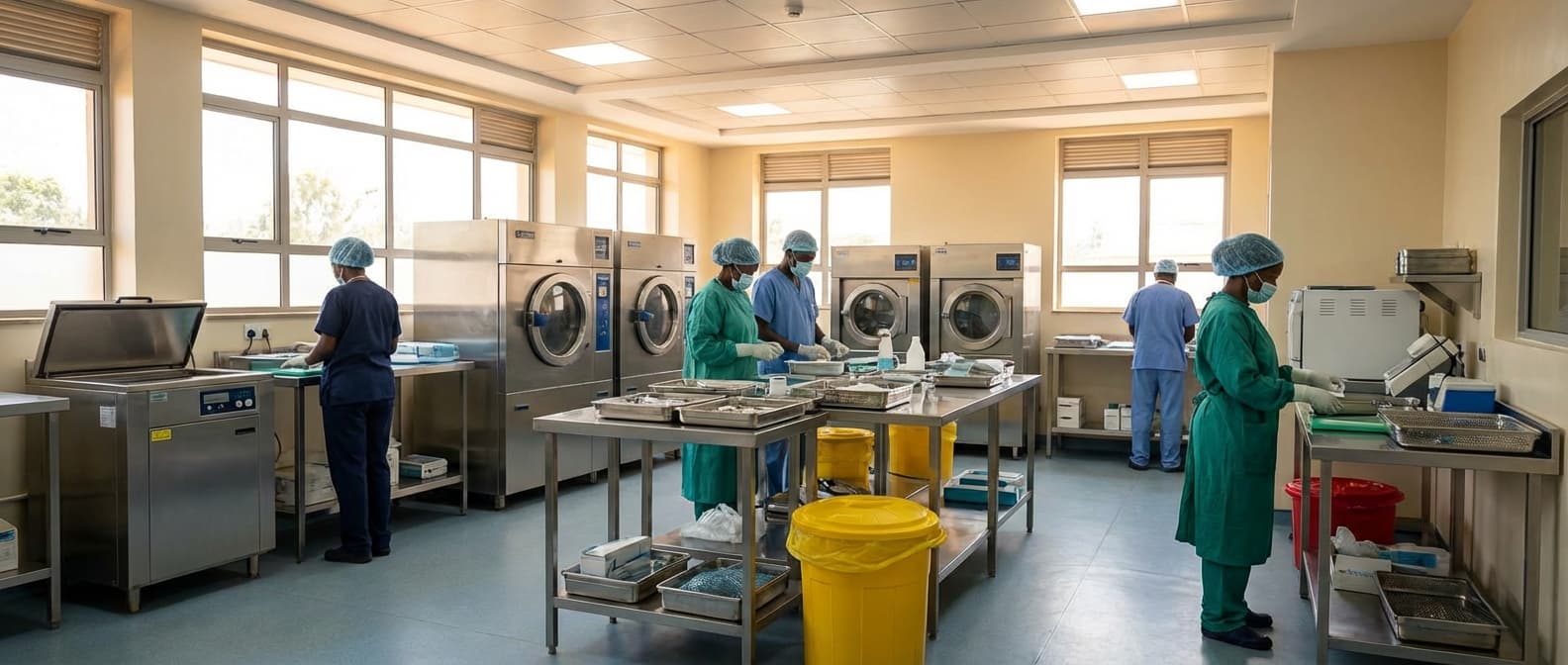
Endoscope Reprocessing Equipment Support Service in Sudan
Engineering Excellence & Technical Support
Endoscope Reprocessing Equipment Support Service High-standard technical execution following OEM protocols and local regulatory frameworks.
Rapid Response Technical Support
We offer 24/7 on-site technical support for all endoscope reprocessing equipment in Sudan, minimizing downtime and ensuring patient safety. Our certified technicians are equipped to handle emergency repairs and diagnostics across all major brands, restoring your reprocessing capabilities swiftly.
Preventive Maintenance & Calibration Programs
Proactive maintenance is key to equipment longevity and optimal performance. Our comprehensive preventive maintenance and calibration services in Sudan extend the lifespan of your reprocessing machines, reduce the risk of costly breakdowns, and ensure adherence to strict infection control standards.
Genuine Parts & Upgrades
Access to genuine manufacturer parts and expert installation for all endoscope reprocessing equipment repairs and upgrades in Sudan. We ensure the integrity and efficiency of your systems with high-quality components and advanced technical solutions, keeping your facility at the forefront of reprocessing technology.
What Is Endoscope Reprocessing Equipment Support Service In Sudan?
Endoscope reprocessing equipment support service in Sudan refers to the provision of specialized technical assistance, maintenance, repair, and validation for automated endoscope reprocessors (AERs) and associated ancillary equipment used in the decontamination and sterilization of flexible endoscopes. This service is critical for ensuring the safety and efficacy of endoscopic procedures by preventing healthcare-associated infections (HAAs) transmitted through improperly reprocessed endoscopes. The service encompasses a range of activities designed to maintain the optimal operational status, regulatory compliance, and performance verification of this essential medical equipment.
| Who Needs the Service | Typical Use Cases & Rationale |
|---|---|
| Hospitals (Public and Private) | Operating Rooms, Gastroenterology Departments, Pulmonology Departments, Urology Departments. Essential for patient safety and to prevent outbreaks of infections linked to inadequately reprocessed endoscopes (e.g., duodenoscopes, colonoscopes, bronchoscopes). |
| Specialty Clinics (e.g., Gastroenterology Clinics) | Facilities performing diagnostic and therapeutic endoscopic procedures. Ensures compliance with HLD standards and patient safety, mitigating risks associated with flexible endoscopes. |
| Medical Equipment Service Providers & Distributors | Companies responsible for the sale, installation, and ongoing maintenance of AERs and related equipment. They often sub-contract specialized support services. |
| Government Health Agencies & Regulatory Bodies | Ensuring that healthcare facilities adhere to national and international standards for medical device reprocessing and infection control. |
| Biomedical Engineering Departments | Responsible for the in-house maintenance and repair of medical equipment, requiring access to specialized knowledge, parts, and validation tools for AERs. |
Key Components of Endoscope Reprocessing Equipment Support Service
- Preventive Maintenance (PM): Scheduled inspections, calibration, cleaning, and component replacement to avert equipment failures and prolong lifespan.
- Corrective Maintenance & Repair: Diagnosis and rectification of equipment malfunctions, including troubleshooting, part replacement, and functional restoration.
- Validation & Performance Testing: Verifying that the AER meets manufacturer specifications and regulatory standards (e.g., ANSI/AAMI ST91, ISO 15883 series) for cleaning and high-level disinfection (HLD) efficacy.
- IQ/OQ/PQ (Installation Qualification, Operational Qualification, Performance Qualification): Comprehensive validation protocols to ensure proper installation, consistent operation, and effective patient-ready reprocessing.
- Training & Education: Providing technical training to biomedical engineers, infection control practitioners, and endoscopy staff on the proper operation, maintenance, and troubleshooting of the equipment.
- Consumable Management: Supplying and managing essential consumables such as detergents, disinfectants, leak testing solutions, and filters.
- Calibration & Servicing: Regular calibration of sensors, flow meters, and temperature controls to ensure accurate and reproducible reprocessing cycles.
- Technical Consultation & Support: Offering expert advice on equipment selection, workflow optimization, and compliance with infection control guidelines.
- Emergency Breakdown Service: Rapid response to critical equipment failures to minimize downtime.
Who Needs Endoscope Reprocessing Equipment Support Service In Sudan?
The need for Endoscope Reprocessing Equipment Support Services in Sudan is critical for ensuring patient safety, preventing healthcare-associated infections (HAIs), and maintaining the operational efficiency of medical facilities. Proper cleaning, disinfection, and sterilization of endoscopes are paramount given their invasive nature and direct contact with patient tissues. These services are essential for hospitals and clinics that perform endoscopic procedures.
| Customer Type | Key Departments Involved | Specific Needs Addressed |
|---|---|---|
| Public Hospitals | Gastroenterology, Pulmonology, Urology, Surgery, Endoscopy Unit, Central Sterile Supply Department (CSSD) | Routine maintenance and repair of automated reprocessors, leak testing equipment, cleaning brushes, and drying cabinets. Calibration of disinfection parameters. Technical training for CSSD staff. Supply of consumables (detergents, disinfectants). Emergency repair services. |
| Private Hospitals | Gastroenterology, Pulmonology, Urology, Gynecology, Endoscopy Unit, CSSD | Similar to public hospitals, with an emphasis on rapid response times and preventative maintenance to minimize procedure downtime. Support for advanced reprocessing technologies. Compliance with international standards. |
| Specialized Clinics | Gastroenterology, Pulmonology, Urology, Gynecology, Endoscopy Suite | On-site troubleshooting and repair of smaller reprocessing units. Equipment servicing for high-volume clinics. Training on best practices for manual and automated reprocessing. Supply chain management for reprocessing agents. |
| Diagnostic Centers | Endoscopy Department | Focus on ensuring consistent quality of reprocessing for diagnostic procedures. Support for equipment used in lower volume settings. Calibration and validation of reprocessing cycles. |
| Medical Training Institutions | Simulation Centers, Surgical Training Departments | Maintenance of equipment used for hands-on training. Technical support for simulation equipment incorporating reprocessing functions. Training modules on equipment operation and maintenance. |
| Government Health Agencies | Ministry of Health, Public Health Institutes | Support for regulatory compliance. Guidance on procurement of appropriate reprocessing equipment. Development of national guidelines for reprocessing. Training programs for healthcare professionals on infection control related to endoscopes. |
Target Customers and Departments Requiring Endoscope Reprocessing Equipment Support Service in Sudan
- Hospitals (Public and Private)
- Specialized Clinics (e.g., Gastroenterology, Pulmonology, Urology, Gynecology)
- Diagnostic Centers
- Medical Training Institutions (for practical training)
- Government Health Agencies (for oversight and standards)
Endoscope Reprocessing Equipment Support Service Process In Sudan
This document outlines the Endoscope Reprocessing Equipment Support Service Process in Sudan, detailing the workflow from an initial inquiry to the successful execution and completion of the service. The process is designed to ensure efficient, timely, and effective support for critical medical equipment used in reprocessing endoscopes, thereby contributing to patient safety and infection control.
| Step | Description | Key Activities | Responsible Party | Expected Outcome |
|---|---|---|---|---|
| The process begins when a healthcare facility in Sudan requires support for their endoscope reprocessing equipment (e.g., washer-disinfectors, leak testers, drying cabinets). | Client contacts the service provider via phone, email, or website. Inquiry details include equipment type, model, serial number, nature of the issue (preventive maintenance, repair, validation), and urgency. | Client, Service Provider Sales/Support Team | Acknowledgement of inquiry, initial understanding of client's need. |
| A thorough understanding of the client's specific requirements is established. | Service provider may request additional information (e.g., maintenance history, error codes). A preliminary diagnosis of the issue may be attempted remotely. The type of service (PM, repair, calibration) and required parts/consumables are identified. | Service Provider Technical Support/Sales Team, Client | Clear definition of the service scope, identification of potential parts and labor requirements. |
| A detailed quotation is provided to the client based on the defined scope. | Quotation includes service fees, parts costs, travel expenses, and estimated timeline. Client reviews and approves the quotation. A service agreement or purchase order is issued. | Service Provider Sales Team, Client | Formal agreement to proceed with the service, outlining terms and conditions. |
| The service appointment is scheduled based on client availability and service provider resources. | Coordination of technician availability, travel arrangements (if necessary), and client's operational schedule. Confirmation of appointment details with the client. | Service Provider Logistics/Scheduling Team, Client | Confirmed date and time for service execution. |
| A qualified service technician visits the client's facility to perform the agreed-upon service. | Technician arrives on-site, performs safety checks, diagnoses the issue (if repair), carries out preventive maintenance procedures, or conducts validation/calibration as per manufacturer guidelines. Necessary parts are replaced. | Service Provider Field Service Technician | Equipment is serviced according to the defined scope and manufacturer specifications. |
| The serviced equipment is rigorously tested to ensure proper functionality and performance. | Functional tests, performance verification checks, and cycle tests are conducted. If calibration was performed, necessary measurements and adjustments are made to ensure accuracy. Results are documented. | Service Provider Field Service Technician | Confirmation of equipment's operational readiness and adherence to performance standards. |
| All service activities are documented, and a formal handover is conducted. | Service report is generated detailing work performed, parts used, test results, and recommendations. Client representative reviews and signs off on the service report. Any user training or troubleshooting advice is provided. | Service Provider Field Service Technician, Client Representative | Completed service report, client acknowledgement, and any necessary information transfer. |
| Post-service follow-up ensures client satisfaction and captures valuable feedback. | Service provider may contact the client after a period to check on equipment performance and address any emergent issues. Client is encouraged to provide feedback on the service received. | Service Provider Customer Service/Support Team, Client | Customer satisfaction, identification of areas for service improvement, and potential for future business. |
Endoscope Reprocessing Equipment Support Service Process Workflow
- Inquiry & Initial Contact
- Needs Assessment & Scope Definition
- Quotation & Agreement
- Service Scheduling
- On-site Service Execution
- Testing & Verification
- Documentation & Handover
- Follow-up & Feedback
Endoscope Reprocessing Equipment Support Service Cost In Sudan
The cost of endoscope reprocessing equipment support services in Sudan can vary significantly due to a combination of factors. These services are crucial for maintaining the safety and efficacy of endoscopes, which are vital for diagnostic and therapeutic procedures. Understanding the pricing structure involves considering several key elements, including the type and complexity of the equipment, the scope of the service, the vendor's reputation and location, and the prevailing economic conditions in Sudan.
| Service Type | Estimated Price Range (SDG) - Low End | Estimated Price Range (SDG) - High End | Notes |
|---|---|---|---|
| Annual Preventive Maintenance (Standard AER) | 150,000 | 400,000 | Covers routine checks, calibration, and minor adjustments. May exclude major parts. |
| Annual Full Service Contract (Standard AER) | 300,000 | 750,000 | Includes preventive maintenance, labor, and a certain allocation of common spare parts. |
| On-Demand Repair (Labor Only) | 75,000 | 250,000 | Cost for technician call-out and labor. Parts are billed separately. |
| On-Demand Repair (Parts & Labor) | 150,000 | 600,000+ | Highly variable depending on the complexity of the repair and the cost of parts. |
| Service for Advanced/Complex Endoscopes (e.g., Surgical Endoscopes) | 400,000 | 1,500,000+ | Requires specialized technicians and potentially imported parts, leading to higher costs. |
| Leak Testing Service (Per Unit) | 20,000 | 50,000 | Basic service for ensuring endoscope integrity. |
| Calibration and Performance Verification (Per Unit) | 30,000 | 100,000 | Ensuring the equipment functions according to manufacturer specifications. |
Key Pricing Factors for Endoscope Reprocessing Equipment Support Services in Sudan
- Equipment Type and Complexity: Different types of endoscopes (e.g., gastroscopes, colonoscopes, bronchoscopes) and their associated reprocessing equipment (e.g., automated endoscope reprocessors - AERs, cleaning brushes, leak testing devices) have varying maintenance requirements. More advanced or specialized equipment often incurs higher service costs due to the need for specialized technicians and parts.
- Scope of Service: The pricing is heavily influenced by whether the service is a routine preventive maintenance contract, an on-demand repair, or a full-service package that includes parts, labor, and emergency call-outs. Annual maintenance contracts typically offer a more predictable cost and can be more economical in the long run compared to ad-hoc repairs.
- Vendor Reputation and Expertise: Established vendors with a proven track record, certified technicians, and access to genuine spare parts generally command higher prices. Smaller or less experienced providers might offer lower rates, but this can come with risks regarding the quality of service and the availability of parts.
- Geographic Location and Accessibility: The cost of travel and logistics for technicians can impact the overall price, especially in more remote areas of Sudan. Proximity of the service provider to the healthcare facility can also be a factor.
- Spare Parts and Consumables: The cost of replacement parts and specialized cleaning consumables used during maintenance and repair is a significant component of the service fee. The availability and import costs of these items in Sudan can influence pricing.
- Service Level Agreements (SLAs): The terms of the SLA, including response times, uptime guarantees, and the duration of the contract, will directly affect the pricing. Higher SLAs often translate to higher costs.
- Economic Conditions and Currency Fluctuations: As with any service in Sudan, the prevailing economic climate, inflation rates, and fluctuations in the Sudanese Pound (SDG) against major currencies (if parts are imported) will play a critical role in determining the local currency cost.
Affordable Endoscope Reprocessing Equipment Support Service Options
For healthcare facilities prioritizing both patient safety and financial responsibility, exploring affordable endoscope reprocessing equipment support service options is crucial. This involves understanding the value of bundled services and implementing strategic cost-saving measures. Investing in proactive and comprehensive support not only ensures compliance with stringent infection control standards but can also prevent costly equipment downtime and repair expenses in the long run.
| Cost-Saving Strategy | Description | Benefit |
|---|---|---|
| Negotiate Long-Term Contracts: | Secure multi-year service agreements with providers. Often, longer commitments come with discounted rates. | Predictable budgeting, reduced per-unit cost over time. |
| Bundle Services Strategically: | Combine multiple support needs (e.g., maintenance, repair, training) into a single contract. Providers may offer discounts for comprehensive packages. | Simplified vendor management, potential for package discounts. |
| Inquire About Tiered Service Levels: | Understand different levels of service offered. Choose the tier that best matches your facility's needs and budget, avoiding over-servicing. | Tailored support, cost optimization by paying only for necessary services. |
| Leverage Remote Diagnostics & Support: | Opt for service providers who offer remote monitoring and troubleshooting capabilities. This can resolve minor issues without a site visit. | Faster resolution of minor issues, reduced on-site service call costs. |
| Compare Provider Offerings Thoroughly: | Obtain quotes from multiple reputable service providers specializing in endoscope reprocessing equipment. Do not settle for the first offer. | Competitive pricing, access to best-value solutions. |
| Invest in Staff Training: | Properly trained staff are less likely to misuse equipment, leading to fewer breakdowns and costly repairs. | Reduced repair frequency, extended equipment lifespan. |
| Consider Refurbished Equipment & Parts: | For non-critical components or older equipment, inquire about the availability and warranty of certified refurbished parts or equipment. | Significant cost savings on parts and initial equipment investment. |
| Track Equipment Performance & Downtime: | Maintain records of equipment performance and downtime. This data can be used during contract negotiations to demonstrate value or identify areas for improvement. | Informed negotiation leverage, identification of underperforming equipment or services. |
Key Value Bundles to Consider
- Preventive Maintenance & Calibration Bundle: Includes scheduled inspections, cleaning, lubrication, and calibration of endoscopes and their associated reprocessing equipment (e.g., automated endoscope reprocessors - AERs, drying and storage cabinets). This bundle is designed to identify and address potential issues before they lead to breakdowns.
- Parts & Labor Protection Bundle: Combines preventive maintenance with coverage for unexpected equipment failures. This can significantly reduce out-of-pocket expenses for repairs and ensures faster turnaround times.
- Compliance & Training Bundle: Integrates equipment support with essential training for reprocessing staff. This ensures correct usage, maintenance, and adherence to regulatory guidelines, minimizing risks of errors and equipment damage.
- Managed Service Bundle: Offers a more comprehensive solution where the service provider takes over the majority of the endoscope reprocessing equipment management, including maintenance, repairs, and sometimes even parts inventory. This can free up internal resources and provide predictable budgeting.
- Basic Support & Emergency Repair Bundle: A more cost-effective option for facilities with strong internal capabilities, focusing on essential preventive maintenance and providing prioritized access to emergency repair services when needed.
Verified Providers In Sudan
In Sudan's evolving healthcare landscape, identifying truly verified and credentialed providers is paramount for ensuring quality and safety. Franance Health stands out as a beacon of trust, meticulously vetting its network to offer patients access to the highest caliber of medical professionals. This commitment to verification means that when you choose a Franance Health-affiliated provider, you are choosing excellence, expertise, and unwavering patient care.
| Credential Type | Verification Standard | Franance Health Assurance |
|---|---|---|
| Medical Licenses | Up-to-date and valid Sudanese Medical Council registration. | Confirmed through direct verification with relevant authorities. |
| Specialty Certifications | Recognized board certifications in their respective fields. | Verified against international and national accreditation bodies. |
| Educational Qualifications | Graduation from accredited medical institutions. | Checked against official academic records and degrees. |
| Professional Experience | Demonstrated history of ethical practice and patient care. | Assessed through reference checks and peer reviews where applicable. |
| Continuing Medical Education (CME) | Commitment to ongoing learning and professional development. | Verified through participation in recognized CME programs. |
Why Franance Health Providers are the Best Choice in Sudan:
- Rigorous Credentialing Process: Each provider undergoes a comprehensive background check and verification of their medical licenses, certifications, and educational qualifications.
- Expertise and Specialization: Franance Health partners with specialists across a wide range of medical fields, ensuring you find the right expertise for your specific needs.
- Commitment to Patient Safety: Our verification process prioritizes patient safety above all else, ensuring providers adhere to the highest ethical and professional standards.
- Patient-Centric Approach: Verified Franance Health providers are dedicated to delivering compassionate and personalized care, focusing on your well-being and recovery.
- Access to Modern Healthcare: By partnering with Franance Health, you gain access to a network of providers who are often at the forefront of medical advancements and best practices.
Scope Of Work For Endoscope Reprocessing Equipment Support Service
This Scope of Work (SOW) outlines the requirements for Endoscope Reprocessing Equipment Support Services. This includes preventative maintenance, corrective maintenance, and calibration services for a range of endoscope reprocessing equipment. The objective is to ensure optimal performance, reliability, and compliance with regulatory standards for all supported equipment, thereby maintaining patient safety and operational efficiency within the healthcare facility.
| Category | Equipment Type | Service Provided | Frequency/Response Time | Technical Deliverable | Standard Specification |
|---|---|---|---|---|---|
| Preventative Maintenance (PM) | Automated Endoscope Reprocessors (AERs) | Routine inspection, cleaning, lubrication, functional testing, and replacement of wear parts. | Quarterly, or as per manufacturer's recommendation. | PM Report detailing performed tasks, identified issues, and recommended actions. Calibration Certificate (if applicable). | Manufacturer's recommended PM checklist. ISO 13485 compliance documentation. |
| Preventative Maintenance (PM) | Disinfection Cabinets | Inspection, cleaning, functional checks of UV lamps/filters, and door seals. | Semi-annually, or as per manufacturer's recommendation. | PM Report detailing performed tasks and identified issues. | Manufacturer's recommended PM checklist. |
| Preventative Maintenance (PM) | Leak Testers | Cleaning of sensor, battery check, and calibration verification. | Quarterly, or as per manufacturer's recommendation. | PM Report and Calibration Certificate. | Manufacturer's recommended PM checklist. Traceable calibration standards. |
| Corrective Maintenance (CM) | Automated Endoscope Reprocessors (AERs) | On-demand repair services for equipment malfunctions, failures, or performance degradation. | Within 2 hours of notification for critical issues (equipment down), within 8 hours for non-critical issues. | Troubleshooting log, repair report detailing root cause, parts replaced, and corrective actions taken. Post-repair functional testing report. | Manufacturer's service manual and diagnostic tools. Compliance with relevant medical device regulations. |
| Corrective Maintenance (CM) | Disinfection Cabinets | On-demand repair services for malfunctions or performance issues. | Within 4 hours of notification. | Repair report detailing diagnosis, parts replaced, and functional test results. | Manufacturer's service manual. |
| Corrective Maintenance (CM) | Leak Testers | On-demand repair services for malfunctions or calibration failures. | Within 4 hours of notification. | Repair report and post-repair calibration certificate. | Manufacturer's service manual. Traceable calibration standards. |
| Calibration | Automated Endoscope Reprocessors (AERs) | Verification and adjustment of critical parameters (e.g., temperature, pressure, flow rates, cycle times) to ensure accurate and effective reprocessing. | Annually, or as per manufacturer's recommendation or regulatory requirement. | Calibration Certificate for each verified parameter, signed by a qualified technician. Updated equipment logs. | Manufacturer's calibration procedures. NIST-traceable calibration equipment. Adherence to AAMI ST79 or equivalent standards. |
| Calibration | Leak Testers | Verification and adjustment of pressure/vacuum readings. | Annually, or as per manufacturer's recommendation. | Calibration Certificate with recorded readings before and after adjustment. Traceable calibration standards. | Manufacturer's calibration procedures. NIST-traceable calibration equipment. |
| Technical Support & Consultation | All supported equipment | Remote and on-site assistance for troubleshooting, operational queries, and guidance on best practices. | As needed, with a target response time of < 1 hour for urgent inquiries. | Records of support interactions and resolutions. | Experienced and certified technical personnel. |
| Documentation & Reporting | All supported equipment | Provision of service reports, maintenance logs, calibration certificates, and audit trails. | Within 5 business days of service completion. | Secure, organized, and readily accessible documentation. Digital and/or hard copy as agreed. | Compliance with facility's record-keeping policies and relevant regulatory requirements. |
| Parts Management | All supported equipment | Procurement and stocking of genuine manufacturer replacement parts. | As required, with a target of having common wear parts in stock. | Inventory of critical spare parts. Documentation of parts used in repairs. | Genuine OEM parts or equivalent certified parts. Proper storage and handling of parts. |
Key Performance Indicators (KPIs)
- Mean Time Between Failures (MTBF) for critical components: > 1000 hours
- Mean Time To Repair (MTTR): < 4 hours for critical failures, < 8 hours for non-critical failures
- Preventative Maintenance (PM) completion rate: 100% within scheduled windows
- Service response time: < 2 hours for critical equipment downtime
- Customer Satisfaction Score (CSAT): > 90%
Service Level Agreement For Endoscope Reprocessing Equipment Support Service
This Service Level Agreement (SLA) outlines the support services provided for Endoscope Reprocessing Equipment, focusing on response times and uptime guarantees to ensure optimal operational efficiency and patient safety. The agreement defines the terms and conditions for incident management, problem resolution, and preventative maintenance.
| Incident Severity | Response Time Target | Resolution Time Target | Uptime Guarantee (Monthly) |
|---|---|---|---|
| Critical Incident | 1 Hour | 4 Business Hours | 99.5% |
| Major Incident | 2 Business Hours | 8 Business Hours | 99.8% |
| Minor Incident | 4 Business Hours | 2 Business Days | 99.9% |
| Scheduled Maintenance | N/A (Advance Notification Provided) | As per schedule | N/A (Excludes scheduled downtime) |
Key Definitions
- Critical Incident: An event that renders endoscope reprocessing equipment completely inoperable, impacting patient care and safety, requiring immediate attention.
- Major Incident: An event that significantly degrades the performance of endoscope reprocessing equipment, affecting a substantial portion of the workflow but not completely halting operations.
- Minor Incident: An event that causes minor disruption to endoscope reprocessing equipment functionality, affecting a limited scope of operations or a single feature.
- Scheduled Maintenance: Planned maintenance activities performed to prevent future issues and ensure optimal equipment performance.
- Response Time: The maximum time allowed for a qualified support technician to acknowledge and begin working on a reported incident.
- Resolution Time: The maximum time allowed to restore endoscope reprocessing equipment to its operational state. (Note: Actual resolution may vary based on the complexity of the issue and part availability.)
- Uptime Guarantee: The percentage of time the endoscope reprocessing equipment is expected to be operational and available for use.
Frequently Asked Questions

Ready when you are
Let's scope your Endoscope Reprocessing Equipment Support Service in Sudan project in Sudan.

Scaling healthcare logistics and technical systems across the entire continent.