
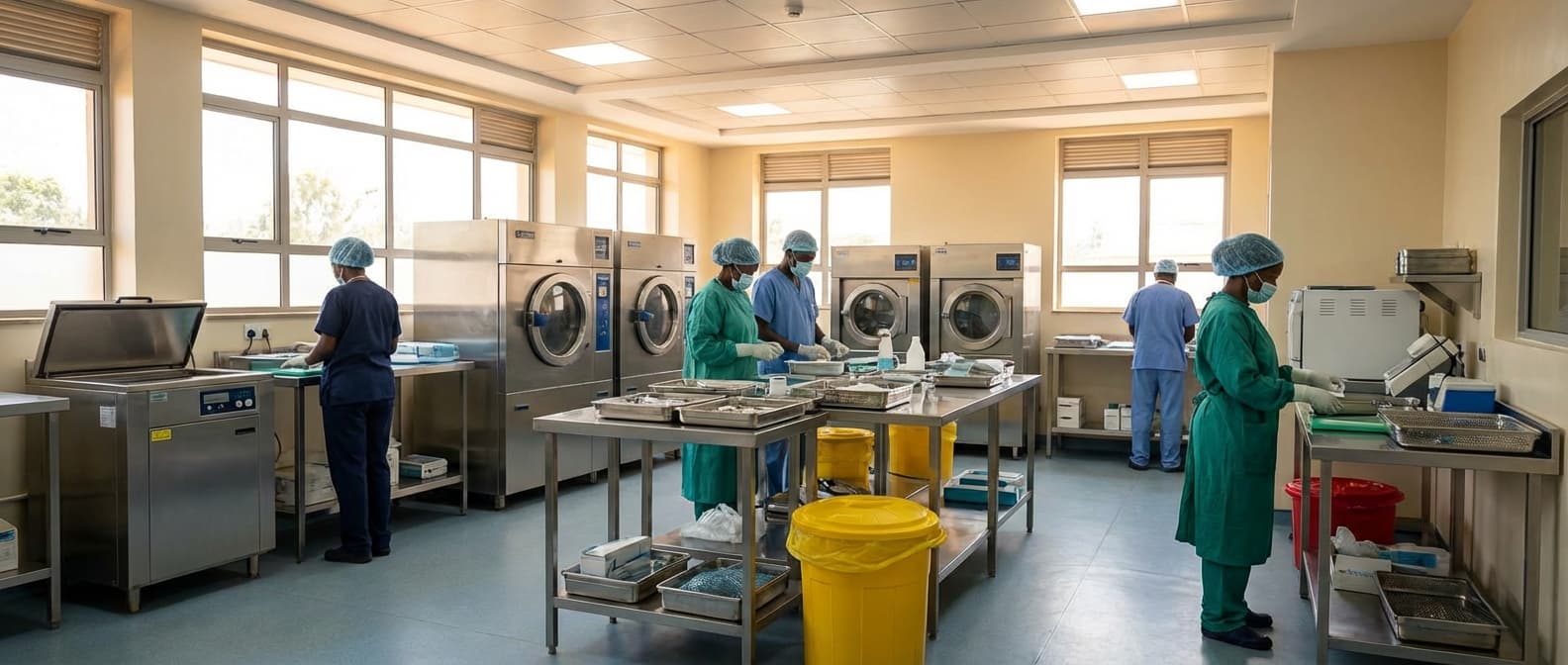
Autoclave Validation Support Service in Sudan
Engineering Excellence & Technical Support
Autoclave Validation Support Service High-standard technical execution following OEM protocols and local regulatory frameworks.
ISO 17025 Accredited Validation Protocols
Our autoclave validation services in Sudan adhere strictly to ISO 17025 accredited protocols, ensuring the highest level of accuracy and reliability for your sterilization cycles. We provide comprehensive documentation for regulatory compliance and operational assurance.
Advanced Data Logging & Analysis
Leveraging state-of-the-art data loggers and analytical software, we capture and interpret critical sterilization parameters (temperature, pressure, time) in real-time. This meticulous approach guarantees consistent and effective sterilization for all your medical and laboratory instruments.
Certificates of Conformance & Calibration
Upon successful validation, we issue detailed Certificates of Conformance and Calibration for your autoclaves. These official documents are essential for quality management systems, audits, and demonstrating your commitment to patient safety and scientific integrity within Sudan's healthcare and research sectors.
What Is Autoclave Validation Support Service In Sudan?
Autoclave validation support services in Sudan are specialized technical services focused on ensuring that steam sterilization equipment (autoclaves) within healthcare and research facilities consistently and effectively eliminate microbial contamination. This process is critical for maintaining sterility assurance levels (SAL) and preventing the transmission of healthcare-associated infections (HAIs). The service encompasses a comprehensive suite of activities designed to demonstrate and document the autoclave's performance against established industry standards and regulatory requirements. This includes assessing the efficacy of the sterilization cycle, the penetration of steam to all load configurations, and the absence of viable microorganisms post-sterilization. The validation process is not a one-time event but an ongoing requirement for routine revalidation to account for equipment wear, maintenance, and any modifications or repairs.
| Who Needs Autoclave Validation Support Service? | Typical Use Cases |
|---|---|
| Hospitals and Healthcare Facilities: Including operating theaters, sterile processing departments (SPDs), dental clinics, and laboratories. | Sterilization of surgical instruments, medical devices, glassware, and biohazardous waste. |
| Research Laboratories: Particularly those involved in microbiology, molecular biology, and life sciences, requiring sterile consumables and equipment. | Sterilization of culture media, glassware, pipette tips, and laboratory consumables. Decontamination of biohazardous waste. |
| Pharmaceutical and Biotechnology Companies: For sterile manufacturing processes and laboratory operations. | Sterilization of manufacturing equipment, cleanroom components, and laboratory supplies for aseptic processing and quality control. |
| Veterinary Clinics and Animal Research Facilities: Requiring sterile instruments and equipment for procedures. | Sterilization of surgical instruments, dental equipment, and other veterinary supplies. |
| Central Sterile Supply Departments (CSSDs): As the primary unit responsible for sterilization in larger healthcare institutions. | Ensuring the sterility of a wide range of reusable medical devices and surgical equipment. |
Key Components of Autoclave Validation Support Service
- Installation Qualification (IQ): Verifying that the autoclave is installed correctly according to manufacturer specifications and relevant safety standards.
- Operational Qualification (OQ): Testing the autoclave's operational parameters within specified limits, including temperature, pressure, and time cycles.
- Performance Qualification (PQ): Conducting multiple sterilization cycles using biological and chemical indicators under worst-case load conditions to demonstrate consistent efficacy.
- Load Configuration Studies: Analyzing and validating the effectiveness of sterilization across different types and densities of loads that the autoclave will process.
- Documentation and Reporting: Generating detailed reports that document all validation activities, test results, and conclusions, providing evidence of compliance for regulatory bodies and internal quality management systems.
- Revalidation Services: Performing periodic revalidation to ensure ongoing compliance and maintain sterility assurance after a specified period, or following significant equipment changes, repairs, or recalibrations.
- Calibration and Maintenance Support: Providing or facilitating calibration of critical autoclave components and offering guidance on preventative maintenance to ensure optimal performance.
Who Needs Autoclave Validation Support Service In Sudan?
Autoclave validation support services are crucial for ensuring the efficacy and safety of sterilization processes in Sudan, particularly within sectors that rely heavily on sterile equipment and supplies. These services guarantee that autoclaves are functioning optimally, meeting international standards and regulatory requirements, and ultimately protecting public health and preventing the spread of infections.
| Customer/Department | Specific Needs & Benefits of Validation Support |
|---|---|
| Hospitals and Healthcare Facilities (e.g., Khartoum Teaching Hospital, Omdurman Military Hospital, Private Hospitals) | Departments: Operating Theatres, Intensive Care Units (ICUs), Emergency Departments, Central Sterile Supply Departments (CSSDs), Maternity Wards, Outpatient Clinics. Needs: Sterilization of surgical instruments, medical devices, gowns, masks, and other critical supplies. Ensures patient safety, prevents healthcare-associated infections (HAIs), and maintains compliance with national and international health regulations. Critical for high-risk procedures. |
| Diagnostic Laboratories (e.g., National Public Health Laboratory, private diagnostic centers) | Departments: Microbiology, Hematology, Biochemistry, Pathology. Needs: Sterilization of glassware, media, loops, and other laboratory equipment. Prevents contamination, ensures accurate diagnostic results, and maintains biosafety standards. Essential for reliable disease detection and public health surveillance. |
| Pharmaceutical and Medical Device Manufacturers (e.g., Sudanese Pharmaceutical Company, emerging manufacturers) | Departments: Production, Quality Control (QC), Research and Development (R&D). Needs: Sterilization of raw materials, packaging components, and finished medical devices. Guarantees product sterility, shelf-life, and compliance with Good Manufacturing Practices (GMP) and regulatory approvals for market access. Crucial for ensuring the safety and efficacy of pharmaceuticals and devices. |
| Research Institutions and Universities (e.g., University of Khartoum - Medical Faculty, National Centre for Research) | Departments: Biology, Chemistry, Medicine, Veterinary Science, Public Health. Needs: Sterilization of laboratory equipment, consumables, and biological samples. Supports research integrity, prevents cross-contamination in experiments, and ensures biosafety protocols are met. Vital for advancing scientific knowledge and training future professionals. |
| Veterinary Clinics and Animal Health Services | Departments: Surgical units, diagnostic labs. Needs: Sterilization of surgical instruments and equipment used in animal care. Prevents the transmission of zoonotic diseases and ensures the health and well-being of animals. Important for both companion animal and livestock health services. |
| Dental Clinics | Departments: Treatment rooms, sterilization areas. Needs: Sterilization of dental instruments (e.g., drills, probes, mirrors). Prevents the spread of infections among patients and dental staff, ensuring safe dental procedures. A fundamental requirement for any dental practice. |
| Cosmetic and Tattoo/Piercing Studios | Departments: Treatment areas, sterilization facilities. Needs: Sterilization of needles, tools, and equipment used in cosmetic procedures, tattooing, and body piercing. Crucial for preventing the transmission of blood-borne pathogens and skin infections. Increasingly important as these industries grow and face regulatory scrutiny. |
Target Customers and Departments Requiring Autoclave Validation Support Service in Sudan
- Hospitals and Healthcare Facilities
- Diagnostic Laboratories
- Pharmaceutical and Medical Device Manufacturers
- Research Institutions and Universities
- Veterinary Clinics and Animal Health Services
- Dental Clinics
- Cosmetic and Tattoo/Piercing Studios
Autoclave Validation Support Service Process In Sudan
The Autoclave Validation Support Service process in Sudan is a structured workflow designed to ensure that autoclaves used in critical environments (e.g., healthcare, laboratories, pharmaceutical manufacturing) consistently achieve effective sterilization. This process begins with an initial client inquiry and culminates in the provision of comprehensive validation documentation. The service aims to verify the autoclave's ability to kill or inactivate microorganisms under defined conditions, thereby safeguarding product integrity and patient safety.
| Stage | Description | Key Activities | Deliverables/Outcomes | Responsible Party |
|---|---|---|---|---|
| The process begins when a potential client in Sudan contacts the service provider to inquire about autoclave validation. | Initial discussion of client's needs, autoclave type, usage, regulatory requirements (e.g., local health regulations, GMP, ISO standards), and desired validation scope. | Understanding of client's validation requirements, preliminary assessment of complexity. | Client, Service Provider Representative |
| Based on the needs assessment, a detailed proposal and quotation are prepared. | Scope of work definition, methodology, validation protocol outline, equipment required, timeline estimation, and cost breakdown. | Formal proposal document, detailed quotation. | Service Provider (Technical and Sales Team) |
| Upon client approval of the proposal, a formal service agreement is established, and the validation dates are scheduled. | Contract negotiation, signing of Service Level Agreement (SLA), booking of validation team and equipment, confirmation of site access and necessary permissions. | Signed Service Agreement, confirmed validation schedule. | Client, Service Provider (Legal and Operations Team) |
| A preliminary visit to the client's site to assess the autoclave and its operational environment. | Review of autoclave documentation (manuals, maintenance records), assessment of utilities (steam quality, water, power), identification of potential risks, finalization of validation plan and protocol details. | Detailed understanding of site conditions, finalized validation plan, risk assessment report. | Service Provider (Validation Engineers) |
| Verification that the autoclave is installed correctly and according to manufacturer specifications. | Review of installation records, verification of all components, utilities, and safety features, documentation of installation parameters. | IQ protocol execution, completed IQ report, confirmation of proper installation. | Service Provider (Validation Engineers), Client (for access and information) |
| Verification that the autoclave operates as intended within its defined operating ranges. | Testing of control systems, alarms, safety interlocks, temperature and pressure monitoring, and cycle parameters under empty load conditions. Use of calibrated sensors and data loggers. | OQ protocol execution, collected OQ data, preliminary OQ findings. | Service Provider (Validation Engineers) |
| Verification that the autoclave consistently achieves the required sterilization efficacy under actual operating conditions with challenging loads. | Multiple validation cycles with biological indicators (BIs) and/or chemical indicators (CIs) placed at critical locations. Testing with representative product loads (if applicable). Analysis of temperature, pressure, and time data. | PQ protocol execution, collected PQ data (including BI/CI results), evidence of sterilization efficacy. | Service Provider (Validation Engineers) |
| Comprehensive analysis of all collected IQ, OQ, and PQ data. | Statistical analysis of temperature, pressure, and time data. Interpretation of BI/CI results. Identification of any deviations or out-of-specification (OOS) results. Compilation of all findings into a validation report. | Raw data, analyzed data, draft validation report. | Service Provider (Validation Engineers and Quality Assurance) |
| The final validation report is submitted to the client for review and approval. | Formal submission of the complete validation report including protocols, raw data, analysis, and conclusions. Client review and feedback. | Final, approved Validation Report. | Service Provider, Client (Quality Assurance/Management) |
| Providing ongoing support and recommendations to the client after validation. | Clarification of report findings, recommendations for operational improvements, preventative maintenance, and troubleshooting if issues arise. | Technical support, operational advice. | Service Provider (Technical Support) |
| Planning for future revalidation events and continuous monitoring. | Advising on revalidation frequencies based on regulatory requirements and usage. Discussion of annual performance checks or calibration services. | Revalidation schedule recommendations, ongoing service agreements. | Service Provider, Client |
Autoclave Validation Support Service Workflow in Sudan
- Client Inquiry and Needs Assessment
- Proposal Development and Quotation
- Service Agreement and Scheduling
- Pre-Validation Site Assessment and Planning
- Installation Qualification (IQ) Support
- Operational Qualification (OQ) Execution
- Performance Qualification (PQ) Execution
- Data Analysis and Report Generation
- Validation Report Submission and Review
- Post-Validation Support and Recommendations
- Revalidation and Ongoing Support Planning
Autoclave Validation Support Service Cost In Sudan
Autoclave validation is a critical process to ensure that sterilization cycles are effective and consistent, thus maintaining the safety and integrity of medical and laboratory equipment. In Sudan, the cost of this essential service is influenced by several factors, leading to a range of pricing. These factors include the type and size of the autoclave, the number of validation cycles required (e.g., installation qualification, operational qualification, performance qualification), the complexity of the validation protocol, the expertise and reputation of the service provider, and any necessary calibration or repair services that might be identified during the validation process. The local currency, the Sudanese Pound (SDG), is subject to fluctuations, which can impact the overall cost. Generally, clients can expect a tiered pricing structure, with smaller, simpler validations costing less than comprehensive, multi-cycle validations for larger or more complex autoclaves. The urgency of the service can also be a pricing determinant. Specialized equipment or the need for specialized testing media can also add to the overall expense. It's recommended to obtain detailed quotes from multiple reputable service providers in Sudan to get the most accurate pricing for specific autoclave validation needs.
| Validation Service | Estimated Price Range (SDG) | Notes |
|---|---|---|
| Basic Operational Qualification (OQ) for a standard small autoclave | 30,000 - 70,000 SDG | Covers a single cycle validation with standard testing. |
| Full Validation (IQ, OQ, PQ) for a medium-sized autoclave | 70,000 - 150,000 SDG | Includes initial installation checks, operational performance, and load testing. |
| Comprehensive Validation for large or specialized autoclaves | 150,000 - 300,000+ SDG | May involve multiple load types, complex protocols, and extended testing. |
| Annual Re-validation/Performance Qualification (PQ) | 25,000 - 60,000 SDG | Typically less intensive than initial full validation. |
| Calibration of Autoclave Sensors (per sensor) | 5,000 - 15,000 SDG | Can be bundled with validation or a standalone service. |
| Consultation & Protocol Development | 10,000 - 30,000 SDG | For complex or non-standard validation needs. |
Key Pricing Factors for Autoclave Validation Support in Sudan
- Autoclave Type and Size: Larger or more specialized autoclaves may incur higher validation costs.
- Number of Validation Stages: IQ, OQ, and PQ stages have distinct costs.
- Validation Protocol Complexity: Standard protocols are generally less expensive than custom-designed ones.
- Service Provider Expertise and Reputation: Highly experienced providers may charge more but offer greater assurance.
- Calibration and Repair Requirements: Unexpected findings during validation can increase the final cost.
- Currency Fluctuations: The current exchange rate of the Sudanese Pound (SDG) affects USD-denominated costs or imported materials.
- Urgency of Service: Expedited validation services often come with a premium.
- Specialized Testing Media/Equipment: Use of specific biological indicators or other specialized consumables.
Affordable Autoclave Validation Support Service Options
Ensuring the proper functioning of your autoclave is critical for maintaining sterile environments in healthcare, research, and manufacturing. Autoclave validation is a rigorous process that confirms your equipment consistently sterilizes effectively. However, the cost of this essential service can be a concern. This document outlines affordable autoclave validation support service options, focusing on value bundles and cost-saving strategies to help you manage your budget without compromising quality.
| Service Offering | Description | Typical Value Proposition | Cost-Saving Potential |
|---|---|---|---|
| Individual Service Packages | Purchase of specific validation services (IQ, OQ, PQ) as needed. | Flexibility to address immediate needs. | Can be cost-effective for one-off requirements or small facilities with minimal validation needs. |
| Value Bundles (Comprehensive Packages) | Combined validation services (e.g., IQ/OQ, OQ/PQ, or full IQ/OQ/PQ) often offered at a reduced rate compared to purchasing individually. | Streamlined process, potentially faster turnaround, and integrated reporting. Offers predictable costs for routine validation cycles. | Significant cost savings due to bundled discounts. Reduced administrative overhead for managing multiple service contracts. Predictable budgeting for annual or biennial validation. |
| Multi-Year Service Agreements | Contracts for ongoing validation services over a set period (e.g., 3-5 years), often including routine maintenance and calibration. | Long-term cost predictability, priority scheduling, and potential for further discounts on proactive maintenance. | Negotiated lower annual rates. Avoidance of price increases on individual services. Reduced risk of unexpected repair costs due to preventative maintenance. |
| On-Site vs. Off-Site Validation | Validation performed at your facility or by sending the autoclave to the service provider's facility (less common for larger units). | Convenience and minimal disruption for on-site. Potentially more controlled environment and specialized equipment for off-site. | On-site often saves on shipping costs and downtime. Off-site might be more cost-effective for smaller units if shipping is inexpensive. |
| Manufacturer vs. Third-Party Services | Services provided by the original equipment manufacturer or an independent validation company. | Manufacturer offers original equipment expertise. Third-party may offer competitive pricing and flexibility. | Third-party providers can often be more cost-competitive, especially for older equipment. Manufacturers may offer bundled deals with new equipment purchases. |
Cost-Saving Strategies for Autoclave Validation
- Negotiate Contracts: Don't accept initial quotes. Negotiate pricing, especially for multi-year agreements or bundled services.
- Bundle Services: Whenever possible, opt for comprehensive validation packages (IQ/OQ/PQ) as they are typically more cost-effective than individual services.
- Schedule Proactively: Plan your validation well in advance to avoid rush fees and secure better rates. Coordinate with your service provider for optimal scheduling.
- Consider Longer Contract Terms: Multi-year agreements often come with significant discounts. Assess your long-term validation needs.
- Maintain Equipment Regularly: Routine maintenance and calibration by a qualified technician can prevent issues that might lead to costly revalidation or repairs.
- Ask About Discounts: Inquire about discounts for first-time customers, repeat business, or if you are validating multiple units.
- Compare Quotes from Multiple Providers: Obtain at least three quotes from reputable manufacturers and independent third-party validation companies.
- Understand Scope of Work: Clearly define what each validation phase entails to avoid scope creep and unexpected charges.
- Leverage In-House Expertise (with caution): For very basic aspects of validation (like data logging checks), some internal training might be possible, but critical validation steps should always be performed by qualified professionals to ensure compliance.
- Bulk Purchasing of Consumables: If your validation involves specific biological indicators or chemical indicators, inquire about bulk discounts if you have multiple autoclaves or frequent validation needs.
Verified Providers In Sudan
In Sudan's burgeoning healthcare landscape, identifying reliable and credentialed providers is paramount for ensuring quality patient care. Franance Health stands out as a leading entity, rigorously vetting its network of healthcare professionals and facilities. This commitment to verification ensures that patients have access to competent, ethical, and well-equipped medical services. Understanding Franance Health's credentialing process and the advantages it offers is key to making informed healthcare decisions.
| Aspect | Franance Health's Verification | Why it Matters for Patients |
|---|---|---|
| Provider Qualifications | Verified academic degrees, licenses, and specialized certifications. | Ensures providers possess the necessary knowledge and expertise for safe and effective treatment. |
| Clinical Experience | Documented and validated professional history and case experience. | Guarantees that providers have practical skills and have successfully managed similar medical situations. |
| Ethical Standards | Thorough background checks, peer reviews, and adherence to a strict code of conduct. | Provides assurance of trustworthy and patient-centered care, minimizing risks of malpractice or unethical practices. |
| Facility Safety & Equipment | Compliance with national and international standards for hygiene, safety, and medical equipment functionality. | Ensures a safe and well-equipped environment for diagnosis and treatment, reducing the risk of infections or procedural complications. |
| Specialized Expertise | Identification and confirmation of providers with specific advanced training and specializations. | Allows patients to easily find highly qualified specialists for complex or specific medical needs. |
Franance Health's Credentialing Pillars
- Rigorous Qualification Review: Franance Health meticulously examines the academic achievements, professional licenses, and specialized training of all affiliated healthcare providers.
- Experience Validation: Beyond formal qualifications, Franance Health verifies the practical experience of providers, ensuring a proven track record in their respective fields.
- Ethical Conduct Assessment: A critical component is the evaluation of a provider's professional conduct and adherence to ethical medical practices, often involving background checks and peer reviews.
- Facility Standards Compliance: For affiliated healthcare facilities, Franance Health assesses adherence to stringent safety, hygiene, and equipment maintenance standards.
- Continuous Professional Development: Providers are encouraged and often required to engage in ongoing education and training to stay abreast of the latest medical advancements.
- Patient Feedback Integration: Franance Health incorporates patient feedback and satisfaction surveys into its ongoing evaluation process, fostering accountability and continuous improvement.
Scope Of Work For Autoclave Validation Support Service
This Scope of Work (SOW) outlines the services to be provided by [Vendor Name] to [Client Name] for autoclave validation support. The objective is to ensure that the autoclave(s) located at [Client Site Address] consistently sterilize medical devices according to specified parameters and regulatory requirements. This SOW details the technical deliverables and standard specifications for the validation process.
| Parameter | Standard Specification / Reference | Measurement Unit | Acceptance Criteria (Example) |
|---|---|---|---|
| Temperature (Sterilization Hold) | ISO 17665-1, FDA General Principles of Software Validation, Manufacturer's Specifications | °C | ± 2°C deviation from target temperature (e.g., 121°C or 134°C) at all measured points during the hold time. |
| Pressure (Sterilization Hold) | ISO 17665-1, Manufacturer's Specifications | kPa (gauge) or psi (gauge) | Maintain specified pressure range throughout the hold time to ensure saturated steam conditions. |
| Sterilization Cycle Time | ISO 17665-1, Manufacturer's Specifications | Minutes | Achieve and maintain specified temperature and pressure for the designated hold time (e.g., 20 minutes at 121°C). |
| Drain Time | ISO 17665-1, Manufacturer's Specifications | Minutes | Complete drainage within the specified time to ensure effective drying and prevent recontamination. |
| Heat Distribution | ISO 17665-1 | °C | Temperature variation across the load chamber shall be within a defined range (e.g., ± 3°C). |
| Biological Indicator (BI) Inactivation | ISO 11138 Series, Manufacturer's Specifications | Log Reduction Value (LRV) | Complete inactivation of the BI (e.g., ≥ 10^6 LRV for Geobacillus stearothermophilus). |
| Chemical Indicator (CI) Response | ISO 11140 Series, Manufacturer's Specifications | Pass/Fail | Visual change of CI to the 'Accepted' or 'Sterilized' state as per manufacturer's instructions. |
| Load Penetration (for PQ) | ISO 17665-1 | N/A | Demonstrate consistent steam penetration to the center of representative loads (e.g., using temperature probes or steam challenge devices). |
| Drying Effectiveness (for PQ) | ISO 17665-1 | N/A | Loads are sufficiently dry for subsequent handling and storage, as defined by specific tests or visual inspection. |
Technical Deliverables
- Validation Protocol Development: Creation of a detailed protocol for the autoclave validation, including scope, objectives, responsibilities, test procedures, acceptance criteria, and reporting requirements.
- Installation Qualification (IQ): Verification that the autoclave is installed correctly, in accordance with manufacturer specifications, and meets all relevant regulatory standards.
- Operational Qualification (OQ): Testing of the autoclave's operational parameters to ensure it functions consistently and reliably within specified limits. This includes testing of critical parameters such as temperature, pressure, and cycle times.
- Performance Qualification (PQ): Validation that the autoclave consistently sterilizes specified loads effectively under normal operating conditions. This involves running challenge cycles with biological and/or chemical indicators.
- Validation Report: A comprehensive report summarizing the findings of the IQ, OQ, and PQ activities. The report will include raw data, analysis, deviations (if any), and a conclusion on the validation status of the autoclave.
- Re-validation Support (if applicable): Assistance with re-validation activities as required by regulatory changes, equipment modifications, or periodic re-validation schedules.
- Training (optional): On-site training for designated client personnel on the operation and basic maintenance of the validated autoclave.
- Documentation Package: Provision of all executed protocols, raw data, calibration certificates, and the final validation report in a format agreed upon by both parties.
Service Level Agreement For Autoclave Validation Support Service
This Service Level Agreement (SLA) outlines the commitment for Autoclave Validation Support Services, specifically addressing response times for critical issues and guaranteed uptime for the support system. This SLA aims to ensure timely assistance and accessibility of our support resources.
| Issue Severity | Response Time Guarantee (Business Hours) | Target Resolution Time (Business Hours) | Uptime Guarantee (Support System) |
|---|---|---|---|
| Critical Issue | 1 Hour | 4 Business Hours | 99.5% |
| Major Issue | 4 Business Hours | 2 Business Days | 99.5% |
| Minor Issue | 8 Business Hours | 5 Business Days | 99.5% |
Key Definitions
- Autoclave Validation Support Service: Refers to the provision of technical assistance, troubleshooting, and guidance related to the validation processes of autoclave equipment.
- Critical Issue: An issue that renders the autoclave validation process inoperable or significantly impedes its progress, posing a direct risk to product quality, patient safety, or regulatory compliance.
- Major Issue: An issue that impairs the functionality of the autoclave validation process but does not render it completely inoperable. Workarounds may be available.
- Minor Issue: A non-critical issue that does not significantly impact the autoclave validation process. This includes general inquiries, feature requests, or documentation clarification.
- Business Hours: Defined as Monday through Friday, 9:00 AM to 5:00 PM in the primary time zone of the customer, excluding public holidays observed by the service provider.
- Response Time: The maximum time allowed to acknowledge a reported issue and begin actively working on it.
- Resolution Time: The target time to permanently fix or provide a suitable workaround for a reported issue. This is an objective and not a strict guarantee, as complex issues may require extended investigation.
- Uptime Guarantee: The percentage of time the support system (e.g., ticketing portal, knowledge base, support phone lines) is available and operational.
Frequently Asked Questions

Ready when you are
Let's scope your Autoclave Validation Support Service in Sudan project in Sudan.

Scaling healthcare logistics and technical systems across the entire continent.