
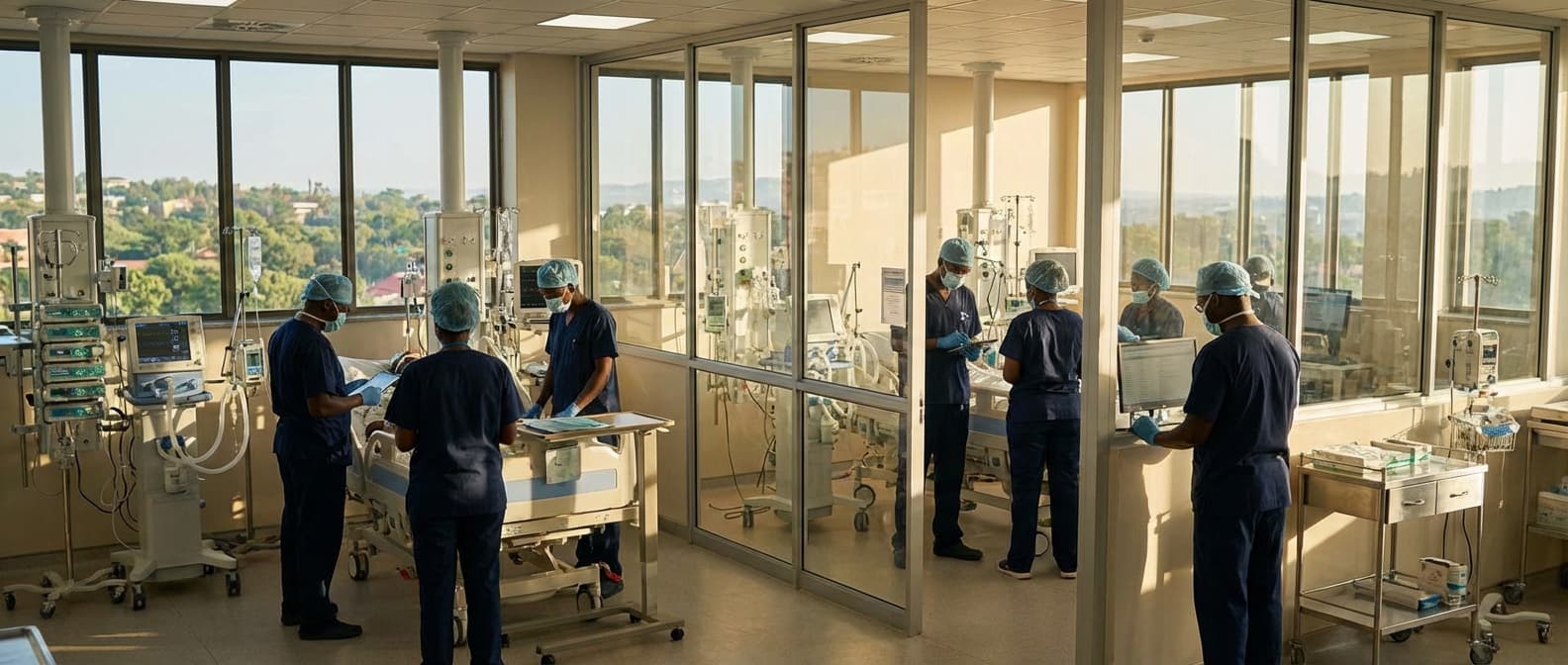
Ventilator Fleet Management & PM in Sudan
Engineering Excellence & Technical Support
Preventive maintenance and fleet management for ICU ventilators High-standard technical execution following OEM protocols and local regulatory frameworks.
Predictive Maintenance for Critical Ventilators
Leveraging IoT sensors and AI algorithms to analyze real-time ventilator performance data. This enables proactive identification of potential failures, scheduling preventive maintenance, and minimizing unplanned downtime for critical respiratory support equipment across Sudan's healthcare facilities.
Real-time Ventilator Fleet Visibility & Allocation
Implementing a centralized digital platform for comprehensive tracking of ventilator location, status, and usage across Sudan. This ensures optimal allocation of resources during health emergencies, facilitates rapid deployment to areas of greatest need, and improves inventory management.
Standardized Training & Certification for Biomedical Technicians
Developing and deploying a robust, accessible training program for biomedical technicians nationwide. This program focuses on standardized preventive maintenance procedures, troubleshooting, and safe operation of diverse ventilator models, ensuring consistent quality of care and equipment longevity.
What Is Ventilator Fleet Management & Pm In Sudan?
Ventilator Fleet Management & Preventive Maintenance (PM) in Sudan refers to the systematic organizational, operational, and technical activities required to ensure the optimal performance, longevity, and readiness of a hospital's or healthcare facility's mechanical ventilator inventory. This encompasses the entire lifecycle of the equipment, from acquisition and deployment to routine servicing, calibration, repair, and eventual decommissioning. The objective is to maximize equipment availability, minimize downtime, ensure patient safety, and optimize resource allocation within the often resource-constrained healthcare environment of Sudan.
| Service/Activity | Description | Impact on Ventilator Fleet in Sudan |
|---|---|---|
| Inventory Management | Detailed record-keeping of all ventilators. | Enables accurate asset accounting, facilitates PM scheduling, and supports informed procurement decisions. |
| Preventive Maintenance (PM) | Scheduled inspections and servicing to prevent failures. | Reduces unexpected breakdowns, extends equipment lifespan, and ensures consistent performance for patient care. |
| Corrective Maintenance | Repair of malfunctioning ventilators. | Minimizes patient care disruption, restores critical life-support capabilities, and prevents cascading failures. |
| Calibration | Adjustment of ventilator parameters to meet specifications. | Ensures accurate delivery of prescribed ventilation, crucial for patient safety and treatment efficacy. |
| Asset Tracking | Monitoring the location and usage of ventilators. | Optimizes resource allocation, especially during surges in demand (e.g., pandemics), and prevents equipment loss or theft. |
| Training | Education for biomedical and clinical staff. | Enhances operational proficiency, improves troubleshooting capabilities, and promotes safe and effective use of ventilators. |
Key Components of Ventilator Fleet Management & PM in Sudan
- Inventory Management: Establishing and maintaining a comprehensive database of all ventilators, including make, model, serial number, acquisition date, warranty status, location, and service history.
- Preventive Maintenance (PM) Scheduling and Execution: Developing and adhering to a rigorous PM schedule based on manufacturer recommendations and local operational conditions. This includes cleaning, lubrication, functional testing, alarm verification, and calibration of critical parameters (e.g., tidal volume, pressure, flow).
- Corrective Maintenance and Repair: Promptly addressing equipment malfunctions and failures through diagnosis, component replacement, and functional restoration. This requires access to trained biomedical engineers, spare parts, and diagnostic tools.
- Calibration and Performance Verification: Ensuring ventilators operate within specified tolerances and deliver accurate ventilatory support. This involves using calibrated test lungs, flow meters, and pressure meters.
- Asset Tracking and Utilization Monitoring: Implementing systems to track the location and usage patterns of ventilators across different departments or facilities to optimize deployment and identify underutilized assets.
- Training and Competency Assurance: Providing ongoing training for biomedical engineers and clinical staff on the proper operation, basic troubleshooting, and maintenance of ventilator equipment.
- Regulatory Compliance: Adhering to any relevant national or international standards and guidelines pertaining to medical device maintenance and safety.
- Budgeting and Financial Planning: Estimating and allocating resources for PM, repairs, spare parts, and potential upgrades or replacements.
- Decommissioning and Disposal: Establishing protocols for the safe and environmentally responsible removal of end-of-life ventilators.
Who Needs Ventilator Fleet Management & Pm In Sudan?
Effective ventilator fleet management and preventive maintenance (PM) are crucial for ensuring the optimal performance and longevity of critical medical equipment in Sudan. This is particularly vital in healthcare settings facing resource constraints, where maintaining a functional ventilator fleet directly impacts patient care and survival rates. Ignoring these aspects can lead to equipment failure, increased repair costs, extended downtime, and ultimately, compromised patient outcomes.
| Customer Segment | Key Departments Involved | Specific Needs & Challenges |
|---|---|---|
| Government Hospitals | Intensive Care Units (ICUs), Emergency Departments (EDs), Anesthesiology, Biomedical Engineering Department, Procurement Department | Limited budgets for new equipment, aging fleet, need for cost-effective maintenance solutions, ensuring consistent availability for critical care, training for local technicians. |
| Tertiary Care/Referral Centers | ICUs, Respiratory Therapy Departments, Biomedical Engineering, Surgical Departments | High patient volume, complex cases requiring advanced ventilation, need for specialized PM, managing a larger and more diverse fleet, data-driven decision-making for resource allocation. |
| NGO Hospitals/Clinics | ICUs, General Wards (for respiratory support), Biomedical Technicians (if available), Program Managers | Reliance on donated equipment, potential lack of standardized maintenance protocols, need for capacity building, ensuring equipment functionality in remote or underserved areas. |
| Private Hospitals/Clinics | ICUs, Operating Rooms, Respiratory Therapy, Biomedical Engineering | Focus on patient outcomes and efficiency, desire to minimize downtime, potential for investment in advanced fleet management software, ensuring brand reputation through reliable equipment. |
| Emergency Medical Services (EMS) | Ambulance Services, Critical Care Transport Teams | Need for robust and portable transport ventilators, ensuring functionality in challenging environments, rapid response readiness, routine checks and maintenance to prevent in-transit failures. |
Target Customers and Departments in Sudan for Ventilator Fleet Management & PM
- Government Hospitals (Federal and State Level)
- Tertiary Care and Referral Centers
- University Teaching Hospitals
- Specialized Hospitals (e.g., Pediatric, Cardiac, Intensive Care Units)
- Non-Governmental Organization (NGO) Hospitals and Clinics
- Private Hospitals and Clinics (where applicable)
- Emergency Medical Services (EMS) and Ambulance Services (equipped with transport ventilators)
Ventilator Fleet Management & Pm Process In Sudan
This document outlines the workflow for Ventilator Fleet Management and Preventive Maintenance (PM) processes in Sudan, from initial inquiry to final execution. The process is designed to ensure the optimal functioning and longevity of the ventilator fleet, critical for patient care.
| Stage | Description | Key Activities | Responsible Parties | Outputs/Deliverables |
|---|---|---|---|---|
| Inquiry & Request Initiation | The process begins with a need identified for new ventilators, replacement parts, or a request for PM services. | Formal request submission, needs assessment (e.g., number of units required, specific models, urgency), initial budget consultation. | Healthcare Facilities (hospitals, clinics), Ministry of Health (MoH) Procurement Department, Equipment Management Teams. | Formalized Request Document, Initial Needs Assessment Report. |
| Assessment & Planning | Evaluation of the request, including technical specifications, budget availability, and logistical considerations. | Technical review of ventilator specifications, market research for available models/parts, cost-benefit analysis, development of a procurement plan or PM schedule. | MoH Technical Committees, Biomedical Engineering Department, Procurement Officers. | Technical Specification Document, Procurement Strategy, PM Schedule. |
| Procurement & Delivery (for new units or parts) | The acquisition and delivery of new ventilators or necessary spare parts to designated locations. | Issuing tenders, vendor selection, contract negotiation, quality assurance checks upon receipt, logistics and transportation planning, customs clearance. | MoH Procurement Department, Approved Vendors, Logistics Providers, Customs Authorities. | Procurement Contracts, Delivered Ventilators/Parts, Delivery Chits. |
| Preventive Maintenance Scheduling | Organizing and scheduling routine maintenance activities for the existing ventilator fleet. | Inventorying existing ventilators, assessing their maintenance history, identifying PM requirements based on manufacturer guidelines and usage, creating a rolling PM schedule. | Biomedical Engineering Department, Field Service Technicians, Hospital Administration. | Comprehensive Ventilator Inventory, PM Schedule for the Fleet. |
| Preventive Maintenance Execution | Performing scheduled maintenance on ventilators to prevent breakdowns and ensure optimal performance. | Calibration, cleaning, inspection of all components, functional testing, replacement of wear-and-tear parts, recording of maintenance performed. | Certified Biomedical Technicians, Equipment Maintenance Teams. | Completed PM Checklists, Service Reports, Updated Maintenance Logs. |
| Corrective Maintenance (if needed) | Addressing unexpected equipment failures or malfunctions. | Troubleshooting, diagnosis of the fault, sourcing of spare parts, repair execution, post-repair testing and validation. | Biomedical Technicians, Specialized Repair Services (if required). | Fault Diagnosis Report, Repair Logs, Functional Test Results. |
| Reporting & Documentation | Maintaining accurate records of all fleet activities, maintenance performed, and equipment status. | Updating inventory databases, generating PM and repair reports, documenting parts usage, financial tracking of maintenance costs, generating performance reports for MoH. | Biomedical Engineering Department, Finance Department, MoH Central Management. | Maintenance Records, Inventory Updates, Financial Reports, Fleet Performance Reports. |
| Fleet Utilization & Performance Monitoring | Ongoing assessment of the ventilator fleet's operational status, utilization rates, and overall effectiveness. | Analyzing usage data, identifying underutilized or overutilized equipment, tracking breakdown frequencies, evaluating the impact of PM on operational uptime, recommending fleet optimization strategies. | Biomedical Engineering Department, Hospital Management, MoH Planning Department. | Utilization Reports, Performance Analysis, Recommendations for Fleet Optimization. |
Key Stages of Ventilator Fleet Management & PM Process
- Inquiry & Request Initiation
- Assessment & Planning
- Procurement & Delivery (for new units or parts)
- Preventive Maintenance Scheduling
- Preventive Maintenance Execution
- Corrective Maintenance (if needed)
- Reporting & Documentation
- Fleet Utilization & Performance Monitoring
Ventilator Fleet Management & Pm Cost In Sudan
Managing a ventilator fleet in Sudan involves significant operational costs, particularly for preventative maintenance (PM). These costs are influenced by a variety of factors, making it challenging to provide a single definitive price range. Key considerations include the type and age of ventilators, the availability of spare parts, the expertise of biomedical technicians, and the geographical location within Sudan. The local currency, the Sudanese Pound (SDG), fluctuates, adding another layer of complexity to cost estimations. Regular PM is crucial to ensure ventilator reliability, patient safety, and to avoid more costly emergency repairs or premature equipment replacement. The overall cost will depend on the intensity of the PM program, including the frequency of checks, the depth of the maintenance performed, and whether outsourced services are utilized.
| Service Component | Typical Frequency | Estimated Cost Range (SDG) Per Ventilator | Notes |
|---|---|---|---|
| Routine Preventive Maintenance (Visual Inspection, Calibration, Filter Replacement) | Bi-annual or Quarterly | 5,000 - 25,000 | Varies based on technician expertise and consumables. Likely to be higher for complex ventilators. |
| Comprehensive Preventive Maintenance (Includes deeper checks, software updates if applicable) | Annual | 15,000 - 75,000 | More involved than routine PM. May include battery replacement if nearing end-of-life. |
| Minor Repairs (e.g., sensor replacement, minor part adjustment) | As Needed | 7,500 - 40,000+ | Highly variable. Depends on the specific part and labor involved. Imported parts will be more expensive. |
| Major Repairs (e.g., circuit board replacement, complex component failure) | As Needed | 50,000 - 300,000+ | Can be substantial. May involve shipping the unit for specialized repair or ordering expensive imported parts. |
| Biomedical Technician Labor (Hourly Rate for ad-hoc support/repairs) | Ad-hoc | 1,000 - 5,000 | Depends on the technician's experience and the urgency of the service. |
| Spare Parts (Average cost per PM cycle for common parts) | Per PM Cycle | 2,000 - 15,000+ | Includes filters, tubing, seals, and potentially minor sensors. Imported parts will be at the higher end. |
| Consumables (e.g., specific lubricants, cleaning agents) | Per PM Cycle | 500 - 2,000 | Generally a smaller component of the overall cost. |
Key Pricing Factors for Ventilator Fleet Management & PM in Sudan
- Ventilator Type and Model: Sophisticated, high-end ventilators often have higher PM costs due to specialized components and software.
- Age and Condition of Equipment: Older or heavily used ventilators may require more frequent and extensive maintenance.
- Availability of Spare Parts: Local or imported spare parts have different cost implications. Import duties and logistics impact pricing.
- Biomedical Technician Expertise: The cost of employing or contracting skilled technicians varies. Specialized training is often required.
- Service Provider (In-house vs. Outsourced): In-house teams have fixed salary costs, while outsourced services are often priced per service contract or visit.
- Geographical Location: Transportation costs for technicians and parts to remote areas can increase overall expenses.
- PM Scope and Frequency: The comprehensiveness of the PM checklist and how often it's performed directly affects costs.
- Currency Fluctuation (SDG): The exchange rate significantly impacts the cost of imported parts and specialized services.
- Warranty Status: Ventilators still under warranty may have PM costs covered by the manufacturer, reducing direct expenses.
- Consumables: Certain PM procedures may require specific consumables that add to the cost.
Affordable Ventilator Fleet Management & Pm Options
Maintaining a reliable and functional ventilator fleet is critical for healthcare facilities, but the associated costs can be substantial. This document outlines strategies for affordable ventilator fleet management and preventative maintenance (PM), focusing on value bundles and cost-saving opportunities. Effective management ensures optimal equipment uptime, patient safety, and compliance with regulatory standards, all while mitigating financial strain.
| Value Bundle Type | Inclusions | Cost-Saving Strategy | Benefits |
|---|---|---|---|
| Comprehensive PM & Parts Plan | Scheduled preventative maintenance, labor for PM, replacement of common wear-and-tear parts (filters, batteries, sensors) | Predictable annual cost, reduced risk of unexpected repair bills, extended equipment lifespan | Improved uptime, reduced emergency repair costs, better budgeting |
| Extended Warranty & Service Package | Covers repair labor and parts beyond the manufacturer's standard warranty, includes PM services | Mitigates risk of high-cost repairs on aging equipment, locks in service rates | Peace of mind, controlled operational expenses, continued access to expert service |
| On-Demand Service with Retainer | Discounted hourly rates for unscheduled repairs, priority service access, potentially a set number of included service calls per year | Lower hourly costs compared to ad-hoc service, faster response times | Reduced downtime during unexpected failures, efficient resolution of issues |
| Third-Party PM & Calibration | Specialized PM services and calibration performed by accredited third-party technicians | Often more competitive pricing than OEM service, access to broader expertise | Cost-effective compliance, specialized knowledge for specific ventilator models |
Key Components of Affordable Ventilator Fleet Management & PM
- Proactive Preventative Maintenance (PM): Regular, scheduled maintenance to identify and address potential issues before they lead to costly breakdowns and downtime.
- Strategic Service Contracts: Negotiating comprehensive service agreements that offer predictable costs and cover essential repairs and parts.
- Value-Based Bundles: Packaging PM services, parts, and even extended warranties into a single, cost-effective solution.
- Third-Party Service Providers: Exploring specialized third-party companies that often offer competitive pricing and expertise for PM and repairs.
- In-House Training & Expertise: Developing internal technical capabilities to perform some PM tasks and minor repairs, reducing reliance on external services.
- Equipment Lifecycle Management: Planning for equipment replacement and upgrade cycles to avoid unexpected capital expenditures and maximize ROI.
- Data Analytics & Monitoring: Utilizing data to track equipment performance, identify trends, and optimize PM schedules for maximum efficiency.
- Consumables and Parts Management: Negotiating bulk discounts on common parts and implementing efficient inventory management for consumables.
Verified Providers In Sudan
In the complex and often challenging healthcare landscape of Sudan, identifying truly verified and trustworthy providers is paramount for ensuring quality care. Franance Health stands out as a beacon of reliability, offering a network of healthcare professionals and facilities that have undergone rigorous credentialing processes. This commitment to verification is not merely a formality; it's a fundamental aspect of Franance Health's mission to provide accessible, safe, and effective medical services to the Sudanese population. Their stringent selection criteria and ongoing monitoring ensure that all affiliated providers meet the highest standards of medical expertise, ethical practice, and patient care. Choosing Franance Health means partnering with a system dedicated to transparency, accountability, and ultimately, the well-being of its patients. Their comprehensive approach to credentialing builds confidence and peace of mind for individuals seeking medical assistance.
| Franance Health Credentialing Component | Description | Benefit to Patients |
|---|---|---|
| Medical License Verification | Confirmation of valid and current medical licenses with Sudanese authorities. | Ensures providers are legally qualified to practice medicine. |
| Education and Training Validation | Verification of academic degrees, certifications, and specialized training from recognized institutions. | Guarantees providers possess the necessary knowledge and skills. |
| Professional Experience Review | Thorough assessment of past work experience, including specialties and durations of practice. | Confirms practical expertise and familiarity with various medical conditions. |
| Background Checks | Screening for any disciplinary actions, malpractice claims, or criminal history. | Protects patients from unqualified or compromised practitioners. |
| Peer Review and Reference Checks | Gathering feedback from colleagues and supervisors on clinical competence and professional conduct. | Provides an objective evaluation of a provider's capabilities. |
| Adherence to Ethical Guidelines | Confirmation of commitment to a strict code of medical ethics and patient rights. | Ensures compassionate, respectful, and professional patient interactions. |
| Facility Accreditation (where applicable) | Ensuring partner clinics and hospitals meet established safety and quality standards. | Provides a safe and well-equipped environment for treatment. |
Why Franance Health Providers are the Best Choice
- Rigorous Vetting and Credentialing Process
- Adherence to Highest Medical and Ethical Standards
- Commitment to Patient Safety and Well-being
- Network of Specialized Healthcare Professionals
- Focus on Transparency and Accountability
- Accessible and Reliable Healthcare Solutions
- Continuous Monitoring and Quality Assurance
Scope Of Work For Ventilator Fleet Management & Pm
This document outlines the Scope of Work (SOW) for Ventilator Fleet Management and Preventative Maintenance (PM). It details the technical deliverables and standard specifications required to ensure the optimal performance, reliability, and safety of the organization's ventilator fleet. The SOW covers all aspects of fleet management, including inventory, deployment, maintenance scheduling, repair, and decommissioning, with a strong emphasis on preventative maintenance to minimize downtime and extend equipment lifespan.
| Technical Deliverable | Description | Standard Specification / Requirement | Frequency/Timeline |
|---|---|---|---|
| Comprehensive Fleet Inventory Database | A centralized, up-to-date database of all ventilators, including make, model, serial number, purchase date, location, service history, and current status. | Must be accessible via a secure web-based platform. Data fields to include manufacturer, model, serial number, asset tag, purchase date, warranty expiration, location, PM status, repair history, and expected lifespan. | Ongoing, with updates within 24 hours of any change. |
| Preventative Maintenance (PM) Schedule | A documented and implemented PM schedule for each ventilator type based on manufacturer recommendations and best practices. | PM checklists must be standardized and include all manufacturer-specified inspections, cleaning, lubrication, and functional tests. PM should be performed by certified technicians. | As per manufacturer recommendations (e.g., annually, bi-annually) or based on usage hours. |
| PM Completion Reports | Detailed reports for each completed PM service. | Reports must include date of service, technician performing service, all checks performed, any adjustments made, parts replaced, and sign-off by the responsible party. Recommendations for further action should be noted. | Within 5 business days of PM completion. |
| Corrective Maintenance & Repair Service | Prompt and effective response to reported equipment malfunctions and breakdowns. | Response time for critical failures to be within 2 hours, with repair initiation within 8 business hours. Use of OEM or equivalent quality parts. All repairs to be documented. | On-demand, as needed. Service Level Agreements (SLAs) to define response and repair times. |
| Calibration Certificates | Documentation verifying that ventilators are calibrated to manufacturer specifications. | Calibration must be performed using traceable standards and documented with a certificate of calibration, including pre- and post-calibration readings and acceptable tolerance ranges. | Annually, or as recommended by the manufacturer. |
| Performance Verification Reports | Reports confirming the operational performance of ventilators after PM or repair. | Includes testing of all modes of operation, alarms, and safety features. Report to include test results against specified parameters. | Following each PM and significant repair. |
| Parts & Consumables Inventory Management | Management of an adequate stock of critical spare parts and consumables to minimize repair downtime. | Maintain minimum and maximum stock levels for essential parts. Implement a system for tracking part usage and reordering. Prioritize OEM or manufacturer-approved parts. | Ongoing. Regular inventory audits to be conducted quarterly. |
| Fleet Utilization & Performance Reports | Regular reports on fleet status, utilization rates, downtime, and key performance indicators (KPIs). | Reports to include number of ventilators in service, number in repair, average downtime per ventilator, PM compliance rate, cost per ventilator for PM/repairs. KPIs to be agreed upon. | Monthly and Quarterly. |
| Decommissioning & Disposal Plan | A process for the safe and environmentally responsible decommissioning and disposal of end-of-life ventilators. | Must comply with all relevant environmental regulations. Documentation of disposal to be provided. | As required, upon reaching end-of-life or obsolescence. |
| Asset Tagging & Traceability | Each ventilator must have a unique, durable asset tag for identification and tracking. | Asset tags to be clearly visible and securely affixed. Barcode or RFID technology can be utilized for efficient scanning and data entry. | Upon initial inventory and throughout the equipment lifecycle. |
Key Areas of Ventilator Fleet Management & PM
- Inventory Management & Tracking
- Deployment & Redeployment Coordination
- Preventative Maintenance (PM) Program
- Corrective Maintenance & Repair Services
- Calibration & Performance Verification
- Parts & Consumables Management
- Documentation & Reporting
- Decommissioning & Disposal
Service Level Agreement For Ventilator Fleet Management & Pm
This Service Level Agreement (SLA) outlines the terms and conditions for the comprehensive management and preventative maintenance (PM) of the client's ventilator fleet. It details the agreed-upon response times for various service incidents and guarantees a specified uptime for critical medical equipment. This agreement aims to ensure the reliable operation of the ventilator fleet, minimizing downtime and maximizing patient safety.
| Incident Type | Severity Level | Response Time Target (within business hours) | Resolution Time Target (within business hours) | Escalation Protocol |
|---|---|---|---|---|
| Ventilator Malfunction/Failure | Critical (Patient Impacted) | 15 minutes (acknowledgment) | 4 hours (initiation of repair) | Immediate notification to client's clinical lead and biomedical engineering department. Escalation to senior management if resolution time is exceeded. |
| Ventilator Malfunction/Failure | High (Potential Patient Impact) | 30 minutes (acknowledgment) | 8 hours (initiation of repair) | Notification to client's biomedical engineering department. Escalation to senior management if resolution time is exceeded. |
| Ventilator Malfunction/Failure | Medium (No Immediate Patient Impact) | 2 business hours (acknowledgment) | 24 business hours (scheduling of repair) | Notification to client's biomedical engineering department. |
| Preventative Maintenance (Scheduled) | N/A | As per scheduled appointment | As per scope of work for PM | Notification of any delays or deviations from the PM schedule. |
| Request for Information/Support (non-critical) | Low | 4 business hours (acknowledgment) | As per client request and service provider availability | Standard ticket management system. |
Key Performance Indicators (KPIs) & Uptime Guarantees
- Uptime Guarantee: The service provider guarantees a minimum uptime of 98% for the entire ventilator fleet, calculated on a rolling monthly basis.
- Exclusions from Uptime Calculation: Scheduled preventative maintenance, planned upgrades, and downtime resulting from client-induced damage or misuse shall be excluded from the uptime calculation.
- Reporting: Monthly reports detailing fleet performance, including uptime percentages, PM completion rates, and incident response times, will be provided to the client.
Frequently Asked Questions

Ready when you are
Let's scope your Ventilator Fleet Management & PM in Sudan project in Sudan.

Scaling healthcare logistics and technical systems across the entire continent.