
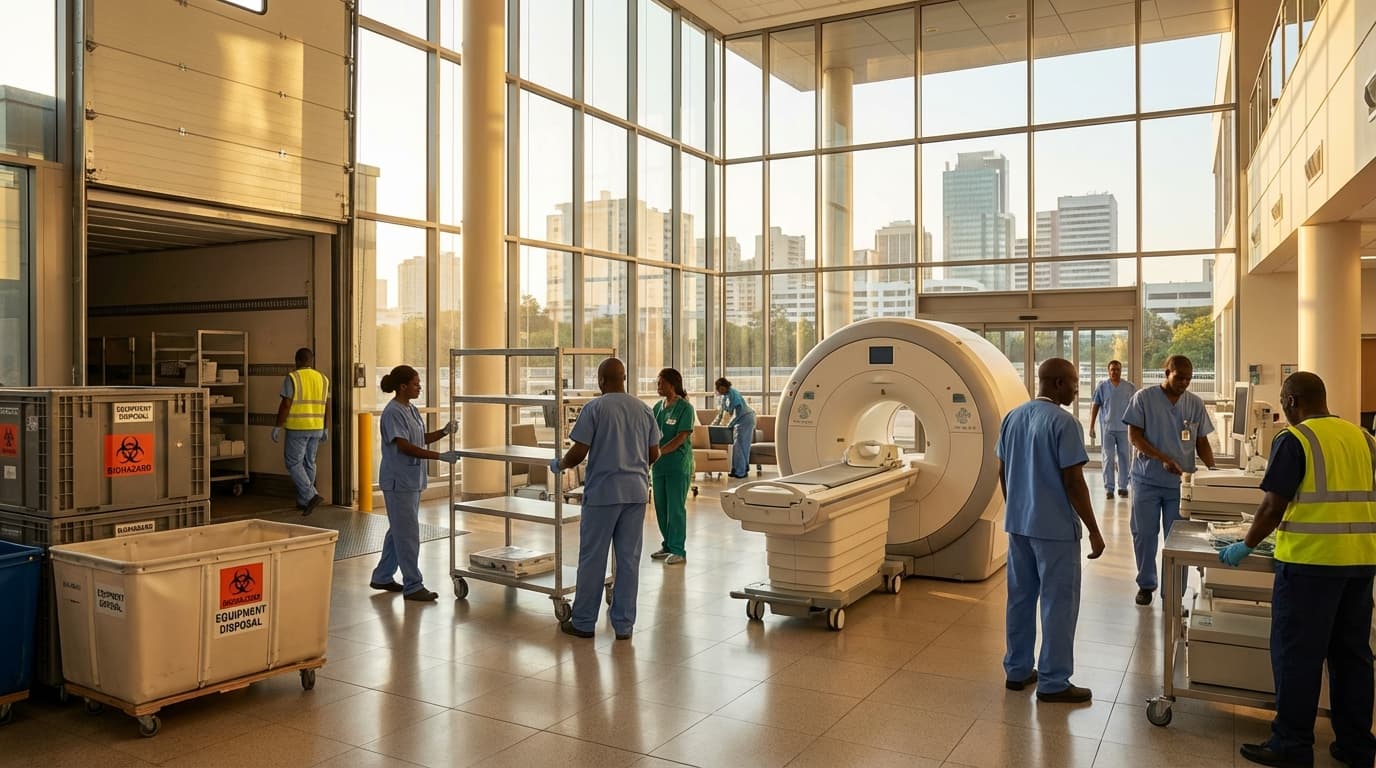
Site Restoration Service After Equipment Removal in Sudan
Engineering Excellence & Technical Support
Site Restoration Service After Equipment Removal High-standard technical execution following OEM protocols and local regulatory frameworks.
Heavy Equipment Decommissioning & Site Prep
Expert removal of large-scale industrial and agricultural machinery, followed by precise land grading and soil preparation to ensure a stable and ready surface for new land use.
Contaminant Remediation & Soil Stabilization
Comprehensive assessment and treatment of any residual contaminants (e.g., fuel, oils, chemicals) left from equipment, utilizing advanced techniques for safe soil stabilization and ecological recovery.
Native Vegetation Re-establishment
Strategic planting and nurturing of indigenous Sudanese flora to restore biodiversity, prevent erosion, and re-integrate the site with the local ecosystem for sustainable land use.
What Is Site Restoration Service After Equipment Removal In Sudan?
Site Restoration Service After Equipment Removal in Sudan refers to the comprehensive process of rehabilitating land and associated infrastructure that has been impacted by the installation, operation, and subsequent decommissioning and removal of industrial equipment. This service is critical for mitigating environmental damage, ensuring compliance with regulatory frameworks, and returning the land to a safe and usable state for its pre-existing or intended post-operational purpose. The service encompasses a multi-faceted approach involving environmental assessments, remediation activities, physical dismantling and removal, and final landscaping or repurposing.
This service is primarily required by entities that operate or have operated industrial facilities, resource extraction sites, or construction projects involving significant heavy machinery and infrastructure. In the Sudanese context, this is particularly relevant to the oil and gas sector, mining operations, large-scale agricultural infrastructure, and infrastructure development projects. The primary drivers for engaging such services include legal obligations, corporate social responsibility (CSR) commitments, and the desire to avoid long-term environmental liabilities. The objective is to address any contamination, structural damage, or ecological disruption caused during the equipment's lifecycle.
| Who Needs Site Restoration? | Typical Use Cases in Sudan |
|---|---|
| Oil and Gas Companies (Upstream, Midstream, Downstream) | Decommissioning of drilling rigs, pipelines, processing plants, storage tanks, and associated facilities. Removal of exploration and production equipment. Restoration of well sites and seismic survey areas. |
| Mining and Extractive Industries | Closure of open-pit mines and underground mines. Removal of processing equipment, crushers, and conveyors. Reclamation of tailings ponds and waste rock dumps. Restoration of quarry sites. |
| Infrastructure Development Projects (e.g., large dams, irrigation systems) | Removal of temporary construction facilities and heavy machinery. Restoration of borrow pits and staging areas. Reinstatement of disturbed land during construction. |
| Industrial Manufacturing Facilities | Dismantling and removal of production lines, heavy machinery, and storage infrastructure. Remediation of industrial spills and contamination. |
| Government and Regulatory Bodies | Oversight and enforcement of site restoration regulations for all industrial activities. Management of abandoned or legacy sites. |
Key Components of Site Restoration Service:
- Decommissioning and Demolition: Safe dismantling, removal, and disposal/recycling of all associated equipment, structures, and piping.
- Hazardous Material Management: Identification, containment, and remediation of any hazardous substances (e.g., fuels, lubricants, chemicals, heavy metals) released during operation or removal.
- Soil and Groundwater Remediation: Treatment and cleanup of contaminated soil and groundwater to meet established environmental standards.
- Waste Management: Proper handling, transportation, and disposal of all waste generated during the restoration process.
- Reinstatement of Topography: Reshaping the land to its original or a safe, stable contour.
- Revegetation and Landscaping: Restoring vegetation cover using native species to promote ecological recovery and prevent erosion.
- Monitoring and Verification: Post-restoration monitoring to ensure the effectiveness of remediation and the long-term stability of the site.
Who Needs Site Restoration Service After Equipment Removal In Sudan?
Site restoration after equipment removal in Sudan is a critical service for a range of industries and organizations operating within the country. This process ensures that land is returned to its original or an agreed-upon state, mitigating environmental impact, complying with regulations, and preparing the site for future use or handover. The need for this service spans across sectors that frequently install, operate, and then dismantle heavy machinery, infrastructure, or temporary structures.
| Target Customer Type | Key Departments Involved | Specific Needs for Restoration |
|---|---|---|
| Oil and Gas | Operations, Environmental Health & Safety (EHS), Asset Management, Procurement | Well pad decommissioning, pipeline right-of-way rehabilitation, soil remediation, vegetation re-establishment, site grading. |
| Mining | Mine Closure Planning, Environmental Compliance, Operations, Procurement | Landform reshaping, spoil heap stabilization, topsoil replacement, revegetation, watercourse restoration, groundwater monitoring. |
| Construction/Infrastructure | Project Management, Site Operations, Environmental Officers, Contract Management | Removal of temporary structures, compaction of soil, grading, removal of construction debris, re-establishment of drainage patterns. |
| Telecommunications | Network Operations, Real Estate & Site Acquisition, EHS | Removal of concrete bases, backfilling excavations, soil compaction, surface restoration (e.g., gravel, grass). |
| Government Agencies | Environmental Protection Agencies, Public Works Departments, Land Management Bureaus, Project Oversight Teams | Enforcing restoration standards, managing government-led projects, ensuring compliance by third parties. |
| NGOs/Humanitarian | Logistics, Operations Management, Program Implementation, Finance | Dismantling temporary shelters, clearing waste, returning land to a usable or natural state, basic grading. |
| Agricultural/Agribusiness | Farm Management, Operations, Sustainability Departments | Removal of temporary infrastructure, soil aeration, minor grading, reseeding. |
| Logistics/Warehousing | Operations, Facilities Management, Procurement | Removal of temporary flooring, leveling of surfaces, site clean-up. |
Target Customers & Departments Requiring Site Restoration
- {"title":"Oil and Gas Companies","description":"These are primary clients, especially those involved in exploration, extraction, and pipeline construction. They often operate in remote or environmentally sensitive areas and must restore well pads, processing facilities, and temporary access roads."}
- {"title":"Mining Operations","description":"Companies engaged in mineral extraction require extensive site restoration after mine closures or the decommissioning of processing plants and infrastructure. This includes reshaping land, revegetation, and managing water bodies."}
- {"title":"Construction and Infrastructure Developers","description":"Companies building large-scale projects like dams, power plants, roads, and bridges often lease land for temporary facilities, laydown yards, and construction camps, all of which need restoration upon project completion."}
- {"title":"Telecommunications Companies","description":"Operators installing and then decommissioning cell towers, satellite dishes, and underground cabling networks will need to restore the immediate sites around these installations."}
- {"title":"Government Agencies and Ministries","description":"Various government bodies responsible for land management, environmental protection, and public works will oversee or procure site restoration services for projects they initiate or manage, or to ensure compliance by private entities."}
- {"title":"Non-Governmental Organizations (NGOs) and Humanitarian Organizations","description":"Organizations involved in temporary infrastructure projects, such as establishing field hospitals, refugee camps, or agricultural support facilities, will need to restore these sites after their operational life."}
- {"title":"Agricultural and Agribusiness Companies","description":"Firms that set up temporary irrigation systems, processing units, or storage facilities for agricultural produce may require restoration services for the land used."}
- {"title":"Logistics and Warehousing Companies","description":"Companies that set up temporary logistical hubs or warehousing solutions, especially in remote areas or for specific projects, will need to restore the ground upon dismantling."}
Site Restoration Service After Equipment Removal Process In Sudan
This document outlines the comprehensive workflow for site restoration services following equipment removal in Sudan. Our process is designed to be transparent, efficient, and tailored to meet specific client and regulatory requirements. From the initial inquiry to the final sign-off, each step is meticulously managed to ensure a successful and environmentally responsible restoration.
| Stage | Key Activities | Deliverables | Timeline (Indicative) |
|---|---|---|---|
| Client contacts us with details of equipment removal and site. We discuss scope, objectives, and preliminary requirements. | Understanding of client needs, preliminary scope definition. | 1-3 Business Days |
| Our team visits the site to conduct a thorough assessment of the impact of equipment removal, soil conditions, vegetation, and any potential contaminants. A detailed restoration plan is developed. | Detailed site assessment report, comprehensive restoration plan, risk assessment. | 3-7 Business Days |
| Based on the assessment and plan, a detailed proposal is submitted outlining scope of work, methodologies, timelines, and costs. Upon agreement, a formal contract is signed. | Formal proposal, signed contract. | 2-5 Business Days |
| We identify and secure all necessary permits and approvals from relevant Sudanese authorities for restoration activities. | All required permits and regulatory clearances obtained. | Varies based on local regulations (e.g., 1-4 Weeks) |
| Personnel, equipment, and materials are mobilized to the site. The site is prepared by establishing safety zones, securing access, and implementing erosion control measures. | Mobilized team and resources, prepared and secured site. | 1-3 Business Days |
| Implementation of planned activities, which may include soil remediation, grading, re-vegetation, debris removal, and waste management according to the approved plan. | Completed restoration activities as per plan. | Varies based on scope and complexity (e.g., 1 Week - 2 Months) |
| Throughout the execution phase, ongoing quality control checks are performed. Detailed records and photographic evidence are maintained. | Quality control reports, photographic documentation, progress reports. | Ongoing during execution |
| All equipment and personnel are demobilized from the site. A final inspection is conducted with the client, and the restored site is formally handed over. | Final inspection report, site handover certificate. | 1-2 Business Days |
| If required by contract or regulation, periodic monitoring of the site's progress (e.g., vegetation growth, soil stability) is conducted. | Post-restoration monitoring reports. | As per contract terms (e.g., 3, 6, 12 months) |
Site Restoration Service Workflow
- Inquiry & Initial Consultation
- Site Assessment & Planning
- Proposal & Contract Finalization
- Permitting & Regulatory Approvals
- Mobilization & Site Preparation
- Execution of Restoration Activities
- Quality Control & Documentation
- Demobilization & Site Handover
- Post-Restoration Monitoring (if applicable)
Site Restoration Service After Equipment Removal Cost In Sudan
The cost of site restoration services after equipment removal in Sudan can vary significantly due to a combination of factors. These services are crucial for returning a site to its pre-construction or pre-operation state, ensuring environmental compliance and site safety. Understanding these influencing factors is key to budgeting for such projects. The pricing is typically presented in the local currency, the Sudanese Pound (SDG).
| Service Component / Site Type | Estimated Cost Range (SDG) - Low | Estimated Cost Range (SDG) - High | Notes |
|---|---|---|---|
| Basic Site Clearing & Grading (Small Site) | 50,000 | 200,000 | Includes vegetation removal and leveling. Excludes soil remediation. |
| Basic Site Clearing & Grading (Medium/Large Site) | 200,000 | 1,000,000+ | Scale of operation significantly impacts cost. May include basic debris removal. |
| Soil Remediation (Light Contamination) | 150,000 | 750,000 | Assumes localized, non-hazardous spills. Includes testing and basic treatment. |
| Soil Remediation (Moderate/Heavy Contamination) | 750,000 | 5,000,000+ | Requires extensive testing, excavation, off-site disposal, or in-situ treatment. Highly variable. |
| Revegetation & Landscaping (Basic) | 75,000 | 300,000 | Seeding, basic planting, and soil stabilization. Depends on area and plant types. |
| Revegetation & Landscaping (Advanced) | 300,000 | 1,500,000+ | Includes mature trees, irrigation systems, and complex horticultural designs. |
| Hazardous Waste Removal & Disposal | 200,000 | 10,000,000+ | Highly dependent on the type and volume of hazardous materials and disposal regulations. |
| Demolition of Minor Structures | 100,000 | 750,000 | Excludes complex industrial buildings. Includes debris removal and site cleanup. |
| Full Site Restoration (Industrial/Oil & Gas - Moderate) | 2,000,000 | 15,000,000+ | Includes a combination of clearing, grading, moderate remediation, and basic landscaping. |
| Full Site Restoration (Industrial/Oil & Gas - Complex) | 10,000,000 | 50,000,000+ | Encompasses extensive remediation, demolition, specialized waste management, and full environmental compliance. |
Key Pricing Factors for Site Restoration in Sudan:
- Site Size and Complexity: Larger and more complex sites (e.g., industrial zones, oil and gas facilities) will naturally incur higher restoration costs due to the extended area requiring attention and the potential for diverse contamination or disturbance.
- Type of Equipment Removed: The nature of the equipment itself plays a role. Heavy machinery, chemical processing units, or underground tanks may leave behind more substantial damage, contamination (soil, water), or require specialized removal and disposal methods, all impacting cost.
- Scope of Restoration Work: This is a primary driver. It can range from basic grading and revegetation to extensive soil remediation, hazardous waste removal, structural demolition, and infrastructure reinstatement. The more comprehensive the scope, the higher the cost.
- Environmental Conditions and Contamination: If the site has experienced soil or water contamination (e.g., oil spills, chemical leaks), extensive testing, assessment, and remediation will be required, significantly increasing the overall expense.
- Accessibility and Logistics: Remote or difficult-to-access locations in Sudan can drive up costs due to increased transportation expenses for labor, equipment, and materials, as well as potential challenges in waste disposal.
- Regulatory Requirements: Compliance with Sudanese environmental regulations and permits will dictate the necessary procedures and standards, which can influence the depth and cost of restoration efforts.
- Labor Costs: Wages for skilled and unskilled labor in Sudan, influenced by local economic conditions and availability of expertise, will directly impact the final price.
- Material and Equipment Costs: The price of materials for landscaping, soil amendments, construction of new features, and the rental or purchase of specialized restoration equipment will also be factored in.
- Permitting and Documentation: Obtaining necessary permits and completing required documentation for the restoration process can add administrative costs.
- Geological and Hydrological Conditions: Underlying soil types, groundwater levels, and potential for erosion can influence the methods and materials needed for effective restoration.
Affordable Site Restoration Service After Equipment Removal Options
After equipment removal, site restoration is crucial for safety, environmental compliance, and future land use. Affordable site restoration services can significantly reduce your project's overall cost. This involves a range of activities from debris clearing and soil remediation to landscaping and re-vegetation. Understanding value bundles and employing smart cost-saving strategies are key to managing these expenses effectively.
| Cost-Saving Strategy | Description | Benefits |
|---|---|---|
| Bundle Services | Combine multiple restoration tasks under a single contract with one provider. This often includes debris removal, grading, and initial landscaping. | Reduces administrative overhead, potentially unlocks volume discounts, and streamlines project management. |
| Phased Restoration | Break down the restoration into manageable phases based on priority and budget. Start with essential safety and environmental compliance tasks. | Allows for better cash flow management and flexibility to adjust plans as needed. Ensures critical issues are addressed first. |
| Material Recycling and Reuse | Prioritize recycling of removed materials (metals, concrete, etc.) and explore reusing excavated soil on-site where feasible. | Lowers disposal fees and the cost of importing new materials. Demonstrates environmental responsibility. |
| DIY or Client-Supplied Materials (for non-critical tasks) | For less technical aspects like basic landscaping or site cleanup, consider if some tasks can be performed by your team or if you can source materials at a lower cost. | Direct cost savings on labor and materials, but requires careful assessment of skill sets and potential risks. |
| Early Planning and Assessment | Conduct thorough site assessments and develop a detailed restoration plan before equipment removal begins. | Identifies potential challenges early, allowing for more accurate budgeting and avoiding costly last-minute changes. Reduces the risk of unforeseen issues. |
| Negotiate Contracts Carefully | Obtain multiple quotes from reputable restoration companies and thoroughly review contract terms, including scope of work, timelines, and payment schedules. | Ensures you're getting competitive pricing and clear expectations. Protects against unexpected charges. |
| Utilize Local Resources | Engage local contractors and material suppliers. This can often lead to lower transportation costs and quicker response times. | Supports the local economy and can reduce overall project expenses. Faster service often means less downtime. |
Key Site Restoration Activities
- Debris and Hazardous Material Removal
- Soil Testing and Remediation
- Grading and Resurfacing
- Re-vegetation and Landscaping
- Waterway and Drainage System Repair
- Fencing and Security Measures
Verified Providers In Sudan
In Sudan, access to reliable and credentialed healthcare providers is paramount. Franance Health stands out as a leading platform for verified medical professionals, offering a crucial service that bridges the gap between patients and trusted healthcare. This verification process is not just a formality; it's a commitment to quality, safety, and patient well-being. Understanding what makes Franance Health's credentials significant reveals why they represent the best choice for healthcare in Sudan.
| Benefit for Patients | Franance Health's Assurance | Why it's the Best Choice |
|---|---|---|
| Trust and Confidence | Patients can be assured they are engaging with legitimate, qualified medical professionals. | Eliminates the uncertainty of seeking care from unverified practitioners, reducing risks and anxiety. |
| Quality of Care | Verified providers adhere to high standards of medical practice and ethical conduct. | Increases the likelihood of receiving effective, safe, and evidence-based treatment. |
| Safety and Security | Background checks and license verification minimize the risk of encountering fraudulent or incompetent individuals. | Protects patients from potential harm and exploitation. |
| Specialized Expertise | Certification verification ensures access to true specialists for complex medical needs. | Allows patients to find the most appropriate and skilled doctor for their specific condition. |
| Access to Up-to-Date Medicine | CME verification guarantees providers are current with modern medical practices. | Ensures patients benefit from the latest diagnostic and treatment methodologies. |
What Franance Health Verification Entails:
- Academic and Professional Licensure: Rigorous checks to confirm that practitioners hold legitimate degrees from accredited institutions and possess current, valid licenses to practice in Sudan.
- Specialty Board Certifications: Verification of advanced training and expertise in specific medical fields, ensuring that patients are seeing specialists with proven competency.
- Continuing Medical Education (CME): Confirmation that providers are actively engaged in ongoing learning to stay abreast of the latest medical advancements and techniques.
- Clean Disciplinary Records: Thorough background checks to ensure no history of malpractice or disciplinary actions that could compromise patient care.
- Identity Verification: Robust procedures to confirm the identity of each healthcare professional, preventing impersonation and ensuring accountability.
Scope Of Work For Site Restoration Service After Equipment Removal
This Scope of Work (SOW) outlines the requirements for site restoration services following the complete removal of equipment from the designated project site. The objective is to return the site to a safe, environmentally sound, and aesthetically acceptable condition, meeting all relevant regulatory and client-specified standards.
| Task/Activity | Description | Standard Specifications/Deliverables | Acceptance Criteria |
|---|---|---|---|
| Site Assessment and Preparation | Conduct a thorough inspection of the site post-equipment removal to identify any remaining infrastructure, potential hazards, and baseline conditions. | Detailed site survey report including photographs, identified anomalies, and proposed remediation plan. | Client approval of the site assessment report and remediation plan. |
| Hazardous Material Identification and Abatement | If indicated by the site assessment, identify and safely remove any hazardous materials (e.g., oils, chemicals, asbestos, contaminated soil) in accordance with local, state, and federal regulations. | Manifests for hazardous waste disposal, certification of abatement, and analytical reports confirming removal of hazardous substances. | Confirmation of regulatory compliance for all hazardous material handling and disposal. Zero residual hazardous materials detected above regulatory limits. |
| Debris Removal and Disposal | Remove all residual construction debris, equipment parts, and unauthorized materials from the site. | Weight tickets and manifests for all disposed materials, detailing the type and destination of waste. Site cleared of all debris. | Visual confirmation of a debris-free site. Disposal records demonstrate compliance with waste management regulations. |
| Surface Repair and Grading | Repair any damage to the site surface caused by equipment removal (e.g., potholes, ruts, cracks). Grade the site to promote proper drainage and prevent erosion. | Compacted and graded surface meeting specified slopes (e.g., 2-5% for drainage), free of significant depressions or prominences. Material used for repair (e.g., soil, gravel) to be specified. | Surface is stable, drains effectively, and is visually consistent with pre-existing or specified conditions. Topographical survey confirming grade compliance. |
| Vegetation Restoration | Re-establish native or client-specified vegetation in disturbed areas to prevent erosion and restore aesthetic appeal. | Seeding, sodding, or planting of approved vegetation types. Documentation of seed mix or plant species used. Establishment of vegetation to a specified percentage of ground cover. | Vegetation established and growing at a specified density (e.g., 80% ground cover) and appearance, free of invasive species. Client approval of vegetation type and coverage. |
| Final Inspection and Sign-off | Conduct a joint inspection with the client to verify that all restoration activities are complete and meet the SOW requirements. | Final inspection report detailing all completed tasks, compliance with specifications, and any outstanding items. Formal client sign-off acknowledging completion of the SOW. | Full client acceptance of the restored site, signifying that all contractual obligations for site restoration have been met. |
Key Project Areas and Activities
- Site Assessment and Preparation
- Hazardous Material Identification and Abatement (if applicable)
- Debris Removal and Disposal
- Surface Repair and Grading
- Vegetation Restoration
- Final Inspection and Sign-off
Service Level Agreement For Site Restoration Service After Equipment Removal
This Service Level Agreement (SLA) outlines the commitment to site restoration services following the removal of equipment. It defines the response times and uptime guarantees associated with these services, ensuring a prompt and efficient return of the site to its agreed-upon condition. This SLA is a critical component of the overall service delivery, aimed at minimizing disruption and maintaining operational continuity. Key performance indicators (KPIs) for site restoration are detailed below, including timelines for initial response, commencement of work, and project completion.
| Service Level Objective | Target Timeframe | Measurement Method | Remedy/Escalation |
|---|---|---|---|
| Initial Response Time | 4 Business Hours | Timestamp of official notification to timestamp of acknowledgement/dispatch. | If target is missed, a formal explanation will be provided, and priority will be assigned to the next restoration project. If repeated, a review meeting will be scheduled. |
| Commencement of Restoration | 24 Business Hours (following site access approval) | Timestamp of acknowledgement/dispatch to timestamp of physical commencement of work. | If target is missed, a revised schedule and detailed mitigation plan will be provided. A credit of 5% of the restoration service cost may be applied if the delay exceeds 48 business hours. |
| Restoration Completion (Standard Site) | 7 Business Days (for typical restoration needs) | Timestamp of commencement of work to timestamp of final sign-off. | For delays exceeding the target, a daily credit of 2% of the restoration service cost will be applied, up to a maximum of 10% of the total restoration cost. Significant delays may trigger a full service review. |
| Restoration Completion (Complex Site) | TBD (upon initial assessment, documented in Restoration Plan) | Timestamp of commencement of work to timestamp of final sign-off. | Detailed mitigation plan and revised timelines will be provided. Progress reports will be provided daily. Remedies will be defined in the specific Restoration Plan. |
| Service Availability | 99.5% during business hours | Percentage of time the restoration team is available to receive notifications and initiate response processes during defined business hours (e.g., Mon-Fri, 8 AM - 5 PM local time, excluding public holidays). | If service availability falls below the target, a pro-rata refund for the affected period will be considered. |
Key Service Level Objectives
- Response Time: The time elapsed from the notification of a completed equipment removal and the need for site restoration to the initial acknowledgement and dispatch of a restoration team.
- Commencement of Restoration: The time elapsed from the initial response to the actual physical start of restoration activities on-site.
- Restoration Completion: The target timeframe for completing all agreed-upon site restoration tasks.
- Uptime Guarantee: While direct uptime of the restored site is dependent on the nature of the restoration (e.g., structural, landscaping), this SLA focuses on the availability of the restoration service itself to meet the defined response and completion times. The goal is to minimize the duration the site is in a non-restored state.
Frequently Asked Questions

Ready when you are
Let's scope your Site Restoration Service After Equipment Removal in Sudan project in Sudan.

Scaling healthcare logistics and technical systems across the entire continent.