
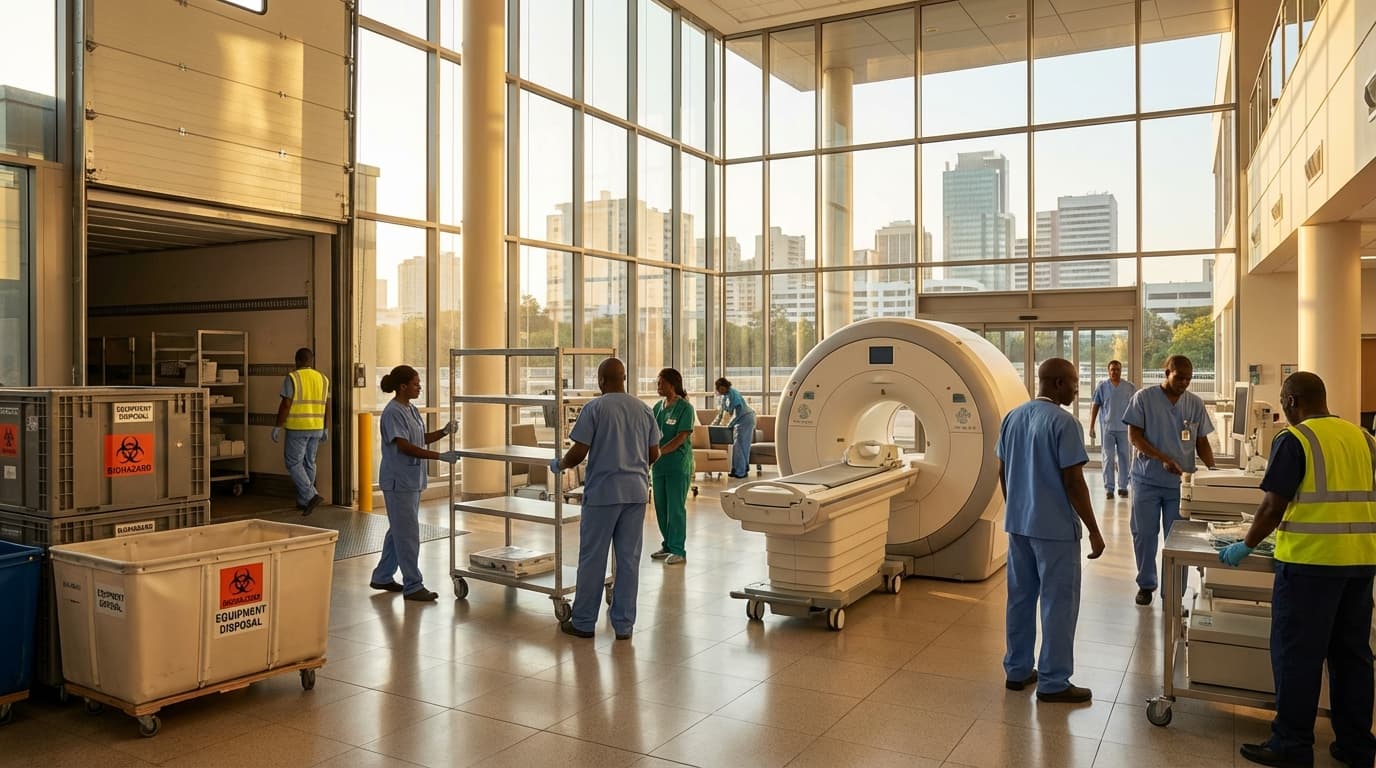
Decommissioning Service for Medical Devices in Sudan
Engineering Excellence & Technical Support
Decommissioning Service for Medical Devices High-standard technical execution following OEM protocols and local regulatory frameworks.
Hazardous Material Containment & Disposal
Expert handling and certified disposal of potentially hazardous materials (e.g., mercury, radioactive isotopes, biohazards) within medical devices, ensuring environmental safety and regulatory compliance in Sudan.
Secure Data Eradication & Privacy Protection
Implementing robust data sanitization and physical destruction protocols for devices with sensitive patient information, safeguarding privacy and complying with data protection standards in the Sudanese healthcare sector.
Logistics & Asset Tracking in Challenging Environments
Coordinated and secure transportation of decommissioned medical assets from remote or conflict-affected areas in Sudan to designated disposal facilities, utilizing specialized vehicles and tracking systems.
What Is Decommissioning Service For Medical Devices In Sudan?
Decommissioning service for medical devices in Sudan refers to the formal process of retiring a medical device from active service. This involves a systematic approach to safely and environmentally responsibly remove a device from clinical use, ensuring data security, proper disposal, and compliance with regulatory requirements. The service encompasses a range of technical, administrative, and logistical procedures designed to mitigate risks associated with outdated, damaged, or superseded medical equipment.
| Who Needs Decommissioning Services | Typical Use Cases | |||
|---|---|---|---|---|
| Hospitals and Healthcare Facilities (Public and Private): Management of aging or faulty diagnostic imaging equipment, surgical instruments, laboratory analyzers, and patient monitoring systems. | End-of-life for diagnostic imaging equipment (X-ray, CT, MRI scanners) due to obsolescence or inability to maintain service contracts. | Replacement of worn-out or outdated laboratory testing equipment to improve diagnostic accuracy and throughput. | Retirement of anesthesia machines or ventilators that have reached their service life or pose a safety risk. | Disposal of expired or damaged medical consumables with integrated electronic components. |
| Specialized Clinics and Diagnostic Centers: Ensuring the responsible disposal of specialized medical equipment. | Decommissioning of older ultrasound machines or endoscopy units. | Retiring older dental equipment or audiology testing devices. | Managing the lifecycle of specialized rehabilitation equipment. | |
| Medical Device Manufacturers and Distributors (in Sudan): Managing returned or obsolete inventory. | Disposal of demonstration units no longer in use. | Handling of devices that have been recalled or are no longer supported. | End-of-life management for devices under service agreements that have expired. | |
| Government Health Ministries and Regulatory Bodies: Overseeing the proper disposal of medical devices within national healthcare systems. | Developing and enforcing guidelines for medical device decommissioning. | Managing the disposal of equipment from public health programs. | Auditing decommissioning processes of healthcare facilities. |
Key Components of Medical Device Decommissioning in Sudan
- Technical Assessment and Verification: Confirming the device is no longer functional, obsolete, or beyond economical repair. This may involve diagnostic testing and functional evaluations.
- Data Sanitization and Destruction: Erasing or physically destroying all patient data, calibration settings, and proprietary software to maintain patient privacy and intellectual property protection. This adheres to data privacy regulations, if applicable.
- Asset Management and Documentation: Updating inventory records to reflect the device's retired status. This includes recording the date of decommissioning, method of disposal, and relevant chain of custody documentation.
- Environmental Assessment and Disposal Planning: Identifying hazardous materials within the device (e.g., mercury, lead, radioactive isotopes) and planning for their safe removal and disposal in accordance with environmental regulations and hazardous waste management protocols.
- Physical Disassembly and Preparation for Disposal: Safely disassembling the device, separating components for recycling, refurbishment, or disposal. This may involve specialized tools and techniques.
- Final Disposal/Recycling: Transporting the device or its components to licensed recycling facilities or designated waste disposal sites, ensuring compliance with local and national environmental laws.
- Decontamination (if necessary): Sterilizing or decontaminating the device to prevent the spread of infectious agents before disposal or transfer.
- Regulatory Compliance Verification: Ensuring all decommissioning activities meet the standards set by Sudanese health authorities and relevant international guidelines.
Who Needs Decommissioning Service For Medical Devices In Sudan?
Decommissioning services for medical devices are crucial in Sudan for a variety of entities that handle and manage medical equipment. This process ensures the safe, environmentally responsible, and compliant disposal or retirement of devices that are no longer in use, have reached the end of their lifecycle, or are being replaced. It is particularly vital for organizations that must adhere to strict regulations regarding data security, hazardous waste management, and asset tracking.
| Customer Type | Relevant Departments | Specific Needs for Decommissioning |
|---|---|---|
| Public and Private Hospitals | Biomedical Engineering Department, IT Department, Procurement Department, Facilities Management, Infection Control | Secure data wiping of imaging systems (MRI, CT), disposal of biohazardous waste from equipment, asset tracking for financial and regulatory purposes, compliant disposal of old equipment to free up space, safe removal of potentially hazardous materials (e.g., mercury in older equipment). |
| Government Health Ministries and Agencies | Procurement and Logistics, Health Infrastructure Department, Environmental Health Unit, Regulatory Affairs | Developing and enforcing decommissioning standards, managing national medical equipment inventories, ensuring compliance with environmental regulations, facilitating bulk disposal contracts, supporting public health facilities with decommissioning. |
| Non-Governmental Organizations (NGOs) | Logistics and Operations, Program Management, Finance | Responsible disposal of equipment donated or purchased for projects, ensuring adherence to international disposal standards, managing assets in remote or challenging locations, environmentally sound practices where resources might be limited. |
| Medical Research Institutions | Research Support Services, IT Department, Laboratory Management, Health and Safety | Secure data erasure from research-specific equipment, disposal of specialized laboratory consumables, compliance with research ethics and data privacy regulations, safe handling of experimental equipment. |
| Medical Training Colleges and Universities | Biomedical Engineering Departments, Simulation Labs, Procurement | Disposal of outdated training equipment, safe removal of materials for practical demonstrations, asset management for educational purposes, compliance with institutional and national guidelines. |
| Private Diagnostic Laboratories | Laboratory Management, IT Department, Quality Assurance | Data security for patient diagnostic information on analysers and imaging devices, compliant disposal of chemical reagents and biohazardous waste, asset lifecycle management. |
Target Customers for Medical Device Decommissioning Services in Sudan
- Public and Private Hospitals
- Specialized Clinics (e.g., diagnostic, surgical, rehabilitation)
- Government Health Ministries and Agencies
- Non-Governmental Organizations (NGOs) involved in healthcare
- Medical Research Institutions
- Medical Training Colleges and Universities
- Private Diagnostic Laboratories
- Medical Equipment Suppliers and Distributors (for end-of-life management of their stock)
- Any facility utilizing medical imaging equipment, laboratory analyzers, surgical instruments, or patient monitoring systems.
Decommissioning Service For Medical Devices Process In Sudan
This document outlines the workflow for the decommissioning service of medical devices in Sudan, from the initial inquiry to the final execution. Decommissioning is a critical process to ensure the safe, secure, and environmentally responsible retirement of medical equipment, complying with Sudanese regulations and international best practices.
| Phase | Key Activities | Responsible Parties | Documentation/Deliverables |
|---|---|---|---|
| Healthcare facility or entity contacts decommissioning service provider to inquire about services. Discussion of needs, device types, and preliminary requirements. Understanding of the scope and objectives. | Client (Healthcare Facility/Entity), Service Provider | Initial Inquiry Form, Meeting Minutes |
| On-site visit by service provider to assess the location, access, and to conduct a detailed inventory of devices to be decommissioned. Identification of device specifics (make, model, serial number, condition). | Service Provider (Technicians, Assessors), Client (Facility Representative) | Site Survey Report, Detailed Device Inventory List (including photos, condition) |
| Service provider develops a comprehensive proposal outlining the scope of work, methodology, timeline, resources, safety protocols, waste management plan, and a detailed quotation. | Service Provider | Formal Proposal Document, Itemized Quotation |
| Client reviews and accepts the proposal. Negotiation and signing of a legally binding service agreement specifying terms, conditions, liabilities, and payment schedules. | Client, Service Provider | Signed Service Agreement/Contract |
| Service provider formally notifies relevant Sudanese authorities (e.g., Ministry of Health, environmental agencies) as per regulatory requirements. Obtain any necessary permits or authorizations for decommissioning and disposal. | Service Provider, Client (for providing necessary device information) | Notification Letters to Authorities, Permit Applications/Approvals |
| On-site team (qualified technicians) safely disconnects, disassembles, and prepares devices for removal. Adherence to strict safety procedures and best practices for medical device handling. | Service Provider (Decommissioning Team) | Work Log, Safety Incident Reports (if any) |
| If applicable, secure and irreversible erasure or physical destruction of all sensitive data stored on medical devices (e.g., patient records, calibration settings) according to privacy regulations. | Service Provider (Certified Data Destruction Technicians) | Data Sanitization Certificates, Destruction Logs |
| Further disassembly of devices into manageable components. Proper packaging to prevent damage during transportation and to ensure safe handling. | Service Provider (Decommissioning Team) | Packaging Records |
| Secure transportation of decommissioned devices to designated disposal or recycling facilities. Compliance with transportation regulations for medical waste and hazardous materials. | Service Provider (Logistics Team, Certified Transporters) | Transportation Manifests, Bill of Lading |
| Ensuring proper disposal or recycling of all components, including hazardous materials. Issuance of certificates confirming environmentally sound disposal or recycling practices. | Service Provider, Certified Disposal/Recycling Facilities | Waste Disposal Certificates, Recycling Certificates |
| Compilation of a comprehensive final report detailing the entire decommissioning process, including inventory, data destruction, disposal/recycling certificates, and any encountered issues. Submission to the client. | Service Provider | Final Decommissioning Report, All Supporting Certificates and Logs |
| Client may conduct an internal audit or engage a third party to verify compliance and effectiveness of the decommissioning process. | Client, Third-Party Auditor (Optional) | Audit Report (if conducted) |
Decommissioning Service Workflow for Medical Devices in Sudan
- Inquiry and Initial Consultation
- Site Assessment and Inventory
- Proposal and Quotation
- Contract Agreement
- Notification and Authorization
- Decommissioning Execution
- Data Sanitization and Destruction
- Disassembly and Packaging
- Transportation and Disposal/Recycling
- Waste Management and Certification
- Final Reporting and Documentation
- Post-Decommissioning Audit (Optional)
Decommissioning Service For Medical Devices Cost In Sudan
Decommissioning medical devices in Sudan involves a multifaceted process with varying costs influenced by several key factors. These factors can significantly impact the final price, making it crucial for healthcare facilities to understand them before engaging decommissioning services. The process typically includes safe removal, data sanitization, proper disposal or recycling, and compliance with environmental and health regulations. The overall cost will depend on the complexity of the device, its condition, the volume of devices, and the chosen disposal method.
| Device Category | Estimated Cost Range (SDG - Sudanese Pound) | Notes |
|---|---|---|
| Small Diagnostic Devices (e.g., Blood Pressure Monitors, Thermometers, Stethoscopes) | 1,000 - 5,000 SDG | Generally straightforward, often handled with basic waste management or recycling protocols. Cost mainly for labor and basic transport. |
| Mid-Range Imaging & Laboratory Equipment (e.g., Portable X-ray, Ultrasound, Basic Analyzers) | 15,000 - 75,000 SDG | Requires more specialized disassembly, potential data wiping, and specific disposal methods for components. Transportation can be a factor. |
| Large and Complex Medical Systems (e.g., MRI, CT Scanners, Cath Labs, Ventilators) | 100,000 - 500,000+ SDG | Significant costs due to specialized engineering, hazardous material handling (if applicable), extensive data sanitization, complex disassembly, and potentially specialized transportation and disposal facilities. |
| General Hospital Furniture & Non-Electronic Equipment (e.g., Beds, Tables, Trolleys) | 500 - 3,000 SDG per item | Costs vary based on size, material, and disposal method (recycling or landfill). |
Key Pricing Factors for Medical Device Decommissioning in Sudan:
- Type and Complexity of Medical Device: Larger, more complex, or specialized equipment (e.g., MRI machines, CT scanners, anesthesia machines) will generally incur higher decommissioning costs due to specialized handling, disassembly requirements, and potential for hazardous materials.
- Condition and Age of the Device: Devices requiring extensive disassembly, those containing hazardous materials (like mercury or radioactive components), or older equipment that may be more brittle or difficult to dismantle can increase labor and disposal expenses.
- Data Sanitization Requirements: For devices storing sensitive patient data (e.g., electronic health records systems, imaging equipment), robust data sanitization procedures are mandatory. The level of sanitization required (e.g., physical destruction, secure data wiping) directly influences costs.
- Volume of Devices: Decommissioning a single device will have a different cost structure than a large-scale project involving multiple units. Economies of scale may apply for larger volumes, but increased logistical coordination can also add to overall expense.
- Disposal Method (Recycling vs. Landfill vs. Incineration): The chosen disposal method significantly impacts cost. Environmentally friendly options like specialized recycling for medical components or controlled incineration for hazardous materials are often more expensive than traditional landfill disposal, but are increasingly mandated by regulations.
- Transportation and Logistics: The distance from the healthcare facility to the decommissioning/disposal site, the size and weight of the devices, and the need for specialized transportation (e.g., for heavy machinery) will contribute to the overall cost.
- Regulatory Compliance and Documentation: Ensuring adherence to Sudanese environmental, health, and waste management regulations is paramount. Services that include comprehensive documentation, permits, and certificates of destruction/disposal will add to the price.
- Service Provider Expertise and Reputation: More experienced and reputable decommissioning service providers may charge a premium for their specialized knowledge, certified technicians, and established compliance procedures.
- Urgency of Service: If a rapid decommissioning is required, it may incur additional charges for expedited services.
Affordable Decommissioning Service For Medical Devices Options
Decommissioning medical devices is a critical and often overlooked aspect of healthcare facility management. Proper decommissioning ensures data security, compliance with regulations (like HIPAA and FDA guidelines), and responsible environmental disposal. Finding an affordable service is paramount for budget-conscious organizations. This service focuses on offering cost-effective solutions through transparent pricing, efficient processes, and flexible service options. We understand that each facility has unique needs, and our aim is to provide value without compromising on security or regulatory adherence.
| Value Bundle Type | Includes | Key Cost-Saving Benefit | Ideal For |
|---|---|---|---|
| Standard Decommissioning Bundle | On-site assessment, secure data erasure (DoD 5220.22-M compliant), physical destruction of storage media, certificate of destruction, basic logistics. | Bulk pricing on data erasure and destruction, streamlined process reduces labor costs. | Facilities with standard medical equipment and moderate data security needs. |
| Comprehensive Compliance Bundle | All of Standard Bundle, plus detailed inventory tracking, chain of custody documentation, environmental impact assessment, recycling and responsible disposal planning, extended record retention. | Reduces risk of compliance fines, consolidates multiple compliance-related tasks into one service. | Facilities requiring rigorous documentation, regulated environments, and a focus on environmental responsibility. |
| High-Volume Decommissioning Package | Customizable bundle for large-scale projects. Includes dedicated project management, bulk scheduling discounts, specialized logistics for large quantities, and tailored data security protocols. | Significant economies of scale, optimized resource allocation, and reduced per-unit costs. | Hospitals undergoing major renovations, mergers, or equipment upgrades. |
| Basic Data Sanitization Only | Remote or on-site secure data erasure from medical devices with internal storage (e.g., EMR systems, imaging equipment). | Focuses on the most critical data security component at a lower price point, suitable for devices not requiring physical destruction. | Organizations looking to secure data before resale or reuse of devices where physical destruction is not necessary. |
Understanding Value Bundles and Cost-Saving Strategies
- {"title":"Value Bundles Explained","description":"Value bundles are pre-packaged service offerings designed to provide a comprehensive solution at a more attractive price point than individual services. These bundles are tailored to common decommissioning needs, offering convenience and predictability in budgeting."}
- {"title":"Cost-Saving Strategies","description":"We employ several strategies to keep our decommissioning services affordable while maintaining high quality and security standards."}
Verified Providers In Sudan
In Sudan, ensuring access to reliable and safe healthcare is paramount. Verified providers, such as Franance Health, play a crucial role in delivering high-quality medical services. Understanding their credentials and the benefits they offer is essential for making informed healthcare decisions.
| Credential/Aspect | Franance Health's Commitment | Benefit to Patients |
|---|---|---|
| Medical Staff Qualifications | Rigorous vetting and employment of licensed, board-certified physicians and specialists. | Access to expert medical advice and treatment from highly skilled professionals. |
| International Standards Adherence | Implementation of protocols aligned with global best practices in healthcare delivery and patient safety. | Assurance of safe, effective, and internationally recognized medical care. |
| Technology and Equipment | Continuous investment in state-of-the-art diagnostic and treatment technologies. | Accurate diagnoses, minimally invasive procedures, and improved treatment outcomes. |
| Patient Experience | Focus on compassionate care, clear communication, and respect for patient privacy and autonomy. | A supportive and trustworthy healthcare environment, leading to greater patient satisfaction and trust. |
| Quality Assurance | Regular internal audits and quality control measures to ensure consistent service excellence. | Reliable and consistently high-quality healthcare services with minimized risks. |
Why Franance Health Stands Out
- Franance Health is a leading healthcare provider in Sudan, recognized for its commitment to patient well-being and ethical medical practices.
- Their team comprises highly qualified and experienced medical professionals with diverse specializations.
- Franance Health adheres to stringent international standards for medical care, safety, and hygiene.
- They offer a comprehensive range of medical services, from general consultations to specialized treatments and diagnostic procedures.
- Investment in modern medical technology and equipment ensures accurate diagnoses and effective treatments.
- Patient-centric approach, prioritizing empathy, clear communication, and personalized care plans.
- Strong emphasis on continuous professional development for their staff, keeping them updated with the latest medical advancements.
- Robust internal quality assurance mechanisms to maintain the highest standards of care.
- Positive patient testimonials and a growing reputation for excellence within the Sudanese healthcare landscape.
Scope Of Work For Decommissioning Service For Medical Devices
This Scope of Work (SOW) outlines the requirements for the decommissioning of medical devices. It specifies the technical deliverables and standard specifications to ensure safe, compliant, and environmentally responsible removal of medical equipment from service. The decommissioning process encompasses activities from initial planning to final documentation, adhering to industry best practices and regulatory guidelines.
| Stage | Technical Deliverable | Standard Specification/Requirement | Key Considerations |
|---|---|---|---|
| Planning and Preparation | Decommissioning Plan | Comprehensive plan including device inventory, risk assessment, timelines, resource allocation, disposal strategy, and regulatory compliance checks. | Identify all devices, their current status, and regulatory requirements for decommissioning. |
| Planning and Preparation | Site Survey Report | Detailed report of the physical environment where devices are located, including access routes, power requirements, and potential hazards. | Ensure safe access and removal pathways. |
| System Shutdown and Isolation | Shutdown Procedures Documentation | Detailed step-by-step procedures for safely powering down and isolating each device from its power source, network, and any connected systems. | Prevent accidental activation or data loss during shutdown. |
| System Shutdown and Isolation | System Isolation Verification | Confirmation that the device is fully isolated and cannot be inadvertently powered on or accessed. | Physical and electrical verification. |
| Data Eradication and Security | Data Eradication Report | Documentation confirming that all sensitive patient and operational data has been securely and irretrievably erased according to established standards (e.g., NIST SP 800-88, HIPAA guidelines). | Protect patient privacy and comply with data protection regulations. |
| Data Eradication and Security | Data Destruction Certificates | Certificates of data destruction issued by an authorized third party, if applicable. | Provides auditable proof of data erasure. |
| Physical Removal and Transportation | Device Removal and Handling Plan | Procedures for safe and secure physical removal, including any required disassembly, packaging, and labeling of devices. | Prevent damage to devices and the environment. |
| Physical Removal and Transportation | Transportation Manifest | Documentation detailing the devices being transported, their origin and destination, and compliance with transportation regulations for potentially hazardous materials. | Ensure chain of custody and regulatory compliance. |
| Environmental Disposal and Recycling | Waste Disposal Certificates | Certificates from licensed waste disposal facilities confirming proper and environmentally sound disposal of non-recyclable components. | Adhere to environmental regulations and minimize landfill waste. |
| Environmental Disposal and Recycling | Recycling Reports | Documentation from certified recyclers detailing the materials recycled and the responsible handling of hazardous components (e.g., mercury, lead). | Promote sustainability and responsible resource management. |
| Documentation and Certification | Final Decommissioning Report | A comprehensive report summarizing all decommissioning activities, including dates, personnel involved, disposal methods, and any issues encountered. | Provides a complete record of the decommissioning process. |
| Documentation and Certification | Device Certificate of Decommissioning | A formal certificate issued for each decommissioned device, attesting that it has been removed from service according to the defined scope and standards. | Confirms the device is no longer in active use. |
| Documentation and Certification | Asset Register Update | Confirmation that the organization's asset register has been updated to reflect the removal of the decommissioned devices. | Maintain accurate inventory records. |
Key Stages of Decommissioning
- Planning and Preparation
- System Shutdown and Isolation
- Data Eradication and Security
- Physical Removal and Transportation
- Environmental Disposal and Recycling
- Documentation and Certification
Service Level Agreement For Decommissioning Service For Medical Devices
This Service Level Agreement (SLA) outlines the guaranteed response times and uptime for the Decommissioning Service for Medical Devices provided by [Your Company Name] to [Client Name]. This SLA aims to ensure timely and reliable service delivery throughout the decommissioning process, from initial notification to final data sanitization and disposal.
| Service Component | Response Time Guarantee | Uptime Guarantee |
|---|---|---|
| Initial Service Request Acknowledgment & Planning: Time to acknowledge a Service Request and commence initial planning/scheduling of the decommissioning process. | 4 Business Hours | N/A (N/A for this specific component, as it's reactive based on requests) |
| On-Site Technician Dispatch (for initial site assessment/equipment staging, if applicable): Time to dispatch a technician after Service Request confirmation and scheduling. | Within 2 Business Days of Scheduled Start Date | N/A |
| Data Sanitization Service Availability (remote/coordination): Availability of our team and systems to support or initiate data sanitization protocols. | N/A (Not applicable as a continuous uptime metric, managed per service request) | 99.5% during scheduled service windows |
| Physical Destruction/Disposal Coordination: Availability of our team to schedule and oversee the physical removal and disposal. | N/A (Managed per service request) | 99.5% during scheduled service windows |
| Support Channel Availability (Phone & Email): Availability of [Your Company Name]'s support channels for urgent inquiries or issue resolution related to active decommissioning projects. | 1 Business Hour for Critical Incidents, 4 Business Hours for Standard Inquiries | 99.9% |
Definitions
- Decommissioning Service: The comprehensive process of safely and securely removing medical devices from service, including data sanitization, physical destruction, and environmentally responsible disposal, in compliance with all relevant regulations.
- Response Time: The maximum time allowed for [Your Company Name] to acknowledge and initiate troubleshooting or action upon receiving a Service Request.
- Uptime: The percentage of time the Decommissioning Service is available and operational as defined within the scope of this SLA. Uptime specifically refers to the availability of our support and coordination channels required to initiate and manage the decommissioning process.
- Service Request: A formal notification from [Client Name] requesting the commencement of the decommissioning process for specific medical devices.
- Critical Incident: An event that significantly impairs or prevents the initiation or continuation of the decommissioning service, requiring immediate attention.
- Scheduled Maintenance: Planned downtime for necessary system updates, upgrades, or maintenance activities. Advance notice will be provided.
Frequently Asked Questions

Ready when you are
Let's scope your Decommissioning Service for Medical Devices in Sudan project in Sudan.

Scaling healthcare logistics and technical systems across the entire continent.