
Uptime, Downtime & Root-Cause Analysis Reporting Service in Sudan
Engineering Excellence & Technical Support
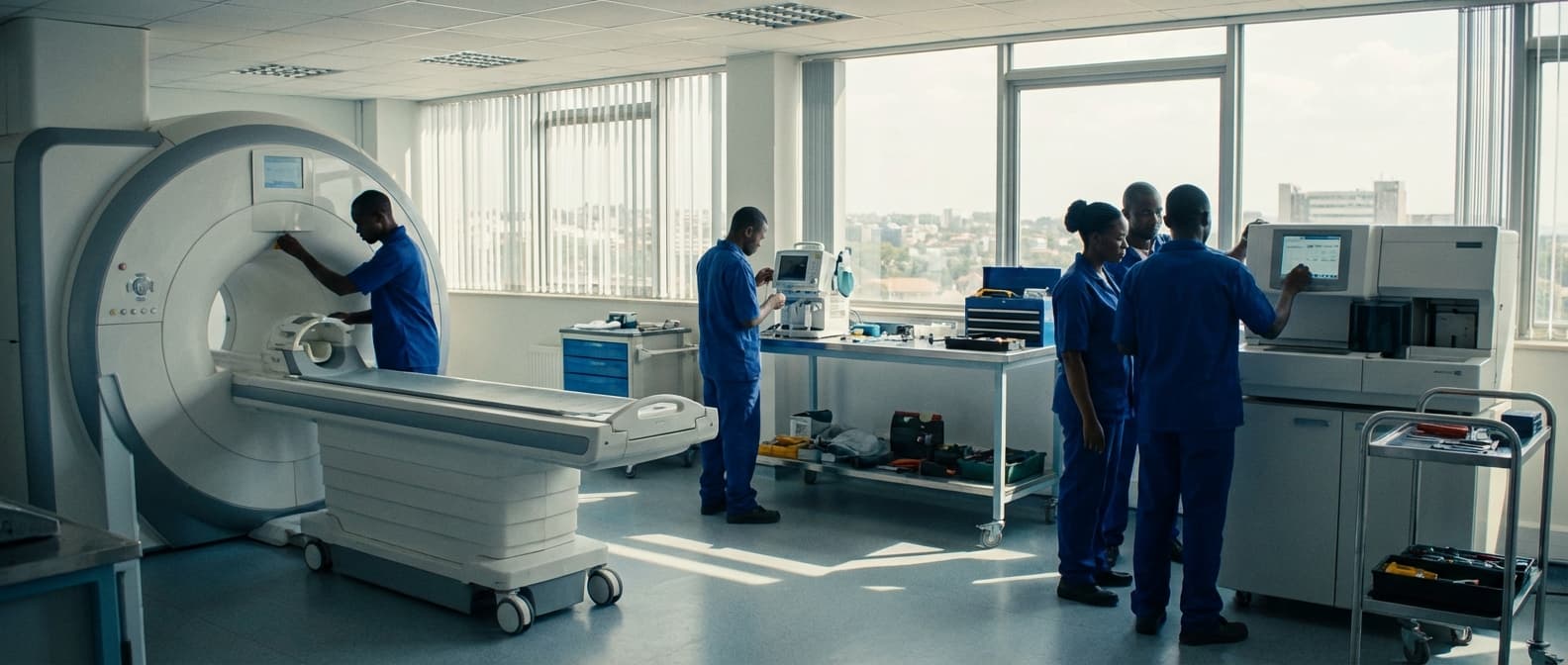
Uptime, Downtime & Root-Cause Analysis Reporting Service High-standard technical execution following OEM protocols and local regulatory frameworks.
Proactive Uptime Monitoring
Our service in Sudan leverages cutting-edge AI-driven monitoring tools to continuously track the health and performance of your critical IT infrastructure. We provide real-time alerts and detailed dashboards, ensuring maximum system availability and minimizing potential disruptions before they impact your business.
Rapid Downtime Resolution
When incidents do occur, our specialized Sudan-based support teams are equipped with advanced diagnostic capabilities to identify and resolve downtime issues with unparalleled speed. We focus on minimizing Mean Time To Repair (MTTR) through streamlined escalation processes and expert troubleshooting.
In-depth Root-Cause Analysis (RCA)
Beyond simply fixing issues, we provide comprehensive Root-Cause Analysis reports tailored for the Sudanese market. Our detailed investigations uncover the underlying factors contributing to downtime, enabling you to implement strategic preventative measures and enhance long-term system resilience.
What Is Uptime, Downtime & Root-cause Analysis Reporting Service In Sudan?
Uptime, Downtime & Root-Cause Analysis (RCA) Reporting Service in Sudan refers to a comprehensive offering designed to monitor, document, and analyze the operational availability and unavailability of critical IT infrastructure, applications, and services within organizations operating in Sudan. This service provides structured insights into system performance, identifies the underlying causes of service disruptions, and facilitates the implementation of corrective and preventative measures. It is crucial for maintaining business continuity, optimizing resource allocation, and enhancing overall service reliability in the Sudanese operational landscape.
| Who Needs This Service? | Typical Use Cases | ||||||||
|---|---|---|---|---|---|---|---|---|---|
| Businesses & Enterprises: Particularly those heavily reliant on IT for core operations, customer service, and data management. This includes financial institutions, telecommunications providers, e-commerce platforms, and manufacturing companies. | Financial Services (Banks, Microfinance): Ensuring continuous availability of online banking, ATM networks, and payment processing systems is paramount for customer trust and regulatory compliance. | Telecommunications Providers: Maintaining uninterrupted network services (voice, data, internet) is essential for subscriber satisfaction and revenue. | Government Agencies & Public Sector: Critical infrastructure monitoring, e-governance platforms, and public service delivery systems require high availability. | Healthcare Providers: Uninterrupted access to electronic health records (EHR), medical imaging systems, and patient monitoring devices is vital for patient care. | IT Service Providers & Managed Service Providers (MSPs): Offering this service to their clients as a value-added component of their IT management offerings. | Critical Infrastructure Operators: Power grids, water treatment facilities, and transportation networks often rely on IT for control and management systems. | Organizations with Remote or Distributed Operations: Ensuring seamless connectivity and access to resources for employees across various locations in Sudan. | E-commerce & Retail Businesses: Guaranteeing that online storefronts and inventory management systems are consistently accessible to customers. | Educational Institutions: Maintaining the availability of learning management systems (LMS), student portals, and administrative databases. |
Key Components of the Service:
- Uptime Monitoring: Continuous, real-time surveillance of systems and applications to verify their availability and operational status. This includes metrics such as availability percentage, response times, and transaction success rates.
- Downtime Tracking: Accurate logging and timestamping of all periods of service unavailability. This encompasses planned maintenance windows and unplanned outages, detailing the duration and impact of each.
- Incident Reporting: Generation of standardized incident tickets or reports for every detected anomaly or outage, capturing essential details like affected systems, severity level, and initial impact assessment.
- Root-Cause Analysis (RCA): A systematic investigation process to identify the fundamental reasons behind service disruptions. This involves data collection, analysis of logs, configuration reviews, and stakeholder interviews to pinpoint the primary contributing factors.
- Reporting & Analytics: Production of regular (e.g., daily, weekly, monthly) and ad-hoc reports summarizing uptime/downtime trends, common causes of failure, Mean Time Between Failures (MTBF), Mean Time To Repair (MTTR), and other key performance indicators (KPIs).
- Recommendations & Action Plans: Development of actionable recommendations derived from RCA findings to prevent recurrence of similar issues. This can include infrastructure upgrades, process improvements, patching strategies, or enhanced training.
Who Needs Uptime, Downtime & Root-cause Analysis Reporting Service In Sudan?
In Sudan, reliable operations are crucial for economic growth and public services. Businesses and government entities that depend on consistent performance of their IT infrastructure, machinery, and critical systems require robust reporting on uptime, downtime, and the underlying causes of any disruptions. This service helps them maintain operational continuity, minimize financial losses, and improve overall efficiency and customer satisfaction.
| Customer Type | Key Departments Involved | Primary Needs/Concerns |
|---|---|---|
| Telecommunications | Network Operations Center (NOC), IT Operations, Service Assurance, Engineering | Network availability, service continuity, customer satisfaction, identifying recurring network faults. |
| Financial Institutions | IT Operations, Risk Management, Compliance, Business Continuity Planning (BCP), Operations | Transaction integrity, customer trust, regulatory adherence, minimizing financial impact of outages. |
| Government Agencies | IT Department, Service Delivery Units, Public Works, Emergency Services | Uninterrupted service delivery, public safety, efficient resource allocation, accountability. |
| Oil and Gas | Operations, IT Infrastructure Management, Maintenance, Safety & Compliance | Production efficiency, asset integrity, safety protocols, minimizing environmental risks from downtime. |
| Manufacturing | Production Management, Maintenance, IT Operations, Quality Control | Minimizing production stoppages, optimizing machine utilization, reducing waste, controlling operational costs. |
| Healthcare | IT Department, Clinical Engineering, Patient Care Units, Administration | 24/7 availability of critical medical systems, patient safety, data integrity, operational efficiency. |
| Cloud & Data Centers | Data Center Operations, Network Engineering, Systems Administration, Customer Support | SLAs (Service Level Agreements) adherence, client satisfaction, infrastructure reliability, proactive issue resolution. |
Target Customers and Departments for Uptime, Downtime & Root-Cause Analysis Reporting Service in Sudan:
- Telecommunications Companies: Essential for maintaining network availability and service quality for millions of users.
- Financial Institutions (Banks, Microfinance): Downtime directly impacts transactions, customer trust, and regulatory compliance.
- Government Agencies & Public Sector: Critical for delivering essential services like healthcare, education, and utilities without interruption.
- Oil and Gas Sector: Operational continuity is paramount for safety, production, and revenue generation.
- Manufacturing and Industrial Enterprises: Unplanned downtime leads to significant production losses and increased operational costs.
- Logistics and Transportation Companies: Ensuring timely delivery and efficient operations relies heavily on system availability.
- Healthcare Providers (Hospitals, Clinics): Critical systems must be operational 24/7 to support patient care and medical diagnostics.
- Cloud Service Providers & Data Centers: Guaranteeing the uptime of their infrastructure for their clients is their core business.
- Internet Service Providers (ISPs): Maintaining a stable internet connection is vital for both consumers and businesses.
- E-commerce Platforms & Online Services: Any downtime results in lost sales and customer churn.
- Utilities (Electricity, Water): Public services that directly impact daily life and require uninterrupted operation.
- Mining Sector: Efficient operations and safety depend on the reliable functioning of heavy machinery and IT systems.
- Agricultural Technology Providers: Ensuring systems for irrigation, monitoring, and logistics are always available.
Uptime, Downtime & Root-cause Analysis Reporting Service Process In Sudan
This document outlines the workflow for the Uptime, Downtime & Root-Cause Analysis Reporting Service offered in Sudan. This service aims to provide clients with comprehensive reports detailing system availability, periods of disruption, and the underlying causes of those disruptions. The process is designed to be transparent, efficient, and to deliver actionable insights for improvement.
| Stage | Description | Key Activities | Deliverables/Outcomes | Responsible Parties |
|---|---|---|---|---|
| Inquiry & Requirements Gathering | Initial contact from a client seeking the Uptime, Downtime & Root-Cause Analysis Reporting Service. | Client contact, understanding of scope, identification of systems/services to monitor, desired reporting frequency and format, specific concerns or historical issues. | Clear understanding of client needs, initial scope definition. | Client, Service Provider Sales/Consultant |
| Service Agreement & Planning | Formalizing the service engagement and outlining the operational plan. | Proposal generation, contract negotiation and signing, detailed service level agreement (SLA) definition, agreement on monitoring tools and methodologies, scheduling of kick-off meeting. | Signed service agreement, detailed project plan, defined SLAs, agreed-upon monitoring strategy. | Client, Service Provider Legal/Project Management |
| Data Collection & Monitoring | Continuous or scheduled gathering of relevant system and service performance data. | Deployment/configuration of monitoring tools, active monitoring of uptime/downtime events, collection of logs, performance metrics, error messages, user reports. | Raw monitoring data, event logs, system performance statistics. | Service Provider Technical Team |
| Analysis & Root-Cause Identification | Processing collected data to identify patterns, anomalies, and the fundamental reasons for downtime. | Data correlation, trend analysis, identification of recurring issues, investigation of error messages, interviews with IT staff (if necessary), application of diagnostic techniques. | Identified downtime events, confirmed root causes, contributing factors. | Service Provider Technical Analysts |
| Report Generation & Review | Compilation of findings into a structured and informative report. | Drafting of the report (including uptime statistics, downtime incidents, root cause analysis, impact assessment), internal quality assurance review of the report content and accuracy. | Draft report, finalized report. | Service Provider Technical Analysts, Quality Assurance Team |
| Report Delivery & Presentation | Sharing the findings with the client in an understandable and actionable format. | Formal submission of the report, presentation of findings to client stakeholders (in-person or virtual), Q&A session. | Final Uptime, Downtime & Root-Cause Analysis Report, clear understanding of findings by the client. | Service Provider Project Manager, Technical Analysts, Client Stakeholders |
| Follow-up & Recommendations Implementation Support | Assisting the client in leveraging the report's insights for improvement. | Discussing recommended corrective actions, providing guidance on implementation strategies, offering ongoing support or specialized services for remediation. | Client-driven improvements, enhanced system reliability, potential for reduced future downtime. | Service Provider Project Manager, Technical Consultants, Client IT Team |
Workflow Stages
- Inquiry & Requirements Gathering
- Service Agreement & Planning
- Data Collection & Monitoring
- Analysis & Root-Cause Identification
- Report Generation & Review
- Report Delivery & Presentation
- Follow-up & Recommendations Implementation Support
Uptime, Downtime & Root-cause Analysis Reporting Service Cost In Sudan
Providing Uptime, Downtime, and Root-Cause Analysis (RCA) reporting services in Sudan involves several cost factors that influence the final price. These services are crucial for businesses relying on stable IT infrastructure and operational continuity. The pricing is typically determined by the complexity of the systems being monitored, the frequency and depth of reporting required, the expertise of the analysts, and the ongoing support needs. Clients in Sudan will find that costs are generally quoted and settled in Sudanese Pounds (SDG).
| Service Component | Estimated Price Range (SDG) | Notes |
|---|---|---|
| Basic Uptime/Downtime Monitoring & Reporting (Monthly) | 50,000 - 150,000 | Covers monitoring of a few key systems, with standard weekly/monthly reports. Suitable for small businesses. |
| Comprehensive Uptime/Downtime Monitoring & Reporting (Monthly) | 150,000 - 400,000 | Includes a broader range of systems, more frequent reporting (daily/weekly), and basic incident notification. For medium-sized businesses. |
| Standard Root-Cause Analysis (RCA) Report (Per Incident) | 75,000 - 250,000 | For typical incidents, involving analysis of logs and immediate factors. Price varies based on incident complexity. |
| In-depth RCA & Preventative Recommendations (Per Incident) | 200,000 - 700,000+ | For complex or recurring incidents, requiring deep technical investigation, identifying underlying systemic issues, and proposing long-term solutions. |
| Managed Service for Uptime, Downtime & RCA (Monthly) | 300,000 - 1,000,000+ | A bundled service offering continuous monitoring, real-time alerts, and proactive RCA for an entire IT infrastructure. Price scales with the size and complexity of the environment. |
| Setup and Integration Fee | 100,000 - 500,000+ | One-time fee for configuring monitoring tools, integrating with existing systems, and initial setup. |
Key Pricing Factors for Uptime, Downtime & RCA Reporting Services in Sudan
- Scope of Services: This includes the number of systems or applications to be monitored, the level of detail in downtime detection (e.g., network, application, or server level), and the comprehensiveness of RCA reports.
- Reporting Frequency and Depth: Daily, weekly, monthly, or ad-hoc reports. The depth of analysis in RCA reports (e.g., simple incident logs vs. in-depth technical investigations) significantly impacts cost.
- Monitoring Tools and Infrastructure: If the service provider utilizes proprietary or advanced monitoring tools, or if custom integration is required, this will factor into the price.
- Analyst Expertise and Experience: Highly skilled and experienced IT professionals with specialized knowledge in RCA and incident management command higher rates.
- Service Level Agreements (SLAs): The guaranteed uptime levels and response times for incident detection and initial analysis will influence the cost. Stricter SLAs usually mean higher prices.
- On-site vs. Remote Support: While most RCA is remote, any requirement for on-site presence for diagnostics or data collection will add to the cost.
- Data Retention and Storage: The duration for which historical uptime/downtime data and RCA reports are stored can affect pricing, especially for long-term archival needs.
- Contract Duration: Longer-term contracts may offer volume discounts.
- Complexity of IT Environment: The more diverse and complex an organization's IT infrastructure, the more effort and expertise is required for accurate monitoring and analysis.
Affordable Uptime, Downtime & Root-cause Analysis Reporting Service Options
This document outlines affordable options for Uptime, Downtime, and Root-Cause Analysis (RCA) reporting services. We aim to provide clarity on value bundles and effective cost-saving strategies to ensure you receive crucial insights without breaking the budget.
| Value Bundle | Included Services | Key Benefits | Typical Use Cases | Estimated Price Range (Monthly/Annual - Indicative) |
|---|---|---|---|---|
| Basic Monitoring & Alerts | Uptime checks (e.g., every 5-15 minutes), basic downtime alerts (email/SMS). | Cost-effective for essential availability tracking. Immediate notification of outages. | Small businesses, personal projects, non-critical applications. | $10 - $50 / month |
| Standard Uptime & Downtime Reporting | More frequent uptime checks, detailed downtime logs, basic historical reporting, simple dashboards. | Provides clear visibility into service performance. Identifies frequent but minor issues. | Medium-sized businesses, websites, internal applications. | $50 - $200 / month |
| Comprehensive RCA & Performance Analytics | All of Standard, plus advanced RCA features (e.g., log analysis integration, performance metrics), trend analysis, customizable reports, SLA compliance tracking. | Deep understanding of system behavior. Proactive issue identification and prevention. Data-driven decision-making. | Enterprises, mission-critical systems, SaaS providers. | $200 - $1000+ / month |
| On-Demand RCA Consultation | Focuses solely on in-depth RCA for specific incidents, with expert analysis and recommendations. (May be an add-on to monitoring services). | Expert insights for complex or recurring issues. Can save significant internal resources. | Any business experiencing significant or persistent problems. | Varies based on complexity and retainer; $500 - $5000+ per incident/project. |
Understanding the Core Services
- Uptime Reporting: Tracks the availability of your systems, applications, or services over a defined period. Essential for demonstrating reliability and meeting Service Level Agreements (SLAs).
- Downtime Reporting: Documents the duration and impact of service interruptions. Crucial for identifying recurring issues and quantifying losses.
- Root-Cause Analysis (RCA): A systematic process to investigate the underlying reasons for a problem (downtime). RCA helps prevent future occurrences by addressing the fundamental causes, not just the symptoms.
- Reporting Service: The delivery mechanism for these insights, often through dashboards, email alerts, or comprehensive reports.
Verified Providers In Sudan
Navigating the healthcare landscape in Sudan can be challenging. Ensuring you receive care from verified and reputable providers is paramount to your well-being. Franance Health stands out as a leader in this regard, offering a network of credentialed professionals dedicated to providing high-quality medical services. This commitment to verification and excellence makes Franance Health the optimal choice for individuals seeking reliable healthcare in Sudan.
| Provider Type | Franance Health Verification Standard | Benefits for Patients |
|---|---|---|
| General Practitioners | Valid Sudanese Medical License, verified educational qualifications, minimum of 2 years post-qualification experience. | Access to primary care, accurate diagnoses, and referrals to specialists. |
| Specialists (e.g., Cardiologists, Pediatricians, Dermatologists) | Specialty board certification (where applicable), extensive training and experience in their field, peer reviews. | Expertise in specific medical conditions, advanced treatment options, and specialized care. |
| Diagnostic Centers (e.g., Radiology, Pathology) | Accreditation from relevant Sudanese health authorities, qualified technicians and radiologists, up-to-date equipment. | Accurate and reliable diagnostic results, supporting effective treatment planning. |
| Hospitals and Clinics | Licensing from the Ministry of Health, adherence to safety and hygiene protocols, availability of essential medical equipment and qualified staff. | Comprehensive medical services, surgical procedures, and inpatient care in a safe environment. |
Why Franance Health is the Best Choice for Verified Providers in Sudan:
- Rigorous Credentialing Process: Franance Health meticulously vets all healthcare professionals within its network. This involves a thorough review of licenses, certifications, educational backgrounds, and professional experience to ensure adherence to the highest standards.
- Commitment to Quality Care: Beyond basic verification, Franance Health actively monitors patient feedback and provider performance. This continuous quality assurance ensures that patients consistently receive compassionate and effective medical treatment.
- Access to a Diverse Range of Specialties: Whether you need a general practitioner, a specialist, or diagnostic services, Franance Health connects you with a comprehensive network of verified providers across various medical disciplines.
- Enhanced Patient Safety and Trust: By partnering exclusively with credentialed providers, Franance Health significantly reduces the risk of medical errors or malpractice, fostering a secure and trustworthy healthcare experience for all.
- Streamlined Access to Care: Franance Health simplifies the process of finding and booking appointments with verified healthcare professionals, saving you time and stress.
Scope Of Work For Uptime, Downtime & Root-cause Analysis Reporting Service
This Scope of Work (SOW) outlines the requirements for a Uptime, Downtime, and Root-Cause Analysis (RCA) Reporting Service. The service will provide comprehensive reporting and analysis to identify the causes of service interruptions, quantify their impact, and recommend preventative measures. The technical deliverables will adhere to specified standards to ensure consistency, accuracy, and actionable insights.
| Deliverable Name | Description | Frequency | Format/Standard | Key Information Included |
|---|---|---|---|---|
| Uptime/Downtime Summary Report | Provides an overview of system availability over a defined period. Includes overall uptime percentage, total downtime duration, and identification of services affected. | Weekly, Monthly, Quarterly | PDF, CSV | Uptime Percentage, Downtime Duration (hours/minutes), Affected Services, SLA Status |
| Downtime Incident Report | Detailed report for each individual downtime incident. Includes start/end times, duration, affected systems/services, impact assessment, and initial troubleshooting steps. | As incidents occur (within 24 hours of resolution) | PDF, HTML | Incident ID, Start Time, End Time, Duration, Affected Components, Business Impact, Severity Level |
| Root-Cause Analysis (RCA) Report | In-depth analysis of significant downtime incidents to determine the underlying causes. Focuses on identifying 'why' the incident occurred and providing recommendations for prevention. | For incidents exceeding a defined duration/severity threshold (e.g., >1 hour downtime or P1/P2 incidents) | PDF, Confluence/Wiki format | Problem Statement, Timeline of Events, Root Cause(s) (e.g., hardware failure, software bug, human error), Contributing Factors, Impact Assessment, Corrective Actions, Preventative Actions, Owners, Due Dates |
| Trend Analysis Report | Analyzes aggregated downtime data over time to identify recurring issues, common failure patterns, and areas requiring systemic improvement. | Monthly, Quarterly, Annually | PDF, PowerPoint | Downtime Trends by Service/Component, Common Root Causes, Mean Time Between Failures (MTBF), Mean Time To Recover (MTTR), Recommendations for Improvement |
| Service Level Agreement (SLA) Performance Report | Measures performance against contractual SLA commitments for uptime and availability. Highlights any breaches or areas of concern. | Monthly, Quarterly | PDF, CSV | SLA Metrics, Uptime vs. Target, Downtime vs. Target, SLA Breach Notifications |
Key Objectives of the Reporting Service
- Accurately track and report on system uptime and downtime.
- Conduct thorough root-cause analysis for all significant downtime events.
- Provide clear, concise, and actionable reports to stakeholders.
- Identify trends and patterns in downtime to facilitate proactive measures.
- Measure the impact of downtime in terms of business cost, user experience, and SLA adherence.
Service Level Agreement For Uptime, Downtime & Root-cause Analysis Reporting Service
This Service Level Agreement (SLA) outlines the guaranteed uptime, acceptable downtime, and reporting procedures for the Root-Cause Analysis (RCA) service. This SLA applies to all active subscriptions of the RCA service.
| Metric | Guarantee | Measurement Period | Notes |
|---|---|---|---|
| Uptime Guarantee | 99.9% | Per Calendar Month | Excludes Scheduled Maintenance. |
| Maximum Scheduled Maintenance per Month | 4 hours | Per Calendar Month | Scheduled with at least 48 hours notice. |
| Maximum Unscheduled Downtime per Month | 43.2 minutes (0.1% of 720 hours) | Per Calendar Month | Any downtime exceeding this may trigger SLA credits. |
| Incident Response Time (Critical Incidents) | < 30 minutes | From incident logging | Critical incidents are defined as complete service outage impacting all users. |
| Incident Response Time (High Priority Incidents) | < 1 hour | From incident logging | High priority incidents are defined as partial service degradation affecting a significant number of users. |
| Incident Response Time (Medium Priority Incidents) | < 4 hours | From incident logging | Medium priority incidents are defined as minor service degradation or non-critical feature issues. |
| Root-Cause Analysis (RCA) Report Delivery (Post-Resolution) | Within 72 hours | Following resolution of a Critical or High Priority Incident | Report will detail the incident, its impact, identified root cause, and preventative measures. |
Key Definitions
- Uptime: The percentage of time the RCA service is available and functioning as intended, measured over a calendar month.
- Downtime: The percentage of time the RCA service is unavailable or significantly degraded, preventing users from accessing or utilizing its core functionalities.
- Scheduled Maintenance: Planned periods of downtime announced in advance, during which maintenance or upgrades are performed on the RCA service. This time is generally excluded from Uptime calculations.
- Unscheduled Downtime: Any period of Downtime that is not Scheduled Maintenance.
- Root-Cause Analysis (RCA) Report: A documented investigation into the underlying cause of a service incident, provided by the RCA service.
- Incident: Any event that causes the RCA service to be unavailable or significantly degraded.
- Response Time: The time taken for our support team to acknowledge and begin working on a reported incident after it has been logged.
- Resolution Time: The time taken to resolve an incident and restore full service functionality.
Frequently Asked Questions

Ready when you are
Let's scope your Uptime, Downtime & Root-Cause Analysis Reporting Service in Sudan project in Sudan.

Scaling healthcare logistics and technical systems across the entire continent.