
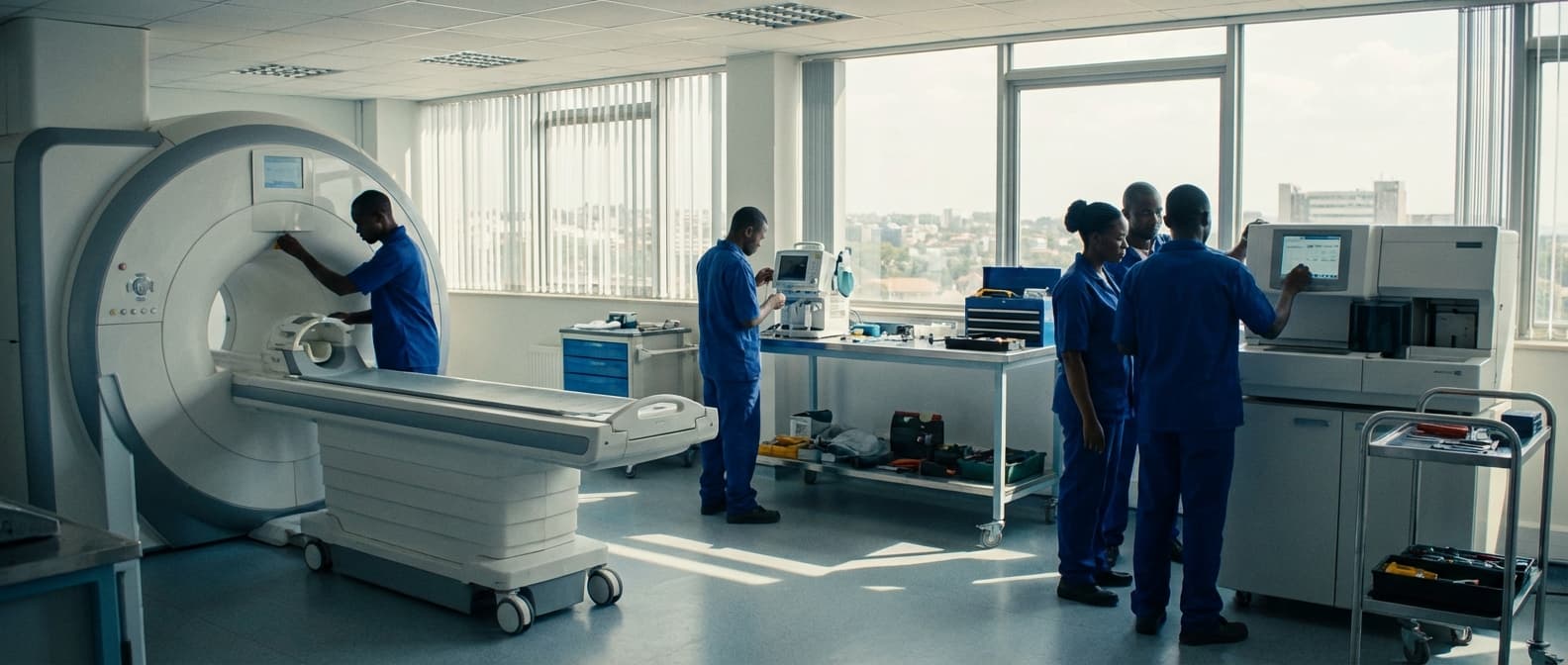
Planned Shutdown Coordination Service for Critical Equipment in Sudan
Engineering Excellence & Technical Support
Planned Shutdown Coordination Service for Critical Equipment High-standard technical execution following OEM protocols and local regulatory frameworks.
Optimized Shutdown Scheduling
Leveraging advanced scheduling algorithms and real-time operational data to minimize downtime and maximize equipment availability, ensuring critical infrastructure in Sudan operates at peak efficiency during planned maintenance windows.
Risk Mitigation & Resource Allocation
Implementing a comprehensive risk assessment framework to identify potential hazards during shutdown, coupled with precise resource allocation of skilled personnel, spare parts, and specialized tools, to ensure safe and successful execution in Sudan's unique operating environment.
Data-Driven Performance Monitoring
Establishing robust data collection and analysis protocols to track shutdown progress, identify bottlenecks, and measure key performance indicators, providing Sudanese stakeholders with actionable insights for continuous improvement and future planning.
What Is Planned Shutdown Coordination Service For Critical Equipment In Sudan?
The Planned Shutdown Coordination Service for Critical Equipment in Sudan is a specialized operational and logistical management framework designed to orchestrate the safe, efficient, and minimally disruptive cessation of operations for essential equipment and infrastructure. This service is crucial in environments where the consequences of unplanned downtime are severe, encompassing economic losses, safety hazards, and critical service interruptions. It involves a multi-faceted approach to planning, executing, and resuming operations, ensuring that all stakeholders are aligned and that risks are proactively mitigated. The service aims to optimize the utilization of scheduled maintenance windows, thereby maximizing asset lifespan, enhancing operational reliability, and ensuring compliance with regulatory and safety standards.
| Who Needs It? | Typical Use Cases | ||||||||
|---|---|---|---|---|---|---|---|---|---|
| Critical Infrastructure Operators: Entities responsible for the continuous operation of essential services. | Energy Sector: Power generation plants (thermal, hydro, renewable), oil and gas refineries, transmission and distribution networks. | Water and Wastewater Management: Pumping stations, treatment facilities, and distribution pipelines. | Telecommunications Providers: Core network infrastructure, data centers, and transmission towers. | Industrial Manufacturing: Large-scale production facilities with complex machinery and continuous processes. | Mining and Extractive Industries: Processing plants, heavy machinery, and transportation systems. | Transportation Infrastructure: Ports, airports, and major railway systems. | Healthcare Facilities: Large hospitals with critical medical equipment and life support systems. | Government Agencies: Responsible for national security and critical service delivery. | Companies operating in politically or economically sensitive environments: Sudan's context often necessitates robust planning due to potential logistical challenges and resource constraints. |
| Routine Maintenance: Scheduled overhauls, component replacements, and preventative maintenance tasks. | Asset Upgrades and Modernization: Installation of new technology, system enhancements, or capacity expansion. | Regulatory Compliance Inspections: Shutdowns required for mandatory safety audits, certifications, or environmental assessments. | Emergency Preparedness Drills: Simulating shutdown scenarios to test response capabilities. | Disaster Recovery Planning: Implementing planned shutdowns as part of broader disaster preparedness and resilience strategies. | Integration of New Assets: Connecting and commissioning new equipment or entire facilities into existing operational frameworks. | Decommissioning and Retirement: Safely shutting down and preparing equipment or facilities for end-of-life. |
Key Components and Objectives of Planned Shutdown Coordination Service:
- Strategic Planning: Developing detailed shutdown schedules, outlining scope of work, resource allocation, and contingency plans.
- Risk Assessment and Mitigation: Identifying potential hazards associated with the shutdown and implementing robust safety protocols and emergency response procedures.
- Stakeholder Management: Facilitating communication and collaboration among internal teams (operations, maintenance, engineering), external contractors, regulatory bodies, and affected communities.
- Logistics and Resource Management: Coordinating the mobilization and demobilization of specialized personnel, equipment, spare parts, and materials.
- Permitting and Approvals: Securing all necessary permits and authorizations from relevant authorities prior to and during the shutdown.
- Execution Oversight: Supervising the shutdown activities to ensure adherence to the plan, quality control, and safety compliance.
- Post-Shutdown Activities: Managing the recommissioning process, performance testing, and final handover, ensuring operational readiness.
- Documentation and Reporting: Maintaining comprehensive records of all shutdown activities, lessons learned, and performance metrics.
- Minimizing Economic Impact: Reducing lost production and revenue by optimizing shutdown duration and efficiency.
- Enhancing Safety: Prioritizing the safety of personnel and the environment during all shutdown phases.
- Improving Equipment Reliability: Facilitating proactive maintenance and upgrades to prevent future failures.
- Ensuring Regulatory Compliance: Adhering to all national and international safety and operational standards.
Who Needs Planned Shutdown Coordination Service For Critical Equipment In Sudan?
Planned Shutdown Coordination Service for Critical Equipment in Sudan is essential for any organization operating high-stakes machinery and infrastructure. This service ensures that essential maintenance and upgrades are performed efficiently, safely, and with minimal disruption to operations. In Sudan's unique operational environment, characterized by potential logistical challenges, regulatory considerations, and the critical nature of many industries, expert coordination is paramount. This service mitigates risks, optimizes resource allocation, and upholds safety standards during planned downtime.
| Industry Sector | Target Customers | Relevant Departments |
|---|---|---|
| Oil & Gas (Upstream, Midstream, Downstream) | National oil companies, international exploration and production companies, refineries, petrochemical plants. | Operations, Maintenance, Engineering, Health, Safety & Environment (HSE), Supply Chain, Project Management. |
| Power Generation & Distribution | State-owned power utilities, independent power producers (IPPs), transmission and distribution network operators. | Operations, Plant Maintenance, Engineering, Grid Management, Safety, Asset Management. |
| Mining & Minerals | Gold mines, mineral extraction facilities, processing plants. | Operations, Mine Maintenance, Processing Plant Maintenance, Engineering, HSE, Logistics. |
| Telecommunications | Mobile network operators, fixed-line providers, data center operators. | Network Operations, Infrastructure Maintenance, Engineering, IT Operations, Site Management. |
| Water & Wastewater Treatment | Municipal water authorities, industrial water treatment facilities. | Operations, Plant Maintenance, Engineering, Environmental Services, Facility Management. |
| Manufacturing (Heavy Industry) | Cement plants, food processing facilities, heavy machinery manufacturers. | Production, Maintenance, Engineering, Quality Control, Supply Chain. |
| Infrastructure & Transportation | Port authorities, airport operators, railway companies (for critical signaling and track maintenance). | Operations, Maintenance, Engineering, Safety, Asset Management. |
| Government & Public Services | Agencies managing critical national assets (e.g., defense installations requiring specific maintenance windows). | Technical Services, Facilities Management, Operations, Security. |
Target Customers and Departments
- Organizations with critical infrastructure and operational continuity needs.
- Sectors heavily reliant on continuous power and resource supply.
- Companies operating in industries with stringent safety and regulatory compliance requirements.
- Entities facing unique logistical challenges in remote or developing regions.
Planned Shutdown Coordination Service For Critical Equipment Process In Sudan
The Planned Shutdown Coordination Service for Critical Equipment is designed to ensure safe, efficient, and minimally disruptive planned shutdowns of vital industrial machinery in Sudan. This comprehensive service manages the entire lifecycle of a shutdown, from the initial request to the successful recommissioning of equipment. The workflow prioritizes meticulous planning, clear communication, and adherence to safety protocols throughout the process.
| Stage | Description | Key Activities | Key Deliverables/Outputs |
|---|---|---|---|
| Inquiry & Initial Assessment | The client initiates contact to request a planned shutdown for specific critical equipment. | Receive shutdown request, identify critical equipment, assess preliminary scope of work, understand client objectives and constraints, initial risk assessment. | Confirmation of service engagement, preliminary understanding of shutdown scope, initial risk identification report. |
| Planning & Scheduling | Detailed planning and scheduling of all shutdown activities to minimize downtime and ensure safety. | Develop detailed shutdown plan, create master schedule, identify dependencies, define hold points, create lockout/tagout (LOTO) procedures, develop contingency plans, communication plan development. | Approved shutdown plan, detailed Gantt chart schedule, risk management plan, LOTO procedures, communication matrix. |
| Resource Allocation & Procurement | Ensuring all necessary personnel, materials, and specialized equipment are available and procured. | Identify required skilled labor, secure internal and external resources, procure spare parts and consumables, arrange for specialized tools and equipment, obtain necessary permits and approvals. | Resource mobilization plan, procurement orders, inventory of materials, secured permits and licenses. |
| Pre-Shutdown Preparations | Finalizing all arrangements and preparations before the shutdown commences. | Site readiness inspection, pre-shutdown safety briefings and training, final confirmation of resources, setup of temporary facilities, confirmation of vendor readiness, pre-shutdown inspections of equipment. | Pre-shutdown checklist completion, site readiness report, trained personnel, confirmed vendor attendance. |
| Execution (Shutdown & Maintenance) | The actual implementation of the planned shutdown and associated maintenance activities. | Safe isolation of equipment (LOTO), execution of planned maintenance tasks (inspections, repairs, replacements), adherence to schedule and safety procedures, regular progress reporting, management of unforeseen issues. | Completed maintenance tasks, progress reports, incident reports (if any), updated logbooks. |
| Post-Shutdown Testing & Commissioning | Thorough testing and validation of the equipment to ensure it is ready for operation. | Perform functional tests, performance tests, quality assurance checks, final inspections, obtain client sign-off on completed work. | Test results documentation, commissioning reports, client acceptance certificates. |
| Closure & Review | Formalizing the completion of the shutdown and reviewing performance for continuous improvement. | Demobilize resources, conduct post-shutdown review meeting, document lessons learned, prepare final shutdown report, update maintenance records, invoice processing. | Final shutdown report, lessons learned document, updated equipment history, financial closure. |
Workflow Stages:
- Inquiry & Initial Assessment
- Planning & Scheduling
- Resource Allocation & Procurement
- Pre-Shutdown Preparations
- Execution (Shutdown & Maintenance)
- Post-Shutdown Testing & Commissioning
- Closure & Review
Planned Shutdown Coordination Service For Critical Equipment Cost In Sudan
Coordinating planned shutdowns for critical equipment in Sudan involves a complex interplay of factors that influence the overall cost. These factors range from the scope and duration of the shutdown to the specific expertise required, logistical challenges, and potential risks involved. Understanding these elements is crucial for accurate budgeting and effective resource allocation. The pricing for such services is typically project-specific and can vary significantly based on the nature of the critical equipment, the operational environment, and the service provider's capabilities. Costs are generally quoted in Sudanese Pounds (SDG) for local projects, with potential for USD quotes in cases of international service providers or specialized imported components. Factors influencing the cost include the complexity of the equipment, the need for specialized tools or technologies, the number of personnel required, safety protocols, and contingency planning.
| Service Component | Estimated Cost Range (SDG) | Notes |
|---|---|---|
| Project Management & Planning | 50,000 - 500,000+ | Varies with complexity and duration; includes risk assessment, scheduling, and resource allocation. |
| On-Site Supervision & Coordination | 75,000 - 750,000+ | Dependent on the number of teams, shift patterns, and criticality of operations. |
| Skilled Labor (Engineers & Technicians) | 100,000 - 1,500,000+ (per week) | Highly dependent on specialization, experience, and daily rates. Includes potential for expatriate rates if applicable. |
| Safety Personnel & Equipment | 20,000 - 150,000+ | Includes safety officers, monitoring equipment, and specialized PPE. |
| Logistics & Transportation | 30,000 - 300,000+ | Covers transport of personnel, equipment, and materials; higher for remote or difficult-to-access sites. |
| Specialized Tools & Equipment Rental | 40,000 - 400,000+ | If specialized tools not owned by the client are required (e.g., heavy lifting, precision calibration). |
| Third-Party Services (e.g., NDT, welding) | 50,000 - 500,000+ | Varies significantly based on the nature and extent of the specialized work. |
| Contingency & Risk Mitigation | 10% - 20% of total estimated cost | A buffer for unforeseen issues and delays. |
| Reporting & Documentation | 15,000 - 100,000+ | Dependent on the detail and format required. |
Key Pricing Factors for Planned Shutdown Coordination Services in Sudan:
- Scope and Complexity of Equipment: The type and intricacy of the critical equipment (e.g., power generation turbines, industrial machinery, complex control systems) directly impact the planning and execution effort.
- Duration of Shutdown: Longer shutdown periods necessitate extended staffing, resource allocation, and potential standby charges.
- Personnel Expertise and Skill Level: The requirement for specialized engineers, technicians, and safety officers with specific experience in the relevant equipment drives up labor costs.
- Logistics and Site Access: Challenges related to remote locations, transportation of personnel and equipment, and site accessibility in Sudan can add to the overall expense.
- Safety and Environmental Compliance: Adherence to strict safety regulations, environmental impact assessments, and the provision of personal protective equipment (PPE) contribute to the cost.
- Third-Party Service Providers: Engagement of specialized subcontractors for specific tasks (e.g., non-destructive testing, welding, calibration) will incur additional fees.
- Materials and Spare Parts: The cost of any required replacement parts, consumables, or specialized materials needed during the shutdown.
- Contingency Planning and Risk Management: Developing and implementing robust contingency plans to mitigate unforeseen issues and risks incurs planning costs.
- Technology and Tools: The need for specialized diagnostic equipment, lifting gear, or advanced planning software can impact pricing.
- Reporting and Documentation: The level of detail and comprehensiveness required for post-shutdown reports and documentation.
Affordable Planned Shutdown Coordination Service For Critical Equipment Options
Our Affordable Planned Shutdown Coordination Service is designed to minimize downtime and maximize efficiency during your critical equipment maintenance. We offer flexible value bundles and implement strategic cost-saving measures to ensure your planned shutdowns are both effective and economical. Our service focuses on proactive planning, meticulous execution, and thorough post-shutdown analysis, all tailored to your specific operational needs and budget constraints.
| Cost-Saving Strategy | Description | Benefit |
|---|---|---|
| Proactive Planning & Scheduling | Detailed pre-shutdown analysis, identification of critical paths, and optimized scheduling to minimize overall downtime. | Reduced lost production revenue and improved resource utilization. |
| Bulk Purchasing & Vendor Negotiation | Leveraging our established relationships and aggregated demand to negotiate favorable rates for parts, labor, and specialized services. | Lower procurement costs for materials and external services. |
| Optimized Resource Allocation | Ensuring the right personnel and equipment are available at the right time, avoiding idle resources or critical shortages. | Reduced labor costs and improved project velocity. |
| Standardized Shutdown Procedures | Developing and implementing repeatable, best-practice procedures for common maintenance tasks. | Increased efficiency, reduced errors, and faster execution times. |
| Preventive & Predictive Maintenance Integration | Aligning planned shutdowns with predictive maintenance insights to address issues before they escalate, preventing costly emergency repairs. | Avoidance of unscheduled downtime and reduced emergency repair expenses. |
| Efficient Communication & Reporting | Clear and concise communication channels and real-time reporting to prevent miscommunication and delays. | Minimized rework and faster decision-making. |
Value Bundles and Key Service Components
- Basic Shutdown Coordination: Includes essential planning meetings, detailed shutdown schedule development, resource allocation, and on-site supervision during the shutdown period. Ideal for straightforward maintenance tasks with minimal complexity.
- Enhanced Shutdown Coordination: Builds upon the Basic package with added features like advanced risk assessment and mitigation planning, detailed communication protocols, vendor management integration, and initial post-shutdown performance reporting. Suitable for moderately complex shutdowns requiring more robust oversight.
- Comprehensive Shutdown Management: Our premium offering encompasses all aspects of Enhanced Coordination, plus in-depth predictive maintenance integration, detailed budget tracking and control, real-time status reporting with advanced analytics, a dedicated project manager, and a comprehensive post-shutdown review with actionable recommendations for future improvements. Best for critical, large-scale, or highly complex shutdown events.
- Customizable Add-ons: Services such as specialized safety training for shutdown crews, emergency response planning, independent third-party inspection, and advanced asset data collection can be added to any bundle to meet unique project requirements.
Verified Providers In Sudan
In Sudan's evolving healthcare landscape, access to verified and reputable medical providers is paramount. Franance Health stands out as a leading platform dedicated to connecting individuals with trusted healthcare professionals. This commitment to verification ensures that patients receive high-quality care from qualified practitioners, fostering confidence and peace of mind. By prioritizing credential checks, Franance Health simplifies the process of finding reliable medical services, making it easier for the Sudanese population to access the healthcare they need.
| Franance Health Advantage | Why it's the Best Choice for You |
|---|---|
| Extensive Verification Process | Eliminates the risk of encountering unqualified or fraudulent practitioners, ensuring your safety and well-being. |
| Curated Network of Experts | Access to a wide range of specialists and general practitioners who meet the highest standards of medical excellence. |
| Time and Effort Savings | No need to spend hours researching or vetting providers yourself; our platform does the due diligence for you. |
| Enhanced Patient Confidence | Peace of mind knowing you are entrusting your health to verified and competent medical professionals. |
| Focus on Quality of Care | Our verification process directly contributes to a higher standard of medical services available to the Sudanese population. |
Key Credentials and Why They Matter
- Medical Licensing: All Franance Health providers undergo rigorous verification of their national medical licenses, ensuring they are legally authorized to practice.
- Specialization and Board Certification: We confirm that providers hold relevant board certifications in their respective specialties, signifying advanced training and expertise.
- Educational Background: Franance Health verifies the academic credentials and training institutions of its healthcare professionals.
- Professional Experience: We assess the practical experience of providers, looking for a track record of successful patient care.
- Continuing Medical Education (CME): We encourage and, where possible, verify ongoing professional development to ensure providers stay current with medical advancements.
- Reputation and Reviews: While not a formal credential, we consider patient feedback and professional references to gauge the overall quality of care and patient satisfaction.
Scope Of Work For Planned Shutdown Coordination Service For Critical Equipment
This Scope of Work (SOW) outlines the services required for the effective coordination and execution of planned shutdowns for critical equipment within the XYZ Corporation's facilities. The primary objective is to minimize downtime, ensure safety, and maintain operational integrity during scheduled maintenance activities. The service provider will be responsible for the comprehensive planning, scheduling, resource management, execution oversight, and post-shutdown reporting of these critical equipment shutdowns.
| Technical Deliverable | Description | Standard Specification/Format |
|---|---|---|
| Shutdown Plan Document | Comprehensive document detailing all aspects of the shutdown, including scope, objectives, timeline, dependencies, risk assessment, communication plan, and emergency procedures. | PDF format, following industry best practices for project management documentation (e.g., PMI standards). |
| Detailed Work Schedule | Gantt chart or similar visual representation of all tasks, durations, dependencies, and milestones. Includes breakdown of activities for each piece of critical equipment. | Microsoft Project (.mpp) or Primavera P6 format. PDF export for review. |
| Risk Assessment and Mitigation Report | Identifies potential hazards and risks associated with the shutdown and outlines specific mitigation measures. Includes HAZID/HAZOP reports where applicable. | PDF format. Referencing industry safety standards (e.g., OSHA, HSE). |
| Resource Management Plan | Details personnel requirements (skills, numbers), required tools, special equipment, and materials needed for the shutdown. Includes contractor management protocols. | Excel or PDF format. Clear breakdown by task and skill set. |
| Permit to Work (PTW) System Integration | Ensuring all necessary PTWs are identified, applied for, and managed effectively during the shutdown. Liaison with site safety personnel. | Adherence to XYZ Corporation's established PTW procedures and documentation. Digital or physical copies as per site requirements. |
| Daily Progress Reports | Concise reports on work completed, tasks in progress, any delays or issues encountered, and planned activities for the next shift/day. | Daily email or integrated project management software update. Standardized template provided by XYZ Corporation or agreed upon. |
| Shutdown Completion Report | Final report summarizing the execution of the shutdown, including deviations from the plan, actual downtime, costs incurred (if applicable), and any significant observations. | PDF format. Including summary statistics and key performance indicators (KPIs). |
| Lessons Learned Document | Analysis of successes and failures during the shutdown to identify areas for improvement in future planned maintenance activities. | PDF format. Structured format for capturing actionable insights. |
| As-Built Documentation Updates | Ensuring any modifications or adjustments made during the shutdown are documented and reflected in the relevant asset documentation. | As per XYZ Corporation's existing documentation control procedures. Digital or physical as required. |
Key Services Provided
- Detailed shutdown planning and scheduling
- Risk assessment and mitigation strategies development
- Resource identification and allocation (personnel, materials, tools)
- Coordination with all affected stakeholders (operations, maintenance, safety, external contractors)
- Development and implementation of detailed work permits and safety procedures
- On-site supervision and coordination during the shutdown period
- Real-time progress tracking and communication
- Troubleshooting and issue resolution during the shutdown
- Post-shutdown verification and handover
- Post-shutdown analysis and lessons learned documentation
Service Level Agreement For Planned Shutdown Coordination Service For Critical Equipment
This Service Level Agreement (SLA) outlines the terms and conditions for the Planned Shutdown Coordination Service for Critical Equipment. It defines the responsibilities of both the Service Provider and the Client regarding planned shutdowns, focusing on response times for scheduling and notification, and uptime guarantees for the coordination service itself.
| Service Component | Metric | Target Value | Measurement Period | Remedy/Penalty |
|---|---|---|---|---|
| Planned Shutdown Scheduling Request | Response Time (Acknowledgement) | 2 Business Hours | Per Request | 10% discount on the next monthly service fee for each instance of exceeding the target. |
| Planned Shutdown Scheduling Request | Response Time (Initial Schedule Proposal) | 1 Business Day | Per Request | 15% discount on the next monthly service fee for each instance of exceeding the target. |
| Urgent Shutdown Notification (Client initiated, e.g., for unforeseen maintenance) | Response Time (Acknowledgement) | 1 Business Hour | Per Request | 20% discount on the next monthly service fee for each instance of exceeding the target. |
| Planned Shutdown Coordination Service Availability | Uptime Guarantee | 99.5% | Monthly | For every full 0.5% drop below the target uptime in a given month, a credit of 5% of the monthly service fee will be issued. Credits are capped at 25% of the monthly service fee. |
| Scheduled Maintenance Notifications (Internal to Service Provider) | Advance Notification | 48 Hours | Per Notification | No direct financial penalty, but will be factored into future SLA performance reviews. |
Key Service Definitions
- Planned Shutdown: A pre-scheduled cessation of operation for critical equipment, coordinated through the Planned Shutdown Coordination Service, to allow for maintenance, upgrades, or other required activities.
- Critical Equipment: Equipment designated by the Client as essential for ongoing operations, where unplanned downtime would result in significant financial loss or operational disruption.
- Coordination Service: The service provided by the Service Provider to facilitate the scheduling, communication, and tracking of planned shutdowns for critical equipment.
- Response Time: The maximum time allowed for the Service Provider to acknowledge and begin addressing a request or notification related to the Planned Shutdown Coordination Service.
- Uptime Guarantee: The percentage of time the Planned Shutdown Coordination Service is expected to be available and operational.
Frequently Asked Questions

Ready when you are
Let's scope your Planned Shutdown Coordination Service for Critical Equipment in Sudan project in Sudan.

Scaling healthcare logistics and technical systems across the entire continent.