
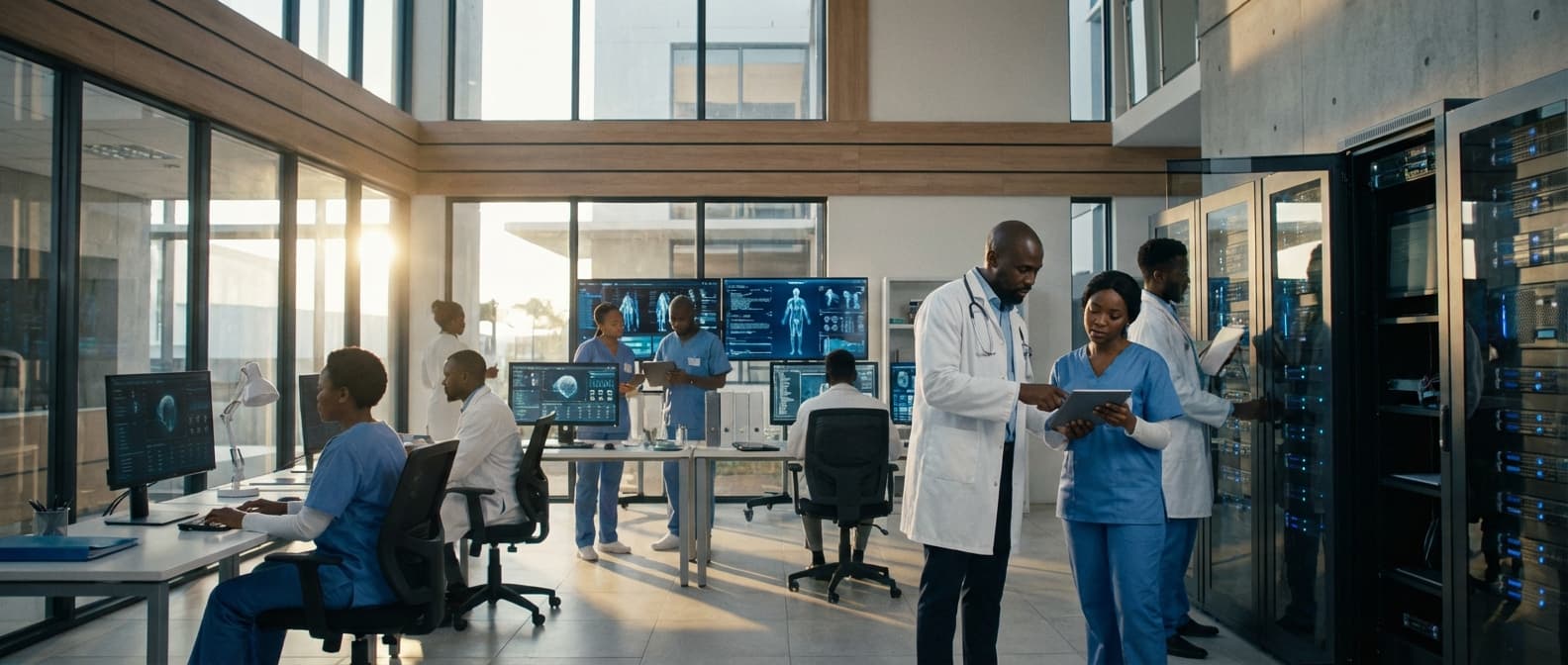
Tele-Radiology in Sudan
Engineering Excellence & Technical Support
24/7 access to certified radiologists providing rapid, accurate remote interpretation of diagnostic imaging studies. High-standard technical execution following OEM protocols and local regulatory frameworks.
Bridging the Gap: Remote Diagnostic Expertise
Tele-radiology connects Sudanese healthcare facilities, particularly those in underserved rural areas, with expert radiologists located anywhere. This allows for timely and accurate interpretation of medical images (X-rays, CT scans, MRIs) without the need for on-site specialists, significantly improving diagnostic capabilities and patient outcomes across the nation.
Secure Cloud-Based Image Archiving and Transmission
Implementing robust, secure cloud infrastructure ensures the reliable storage, retrieval, and transmission of sensitive patient imaging data. This system facilitates seamless collaboration among radiologists, supports large data volumes, and maintains data integrity, crucial for accurate and efficient remote diagnostics in Sudan.
AI-Powered Image Analysis Augmentation
Integrating Artificial Intelligence (AI) tools into the tele-radiology workflow provides automated preliminary analysis of medical images, flagging potential abnormalities. This augments the expertise of Sudanese radiologists, increasing diagnostic speed and accuracy, and acting as a crucial second opinion, especially in complex or rare cases.
What Is Tele-radiology In Sudan?
Tele-radiology in Sudan refers to the practice of transmitting radiological images (such as X-rays, CT scans, and MRIs) from a medical facility in Sudan to a radiologist located remotely, often in a different city, region, or even internationally, for interpretation and reporting. This service leverages telecommunications technology to overcome geographical barriers and provide expert radiological analysis where local expertise may be scarce or overburdened. It encompasses the acquisition, transmission, interpretation, and storage of medical imaging data.
| Who Needs Tele-Radiology in Sudan? | Typical Use Cases | |||
|---|---|---|---|---|
| Rural and Remote Healthcare Facilities: Hospitals and clinics lacking on-site radiologists or specialized imaging equipment. | Emergency Department Consultations: Providing rapid interpretation of critical imaging studies (e.g., stroke, trauma) when local radiologists are unavailable. | Specialized Imaging Interpretation: Accessing subspecialist expertise (e.g., neuroradiology, pediatric radiology) that may not be available locally. | Overburdened Local Radiology Departments: Supplementing existing staff to manage high patient volumes and reduce turnaround times. | Disaster Relief and Humanitarian Efforts: Deploying mobile radiology units and providing remote interpretation services in crisis zones where infrastructure is compromised. |
| Routine diagnostic imaging interpretation (e.g., chest X-rays, bone scans). | Post-operative imaging follow-up. | Second opinions on complex cases. | Screening programs (e.g., mammography, lung cancer screening) where dedicated interpretation centers can consolidate expertise. | Training and educational support for local medical professionals. |
Key Components of Tele-Radiology in Sudan:
- Image Acquisition: Performing standard radiological examinations at the originating facility.
- Image Transmission: Securely transferring digital image files (e.g., DICOM format) over networks (internet, dedicated lines) to a remote reading center.
- Image Interpretation: A qualified radiologist, located elsewhere, analyzes the transmitted images and generates a diagnostic report.
- Report Delivery: The interpreted report is securely transmitted back to the originating facility.
- PACS/RIS Integration: Often integrated with Picture Archiving and Communication Systems (PACS) for image management and Radiology Information Systems (RIS) for workflow management.
Who Needs Tele-radiology In Sudan?
Tele-radiology, the practice of interpreting medical images remotely, holds significant potential to address critical gaps in healthcare access and expertise within Sudan. The country faces challenges such as a scarcity of radiologists, particularly in rural and remote areas, limited access to advanced imaging equipment, and infrastructure limitations. Tele-radiology can bridge these divides by connecting Sudanese healthcare facilities with qualified radiologists, both domestically and internationally, enabling timely and accurate diagnoses, improving patient outcomes, and optimizing the utilization of existing resources. This technology is not a luxury but a necessity for enhancing the quality and reach of diagnostic imaging services across the nation.
| Department/Specialty | Specific Needs Addressed by Tele-Radiology | Impact on Patient Care |
|---|---|---|
| Radiology Departments (with limited or no radiologists) | Provides access to expert interpretation for X-rays, CT scans, MRIs, and ultrasounds. | Enables faster diagnosis, reduces delays in treatment initiation, and improves diagnostic accuracy, especially for complex cases. |
| Emergency Departments | Facilitates urgent interpretation of trauma imaging, stroke scans, and other critical studies, even outside of standard working hours. | Crucial for time-sensitive interventions, potentially saving lives and preventing long-term disability. |
| Surgical Departments | Supports pre-operative planning and post-operative assessment of imaging studies. | Enhances surgical precision, identifies complications early, and improves surgical outcomes. |
| Oncology Departments | Enables accurate staging and monitoring of cancer through timely interpretation of imaging. | Facilitates personalized treatment plans and early detection of treatment response or recurrence. |
| Pediatric Departments | Provides specialized interpretation of pediatric imaging, often requiring specific expertise. | Ensures accurate diagnosis and appropriate management of childhood illnesses and injuries. |
| Maternal and Child Health Departments | Facilitates interpretation of obstetric ultrasounds for prenatal care and diagnosis of fetal abnormalities. | Improves maternal and infant outcomes through early detection and intervention. |
| Internal Medicine Departments | Assists in the diagnosis and management of a wide range of conditions requiring imaging studies. | Supports evidence-based decision-making for common and complex medical problems. |
| Infectious Disease Control Units | Aids in the diagnosis of infectious diseases affecting organs visible on imaging (e.g., pneumonia, tuberculosis). | Facilitates prompt identification and containment of outbreaks. |
Target Customers and Departments for Tele-Radiology in Sudan
- Hospitals and Clinics in Remote and Underserved Areas
- Tertiary and Referral Hospitals
- Government and Public Health Facilities
- Non-Governmental Organizations (NGOs) and Humanitarian Organizations
- Private Healthcare Providers
Tele-radiology Process In Sudan
Tele-radiology in Sudan is an emerging field aiming to bridge the gap in radiological expertise, particularly in remote or underserved areas. The process generally follows a standardized workflow from the initial inquiry to the final execution and reporting of diagnostic imaging studies. This workflow is designed to ensure efficient and accurate interpretation of medical images despite geographical distances.
| Stage | Description | Key Actors | Technology Involved |
|---|---|---|---|
| Inquiry & Referral | Identification of need for radiological interpretation and initiation of request. | Referring Physician, Healthcare Facility Staff | Phone, Email, EMR System |
| Image Acquisition & Preparation | Performing the imaging study and ensuring image quality and anonymization. | Radiographer, Technician | Medical Imaging Equipment (X-ray, CT, MRI), DICOM Standard |
| Image Transmission | Securely sending anonymized images to the tele-radiology provider. | Radiographer, IT Support | Secure PACS, VPN, Encryption Software, Internet/Network |
| Image Triage & Assignment | Categorizing images by urgency and assigning to an appropriate radiologist. | Workflow Coordinator, Triage System | Triage Software, PACS Workflow Module |
| Image Interpretation | Radiologist reviews images and clinical data to identify abnormalities. | Tele-Radiologist | High-resolution Medical Display, PACS Viewer, Clinical Data System |
| Report Generation | Creating a detailed diagnostic report. | Tele-Radiologist | Reporting Software, Speech Recognition Software (optional) |
| Report Review & QA | Ensuring accuracy and quality of the generated report. | Senior Radiologist, Peer Reviewer | Reporting Software, Quality Assurance Protocols |
| Report Transmission | Securely sending the finalized report back to the referring facility. | Tele-Radiology Service Provider | Secure PACS, EMR Integration, Secure Email |
| Follow-up & Communication | Discussing findings and answering queries from the referring physician. | Tele-Radiologist, Referring Physician | Phone, Secure Messaging Platform, Video Conferencing (optional) |
Tele-Radiology Workflow in Sudan
- Inquiry and Referral: A healthcare facility or physician in a location without on-site radiological expertise identifies the need for a radiological interpretation of a medical image (e.g., X-ray, CT scan, MRI). This can be initiated through a direct request to a tele-radiology provider or a designated referral system.
- Image Acquisition and Preparation: At the referring facility, the medical imaging study is performed using standard equipment. The radiographer or technician ensures the images are of diagnostic quality and are properly anonymized to protect patient privacy, adhering to local data protection regulations.
- Image Transmission: The anonymized digital images are then securely transmitted to the tele-radiology service provider. This is typically done via a secure Picture Archiving and Communication System (PACS) or a dedicated tele-radiology platform. Encryption and secure network protocols are crucial to ensure data integrity and confidentiality during transmission, often utilizing internet or dedicated secure lines.
- Image Triage and Assignment: Upon receipt by the tele-radiology provider, images are triaged based on urgency and subspecialty required. A radiologist with the appropriate expertise (e.g., neuroradiology, musculoskeletal radiology) is then assigned to interpret the case. This assignment can be automated based on pre-defined rules or managed by a workflow coordinator.
- Image Interpretation: The assigned radiologist accesses the images on their workstation at their location. They perform a thorough review of the images, correlating them with the patient's clinical information provided by the referring physician. This stage involves detailed analysis and identification of any abnormalities.
- Report Generation: Following the interpretation, the radiologist dictates or types a comprehensive diagnostic report. This report includes findings, a differential diagnosis if applicable, and recommendations. The report is usually generated using specialized reporting software that can integrate with the PACS.
- Report Review and Quality Assurance: In many tele-radiology setups, reports may undergo a quality assurance review by a senior radiologist or a peer review process before being finalized. This step ensures accuracy and adherence to reporting standards.
- Report Transmission and Communication: The finalized report is securely transmitted back to the referring healthcare facility. This can be through the same secure platform used for image transmission, email, or a secure portal. The referring physician receives the report and integrates it into the patient's medical record.
- Follow-up and Communication: The tele-radiology service may also be involved in communicating with the referring physician to discuss findings, answer queries, or provide further recommendations. This collaborative approach ensures optimal patient care.
Tele-radiology Cost In Sudan
Tele-radiology services in Sudan are gaining traction as a way to bridge the gap in access to specialized medical imaging interpretation, particularly in remote areas. However, the cost of these services is influenced by a combination of local economic factors, the complexity of the imaging study, and the provider's operational model. Understanding these pricing dynamics is crucial for healthcare facilities and patients alike.
| Imaging Modality | Estimated Cost Range (SDG - Sudanese Pound) | Notes |
|---|---|---|
| X-ray (per view/study) | 5,000 - 15,000 | Basic interpretations; highly variable based on complexity and provider. |
| Ultrasound (per study) | 7,000 - 25,000 | Includes obstetric, abdominal, etc. Specialized scans (e.g., Doppler) may be higher. |
| CT Scan (per study) | 25,000 - 80,000+ | Depends on the number of slices, body part, and contrast usage. Neurological or complex scans are at the higher end. |
| MRI (per study) | 50,000 - 150,000+ | Generally the most expensive modality. Specific sequences and body parts influence cost. |
| STAT/Urgent Reading Surcharge | 20% - 50% of base cost | Applied on top of the standard interpretation fee. |
Key Pricing Factors for Tele-Radiology in Sudan:
- Type of Imaging Modality: Different imaging techniques, such as X-ray, Ultrasound, CT scans, and MRI, have varying associated costs. More complex modalities generally command higher reading fees.
- Complexity and Volume of Studies: A single, straightforward X-ray interpretation will be less expensive than a complex CT scan with multiple slices or a large volume of studies from a busy clinic.
- Radiologist's Specialization and Experience: Highly specialized radiologists (e.g., neuroradiologists, interventional radiologists) or those with extensive experience may charge a premium for their expertise.
- Turnaround Time (TAT): Urgent or STAT (immediately required) readings typically incur a surcharge compared to standard TAT interpretations.
- Provider's Business Model: Whether the tele-radiology service is offered by a local Sudanese provider, an international company with local representation, or a non-profit organization can impact pricing. Local providers may have lower overheads.
- Technology Infrastructure and Software: The cost of maintaining secure, high-speed internet, Picture Archiving and Communication Systems (PACS), and other necessary software can be factored into pricing, although this is often absorbed by larger providers.
- Geographic Location of the Referring Facility: While tele-radiology aims to overcome distance, very remote or logistically challenging areas might indirectly influence costs if there are additional coordination or infrastructure requirements.
- Negotiated Contracts and Volume Agreements: Larger hospitals or healthcare networks that contract for a significant volume of tele-radiology services can often negotiate more favorable rates.
- Currency Exchange Rates and Inflation: Given Sudan's economic landscape, fluctuating currency exchange rates and inflation significantly impact the cost of imported technology, software licenses, and potentially the cost of services offered by international providers. Local currency pricing is highly sensitive to these macroeconomic factors.
Affordable Tele-radiology Options
Tele-radiology offers a cost-effective solution for healthcare providers by reducing the need for in-house radiologists, cutting down on infrastructure expenses, and improving turnaround times. This section explores affordable tele-radiology options, focusing on value bundles and smart cost-saving strategies. Value bundles in tele-radiology typically combine a set of services, such as image interpretation for specific modalities (e.g., X-ray, CT, MRI), preliminary reads, final reports, and potentially subspecialty consultations, all offered at a predetermined price. These bundles provide predictability in costs and often come with service level agreements (SLAs) ensuring quality and responsiveness. Cost-saving strategies involve leveraging technology, negotiating favorable contracts, and optimizing workflow. This includes exploring tiered service models, considering off-peak hour coverage, and utilizing advanced AI tools to assist radiologists, thereby increasing efficiency and reducing per-study costs.
| Tele-Radiology Service | Typical Value Bundle Components | Cost-Saving Aspect |
|---|---|---|
| Routine X-ray Interpretation | Preliminary and final reports for general X-rays, 24/7 coverage option. | Reduced need for in-house radiologist on staff, predictable per-study cost. |
| CT/MRI Interpretation (General) | Interpretation of CT and MRI scans, final reports, electronic delivery. | Access to specialized expertise without overhead, optimized turnaround times. |
| Subspecialty Consultations | Expert interpretation for specific areas like neuroradiology, musculoskeletal, or breast imaging. | Cost-effective access to subspecialists on demand, rather than full-time recruitment. |
| After-Hours/Emergency Reads | Urgent interpretation of scans outside of normal business hours. | Ensures patient care continuity and reduces reliance on on-call internal staff with potential overtime costs. |
| AI-Assisted Reporting | Integration of AI tools for automated anomaly detection or preliminary report generation. | Increased radiologist efficiency, allowing them to review more studies, potentially lowering per-study cost. |
Key Cost-Saving Strategies for Affordable Tele-Radiology
- Negotiate tiered service level agreements (SLAs) based on urgency and subspecialty needs.
- Explore fixed-fee per study or volume-based pricing models.
- Consider off-peak hour coverage for routine studies to reduce costs.
- Leverage AI-powered preliminary reads to improve radiologist efficiency.
- Utilize cloud-based PACS and reporting systems to minimize IT infrastructure investment.
- Inquire about bundled packages for multiple modalities or specific departments.
- Seek providers offering dedicated subspecialty support without requiring a full-time hire.
- Implement robust quality assurance processes to minimize the need for re-reads or litigation.
Verified Providers In Sudan
In Sudan's evolving healthcare landscape, identifying reliable and credentialed providers is paramount for ensuring quality care and patient safety. Franance Health stands out as a leading entity, rigorously vetting and credentialing healthcare professionals and facilities. This commitment to verification means that when you engage with a Franance Health credentialed provider, you are choosing a partner dedicated to the highest standards of medical expertise, ethical practice, and patient well-being.
| Benefit Category | Description | Impact for Patients |
|---|---|---|
| Quality Assurance | Franance Health's verification ensures providers meet established criteria for competence and training. | Access to skilled and knowledgeable healthcare professionals. |
| Trust and Reliability | The credentialing process builds confidence in the provider's qualifications and ethical standing. | Greater peace of mind and reduced anxiety when seeking medical care. |
| Patient Safety | Verification screens for potential risks, contributing to a safer healthcare environment. | Minimizing the likelihood of medical errors or substandard treatment. |
| Professionalism | Credentials signify a commitment to recognized professional standards and practices. | A more positive and respectful patient-provider interaction. |
Why Franance Health Credentials Matter:
- Rigorous Vetting Process: Franance Health employs a comprehensive background check and credentialing process for all its providers. This includes verification of educational qualifications, professional licenses, training, and work history, ensuring that only competent and qualified individuals are included.
- Commitment to Ethical Standards: Beyond technical skills, Franance Health assesses providers' adherence to ethical guidelines and professional codes of conduct, promoting trust and integrity in healthcare delivery.
- Continuous Professional Development: Verified providers are often required to demonstrate ongoing commitment to their professional development, staying abreast of the latest medical advancements and best practices.
- Enhanced Patient Safety: The stringent credentialing process directly contributes to improved patient safety by minimizing the risk of unqualified or compromised healthcare services.
- Access to Trusted Healthcare: Choosing a Franance Health credentialed provider gives you peace of mind, knowing you are accessing healthcare services from professionals who have met a recognized standard of excellence.
Scope Of Work For Tele-radiology
This document outlines the Scope of Work (SOW) for the provision of Tele-Radiology services, encompassing technical deliverables and standard specifications. The objective is to ensure high-quality, secure, and efficient remote interpretation of medical imaging studies.
| Deliverable Category | Specific Deliverable | Standard Specifications / Requirements |
|---|---|---|
| Service Provision | Radiologist Availability | 24/7/365 availability for emergency and routine interpretations. Defined turnaround times (TATs) based on urgency (e.g., STAT, urgent, routine). |
| Service Provision | Interpretation Services | Interpretation of various imaging modalities (X-ray, CT, MRI, Ultrasound, Mammography, Nuclear Medicine). Subspecialty reporting as required. |
| Service Provision | Report Generation | Standardized report format (e.g., ACR, custom templates). Secure electronic transmission of reports. |
| Technical Requirements | PACS/VNA Integration | Seamless integration with the client's Picture Archiving and Communication System (PACS) or Vendor Neutral Archive (VNA). Support for DICOM standards. |
| Technical Requirements | Workstation Requirements | High-resolution diagnostic monitors (e.g., 3MP/5MP for grayscale, 8MP for color). Dedicated workstations with robust hardware and network connectivity. |
| Technical Requirements | Network Connectivity | Secure, high-bandwidth, low-latency internet connectivity (e.g., dedicated leased line, VPN). Redundant internet connections. |
| Technical Requirements | Viewing Software | Secure, DICOM-compliant image viewing software with advanced visualization tools (e.g., MPR, 3D rendering, image manipulation). |
| Data Management & Security | Data Transmission Security | End-to-end encryption for all data transmission (e.g., TLS 1.2+). HIPAA/GDPR compliant protocols. |
| Data Management & Security | Data Storage & Archiving | Secure data storage solutions, compliant with national and international regulations. Clear policies on data retention and destruction. |
| Data Management & Security | Access Control | Role-based access control to patient data and system resources. Multi-factor authentication (MFA). |
| Reporting & Communication | Communication Channels | Secure messaging platform for communication between referring physicians and radiologists. Direct contact information for critical findings. |
| Reporting & Communication | Critical Findings Notification | Established protocol for immediate notification of critical findings to referring physicians via phone or secure messaging. |
| SLAs | Turnaround Time (TAT) | Defined and agreed-upon TATs for all study types (e.g., STAT < 30 mins, Urgent < 2 hours, Routine < 24 hours). |
| SLAs | Uptime Guarantees | Service uptime guarantees (e.g., 99.9% availability). Penalties for service outages. |
| Compliance & Regulatory | Regulatory Compliance | Adherence to HIPAA, GDPR, and other relevant local and international healthcare data privacy and security regulations. |
| Compliance & Regulatory | Licensing & Credentialing | All interpreting radiologists must be licensed in the relevant jurisdictions and hold appropriate board certifications. |
Key Areas of the Scope of Work
- Service Provision Overview
- Technical Requirements and Infrastructure
- Data Management and Security
- Reporting and Communication Protocols
- Service Level Agreements (SLAs)
- Training and Support
- Compliance and Regulatory Adherence
Service Level Agreement For Tele-radiology
This Service Level Agreement (SLA) outlines the guaranteed response times and uptime for the Tele-Radiology services provided by [Provider Name] to [Client Name]. It is designed to ensure the timely and reliable delivery of diagnostic imaging interpretation services.
| Service Component | Guaranteed Response Time (Critical Studies) | Guaranteed Response Time (Routine Studies) | Guaranteed Uptime |
|---|---|---|---|
| Tele-Radiology Platform Availability | N/A | N/A | 99.9% |
| Radiologist Report Availability (Critical Studies) | Within 30 minutes of study upload | N/A | N/A |
| Radiologist Report Availability (Routine Studies) | N/A | Within 4 business hours of study upload | N/A |
| Image Archiving and Retrieval | N/A | N/A | 99.9% |
Key Definitions
- Critical Study: An urgent imaging study requiring immediate radiologist review, typically indicated by the referring physician as 'STAT' or 'URGENT'.
- Routine Study: A standard imaging study requiring radiologist review within a normal timeframe, not categorized as critical.
- Response Time: The time elapsed from the successful transmission of a study to the Tele-Radiology platform until a radiologist's preliminary or final report is available.
- Uptime: The percentage of time the Tele-Radiology platform and associated services are available and operational for receiving, processing, and reporting on imaging studies.
Frequently Asked Questions

Ready when you are
Let's scope your Tele-Radiology in Sudan project in Sudan.

Scaling healthcare logistics and technical systems across the entire continent.