
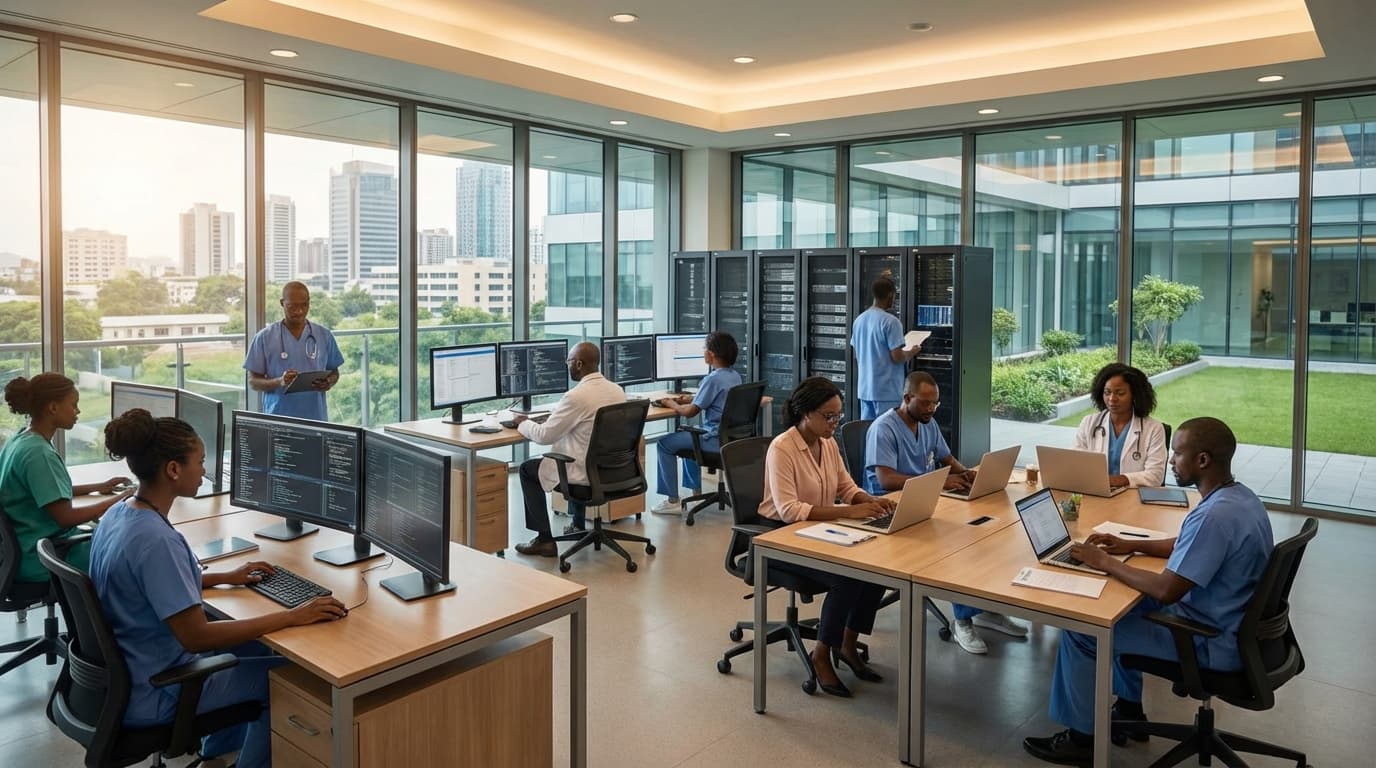
Radiology Reader & Reporting Support in Sudan
Engineering Excellence & Technical Support
Remote radiology reading and reporting services High-standard technical execution following OEM protocols and local regulatory frameworks.
AI-Powered Image Analysis
Leveraging advanced Artificial Intelligence algorithms to automatically detect anomalies, prioritize urgent cases, and improve diagnostic accuracy for radiologists across Sudan. This enables faster turnaround times and more confident interpretations.
Secure Cloud-Based Reporting Platform
Providing a secure, centralized cloud platform for radiologists to access patient imaging studies, generate structured reports, and collaborate remotely. This ensures data integrity, facilitates knowledge sharing, and overcomes geographical limitations within Sudan.
Remote Consultation & Support Hub
Establishing a dedicated remote hub offering expert radiological consultation and technical support to healthcare facilities nationwide. This empowers local medical teams with specialized knowledge, bridging gaps in expertise and ensuring consistent, high-quality care.
What Is Radiology Reader & Reporting Support In Sudan?
Radiology Reader & Reporting Support in Sudan refers to a specialized service providing expert interpretation of medical imaging studies and the generation of comprehensive diagnostic reports. This service is crucial in healthcare systems where local expertise may be limited, access to sub-specialized radiologists is scarce, or when there is a need for an additional layer of quality assurance and efficiency in diagnostic radiology workflows. The core function involves remote or on-site review of radiological images (e.g., X-rays, CT scans, MRI, ultrasounds) by qualified radiologists, followed by the creation of detailed, actionable reports that guide clinical decision-making and patient management. This can be delivered through various models, including teleradiology platforms, locum tenens services, or collaborative partnerships with international radiology groups.
| Stakeholder/Entity | Need for Support | Typical Use Cases |
|---|---|---|
| Hospitals and Clinics in Sudan | Lack of in-house sub-specialized radiologists, high patient load overwhelming local capacity, need for 24/7 coverage, cost-effectiveness for specialized services. | Interpretation of complex imaging studies (e.g., MRI brain, CT angiography), routine chest X-ray reads for remote facilities, emergency radiology coverage for after-hours and weekends, backlog management of imaging studies. |
| Public Health Initiatives | Extending diagnostic services to underserved rural or remote areas, supporting screening programs (e.g., tuberculosis detection via chest X-ray), capacity building for local medical personnel. | Large-scale screening programs requiring high-volume interpretation, diagnostic support for mobile clinics or outreach programs, remote interpretation of studies from primary healthcare centers. |
| Medical Training Institutions | Providing access to a diverse range of cases for educational purposes, offering mentorship and feedback to radiology residents and fellows. | Case reviews for teaching sessions, expert annotations on difficult cases, simulated reporting environments for trainees, access to rare or complex pathologies for learning. |
| Private Medical Practices | Augmenting existing radiology departments, providing specialized read services not locally available, improving report turnaround times for patient satisfaction. | Weekend and holiday coverage for private diagnostic centers, sub-specialty interpretations for specific patient cohorts, integration with existing digital imaging infrastructure. |
Key Components of Radiology Reader & Reporting Support
- Image Interpretation: Professional analysis of various medical imaging modalities by board-certified or equivalent radiologists.
- Report Generation: Creation of structured, clear, and concise diagnostic reports adhering to international standards and including relevant clinical information.
- Sub-specialty Expertise: Access to radiologists with specific expertise in areas such as neuroradiology, musculoskeletal radiology, pediatric radiology, or interventional radiology.
- Quality Assurance: Second-read services or peer review to enhance diagnostic accuracy and consistency.
- Turnaround Time Optimization: Expedited reporting for critical cases to facilitate timely patient care.
- Technology Integration: Utilization of Picture Archiving and Communication Systems (PACS) and Radiology Information Systems (RIS) for efficient workflow and data management.
Who Needs Radiology Reader & Reporting Support In Sudan?
Radiology reader and reporting support services are crucial in Sudan to address the existing challenges in medical imaging interpretation and reporting. These services can significantly enhance diagnostic accuracy, improve patient care pathways, and alleviate the workload on local radiologists. The target customers are primarily healthcare providers and institutions facing a shortage of skilled radiologists or requiring specialized expertise.
| Target Customer Type | Specific Departments Requiring Support | Rationale for Need |
|---|---|---|
| Hospitals (Public) | Radiology Department, Emergency Department, Outpatient Clinics, Surgical Wards, Internal Medicine | High patient volume, limited number of radiologists, need for consistent and timely reporting, support for complex cases. |
| Hospitals (Private) | Radiology Department, Cardiology, Neurology, Oncology, Orthopedics | Demand for specialized imaging interpretation, desire for enhanced accuracy and efficiency, overcoming potential radiologist shortages. |
| Diagnostic Imaging Centers | All imaging modalities (X-ray, CT, MRI, Ultrasound), reporting services | Supplementing existing reporting capacity, providing expert second opinions, ensuring quality control. |
| Specialized Clinics | Cardiology (echocardiography, cardiac MRI), Neurology (brain MRI, CT), Oncology (staging scans, follow-up imaging), Orthopedics (MRI, CT) | Access to subspecialty-trained readers for precise diagnosis and treatment planning. |
| Medical Universities/Teaching Hospitals | Radiology Department, Education and Research Units | Supporting training programs, providing expert feedback to trainees, contributing to research endeavors. |
| NGOs/Humanitarian Organizations | Mobile clinics, field hospitals, general healthcare facilities | Extending diagnostic capabilities to underserved areas, providing essential reporting for critical health interventions. |
| Government Health Ministries/Authorities | National imaging networks, public health programs, referral systems | Standardizing reporting quality across public health facilities, managing large-scale diagnostic initiatives, improving national health outcomes. |
Target Customers and Departments in Sudan for Radiology Reader & Reporting Support
- Hospitals (Public and Private)
- Diagnostic Imaging Centers
- Specialized Clinics (e.g., cardiology, oncology, neurology)
- Medical Universities and Teaching Hospitals
- Non-Governmental Organizations (NGOs) providing healthcare services
- Government Health Ministries and Regional Health Authorities
Radiology Reader & Reporting Support Process In Sudan
The Radiology Reader & Reporting Support Process in Sudan outlines the steps involved from a healthcare provider initiating a request for a radiology reading and report to its final delivery. This process is crucial for ensuring accurate diagnoses and timely patient care within the Sudanese healthcare system, often involving remote consultations and expertise sharing.
| Stage | Description | Key Actors | Output/Outcome | Challenges/Considerations in Sudan |
|---|---|---|---|---|
| Inquiry & Request Initiation | A healthcare provider (physician, specialist) identifies the need for a radiology interpretation for a patient. This might involve a new scan or a follow-up. | Requesting Physician, Referring Clinician | Radiology Request Form, Patient Clinical History | Limited access to diagnostic imaging equipment in some regions, potential for unclear or incomplete clinical information. |
| Image Transmission & Data Preparation | Acquired radiological images (X-ray, CT, MRI, Ultrasound) are prepared for transmission. This may involve anonymization and compression. | Radiology Technologist, IT Support | Digital Image Files (DICOM format), Anonymized Patient Data | Inconsistent availability and reliability of internet infrastructure, lack of standardized PACS (Picture Archiving and Communication System) in many facilities, cost of data transmission. |
| Case Triage & Assignment | Incoming requests and images are reviewed to assess urgency and complexity. The case is then assigned to an available and appropriate radiologist, potentially remotely. | Radiology Coordinator, Senior Radiologist, Teleradiology Platform Administrator | Prioritized Worklist, Assigned Radiologist | Shortage of specialist radiologists in Sudan, need for efficient worklist management for remote readers, language barriers for some imported systems. |
| Remote Reading & Interpretation | The assigned radiologist reviews the images and associated clinical information using specialized software, often from a different location. | Radiologist (Reader) | Preliminary Findings, Interpretation Notes | Reliance on high-speed internet for smooth viewing, potential for eye strain and fatigue with prolonged remote work, need for robust cybersecurity measures. |
| Report Generation & Review | The radiologist drafts a comprehensive report detailing their findings, conclusions, and recommendations. This report is often reviewed by another radiologist for quality control. | Radiologist (Reporter), Supervising Radiologist | Draft Radiology Report | Ensuring standardized reporting templates, potential for typographical errors, need for clear and concise language understandable by referring physicians. |
| Report Dissemination & Integration | The final, signed radiology report is securely transmitted back to the requesting healthcare provider and integrated into the patient's medical record. | Radiology Department, EMR/HIS System Administrator, Requesting Physician | Final Radiology Report, Patient Medical Record Update | Delays in transmission due to connectivity issues, ensuring secure and timely delivery, integrating reports into existing (often paper-based or fragmented) record systems. |
| Feedback & Quality Assurance | The requesting physician may provide feedback on the report's usefulness and accuracy. Regular quality assurance checks are conducted on the reading and reporting process. | Requesting Physician, Radiologist, Quality Assurance Committee | Feedback Forms, QA Audits, Performance Metrics | Establishing a formal feedback mechanism, continuous training and professional development for radiologists, tracking turnaround times and accuracy rates. |
Workflow Stages
- Inquiry & Request Initiation
- Image Transmission & Data Preparation
- Case Triage & Assignment
- Remote Reading & Interpretation
- Report Generation & Review
- Report Dissemination & Integration
- Feedback & Quality Assurance
Radiology Reader & Reporting Support Cost In Sudan
The cost of radiology reader and reporting support in Sudan is influenced by several factors, primarily related to the complexity and volume of imaging studies, the expertise of the radiologist, and the administrative overhead involved. These services are crucial for accurate diagnosis and patient care, but their availability and pricing can be subject to local economic conditions and the specific healthcare infrastructure in place. While precise, standardized pricing is difficult to ascertain due to the fragmented nature of the healthcare sector and varying service provider models, we can outline the key determinants and provide estimated ranges in Sudanese Pound (SDG).
| Service Type | Estimated Price Range (SDG) per Study |
|---|---|
| Basic X-ray Interpretation & Reporting | 1,500 - 4,000 |
| Ultrasound Interpretation & Reporting | 2,000 - 5,000 |
| CT Scan Interpretation & Reporting (Standard) | 5,000 - 15,000 |
| MRI Scan Interpretation & Reporting (Standard) | 7,000 - 20,000 |
| Specialized Interpretation (e.g., Mammography, Neuro-radiology) | 10,000 - 30,000+ |
| Urgent/STAT Reporting Surcharge | 20% - 50% additional |
| Tele-radiology Reporting (Per Study - depends on platform/volume) | 3,000 - 10,000 |
Key Pricing Factors for Radiology Reader & Reporting Support in Sudan
- Type and Volume of Imaging Studies: More complex modalities (e.g., MRI, CT scans) generally command higher fees than simpler ones (e.g., X-rays, ultrasounds). A higher volume of studies processed by a reader will also influence the overall cost structure, often leading to per-study or tiered pricing.
- Radiologist Expertise and Specialization: Highly specialized radiologists with extensive experience, particularly in niche areas like neuro-radiology, interventional radiology, or pediatric radiology, will typically charge more for their services. The need for subspecialty interpretations is a significant cost driver.
- Turnaround Time (TAT) Requirements: Urgent reporting requests, requiring faster turnaround times than standard reports, will incur premium charges. The urgency is often dictated by clinical necessity.
- Technology and Infrastructure: The cost can also be influenced by the technology used for reporting, such as Picture Archiving and Communication Systems (PACS) integration, advanced reporting software, and tele-radiology platforms. The maintenance and upgrade costs of such infrastructure are factored in.
- Administrative and Support Staff: The cost of managing the reporting process, including scheduling, report generation, quality assurance, and communication with referring physicians, contributes to the overall price. This includes salaries for administrative and support personnel.
- Geographic Location and Operational Costs: Operating costs within Sudan, including rent, utilities, and local labor, will impact the pricing. Service providers located in major urban centers might have different cost structures compared to those in more remote areas.
- Contractual Agreements: Pricing can vary significantly based on whether services are contracted on a per-study basis, a fixed monthly fee, or a revenue-sharing model. Long-term contracts may offer more favorable rates.
- Insurance and Payment Models: The presence and nature of health insurance coverage, as well as government reimbursement policies, can indirectly affect pricing by influencing the overall demand and the ability of patients or institutions to pay.
Affordable Radiology Reader & Reporting Support Options
Radiology practices and healthcare facilities are constantly seeking ways to optimize their operations and reduce costs without compromising the quality of patient care. Access to skilled radiology readers and efficient reporting processes is critical. This document outlines affordable radiology reader and reporting support options, focusing on value bundles and cost-saving strategies to help you achieve your operational and financial goals.
| Service Type | Description | Cost-Saving Benefit | Potential Application |
|---|---|---|---|
| Dedicated Teleradiology Platform | Provides access to a network of remote radiologists for image interpretation and reporting. | Reduces overhead, infrastructure costs, and recruitment expenses. Offers flexible staffing. | Emergency departments, overnight coverage, subspecialty consults, overflow reading. |
| AI-Assisted Reporting Tools | Utilizes artificial intelligence to automate aspects of image analysis, anomaly detection, and preliminary report generation. | Increases radiologist efficiency, reduces turnaround times, and lowers per-report costs. | Routine screenings, follow-up studies, preliminary reads for faster review. |
| Subspecialty Teleradiology Pools | Access to a broad range of subspecialist radiologists (e.g., neuroradiology, musculoskeletal, pediatric) on a remote basis. | Eliminates the need for expensive in-house subspecialist recruitment and staffing. | Complex diagnostic cases, niche imaging modalities, specialized consultations. |
| Flexible On-Demand Reading | Pay-per-read model for radiology interpretation, allowing for variable demand management. | Minimizes fixed costs and ensures coverage only when needed, ideal for fluctuating workloads. | Practices with unpredictable patient volumes, during staff vacations or leave, for specific imaging centers. |
| Shared Reading Services (Group Purchasing) | Collaborative agreements between multiple facilities to leverage teleradiology reading services and obtain bulk discounts. | Reduces per-read costs through increased volume and shared resources. | Community hospitals, smaller imaging centers, rural healthcare networks. |
Value Bundles & Cost-Saving Strategies
- Teleradiology Services: Leverage remote radiologists to interpret medical images. This significantly reduces overhead associated with in-house staffing, infrastructure, and recruitment.
- On-Demand Reading: Utilize teleradiology platforms that offer flexible on-demand reading services. Pay only for the reads you need, eliminating fixed staffing costs and ensuring coverage during peak times or staff absences.
- Subspecialty Expertise: Access a wider pool of subspecialist radiologists remotely. This allows for high-quality interpretation of complex cases without the need to hire expensive in-house subspecialists.
- Workflow Automation Tools: Implement AI-powered tools for preliminary analysis, image triage, and report generation. This speeds up the reading process, reduces radiologist fatigue, and can lower per-report costs.
- Shared Service Models: Collaborate with other healthcare facilities to share teleradiology reading resources. This can lead to bulk discounts and optimized utilization of reading services.
- Hybrid Models: Combine in-house reading for routine cases with teleradiology support for after-hours, weekends, or subspecialty needs. This balances cost control with immediate access to care.
- Tiered Reporting Services: Choose reporting options based on complexity and turnaround time requirements. Standard reports may be more affordable than STAT or highly detailed reports.
- Volume-Based Discounts: Negotiate pricing with teleradiology providers based on projected reading volumes. Higher volumes often translate to lower per-read costs.
- Technology Integration: Ensure seamless integration between your PACS, RIS, and teleradiology platforms to minimize manual data entry and potential errors, thereby saving time and resources.
- Managed Services Agreements: Explore agreements that include not only reading services but also IT support, quality assurance, and credentialing, offering a comprehensive and cost-effective solution.
Verified Providers In Sudan
In the challenging landscape of healthcare in Sudan, identifying truly reliable and credentialed providers is paramount for individuals seeking quality medical services. Franance Health stands out as a beacon of trust, meticulously vetting its network of healthcare professionals. This rigorous credentialing process ensures that patients are connected with doctors, specialists, and facilities that meet the highest standards of expertise, ethical practice, and patient care. By prioritizing verified providers, Franance Health mitigates the risks associated with unqualified practitioners and empowers individuals to make informed decisions about their health.
| Credential Type | Verification Process by Franance Health | Benefit to Patients |
|---|---|---|
| Medical Licenses & Certifications | Verification with relevant Sudanese medical councils and professional bodies. | Confirms legal qualification to practice and specialization. |
| Educational Background | Cross-referencing of degrees and diplomas with recognized institutions. | Ensures foundational knowledge and training are legitimate. |
| Professional Experience | References and past performance reviews where applicable. | Assesses practical skills and track record in patient care. |
| Ethical Conduct & Reputation | Checks for any disciplinary actions and reviews community feedback. | Guarantees adherence to professional ethics and patient trust. |
| Specialty Expertise | Confirmation of specific training and certifications in their chosen field. | Connects patients with the most qualified specialists for their condition. |
Why Franance Health's Verified Providers are the Best Choice:
- Unwavering Commitment to Quality: Franance Health implements a multi-faceted verification process that goes beyond basic licensing. This includes background checks, verification of educational qualifications, reviews of professional experience, and assessment of adherence to ethical guidelines.
- Enhanced Patient Safety and Trust: By partnering exclusively with credentialed and verified providers, Franance Health significantly reduces the risk of medical errors, malpractice, and exploitation, fostering a sense of security and trust among its users.
- Access to Specialized Expertise: The verification process ensures that listed providers possess the necessary certifications and experience for their respective specialties, giving patients access to the most appropriate care for their specific medical needs.
- Transparent and Reliable Information: Franance Health provides clear and accessible information about each provider's credentials, enabling patients to make informed choices and feel confident in the care they receive.
- Streamlined Healthcare Navigation: Navigating the healthcare system in Sudan can be complex. Franance Health simplifies this process by offering a curated list of trusted professionals, saving patients time and effort in their search for quality medical attention.
- Ethical Practice Assurance: Franance Health actively screens for practitioners who uphold the highest ethical standards, ensuring a patient-centered approach focused on well-being and respect.
Scope Of Work For Radiology Reader & Reporting Support
This Scope of Work (SOW) outlines the requirements for a Radiology Reader & Reporting Support service. The service provider will be responsible for providing qualified radiologists to read medical imaging studies and generate comprehensive, accurate, and timely reports. This includes adhering to established technical deliverables and standard specifications to ensure quality and consistency.
| Technical Deliverable | Standard Specification | Description | Measurement/Verification |
|---|---|---|---|
| Radiology Reports | ACR Standards for Reporting | Reports must be comprehensive, including indications, technique, findings, impressions, and recommendations. Use of standardized templates and terminology is expected. | Audit of a sample of reports for completeness, accuracy, and adherence to ACR guidelines. TAT measurement. |
| Turnaround Time (TAT) | Agreed-upon TAT per modality and urgency level (e.g., routine, STAT) | Reports for STAT studies to be completed within 1 hour, urgent within 4 hours, and routine within 24-48 hours from image availability. | Automated tracking through PACS/RIS. Regular reporting on TAT compliance. |
| Communication of Critical Findings | Client's established protocol for critical finding communication | Immediate verbal notification to the referring physician or designated contact for critical findings, followed by documented confirmation in the report. | Log maintained by the reading physician and verified by client contact. |
| Image Quality Assessment | Adherence to ACR appropriateness criteria and optimal image acquisition protocols | Radiologists will assess image quality and request repeat imaging if necessary, documenting the reason. | Feedback mechanism for referring physicians on image quality issues. Review of radiologist notes regarding image quality. |
| Data Security & Privacy | HIPAA Compliance, Client Data Security Policies | All patient data accessed and processed will be handled with the utmost confidentiality and in compliance with all applicable privacy regulations and client-specific policies. | Regular audits of system access logs. Review of incident reports (if any). |
| Reporting Platform Integration | HL7, DICOM standards, API specifications (if applicable) | Seamless integration with the client's PACS/RIS/EHR for image access, report dictation/upload, and order management. | Successful transmission of reports and data. Uptime and performance monitoring. |
| Quality Assurance (QA) | Client's QA program, peer review process | Participation in the client's QA program, including peer review of reports and constructive feedback provision. | Regular QA reports from the client. Tracking of improvement metrics. |
Key Responsibilities
- Reading and interpreting various medical imaging modalities (e.g., X-ray, CT, MRI, Ultrasound, Mammography, Nuclear Medicine).
- Generating detailed, accurate, and clinically relevant radiology reports within agreed-upon turnaround times (TAT).
- Communicating critical findings to referring physicians and relevant healthcare personnel in a timely manner.
- Adhering to all relevant professional, ethical, and regulatory guidelines (e.g., HIPAA, ACR guidelines).
- Maintaining proficiency through continuous medical education and participation in quality assurance programs.
- Utilizing the client's Picture Archiving and Communication System (PACS) and Electronic Health Record (EHR) systems as required.
Service Level Agreement For Radiology Reader & Reporting Support
This Service Level Agreement (SLA) outlines the guaranteed response times and uptime for the Radiology Reader & Reporting Support service. This SLA applies to all registered users and is effective from the date of service activation. We are committed to providing reliable and efficient support to ensure smooth operations and timely radiology report turnaround.
| Service Metric | Guaranteed Level | Measurement Period | Remedy/Escalation |
|---|---|---|---|
| Overall Service Uptime | 99.9% | Monthly | Service credits will be issued based on the severity and duration of downtime exceeding the guaranteed level. Escalation to senior management for prolonged outages. |
| Critical Incident Response Time | Within 30 minutes (acknowledgement and active work) | Per Incident | Immediate engagement of senior technical and clinical resources. Root cause analysis and communication updates every hour. Potential for temporary resource augmentation. |
| Major Incident Response Time | Within 2 hours (acknowledgement and active work) | Per Incident | Assignment of dedicated support team. Regular status updates and a detailed post-incident review. |
| Minor Incident Response Time | Within 8 business hours (acknowledgement and active work) | Per Incident | Resolution target within 24 business hours. Follow-up to ensure satisfaction. |
| Routine Report Turnaround Time (TAT) - Standard Cases | Within 24 hours of image availability | Per Report | Monitoring of TAT trends. Feedback to reading physicians for process optimization. Potential for review of workflow bottlenecks. |
| STAT/Urgent Report Turnaround Time (TAT) | Within 1 hour of image availability | Per Report | Prioritized workflow and immediate reader assignment. Continuous monitoring and alerts for delays. |
Key Service Metrics
- Scope of Service: This SLA covers the provision of qualified radiology readers for interpretation of medical images and generation of comprehensive reports. It also includes the technical support and infrastructure required for this service.
- Service Hours: Support is available 24 hours a day, 7 days a week, 365 days a year, excluding scheduled maintenance periods (with advance notification).
- Definitions:
- Uptime: The percentage of time the service is operational and accessible to users.
- Response Time: The time taken from the moment a support request is logged to the moment our team acknowledges and begins actively working on the request.
- Report Turnaround Time (TAT): The time taken from the completion of image acquisition to the delivery of the final interpreted report. This is often a critical metric for radiology services.
- Critical Incident: An event that renders the core reading or reporting service completely unavailable or severely degraded, impacting a significant portion of users or operations.
- Major Incident: An event that significantly impacts the service, causing partial unavailability or degraded performance, affecting a subset of users or a specific function.
- Minor Incident: An event that causes minimal disruption, affecting a single user or a specific non-critical function.
Frequently Asked Questions

Ready when you are
Let's scope your Radiology Reader & Reporting Support in Sudan project in Sudan.

Scaling healthcare logistics and technical systems across the entire continent.