
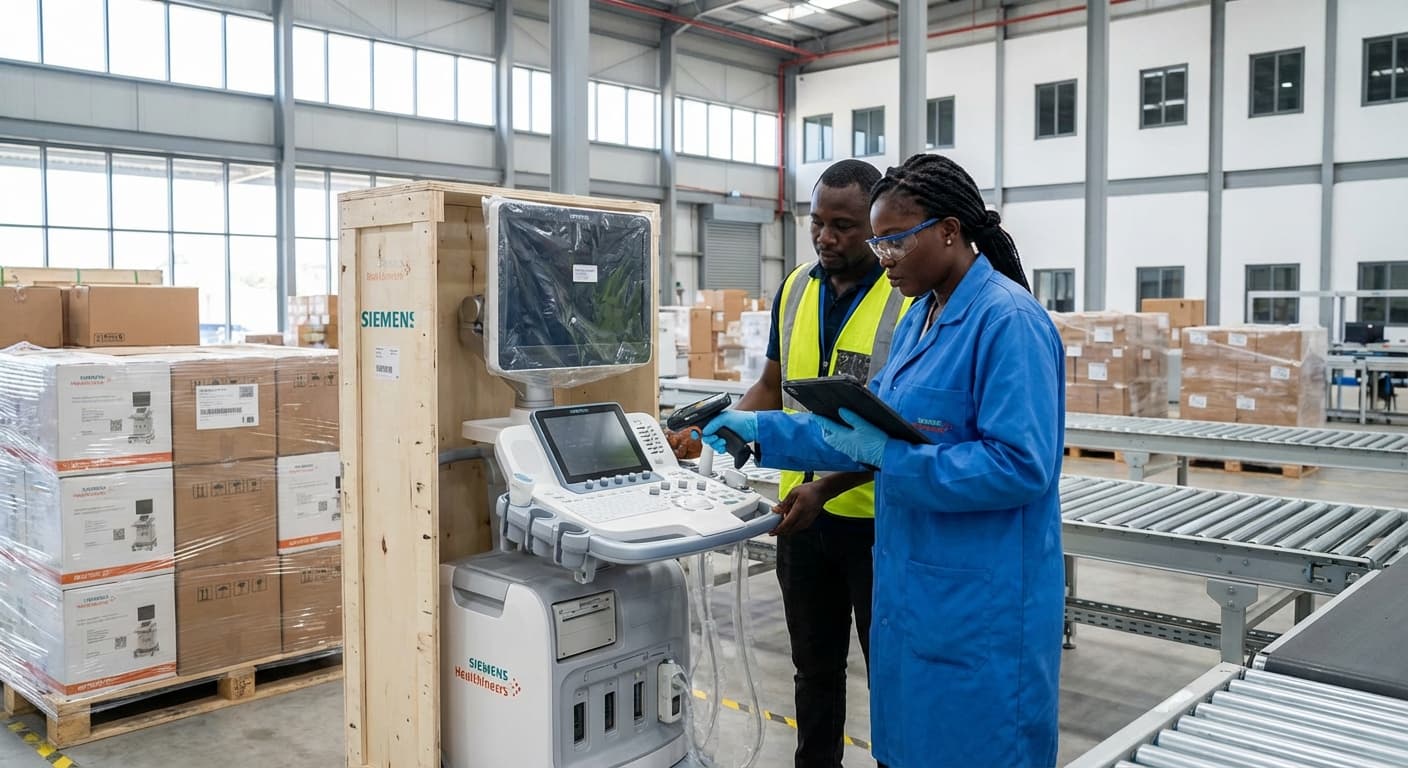
Warehouse Receiving Inspection Service (Medical Equipment) in Sudan
Engineering Excellence & Technical Support
Warehouse Receiving Inspection Service (Medical Equipment) High-standard technical execution following OEM protocols and local regulatory frameworks.
Automated Inventory & Compliance Verification
Leveraging advanced barcode scanning and RFID technology, our receiving inspection service in Sudan ensures every medical equipment item is precisely identified, tracked, and verified against purchase orders and regulatory compliance standards in real-time. This minimizes errors and expedites the crucial first step in the medical supply chain.
Expert Visual & Functional Assessment
Our Sudan-based team comprises certified inspectors with deep expertise in medical equipment. We conduct rigorous visual inspections for damage, defects, and completeness, alongside functional testing to confirm operational readiness. This safeguards against the introduction of faulty or substandard equipment into healthcare facilities.
Detailed Documentation & Traceability
Every inspection in Sudan is meticulously documented with comprehensive reports, photographic evidence, and digital records. This robust traceability system provides a clear audit trail, essential for regulatory compliance, warranty claims, and efficient inventory management within the Sudanese healthcare sector.
What Is Warehouse Receiving Inspection Service (Medical Equipment) In Sudan?
Warehouse Receiving Inspection Service for Medical Equipment in Sudan is a critical process designed to verify the condition, conformity, and completeness of medical equipment upon arrival at designated warehouses or storage facilities within Sudan. This service ensures that procured medical devices and supplies meet predefined specifications, regulatory standards, and are fit for their intended purpose before being released for distribution or deployment. It acts as a quality assurance gate, mitigating risks associated with damaged, non-compliant, or incomplete shipments.
| Inspection Stage | Objective | Key Activities | Potential Outcome |
|---|---|---|---|
| Pre-Shipment (if applicable) | Verify conformity before international dispatch. | Visual inspection, documentation check, basic functional test. | Confirmation of shipment accuracy, reduced transit risks. |
| Arrival at Warehouse (Primary Focus) | Confirm receipt accuracy and condition upon entry. | Visual inspection, physical verification, damage assessment, documentation review. | Accurate inventory, identification of transit damage, compliance verification. |
| Post-Arrival (Detailed Inspection) | In-depth verification of functionality and completeness. | Detailed functional testing, calibration checks, accessory verification, serial number logging. | Confirmation of operational readiness, detailed record-keeping for maintenance and warranty. |
| Non-Conformance Handling | Address any deviations from expected standards. | Reporting, photographic evidence, communication with supplier/shipper, initiation of claims or returns. | Resolution of issues, prevention of substandard equipment entering the supply chain. |
| Release to Inventory/Distribution | Approve equipment for onward movement. | Final clearance based on successful inspection, updating inventory systems. | Ensured quality and compliance of distributed medical equipment. |
Typical Use Cases
- Large-Scale Procurement for National Health Programs: Verifying the integrity and compliance of bulk medical equipment shipments for vaccination campaigns, essential drug supply chains, or public health initiatives.
- Disaster Relief and Emergency Response: Inspecting critical medical supplies and equipment arriving during health crises or natural disasters to ensure immediate usability.
- New Hospital Construction and Equipping: Ensuring that all procured medical devices for new facilities meet specifications before installation and commissioning.
- Routine Replenishment of Medical Supplies: Regular inspection of incoming stocks for healthcare facilities to maintain quality and availability.
- Donated Medical Equipment: Verifying the condition and suitability of medical equipment received as donations to ensure it meets local standards and can be serviced.
- Compliance with Sudanese Regulatory Requirements: Confirming that imported medical equipment has passed the necessary quality checks to align with the standards set by Sudanese health authorities.
Who Needs Warehouse Receiving Inspection Service (Medical Equipment) In Sudan?
A comprehensive warehouse receiving inspection service for medical equipment in Sudan is crucial for ensuring the quality, safety, and compliance of vital healthcare supplies. This service guarantees that incoming medical devices meet specified standards, regulatory requirements, and are free from damage or defects before being released for use in healthcare facilities. This meticulous process safeguards patient well-being, optimizes resource allocation, and prevents costly errors and recalls. The service is particularly vital given the potential for challenges in global supply chains and the critical nature of medical equipment in a developing healthcare landscape like Sudan.
| Customer Type | Key Departments/Functions Involved | Primary Needs & Benefits of Inspection |
|---|---|---|
| Government Ministry of Health | Procurement Department, Quality Assurance Unit, Regulatory Affairs | Ensuring compliance with national standards, preventing procurement of substandard equipment, optimizing public health expenditure, safeguarding national health infrastructure. |
| Public Hospitals and Healthcare Centers | Procurement/Purchasing Department, Biomedical Engineering Department, Clinical Departments (e.g., Surgery, Radiology), Pharmacy | Verifying equipment functionality and safety, preventing patient harm, reducing equipment downtime, ensuring proper calibration, maintaining operational efficiency. |
| Private Hospitals and Clinics | Administration, Procurement Manager, Head of Medical Services, Biomedical Technicians | Protecting patient safety and reputation, ensuring return on investment, minimizing operational risks, maintaining competitive service quality. |
| NGOs and Humanitarian Aid Organizations | Logistics Department, Procurement Team, Program Managers, Medical Coordinators | Ensuring effective delivery of aid, verifying suitability of equipment for target populations, preventing waste of resources, maintaining donor trust and accountability. |
| Medical Equipment Distributors and Suppliers | Quality Control Department, Logistics and Warehouse Management, Sales and Account Management | Enhancing customer confidence, reducing post-delivery disputes, mitigating liability, ensuring adherence to contractual obligations, improving supply chain transparency. |
| International Procurement Agencies | Project Management, Logistics and Supply Chain, Quality Assurance Specialists | Meeting donor requirements, verifying project deliverables, ensuring efficient utilization of funds, mitigating risks associated with international procurement. |
| Medical Equipment Manufacturers | Quality Control, Logistics, Customer Support | Early detection of transit damage, streamlined claims processing, identifying logistical issues, ensuring product integrity upon arrival in Sudan. |
| Research Institutions and Universities | Procurement Office, Department Heads, Laboratory Managers, Technical Staff | Ensuring accuracy of research data, maintaining effectiveness of educational programs, preventing disruptions to research and teaching, validating equipment specifications. |
Target Customers and Departments Requiring Warehouse Receiving Inspection Service (Medical Equipment) in Sudan:
- Government Ministry of Health: Responsible for national health policy, procurement of essential medicines and equipment, and oversight of healthcare facilities. They require assurance that all procured medical equipment meets national and international standards.
- Public Hospitals and Healthcare Centers: These facilities are the direct users of medical equipment. They need to ensure that the equipment they receive is functional, safe, and suitable for patient care, preventing potential harm and operational disruptions.
- Private Hospitals and Clinics: Similar to public facilities, private healthcare providers rely on high-quality medical equipment for their services. Inspections ensure they are receiving value for their investments and maintaining high standards of care.
- Non-Governmental Organizations (NGOs) and Humanitarian Aid Organizations: These entities often procure and distribute medical equipment to underserved populations. Receiving inspections are essential to verify the quality and suitability of aid being delivered.
- Medical Equipment Distributors and Suppliers: While they may have their own internal quality control, an independent receiving inspection service provides an extra layer of verification, enhancing their reputation and ensuring compliance with client requirements.
- International Procurement Agencies: Organizations that procure medical equipment on behalf of Sudan or for specific projects within the country. They need independent verification of quality and compliance to meet donor or project mandates.
- Medical Equipment Manufacturers (Local and International): While they conduct their own quality control, engaging a receiving inspection service in Sudan can help them identify any transit damage or discrepancies early in the process, facilitating faster resolution with logistics providers.
- Research Institutions and Universities with Medical Programs: Require calibrated and functional equipment for teaching and research purposes. Inspections ensure the accuracy and reliability of this equipment.
Warehouse Receiving Inspection Service (Medical Equipment) Process In Sudan
This document outlines the workflow for a Warehouse Receiving Inspection Service specifically for medical equipment in Sudan. The process begins with an inquiry from a client requiring inspection of incoming medical equipment and concludes with the delivery of a comprehensive inspection report. The workflow is designed to ensure the quality, functionality, and compliance of medical equipment upon arrival, mitigating risks for healthcare providers and patients in Sudan.
| Stage | Activity | Description | Key Deliverables | Responsible Party | |||||
|---|---|---|---|---|---|---|---|---|---|
| Inquiry & Initial Consultation | Client Contact | Client contacts the inspection service provider to request medical equipment receiving inspection in Sudan. This involves understanding the client's needs, the type and volume of equipment, and the location. | Initial client requirements, understanding of the scope. | Client, Inspection Service Provider | |||||
| Scope of Work Definition | Needs Assessment & Customization | Detailed discussion to define the specific inspection parameters. This includes identifying standards (e.g., WHO, local Sudanese health regulations), inspection checklist items, testing procedures, and any specialized requirements for the medical equipment. | Defined inspection checklist, agreed-upon testing protocols, specification of applicable standards. | Inspection Service Provider, Client | |||||
| Quotation & Agreement | Proposal & Contract | Based on the defined scope of work, the inspection service provider prepares a detailed quotation. Upon acceptance, a formal agreement or contract is signed, outlining terms, fees, timelines, and responsibilities. | Formal quotation, signed service agreement/contract. | Inspection Service Provider, Client | |||||
| Pre-Inspection Planning | Logistics & Resource Allocation | Scheduling the inspection date and time, assigning qualified inspectors with relevant medical equipment expertise, preparing necessary tools, testing equipment, and documentation. Coordination with the client for site access and equipment availability. | Inspection schedule, assigned inspector(s), required equipment and tools list, confirmed site access. | Inspection Service Provider | |||||
| On-Site Inspection Execution | Physical Inspection & Testing | Inspectors arrive at the designated warehouse in Sudan. This phase involves: |
|
|
|
|
| Inspection findings (conformities and non-conformities), photographic evidence, test results. | Inspector(s) |
| Reporting & Documentation | Report Generation | Compiling a comprehensive inspection report. This report includes an executive summary, detailed findings, list of compliant and non-compliant items, photographic evidence, recommendations for corrective actions (if any), and a conclusion on the overall acceptance of the received equipment. | Detailed inspection report (electronic and/or hard copy). | Inspector(s), Inspection Service Provider | |||||
| Follow-up & Archiving | Client Communication & Record Keeping | Presenting the report to the client, discussing findings, and addressing any queries. The inspection service provider archives all inspection records and reports for future reference and audit purposes. | Client acknowledgment of report, archived inspection records. | Inspection Service Provider, Client |
Warehouse Receiving Inspection Service Workflow (Medical Equipment - Sudan)
- Inquiry & Initial Consultation
- Scope of Work Definition
- Quotation & Agreement
- Pre-Inspection Planning
- On-Site Inspection Execution
- Reporting & Documentation
- Follow-up & Archiving
Warehouse Receiving Inspection Service (Medical Equipment) Cost In Sudan
The cost of Warehouse Receiving Inspection Services for medical equipment in Sudan can vary significantly based on several factors. These services are crucial to ensure the quality, safety, and compliance of imported medical devices before they are stored and distributed. Understanding these pricing determinants is key for medical equipment importers operating in Sudan.
| Service Component/Volume | Estimated Range (SDG - Sudanese Pound) | Notes |
|---|---|---|
| Basic Visual Inspection & Documentation Review (per shipment) | 20,000 - 60,000 SDG | Covers basic checks of packaging, labeling, and accompanying documents. |
| Standard Inspection (Visual, Basic Functionality, Documentation - per shipment) | 50,000 - 150,000 SDG | Includes checks for damage, basic operational readiness, and compliance with initial documentation. |
| Comprehensive Inspection (Full Functionality, Calibration, Compliance - per shipment) | 100,000 - 300,000+ SDG | For complex equipment requiring detailed testing and verification against standards. Price increases with equipment sophistication and quantity. |
| Per Unit Surcharge (for high-volume, low-complexity items) | 1,000 - 5,000 SDG | Applicable as an add-on to shipment-based fees for individual units. |
| Specialized Equipment Inspection (e.g., MRI, CT Scanner) | 200,000 - 1,000,000+ SDG | Highly variable, dependent on specific equipment, required expertise, and testing protocols. |
| Expedited Service Fee | 20% - 50% Premium | An additional percentage on top of the standard service cost for urgent requests. |
Key Pricing Factors for Warehouse Receiving Inspection Services (Medical Equipment) in Sudan:
- {"title":"Complexity and Type of Medical Equipment","description":"Highly sophisticated or specialized medical equipment (e.g., imaging machines, surgical robots) requires more expertise, specialized tools, and time for inspection compared to simpler devices (e.g., diagnostic kits, basic medical consumables). The intrinsic risk associated with the equipment also plays a role."}
- {"title":"Volume and Quantity of Equipment","description":"The number of units or the total volume of equipment to be inspected will directly influence the labor hours and resources required, thus affecting the overall cost. Larger shipments may benefit from economies of scale on a per-unit basis, but the total cost will be higher."}
- {"title":"Scope of Inspection","description":"The depth and breadth of the inspection are critical. This can range from basic visual checks and documentation verification to comprehensive functional testing, calibration, and verification against regulatory standards (e.g., Sudan Standards and Metrology Organization - SSMO). More extensive inspections naturally incur higher costs."}
- {"title":"Inspection Provider's Expertise and Reputation","description":"Established inspection companies with a proven track record, specialized certifications, and experienced personnel often command higher fees. Their reliability and ability to provide comprehensive and accurate reports are valued."}
- {"title":"Location of Warehouse and Accessibility","description":"The geographical location of the warehouse within Sudan can impact costs due to transportation, logistics, and potentially the availability of skilled inspectors in remote areas. Difficult-to-access locations might incur surcharges."}
- {"title":"Regulatory Requirements and Documentation","description":"The complexity of Sudan's regulatory framework for medical equipment, including specific documentation requirements, can influence the time and effort needed for compliance checks. Inspections required for specific import permits or clearance processes might have associated fees."}
- {"title":"Urgency of Inspection","description":"Expedited inspection services, often required to meet tight import deadlines or market launch schedules, typically come with a premium price."}
- {"title":"Reporting and Certification Needs","description":"The format, detail level, and any specific certification or issuance of a Goods Declaration Certificate (GDC) required by the importing authority can affect the final cost."}
Affordable Warehouse Receiving Inspection Service (Medical Equipment) Options
Securing a reliable and affordable warehouse receiving inspection service for medical equipment is crucial to ensure product integrity, compliance, and timely inventory management. This service plays a vital role in preventing costly errors and potential patient safety risks. We offer flexible options designed to meet diverse budgetary needs, focusing on value bundles and strategic cost-saving measures.
| Bundle Name | Included Services | Ideal For | Estimated Cost Savings (vs. Ad-Hoc) |
|---|---|---|---|
| Essential Check | Visual inspection for damage, documentation verification, basic count accuracy. | Low-volume, non-critical equipment, start-ups. | 10-15% |
| Standard Compliance | Includes Essential Check plus functional testing (basic), serial number validation, packaging integrity check. | Moderate volume, standard medical devices, ongoing operations. | 15-25% |
| Premium Quality Assurance | Includes Standard Compliance plus detailed functional testing, calibration verification (where applicable), component check, initial condition assessment for potential future maintenance. | High-volume, high-value or critical medical equipment, stringent compliance needs. | 20-30%+ |
| Customized Solution | Tailored to specific equipment types, regulatory requirements, and client workflows. Includes a dedicated account manager. | Unique operational challenges, specialized equipment, maximum control over inspection scope. | Variable, based on scope and negotiation. |
Value Bundles & Cost-Saving Strategies
- {"title":"Tiered Inspection Packages","description":"We offer tiered packages to align with your inspection frequency and depth requirements. This allows you to select the level of service that best suits your volume and criticality of medical equipment."}
- {"title":"Volume-Based Discounts","description":"The more inspections you require, the lower the per-inspection cost. This rewards consistent partners with significant savings as their operational needs grow."}
- {"title":"Off-Peak Inspection Scheduling","description":"Scheduling inspections during non-peak hours can lead to reduced labor costs and thus, a more affordable service. We work with you to identify optimal times."}
- {"title":"Standardized Inspection Protocols","description":"Utilizing our pre-defined, comprehensive inspection protocols ensures efficiency and consistency. This reduces the time spent on each inspection, lowering overall costs."}
- {"title":"Digital Reporting & Documentation","description":"Our digital reporting system streamlines the inspection process, reduces paper waste, and provides immediate access to critical data. This efficiency translates to cost savings."}
- {"title":"Customizable Service Level Agreements (SLAs)","description":"We can tailor SLAs to match your specific needs, ensuring you only pay for the services you truly require, eliminating unnecessary expenses."}
- {"title":"Preventative Maintenance Integration (Optional)","description":"Bundling basic preventative maintenance checks with receiving inspections can identify potential issues early, preventing more expensive repairs down the line. Inquire about our integrated solutions."}
- {"title":"Long-Term Contract Incentives","description":"Committing to longer contract terms often comes with preferential pricing and dedicated service levels, offering significant cost benefits over time."}
Verified Providers In Sudan
In Sudan's evolving healthcare landscape, identifying trustworthy and competent medical service providers is paramount. Franance Health stands out as a leading platform dedicated to connecting individuals with verified and credentialed healthcare professionals. This commitment to quality assurance ensures that patients receive the highest standard of care. Their rigorous vetting process examines medical licenses, certifications, educational backgrounds, and professional experience, providing peace of mind to those seeking medical assistance.
| Credential | Franance Health Verification | Importance for Patients |
|---|---|---|
| Medical License | Mandatory & Verified | Confirms legal authorization to practice medicine in Sudan. |
| Specialty Certifications | Verified | Validates expertise in a specific medical field. |
| Educational Background | Verified | Confirms foundational medical training from accredited institutions. |
| Professional Experience | Assessed | Indicates practical application of knowledge and skills. |
| Reputation & References | Considered | Provides insight into patient satisfaction and professional standing (where applicable). |
Why Franance Health is the Best Choice for Verified Providers in Sudan:
- Uncompromising Verification Process: Franance Health employs a multi-faceted verification system to ensure all listed providers meet stringent criteria.
- Extensive Network of Specialists: Access a broad spectrum of medical disciplines, from general practitioners to highly specialized surgeons and therapists.
- Patient-Centric Approach: Focus on user experience and ease of access to quality healthcare information.
- Commitment to Transparency: Clear display of provider credentials and qualifications.
- Enhanced Patient Safety: By partnering only with verified professionals, Franance Health significantly reduces risks associated with unqualified practitioners.
Scope Of Work For Warehouse Receiving Inspection Service (Medical Equipment)
This Scope of Work (SOW) outlines the requirements for a Warehouse Receiving Inspection Service specifically for medical equipment. The service aims to ensure that all incoming medical equipment meets established quality, safety, and regulatory standards before being accepted into inventory. This SOW details the technical deliverables and standard specifications that will guide the inspection process.
| Deliverable | Description | Format | Frequency | Acceptance Criteria |
|---|---|---|---|---|
| Receiving Inspection Report | Detailed report documenting the findings of each inspection, including any discrepancies, damages, or non-conformances. Includes photographic evidence where applicable. | Electronic (PDF, Excel) and/or physical report. | Per shipment/delivery. | Report is accurate, complete, and submitted within 24 hours of inspection completion. |
| Non-Conformance Report (NCR) | Specific report detailing any identified issues that prevent acceptance of the equipment. Includes proposed disposition (e.g., return, rework, quarantine). | Electronic (PDF, Excel). | As needed, for each identified non-conformance. | NCR is clear, concise, and includes all necessary information for decision-making. Submitted within 12 hours of identifying a non-conformance. |
| Inspection Log/Database | A master record of all inspections performed, including dates, equipment details, inspection results, and reference numbers. | Electronic (Database or Spreadsheet). | Daily/Weekly updates. | Log is accurate, up-to-date, and easily searchable. |
| Photographic Evidence | High-resolution images documenting the condition of the received equipment, packaging, and any identified damages or defects. | Digital images (JPEG). | As needed, attached to inspection reports. | Images are clear, well-lit, and accurately represent the documented condition. |
| Quality Assurance Review Summary | Periodic summary of inspection activities, trends in non-conformances, and proposed areas for process improvement. | Electronic (PDF, Word). | Monthly/Quarterly. | Summary provides actionable insights and identifies areas for continuous improvement. |
Key Responsibilities
- Visual inspection of all incoming medical equipment for damage, defects, and completeness.
- Verification of product identity against purchase orders, packing lists, and manufacturer documentation.
- Confirmation of correct quantities received.
- Inspection of packaging integrity and suitability for storage and transport.
- Verification of required documentation (e.g., Certificates of Conformance, Sterilization Records, User Manuals, Regulatory Approvals).
- Basic functional testing (where applicable and specified).
- Identification and documentation of any discrepancies, damages, or non-conformances.
- Reporting of inspection results in a timely and accurate manner.
- Adherence to all relevant industry standards, regulations (e.g., FDA, ISO), and client-specific procedures.
- Maintaining a clean and organized inspection area.
Service Level Agreement For Warehouse Receiving Inspection Service (Medical Equipment)
This Service Level Agreement (SLA) outlines the performance standards for the Warehouse Receiving Inspection Service for Medical Equipment provided by [Your Company Name] to [Client Company Name]. It defines the expected response times and uptime guarantees to ensure efficient and compliant receipt of medical equipment.
| Service Component | Performance Standard | Measurement Method | Reporting Frequency | Remedy for Non-Compliance |
|---|---|---|---|---|
| Response Time - Notification to Inspection Initiation (Standard Items) | Within 2 business hours of notification. | Timestamp of notification received vs. timestamp of first inspection action logged. | Weekly | 10% discount on the monthly service fee for each instance of exceeding the response time. |
| Response Time - Notification to Inspection Initiation (Expedited/Critical Items) | Within 1 business hour of notification. (To be flagged by Client) | Timestamp of notification received vs. timestamp of first inspection action logged. | Weekly | 20% discount on the monthly service fee for each instance of exceeding the response time. |
| Receiving Inspection Completion Time | Within 4 business hours for standard shipments (up to 10 pallets). Additional time for larger or complex shipments to be agreed upon in advance. | Timestamp of inspection initiation vs. timestamp of inspection completion and documentation upload. | Weekly | Credit of 5% of the monthly service fee for each shipment exceeding the agreed completion time (without prior notification). |
| Uptime Guarantee | 99.5% during agreed Service Hours. | Monitoring of service availability and operational status. Downtime is defined as any period where the inspection service is unavailable and not performing scheduled or requested inspections. | Monthly | For every 1% or fraction thereof of downtime below the 99.5% guarantee, a credit of 5% of the monthly service fee will be applied. |
| Documentation Accuracy | 99.0% accuracy in recorded inspection details and uploaded documentation. | Audit of recorded data against original documentation and physical inspection reports. | Monthly | Corrective action plan implemented. If accuracy falls below 98% for two consecutive months, a 5% reduction in the monthly service fee will apply. |
Key Service Definitions
- Receiving Inspection: The process of verifying the identity, quantity, and condition of medical equipment upon arrival at the warehouse, including checking for damage, verifying documentation, and initiating the appropriate inventory and quality control procedures.
- Response Time: The maximum allowable time from when a notification of incoming medical equipment is received by the Service Provider to when the first action related to the receiving inspection is initiated.
- Uptime Guarantee: The percentage of time the receiving inspection service is available and operational as per the agreed-upon service schedule.
- Service Hours: The operational hours during which the receiving inspection service is actively provided. This will typically align with the client's operational hours or agreed-upon warehouse receiving times.
Frequently Asked Questions

Ready when you are
Let's scope your Warehouse Receiving Inspection Service (Medical Equipment) in Sudan project in Sudan.

Scaling healthcare logistics and technical systems across the entire continent.