
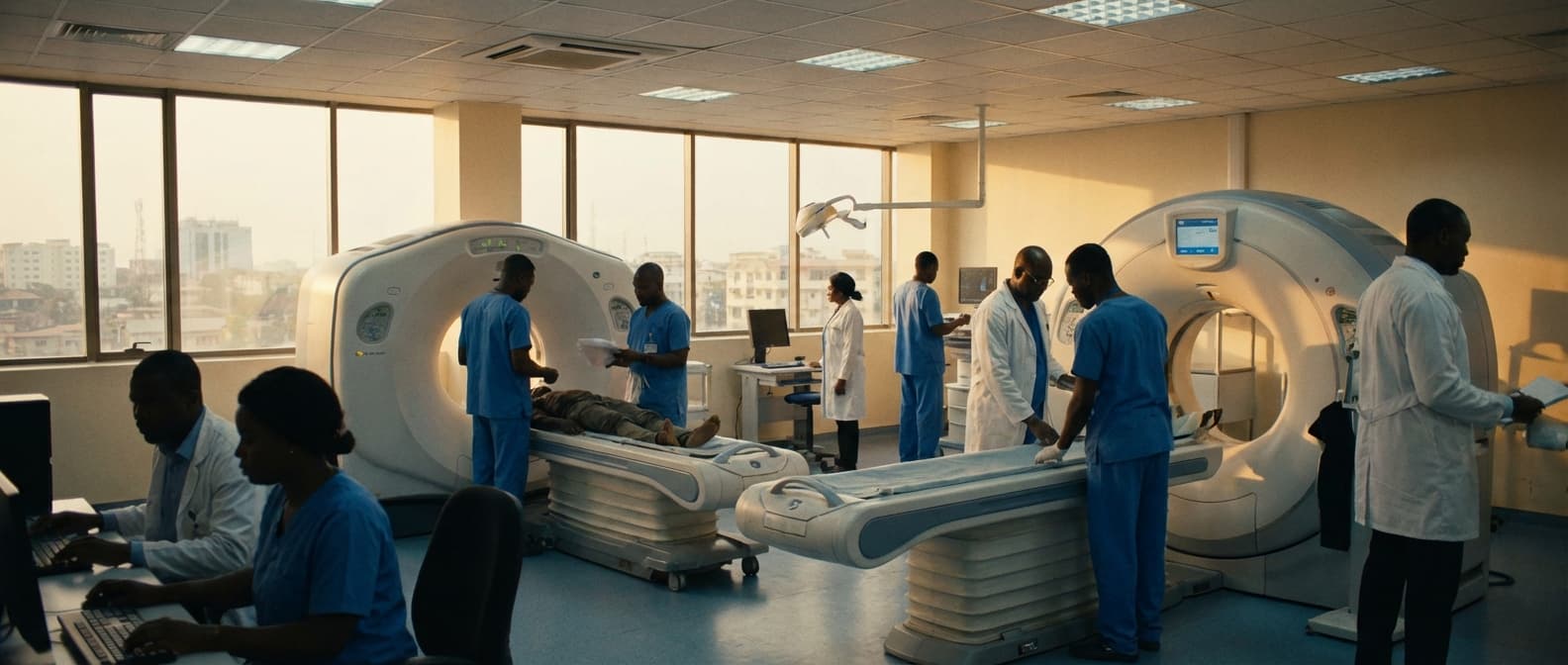
Radiology Room Design & Shielding Calculation in Sudan
Engineering Excellence & Technical Support
Turnkey room planning, shielding drawings and approvals for imaging suites. High-standard technical execution following OEM protocols and local regulatory frameworks.
Optimized Radiation Shielding for Diagnostic Imaging Suites
Engineered comprehensive radiation shielding solutions for new and existing radiology rooms in Sudan, adhering to international ALARA principles and local safety regulations. Calculations meticulously accounted for beam energy, workload, occupancy factors, and building materials to ensure optimal protection for patients, staff, and the public, minimizing stray radiation scatter and dose.
Integrated Room Layout and Workflow Efficiency
Designed radiology room layouts in Sudan that seamlessly integrate imaging equipment, control areas, and patient holding zones. Focused on creating efficient workflows to maximize throughput and minimize patient wait times, while ensuring optimal positioning for imaging procedures and adherence to radiation safety guidelines. Consideration given to modular design for future expansion and technological upgrades.
Advanced Shielding Calculation Software & Compliance
Utilized state-of-the-art radiation shielding calculation software to perform precise dosimetry and shielding assessments for various radiology modalities (X-ray, CT, fluoroscopy, mammography) across Sudan. Ensured all designs met or exceeded national and international regulatory requirements for radiation protection, providing detailed reports for certification and operational approval.
What Is Radiology Room Design & Shielding Calculation In Sudan?
Radiology Room Design & Shielding Calculation is a specialized engineering service focused on the planning, layout, and radiation protection of medical imaging facilities. This involves determining the optimal spatial arrangement of imaging equipment, patient and staff areas, control rooms, and ancillary spaces to ensure efficient workflow, patient comfort, and ALARA (As Low As Reasonably Achievable) radiation dose principles. A critical component is the accurate calculation of shielding requirements (e.g., lead, concrete, drywall thickness) for walls, floors, ceilings, and doors to prevent excessive radiation exposure to personnel and the public from X-ray, CT, MRI, nuclear medicine, and other imaging modalities. The service often includes site surveys, architectural integration, compliance with international and national radiation safety standards, and the generation of detailed design specifications and shielding blueprints.
| Service Component | Description | Importance |
|---|---|---|
| Facility Planning | Defining room sizes, equipment placement, and traffic flow for optimal operational efficiency. | Ensures smooth patient care delivery and minimizes staff exposure time. |
| Radiation Physics Modeling | Utilizing software and theoretical models to predict radiation scatter and transmission based on equipment specifications and room geometry. | Foundation for accurate shielding design and dose reduction. |
| Shielding Material Specification | Selecting appropriate materials (e.g., lead equivalents, concrete densities) and their required thicknesses. | Guarantees effective attenuation of ionizing radiation to safe levels. |
| ALARA Principle Implementation | Integrating design features that inherently promote As Low As Reasonably Achievable radiation doses for patients and staff. | Core principle of radiation safety and regulatory compliance. |
| Cost-Benefit Analysis | Balancing shielding costs with safety requirements and operational needs. | Optimizes resource allocation for effective radiation protection. |
| Commissioning Support | Providing guidance during the construction and installation phases to ensure design integrity. | Verifies that the constructed facility meets the design intent. |
Key Components of Radiology Room Design & Shielding Calculation
- Site and Equipment Assessment: Analyzing the intended imaging modalities, their radiation output, and the existing facility layout.
- Layout and Workflow Optimization: Designing room configurations for efficient patient throughput and staff ergonomics.
- Radiation Shielding Calculations: Quantifying the necessary protective materials (lead, concrete, etc.) based on workload, occupancy factors, distance, and beam orientation.
- Structural and Architectural Integration: Ensuring shielding designs are compatible with building structures and architectural plans.
- Door and Viewing Window Design: Specifying radiation-attenuating doors and leaded glass viewing windows.
- Ventilation and HVAC Integration: Considering airflow and temperature control within the shielded environment.
- Compliance and Regulatory Review: Ensuring adherence to relevant national (e.g., Sudan's Atomic Energy Commission regulations) and international (e.g., ICRP, NCRP) radiation safety guidelines.
- Documentation and Deliverables: Producing detailed design reports, shielding calculations, drawings, and specifications for construction and licensing.
Who Needs Radiology Room Design & Shielding Calculation In Sudan?
In Sudan, the need for expert radiology room design and shielding calculations is critical for ensuring patient and staff safety, optimizing workflow, and meeting regulatory compliance within healthcare facilities. This specialized service is essential for any institution involved in diagnostic imaging and radiation-based therapies. The primary beneficiaries are medical facilities that utilize or plan to utilize X-ray, CT scanners, fluoroscopy, mammography, and radiation therapy equipment.
| Customer Type | Department/Service | Key Needs Addressed |
|---|---|---|
| Public Hospitals | Radiology, Oncology | Upgrading existing facilities, new equipment installations, ensuring radiation safety for large patient volumes, compliance with national health regulations. |
| Private Hospitals | Radiology, CT Scanning, Mammography, Oncology | Establishing state-of-the-art imaging suites, attracting specialized medical professionals, meeting international standards for patient care, efficient patient throughput. |
| Specialized Medical Centers (e.g., Cardiac Centers, Orthopedic Centers) | Interventional Radiology, Diagnostic Imaging | Designing rooms for specific procedures (e.g., cath labs), minimizing scatter radiation in cramped spaces, optimizing room layout for specialized equipment. |
| Clinics with Imaging Services | General Radiology (X-ray) | Ensuring safe installation of basic X-ray units, meeting minimum shielding requirements for smaller spaces, cost-effective design solutions. |
| Radiology Departments | X-ray, CT, Fluoroscopy, Ultrasound (with shielding considerations for nearby X-ray) | Room layout optimization for workflow, patient comfort, equipment maintenance access, shielding calculations for various modalities, acoustic considerations. |
| Oncology Departments (Radiation Therapy) | Linear Accelerators (LINACs), Brachytherapy | Extensive shielding calculations for high-energy radiation, bunker design, interlock systems, patient positioning areas, safety protocols for staff and the public. |
| Emergency Departments | Trauma X-ray, Mobile CT Scanners | Rapid setup and shielding for emergency imaging, minimizing radiation exposure in high-traffic areas, integration with existing ED layout. |
| Outpatient Imaging Centers | CT, MRI (non-ionizing but requires RF shielding design), X-ray, Mammography | Creating a comfortable patient experience, efficient patient flow, maximizing space utilization, adhering to radiation safety standards for a high volume of diverse imaging needs. |
Target Customers & Departments in Sudan
- Hospitals (Public and Private)
- Specialized Medical Centers
- Clinics with Imaging Services
- Radiology Departments
- Oncology Departments (Radiation Therapy)
- Emergency Departments (for X-ray/CT)
- Outpatient Imaging Centers
Radiology Room Design & Shielding Calculation Process In Sudan
Designing and calculating radiation shielding for radiology rooms in Sudan involves a systematic process, ensuring patient and staff safety while adhering to international standards and local regulations. The workflow typically begins with an inquiry from a healthcare facility and culminates in a fully commissioned and shielded radiology room. This process requires collaboration between the client, architects, contractors, and specialized radiology shielding consultants.
| Phase | Description | Key Activities | Involved Parties | Deliverables |
|---|---|---|---|---|
| The initial stage where a healthcare facility expresses interest in establishing or upgrading a radiology department. This involves understanding their imaging modality requirements and desired room configurations. | Client consultation, understanding imaging equipment types (X-ray, CT, MRI, Fluoroscopy, Mammography, etc.), number of rooms, patient throughput, and preliminary budget. | Healthcare Facility Management, Project Initiator. | Project brief, initial requirements document. |
| A crucial step involving a physical inspection of the proposed site to gather essential information for design and calculations. | Measuring room dimensions, assessing wall construction (material, thickness), identifying adjacent areas (occupied/unoccupied), locating doors, windows, and potential radiation sources. Reviewing architectural drawings. | Radiology Shielding Consultant, Architect, Healthcare Facility Representative. | Site survey report, architectural drawings with annotations, existing condition photographs. |
| Developing the initial room layouts, considering equipment placement, workflow, patient and staff movement, and basic shielding requirements. | Creating floor plans showing room dimensions, equipment positioning, control booth location, patient entry/exit points. Identifying primary and secondary beam directions. | Radiology Shielding Consultant, Architect, Radiologist/Physicist. | Preliminary room layouts, basic workflow diagrams. |
| Defining the specific shielding requirements based on the imaging equipment, workload, and proximity of adjacent areas. | Determining workload units (W), use factors (U), occupancy factors (T), and calculating Transmission Factors (B). Selecting appropriate lead (Pb) or concrete (Rc) equivalent thickness based on national or international guidelines (e.g., NCRP, ICRP). | Radiology Shielding Consultant, Radiation Protection Officer (RPO). | Shielding specifications document, preliminary material requirements. |
| Performing precise calculations to determine the exact thickness of shielding materials needed for each wall, floor, and ceiling. This is the core of the process. | Using established formulas and software tools to calculate required shielding thickness for primary and secondary radiation. Considering factors like kVp, filtration, beam angle, distance, and workload. Performing labyrinth design for doors and windows. | Radiology Shielding Consultant (Medical Physicist/Radiation Shielding Engineer). | Detailed shielding calculation report, material thickness schedule for each surface. |
| Choosing the appropriate shielding materials and initiating the procurement process. | Specifying lead sheeting (thickness and grade), concrete mix design (if applicable), observation windows (lead glass), and shielding doors. Obtaining quotations and placing orders with approved suppliers. | Procurement Department, Contractor, Radiology Shielding Consultant. | Bill of Materials (BOM), approved supplier list, purchase orders. |
| The physical implementation of the design and shielding specifications. | Installing lead lining (ensure proper overlap and sealing), constructing concrete walls to specified thickness, installing shielding doors and windows. Close supervision by the consultant to ensure adherence to specifications. | General Contractor, Specialized Shielding Installers, Radiology Shielding Consultant. | Installed shielding infrastructure. |
| Ensuring that the installed shielding meets the calculated specifications and international standards. | Visual inspection of lead lining continuity, checking concrete densities and thicknesses. Radiation surveys to measure actual dose rates in adjacent areas and confirm shielding effectiveness. | Radiology Shielding Consultant, Radiation Protection Officer (RPO), Quality Control Inspector. | Verification report, radiation survey results. |
| The final stage where the room is officially put into operation and handed over to the healthcare facility. | Final review of all documentation, confirmation of compliance with safety regulations, training for facility staff on radiation safety protocols. Issuance of commissioning certificate. | Radiology Shielding Consultant, Healthcare Facility Management, Regulatory Authority (if applicable). | Commissioning certificate, final project report, as-built drawings. |
| Providing ongoing support and recommendations after the room is operational. | Periodic radiation safety audits, consultation on any modifications or upgrades, recalibration of equipment. | Radiology Shielding Consultant, Healthcare Facility Management. | Maintenance contracts, periodic audit reports. |
Radiology Room Design & Shielding Calculation Workflow in Sudan
- Inquiry and Needs Assessment
- Site Visit and Data Collection
- Preliminary Design and Layout
- Shielding Specification Development
- Detailed Shielding Calculations
- Material Selection and Procurement
- Construction and Installation
- Verification and Quality Control
- Commissioning and Handover
- Post-Installation Support
Radiology Room Design & Shielding Calculation Cost In Sudan
Designing a radiology room and calculating its radiation shielding requirements involves a complex interplay of factors that influence the overall cost. In Sudan, as in many other regions, these costs are subject to local economic conditions, the availability of specialized materials and expertise, and the specific demands of the radiology facility. This discussion aims to provide a general overview of pricing factors and estimated ranges for these services in Sudanese Pounds (SDG). It's crucial to note that these are indicative figures and actual costs can vary significantly based on specific project details and prevailing market rates. Professional consultation with local engineers and radiation protection specialists is essential for accurate budgeting.
| Service/Component | Estimated Cost Range (SDG) | Notes |
|---|---|---|
| Initial Consultation & Site Assessment | 50,000 - 200,000+ | Depends on the complexity and number of modalities. |
| Radiation Shielding Calculations & Report (per room) | 100,000 - 500,000+ | Varies significantly based on equipment (X-ray vs. CT vs. MRI). |
| Architectural Design Fees (for radiology suite) | 5% - 15% of construction cost (estimated) | Can be a fixed fee or percentage-based. |
| Engineering Design Fees (structural, electrical, HVAC integration) | Included within architectural fees or separate, ~2% - 5% of construction cost | Ensures all services integrate with shielding. |
| Regulatory Approval & Licensing Support | 30,000 - 150,000+ | Covers documentation, submission, and potential inspection fees. |
| Lead Shielding Material Estimation (per square meter) | 150,000 - 500,000+ per cm thickness | Highly variable based on lead price and required thickness. This is for material cost estimation, not installation. |
| Concrete Shielding Material Estimation (per cubic meter) | 40,000 - 100,000+ | For specialized high-density concrete. Cost varies with aggregate and mix design. |
Key Pricing Factors for Radiology Room Design & Shielding Calculation in Sudan:
- Facility Size & Scope: The larger the radiology suite and the more modalities it houses (e.g., X-ray, CT, MRI, interventional radiology), the more extensive the design and shielding calculations will be. This includes the number of rooms, their layouts, and the overall footprint.
- Type of Imaging Modalities: Different imaging equipment emits varying levels of radiation. CT scanners and interventional X-ray systems generally require more robust shielding than basic diagnostic X-ray units. MRI rooms have unique shielding requirements related to magnetic fields, not just radiation.
- Shielding Materials: The choice of shielding materials significantly impacts cost. Common materials include lead (Pb), concrete, and specialized baryte plaster. The thickness and density of these materials are determined by the radiation levels and types of equipment. Lead is generally more expensive than concrete.
- Architectural & Engineering Fees: This includes the cost of specialized architects experienced in healthcare facility design and radiation protection engineers who perform the calculations and specify shielding. Fees are often based on a percentage of the total project cost or a fixed fee for the design phase.
- Regulatory Compliance: Adhering to national and international radiation safety standards and obtaining necessary permits and approvals from Sudanese regulatory bodies (e.g., Nuclear and Radiation Control Directorate) incurs associated costs for documentation, inspections, and potential modifications.
- Complexity of Room Layout: Non-standard room shapes, complex plumbing or electrical requirements, and the integration of specialized equipment can increase design and construction complexity, thereby raising costs.
- Site Conditions: The existing building structure, accessibility for material delivery, and any necessary demolition or structural reinforcement will influence overall project costs.
- Consultant Expertise & Reputation: Highly experienced and reputable radiation protection consultants and architectural firms may command higher fees, but their expertise can lead to more efficient and cost-effective solutions in the long run.
- Market Fluctuations: The cost of materials (especially lead and cement) and labor can fluctuate due to inflation, import costs, and supply chain issues within Sudan.
- Installation & Construction: While this discussion focuses on design and calculation, the cost of implementing the calculated shielding (e.g., installing lead sheeting, pouring specialized concrete) is a separate, but closely related, major expense.
Affordable Radiology Room Design & Shielding Calculation Options
Designing and equipping a radiology room involves significant investment, particularly in lead shielding. Understanding cost-effective design principles and accurate shielding calculations is crucial for managing expenses without compromising safety. This document outlines value bundles and cost-saving strategies for affordable radiology room design and shielding. We'll explore how thoughtful planning, material selection, and procurement can lead to substantial savings while ensuring compliance with radiation safety standards.
| Cost-Saving Strategy | Description | Potential Benefit |
|---|---|---|
| Integrated Design Packages | Bundled architectural, shielding calculation, and layout services. | Reduced coordination issues, fewer redesigns, potentially lower overall design fees. |
| Modular Shielding | Pre-fabricated lead-lined panels or units. | Faster installation, reduced labor costs, minimized disruption. |
| Precise Shielding Calculations | Accurate determination of shielding requirements based on X-ray/gamma sources and occupancy factors. | Avoids over-spending on excess lead, ensures safety and compliance. |
| Material Alternatives | Exploring lead-rubber, dense concrete, or other approved materials where feasible. | Potential reduction in material cost per square foot. |
| Bulk Purchasing | Negotiating lower prices for materials and components by purchasing in large quantities. | Significant discounts on lead, doors, windows, and other supplies. |
| Efficient Room Layout | Optimizing the placement of equipment and barriers to minimize shielding area. | Reduced material usage and associated costs. |
| Pre-owned Equipment | Acquiring certified refurbished imaging equipment. | Substantial capital cost savings compared to new equipment. |
| Leasing Equipment | Instead of outright purchase, opting for equipment leasing agreements. | Lower upfront capital expenditure, predictable operational costs, easier upgrades. |
| Value Engineering | Systematic review of design and construction elements to find cost-effective alternatives without sacrificing essential function or safety. | Continuous identification and implementation of cost-saving opportunities throughout the project lifecycle. |
Value Bundles & Cost-Saving Strategies
- Comprehensive Design Packages: Opt for bundled services that include architectural design, radiation shielding calculations, and equipment layout. This integrated approach often leads to better coordination and reduces the risk of costly redesigns.
- Modular Shielding Solutions: Investigate modular lead-lined panels or pre-fabricated shielding units. These can be faster to install than traditional poured lead, potentially reducing labor costs and project timelines.
- Strategic Material Selection: While lead is the standard, explore alternative shielding materials or combinations (e.g., lead-rubber composites, concrete with specific densities) where appropriate and approved by regulatory bodies, which might offer cost benefits.
- Accurate Shielding Calculations from the Outset: Invest in precise radiation shielding calculations by experienced medical physicists or specialized firms. Over-shielding leads to unnecessary material costs, while under-shielding is a critical safety and compliance issue. Precise calculations optimize material usage.
- Bulk Purchasing and Vendor Negotiation: For larger projects, leverage bulk purchasing power for lead shielding materials, doors, and windows. Negotiate prices with multiple suppliers to secure the best rates.
- Phased Implementation: If budget constraints are immediate, consider phasing the radiology room setup. Prioritize essential shielding and equipment, with plans to upgrade or add components later as funds become available.
- Efficient Layout and Workflow Design: A well-designed layout minimizes the required shielding area and optimizes equipment placement. Efficient workflow can also reduce the need for certain types of protective barriers.
- Consider Pre-owned or Refurbished Equipment: For less critical or older imaging modalities, explore the option of high-quality, certified pre-owned or refurbished radiology equipment, which can significantly reduce capital expenditure.
- Leasing vs. Buying Equipment: Evaluate leasing options for imaging equipment. While outright purchase offers ownership, leasing can provide predictable monthly costs and easier upgrade paths, freeing up capital for other essential design elements.
- Energy-Efficient Lighting and HVAC: Integrate energy-efficient lighting and HVAC systems into the room design. While not directly related to shielding, these contribute to overall operational cost savings and can be factored into the project budget.
- Consultation with Experienced Professionals: Partnering with architects, medical physicists, and contractors who specialize in radiology suite design and have a track record of cost-effective solutions is paramount.
- Value Engineering during Design: Actively engage in value engineering exercises throughout the design process. This involves scrutinizing every component and process to identify opportunities for cost reduction without compromising quality or safety.
Verified Providers In Sudan
In Sudan's burgeoning healthcare landscape, identifying truly Verified Providers is paramount for patient safety and quality care. Franance Health stands out as a beacon of trust, rigorously vetting its network to ensure all partners meet the highest standards. This commitment to verification offers unparalleled peace of mind to patients seeking reliable medical services. Their credentialing process is exhaustive, encompassing rigorous checks on:
- Medical Licensure and Certification: Ensuring all healthcare professionals are duly licensed and hold current certifications in their respective fields.
- Educational Background and Training: Verifying the authenticity of degrees, diplomas, and specialized training from recognized institutions.
- Professional Experience: Thoroughly assessing the practical experience and career history of each provider.
- Reputation and Peer Review: Gathering feedback from peers and conducting background checks to ensure a strong professional reputation.
- Facility Standards (where applicable): For clinics and hospitals, assessing adherence to safety regulations, equipment maintenance, and hygiene protocols.
Choosing Franance Health means opting for a network where every provider has undergone this stringent verification, guaranteeing a commitment to excellence, ethical practice, and patient well-being. This meticulous approach distinguishes them and solidifies their position as the best choice for accessing verified healthcare in Sudan.
| Attribute | Franance Health's Verification Standard | Why it Matters for Patients |
|---|---|---|
| Licensing & Certification | Mandatory, current, and valid across all specializations. | Ensures practitioners are legally qualified and competent to provide care. |
| Education & Training | Verified against recognized institutions and curricula. | Confirms providers possess the foundational knowledge and specialized skills required. |
| Professional Experience | Thoroughly assessed for relevance and duration. | Indicates a proven track record and practical application of expertise. |
| Reputation & Ethics | Background checks and peer feedback incorporated. | Guarantees trustworthy and ethically sound medical practice. |
| Facility Standards | For partner facilities, adherence to safety, hygiene, and equipment protocols. | Ensures a safe, clean, and well-equipped environment for treatment. |
Franance Health Credentialing Pillars:
- Medical Licensure and Certification Verification
- Authenticity of Educational Background and Training
- In-depth Professional Experience Assessment
- Reputation and Peer Review Checks
- Facility Standards Compliance (for clinics/hospitals)
Scope Of Work For Radiology Room Design & Shielding Calculation
This Scope of Work (SOW) outlines the design and shielding calculation services required for a new radiology room. The objective is to ensure the room is designed to meet all safety regulations, operational needs, and technological requirements for diagnostic imaging, with a strong emphasis on radiation safety.
| Standard/Specification | Description | Relevance |
|---|---|---|
| NCRP Report No. 147: Radiation Protection and Measurement, Diagnostic X-ray Imaging | Provides recommendations on shielding calculations, dose limits, and radiation protection principles for diagnostic X-ray facilities. | Essential for determining shielding requirements for X-ray rooms. |
| NCRP Report No. 151: Management of Radiation Protection in Hospitals | Offers guidance on radiation safety programs, shielding, and facility design for medical facilities, including diagnostic imaging. | Provides a broader context for radiation safety in a hospital setting. |
| IEC 60601 Series (Medical electrical equipment) | Specifies general safety requirements for medical electrical equipment, including radiation protection aspects for equipment design. | Ensures equipment compatibility and safety within the designed room. |
| ACR Guidelines (American College of Radiology) | Provides recommendations and guidelines for facility design, equipment selection, and quality control for various imaging modalities. | Ensures best practices and optimal performance for specific imaging procedures. |
| Local Building Codes and Regulations | Adherence to all applicable national, regional, and local building codes, fire safety regulations, and accessibility standards. | Ensures legal compliance and safety for occupants and the structure. |
| ASHRAE Standards (e.g., 55, 62.1) | Standards for thermal comfort and ventilation, crucial for maintaining optimal environmental conditions for equipment and personnel. | Ensures appropriate temperature, humidity, and air quality. |
| NFPA Standards (e.g., 99) | Standards related to health care facilities, including requirements for electrical systems, gas systems, and fire protection. | Ensures the safety and integrity of the room's infrastructure. |
Technical Deliverables
- Detailed architectural drawings of the radiology room, including layout, dimensions, door and window specifications, and material selections.
- Mechanical, Electrical, and Plumbing (MEP) drawings integrated with radiology equipment requirements.
- Radiation shielding calculations and specifications based on intended imaging modalities (e.g., X-ray, CT, Fluoroscopy, Mammography, Angiography).
- Detailed shielding design drawings, indicating materials (e.g., lead, concrete), thicknesses, and placement for walls, doors, windows, and penetrations.
- Recommendations for ventilation and HVAC systems to maintain appropriate environmental conditions for equipment and personnel.
- Lighting design specifications considering ambient and task lighting requirements.
- Acoustic treatment recommendations to mitigate noise levels from equipment.
- Final report summarizing design rationale, compliance with relevant standards, and shielding justification.
- Bill of Quantities (BOQ) for all specified materials and components related to the radiology room design and shielding.
Service Level Agreement For Radiology Room Design & Shielding Calculation
This Service Level Agreement (SLA) outlines the performance expectations for the Radiology Room Design & Shielding Calculation service, focusing on response times for requests and uptime guarantees for any associated platforms or tools. This agreement is designed to ensure timely and reliable delivery of accurate radiology room design and shielding calculations.
| Service Component | Response Time Target | Definition | Uptime Guarantee | Definition |
|---|---|---|---|---|
| Initial Consultation Request | 24 Business Hours | Time from initial contact (email/phone) to acknowledge request and schedule initial consultation. | N/A | Not applicable to this ad-hoc request. |
| Delivery of Preliminary Design Concepts | 5 Business Days (post-consultation & data receipt) | Time from receiving all necessary project data (site dimensions, modality details, workload) to delivering initial design concepts for review. | N/A | Not applicable to this ad-hoc deliverable. |
| Delivery of Final Design & Shielding Report | 10 Business Days (post-final concept approval & data receipt) | Time from receiving final design approval and any remaining data to delivering the complete design package and shielding report. | N/A | Not applicable to this ad-hoc deliverable. |
| Support/Clarification Requests (during design phase) | 12 Business Hours | Time to respond to specific questions or requests for clarification related to the ongoing design and shielding calculations. | 99.5% | Percentage of time any associated online collaboration tools or client portals (if applicable) are available and operational for communication and file sharing during standard business hours (e.g., Monday-Friday, 9 AM - 5 PM local time). |
| Post-Project Support (within 30 days of final report delivery) | 2 Business Days | Time to address minor revisions or answer follow-up questions directly related to the delivered design and shielding report. | N/A | Not applicable to this defined support window. |
| Online Design/Collaboration Platform (if applicable) | N/A | N/A | 99.5% | Percentage of time the designated online platform used for design collaboration, data sharing, and communication is available and operational. Scheduled maintenance will be communicated 48 hours in advance and will occur outside of standard business hours. |
Scope of Service
- Development of architectural layouts and floor plans for radiology suites, incorporating workflow efficiency and patient/staff safety.
- Calculation of radiation shielding requirements for walls, doors, windows, and other structural elements based on imaging modalities (e.g., X-ray, CT, MRI, PET/CT) and workload projections.
- Provision of detailed shielding reports and design specifications for construction and installation.
- Consultation and support during the design and construction phases.
- Review and validation of existing shielding designs upon request.
Frequently Asked Questions

Ready when you are
Let's scope your Radiology Room Design & Shielding Calculation in Sudan project in Sudan.

Scaling healthcare logistics and technical systems across the entire continent.