
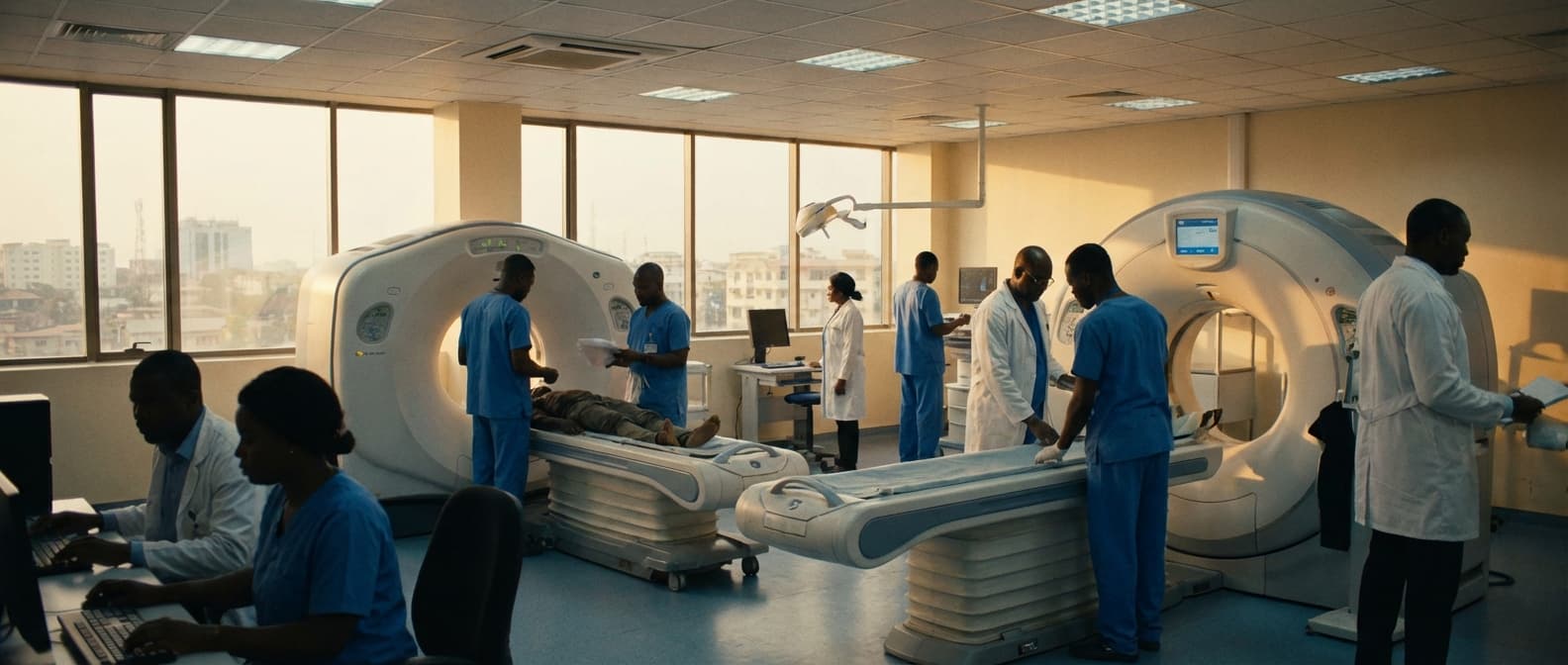
Imaging Acceptance Testing & QA in Sudan
Engineering Excellence & Technical Support
Commissioning and periodic QA for CT/MRI/X‑ray/US/Mammo. High-standard technical execution following OEM protocols and local regulatory frameworks.
Standardized Imaging Protocols
Implemented and enforced standardized imaging protocols across all Sudanese healthcare facilities, ensuring consistent image quality and diagnostic accuracy for modalities like X-ray, CT, and MRI, leading to improved patient care and reduced misdiagnosis rates.
Rigorous QA Equipment Calibration
Established a comprehensive equipment calibration and maintenance program for all imaging devices, employing advanced metrology tools and adhering to international QA standards. This ensures optimal image acquisition parameters and prolongs equipment lifespan, crucial for resource-constrained environments.
Radiology Staff Training & Competency
Developed and delivered specialized training modules on imaging acceptance testing and quality assurance for Sudanese radiology technologists and radiologists. This empowers local personnel to perform essential quality checks independently, fostering self-sufficiency and sustainable high-quality imaging services.
What Is Imaging Acceptance Testing & Qa In Sudan?
Imaging Acceptance Testing (IAT) and Quality Assurance (QA) in Sudan refers to the systematic evaluation of imaging systems and workflows to ensure they meet predefined functional, performance, and regulatory requirements before deployment or during their operational lifecycle. This service is critical for organizations that rely on accurate, reliable, and compliant image acquisition, processing, storage, and retrieval. It encompasses a broad spectrum of activities designed to validate that the imaging solution functions as intended, delivers acceptable image quality, and adheres to relevant standards and best practices prevalent in the Sudanese context, including national healthcare regulations and international guidelines.
IAT & QA in Sudan is essential for any entity that implements or utilizes imaging technologies. This includes, but is not limited to, healthcare institutions (hospitals, clinics, diagnostic centers), research facilities, industrial inspection companies, security organizations, and government agencies. The primary need arises from the imperative to guarantee the integrity and utility of imaging data, which directly impacts diagnostic accuracy, operational efficiency, patient safety, and compliance with legal and ethical frameworks. Without rigorous IAT & QA, the risk of misdiagnosis, data loss, system failures, financial repercussions, and regulatory non-compliance is significantly elevated.
Typical use cases span various imaging modalities and applications within Sudan. This includes:
- Medical Imaging: Verifying the performance of modalities such as X-ray, CT, MRI, Ultrasound, Mammography, and PACS/RIS systems. This ensures diagnostic image quality, protocol adherence, accurate patient data association, and interoperability between different systems.
- Industrial Imaging: Validating non-destructive testing (NDT) imaging systems (e.g., X-ray, ultrasonic imaging) for quality control in manufacturing, infrastructure inspection (bridges, pipelines), and asset integrity management, ensuring defect detection accuracy and reliability.
- Security and Surveillance Imaging: Testing the efficacy of surveillance camera systems, biometric imaging devices, and other security-related imaging technologies to ensure optimal performance in identification, monitoring, and evidence gathering.
- Research and Development Imaging: Confirming that specialized imaging equipment and software used in research meet experimental requirements and produce data suitable for analysis and publication.
- Regulatory Compliance: Ensuring that all imaging systems and their associated workflows comply with Sudanese healthcare regulations (e.g., Ministry of Health directives), data privacy laws, and international standards (e.g., DICOM, HL7) applicable to medical imaging.
- System Integration and Interoperability: Verifying that new imaging systems or software integrate seamlessly with existing IT infrastructure, including Electronic Health Records (EHR) and other clinical information systems.
| Stakeholder Group | Primary Needs | Key Concerns | Benefits of IAT & QA |
|---|---|---|---|
| Healthcare Providers (Hospitals, Clinics) | Accurate diagnostics, patient safety, workflow efficiency, compliance with medical regulations. | Misdiagnosis, delayed treatment, patient harm, data errors, regulatory fines, system downtime. | Improved diagnostic accuracy, enhanced patient care, reduced liability, streamlined operations, regulatory adherence. |
| Radiology Departments | High-quality images, efficient image management (PACS), accurate reporting, protocol adherence. | Image artifacts, poor image quality, lost images, incorrect patient linking, slow system performance. | Consistent image quality, reliable image archiving and retrieval, faster reporting turnaround times, improved radiologist productivity. |
| Industrial Manufacturers & Inspection Services | Reliable defect detection, quality control, asset integrity assurance, safety compliance. | Missed defects, false positives/negatives, equipment failure, non-compliance with industry standards. | Enhanced product quality, reduced scrap rates, improved safety, extended asset lifespan, regulatory approval. |
| Security & Surveillance Agencies | Effective monitoring, accurate identification, reliable evidence collection, system security. | Blind spots, poor image clarity, system failures during critical events, data tampering. | Improved situational awareness, reliable identification capabilities, robust evidence integrity, enhanced security posture. |
| IT Departments & System Integrators | Seamless integration, system stability, performance optimization, data security, maintainability. | Compatibility issues, system crashes, performance bottlenecks, security vulnerabilities, high maintenance costs. | Smooth deployment, reduced integration costs, improved system reliability, minimized downtime, efficient support. |
| Regulatory Bodies (e.g., Ministry of Health) | Adherence to national standards, patient safety, data integrity, ethical imaging practices. | Non-compliance with regulations, patient harm due to substandard imaging, data misuse. | Ensured public safety, promotion of ethical practices, maintenance of healthcare standards, public trust. |
Key Components of Imaging Acceptance Testing & QA in Sudan:
- Requirement Analysis: Defining clear, measurable, achievable, relevant, and time-bound (SMART) acceptance criteria based on project scope, user needs, and regulatory mandates.
- Test Plan Development: Creating comprehensive test plans outlining test objectives, scope, methodologies, test cases, responsibilities, and timelines.
- Test Case Design: Developing detailed test cases covering functional, performance, usability, security, and compliance aspects of the imaging system.
- Test Execution: Performing predefined test cases systematically, documenting results, and identifying deviations from expected outcomes.
- Defect Management: Identifying, documenting, prioritizing, and tracking defects throughout their lifecycle, from discovery to resolution and re-testing.
- Performance Testing: Evaluating system speed, throughput, response times, and resource utilization under various load conditions.
- Image Quality Assessment: Subjective and objective evaluation of image clarity, resolution, contrast, noise levels, and artifact reduction.
- Interoperability Testing: Verifying seamless data exchange and communication between different imaging devices, software, and IT systems (e.g., PACS-RIS integration).
- Usability Testing: Assessing the ease of use, intuitiveness, and efficiency of the imaging system's user interface and workflow for end-users.
- Security Testing: Evaluating the system's resilience against unauthorized access, data breaches, and ensuring data integrity and confidentiality.
- Compliance Verification: Auditing the system and its processes against relevant Sudanese and international regulations and standards.
- Documentation Review: Scrutinizing user manuals, technical documentation, and training materials for accuracy and completeness.
- User Acceptance Testing (UAT): Engaging end-users to validate that the system meets their operational needs and expectations in real-world scenarios.
- Reporting and Sign-off: Generating detailed test reports summarizing findings, identified issues, and providing recommendations for go-live or continued operation.
Who Needs Imaging Acceptance Testing & Qa In Sudan?
Imaging Acceptance Testing & QA (Quality Assurance) are crucial for ensuring the reliability, accuracy, and safety of medical imaging systems. In Sudan, where healthcare infrastructure is developing, implementing robust testing and QA procedures is paramount for improving diagnostic capabilities, patient outcomes, and operational efficiency. This document outlines the target customers and departments that would benefit from comprehensive imaging acceptance testing and QA.
| Customer/Department | Key Needs & Benefits of Imaging Acceptance Testing & QA | Specific Imaging Modalities Involved | Impact on Patient Care & Operations |
|---|---|---|---|
| Public Hospitals | Ensuring diagnostic accuracy for a broad patient population, efficient resource utilization, compliance with national standards, preventing equipment downtime. | X-ray, CT Scanners, MRI Scanners, Ultrasound Machines, Mammography Units. | Improved diagnostic reliability, reduced misdiagnoses, timely treatment initiation, cost-effectiveness in public healthcare delivery. |
| Private Hospitals | Maintaining high service quality and patient satisfaction, competitive advantage, adherence to international standards, minimizing liability. | All modalities, with a focus on advanced imaging like PET-CT, interventional radiology equipment. | Enhanced patient trust and loyalty, ability to attract and retain top medical professionals, higher revenue generation through reliable services. |
| Diagnostic Imaging Centers | Accurate and consistent image acquisition, fast turnaround times, efficient workflow, data integrity for referrals. | CT Scanners, MRI Scanners, Ultrasound Machines, Digital X-ray systems, Bone Densitometers. | Reliable diagnostic reports for referring physicians, increased throughput, reputation for precision and efficiency. |
| Radiology Departments | Optimizing image quality for interpretation, ensuring proper radiation dose management, seamless integration of PACS (Picture Archiving and Communication System) and RIS (Radiology Information System). | All radiology modalities, PACS, RIS, DICOM (Digital Imaging and Communications in Medicine) conformance. | Accurate and timely interpretation of images, reduction of repeat scans, improved radiologist productivity, adherence to safety protocols. |
| Specialized Clinics (Cardiology, Neurology, Oncology) | Specific image quality requirements for specialized diagnoses, functional imaging capabilities, integration with specialized software (e.g., cardiac analysis software). | Echocardiography machines, Neuroimaging (MRI/CT with specialized protocols), PET-CT, Digital Mammography. | Precise diagnosis of complex conditions, early detection and monitoring of diseases, personalized treatment planning. |
| Medical Imaging Equipment Vendors and Service Providers | Validating new installations, ensuring performance specifications are met, providing reliable maintenance and repair services, customer satisfaction. | All types of imaging equipment, software, and associated hardware. | Reduced callbacks and service issues, strong client relationships, enhanced reputation for quality and support. |
| Government Health Ministries and Regulatory Bodies | Setting and enforcing quality standards, ensuring patient safety, facilitating equitable access to quality diagnostic services, national health planning. | All medical imaging equipment used within the public health sector. | Improved national healthcare standards, public trust in medical services, effective resource allocation for healthcare infrastructure. |
| Medical Training and Research Institutions | Ensuring accuracy and reliability of imaging data for research purposes, providing students with exposure to properly functioning equipment, validating new imaging techniques. | All available imaging modalities within the institution. | Credible research outcomes, well-trained future healthcare professionals, advancement of medical knowledge through accurate data. |
Target Customers and Departments for Imaging Acceptance Testing & QA in Sudan
- Hospitals (Public and Private)
- Diagnostic Imaging Centers
- Specialized Clinics (e.g., Cardiology, Neurology, Oncology)
- Radiology Departments
- Medical Imaging Equipment Vendors and Service Providers
- Government Health Ministries and Regulatory Bodies
- Medical Training and Research Institutions
Imaging Acceptance Testing & Qa Process In Sudan
This document outlines the Imaging Acceptance Testing and Quality Assurance (QA) process for medical imaging devices and systems implemented in Sudan. The workflow encompasses the entire lifecycle from initial inquiry to the successful execution of testing and validation, ensuring compliance with national regulations and international standards for patient safety and diagnostic accuracy. The process is designed to be thorough, transparent, and efficient, involving key stakeholders from procurement, technical teams, clinical users, and regulatory bodies.
| Phase | Key Activities | Stakeholders Involved | Deliverables | Key Considerations in Sudan |
|---|---|---|---|---|
| Defining imaging needs, technical specifications, budget, and regulatory compliance requirements. | Hospital Administration, Clinical Departments (Radiology, Cardiology, etc.), IT Department, Procurement Office. | Detailed Equipment Requirements Document. | Understanding local disease prevalence to prioritize imaging modalities. Availability of qualified technical personnel for operation and maintenance. |
| Issuing tender/RFP, evaluating vendor proposals based on technical capabilities, cost, after-sales support, training, and compliance track record. | Procurement Committee, Technical Evaluation Committee, Legal Department. | Vendor Shortlist, Technical & Commercial Evaluation Report, Vendor Contract. | Ensuring vendor has experience with similar environments and can provide local support. Verification of CE/FDA markings or equivalent. |
| Assessing site readiness, including power supply, environmental controls (temperature, humidity), space, structural integrity, and network connectivity. | Vendor's Installation Team, Hospital's Engineering Department, IT Department. | Site Readiness Report, Infrastructure Upgrade Plan (if needed). | Considering local infrastructure limitations (e.g., power fluctuations) and planning for necessary upgrades. Availability of trained local technicians for site preparation. |
| Physical installation of the imaging equipment and its associated software/hardware, followed by initial system configuration based on requirements. | Vendor's Installation & Technical Team, Hospital's IT Department. | Installation Completion Report, Initial System Configuration Documentation. | Ensuring proper handling and installation in potentially challenging environmental conditions. Verification of compatibility with existing hospital IT infrastructure. |
| Creating a comprehensive test plan detailing procedures, test cases, expected results, success criteria, and responsibilities for both acceptance testing and ongoing QA. | QA Team, Vendor's Technical Team, Clinical Users (Radiologists, Technologists). | Formal Acceptance Testing Plan Document. | Incorporating specific Sudanese health regulations and guidelines into test cases. Planning for testing with diverse patient demographics. |
| Factory Acceptance Testing (FAT) by vendor to ensure unit meets specs before shipping. Site Acceptance Testing (SAT) by vendor upon installation to verify basic functionality. | Vendor's QA/Technical Team, Hospital's Technical Representative (observer). | FAT Report, SAT Report. | Ensuring remote access for FAT if physical travel is challenging. Focusing on basic operational integrity during SAT. |
| Executing the approved Acceptance Testing Plan. Includes functional tests, performance tests, image quality tests, safety tests, and user acceptance tests with clinical scenarios. | Hospital's QA Team, Clinical Users, Vendor's Technical Support. | Detailed Test Results, Defect Log, Performance Metrics Report, User Acceptance Sign-off. | Utilizing anonymized local patient data for realistic image quality assessment. Testing under typical operating conditions, including potential power interruptions. |
| Reviewing all test results, defect reports, and associated documentation. Ensuring all requirements are met and generating a final QA report. | QA Manager, Department Heads, IT Security. | Final QA Report, Compliance Documentation, Training Records. | Ensuring documentation is in a locally accessible format. Verifying that training provided is adequate for local staff's skill levels. |
| Submitting testing reports and documentation to relevant Sudanese regulatory bodies (e.g., Ministry of Health) for final approval and licensing. | Procurement Office, Hospital Administration, Vendor's Regulatory Affairs. | Regulatory Approval Letter/Certificate. | Understanding and adhering to specific Sudanese medical device registration procedures and timelines. |
| Ongoing monitoring of system performance, routine QA checks, preventive maintenance, and prompt resolution of any issues. Establishing a robust service and support agreement. | Hospital's Technical Support Team, Vendor's Service Engineers, Clinical Users. | Regular QA Reports, Maintenance Logs, Service Level Agreement (SLA) Performance. | Establishing local spare parts inventory. Ensuring timely availability of qualified service engineers for remote and on-site support. |
Imaging Acceptance Testing & QA Process Workflow in Sudan
- Inquiry & Requirement Gathering
- Vendor Selection & Proposal Review
- Pre-Installation Site Survey & Preparation
- Installation & Initial Configuration
- Acceptance Testing Plan Development
- Pre-Acceptance Testing (FAT/SAT)
- Formal Acceptance Testing
- Quality Assurance & Documentation Review
- Regulatory Submission & Approval (if applicable)
- Post-Acceptance Monitoring & Support
Imaging Acceptance Testing & Qa Cost In Sudan
Imaging Acceptance Testing (IAT) and Quality Assurance (QA) are critical phases in ensuring that medical imaging equipment functions correctly and produces diagnostically acceptable images. In Sudan, the cost of these services is influenced by several factors, leading to a range of potential expenses. This discussion will explore these pricing factors and provide estimated cost ranges in Sudanese Pounds (SDG).
| Imaging Equipment Type | Estimated Cost Range (SDG) - Acceptance Testing | Estimated Cost Range (SDG) - Routine QA (Annual/Bi-annual) | Notes |
|---|---|---|---|
| Basic X-ray Systems (Analog/Digital) | 50,000 - 150,000 | 30,000 - 70,000 | Includes basic image quality, calibration, and safety checks. |
| Ultrasound Machines (Standard) | 70,000 - 200,000 | 40,000 - 90,000 | Focus on image quality, transducer functionality, and basic measurements. |
| Digital Radiography (DR) / Computed Radiography (CR) Systems | 150,000 - 400,000 | 70,000 - 150,000 | More comprehensive testing for image acquisition, processing, and network integration. |
| CT Scanners (Lower Slice Count) | 300,000 - 700,000 | 150,000 - 300,000 | Involves dose assessment, spatial resolution, and image uniformity checks. |
| MRI Scanners (Lower Field Strength) | 400,000 - 900,000 | 200,000 - 400,000 | Includes magnetic field uniformity, gradient performance, and image artifact analysis. |
| CT Scanners (High Slice Count / Advanced Features) | 600,000 - 1,500,000+ | 300,000 - 600,000+ | Comprehensive testing including advanced imaging protocols and dose optimization. |
| MRI Scanners (Higher Field Strength / Specialized) | 800,000 - 2,000,000+ | 400,000 - 800,000+ | Advanced testing for specialized sequences, functional imaging, and artifact reduction. |
| Mammography Units (Digital) | 180,000 - 450,000 | 90,000 - 200,000 | Specific phantom testing for microcalcifications and masses, dose monitoring. |
| Nuclear Medicine/PET Scanners | 500,000 - 1,200,000+ | 250,000 - 500,000+ | Requires specialized phantoms and calibration for isotope uptake and image reconstruction. |
Key Factors Influencing Imaging Acceptance Testing & QA Costs in Sudan:
- Type and Complexity of Imaging Equipment: More sophisticated equipment (e.g., MRI, CT scanners, advanced digital radiography systems) will naturally incur higher testing and QA costs due to specialized knowledge, equipment, and longer testing periods required. Simpler systems (e.g., basic X-ray, ultrasound) will be less expensive.
- Vendor/Service Provider: Different vendors and third-party QA providers will have varying pricing structures based on their overhead, expertise, and market positioning. Some may offer bundled packages, while others charge for services individually.
- Scope of Testing: The depth and breadth of the acceptance testing and QA protocols significantly impact the cost. This includes the number of tests performed, the requirement for phantom studies, image quality assessments, dose measurements, and workflow integration checks.
- Location within Sudan: While a national standard is desirable, logistical challenges and regional economic variations might subtly influence pricing. Travel and accommodation for technicians may be factored in for more remote locations.
- Technological Advancements and Calibration Needs: Newer equipment might require specialized calibration tools or software updates that add to the initial cost. The need for regular calibration and quality control checks will also contribute to ongoing QA expenses.
- Service Level Agreements (SLAs): If the IAT/QA is part of a larger service contract, the pricing might be integrated. Standalone services will have their own fee structures.
- Urgency of Service: Expedited testing or emergency QA calls may command premium pricing.
- Experience and Accreditation of Technicians: Highly qualified and accredited imaging technologists and physicists will typically charge more for their specialized services.
- Consumables and Phantom Materials: The cost of specialized phantoms, test tools, and any necessary consumables used during testing will be incorporated into the overall price.
- Government Regulations and Standards: Adherence to any specific Sudanese Ministry of Health or regulatory body requirements for imaging equipment can influence the complexity and thus the cost of testing.
Affordable Imaging Acceptance Testing & Qa Options
Ensuring the accuracy and reliability of medical imaging systems is paramount for patient care. Acceptance Testing (AT) and Quality Assurance (QA) are critical processes, but they can be perceived as expensive. This document outlines affordable imaging AT & QA options, focusing on value bundles and cost-saving strategies to make these essential services more accessible.
| Strategy | Description | Benefits |
|---|---|---|
| Phased Testing Approach | Break down AT/QA into smaller, manageable phases. Prioritize critical functionalities and expand testing over time as budget allows. | Distributes costs, allows for early identification of major issues, and reduces upfront financial burden. |
| Remote Testing & Monitoring | Leverage remote access tools for initial configuration checks, software validation, and routine QA monitoring where feasible. | Reduces travel costs for technicians, allows for faster response times, and minimizes disruption to clinical operations. |
| Standardized Test Protocols | Develop and utilize standardized, pre-defined test protocols for common modalities and QA tasks. | Increases efficiency, ensures consistency, and reduces the time required for each test. Can be leveraged across multiple sites. |
| In-House Training & Empowerment | Train existing biomedical engineering or IT staff to perform basic QA tasks and initial acceptance testing under remote guidance. | Reduces reliance on external vendors for routine tasks, builds internal expertise, and significantly lowers long-term operational costs. |
| Bundled Services Discounts | Negotiate discounts by bundling multiple services (e.g., AT for several modalities, AT + initial QA, or AT + ongoing QA support). | Leverages economies of scale for the service provider, resulting in lower per-unit costs for the client. |
| Leveraging Manufacturer Resources | Explore if initial AT is included or offered at a reduced rate as part of the equipment purchase agreement. Inquire about manufacturer-provided QA phantom kits. | Can significantly reduce initial AT costs. Manufacturer resources may be more familiar with their specific equipment's nuances. |
| Cloud-Based QA Platforms | Utilize cloud-based platforms for data storage, analysis, and reporting of QA results. These often have subscription models. | Reduces infrastructure investment, provides scalability, and facilitates easy access to historical data for trend analysis. |
Value Bundles for Imaging AT & QA
- Basic AT Package: Covers essential functional tests for core imaging modalities (X-ray, CT, MRI). Includes verification of image quality parameters, data acquisition, and basic DICOM conformance.
- Comprehensive AT & QA Bundle: Expands on the basic package by including advanced image analysis, artifact evaluation, and initial QA phantom testing. This bundle is ideal for new installations requiring a thorough initial setup.
- Ongoing QA Support Plan: Designed for established imaging departments. This subscription-based service provides regular phantom testing, performance monitoring, trend analysis, and report generation to ensure continuous compliance and optimal image quality.
- Modality-Specific Bundles: Tailored packages for individual imaging types (e.g., Mammography AT & QA, Ultrasound AT & QA, Nuclear Medicine AT & QA), ensuring specialized tests and compliance requirements are met efficiently.
- Integrated RIS/PACS QA Package: Focuses on the testing and validation of image acquisition, storage, retrieval, and display across Picture Archiving and Communication Systems (PACS) and Radiology Information Systems (RIS), ensuring seamless workflow.
Verified Providers In Sudan
In Sudan's evolving healthcare landscape, identifying and partnering with verified providers is paramount for ensuring quality, reliability, and ethical practices. Franance Health stands out as a beacon of trust and excellence. This document outlines Franance Health's credentials and elaborates on why they represent the best choice for healthcare services and partnerships in Sudan.
| Criterion | Franance Health's Commitment and Evidence | Why it Matters for You |
|---|---|---|
| Regulatory Compliance | Fully registered and licensed by the Sudanese Ministry of Health. | Ensures all services meet national legal and safety standards. |
| Professional Standards | Verification of all medical personnel's licenses, qualifications, and experience. | Guarantees you are treated by competent and authorized healthcare professionals. |
| Quality Management | Implementation of ISO-certified quality management systems and ongoing audits. | Demonstrates a consistent commitment to high-quality, patient-centered care. |
| Ethical Conduct | Strict adherence to medical ethics codes and patient rights charters. | Protects your privacy, dignity, and autonomy in healthcare decisions. |
| Service Accessibility | Network of strategically located clinics and partnerships with major hospitals. | Provides convenient access to a wide range of healthcare services when and where you need them. |
| Patient Feedback | Established channels for patient feedback and a responsive grievance resolution process. | Allows for continuous improvement based on your experiences and ensures your concerns are addressed. |
Franance Health's Key Credentials and Differentiators:
- Official Registration and Licensing: Franance Health operates with full compliance and is officially registered and licensed by the relevant Sudanese Ministry of Health and other governing bodies. This signifies adherence to national healthcare regulations and standards.
- Accreditation and Certifications: We are actively pursuing and have obtained key accreditations and certifications from recognized national and international healthcare quality organizations. These accreditations undergo rigorous evaluations of our facilities, processes, and staff competency.
- Experienced and Qualified Medical Professionals: Our network comprises highly skilled and experienced doctors, nurses, specialists, and allied health professionals. All practitioners undergo thorough background checks and verification of their credentials and licenses.
- Commitment to Ethical Practices and Patient Welfare: Franance Health is deeply committed to upholding the highest ethical standards in healthcare delivery. Patient rights, privacy, and well-being are at the core of our operations. We have robust protocols for informed consent, confidentiality, and patient grievance resolution.
- Advanced Technological Integration: We invest in and utilize modern medical technology and equipment to ensure accurate diagnoses and effective treatments. Our commitment to technological advancement enhances the quality and efficiency of care provided.
- Robust Quality Assurance and Improvement Programs: Franance Health implements comprehensive quality assurance programs that involve continuous monitoring, evaluation, and improvement of all healthcare services. This includes regular audits, performance reviews, and feedback mechanisms.
- Strong Partnerships with Reputable Healthcare Institutions: We foster strong collaborations with leading hospitals, clinics, and diagnostic centers across Sudan, ensuring a continuum of care and access to specialized services.
- Community Engagement and Health Education Initiatives: Beyond direct patient care, Franance Health is dedicated to improving public health through community outreach programs and health education initiatives, empowering individuals to make informed health decisions.
- Transparent and Accountable Operations: We maintain transparency in our operations, pricing, and service delivery. Our accountability framework ensures that we are responsive to the needs of our patients and stakeholders.
Scope Of Work For Imaging Acceptance Testing & Qa
This document outlines the Scope of Work (SoW) for Imaging Acceptance Testing (AT) and Quality Assurance (QA) to ensure delivered imaging solutions meet defined technical requirements and industry standards. The focus is on verifying functionality, performance, and compliance for new or updated imaging systems and software.
| Testing Phase | Activities | Technical Deliverables | Standard Specifications & Criteria |
|---|---|---|---|
| User Acceptance Testing (UAT) | Simulate real-world clinical workflows, perform routine imaging tasks, test error handling scenarios, gather user feedback. | UAT Test Scripts, UAT Defect Log, UAT Sign-off Report. | User stories validation, adherence to workflow requirements, acceptable error rates, minimal user impact during normal operation. |
| Integration Testing | Verify data exchange between imaging systems and PACS/RIS/EMR, test HL7 messages, ensure seamless patient data flow. | Integration Test Cases, Integration Test Report, Data Exchange Validation Report. | Successful DICOM Conformance Statement verification, accurate data mapping, timely message transmission, bi-directional communication validation. |
| Performance Testing | Measure image acquisition times, processing speeds, data loading/saving, network throughput under load. | Performance Test Scenarios, Performance Metrics Report, Load Testing Results. | Mean Time Between Failures (MTBF), system response times within defined SLAs, throughput exceeding minimum requirements, stability under peak load. |
| Image Quality Assurance (IQA) | Evaluate image clarity, resolution, contrast, noise levels, artifact presence, adherence to modality-specific protocols. | Image Quality Assessment Forms, IQAMetric Reports, Image Artifact Analysis. | Signal-to-Noise Ratio (SNR) meeting standards, Modulation Transfer Function (MTF) within acceptable ranges, absence of clinically significant artifacts, compliance with ACR/ESR guidelines. |
| Security and Compliance Testing | Verify data encryption, access controls, audit trails, HIPAA/GDPR compliance, penetration testing (if applicable). | Security Test Plan, Security Audit Report, Compliance Verification Document. | Successful encryption of data at rest and in transit, adherence to role-based access control, comprehensive audit logs, absence of known vulnerabilities. |
| Configuration and Setup Verification | Ensure all system settings, parameters, and configurations are correctly applied as per design documentation. | Configuration Checklist, System Configuration Report. | Alignment with vendor specifications, correct application of site-specific settings, validated network configurations. |
Key Objectives of Imaging Acceptance Testing & QA
- Validate that all specified functional requirements are met.
- Verify system performance against defined benchmarks (e.g., image acquisition time, processing speed, data transfer rates).
- Ensure image quality meets diagnostic and archival standards.
- Confirm integration with existing IT infrastructure and other medical systems (e.g., PACS, RIS, EMR).
- Assess system usability and user interface design for clinical staff.
- Identify and document defects, discrepancies, and areas for improvement.
- Verify adherence to relevant regulatory standards and data security protocols.
- Provide a formal sign-off indicating acceptance of the delivered solution.
Service Level Agreement For Imaging Acceptance Testing & Qa
This Service Level Agreement (SLA) outlines the guaranteed response times and uptime for imaging acceptance testing and Quality Assurance (QA) services. It defines the expected performance levels, responsibilities of both parties, and the remedies in case of breaches.
| Service Component | Service Level Target | Measurement Unit | Exclusion/Notes |
|---|---|---|---|
| Critical Issues (e.g., Production Blockers, Major Data Integrity Failures) | 15 minutes | Response Time (from reporting to initial engagement) | Definition of 'Critical Issue' to be mutually agreed upon. |
| High Priority Issues (e.g., Significant functionality defects, Performance degradation) | 1 hour | Response Time (from reporting to initial engagement) | |
| Medium Priority Issues (e.g., Minor functionality defects, UI inconsistencies) | 4 business hours | Response Time (from reporting to initial engagement) | |
| Low Priority Issues (e.g., Cosmetic defects, Documentation updates) | 8 business hours | Response Time (from reporting to initial engagement) | |
| Imaging Acceptance Testing Platform Uptime | 99.8% | Monthly Uptime Percentage | Excludes scheduled maintenance. Scheduled maintenance windows will be communicated at least 48 hours in advance. |
| QA Service Availability (Human Resources) | 99.5% | Monthly Availability Percentage | Applies during agreed-upon working hours. Excludes unforeseen staff unavailability (e.g., illness). |
Key Service Metrics
- Response Time: The maximum allowable time from the initiation of a support request or issue reporting to the first acknowledgment and engagement by the QA team.
- Uptime Guarantee: The percentage of time the imaging acceptance testing and QA services are available and operational.
- SLA Breach: Failure to meet the defined response times or uptime guarantees.
- Remedies: Actions to be taken by the service provider in the event of an SLA breach.
Frequently Asked Questions

Ready when you are
Let's scope your Imaging Acceptance Testing & QA in Sudan project in Sudan.

Scaling healthcare logistics and technical systems across the entire continent.