
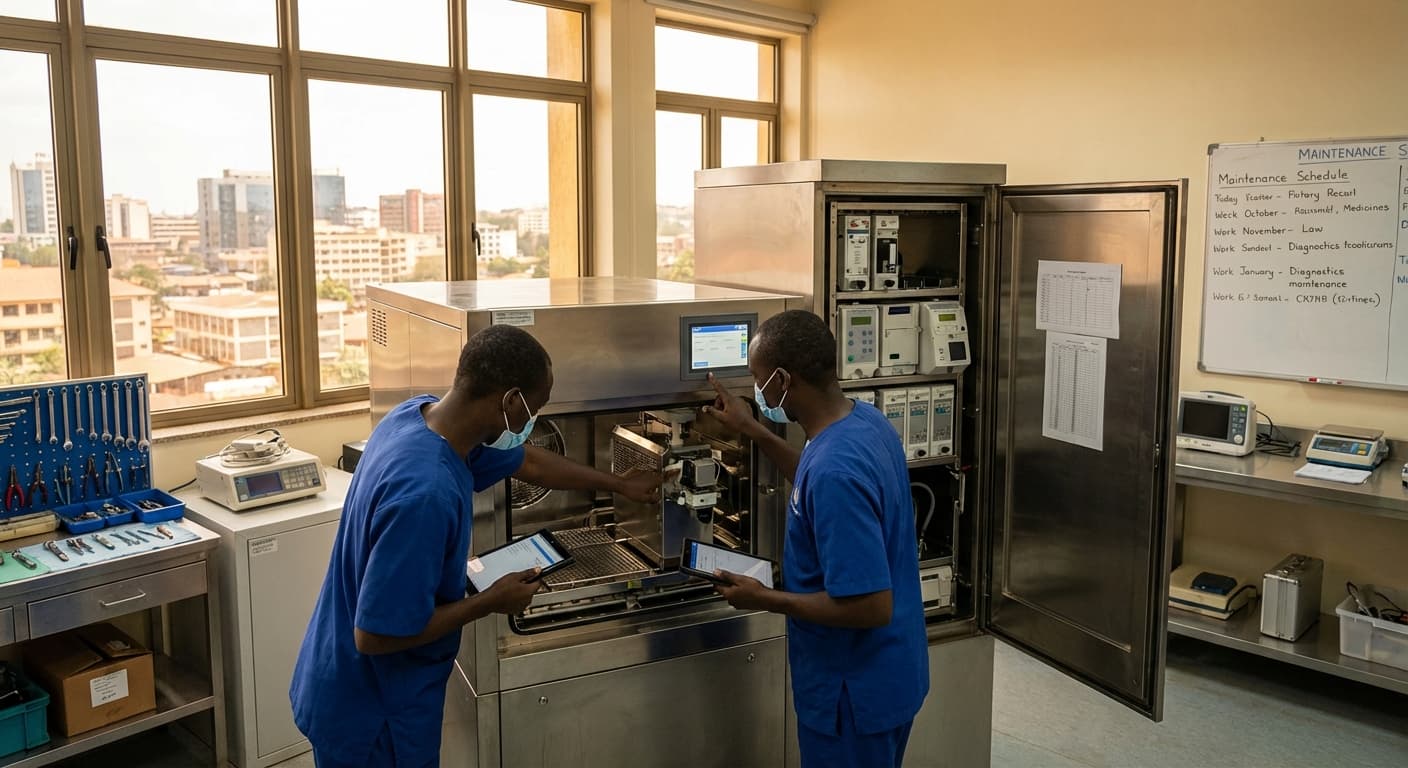
Total Cost of Ownership (TCO) & Lifecycle Budgeting Service in Sudan
Engineering Excellence & Technical Support
Total Cost of Ownership (TCO) & Lifecycle Budgeting Service High-standard technical execution following OEM protocols and local regulatory frameworks.
Optimized Resource Allocation
Leverage granular data analysis to precisely forecast and manage costs across all asset lifecycles, enabling strategic resource allocation and maximizing return on investment for Sudanese infrastructure and industrial projects.
Predictive Cost Modeling
Implement advanced predictive models to anticipate future operational, maintenance, and decommissioning expenses, mitigating risks and ensuring long-term financial stability for businesses operating in Sudan's dynamic economic landscape.
Risk Mitigation & Lifecycle Resilience
Proactively identify and quantify lifecycle risks, from procurement to disposal, developing comprehensive budgeting strategies that safeguard against unforeseen expenditures and ensure project resilience throughout their operational lifespan in Sudan.
What Is Total Cost Of Ownership (Tco) & Lifecycle Budgeting Service In Sudan?
Total Cost of Ownership (TCO) and Lifecycle Budgeting services in Sudan are analytical frameworks and advisory engagements focused on comprehensively assessing and projecting all direct and indirect costs associated with an asset, system, or project throughout its entire operational lifespan. This involves not merely the initial acquisition price but also encompasses all subsequent expenses, including installation, operation, maintenance, repair, upgrades, training, disposal, and potential residual value. Lifecycle Budgeting, an integral component, involves systematically forecasting these costs over the defined lifecycle to facilitate informed financial planning, risk mitigation, and strategic decision-making. These services provide a holistic financial perspective, moving beyond short-term expenditure to optimize long-term economic viability and strategic resource allocation.
| Who Needs TCO & Lifecycle Budgeting Services? | Typical Use Cases | ||||||||
|---|---|---|---|---|---|---|---|---|---|
| Government Entities: Ministries, public utilities, municipalities for infrastructure projects (e.g., power generation, water treatment, transportation networks), IT systems, and public asset management. | Corporate Enterprises: Businesses across all sectors for significant capital expenditure decisions, IT infrastructure investments (hardware, software, cloud services), fleet management, manufacturing equipment acquisition, and facility management. | Non-Governmental Organizations (NGOs) & Development Agencies: For assessing the long-term sustainability and financial viability of projects funded by grants or donations, including operational assets and programmatic expenditures. | Financial Institutions: For evaluating the profitability and risk associated with long-term asset financing and investment portfolios. | Educational Institutions: For managing the lifecycle costs of campus infrastructure, IT equipment, and specialized learning resources. | Large-Scale Project Developers: For comprehensive financial planning and risk assessment of multi-year construction and infrastructure projects. | ||||
| Capital Expenditure (CAPEX) Justification: Providing robust financial data to support decisions for acquiring major assets. | Procurement Strategy Development: Informing vendor selection and contract negotiation by comparing TCO across different solutions. | IT System Modernization & Cloud Migration: Assessing the total cost implications of upgrading legacy systems or transitioning to cloud-based services. | Infrastructure Project Planning: Estimating the full lifecycle costs of roads, bridges, power plants, and other public works. | Fleet Management Optimization: Determining the most cost-effective approach to acquiring, operating, and maintaining vehicles. | Energy Efficiency Investments: Evaluating the long-term savings and payback period for energy-efficient technologies. | Risk Management & Contingency Planning: Identifying potential cost overruns and developing mitigation strategies. | Budgetary Control & Performance Monitoring: Establishing baseline costs for ongoing comparison and evaluation of actual expenditure. | Asset Retirement Planning: Strategizing for the cost-effective and compliant disposal of assets. | Strategic Financial Planning: Integrating TCO insights into long-term organizational financial strategies. |
Key Components of TCO & Lifecycle Budgeting Services:
- Acquisition Costs: Initial purchase price, licensing fees, taxes, and tariffs.
- Implementation Costs: Installation, configuration, integration, and initial setup.
- Operational Costs: Energy consumption, consumables, software licenses, personnel salaries, and cloud service fees.
- Maintenance & Support Costs: Scheduled maintenance, unscheduled repairs, spare parts, warranties, and third-party support contracts.
- Upgrade & Enhancement Costs: Software updates, hardware replacements, and feature additions.
- Training & Development Costs: End-user training, IT staff training, and skill development.
- Decommissioning & Disposal Costs: Dismantling, data sanitization, environmental disposal, and salvage value assessment.
- Financing Costs: Interest on loans, depreciation, and opportunity costs.
- Indirect Costs: Productivity impacts, downtime, security breaches, and regulatory compliance.
Who Needs Total Cost Of Ownership (Tco) & Lifecycle Budgeting Service In Sudan?
In Sudan, businesses and organizations across various sectors are increasingly recognizing the strategic importance of understanding the true cost of their assets and projects over their entire lifespan. Total Cost of Ownership (TCO) and Lifecycle Budgeting services offer a comprehensive approach to financial planning, risk management, and operational efficiency. By moving beyond initial purchase price, these services empower entities to make informed decisions, optimize resource allocation, and secure long-term financial sustainability. This is particularly crucial in an evolving economic landscape like Sudan, where efficient capital deployment and predictable expenditure are paramount.
| Target Customer/Organization Type | Key Departments/Stakeholders Benefiting |
|---|---|
| Manufacturing & Industrial Companies | Operations Management, Finance & Accounting, Procurement, Maintenance & Engineering, Strategic Planning |
| Energy & Utilities (Oil, Gas, Electricity) | Asset Management, Project Management Office (PMO), Finance, Operations, Risk Management, Procurement |
| Construction & Infrastructure Development | Project Management, Finance, Engineering, Procurement, Asset Management, Planning & Development |
| Telecommunications Providers | Network Operations, Finance, IT Management, Procurement, Strategic Planning, Infrastructure Development |
| Financial Institutions (Banks, Insurance) | IT Department, Operations, Finance & Risk Management, Facilities Management, Strategic Planning |
| Government Ministries & Agencies (e.g., Transportation, Health, Education) | Public Works, Financial Planning, Procurement, Asset Management, Operations, Policy Development |
| Agricultural Businesses & Cooperatives | Farm Management, Operations, Finance, Procurement (of machinery and equipment), Strategic Planning |
| Logistics & Transportation Companies | Fleet Management, Operations, Finance, Procurement, Maintenance, Strategic Planning |
| Non-Governmental Organizations (NGOs) & International Development Agencies | Finance & Administration, Program Management, Procurement, Monitoring & Evaluation, Operations |
| Mining & Extractive Industries | Operations Management, Finance, Procurement, Maintenance & Engineering, Environmental & Safety Departments, Strategic Planning |
Who Needs TCO & Lifecycle Budgeting Services in Sudan?
- Organizations seeking to optimize long-term financial performance.
- Entities managing significant capital investments and operational expenditures.
- Businesses aiming to improve budgeting accuracy and forecast predictability.
- Companies focused on risk mitigation and operational resilience.
- Government agencies responsible for public infrastructure and asset management.
- Non-governmental organizations (NGOs) managing project funding and resource allocation.
- Businesses undergoing digital transformation or major asset upgrades.
- Organizations prioritizing sustainability and responsible resource utilization.
Total Cost Of Ownership (Tco) & Lifecycle Budgeting Service Process In Sudan
This document outlines the typical workflow for providing Total Cost of Ownership (TCO) and Lifecycle Budgeting services to clients in Sudan. The process is designed to be comprehensive, ensuring all relevant costs and future expenditures are identified, analyzed, and incorporated into strategic financial planning.
| Phase | Key Activities | Deliverables | Sudan Specific Considerations |
|---|---|---|---|
| Phase 1: Initial Inquiry & Consultation | Client expresses interest in TCO/Lifecycle Budgeting services. Initial meeting to understand client's needs, objectives, and current challenges. Discuss service offerings and potential benefits. | Meeting minutes, preliminary understanding of client needs. | Establishing trust and clear communication channels. Understanding the specific economic and regulatory environment in Sudan. |
| Phase 2: Scope Definition & Proposal Development | Detailed discussions to define the specific assets, systems, or projects to be included. Determine the desired level of detail for the analysis. Develop a formal proposal outlining services, methodology, timeline, and fees. | Defined scope of work, detailed proposal with cost breakdown and payment terms. | Ensuring clarity on local currency reporting, potential foreign exchange considerations, and any import/export related cost factors. |
| Phase 3: Data Gathering & Asset Inventory | Collection of historical and projected data related to acquisition, operation, maintenance, and disposal costs. This involves site visits (if applicable), interviews with stakeholders, and review of existing documentation. | Comprehensive asset register, raw cost data, operational parameters. | Navigating potential challenges in data availability or reliability. Adapting data collection methods to local infrastructure and communication capabilities. |
| Phase 4: Cost Identification & Categorization | Identifying and categorizing all direct and indirect costs across the asset lifecycle. This includes capital expenditure (CAPEX), operational expenditure (OPEX), and potential disposal costs. | Categorized cost breakdown (e.g., acquisition, energy, labor, repairs, decommissioning). | Accounting for local taxation, import duties, and tariffs specific to Sudan. Understanding the cost of specialized labor and local supplier pricing. |
| Phase 5: Lifecycle Cost Analysis | Applying TCO and lifecycle budgeting methodologies. This involves forecasting future costs, considering inflation, discount rates, and operational efficiencies. Development of financial models. | TCO models, lifecycle cost projections, Net Present Value (NPV) calculations, Return on Investment (ROI) analysis. | Utilizing relevant inflation rates and discount rates for the Sudanese economy. Considering the impact of political and economic stability on future cost projections. |
| Phase 6: Risk Assessment & Mitigation Planning | Identifying potential risks that could impact lifecycle costs (e.g., equipment failure, regulatory changes, supply chain disruptions). Developing strategies to mitigate these risks. | Risk register, mitigation strategies and contingency plans. | Assessing risks related to infrastructure reliability (e.g., power outages affecting operations), security concerns, and potential changes in import/export policies. |
| Phase 7: Reporting & Presentation | Compiling a comprehensive report detailing the TCO analysis, lifecycle budget, risk assessment, and recommendations. Presenting findings and recommendations to client stakeholders. | Detailed TCO/Lifecycle Budgeting report, executive summary, presentation slides. | Ensuring the report is accessible and understandable to local decision-makers. Providing explanations in Arabic if required. |
| Phase 8: Implementation Support & Review | Assisting the client in implementing recommendations. Providing ongoing support for budget management and periodic reviews of the TCO model to account for actual costs and changing conditions. | Implementation guidance, budget tracking tools, periodic review reports. | Facilitating training for local staff on budget management tools and processes. Adapting review cycles to the client's operational pace and local business practices. |
Total Cost of Ownership (TCO) & Lifecycle Budgeting Service Process in Sudan
- Initial Inquiry & Consultation
- Scope Definition & Proposal Development
- Data Gathering & Asset Inventory
- Cost Identification & Categorization
- Lifecycle Cost Analysis
- Risk Assessment & Mitigation Planning
- Reporting & Presentation
- Implementation Support & Review
Total Cost Of Ownership (Tco) & Lifecycle Budgeting Service Cost In Sudan
The Total Cost of Ownership (TCO) and Lifecycle Budgeting service is crucial for organizations in Sudan to understand the complete financial implications of acquiring, operating, and maintaining assets over their entire lifespan. This service helps in making informed procurement decisions, optimizing operational expenditures, and planning for future capital replacements. The pricing for TCO and Lifecycle Budgeting services in Sudan is influenced by several factors, leading to a range of costs in local currency (Sudanese Pound - SDG).
| Service Component / Complexity | Estimated Price Range (SDG) | Notes |
|---|---|---|
| Basic TCO Assessment (Single Asset, Limited Scope) | 250,000 - 750,000 | For straightforward assets with readily available data. May include initial acquisition, basic operating costs, and projected maintenance. |
| Standard TCO & Lifecycle Budgeting (Moderate Complexity) | 750,000 - 2,500,000 | Covers a wider range of lifecycle stages, more detailed cost breakdowns, and analysis of several assets or a moderately complex system. |
| Comprehensive TCO & Lifecycle Budgeting (High Complexity/Large Scale) | 2,500,000 - 10,000,000+ | For large-scale projects, complex integrated systems, or assets with long and intricate lifecycles. Includes in-depth risk analysis, sensitivity analysis, and detailed operational and capital expenditure forecasting. |
| Hourly Consulting Rate (Expert) | 50,000 - 150,000+ per hour | Applicable for ad-hoc consultations, data validation, or specific analytical tasks. Rate depends heavily on consultant's specialization and experience. |
| Data Collection & Validation (Per Asset/System) | 100,000 - 500,000 | If significant effort is required to gather and verify historical cost data. |
| Custom Software/Tool Development (for TCO analysis) | Negotiable (potentially millions) | Rarely needed, but for very specific or long-term needs, a custom solution might be developed. |
Key Pricing Factors for TCO & Lifecycle Budgeting Services in Sudan:
- Complexity of the asset(s) or project: Larger, more intricate, or technologically advanced assets will require more in-depth analysis and thus higher costs.
- Scope of the engagement: The extent of the lifecycle stages covered (e.g., from acquisition to disposal, or just operational phase) will impact pricing.
- Data availability and quality: If comprehensive historical data for the asset(s) is readily available, it can reduce the time and effort required, potentially lowering costs. Conversely, extensive data collection and validation will increase expenses.
- Number of assets or systems analyzed: A single asset TCO will be less expensive than analyzing an entire fleet or a complex integrated system.
- Consultant experience and expertise: Highly specialized consultants with a proven track record in TCO analysis and lifecycle budgeting, particularly within the Sudanese context, will command higher fees.
- Duration of the engagement: Longer-term projects requiring ongoing monitoring and updates will naturally be more costly.
- Reporting and deliverable requirements: The level of detail, customization, and frequency of reports can affect the final price.
- Market demand and competition: The availability of service providers in Sudan and the overall demand for such services play a role in pricing.
- Economic conditions and inflation: Fluctuations in the Sudanese Pound's exchange rate and general economic instability can influence pricing, especially if foreign expertise or software is involved.
- Travel and accommodation: If consultants need to travel to different locations within Sudan for data gathering or site visits, these costs will be factored in.
Affordable Total Cost Of Ownership (Tco) & Lifecycle Budgeting Service Options
Our Affordable Total Cost of Ownership (TCO) & Lifecycle Budgeting service empowers organizations to make smarter, more financially sound decisions about their assets and projects from inception through disposal. We go beyond initial purchase price to encompass all costs associated with an asset's entire lifespan, including acquisition, operation, maintenance, support, and eventual decommissioning. By adopting a comprehensive lifecycle budgeting approach, businesses can proactively identify and mitigate hidden costs, optimize resource allocation, and achieve significant long-term savings.
| Value Bundle | Key Inclusions | Ideal For | Cost-Saving Strategies Focus |
|---|---|---|---|
| Essential TCO Assessment | Initial TCO framework development, core cost identification (acquisition, operation, maintenance), basic lifecycle mapping. | Small to medium-sized businesses, organizations new to TCO principles. | Identifying and controlling operational and maintenance expenses, optimizing purchasing decisions. |
| Strategic Lifecycle Budgeting | Includes Essential TCO Assessment plus: detailed maintenance planning, upgrade/replacement strategy, risk assessment, initial scenario modeling. | Growing businesses, organizations with multiple asset classes, projects with longer lifecycles. | Proactive maintenance scheduling, strategic refresh cycles, minimizing downtime costs, optimizing end-of-life asset value. |
| Comprehensive TCO Optimization | Includes Strategic Lifecycle Budgeting plus: advanced risk mitigation, detailed scenario planning with sensitivity analysis, TCO benchmarking, custom reporting dashboards, expert consultation on long-term cost reduction initiatives. | Large enterprises, organizations with complex IT infrastructure, mission-critical assets, organizations seeking maximum ROI from asset investments. | Minimizing total lifecycle costs through strategic sourcing, optimizing energy consumption, implementing predictive maintenance, exploring alternative technologies, maximizing resource utilization. |
Key Components of Our TCO & Lifecycle Budgeting Service:
- Comprehensive Cost Analysis: We meticulously analyze all direct and indirect costs across the entire lifecycle of your assets, systems, or projects.
- Risk Identification & Mitigation: Proactively identify potential cost overruns and operational risks, developing strategies to minimize their impact.
- Value Bundle Options: Tailored packages designed to meet diverse organizational needs and budgets, offering enhanced value and focused expertise.
- Cost-Saving Strategy Development: Expert guidance on implementing proven strategies to reduce TCO and optimize lifecycle expenditures.
- Scenario Planning & Forecasting: Develop robust financial models to predict future costs and support strategic decision-making.
- Performance Benchmarking: Compare your TCO against industry best practices to identify areas for improvement.
- Customized Reporting & Insights: Clear, actionable reports that provide deep insights into cost drivers and savings opportunities.
Verified Providers In Sudan
In Sudan's burgeoning healthcare landscape, identifying reliable and high-quality medical service providers is paramount for ensuring patient well-being. Franance Health stands out as a beacon of trust and excellence, backed by rigorous credentialing processes and a commitment to superior patient care. This document outlines why Franance Health's verified providers are the optimal choice for your healthcare needs in Sudan.
| Credentialing Aspect | Franance Health's Verification Process | Benefit to Patients |
|---|---|---|
| Professional Qualifications | Verification of medical licenses, degrees, board certifications, and specialty training from recognized institutions. | Ensures providers possess the necessary expertise and formal education to deliver safe and effective care. |
| Clinical Experience | Thorough review of past employment, professional references, and documented patient outcomes. | Guarantees that providers have practical experience in managing various medical conditions. |
| Reputation and Ethics | Background checks, review of any disciplinary actions, and assessment of peer and patient feedback. | Confirms providers adhere to high ethical standards and have a positive professional standing. |
| Facility Standards | Inspection of medical facilities for compliance with safety regulations, infection control protocols, and availability of essential equipment. | Provides assurance of a safe and well-equipped environment for medical procedures and treatments. |
| Continuing Medical Education (CME) | Requirement for providers to demonstrate ongoing professional development and staying updated with the latest medical advancements. | Ensures patients receive care informed by current medical knowledge and practices. |
Why Franance Health's Verified Providers are the Best Choice:
- Uncompromising Quality Standards: Franance Health meticulously vets all affiliated healthcare professionals and facilities, ensuring they meet stringent international and local quality benchmarks.
- Expert Medical Professionals: Our network comprises highly qualified doctors, nurses, specialists, and technicians with extensive experience and a dedication to evidence-based medicine.
- State-of-the-Art Facilities: Verified Franance Health partners are equipped with modern medical technology and infrastructure, facilitating accurate diagnoses and effective treatments.
- Patient-Centric Approach: We prioritize patient comfort, safety, and satisfaction, fostering a supportive and empathetic healthcare experience.
- Transparency and Accountability: Franance Health maintains a transparent credentialing process and holds its providers accountable for maintaining the highest ethical and professional standards.
- Comprehensive Healthcare Services: From primary care to specialized treatments, Franance Health connects you with a wide spectrum of medical services to address diverse health concerns.
Scope Of Work For Total Cost Of Ownership (Tco) & Lifecycle Budgeting Service
This Scope of Work (SOW) outlines the services to be provided for a Total Cost of Ownership (TCO) and Lifecycle Budgeting engagement. The objective is to develop a comprehensive understanding of all costs associated with an asset, project, or system over its entire lifespan, enabling informed decision-making and robust financial planning. The services will include data collection, analysis, modeling, reporting, and the creation of standardized specifications for future TCO and lifecycle budgeting exercises.
| Phase | Activities | Key Deliverables | Standard Specifications | |||
|---|---|---|---|---|---|---|
| Define the scope of the TCO analysis (asset/project/system, timeframe, cost categories). | Project Charter/SOW Confirmation. | Defined lifecycle phases (e.g., Acquisition, Operation, Maintenance, Disposal). | Agreed-upon cost categories (e.g., capital, operational, maintenance, personnel, disposal). | Identification of key stakeholders and data sources. | |
| Gather financial and operational data from identified sources. | Data Collection Plan. | Structured data repository/database. | Data validation and cleansing procedures. | Documentation of data sources and assumptions. | |
| Develop TCO model incorporating all identified cost elements. | TCO Model (e.g., spreadsheet, specialized software). | Standardized TCO calculation methodology. | Defined discount rate for Net Present Value (NPV) calculations (if applicable). | Sensitivity analysis on key cost drivers. | |
| Forecast costs over the defined lifecycle. | Lifecycle Budget Report. | Annual/periodic budget forecasts. | Capital Expenditure (CAPEX) and Operational Expenditure (OPEX) breakdown. | Contingency planning and risk assessment. | |
| Present findings, analysis, and recommendations to stakeholders. | Final TCO & Lifecycle Budget Report. | Executive Summary. | Detailed findings and analysis. | Actionable recommendations for cost optimization and financial management. | Presentation materials. |
| Develop and document standardized templates and procedures. | TCO & Lifecycle Budgeting Standards Manual. | Reusable TCO model templates. | Standard data collection templates. | Training materials for internal use (optional). |
Objectives of TCO & Lifecycle Budgeting Service
- To accurately quantify all direct and indirect costs associated with an asset/project/system from acquisition to disposal.
- To establish a baseline for future financial planning and budgeting related to the asset/project/system.
- To identify cost drivers and potential areas for cost optimization throughout the lifecycle.
- To provide a data-driven basis for investment decisions, upgrades, replacements, and operational strategies.
- To develop standardized methodologies and templates for consistent TCO and lifecycle budgeting.
- To enhance financial transparency and accountability.
Service Level Agreement For Total Cost Of Ownership (Tco) & Lifecycle Budgeting Service
This Service Level Agreement (SLA) outlines the performance expectations and guarantees for the Total Cost of Ownership (TCO) & Lifecycle Budgeting Service. It defines the responsibilities of both the Service Provider and the Client to ensure the successful delivery and utilization of the TCO & Lifecycle Budgeting services.
| Service Component | Response Time (for support inquiries) | Uptime Guarantee (platform availability) |
|---|---|---|
| Platform Access & Core Functionality | Within 4 business hours | 99.8% (measured monthly) |
| Report Generation Requests | Within 8 business hours (for standard reports) | N/A |
| Bug Fixes (Severity 1 - Critical/System Down) | Within 2 business hours for initial response, resolution target within 8 business hours | N/A |
| Bug Fixes (Severity 2 - Major Functionality Impaired) | Within 4 business hours for initial response, resolution target within 24 business hours | N/A |
| Bug Fixes (Severity 3 - Minor/Cosmetic Issues) | Within 8 business hours for initial response, resolution target within 5 business days | N/A |
| New Feature Requests/Consultation | Within 2 business days for initial acknowledgment, further discussion scheduled as needed | N/A |
Service Scope
- Provision and maintenance of the TCO & Lifecycle Budgeting platform.
- Regular updates and enhancements to the platform's features and capabilities.
- User training and support for effective platform utilization.
- Generation of TCO and lifecycle cost reports based on client-provided data and established methodologies.
- Consultation services related to TCO analysis and lifecycle budgeting strategies.
- Data security and privacy assurance in accordance with industry best practices and applicable regulations.
Frequently Asked Questions

Ready when you are
Let's scope your Total Cost of Ownership (TCO) & Lifecycle Budgeting Service in Sudan project in Sudan.

Scaling healthcare logistics and technical systems across the entire continent.