
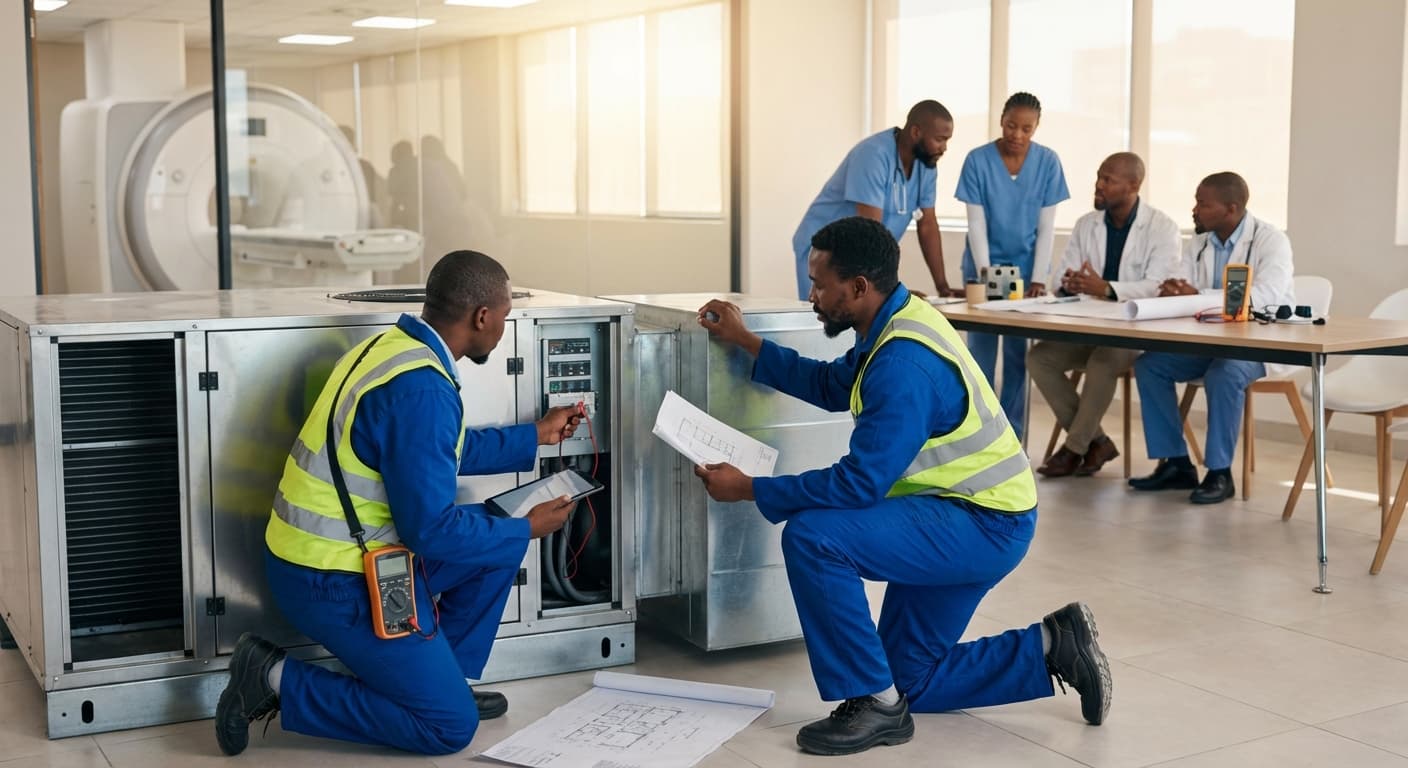
Site Readiness Assessment Service (Space/Access/HVAC/Power/Shielding) in Sudan
Engineering Excellence & Technical Support
Site Readiness Assessment Service (Space/Access/HVAC/Power/Shielding) High-standard technical execution following OEM protocols and local regulatory frameworks.
Strategic Site Selection & Planning
Leveraging advanced geospatial analysis and local environmental data, we identify optimal locations in Sudan for your critical infrastructure. This ensures access to necessary utilities (power, water), minimizes environmental risks, and facilitates efficient logistics, ultimately de-risking your deployment and future expansion.
Robust Power & HVAC Infrastructure Assessment
We conduct thorough evaluations of existing power grid stability and potential for grid integration, alongside precise assessment of HVAC requirements for sensitive equipment in Sudan's diverse climates. Our analysis ensures your operations have reliable, climate-controlled power solutions, preventing costly downtime and equipment failure.
Comprehensive Shielding & Environmental Risk Analysis
Our service meticulously assesses environmental factors in Sudan, including seismic activity, dust ingress, and potential for electromagnetic interference. We provide detailed recommendations for shielding solutions and mitigation strategies to safeguard your sensitive equipment and ensure operational integrity against local environmental challenges.
What Is Site Readiness Assessment Service (Space/access/hvac/power/shielding) In Sudan?
The Site Readiness Assessment Service (Space/Access/HVAC/Power/Shielding) in Sudan is a critical pre-deployment evaluation for organizations intending to establish or upgrade infrastructure within the country. This service systematically assesses the suitability and capacity of a proposed physical location to support specific technological or operational requirements. It encompasses a multi-faceted examination of key environmental and logistical parameters crucial for the successful and reliable functioning of sensitive equipment and systems, such as data centers, telecommunication hubs, research facilities, or any installation demanding controlled environmental conditions and robust power supply. The assessment aims to identify potential risks, bottlenecks, and necessary mitigation strategies before significant investment in hardware or personnel.
| Who Needs the Service? | Typical Use Cases | ||||||
|---|---|---|---|---|---|---|---|
| Telecommunication Providers (establishing new base stations, data centers) | Data Center Operators (colocation, private cloud) | Government Agencies (secure communication infrastructure, research facilities) | Financial Institutions (disaster recovery sites, data processing centers) | Healthcare Organizations (medical imaging centers, research labs) | Research and Development Institutions | International NGOs requiring robust operational bases | Any organization deploying mission-critical IT or industrial equipment in Sudan |
| Deployment of new mobile network towers and associated base station equipment. | Construction or expansion of data center facilities for hosting and cloud services. | Establishment of secure command and control centers for government or military applications. | Setting up of vital IT infrastructure for banking and financial services. | Installation of advanced medical diagnostic and research equipment. | Building of laboratories for scientific research and environmental monitoring. | Setting up of operational hubs for humanitarian aid delivery and coordination. | Deployment of industrial automation and control systems in remote or challenging environments. |
Key Components of Site Readiness Assessment:
- Space Assessment: Evaluation of physical dimensions, layout, ceiling height, floor load capacity, and overall structural integrity to accommodate the intended equipment and operational workflow. This includes assessment of potential for expansion.
- Access Assessment: Analysis of logistical pathways for equipment delivery and personnel movement, including road conditions, proximity to transportation hubs (ports, airports), security of access routes, and availability of necessary permits or clearances.
- HVAC (Heating, Ventilation, and Air Conditioning) Assessment: Determination of existing or required climate control systems to maintain optimal temperature, humidity, and air quality for equipment longevity and performance. This involves evaluating cooling capacity, redundancy, filtration, and energy efficiency.
- Power Assessment: Comprehensive analysis of the available electrical infrastructure, including grid stability, capacity of substations, redundancy (e.g., generator backup, UPS), power quality (voltage fluctuations, harmonics), and earthing/grounding systems.
- Shielding Assessment: Evaluation of the site's susceptibility to and potential for electromagnetic interference (EMI), radio frequency interference (RFI), and radiation. This includes assessment of building materials, proximity to sources of interference, and the need for specialized shielding measures for sensitive electronics.
Who Needs Site Readiness Assessment Service (Space/access/hvac/power/shielding) In Sudan?
In Sudan, a Site Readiness Assessment Service encompassing space, access, HVAC, power, and shielding is crucial for a diverse range of organizations and projects. This service ensures that a proposed site is technically and logistically capable of supporting specific infrastructure and operational requirements, mitigating risks and optimizing project success. The assessment is particularly vital for entities undertaking significant capital investments, deploying sensitive technologies, or operating in demanding environments.
| Customer Segment | Key Departments/Functions | Specific Needs Addressed | Justification for Sudan Context |
|---|---|---|---|
| Government Agencies | IT Departments, Infrastructure Planning, Public Works, National Security | Establishing secure and reliable government data centers, command and control centers, essential service infrastructure (e.g., power grids, water treatment), and secure communication networks. | Ensuring national security, efficient public service delivery, and modernization of critical infrastructure in a developing nation with potential logistical and environmental challenges. |
| Telecommunications Companies | Network Operations, Infrastructure Deployment, Site Acquisition, Engineering | Building new base stations, upgrading existing cell towers, establishing fiber optic network hubs, and deploying critical network infrastructure requiring specific power, cooling, and physical space. | Expanding mobile and internet coverage across diverse terrains, often in remote areas with limited existing infrastructure, and ensuring network resilience against environmental factors. |
| Data Center Providers | Operations, Design & Engineering, Business Development, Facilities Management | Constructing or expanding data centers that demand robust power, advanced cooling systems (HVAC), secure physical space, reliable access for maintenance and upgrades, and potentially electromagnetic shielding for sensitive equipment. | Meeting the growing demand for cloud services, digital transformation initiatives, and data storage in a region with evolving digital economy, while mitigating power instability and ensuring high availability. |
| Energy Sector Companies (Renewable & Traditional) | Project Development, Engineering, Operations & Maintenance, Site Management | Establishing solar farms, wind power installations, power substations, or oil and gas processing facilities that require specific land availability, access for heavy equipment, reliable power supply for operations, and potentially specialized environmental controls. | Developing new energy sources to meet growing demand and address infrastructure deficits, often in remote locations with unique environmental conditions and requiring resilient operational setups. |
| Industrial Manufacturers | Operations, Engineering, Facilities Management, Supply Chain | Setting up or expanding manufacturing plants, factories, or processing units that need adequate space, robust power for machinery, effective HVAC for controlled environments, and accessible logistics for raw materials and finished goods. | Attracting investment and driving economic diversification through industrialization, which requires reliable infrastructure to support complex production processes and a stable operational environment. |
| Healthcare Institutions | Facilities Management, IT Departments, Biomedical Engineering, Administration | Building or upgrading hospitals, specialized clinics, or medical research centers that require secure, climate-controlled spaces for sensitive medical equipment, reliable power for life support systems, and easy access for patients and emergency services. | Improving healthcare access and quality by establishing modern medical facilities, which necessitates high standards of environmental control, power reliability, and operational continuity. |
| Research and Development Facilities | Laboratory Management, Technical Operations, IT, Project Management | Establishing laboratories, testing facilities, or pilot plants that often require precise environmental controls (temperature, humidity), specialized power, secure space, and advanced shielding for sensitive experiments and equipment. | Fostering innovation and technological advancement in sectors like agriculture, water management, or materials science, which often involves cutting-edge research demanding specialized infrastructure. |
| International Development Organizations | Program Management, Logistics, Infrastructure Development, Field Operations | Implementing projects requiring new infrastructure such as schools, water treatment plants, or logistics hubs, which need thorough site assessments to ensure feasibility, sustainability, and alignment with project goals. | Supporting Sudan's development agenda through various projects, requiring careful planning and resource allocation to overcome existing infrastructure limitations and ensure project success in a challenging socio-economic landscape. |
| Security and Defense Organizations | Strategic Planning, Facilities Engineering, IT Security, Operations | Developing or upgrading military bases, intelligence facilities, or command centers that demand high levels of security, robust power, controlled environments, and often specialized shielding against electronic interference or threats. | Enhancing national security capabilities through secure and resilient infrastructure, requiring meticulous site assessments to meet stringent operational and security requirements. |
| Mining and Natural Resource Exploration Companies | Exploration Management, Operations, Logistics, Environmental Health & Safety | Establishing exploration camps, processing facilities, or logistical hubs in remote areas, requiring assessments of space, access for heavy machinery, reliable power generation, and environmental controls for operational efficiency and safety. | Developing Sudan's rich natural resources, which often involves operating in remote and challenging terrains where site readiness for infrastructure is paramount for exploration and extraction activities. |
Target Customers and Departments in Sudan Requiring Site Readiness Assessment Service
- Government Agencies
- Telecommunications Companies
- Data Center Providers
- Energy Sector Companies
- Industrial Manufacturers
- Healthcare Institutions
- Research and Development Facilities
- International Development Organizations
- Security and Defense Organizations
- Mining and Natural Resource Exploration Companies
Site Readiness Assessment Service (Space/access/hvac/power/shielding) Process In Sudan
This document outlines the workflow for the Site Readiness Assessment Service (Space/Access/HVAC/Power/Shielding) in Sudan, from initial inquiry to the final execution and reporting.
| Phase | Step | Description | Key Activities | Deliverables/Outputs | Responsible Party |
|---|---|---|---|---|---|
| 1.1 Inquiry Reception | Receiving the client's request for a Site Readiness Assessment. | Client submits an inquiry detailing their project needs, proposed site, and specific requirements. | Inquiry form/email, initial project scope document. | Client / Sales Team |
| 1.2 Preliminary Discussion | Understanding the client's specific needs and site context. | Discussion of project objectives, technical specifications, critical infrastructure requirements (Space, Access, HVAC, Power, Shielding), and expected timeline. Geographical location confirmation. | Clarified project requirements, preliminary assessment scope. | Sales Team / Technical Lead | |
| 2.1 Site Survey Scope Definition | Defining the detailed scope of work for the site assessment. | Based on preliminary discussions, defining the specific parameters to be assessed for Space, Access, HVAC, Power, and Shielding. Identifying any unique Sudanese context-specific challenges (e.g., power grid stability, dust, temperature extremes). | Detailed Scope of Work document. | Technical Lead |
| 2.2 Proposal Generation | Creating a formal proposal for the assessment service. | Developing a proposal outlining the scope, methodology, deliverables, timeline, team, and cost. Includes considerations for local Sudanese regulations and logistical challenges. | Formal Proposal document, including quotation. | Sales Team / Technical Lead | |
| 2.3 Client Acceptance & Contract | Formalizing the agreement with the client. | Client reviews and accepts the proposal. Contractual agreements are signed. | Signed Contract/Agreement. | Client / Legal & Finance Teams | |
| 3.1 Pre-Site Visit Preparation | Preparing for the physical assessment of the site. | Gathering necessary equipment (measurement tools, cameras, safety gear), arranging local logistics (transportation, accommodation, local permits if required), briefing the assessment team on specific Sudanese conditions and potential risks. | Site visit checklist, logistical plan, safety briefing. | Assessment Team Lead |
| 3.2 Site Visit Execution | Conducting the physical inspection and data collection. | Space: Measuring available dimensions, ceiling heights, structural integrity. Access: Evaluating entry points, road access, security, proximity to utilities. HVAC: Assessing existing systems, ambient temperature, humidity, ventilation capabilities, potential for upgrades/new installations. Power: Analyzing grid stability, available capacity, backup power options (generators), electrical infrastructure quality. Shielding: Evaluating existing RF, EMI, or radiation shielding, or the feasibility of implementing it. | Raw site data (measurements, photos, videos), observations, notes on local conditions (e.g., dust levels, power outages). | Assessment Team | |
| 3.3 Local Stakeholder Engagement | Interacting with relevant local parties. | If necessary, liaising with site owners, facility managers, local utility providers, or government officials to gather additional information or clarify details. | Minutes of meetings with local stakeholders. | Assessment Team | |
| 4.1 Data Compilation & Analysis | Processing and interpreting the collected site data. | Consolidating all collected data. Analyzing against project requirements and international standards. Identifying gaps, risks, and potential solutions specific to the Sudanese context. Assessing feasibility and recommending infrastructure upgrades. | Analyzed data, identified risks and mitigation strategies. | Assessment Team / Technical Lead |
| 4.2 Report Generation | Creating the comprehensive Site Readiness Assessment report. | Developing a detailed report including executive summary, methodology, findings for each category (Space, Access, HVAC, Power, Shielding), risk assessment, recommendations (including cost/time estimates for upgrades), and conclusion. Incorporating specific Sudanese environmental and infrastructure considerations. | Comprehensive Site Readiness Assessment Report. | Technical Lead | |
| 4.3 Internal Review | Ensuring the quality and accuracy of the report. | Peer review of the report by senior technical staff before submission to the client. | Reviewed and approved report. | Senior Technical Staff | |
| 5.1 Report Presentation | Delivering the assessment findings to the client. | Presenting the report to the client, discussing findings, answering questions, and elaborating on recommendations. This can be done remotely or in person. | Presentation slides, clarified understanding of the report. | Technical Lead / Project Manager |
| 5.2 Post-Delivery Support | Providing ongoing assistance to the client. | Offering further consultation on recommendations, assisting with vendor selection for any required upgrades, or addressing any post-report queries. | Ongoing client support, follow-up consultations. | Project Manager / Technical Lead | |
| 5.3 Project Closure | Formally closing the assessment project. | Ensuring all deliverables have been met and the client is satisfied. | Project closure confirmation. | Project Manager |
Service Workflow: Site Readiness Assessment (Sudan)
- The Site Readiness Assessment Service evaluates a potential site's suitability for specific installations (e.g., telecommunications equipment, data centers, specialized labs) by examining critical infrastructure elements: Space, Access, HVAC (Heating, Ventilation, and Air Conditioning), Power, and Shielding.
- This process is crucial in Sudan due to potential challenges related to infrastructure availability, reliability, and specific environmental conditions.
- The workflow is designed to be systematic, ensuring a comprehensive evaluation and clear communication throughout the process.
Site Readiness Assessment Service (Space/access/hvac/power/shielding) Cost In Sudan
Assessing site readiness for projects in Sudan, particularly for specialized infrastructure like space, HVAC, power, and shielding, involves a nuanced pricing structure. The "Site Readiness Assessment Service" encompasses a comprehensive evaluation to ensure a location meets the specific technical and logistical demands of a project. In Sudan, this service's cost is influenced by a multitude of factors, making it challenging to provide a single, definitive price. However, understanding these factors allows for a reasonable estimation of cost ranges in Sudanese Pounds (SDG). The service typically includes evaluating available physical space, ensuring adequate access for equipment and personnel, assessing the existing or required HVAC systems for environmental control, verifying power supply capacity and reliability, and determining the necessary shielding (e.g., for radiation or electromagnetic interference).
| Assessment Scope | Estimated Cost Range (SDG) | Notes |
|---|---|---|
| Basic Space & Access Assessment (e.g., for small office or storage) | 150,000 - 400,000 SDG | Covers initial site survey for physical dimensions, accessibility for standard vehicles, and basic structural integrity checks. |
| Integrated HVAC & Power Assessment (e.g., for light industrial or server room) | 350,000 - 900,000 SDG | Includes evaluation of existing HVAC capacity, power grid stability, and potential upgrade requirements. May involve basic load calculations. |
| Comprehensive Site Readiness (Space, HVAC, Power, basic Shielding - e.g., for small lab or sensitive equipment) | 700,000 - 1,500,000 SDG | Detailed analysis of all core elements, including initial assessment of shielding needs for common interference types. |
| Advanced Site Readiness with Specialized Shielding (e.g., for medical imaging, research, or high-security facilities) | 1,200,000 - 3,000,000+ SDG | Involves specialized technical expertise, potentially advanced testing equipment for radiation or EMI shielding, and detailed engineering reports. Costs can escalate significantly based on the specific shielding requirements and complexity. |
| Remote or High-Risk Location Surcharge | 10% - 30% of base cost | Applied to projects requiring significant travel, logistical planning, and security measures in challenging areas. |
| Rush Service Fee | 15% - 25% of base cost | For expedited assessment timelines. |
Key Pricing Factors for Site Readiness Assessment Services in Sudan
- Project Complexity and Scale: Larger and more complex projects requiring extensive infrastructure (e.g., data centers, manufacturing facilities) will naturally incur higher assessment costs due to the depth and breadth of evaluation needed.
- Geographic Location within Sudan: Costs can vary significantly based on the remoteness of the site. Urban centers might have more readily available expertise and infrastructure, potentially leading to lower assessment fees compared to remote or conflict-affected regions where travel and logistics become more expensive.
- Scope of Assessment: The specific elements being assessed (space, HVAC, power, shielding) will directly impact the cost. A comprehensive assessment covering all aspects will be more expensive than an assessment focused on a single element.
- Specialized Equipment Requirements: If the assessment requires specialized testing equipment (e.g., for power quality analysis, HVAC performance testing, radiation shielding verification), the rental or procurement of such equipment will add to the overall cost.
- Expertise and Qualifications of Assessors: The level of experience and specialized knowledge of the engineering and technical team performing the assessment is a crucial pricing determinant. Highly specialized expertise, especially in areas like shielding, will command higher fees.
- Travel and Accommodation: For assessors traveling to the site, costs associated with transportation, accommodation, and per diem will be factored into the service fee.
- Security and Risk Assessment: In certain regions of Sudan, security considerations and associated risk assessments can add to the overall cost of performing the site evaluation.
- Reporting and Documentation Requirements: The level of detail and format of the final assessment report, including any regulatory compliance documentation, can influence the pricing.
- Third-Party Consultations and Permitting: If the assessment requires input from local authorities, utility providers, or other third parties, associated fees or facilitation costs will be included.
- Market Demand and Competition: The availability of qualified service providers and the overall demand for such assessments in the Sudanese market can also influence pricing.
Affordable Site Readiness Assessment Service (Space/access/hvac/power/shielding) Options
Our Affordable Site Readiness Assessment Service provides a comprehensive evaluation of your location's suitability for your specific project needs. We focus on critical infrastructure elements including Space utilization, Access logistics, HVAC capabilities, Power availability, and EMI/RF Shielding requirements. Our goal is to ensure your site is optimized for efficiency and cost-effectiveness from the outset, preventing costly future modifications and delays. We offer flexible solutions tailored to various project scales and budgets.
| Value Bundle | Description | Typical Project Size | Key Deliverables | Estimated Cost Range (USD) |
|---|---|---|---|---|
| Essential Site Check | Covers fundamental space and access evaluation. Ideal for smaller, less complex projects. | Small office, workshop, basic lab | Basic space utilization report, access route assessment | $800 - $1,500 |
| Standard Infrastructure Audit | Includes space, access, HVAC, and power assessment. Suitable for most standard business operations. | Medium office, small data center, light manufacturing | Detailed reports on space, access, HVAC capacity, and power analysis | $1,500 - $3,000 |
| Advanced Readiness Package | Comprehensive assessment including all core areas plus basic shielding considerations. For projects with sensitive equipment or specific environmental needs. | Larger data centers, R&D facilities, specialized manufacturing | In-depth reports on all core areas, preliminary shielding recommendations, power redundancy analysis | $3,000 - $6,000+ |
| Custom/Specialized Assessment | Tailored to unique project requirements, including advanced shielding, specialized environmental controls, or complex logistics. | High-security facilities, specialized research, unique industrial applications | Fully customized scope of work and deliverables | Quote-based (dependent on complexity) |
Key Assessment Areas and Value Proposition
- Space Optimization: Analyzing layout, workflow, and future expansion potential to maximize usable area.
- Access & Logistics: Evaluating ingress/egress, transportation routes, and material handling capabilities.
- HVAC Efficiency: Assessing climate control systems for optimal temperature, humidity, and air quality.
- Power Infrastructure: Verifying electrical capacity, reliability, and compatibility with your equipment.
- Shielding Effectiveness: Testing and recommending solutions for electromagnetic interference (EMI) and radio frequency (RF) shielding needs.
Verified Providers In Sudan
In Sudan, ensuring access to reliable and qualified healthcare providers is paramount, especially in a landscape that can present unique challenges. Franance Health distinguishes itself by its rigorous verification process and unwavering commitment to quality, making them a leading choice for individuals and organizations seeking dependable medical services. This dedication to credentialing safeguards patients and upholds the highest standards of medical practice. When navigating healthcare options in Sudan, understanding the importance of verified providers and the comprehensive approach of Franance Health becomes crucial.
| Provider Type | Verification Criteria | Franance Health Assurance |
|---|---|---|
| Doctors & Specialists | Medical license, board certification, residency completion, clinical experience. | Verified licenses, accredited residency programs, peer reviews, ongoing CME. |
| Nurses & Allied Health Professionals | Nursing license, relevant certifications, practical experience. | Registered nurse credentials, specialized certifications (e.g., critical care, pediatrics), background checks. |
| Medical Facilities (Clinics, Hospitals) | Operational licenses, compliance with health regulations, equipment standards, safety protocols. | Accreditation by relevant health authorities, inspection reports, adherence to international safety standards. |
| Pharmaceuticals & Medical Supplies | Registration with national drug authority, quality control certifications, supply chain integrity. | Approved by Sudanese Ministry of Health, adherence to GMP (Good Manufacturing Practices), verified sourcing. |
Why Franance Health Credentials Matter
- Rigorous Vetting Process: Franance Health goes beyond basic checks, implementing a multi-faceted verification system for all its healthcare professionals.
- License and Certification Verification: Ensuring all practitioners hold valid and current licenses and certifications from recognized national and international bodies.
- Experience and Specialization Confirmation: Verifying the depth and breadth of a provider's experience, as well as their specific areas of specialization.
- Background Checks: Conducting thorough background checks to ensure patient safety and ethical practice.
- Continuous Professional Development: Monitoring and encouraging ongoing education and training to keep providers at the forefront of medical advancements.
- Patient Feedback Integration: Incorporating patient feedback to maintain accountability and continually improve service quality.
- Ethical Compliance: Ensuring all providers adhere to strict ethical guidelines and professional conduct standards.
Scope Of Work For Site Readiness Assessment Service (Space/access/hvac/power/shielding)
This Scope of Work (SOW) outlines the services for conducting a comprehensive Site Readiness Assessment for a facility. The assessment will evaluate the existing infrastructure to determine its suitability for the intended application, focusing on critical areas such as space, access, HVAC, power, and shielding. The goal is to identify any deficiencies or requirements to ensure a successful deployment and operation of the new system. This document also specifies the technical deliverables and their corresponding standard specifications.
| Section | Description | Key Activities | Deliverables |
|---|---|---|---|
| 1.0 Introduction and Objectives | This section will define the purpose of the site readiness assessment, the intended use of the facility, and the overall project goals. It will also establish the scope boundaries. | Review project documentation, Stakeholder interviews, Site visit planning | Project Charter, Statement of Objectives |
| 2.0 Site Readiness Assessment Methodology | This section will detail the systematic approach to be taken for the assessment, including data collection methods, analysis techniques, and risk identification. | Develop assessment checklists, Define data collection protocols, Establish communication plan | Assessment Plan, Risk Register Template |
| 3.0 Assessment Areas | This section breaks down the critical infrastructure elements to be evaluated. | Detailed inspection and measurement of each area, Documentation of existing conditions, Identification of potential issues | Detailed Assessment Reports for each area (Space, Access, HVAC, Power, Shielding) |
| 4.0 Technical Deliverables | This section lists the tangible outputs of the assessment service. | Compile and format all collected data, Develop comprehensive reports, Present findings and recommendations | Final Site Readiness Assessment Report, Executive Summary, As-Built Documentation (if applicable) |
| 5.0 Standard Specifications | This section provides the criteria against which the existing infrastructure will be evaluated. | Referencing relevant industry standards, Documenting compliance or non-compliance | Standard Specification Matrix |
| 6.0 Assumptions and Exclusions | This section clarifies assumptions made during the assessment and any services that are explicitly excluded from the scope. | Document all assumptions, Clearly define exclusions | Assumptions and Exclusions Statement |
| 7.0 Project Timeline and Reporting | This section outlines the expected project duration, key milestones, and the frequency and format of reporting. | Develop project schedule, Define reporting cadence, Conduct regular progress meetings | Project Schedule, Progress Reports |
Scope of Work Sections
- 1.0 Introduction and Objectives
- 2.0 Site Readiness Assessment Methodology
- 3.0 Assessment Areas
- 4.0 Technical Deliverables
- 5.0 Standard Specifications
- 6.0 Assumptions and Exclusions
- 7.0 Project Timeline and Reporting
Service Level Agreement For Site Readiness Assessment Service (Space/access/hvac/power/shielding)
This Service Level Agreement (SLA) outlines the terms and conditions for the Site Readiness Assessment Service, encompassing Space, Access, HVAC, Power, and Shielding. It defines the expected response times for support requests and guarantees a minimum uptime for the assessment platform and reporting tools. This SLA is effective as of the date of contract execution between [Your Company Name] and [Client Company Name].
| Service Element | Response Time Target (Business Hours) | Resolution Time Target (Business Hours) | Uptime Guarantee (Assessment Platform/Reporting) |
|---|---|---|---|
| Initial Response to Critical Issue (e.g., site access blocked, critical power failure identified) | 2 Business Hours | 8 Business Hours | 99.5% |
| Initial Response to High Priority Issue (e.g., HVAC performance significantly below optimal) | 4 Business Hours | 16 Business Hours | 99.5% |
| Initial Response to Medium Priority Issue (e.g., minor space constraint identified) | 8 Business Hours | 40 Business Hours | 99.5% |
| Initial Response to Low Priority Issue (e.g., minor recommendations for shielding) | 24 Business Hours | 80 Business Hours | 99.5% |
| Reporting Tool Availability | N/A | N/A | 99.9% |
Scope of Service
- Space Assessment: Evaluation of physical dimensions, layout, and suitability for proposed equipment/infrastructure.
- Access Assessment: Verification of ingress/egress routes, door sizes, and accessibility for equipment and personnel.
- HVAC Assessment: Analysis of existing heating, ventilation, and air conditioning systems, including capacity, temperature, and humidity control.
- Power Assessment: Review of electrical capacity, power distribution, redundancy, and grounding.
- Shielding Assessment: Evaluation of electromagnetic interference (EMI) and radio frequency interference (RFI) shielding requirements and existing infrastructure.
Frequently Asked Questions

Ready when you are
Let's scope your Site Readiness Assessment Service (Space/Access/HVAC/Power/Shielding) in Sudan project in Sudan.

Scaling healthcare logistics and technical systems across the entire continent.