
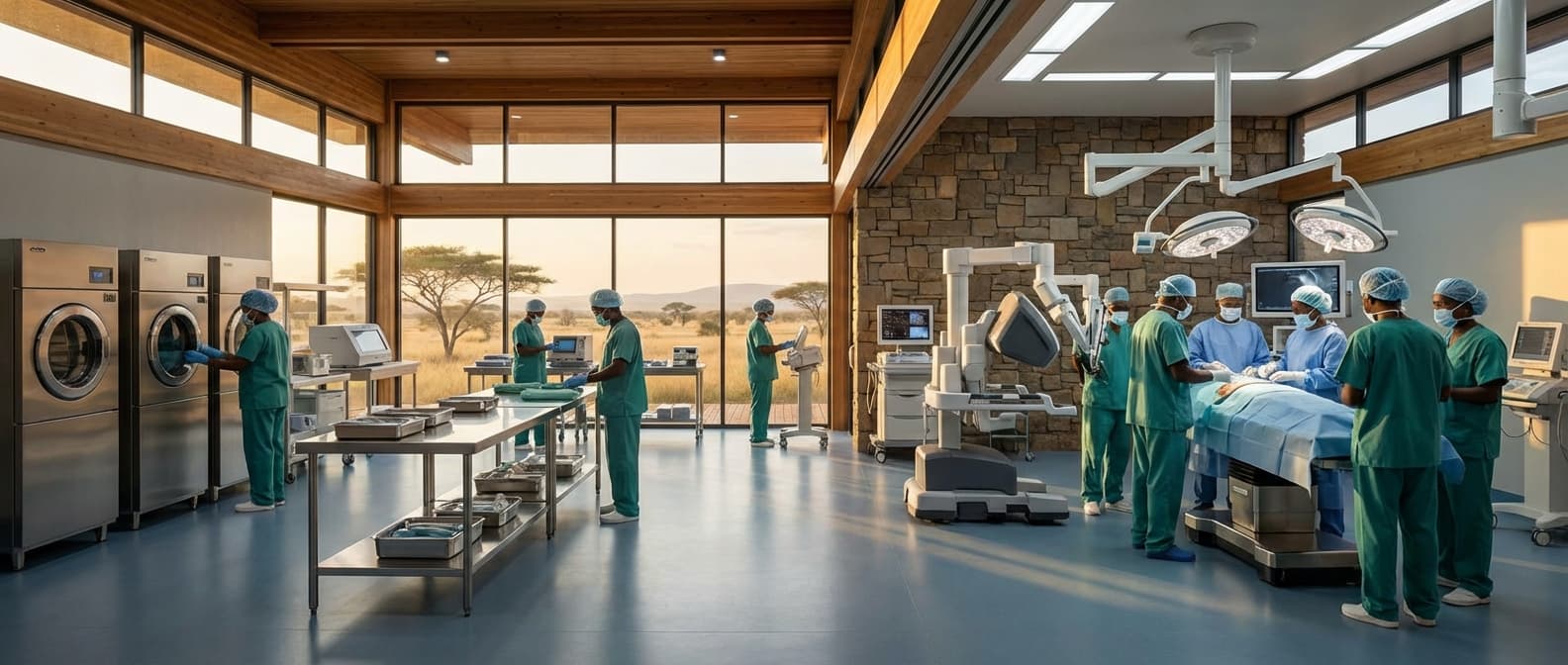
Endoscopy Reprocessing Validation in Sudan
Engineering Excellence & Technical Support
AER validation, SOP development and compliance High-standard technical execution following OEM protocols and local regulatory frameworks.
Rigorous Validation of Disinfection Cycles
Ensuring the efficacy of high-level disinfection (HLD) protocols for flexible endoscopes through pre- and post-disinfection bioburden testing and chemical indicator monitoring, crucial for preventing healthcare-associated infections in Sudanese facilities.
Validation of Sterilization Processes
Confirming the effectiveness of sterilization methods (e.g., EtO, hydrogen peroxide plasma) for rigid endoscopes and accessories by conducting biological indicator challenge studies and ensuring adherence to ISO 17665 standards within the Sudanese healthcare context.
Data-Driven Quality Assurance Framework
Implementing robust data collection and analysis systems for reprocessing validation, including traceabilty of instruments, cleaning efficacy verification (e.g., protein detection), and regular calibration of reprocessing equipment to maintain consistent quality and patient safety in Sudan.
What Is Endoscopy Reprocessing Validation In Sudan?
Endoscopy reprocessing validation in Sudan refers to the systematic verification process ensuring that reusable endoscopes and their accessories are cleaned and disinfected to a predefined standard of safety and efficacy after each patient use. This is crucial for preventing the transmission of infectious agents between patients and healthcare professionals. The validation process confirms that the implemented reprocessing protocols consistently achieve the required microbial kill rates and effectively remove organic debris, thereby maintaining the integrity and safety of the endoscopic equipment.
| Who Needs Endoscopy Reprocessing Validation? | Typical Use Cases | |||||
|---|---|---|---|---|---|---|
| Hospitals and Healthcare Facilities: All facilities that perform endoscopic procedures using reusable endoscopes, including public, private, and military hospitals. | Endoscopy Units: Departments dedicated to gastrointestinal, pulmonary, urological, gynecological, and other endoscopic procedures. | Surgical Centers: Outpatient and inpatient surgical facilities utilizing endoscopes. | Diagnostic Laboratories: Facilities performing diagnostic procedures requiring endoscopes. | Regulatory Bodies and Accreditation Agencies: For oversight and certification of healthcare facilities. | Medical Device Manufacturers: To ensure their reprocessing accessories and equipment are supported by validated protocols. | Infection Control Committees: Responsible for patient safety and preventing healthcare-associated infections (HAIs). |
| Routine Internal Audits: Regularly scheduled checks to ensure ongoing compliance with reprocessing protocols. | Post-Incident Investigations: Following outbreaks or reports of HAIs linked to endoscopic procedures. | Introduction of New Equipment or Protocols: When new endoscopes, reprocessing machines, or chemical disinfectants are implemented. | Regulatory Compliance: To meet national and international guidelines and standards for medical device reprocessing. | Accreditation Surveys: As part of the process for obtaining or maintaining healthcare facility accreditation. | When Manufacturer Recommendations Mandate Validation: To adhere to the guidelines provided by endoscope and AER manufacturers. | To Address Specific Infection Control Concerns: Based on risk assessments or emerging infectious threats. |
Key Aspects of Endoscopy Reprocessing Validation:
- Cleaning Efficacy Verification: Assesses the removal of visible and invisible organic matter, including blood, tissue, and lubricants, from the complex lumens and channels of endoscopes.
- High-Level Disinfection (HLD) / Sterilization Validation: Confirms that the chosen HLD agent or sterilization method effectively inactivates or eliminates a broad spectrum of microorganisms, including bacteria, viruses, fungi, and potentially prions, according to established regulatory standards (e.g., FDA, AAMI).
- Process Monitoring and Documentation: Establishes robust systems for monitoring critical parameters of the reprocessing cycle (e.g., disinfectant concentration, temperature, contact time, water quality) and maintaining detailed records for traceability and compliance.
- Equipment Performance Verification: Ensures that automated reprocessing equipment (e.g., automated endoscope reprocessors - AERs) and manual cleaning tools are functioning correctly and meeting manufacturer specifications.
- Personnel Competency Assessment: Verifies that healthcare personnel involved in reprocessing are adequately trained, understand the protocols, and can perform the tasks competently.
- Microbiological Testing: Involves periodic environmental monitoring and, in some cases, direct testing of reprocessed endoscopes to confirm the absence of viable microorganisms.
- Water Quality Testing: Ensures that the water used for rinsing and the final rinse cycle meets appropriate standards to prevent recontamination.
Who Needs Endoscopy Reprocessing Validation In Sudan?
Endoscopy reprocessing validation is crucial for any healthcare facility that utilizes endoscopic procedures. In Sudan, this validation is essential to ensure patient safety by preventing the transmission of infections through inadequately reprocessed endoscopes. The target customers and departments requiring this validation are primarily those involved in diagnostic and therapeutic endoscopic interventions.
| Department | Scope of Endoscopic Procedures | Key Role in Reprocessing Validation |
|---|---|---|
| Gastroenterology | Upper endoscopy (EGD), colonoscopy, sigmoidoscopy, ERCP | Direct user of endoscopes, responsible for initial cleaning and oversight of reprocessing protocols. |
| Pulmonology | Bronchoscopy | Direct user of endoscopes, responsible for initial cleaning and oversight of reprocessing protocols. |
| Urology | Cystoscopy, ureteroscopy, nephroscopy | Direct user of endoscopes, responsible for initial cleaning and oversight of reprocessing protocols. |
| Infection Prevention and Control (IPC) Department | All endoscopic procedures | Develops, implements, and monitors reprocessing policies; conducts audits and training; ensures compliance with guidelines. |
| Central Sterile Supply Department (CSSD) / Endoscopy Reprocessing Unit | All endoscopes used within the facility | Performs the detailed reprocessing steps (cleaning, disinfection/sterilization) and is the primary focus for validation of these processes. |
| Quality Assurance / Medical Administration | Overall facility operations | Ensures that reprocessing validation is integrated into the facility's quality management system and meets regulatory requirements. |
| Biomedical Engineering Department | Endoscopic equipment maintenance and calibration | Ensures that reprocessing equipment (e.g., automated endoscope reprocessors) is functioning correctly and is calibrated. |
Target Customers and Departments Requiring Endoscopy Reprocessing Validation in Sudan
- {"title":"Hospitals (Public and Private)","description":"All hospitals performing endoscopic procedures, from major referral centers to smaller clinics with dedicated endoscopy units."}
- {"title":"Specialty Clinics","description":"Clinics focusing on gastroenterology, pulmonology, urology, and other specialties that frequently use endoscopes."}
- {"title":"Diagnostic and Imaging Centers","description":"Facilities offering diagnostic endoscopy services as part of their broader imaging and diagnostic capabilities."}
- {"title":"Government Health Ministries and Regulatory Bodies","description":"These entities are responsible for setting and enforcing healthcare standards, including infection control protocols for medical devices."}
- {"title":"International Aid Organizations and NGOs","description":"Organizations involved in providing healthcare support, training, and equipment to Sudan, often ensuring that best practices are implemented."}
Endoscopy Reprocessing Validation Process In Sudan
This document outlines the workflow for the Endoscopy Reprocessing Validation Process in Sudan, from the initial inquiry to the final execution and reporting. This process is crucial for ensuring the safety and efficacy of endoscopic procedures by confirming that reprocessing methods adequately eliminate pathogens and render instruments safe for patient use. The workflow is designed to be systematic, documented, and compliant with relevant international standards and local regulations where applicable.
| Phase | Key Activities | Responsible Parties | Deliverables | Timeline (Indicative) |
|---|---|---|---|---|
| Submission of validation request (e.g., by a healthcare facility, manufacturer). Initial review of the request to understand the scope, types of endoscopes, and reprocessing methods in use. Determination of feasibility and resource allocation. | Requesting Facility/Manufacturer, Regulatory Body/Accreditation Agency, Validation Service Provider | Validation Request Form, Preliminary Scope Assessment | 1-2 Weeks |
| Detailed identification of all endoscope models, accessories, and reprocessing equipment to be validated. Confirmation of the specific reprocessing steps (pre-cleaning, high-level disinfection/sterilization, rinsing, drying, storage) to be assessed. Agreement on validation objectives and acceptance criteria. | Validation Service Provider, Requesting Facility | Scope of Validation Document, Validation Plan Outline | 1-2 Weeks |
| Development of detailed validation protocols based on international guidelines (e.g., AAMI, ISO, CDC) and national guidelines (if available). Protocols will specify sample collection methods, microbiological testing procedures (e.g., bioburden, sterility testing, challenge testing), and analytical methods. | Validation Service Provider (Microbiologist, Validation Specialist) | Detailed Validation Protocol(s), Sampling Plan | 2-4 Weeks |
| Thorough review of existing reprocessing Standard Operating Procedures (SOPs), equipment manufacturer instructions, cleaning agent/disinfectant/sterilant documentation, and staff training records. Assessment of compliance with recommended practices. | Validation Service Provider | Documentation Review Report, Identification of Gaps | 1-2 Weeks |
| Observation of actual reprocessing procedures in the healthcare facility. Collection of environmental data (e.g., water quality, temperature, humidity). Swabbing of endoscopes and associated equipment for microbial analysis. Collection of processed devices for laboratory testing. | Validation Team (Technicians, Microbiologist) | On-site Assessment Report, Sample Collection Records, Raw Data | 1-3 Weeks (depending on facility size and complexity) |
| Execution of microbiological tests on collected samples according to the approved validation protocol. This may include microbial enumeration, sterility testing, endotoxin testing, and effectiveness testing of disinfectants/sterilants. | Accredited Laboratory (or validated in-house lab) | Laboratory Test Results, Analytical Reports | 2-6 Weeks (depending on test complexity) |
| Analysis of all collected data (on-site observations, environmental data, laboratory results) against the defined acceptance criteria. Preparation of a comprehensive validation report detailing the methodology, results, findings, and conclusions regarding the effectiveness of the reprocessing process. | Validation Service Provider (Validation Specialist, Senior Microbiologist) | Comprehensive Validation Report, Certificate of Validation (if successful) | 2-4 Weeks |
| If the validation fails to meet acceptance criteria, identification of root causes and development of CAPAs. Implementation of revised procedures, staff retraining, or equipment adjustments. Revalidation may be required after CAPA implementation. | Requesting Facility, Validation Service Provider | CAPA Plan, Updated SOPs, Revalidation Plan (if needed) | Ongoing (as required) |
| Periodic revalidation of the reprocessing process as per regulatory requirements or after significant changes (e.g., new equipment, new disinfectants, changes in staff). Establishment of routine monitoring systems to ensure ongoing compliance and process effectiveness. | Requesting Facility, Regulatory Body/Accreditation Agency | Revalidation Reports, Routine Monitoring Records | As per defined schedule (e.g., annually, biannually) |
Endoscopy Reprocessing Validation Process Workflow in Sudan
- Inquiry and Initial Assessment
- Scope of Validation Defined
- Methodology Development
- Documentation Review
- On-site Assessment and Data Collection
- Laboratory Testing and Analysis
- Data Interpretation and Validation Report
- Corrective and Preventive Actions (CAPA)
- Revalidation and Ongoing Monitoring
Endoscopy Reprocessing Validation Cost In Sudan
Validating the reprocessing of endoscopic equipment is a critical step in ensuring patient safety and preventing healthcare-associated infections. In Sudan, the cost of this validation process can vary significantly due to several factors. These include the type and complexity of the endoscopic equipment being validated, the specific validation methods employed (e.g., process challenge devices, biological indicators, chemical indicators), the laboratory or service provider conducting the validation, and the geographic location within Sudan. Furthermore, the availability of specialized validation equipment and reagents can influence pricing. The current economic climate and currency exchange rates also play a substantial role in determining the final cost in Sudanese Pounds (SDG). Without a standardized national pricing structure, costs are often negotiated on a case-by-case basis.
| Service Component | Estimated Cost Range (SDG) |
|---|---|
| Process Challenge Device (PCD) Testing | 15,000 - 50,000 |
| Biological Indicator (BI) Testing (per cycle) | 20,000 - 60,000 |
| Chemical Indicator (CI) Strips/Tapes (per kit) | 10,000 - 30,000 |
| Water Quality Testing (relevant to reprocessing) | 5,000 - 15,000 |
| Microbial Air Sampling (if required) | 15,000 - 40,000 |
| Validation Report Generation Fee | 5,000 - 20,000 |
| On-site Technician/Engineer Visit (if applicable) | 20,000 - 70,000 (per day) |
Key Factors Influencing Endoscopy Reprocessing Validation Costs in Sudan
- Type and complexity of endoscopic equipment (e.g., flexible, rigid, video endoscopes)
- Validation methodology and consumables used (e.g., PCDs, biological indicators, chemical indicators)
- Provider of validation services (e.g., in-house hospital lab, private laboratory, external service)
- Geographic location within Sudan (e.g., Khartoum vs. other regions)
- Availability of specialized validation equipment and reagents
- Economic conditions and currency exchange rates (SDG)
Affordable Endoscopy Reprocessing Validation Options
Ensuring the effectiveness and safety of flexible endoscope reprocessing is paramount to patient care and preventing healthcare-associated infections. However, the validation of reprocessing procedures can be a significant financial burden for healthcare facilities. This document outlines affordable options for endoscopy reprocessing validation, emphasizing the value of bundling services and implementing cost-saving strategies.
| Strategy/Bundle | Description | Cost-Saving Benefit |
|---|---|---|
| Comprehensive Validation Bundle (Annual Contract) | Includes regular microbiological testing (e.g., quarterly), chemical indicator supply, initial validation of automated reprocessors, and annual revalidation. May also include staff training modules. | Volume Discounts: Negotiated pricing for bundled services. Predictable Budgeting: Fixed annual cost reduces unexpected expenses. Reduced Administrative Overhead: Single vendor management. |
| Targeted Validation Services | Focuses on specific areas of concern or regulatory requirements. For example, only periodic microbiological testing for a facility with a well-established and recently validated automated system. | Eliminates Unnecessary Testing: Avoids paying for services not critically needed. Customizable Approach: Tailored to facility's risk profile and existing infrastructure. |
| In-House Validation Support with External Oversight | Facilities can perform routine cleaning verification and basic chemical indicator testing in-house, with external labs providing periodic microbiological testing and validation of automated reprocessors. | Reduced External Lab Fees: Lower costs for routine tasks performed internally. Leverages Existing Staff: Enhances staff competency and engagement. Expert Review: Ensures accuracy and compliance with external oversight. |
| Shared Services/Consortiums | Multiple smaller facilities collaborate to contract with a single validation provider, sharing costs and potentially gaining better volume discounts. | Pooled Resources: Distributes the cost of validation among multiple entities. Increased Negotiation Power: Larger collective contract volume can lead to better pricing. |
| Software-Based Documentation and Tracking | Utilizing digital solutions for recording reprocessing steps, validation results, and maintenance logs. Many vendors offer integrated validation modules. | Reduced Paper Costs: Eliminates expenses associated with paper records. Improved Efficiency: Streamlines data entry and retrieval. Enhanced Audit Readiness: Easier access to documentation. |
| Vendor-Provided Training and Consultation | Many validation service providers offer training on best practices and regulatory compliance as part of their service agreements or at a reduced rate for bundled clients. | Improved Staff Competency: Reduces errors and the need for costly re-dos. Proactive Compliance: Helps avoid fines and citations. |
Key Components of Endoscopy Reprocessing Validation
- Microbiological Testing: Verifying the elimination of microorganisms from the endoscope lumen.
- Chemical Indicator Testing: Confirming the effectiveness of high-level disinfectants (HLD) or sterilants.
- Cleaning Verification: Assessing the removal of visible and non-visible organic debris.
- Automated Reprocessor Performance Testing: Validating the consistent operation of washer-disinfectors and sterilizers.
- Environmental Monitoring: Evaluating the cleanliness of the reprocessing area.
- Documentation and Record Keeping: Maintaining a robust system for tracking all reprocessing steps and validation results.
Verified Providers In Sudan
In the complex landscape of healthcare access in Sudan, identifying and trusting verified healthcare providers is paramount. Franance Health stands out as a leading platform dedicated to ensuring that individuals have access to high-quality, reliable medical services. This commitment is built on rigorous credentialing processes that validate the expertise and legitimacy of every healthcare professional and facility listed on their platform. By prioritizing these verified providers, individuals can navigate their healthcare journey with confidence, knowing they are connecting with competent and ethical practitioners. Franance Health's dedication to transparency and patient safety makes them an indispensable resource for anyone seeking healthcare in Sudan.
| Provider Type | Franance Health Verification | Why This Matters for Patients |
|---|---|---|
| Doctors | Verification of medical degree, licensing board registration, and specialization. | Ensures doctors have the required qualifications and are legally permitted to practice, providing confidence in their expertise. |
| Hospitals & Clinics | Assessment of facility accreditations, quality of care standards, and operational licenses. | Guarantees that facilities meet safety and hygiene standards, have appropriate equipment, and are legally recognized health institutions. |
| Specialist Centers (e.g., Cardiology, Oncology) | Confirmation of advanced training, board certifications in the specific specialty, and relevant experience. | Connects patients with highly skilled specialists for complex conditions, ensuring they receive targeted and effective treatment. |
| Diagnostic Laboratories | Verification of laboratory accreditations, quality control measures, and qualified personnel. | Ensures accurate and reliable diagnostic results, which are crucial for proper diagnosis and treatment planning. |
| Pharmaceutical Services | Validation of pharmacy licenses, drug sourcing protocols, and adherence to dispensing regulations. | Provides assurance of genuine medications and safe dispensing practices, protecting patients from counterfeit or substandard drugs. |
Key Credentials Franance Health Verifies:
- Medical Licenses and Certifications
- Specialization Accreditations
- Professional Experience and Track Record
- Institutional Affiliations and Accreditations
- Patient Feedback and Satisfaction Ratings
- Adherence to Ethical Medical Practices
Scope Of Work For Endoscopy Reprocessing Validation
This Scope of Work (SOW) outlines the requirements for validating the endoscopy reprocessing procedures to ensure patient safety and regulatory compliance. The validation process will confirm the effectiveness of manual and automated cleaning, high-level disinfection (HLD), and sterilization (if applicable) for flexible endoscopes and their accessories. The primary objective is to demonstrate that the established reprocessing protocols consistently render endoscopes free from viable microorganisms.
| Phase | Activity | Description | Deliverables | Standard Specifications |
|---|---|---|---|---|
| Phase 1: Protocol Development | Define Reprocessing Procedures | Document detailed step-by-step procedures for cleaning, HLD/sterilization, rinsing, and storage of all endoscope models and accessories. | Validated Reprocessing Protocol Document | Must align with manufacturer instructions for use (IFU), current guidelines, and best practices. |
| Phase 1: Protocol Development | Develop Validation Plan | Outline the methodology for validation, including sampling strategy, test methods, acceptance criteria, and failure investigation procedures. | Endoscopy Reprocessing Validation Plan | Specify test parameters, number of replicates, and statistical approaches for analysis. |
| Phase 2: Cleaning Validation | Simulated Use Testing | Contaminate endoscopes with representative biological soil (e.g., blood, protein, mucin) and execute the documented cleaning protocol. Samples will be taken from critical areas. | Cleaning Validation Report (Microbiological and Chemical Analysis) | Acceptance Criteria: Absence of detectable protein and carbohydrates (e.g., < 10 µg protein, < 100 µg carbohydrate per cm²), and microbial burden below specified limits (e.g., < 10 CFU). |
| Phase 2: Cleaning Validation | Visual Inspection | Thorough visual inspection of internal lumens and external surfaces for residual soil after cleaning. | Visual Inspection Report | All surfaces must be visibly clean to the naked eye and under magnification if specified. |
| Phase 3: HLD/Sterilization Validation | Microbiological Challenge Testing | Expose endoscopes to a microbial challenge (e.g., non-pathogenic resistant spores like Bacillus atrophaeus or Geobacillus stearothermophilus) and process according to HLD or sterilization protocol. Verify organism inactivation. | HLD/Sterilization Validation Report (Microbiological Efficacy) | Acceptance Criteria: Reduction of at least 6 log10 of challenge organisms for HLD, and a Sterility Assurance Level (SAL) of 10⁻⁶ for sterilization (or as per specific standard). |
| Phase 3: HLD/Sterilization Validation | Chemical Indicator Testing | Utilize chemical indicators appropriate for the HLD or sterilization method to confirm process parameters are met. | Chemical Indicator Test Results | Indicators must demonstrate correct color change, indicating adequate exposure to the sterilant/disinfectant. |
| Phase 3: HLD/Sterilization Validation | Biological Indicator Testing | Utilize biological indicators containing known spore populations to confirm the lethality of the HLD or sterilization process. | Biological Indicator Test Results | Negative results for all inoculated BIs, indicating successful inactivation of spores. |
| Phase 4: Rinse and Drying Validation | Microbial Analysis of Rinse Water | Analyze rinse water samples collected after the final rinse step to ensure microbial load is within acceptable limits. | Rinse Water Microbial Analysis Report | Microbial counts in rinse water should be below specified limits (e.g., < 100 CFU/mL). |
| Phase 4: Rinse and Drying Validation | Drying Efficacy | Verify that endoscope lumens and channels are adequately dried, preventing microbial growth. | Drying Efficacy Report | No moisture visible within lumens or channels after the drying process. |
| Phase 5: Documentation and Reporting | Compile Validation Report | Consolidate all data, results, deviations, and conclusions from each validation phase into a comprehensive report. | Final Endoscopy Reprocessing Validation Report | Must include all raw data, statistical analysis, interpretation of results, and recommendations for continuous monitoring. |
| Phase 5: Documentation and Reporting | Standard Operating Procedures (SOPs) | Develop or revise SOPs for routine reprocessing based on validated protocols. | Validated Endoscopy Reprocessing SOPs | SOPs must be clear, concise, and readily accessible to reprocessing staff. |
Key Objectives of Endoscopy Reprocessing Validation
- Verify the efficacy of cleaning processes in removing visible and non-visible biological debris.
- Confirm the effectiveness of HLD or sterilization in eliminating or inactivating all pathogenic microorganisms, including spores.
- Assess the integrity and functionality of endoscopes after the complete reprocessing cycle.
- Ensure compliance with relevant regulatory standards and guidelines (e.g., AAMI ST91, CDC guidelines, FDA regulations, local health authority requirements).
- Establish documented evidence of validated reprocessing procedures for internal quality assurance and external audits.
Service Level Agreement For Endoscopy Reprocessing Validation
This Service Level Agreement (SLA) outlines the agreed-upon service levels for Endoscopy Reprocessing Validation, focusing on response times for critical issues and uptime guarantees for the validation systems. This agreement is between [Your Company Name] (the "Provider") and [Client Company Name] (the "Client").
| Issue Category | Response Time (Business Hours) | Target Resolution Time (Business Hours) | Uptime Guarantee |
|---|---|---|---|
| Critical Issue | 1 Hour | 4 Business Hours | 99.5% (Calculated Monthly) |
| Major Issue | 4 Business Hours | 8 Business Hours | N/A (Uptime guarantee applies to system availability, not specific feature performance) |
| Minor Issue | 8 Business Hours | 3 Business Days | N/A |
Definitions
- Endoscopy Reprocessing Validation: The process of verifying that flexible endoscopes have been reprocessed according to established protocols and regulatory requirements.
- Validation System: Any software, hardware, or combination thereof used to perform or record endoscopy reprocessing validation activities.
- Critical Issue: A problem that prevents or significantly hinders the validation of endoscope reprocessing, potentially impacting patient safety and regulatory compliance.
- Major Issue: A problem that affects the performance or functionality of the validation system but does not completely prevent reprocessing validation.
- Minor Issue: A problem that has minimal impact on the validation system's functionality or performance.
- Downtime: The period during which the Validation System is unavailable for use by the Client.
- Response Time: The maximum time allowed for the Provider to acknowledge and begin working on a reported issue.
- Resolution Time: The maximum time allowed for the Provider to resolve a reported issue, aiming to restore full functionality.
Frequently Asked Questions

Ready when you are
Let's scope your Endoscopy Reprocessing Validation in Sudan project in Sudan.

Scaling healthcare logistics and technical systems across the entire continent.