
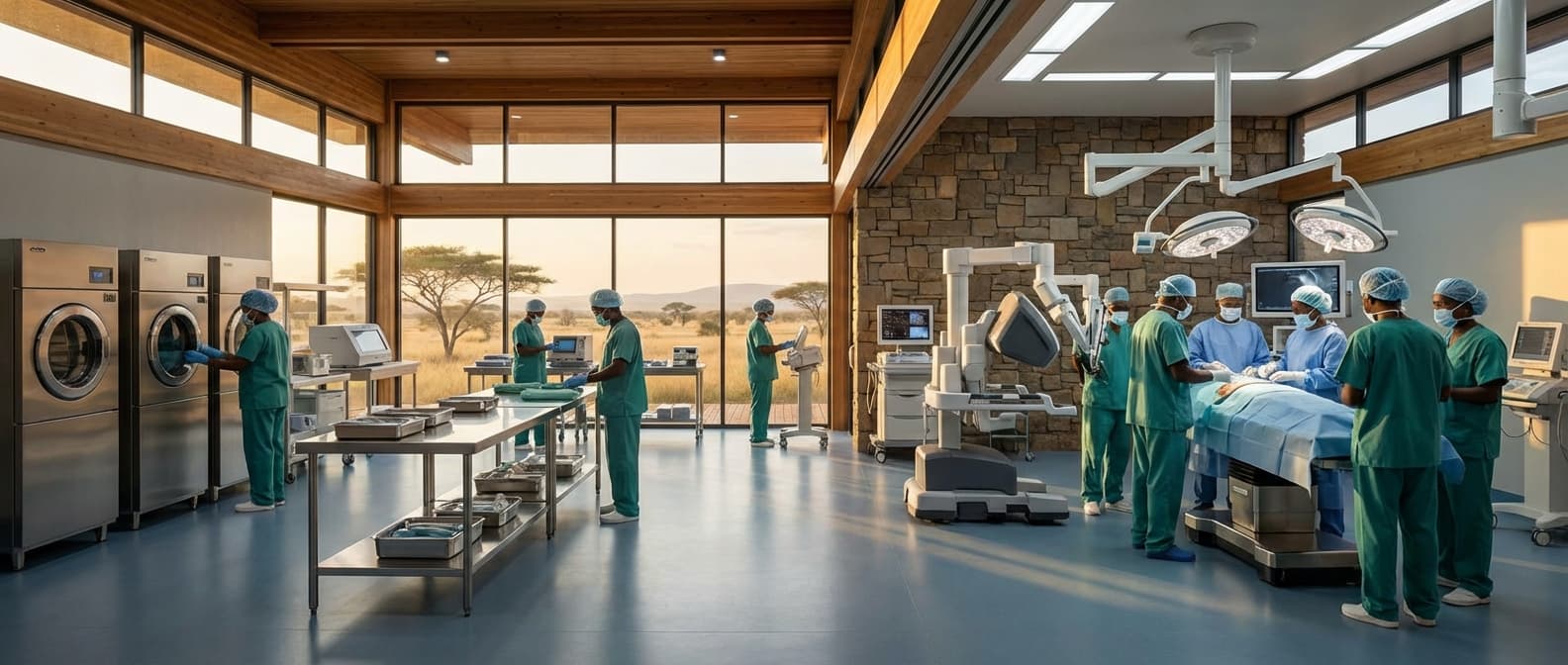
CSSD Design & Validation in Sudan
Engineering Excellence & Technical Support
CSSD workflow design, validation and process development High-standard technical execution following OEM protocols and local regulatory frameworks.
Sterilization Efficacy Validation
Expert validation of sterilization cycles (autoclave, EtO, low-temp) using biological and chemical indicators to ensure compliance with international standards and patient safety in Sudanese healthcare facilities.
CSSD Workflow Optimization
Designing and implementing efficient CSSD layouts and workflows, from soiled receiving to sterile storage, minimizing contamination risks and maximizing throughput for Sudanese hospitals and clinics.
Regulatory Compliance & Documentation
Assisting Sudanese CSSD departments in achieving and maintaining regulatory compliance through comprehensive documentation, standard operating procedures (SOPs), and quality management systems.
What Is Cssd Design & Validation In Sudan?
Central Sterile Supply Department (CSSD) design and validation in Sudan refers to the systematic process of planning, configuring, and verifying the functional integrity and operational readiness of a CSSD facility. This encompasses the architectural layout, workflow optimization, equipment selection and integration, environmental controls, and the establishment of robust Standard Operating Procedures (SOPs) to ensure the safe and effective sterilization of reusable medical devices. The validation phase rigorously tests all aspects of the CSSD's operations to confirm adherence to international standards, regulatory requirements, and best practices in infection prevention and control.
| Who Needs CSSD Design & Validation? | Typical Use Cases |
|---|---|
| Hospitals (Public and Private) | Establishment of new hospital facilities or expansion of existing ones requiring a dedicated and compliant CSSD. |
| Surgical Centers and Clinics | Ensuring the safe reprocessing of surgical instruments used in outpatient or specialized surgical settings. |
| Dental Practices (Large Scale) | For clinics with a high volume of reusable dental instruments requiring professional sterilization. |
| Medical Device Manufacturers (for reprocessing services) | Companies offering sterilization services for reusable medical devices. |
| Government Health Ministries and Regulatory Bodies | To set standards, approve designs, and oversee compliance for healthcare facilities. |
| International Aid Organizations and NGOs | When establishing or upgrading healthcare infrastructure in underserved regions of Sudan. |
Key Components of CSSD Design & Validation
- Facility Layout and Workflow: Designing distinct and unidirectional flow paths for contaminated, clean, and sterile items to prevent cross-contamination. This includes areas for decontamination, preparation and packing, sterilization, sterile storage, and distribution.
- Equipment Specification and Selection: Identifying and procuring appropriate sterilization equipment (e.g., autoclaves, low-temperature sterilizers), cleaning systems (e.g., ultrasonic cleaners, washer-disinfectors), and material handling equipment based on the facility's needs and throughput.
- Environmental Controls: Implementing and validating HVAC systems to ensure appropriate air changes, temperature, humidity, and pressure differentials in different CSSD zones, crucial for maintaining a sterile environment and preventing microbial contamination.
- Material and Waste Management: Designing systems for the safe handling, storage, and disposal of medical devices, instruments, and associated waste streams, adhering to infection control protocols.
- Information Management Systems: Integrating systems for tracking instruments, sterilizer cycles, and inventory to ensure traceability and facilitate quality control.
- Validation Protocols: Developing and executing rigorous testing procedures, including Installation Qualification (IQ), Operational Qualification (OQ), and Performance Qualification (PQ) for all equipment and processes.
- SOP Development and Training: Creating comprehensive SOPs for every CSSD function and providing in-depth training to personnel to ensure consistent and correct execution of tasks.
- Regulatory Compliance: Ensuring the design and operation meet national (Sudanese Ministry of Health) and international standards (e.g., ISO 13485, AAMI ST79).
Who Needs Cssd Design & Validation In Sudan?
The Central Sterile Services Department (CSSD) is a critical, yet often overlooked, component of healthcare facilities. Proper CSSD design and validation are not just about compliance; they are fundamental to patient safety, infection prevention, and operational efficiency. In Sudan, as in any nation striving to improve its healthcare infrastructure, investing in well-designed and validated CSSD facilities is paramount. This ensures that surgical instruments and medical devices are reprocessed to the highest standards, preventing the spread of infections and reducing the risk of surgical site complications. Without a robust CSSD, healthcare providers face increased risks of healthcare-associated infections (HAIs), prolonged patient recovery times, and ultimately, a compromised reputation.
| Target Customer/Department | Specific Needs & Rationale for CSSD Design & Validation |
|---|---|
| Public Hospitals (e.g., Teaching Hospitals, General Hospitals) | High patient volume necessitates efficient workflow and large-scale sterilization capacity. Validation ensures consistent infection control across a broad range of procedures, crucial for public health and trust. |
| Private Hospitals & Specialized Clinics (e.g., Orthopedics, Ophthalmology) | Demand for advanced surgical procedures requires specialized instrument reprocessing. Design needs to accommodate specific equipment and validated processes to maintain high standards of patient care and service reputation. |
| Surgical Centers & Day Surgery Units | Rapid turnover of instruments requires a streamlined and validated CSSD process to ensure timely availability for procedures and minimize downtime. Focus on infection prevention is key to patient safety and quick recovery. |
| Emergency & Trauma Centers | Unpredictable patient flow and the need for immediate availability of sterile instruments demand robust and highly efficient CSSD operations. Validation ensures the highest level of safety during critical interventions. |
| Maternal & Child Health Facilities with Surgical Components | Strict infection control is vital for vulnerable patient populations. CSSD design and validation are essential to prevent perinatal infections and ensure the safety of newborns and mothers. |
| Administrative & Management Departments | Improved operational efficiency, reduced reprocessing errors, and adherence to international standards lead to cost savings and better resource allocation. Validation provides documented evidence of quality and safety. |
| Infection Prevention & Control (IPC) Departments | Directly responsible for preventing HAIs. CSSD design and validation are fundamental to their mandate, providing a sterile environment for instrument reprocessing and a reduction in infection rates. |
| Procurement & Logistics Departments | Well-designed CSSDs can lead to optimized space utilization and informed purchasing decisions for equipment and consumables, ensuring cost-effectiveness and supply chain reliability. |
| Engineering & Maintenance Departments | Understanding the specific requirements of CSSD equipment (e.g., steam, water, ventilation) is crucial for effective maintenance and repair, ensuring continuous operation and preventing breakdowns. |
| Quality Assurance & Regulatory Affairs Departments | CSSD validation provides the necessary documentation and assurance to meet national and international healthcare standards, crucial for accreditation and regulatory compliance. |
Who Needs CSSD Design & Validation in Sudan?
- Hospitals (Public & Private)
- Surgical Centers
- Specialized Clinics with Surgical Procedures
- Larger Polyclinics
- Military Hospitals
- Research & Teaching Hospitals
- Non-Governmental Organization (NGO) Healthcare Facilities
Cssd Design & Validation Process In Sudan
The design and validation process for a Central Sterile Supply Department (CSSD) in Sudan involves a comprehensive workflow, ensuring that the facility meets international standards for infection prevention and control. This process is critical for the safety of patients and healthcare professionals. The workflow typically begins with an initial inquiry and culminates in the operational validation of the CSSD.
| Stage | Key Activities | Deliverables/Outcomes | Responsible Parties | Timeframe (Indicative) |
|---|---|---|---|---|
| Receive request for CSSD design/validation. Understand the scope, existing infrastructure, patient volume, types of procedures, and budget. Site visit and preliminary discussions with stakeholders. | Project brief, initial requirements document, stakeholder list. | Client (Hospital/Ministry of Health), Project Consultant/Designer, Potential CSSD Manager. | 1-2 Weeks |
| Evaluate potential locations for the CSSD within the healthcare facility. Assess space availability, accessibility for clean and dirty flows, utilities (water, electricity, steam, ventilation), and future expansion possibilities. Assess regulatory compliance requirements specific to Sudan. | Feasibility report, recommended site(s), preliminary budget estimation. | Project Consultant/Designer, Client, Local Regulatory Bodies (if applicable). | 2-4 Weeks |
| Develop preliminary layouts and flow diagrams for the CSSD, adhering to international guidelines (e.g., ISO, AAMI). Define functional zones (decontamination, packaging, sterilization, storage, administration). Optimize workflow to prevent cross-contamination. | Conceptual design drawings, flow diagrams, preliminary equipment list, initial cost estimate. | Project Consultant/Designer, CSSD Specialist, Architect. | 4-6 Weeks |
| Prepare detailed architectural, mechanical, electrical, and plumbing (MEP) drawings. Specify materials, finishes, ventilation systems (HVAC), water treatment systems, and sterilization technologies. Develop detailed equipment specifications. | Complete set of architectural and MEP drawings, detailed specifications for all systems and equipment, bill of quantities (BOQ). | Project Consultant/Designer, Mechanical/Electrical Engineers, Plumbing Engineers, Architects, CSSD Specialist. | 8-12 Weeks |
| Tender process for selection of equipment manufacturers and suppliers. Procurement of all necessary equipment (autoclaves, washer-disinfectors, ultrasonic cleaners, packaging machines, etc.) and construction materials. | Procurement contracts, delivery schedules, quality control plans for materials and equipment. | Client/Procurement Department, Project Consultant/Designer (for technical evaluation), Suppliers. | 12-24 Weeks (can vary significantly based on lead times and local availability) |
| Construction of the CSSD facility based on approved detailed designs. Installation of all MEP systems, finishes, and architectural elements. Installation of CSSD equipment by manufacturers or authorized technicians. | Completed construction, installed and connected MEP systems, installed and plumbed equipment. | Main Contractor, Subcontractors, Equipment Suppliers/Installers, Project Consultant/Designer (for supervision). | 20-40 Weeks |
| Testing of all installed systems and equipment to ensure they function as per specifications. This includes flushing of water systems, electrical load testing, HVAC performance checks, and preliminary equipment operational tests. | Commissioning reports, test results for all systems and equipment. | Equipment Suppliers, MEP Engineers, Project Consultant/Designer. | 2-4 Weeks |
| Formal validation of the CSSD process. This involves: a. Installation Qualification (IQ): Verifying that equipment is installed correctly. b. Operational Qualification (OQ): Testing equipment functions under various operating conditions. c. Performance Qualification (PQ): Demonstrating that the entire CSSD process consistently produces sterile and safe medical devices under normal operating conditions, often using biological indicators. | IQ, OQ, and PQ reports, validation certificates for equipment and processes. | Validation Specialists, CSSD Specialist, Equipment Manufacturers, Client, Potentially Ministry of Health/Accreditation Bodies. | 4-8 Weeks |
| Comprehensive training of CSSD staff on all aspects of CSSD operations, including SOPs, equipment use, infection control protocols, safety procedures, and documentation. Competency assessment of staff. | Training manuals, training attendance records, competency assessment results. | CSSD Specialist, Equipment Manufacturers, Senior CSSD Staff. | 2-4 Weeks |
| Formal handover of the operational CSSD to the client. Establishment of routine monitoring and quality control procedures. Regular audits, maintenance schedules, and re-validation of equipment and processes. | Operational handover document, maintenance plan, quality control protocols, audit schedule. | Client, CSSD Manager, Maintenance Department, Project Consultant/Designer (for initial support). | Ongoing |
CSSD Design & Validation Process in Sudan: Workflow Breakdown
- Initial Inquiry & Needs Assessment
- Feasibility Study & Site Selection
- Conceptual Design & Space Planning
- Detailed Design & Engineering
- Procurement of Equipment & Materials
- Construction & Installation
- Commissioning & Initial Testing
- Validation & Performance Qualification
- Training & Staff Competency
- Operational Handover & Ongoing Monitoring
Cssd Design & Validation Cost In Sudan
Designing and validating a Central Sterile Supply Department (CSSD) in Sudan is a complex process influenced by numerous factors, leading to a wide range of potential costs. These costs can be broadly categorized into initial design and planning, equipment and infrastructure, validation and commissioning, and ongoing operational considerations. Understanding these elements is crucial for accurate budgeting and successful project execution.
Pricing Factors for CSSD Design & Validation in Sudan:
- Scope of Services: The size and complexity of the CSSD, the range of sterilization methods employed (e.g., autoclaving, ethylene oxide, low-temperature plasma), and the volume of instruments to be processed all directly impact design and validation costs. A larger, more comprehensive facility will naturally incur higher expenses.
- Facility Size and Layout: The square footage of the CSSD, including dedicated areas for receiving, cleaning, decontamination, packaging, sterilization, storage, and distribution, will influence construction and fit-out costs. The architectural complexity and the need for specialized ventilation or plumbing also play a role.
- Equipment Selection: The type, brand, and quantity of sterilization equipment (autoclaves, washer-disinfectors, ultrasonic cleaners, packaging machines), as well as ancillary equipment (workbenches, trolleys, storage racks, water treatment systems), are major cost drivers. High-end, advanced technology will be more expensive.
- Infrastructure Requirements: This includes the cost of necessary renovations or new construction, electrical and plumbing upgrades, specialized ventilation systems (HVAC), water purification systems, and robust waste management solutions. Compliance with international standards often necessitates higher-grade infrastructure.
- Regulatory Compliance and Standards: Adherence to international standards (e.g., ISO 13485 for medical devices, relevant WHO guidelines) for CSSD design, operation, and validation adds to costs. This often involves engaging specialized consultants and ensuring all aspects of the facility and processes meet these benchmarks.
- Validation and Commissioning Services: This phase involves rigorous testing of equipment and processes to ensure they function correctly and safely. Costs are associated with hiring specialized validation engineers or companies, conducting performance qualification (PQ), operational qualification (OQ), and installation qualification (IQ) tests, and preparing comprehensive documentation.
- Consultancy and Project Management: Engaging experienced CSSD designers, sterilization consultants, and project managers is essential for a successful project. Their fees will vary based on their expertise and the duration of their involvement.
- Local Labor and Material Costs: While efforts are made to source locally, fluctuations in the cost of construction materials, skilled labor, and specialized technicians in Sudan will impact overall expenses.
- Import Duties and Taxes: Equipment and specialized materials imported into Sudan will be subject to import duties, taxes, and customs clearance fees, which can significantly increase the final cost.
- Training: Comprehensive training for CSSD staff on equipment operation, sterilization processes, quality control, and safety protocols is crucial and contributes to the overall project budget.
- Contingency: It is always advisable to include a contingency fund to cover unforeseen expenses that may arise during the design and validation process.
Estimated Cost Ranges in Sudanese Pound (SDG) (Illustrative):
It's important to note that these are illustrative ranges and actual costs can vary significantly. Exchange rates and inflation in Sudan can lead to rapid price fluctuations. For accurate, up-to-date pricing, direct consultation with Sudanese suppliers, contractors, and consultants is highly recommended.
| Cost Component | Low End (SDG) | Mid-Range (SDG) | High End (SDG) |
| :--------------------------------- | :-------------- | :--------------- | :--------------- |
| Initial Design & Planning | 10,000,000 | 30,000,000 | 70,000,000+ |
| (Consultancy, architectural plans) | | | |
| Equipment & Infrastructure | 150,000,000 | 500,000,000 | 1,500,000,000+ |
| (Sterilizers, washers, HVAC, plumbing) | | | |
| Validation & Commissioning | 20,000,000 | 60,000,000 | 150,000,000+ |
| (IQ, OQ, PQ, documentation) | | | |
| Project Management & Training | 15,000,000 | 40,000,000 | 100,000,000+ |
| Total Estimated Range | 195,000,000 | 630,000,000 | 1,820,000,000+ |
Disclaimer: The Sudanese Pound (SDG) has experienced significant volatility. These figures are estimates based on general market conditions and may not reflect current exact pricing. Always obtain formal quotations from multiple reputable sources.
| Cost Component | Low End (SDG) | Mid-Range (SDG) | High End (SDG) |
|---|---|---|---|
| Initial Design & Planning (Consultancy, architectural plans) | 10,000,000 | 30,000,000 | 70,000,000+ |
| Equipment & Infrastructure (Sterilizers, washers, HVAC, plumbing) | 150,000,000 | 500,000,000 | 1,500,000,000+ |
| Validation & Commissioning (IQ, OQ, PQ, documentation) | 20,000,000 | 60,000,000 | 150,000,000+ |
| Project Management & Training | 15,000,000 | 40,000,000 | 100,000,000+ |
| Total Estimated Range | 195,000,000 | 630,000,000 | 1,820,000,000+ |
Key Factors Influencing CSSD Design & Validation Costs in Sudan
- Scope of Services (facility size, sterilization methods, volume)
- Facility Size and Layout (square footage, specialized areas)
- Equipment Selection (type, brand, quantity of sterilizers, ancillary equipment)
- Infrastructure Requirements (construction, electrical, plumbing, HVAC, water treatment)
- Regulatory Compliance and Standards (ISO, WHO guidelines)
- Validation and Commissioning Services (IQ, OQ, PQ, testing)
- Consultancy and Project Management Fees
- Local Labor and Material Costs
- Import Duties, Taxes, and Customs Clearance
- Staff Training Programs
- Contingency Fund
Affordable Cssd Design & Validation Options
Designing and validating a Central Sterile Services Department (CSSD) is crucial for infection control and patient safety. However, budget constraints can make this a significant challenge. This document outlines affordable CSSD design principles and validation strategies, focusing on value bundles and cost-saving opportunities. We'll explore how to achieve compliance and operational efficiency without compromising on quality.
| Value Bundle/Cost-Saving Strategy | Description | Benefits | Considerations for Affordability |
|---|---|---|---|
| Lean Workflow Design Bundle | Focuses on optimizing the physical layout and workflow to eliminate bottlenecks and reduce unnecessary movement. | Increased throughput, reduced staff fatigue, improved infection control, lower operational costs. | Emphasizes planning and layout optimization over expensive equipment. Requires skilled process engineering input. Can be implemented with phased upgrades. |
| Essential Equipment Standardization Package | A curated selection of reliable, mid-range equipment that meets general CSSD needs for cleaning, disinfection, sterilization, and storage. | Reduced procurement costs, simplified maintenance and training, easier spare parts management, predictable operating expenses. | Negotiate bulk discounts. Consider refurbished equipment with warranties. Avoid brand exclusivity if not essential. |
| Integrated Validation & Monitoring Solution | Combines essential validation tools (e.g., chemical indicators, biological indicators) with a robust data logging and trending system for critical processes. | Ensures compliance, early detection of issues, reduced downtime, streamlined reporting, efficient use of validation resources. | Leverage digital monitoring and automated data capture to reduce manual effort. Focus on critical parameters. Explore cloud-based solutions for scalability. |
| Phased Infrastructure Upgrade Program | A plan to upgrade building services (e.g., ventilation, water, electrical) in stages, prioritizing areas with the greatest impact on CSSD operations and compliance. | Manages capital expenditure, allows for flexibility based on budget availability, minimizes disruption to ongoing operations. | Prioritize upgrades based on risk and return on investment. Explore energy-efficient options for long-term savings. |
| Outsourcing of Specialized Validation Services | Engaging third-party experts for specific, infrequent, or highly technical validation tasks (e.g., complex equipment qualification). | Avoids the need for in-house specialized equipment and expertise, reduces training burden, ensures compliance with specialized requirements. | Obtain multiple quotes. Negotiate service level agreements. Focus on outsourcing only truly specialized or infrequent needs. |
| Preventive Maintenance & Calibration Program | A structured program for regular maintenance and calibration of all CSSD equipment. | Maximizes equipment lifespan, reduces unexpected breakdowns, ensures consistent performance and compliance, minimizes costly emergency repairs. | Budget for planned maintenance. Consider service contracts for key equipment. Train internal staff for basic maintenance where appropriate. |
Key Considerations for Affordable CSSD Design & Validation
- Phased Implementation: Break down large projects into manageable phases to spread costs over time and adapt to evolving needs.
- Modular Design: Utilize modular components and equipment that can be easily reconfigured or upgraded, offering flexibility and reducing future renovation expenses.
- Standardization: Employ standardized processes, equipment, and workflows to streamline operations, reduce training time, and simplify maintenance.
- Leveraging Existing Infrastructure: Assess and integrate existing building features and utilities where possible to minimize new construction and infrastructure development.
- Efficient Workflow Planning: Optimize the layout for a unidirectional flow of sterile items to prevent recontamination and minimize staff movement, improving efficiency and reducing errors.
- Technology Adoption (Strategic): Invest in appropriate technology that enhances efficiency and reduces manual labor, such as automated cleaning and disinfection systems, but avoid over-specifying or investing in unnecessary high-end features.
- Energy Efficiency: Incorporate energy-efficient lighting, HVAC systems, and equipment to reduce long-term operating costs.
- Focus on Essential Equipment: Prioritize essential equipment based on the facility's specific needs and patient volume. Avoid unnecessary redundancies or specialized equipment that may rarely be used.
- Training and Skill Development: Invest in comprehensive training for staff on proper CSSD procedures, equipment operation, and quality control. Well-trained staff are more efficient and less prone to errors, saving costs in the long run.
- Partnerships and Group Purchasing: Explore opportunities for shared services, group purchasing organizations, or collaborations with other healthcare facilities to leverage bulk discounts on equipment and supplies.
- Risk-Based Validation Approach: Focus validation efforts on critical processes and equipment. Implement robust monitoring and trending to identify deviations early, reducing the need for extensive re-validation.
- Documentation Simplification: Utilize digital documentation systems where feasible to reduce paper costs and improve accessibility, while ensuring compliance with regulatory requirements.
Verified Providers In Sudan
In the challenging healthcare landscape of Sudan, identifying and relying on verified healthcare providers is paramount for individuals seeking quality and trustworthy medical services. Franance Health stands out as a leading organization committed to ensuring the highest standards of care. This document outlines the credentials of Franance Health and explains why they represent the best choice for healthcare needs in Sudan.
| Credential/Feature | Description | Benefit to Patients |
|---|---|---|
| Accreditation & Licensing Verification | Franance Health confirms all providers hold valid and current medical licenses and accreditations from recognized Sudanese and international bodies. | Ensures providers are legally qualified and meet minimum professional standards. |
| Peer Review and Endorsements | Reputable medical professionals and institutions within the network endorse Franance Health verified providers. | Provides an additional layer of trust and validation from experienced peers. |
| Facility Audits and Compliance | For partner clinics and hospitals, Franance Health conducts audits to ensure compliance with hygiene, safety, and equipment standards. | Guarantees a safe and well-equipped environment for medical procedures. |
| Patient Feedback Integration | Systematic collection and analysis of patient feedback to assess provider performance and patient satisfaction. | Drives continuous improvement and ensures providers maintain a high level of patient care. |
| Specialization and Expertise Mapping | Detailed mapping of provider specializations and sub-specializations to ensure accurate patient referrals. | Connects patients with the most suitable specialists for complex medical conditions. |
Franance Health Credentials and Why They Are the Best Choice:
- Rigorous Verification Process: Franance Health employs a comprehensive and multi-stage verification process for all its partner providers. This includes thorough background checks, credential validation (licenses, certifications, educational qualifications), and extensive experience assessments.
- Commitment to Quality Standards: All Franance Health verified providers adhere to internationally recognized quality of care standards and best practices. This ensures that patients receive evidence-based and up-to-date medical treatments.
- Patient-Centric Approach: Franance Health prioritizes patient well-being and satisfaction. Verified providers are evaluated on their patient communication skills, empathy, and commitment to patient-centered care, ensuring a positive and supportive healthcare experience.
- Network of Specialized Expertise: Franance Health has cultivated a robust network of healthcare professionals across various medical specialties. This allows them to connect patients with the most appropriate and skilled doctors and facilities for their specific health concerns.
- Ethical Practice and Transparency: Integrity and transparency are cornerstones of Franance Health's operations. Verified providers are held to high ethical standards, ensuring fair pricing, informed consent, and complete transparency in medical procedures and costs.
- Continuous Monitoring and Improvement: Franance Health doesn't stop at initial verification. They engage in ongoing monitoring of their providers, including patient feedback mechanisms and regular audits, to ensure sustained quality and identify areas for continuous improvement.
- Accessibility and Convenience: By partnering with a wide range of reputable facilities and individual practitioners, Franance Health enhances accessibility to quality healthcare services across different regions of Sudan, making it easier for individuals to find and access the care they need.
- Reduced Risk for Patients: Choosing a Franance Health verified provider significantly reduces the risk of encountering unqualified or subpar healthcare services. This provides peace of mind to patients and their families.
- Contribution to Healthcare Advancement: Franance Health's commitment to excellence and their rigorous verification process actively contributes to raising the overall standard of healthcare delivery within Sudan, benefiting the entire community.
Scope Of Work For Cssd Design & Validation
This Scope of Work (SOW) outlines the comprehensive services required for the Design and Validation of a Central Sterile Supply Department (CSSD). It details the technical deliverables, standard specifications, and methodologies to ensure the CSSD meets all relevant regulatory, operational, and safety requirements. The project will encompass all phases from initial conceptualization and detailed design to equipment specification, validation, and operational readiness.
| Phase | Key Activities | Technical Deliverables | Standard Specifications/Guidelines | |
|---|---|---|---|---|
| Conceptual Design & Feasibility Study | Needs assessment, space planning, workflow analysis, preliminary budget estimation, regulatory review. | CSSD Functional Program, Preliminary Layout Drawings, Feasibility Report, Risk Assessment. | HTM 01-01 (UK), AS NZS 4187 (Australia/New Zealand), DIN 13080 (Germany), Guidelines from relevant national health ministries and accreditation bodies (e.g., Joint Commission). | Understanding of workflow, segregation of clean and dirty areas, ventilation requirements, material flow. |
| Detailed Design & Engineering | Architectural drawings, mechanical, electrical, plumbing (MEP) design, HVAC design, detailed equipment layout, BIM modeling. | Detailed Architectural Drawings, MEP Drawings, HVAC Schematics, Equipment Location Plans, 3D BIM Model, Bill of Materials (BOM). | National Building Codes, ASHRAE standards (for HVAC), relevant electrical and plumbing codes, EN/ISO standards for medical devices and facilities. | Room pressure differentials, air changes per hour (ACH), temperature and humidity control, infection control principles, fire safety. |
| Equipment Specification & Procurement Support | Development of detailed technical specifications for all CSSD equipment (sterilizers, washer-disinfectors, packaging equipment, etc.), vendor evaluation, tender document preparation. | Equipment Technical Specifications (ATS), Performance Requirements, Tender Documents, Evaluation Criteria. | Manufacturer specifications, performance standards (e.g., EN 285 for steam sterilizers, EN ISO 15883 for washer-disinfectors), energy efficiency standards, usability and safety standards. | Compliance with sterilization validation requirements, material compatibility, ergonomic design, ease of maintenance. |
| Installation & Commissioning Oversight | Supervision of equipment installation, pre-functional checks, functional performance testing, ensuring compliance with design specifications. | Installation Verification Records, Pre-Functional Checklists, Functional Performance Test (FPT) Reports. | Manufacturer's installation manuals, site-specific installation requirements, relevant safety regulations. | Correct power supply, water and drainage connections, ventilation integration, safety interlocks. |
| Validation & Verification | Design Qualification (DQ), Installation Qualification (IQ), Operational Qualification (OQ), Performance Qualification (PQ) for all equipment and the overall CSSD process. | DQ Report, IQ Report, OQ Report, PQ Report, Validation Master Plan (VMP), Validation Protocols, Validation Summary Reports. | International Standards (e.g., ISO 17665 for steam sterilization, ISO 11135 for EtO sterilization, ISO 13485 for Medical Device Quality Management Systems), national guidelines for validation of sterile medical devices. | Demonstration of effective cleaning, disinfection, and sterilization; microbial challenge testing; chemical residue testing; process parameter control. |
| Training & Operational Readiness | Development of training materials, on-site training for CSSD staff on equipment operation, infection control procedures, and documentation. | Training Manuals, Competency Assessment Records, Standard Operating Procedures (SOPs) for CSSD operations. | Manufacturer's operating manuals, infection control guidelines (e.g., CDC guidelines), relevant regulatory requirements for healthcare facility operations. | Safe handling of instruments, proper use of PPE, documentation of reprocessing cycles, routine maintenance procedures. |
Project Phases
- Conceptual Design & Feasibility Study
- Detailed Design & Engineering
- Equipment Specification & Procurement Support
- Installation & Commissioning Oversight
- Validation & Verification
- Training & Operational Readiness
Service Level Agreement For Cssd Design & Validation
This Service Level Agreement (SLA) outlines the terms and conditions regarding response times and uptime guarantees for the design and validation services provided by [Your Company Name] for Central Sterile Supply Departments (CSSD). This agreement is intended to ensure that our clients receive timely and reliable support, contributing to the efficient and safe operation of their CSSD facilities.
| Service Component | Response Time Guarantee | Uptime Guarantee (for related monitoring/reporting tools, if applicable) | Escalation Procedures |
|---|---|---|---|
| Initial Consultation/Design Briefing | Within 2 business days | N/A | If initial response not met, escalate to Project Manager within 1 business day. |
| Design Review & Feedback | Within 3 business days of receiving client input | N/A | If review not completed, escalate to Senior Design Lead within 1 business day. |
| Validation Protocol Development | Within 5 business days of finalized design | N/A | If protocol not developed, escalate to Validation Lead within 2 business days. |
| Validation Execution Support (on-site or remote) | Within 1 business day of critical issue identification | N/A | If support not provided, escalate to Operations Director within 4 business hours. |
| Reporting & Documentation Submission | Within 7 business days of validation completion | N/A | If report delayed, escalate to Quality Assurance Manager within 2 business days. |
| Technical Support (for tools/software used in design/validation) | Critical Issue: 4 business hours; Non-Critical Issue: 1 business day | 99.5% (for cloud-based reporting platforms) | For critical issues, follow incident reporting and escalation matrix. For non-critical, email support@yourcompany.com with subject 'SLA Support Request'. |
| Post-Implementation Review | Scheduled within 30 days of project completion, as agreed | N/A | If review not scheduled, Client Account Manager to follow up within 1 week. |
Scope of Services
- CSSD Design Consultation and Planning
- Equipment Specification and Selection
- Workflow Optimization and Process Mapping
- Validation Protocol Development (IQ/OQ/PQ)
- Validation Execution and Reporting
- Staff Training on New Designs and Processes
- Post-Implementation Support
Frequently Asked Questions

Ready when you are
Let's scope your CSSD Design & Validation in Sudan project in Sudan.

Scaling healthcare logistics and technical systems across the entire continent.