
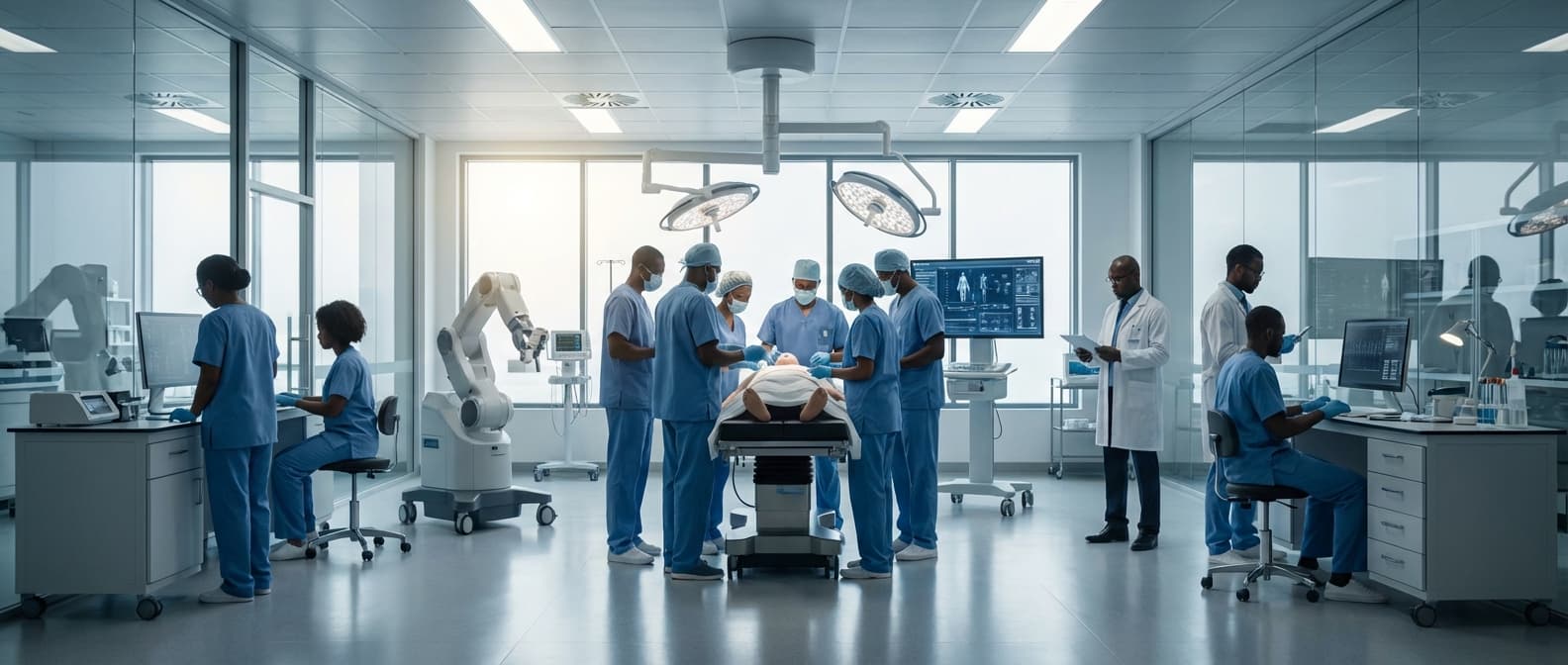
Biomedical Engineering Consulting in Sudan
Engineering Excellence & Technical Support
Equipment selection, procurement and implementation consulting High-standard technical execution following OEM protocols and local regulatory frameworks.
Bridging the Healthcare Technology Gap
We provide expert consulting for the selection, procurement, and implementation of advanced medical equipment and infrastructure, tailored to the specific needs and budget constraints of healthcare facilities in Sudan. Our focus is on improving patient care through appropriate and sustainable technology solutions.
Optimizing Biomedical Equipment Management
Our services include developing and implementing robust biomedical equipment maintenance, calibration, and lifecycle management programs. We empower Sudanese hospitals and clinics to maximize equipment uptime, ensure safety and efficacy, and reduce operational costs through best practices and tailored strategies.
Enhancing Diagnostic and Therapeutic Capabilities
We specialize in advising on the integration and utilization of cutting-edge diagnostic imaging, laboratory, and therapeutic technologies. Our goal is to enhance the diagnostic accuracy and treatment effectiveness of Sudanese healthcare professionals, contributing to improved patient outcomes and public health.
What Is Biomedical Engineering Consulting In Sudan?
Biomedical Engineering Consulting in Sudan refers to the provision of expert technical and advisory services focused on the application of engineering principles to healthcare and biological systems within the Sudanese context. This service encompasses a wide range of activities aimed at optimizing the design, implementation, maintenance, and utilization of medical technologies and healthcare infrastructure. Consultants leverage their specialized knowledge to address challenges faced by healthcare institutions, manufacturers, regulatory bodies, and research organizations, ensuring that medical equipment and facilities meet international standards, are cost-effective, and contribute to improved patient outcomes. The services are tailored to the unique economic, regulatory, and infrastructural landscape of Sudan, often involving considerations for local manufacturing capabilities, import/export regulations, and the availability of skilled personnel.
| Typical Use Cases | Description | Key Considerations in Sudan |
|---|---|---|
| Medical Equipment Procurement and Lifecycle Management | Advising on the selection, acquisition, installation, commissioning, maintenance, and eventual decommissioning of medical devices. This includes developing procurement strategies, vendor evaluation, and establishing service contracts. | Focus on appropriate technology selection based on local needs, affordability, availability of spare parts, and local technical expertise for maintenance. Compliance with Sudanese import regulations and customs procedures. |
| Healthcare Facility Design and Infrastructure Development | Providing expertise in the planning, design, and construction of new healthcare facilities or the renovation of existing ones. This involves ensuring proper space allocation, workflow optimization, utility requirements (medical gases, electrical systems), and infection control. | Adapting designs to local building codes, material availability, and climate. Integration of sustainable and energy-efficient solutions where feasible. |
| Regulatory Compliance and Quality Assurance | Assisting manufacturers and importers in navigating Sudanese regulations for medical devices, including registration, product certification, and post-market surveillance. Developing and implementing quality management systems. | Understanding the specific requirements of Sudanese regulatory bodies, such as the Sudan Standards and Metrology Organization (SSMO) and the Ministry of Health. Ensuring compliance with international standards (e.g., ISO 13485) as applicable. |
| Biomedical Engineering Department Setup and Management | Guiding the establishment and operationalization of in-house biomedical engineering departments within healthcare institutions. This includes defining roles and responsibilities, developing SOPs, and implementing training programs. | Addressing challenges related to workforce shortages, training gaps, and the need for standardized operational procedures. Emphasis on cost-effective departmental structures. |
| Technology Assessment and Implementation of Health IT Solutions | Evaluating and recommending the implementation of electronic health records (EHR), Picture Archiving and Communication Systems (PACS), and other health information technology solutions. | Assessing the readiness of healthcare infrastructure for digital solutions, including internet connectivity, data security, and user training needs. Considering the cost-benefit analysis in the Sudanese economic context. |
| Risk Management and Safety Engineering | Conducting risk assessments for medical devices and healthcare environments, developing safety protocols, and ensuring compliance with patient safety standards. | Prioritizing common risks in the local context, such as power outages, environmental hazards, and issues related to user training and adherence to safety procedures. |
| Training and Capacity Building | Developing and delivering training programs for healthcare professionals and technical staff on the operation, maintenance, and safety of medical equipment. | Tailoring training content to the skill levels of local personnel and available resources. Utilizing train-the-trainer models for sustainable capacity development. |
| Feasibility Studies and Business Planning | Conducting feasibility studies for new healthcare projects, including the introduction of new medical technologies or the establishment of specialized medical services. | Analyzing market demand, economic viability, and potential return on investment within the specific socio-economic conditions of Sudan. |
Who Needs Biomedical Engineering Consulting in Sudan?
- Hospitals and Healthcare Facilities (Public and Private)
- Medical Device Manufacturers and Distributors
- Government Ministries and Regulatory Agencies (e.g., Ministry of Health, Standards and Metrology Organization)
- Research and Development Institutions
- Non-Governmental Organizations (NGOs) and International Aid Agencies
- Educational Institutions (for curriculum development and laboratory infrastructure)
- Investors and Funding Bodies in the Healthcare Sector
Who Needs Biomedical Engineering Consulting In Sudan?
Biomedical Engineering Consulting in Sudan is crucial for the advancement and sustainability of the healthcare sector. The unique challenges and opportunities within Sudan necessitate specialized expertise to navigate complex technical, regulatory, and operational landscapes. Consulting services bridge the gap between cutting-edge biomedical technology and the practical realities of healthcare delivery, ensuring efficient, safe, and cost-effective solutions.
| Customer Type | Key Departments/Units Served | Specific Needs Addressed |
|---|---|---|
| Hospitals (Public & Private) | Engineering Department, Procurement Department, IT Department, Clinical Departments (e.g., Cardiology, Oncology, Radiology, Surgery) | Equipment planning, procurement, installation, maintenance strategy development, compliance with international standards, training of biomedical technicians, asset management, technology assessment. |
| Ministry of Health | Procurement and Logistics, Health Infrastructure Department, Regulatory Affairs, Planning and Policy Department | National equipment standardization, policy development for medical device management, capacity building for regional health facilities, quality assurance frameworks, health technology assessment. |
| Medical Device Manufacturers/Distributors | Sales and Marketing, Technical Support, Training Department, Regulatory Affairs | Market entry strategy, compliance with local regulations, establishing service and support networks, training local personnel, post-market surveillance support. |
| Research Institutions/Universities | Research Labs, Academic Departments (Biomedical Engineering, Medicine), Central Facilities | Acquisition of specialized research equipment, development of research infrastructure, technical consultation on experimental setups, safety protocols for advanced technologies. |
| NGOs & International Aid Agencies | Procurement and Logistics, Program Implementation Units, Monitoring and Evaluation | Needs assessment for medical equipment in humanitarian settings, procurement and deployment of essential medical devices, training of local healthcare providers, ensuring long-term sustainability of donated equipment. |
| Healthcare Insurance Providers | Claims Department, Risk Management, Provider Relations | Assessing the technological capabilities and cost-effectiveness of healthcare facilities, validating equipment costs, developing reimbursement strategies for advanced medical procedures. |
| Specialized Medical Centers (e.g., Dialysis, Imaging) | Operations Management, Technical Staff, Clinical Staff | Optimizing equipment utilization, ensuring regulatory compliance for specialized equipment, developing maintenance schedules, training staff on new technologies, advising on expansion plans. |
Target Customers & Departments for Biomedical Engineering Consulting in Sudan
- Hospitals (Public and Private)
- Ministry of Health and its Sub-Departments
- Medical Device Manufacturers and Distributors
- Research Institutions and Universities
- Non-Governmental Organizations (NGOs) and International Aid Agencies
- Healthcare Insurance Providers
- Radiology and Imaging Centers
- Dialysis Centers
- Surgical Centers and Operating Theaters
- Laboratories and Diagnostic Centers
- Rehabilitation Centers
Biomedical Engineering Consulting Process In Sudan
Navigating the Biomedical Engineering consulting landscape in Sudan involves a structured workflow designed to address the unique needs of healthcare facilities and organizations within the country. This process, from initial inquiry to successful project execution, emphasizes clear communication, thorough assessment, and tailored solutions, ensuring alignment with Sudanese regulations and best practices.
| Stage | Description | Key Activities | Deliverables/Outcomes |
|---|---|---|---|
| 1. Inquiry and Initial Consultation | The process begins when a client in Sudan expresses interest in biomedical engineering consulting services. This stage focuses on understanding the client's initial needs and determining if there's a mutual fit. |
|
|
| 2. Needs Assessment and Scoping | A more in-depth analysis of the client's situation to define the precise requirements, challenges, and desired outcomes. This is crucial for tailoring solutions to the Sudanese context. |
|
|
| 3. Proposal Development and Agreement | Based on the needs assessment, a formal proposal is created outlining the proposed solutions, methodology, timeline, and cost. This is followed by negotiation and contract finalization. |
|
|
| 4. Project Planning and Resource Allocation | Once the agreement is in place, a detailed project plan is developed, and necessary resources (personnel, equipment, budget) are allocated. |
|
|
| 5. Execution and Implementation | This is the core phase where the consulting services are delivered, and solutions are implemented according to the project plan. Adaptability to local conditions is key. |
|
|
| 6. Monitoring, Evaluation, and Handover | The project's progress and outcomes are reviewed to ensure objectives are met. The project is then formally handed over to the client. |
|
|
| 7. Post-Execution Support and Follow-up | Ongoing support and follow-up to ensure sustained success and to address any residual issues or future needs. |
|
|
Biomedical Engineering Consulting Process in Sudan
- Phase 1: Inquiry and Initial Consultation
- Phase 2: Needs Assessment and Scoping
- Phase 3: Proposal Development and Agreement
- Phase 4: Project Planning and Resource Allocation
- Phase 5: Execution and Implementation
- Phase 6: Monitoring, Evaluation, and Handover
- Phase 7: Post-Execution Support and Follow-up
Biomedical Engineering Consulting Cost In Sudan
Biomedical engineering consulting costs in Sudan can vary significantly based on several key factors. These include the complexity and scope of the project, the experience and reputation of the consultant or firm, the duration of the engagement, and the specific expertise required. Geographical location within Sudan can also play a role, with higher costs potentially in major urban centers like Khartoum compared to more remote areas. The currency of Sudan, the Sudanese Pound (SDG), is subject to fluctuations, which can impact the perceived cost in foreign currency terms and influence pricing strategies by consultants. Projects requiring specialized equipment assessment, regulatory compliance navigation, or the development of intricate medical device prototypes will naturally command higher fees than general advisory services.
| Service Type | Estimated Cost Range (SDG) | Notes |
|---|---|---|
| Initial Consultation/Needs Assessment | 15,000 - 50,000 | Covers preliminary discussions and defining project objectives. |
| Feasibility Studies/Market Research | 50,000 - 200,000+ | Depends on the depth of analysis and data collection required. |
| Equipment Specification and Procurement Advisory | 40,000 - 150,000+ | Includes defining technical requirements and vendor evaluation. |
| Regulatory Compliance Consulting (e.g., device registration) | 75,000 - 300,000+ | Can be highly variable based on the type of device and regulatory pathway. |
| Hospital Infrastructure Design/Upgrade Consulting | 100,000 - 1,000,000+ | Significant variation based on the size and complexity of the facility. |
| Medical Device Development/Prototyping Support | 150,000 - 500,000+ | Includes design review, testing, and validation phases. |
| Specialized Training and Capacity Building | 30,000 - 100,000+ per session | Depends on the duration, topic, and number of participants. |
| Project Management (Biomedical focus) | 5%-15% of total project cost or daily/monthly retainer | Often a percentage of the overall project budget. |
| Hourly Rate (for short-term engagements or specific tasks) | 5,000 - 20,000+ per hour | Reflects the consultant's expertise and demand. |
Key Pricing Factors for Biomedical Engineering Consulting in Sudan
- Project Scope and Complexity: The more intricate and extensive the project, the higher the cost.
- Consultant's Experience and Reputation: Highly sought-after consultants with proven track records often charge premium rates.
- Duration of Engagement: Longer-term projects may have negotiated rates, while short-term consultations might be billed hourly or daily.
- Required Expertise: Specialized knowledge in areas like medical imaging, prosthetics, or hospital infrastructure design will increase costs.
- Geographical Location: Consulting services in major cities may be more expensive than in rural areas.
- Regulatory Navigation: Assistance with Sudanese medical device regulations and approvals adds to the cost.
- Equipment Assessment and Procurement: Evaluating, recommending, and sourcing medical equipment involves significant expertise.
- Technology Integration: Implementing new biomedical technologies into existing healthcare systems is a complex service.
- Training and Development: Providing training for healthcare professionals on new equipment or protocols.
- Market Analysis and Feasibility Studies: For new ventures or product launches in the Sudanese market.
Affordable Biomedical Engineering Consulting Options
Biomedical engineering consulting can be a significant investment, but accessible and cost-effective options exist for companies of all sizes. Understanding how to leverage value bundles and implement smart cost-saving strategies can make expert guidance a reality without breaking the bank. Value bundles are curated service packages designed to offer comprehensive support for specific project phases or needs at a more predictable and often discounted rate compared to individual service bookings. Cost-saving strategies involve proactive planning, efficient project management, and exploring alternative expertise sources.
| Consulting Service Area | Typical Value Bundle Focus | Cost-Saving Tactics |
|---|---|---|
| Regulatory Affairs | Pre-submission strategy, Q-Sub meeting preparation, submission dossier compilation | Bundle with QMS development; use remote regulatory specialists; focus on specific market submissions initially |
| Product Development & Design | Conceptualization, technical feasibility, risk analysis, initial design reviews | Bundle with prototyping; leverage internal engineering teams; hire for specific design phases |
| Quality Management Systems | QMS gap analysis, SOP development, auditor training, internal audit support | Bundle with regulatory strategy; leverage existing templates; train internal personnel for ongoing management |
| Clinical & Pre-Clinical | Protocol development, site selection support, data analysis planning | Bundle with regulatory submissions; focus on pilot studies first; partner with academic research centers |
| Manufacturing & Scale-up | Process validation, supply chain assessment, contract manufacturing recommendations | Bundle with product lifecycle management; focus on optimizing existing processes; utilize local manufacturing experts |
Key Value Bundle Components & Cost-Saving Strategies
- Value Bundle Components:
- Feasibility Studies & Concept Development: Initial market research, technology assessment, and concept validation.
- Design & Prototyping Support: Assistance with product design, material selection, and early-stage prototyping.
- Regulatory Pathway & Strategy: Guidance on FDA, CE Mark, or other regulatory body requirements and submission preparation.
- Clinical Trial Planning & Management: Support in designing protocols, selecting sites, and managing trial execution.
- Quality Management System (QMS) Implementation: Establishing or refining ISO 13485, FDA 21 CFR Part 820, or other relevant QMS.
- Post-Market Surveillance & Vigilance: Setting up systems for complaint handling, adverse event reporting, and post-market studies.
- Technology Transfer & Manufacturing Scale-up: Expertise in transitioning from R&D to production.
- Cost-Saving Strategies:
- Define Clear Project Scope & Deliverables: Ambiguity leads to scope creep and increased costs.
- Leverage In-House Expertise: Identify internal skills that can be combined with external consulting.
- Phased Consulting Engagements: Break down large projects into smaller, manageable consulting phases.
- Utilize Off-Peak Consulting Times: Consider engaging consultants during their less busy periods.
- Explore Virtual & Remote Consulting: Reduce travel expenses by opting for remote collaboration.
- Seek Consultants with Niche Specializations: Targeted expertise can be more efficient than generalists.
- Negotiate Retainer Agreements: For ongoing needs, retainers can offer better rates and guaranteed availability.
- Consider Academic Partnerships: Universities with strong biomedical engineering programs may offer consulting or student project opportunities at lower costs.
- Utilize Freelance Platforms for Specific Tasks: For very specific, time-bound tasks, freelance platforms can be cost-effective.
- Request Detailed Proposals with Hour Estimates: Ensure transparency in pricing and resource allocation.
Verified Providers In Sudan
In Sudan's evolving healthcare landscape, identifying verified and trustworthy providers is paramount for ensuring quality care. Franance Health stands out as a leading platform dedicated to connecting individuals with vetted medical professionals and facilities. Our rigorous credentialing process ensures that all listed providers meet the highest standards of expertise, ethics, and patient safety. By choosing Franance Health, you are opting for a service that prioritizes transparency, reliability, and your well-being.
| Feature | Franance Health Advantage | Importance for Patients in Sudan |
|---|---|---|
| Provider Verification | Comprehensive background checks, license validation, and credential review. | Ensures you receive care from legitimate and qualified medical professionals, reducing the risk of unqualified practitioners. |
| Specialty Coverage | Extensive network across primary care, surgery, pediatrics, cardiology, and more. | Provides access to specialized medical expertise that might be scarce or difficult to find through traditional means. |
| Patient Reviews & Ratings | Integrated system for verified patient feedback and ratings. | Offers real-world insights into provider performance and patient satisfaction, aiding in provider selection. |
| Appointment Booking | Streamlined online and mobile booking system. | Simplifies the process of accessing healthcare, saving time and reducing logistical hurdles, especially in challenging environments. |
| Quality Assurance | Ongoing monitoring of provider performance and patient feedback. | Continuously upholds high standards of care and addresses any potential issues, fostering trust and reliability. |
Why Franance Health is Your Best Choice for Verified Providers in Sudan:
- Rigorous Vetting Process: We meticulously verify the qualifications, licenses, and professional history of every provider on our platform.
- Commitment to Patient Safety: Our standards are designed to ensure that you receive care from highly competent and ethical medical professionals.
- Transparency and Information: We provide detailed profiles of our providers, allowing you to make informed decisions about your healthcare.
- Wide Range of Specialties: Access a diverse network of doctors, clinics, and hospitals covering various medical needs.
- User-Friendly Platform: Our intuitive interface makes it easy to search, compare, and book appointments with verified providers.
Scope Of Work For Biomedical Engineering Consulting
This document outlines the Scope of Work (SOW) for a Biomedical Engineering Consulting engagement. It details the technical deliverables, standard specifications, and the overall objectives of the consulting services. The scope is designed to provide comprehensive support in areas such as device design, regulatory affairs, quality systems, and market access for medical technologies.
| Technical Deliverable | Description | Standard Specifications/Key Considerations | Deliverable Format |
|---|---|---|---|
| Product Development Plan | Comprehensive roadmap for the design, development, and testing of a medical device. | Includes market analysis, risk management, design controls, verification & validation strategies, regulatory pathway identification. Aligned with ISO 14971 for Risk Management. | Document (PDF, Word) |
| Design History File (DHF) Compilation | Organization and creation of all documents related to the design and development of a medical device. | Must comply with 21 CFR Part 820 (Quality System Regulation) and relevant ISO standards (e.g., ISO 13485, ISO 14971). | Digital Folder Structure, compiled PDF documents |
| Regulatory Strategy Report | Defines the regulatory pathway for market approval, including required submissions and timelines. | Includes classification determination, predicate device analysis, required clinical data, submission type (e.g., 510(k), PMA, De Novo). Reference to relevant FDA Guidance Documents and EU MDR/IVDR requirements. | Document (PDF, Word) |
| Quality Management System (QMS) Gap Analysis and Implementation Plan | Assessment of existing QMS against regulatory requirements and development of a plan for improvement or establishment. | Based on ISO 13485:2016, 21 CFR Part 820. Identification of missing procedures, training needs, and audit readiness. | Report (PDF), Process Flowcharts, Standard Operating Procedures (SOPs) outlines |
| Verification and Validation (V&V) Protocols & Reports | Development of test plans to confirm the device meets design specifications and intended use. | Protocols must clearly define test methods, acceptance criteria, and required resources. Reports must document results and deviations. Adherence to relevant IEC/ISO standards for medical device testing (e.g., IEC 60601 series for electrical safety, IEC 62304 for software lifecycle). | Documents (PDF, Word) |
| Risk Management File (RMF) Development | Systematic identification, evaluation, and control of risks associated with the medical device. | Implementation of ISO 14971:2019. Includes Hazard Analysis, Failure Mode and Effects Analysis (FMEA), and Risk-Benefit Analysis. | Documents (Excel, Word), Risk Management Plan, Risk Management Report |
| Usability Engineering File | Documentation of the usability engineering process to ensure safe and effective use of the device. | In accordance with IEC 62366-1. Includes use specification, user interface design, and formative/summative usability testing. | Document (PDF, Word), Usability Engineering Plan & Report |
| Technical File (for CE Marking) | Compilation of all technical documentation required for conformity assessment under the EU MDR/IVDR. | Includes device description, design and manufacturing information, risk management, V&V, labeling, and clinical evaluation. Aligned with Annex II and III of EU Regulation 2017/745 (MDR) and/or 2017/746 (IVDR). | Digital Folder Structure, compiled PDF documents |
| Feasibility Study Report | Assessment of the technical and commercial viability of a proposed medical technology or product concept. | Includes literature review, patent search, preliminary risk assessment, technology readiness assessment, and cost estimation. | Document (PDF, Word) |
| Supplier Qualification Program | Development of criteria and processes for evaluating and qualifying suppliers of critical components and services. | Based on ISO 13485 requirements for outsourced processes and purchased product. Includes supplier audits and quality agreements. | Document (PDF, Word), Audit Checklists |
Key Objectives of Biomedical Engineering Consulting
- To provide expert technical guidance and strategic advice on the development and commercialization of biomedical devices.
- To ensure compliance with relevant regulatory standards (e.g., FDA, CE Marking, ISO 13485).
- To enhance the design, performance, and safety of medical products.
- To support the establishment and improvement of robust Quality Management Systems (QMS).
- To facilitate market entry strategies and post-market surveillance planning.
- To assist in the evaluation and selection of appropriate technologies and manufacturing processes.
Service Level Agreement For Biomedical Engineering Consulting
This Service Level Agreement (SLA) outlines the response times and uptime guarantees provided by [Your Company Name] (hereinafter referred to as "Consultant") to its clients for Biomedical Engineering Consulting services. This SLA is an integral part of the Master Service Agreement between the Consultant and the Client.
| Issue Priority | Response Time (during Business Hours) | Resolution Target (during Business Hours) |
|---|---|---|
| Critical Issue | 1 Hour | 4 Business Hours (initial assessment and mitigation plan) |
| High-Priority Issue | 2 Business Hours | 8 Business Hours (initial assessment and plan) |
| Medium-Priority Issue | 4 Business Hours | 2 Business Days (initial assessment and plan) |
| Low-Priority Issue | 1 Business Day | 5 Business Days (or as agreed upon) |
Key Definitions
- {"term":"Service Request","definition":"Any request submitted by the Client to the Consultant for assistance, support, or consultation related to the agreed-upon biomedical engineering services."}
- {"term":"Business Hours","definition":"The standard operating hours of the Consultant, typically Monday through Friday, 9:00 AM to 5:00 PM in the [Specify Time Zone] time zone, excluding public holidays."}
- {"term":"Critical Issue","definition":"A problem that renders a critical biomedical device or system non-operational, significantly impacts patient care, or poses an immediate safety risk."}
- {"term":"High-Priority Issue","definition":"A problem that degrades the performance of a biomedical device or system, affects multiple users, or requires prompt attention to prevent further complications."}
- {"term":"Medium-Priority Issue","definition":"A problem that impacts non-critical functionality or requires attention within a reasonable timeframe to avoid potential future issues."}
- {"term":"Low-Priority Issue","definition":"A request for information, minor clarification, or a non-urgent feature enhancement."}
- {"term":"Uptime Guarantee","definition":"The percentage of time that the Consultant's systems and services, as applicable to the provision of consulting, are available and operational."}
Frequently Asked Questions

Ready when you are
Let's scope your Biomedical Engineering Consulting in Sudan project in Sudan.

Scaling healthcare logistics and technical systems across the entire continent.