
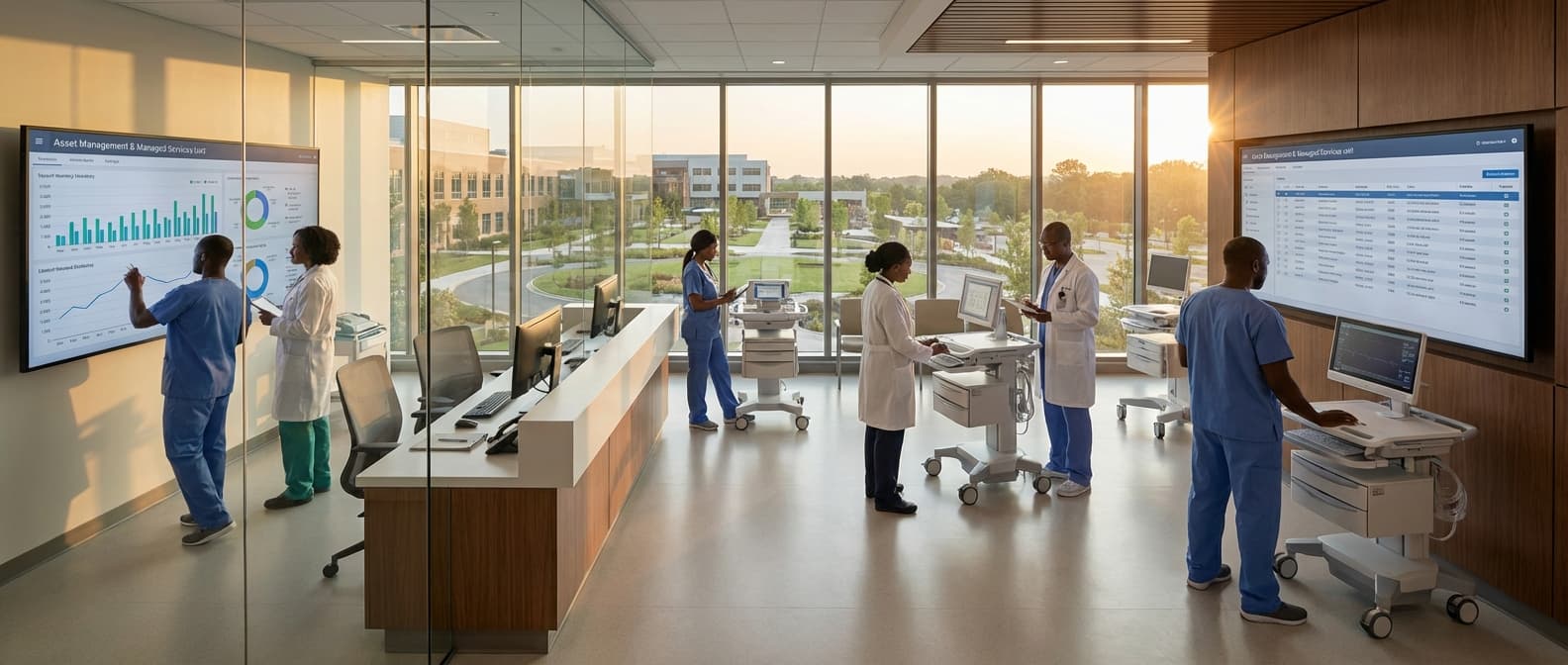
Maintenance KPI Reporting Service (Uptime/MTBF/MTTR) in Sudan
Engineering Excellence & Technical Support
Maintenance KPI Reporting Service (Uptime/MTBF/MTTR) High-standard technical execution following OEM protocols and local regulatory frameworks.
Enhanced Uptime Visibility
Gain real-time, granular insights into asset uptime across all Sudanese operations. Our service tracks and visualizes availability by machine, department, and region, enabling proactive identification of bottlenecks and maximizing production continuity.
Optimized Mean Time Between Failures (MTBF)
Leverage predictive analytics and historical failure data to forecast potential equipment breakdowns. Our reporting service identifies root causes of recurring failures, empowering maintenance teams in Sudan to implement targeted preventative measures and significantly increase MTBF.
Reduced Mean Time To Repair (MTTR)
Streamline repair processes with data-driven diagnostics and optimized spare parts management. Our platform analyzes repair durations, technician performance, and common fault types, providing actionable intelligence to reduce downtime and minimize the MTTR for critical assets in Sudan.
What Is Maintenance Kpi Reporting Service (Uptime/mtbf/mttr) In Sudan?
Maintenance KPI Reporting Service (Uptime/MTBF/MTTR) in Sudan refers to a specialized offering that provides organizations with the systematic collection, analysis, and presentation of key performance indicators (KPIs) related to the operational availability and reliability of their assets. This service is crucial for understanding and optimizing maintenance strategies, ultimately impacting operational efficiency, cost reduction, and risk mitigation within the Sudanese industrial and commercial landscape. The core KPIs typically include: Uptime (percentage of time a system or asset is operational and available for use), Mean Time Between Failures (MTBF - average time a repairable system operates between its consecutive failures), and Mean Time To Repair (MTTR - average time it takes to repair a failed system or component). The service involves establishing data collection mechanisms (manual or automated), defining relevant metrics, performing statistical analysis, and generating actionable reports for decision-making.
| Typical Use Cases | Description and Impact |
|---|---|
| Asset Performance Monitoring and Optimization | Tracking Uptime to quantify operational availability. Identifying trends in MTBF to predict potential failure patterns and implement proactive maintenance. Analyzing MTTR to streamline repair processes and minimize downtime, directly impacting production output and service delivery. |
| Maintenance Strategy Development and Refinement | Using MTBF and MTTR data to shift from reactive to predictive or preventive maintenance strategies. Justifying investments in new equipment or maintenance technologies based on demonstrated performance improvements. |
| Cost Management and Budgeting | Quantifying the cost of downtime through Uptime analysis. Identifying recurring failure modes to address root causes and reduce repair expenditures. Optimizing spare parts inventory based on MTBF data. |
| Risk Assessment and Mitigation | Understanding the probability of failure based on MTBF. Developing contingency plans for critical asset failures. Ensuring regulatory compliance through consistent asset availability. |
| Service Level Agreement (SLA) Management | For service providers, demonstrating adherence to Uptime commitments to clients. Identifying areas for service improvement based on MTTR performance. |
| Benchmarking and Performance Improvement | Comparing asset performance against industry standards or internal historical data. Setting achievable targets for Uptime, MTBF, and MTTR improvements. |
Who Needs Maintenance KPI Reporting Service (Uptime/MTBF/MTTR) in Sudan?
- Industrial Manufacturing Plants (e.g., food and beverage, textiles, cement, oil and gas processing)
- Energy and Utilities (e.g., power generation, water treatment, telecommunications infrastructure)
- Transportation and Logistics Companies (e.g., fleet management, port operations)
- Mining and Extractive Industries
- Healthcare Facilities (e.g., hospital equipment maintenance)
- Large-scale Agricultural Operations (e.g., machinery and processing plant maintenance)
- Facility Management Companies (e.g., managing critical building systems)
- Any organization with significant capital assets whose continuous operation is critical to its business model.
Who Needs Maintenance Kpi Reporting Service (Uptime/mtbf/mttr) In Sudan?
In Sudan, businesses across various sectors are increasingly recognizing the critical importance of reliable operations. Downtime is not just an inconvenience; it translates directly into lost revenue, decreased productivity, and damaged reputation. Therefore, any organization that relies on operational assets for its core functions, and is looking to optimize performance, minimize disruptions, and extend asset lifespan, will benefit from a comprehensive Maintenance KPI Reporting Service. This service provides actionable insights through key performance indicators like Uptime, Mean Time Between Failures (MTBF), and Mean Time To Repair (MTTR), enabling proactive decision-making and strategic asset management.
| Customer Type | Key Departments Benefiting | Primary Needs Addressed | Impact of Uptime/MTBF/MTTR |
|---|---|---|---|
| Manufacturing | Production, Maintenance, Operations Management, Quality Control | Maximizing production output, reducing scrap, ensuring product quality, optimizing maintenance schedules. | Increased production volume, reduced waste, improved on-time delivery, lower operational costs. |
| Oil & Gas | Operations, Maintenance, Safety, Asset Integrity | Ensuring continuous extraction and processing, minimizing safety risks, extending asset life, optimizing exploration efforts. | Higher revenue generation, reduced environmental risks, improved safety records, efficient resource utilization. |
| Utilities (Power/Water) | Operations, Maintenance, Network Management, Customer Service | Ensuring consistent service delivery, minimizing blackouts/outages, optimizing resource allocation for repairs, managing customer satisfaction. | Improved reliability of essential services, reduced public complaints, cost-effective operational management. |
| Telecommunications | Network Operations, Field Maintenance, Customer Support, Infrastructure Management | Maintaining network availability, ensuring seamless communication services, optimizing response times for outages, managing infrastructure upgrades. | Enhanced customer experience, reduced churn, competitive market positioning, efficient capital expenditure. |
| Logistics & Transportation | Fleet Management, Operations, Maintenance, Dispatch | Maximizing vehicle uptime, minimizing delivery delays, optimizing maintenance schedules, reducing operational costs, ensuring driver safety. | Faster delivery times, increased customer satisfaction, lower fuel and repair costs, improved fleet utilization. |
| Healthcare | Biomedical Engineering, Facilities Management, Operations | Ensuring critical medical equipment is always operational, minimizing disruptions to patient care, optimizing repair turnaround times, managing equipment lifecycle. | Improved patient outcomes, reduced risk to patient safety, efficient use of healthcare resources, compliance with regulatory standards. |
Target Customers in Sudan
- Manufacturing Plants (Food & Beverage, Textiles, Cement, Chemicals, Pharmaceuticals)
- Oil & Gas Exploration and Production Companies
- Mining Operations
- Power Generation and Utilities (Electricity, Water)
- Telecommunications Providers
- Logistics and Transportation Companies (Fleet Management)
- Construction Companies (Heavy Machinery Maintenance)
- Hospitals and Healthcare Facilities (Medical Equipment Uptime)
- Large Commercial Buildings and Facilities Management
- Agricultural Cooperatives and Large-Scale Farms (Equipment Reliability)
Maintenance Kpi Reporting Service (Uptime/mtbf/mttr) Process In Sudan
This document outlines the workflow for the Maintenance KPI Reporting Service in Sudan, specifically focusing on Uptime, Mean Time Between Failures (MTBF), and Mean Time To Repair (MTTR). The service aims to provide clients with actionable insights into their asset maintenance performance, enabling them to optimize operations and reduce downtime. The process is designed to be transparent, efficient, and tailored to the specific needs of businesses operating in Sudan.
| Step | Description | Responsibility | Key Activities | Deliverables |
|---|---|---|---|---|
| Potential client expresses interest in the Maintenance KPI Reporting Service. | Client, Service Provider Sales/Account Manager | Client contacts Service Provider. Initial discussion to understand client's needs, existing systems, and specific assets for reporting. Define scope and objectives. | Service Level Agreement (SLA) outline, Proposal Draft |
| Detailed understanding of the client's assets, operational environment, and data availability. | Service Provider Technical Team, Client's Maintenance Team | On-site or remote assessment of assets. Identification of data sources (e.g., CMMS, SCADA, manual logs). Definition of reporting periods and specific KPI calculation methodologies. | Detailed Scope Document, Data Requirements Specification |
| Formal proposal submission and contract negotiation. | Service Provider Sales/Account Manager, Client Management | Submission of a comprehensive proposal outlining services, pricing, timelines, and terms. Negotiation and finalization of the service contract. | Signed Service Contract, Finalized Proposal |
| Connecting to client's data sources and establishing reporting infrastructure. | Service Provider Technical Team, Client's IT/Maintenance Team | Establishing secure data links (API, direct database access, file import). Configuration of data ingestion pipelines. Setting up the KPI reporting platform. | Connected Data Sources, Configured Reporting Platform |
| Gathering and verifying the accuracy of maintenance and operational data. | Service Provider Data Analyst, Client's Maintenance Team | Regular data extraction from integrated sources. Data cleansing and validation to ensure accuracy and completeness. Identification and resolution of data discrepancies. | Validated Raw Data Set |
| Computing Uptime, MTBF, and MTTR based on validated data. | Service Provider Data Analyst | Applying agreed-upon formulas to calculate KPIs. Performing trend analysis, identifying outliers, and correlating KPIs with operational events. | Calculated KPI Values, Preliminary Analysis Report |
| Creating and presenting detailed maintenance KPI reports. | Service Provider Data Analyst, Client's Management/Maintenance Team | Generating standardized and custom reports (dashboards, spreadsheets, PDF). Presenting findings and insights to the client. Reviewing performance against targets. | Maintenance KPI Report (Weekly/Monthly/Quarterly), Executive Summary |
| Discussing report findings and providing actionable recommendations for improvement. | Service Provider Technical Consultant, Client's Management/Maintenance Team | Facilitating review meetings. Discussing root causes of failures and high repair times. Proposing strategies for preventive maintenance, spare parts optimization, and technician training. | Action Plan, Improvement Recommendations |
| Ongoing monitoring, feedback loop, and service optimization. | Service Provider, Client | Regular performance reviews of the reporting service itself. Gathering client feedback. Adjusting methodologies and reporting formats as needed. Implementing new features or insights. | Service Improvement Log, Updated Service Parameters |
Key Maintenance KPIs Explained
- Uptime: The percentage of time an asset or system is operational and available for use. Higher uptime indicates better reliability and less unscheduled downtime.
- Mean Time Between Failures (MTBF): The average time an asset or system operates between one failure and the next. A higher MTBF suggests greater reliability.
- Mean Time To Repair (MTTR): The average time it takes to repair a failed asset or system and restore it to operational status. A lower MTTR indicates faster and more efficient maintenance responses.
Maintenance Kpi Reporting Service (Uptime/mtbf/mttr) Cost In Sudan
The cost of a Maintenance KPI Reporting Service in Sudan, specifically focusing on Uptime, Mean Time Between Failures (MTBF), and Mean Time To Repair (MTTR), can vary significantly based on several factors. This service typically involves data collection, analysis, reporting, and often includes recommendations for improvement. Local currency pricing will be influenced by the current economic climate, inflation, and the specific needs of the client. The Sudanese Pound (SDG) is the local currency, and exchange rates can fluctuate, impacting the perceived cost in foreign currency.
| Service Component | Estimated Range (SDG per month) | Notes |
|---|---|---|
| Basic KPI Monitoring & Reporting (Standard Assets, Monthly Reports) | 50,000 - 150,000 | Covers data collection from limited sources, standard report formats, and basic Uptime, MTBF, MTTR calculations. |
| Intermediate KPI Reporting (Multiple Assets, Bi-weekly/Monthly Reports) | 150,000 - 400,000 | Includes more sophisticated data integration, customizable reports, basic trend analysis, and more assets. May involve some semi-automated data collection. |
| Advanced KPI Reporting & Optimization (Large Asset Base, Weekly/Custom Frequency, IoT Integration) | 400,000 - 1,000,000+ | Encompasses comprehensive asset management, advanced analytics, root cause analysis, predictive maintenance insights, integration with ERP, and potential IoT sensor deployment. Prices can escalate significantly with complexity. |
| Consultation & Recommendations (Per Session/Project) | 75,000 - 200,000+ | Additional charges for expert analysis, strategy development, and implementation guidance beyond standard reporting. |
| Software License/Subscription (If applicable) | Variable (One-time or recurring, often a significant portion of the cost) | Depends on the chosen software platform and its features. May be a separate cost or bundled. |
| Initial Setup & Configuration | 200,000 - 800,000+ | One-time cost for system integration, data mapping, user training, and initial data population. Higher for complex integrations. |
Key Pricing Factors for Maintenance KPI Reporting Service in Sudan
- Scope of Services: The breadth and depth of the reporting are critical. This includes the number of assets being monitored, the complexity of the maintenance processes, and the types of KPIs to be tracked (e.g., preventive maintenance compliance, corrective maintenance effectiveness, spare parts availability).
- Data Collection Method: Will data be collected manually, semi-automatically through existing systems, or require the implementation of new IoT sensors and data loggers? The latter will significantly increase upfront and ongoing costs.
- Reporting Frequency and Granularity: Daily, weekly, monthly, or quarterly reports? Will reports be high-level summaries or detailed breakdowns with root cause analysis?
- Software and Technology: Does the service provider utilize proprietary software, or will a new platform need to be acquired or licensed? The cost of advanced analytics and visualization tools will be factored in.
- Provider Expertise and Reputation: Experienced providers with a proven track record and specialized knowledge in asset management and maintenance optimization will generally command higher fees.
- Customization Requirements: The need for tailored reports, specific dashboards, or integration with existing enterprise resource planning (ERP) systems will add to the cost.
- Service Level Agreements (SLAs): The guarantee of specific response times for data availability, report generation, and support will influence pricing.
- Geographic Coverage within Sudan: While Sudan is the primary focus, if services are required across multiple remote locations, travel and logistics costs for personnel might be incurred.
- Duration of Contract: Long-term contracts might offer discounted rates compared to short-term engagements.
- Economic Conditions and Inflation: As mentioned, the fluctuating economic environment and inflation rates in Sudan directly impact the cost of labor, technology, and operational expenses for the service provider.
Affordable Maintenance Kpi Reporting Service (Uptime/mtbf/mttr) Options
Our Affordable Maintenance KPI Reporting Service offers businesses a cost-effective way to track critical uptime metrics like Mean Time Between Failures (MTBF) and Mean Time To Repair (MTTR). By leveraging smart data collection and automated reporting, we empower you to identify bottlenecks, optimize maintenance schedules, and minimize costly downtime. We offer flexible value bundles designed to fit various operational needs and budgets, alongside proven cost-saving strategies that integrate seamlessly with our reporting solutions.
| Cost-Saving Strategy | Description | How our Service Supports It |
|---|---|---|
| Reduced Unplanned Downtime | Minimizing unexpected equipment failures directly translates to lost production, missed deadlines, and customer dissatisfaction. Proactive identification and resolution of issues prevent costly interruptions. | Our MTBF reporting highlights failure patterns, allowing you to address root causes. MTTR reporting helps identify slow repair processes. Real-time alerts notify you of emerging issues before they cause significant downtime. |
| Optimized Spare Parts Inventory | Holding excessive spare parts ties up capital and warehouse space. Insufficient inventory leads to extended repair times. Data-driven insights help right-size inventory levels. | By analyzing failure frequency (MTBF) and common repair times (MTTR), our reports inform more accurate forecasting of spare parts needs. This reduces overstocking and stockouts. |
| Improved Maintenance Resource Allocation | Inefficient scheduling and dispatch of maintenance teams lead to wasted labor hours and delays. Understanding workload patterns allows for better resource planning. | Our reports reveal peak maintenance demand periods and the time spent on different types of repairs. This data helps in optimizing technician schedules, training needs, and tool allocation. |
| Extended Asset Lifespan | Regular and effective maintenance prevents premature equipment degradation, leading to longer operational life and deferring capital expenditure on replacements. | By tracking MTBF and MTTR, we help identify equipment that is failing frequently or taking too long to repair, indicating potential issues that, if addressed, can extend the asset's useful life. Our data can inform predictive maintenance initiatives. |
| Data-Driven Decision Making | Moving away from guesswork in maintenance strategy to informed decisions based on real performance data. | Our service provides clear, actionable data on your maintenance performance, enabling you to make strategic decisions about investments in training, equipment, and maintenance processes, ultimately leading to better ROI. |
Value Bundles
- {"title":"Essential Uptime Insights","description":"Ideal for smaller operations or those just starting with KPI tracking. Includes automated collection of basic uptime data, weekly MTBF/MTTR reports, and a quarterly performance review. Focuses on identifying the most frequent and longest-duration downtime events."}
- {"title":"Proactive Maintenance Advantage","description":"Suitable for growing businesses seeking to optimize maintenance. Includes all 'Essential' features plus real-time alert notifications for critical equipment, monthly trend analysis reports, and access to a dedicated support specialist. Enables proactive scheduling of preventive maintenance."}
- {"title":"Enterprise Reliability Suite","description":"Comprehensive solution for larger organizations demanding deep insights and advanced analytics. Includes all 'Proactive' features plus customized KPI dashboards, predictive maintenance integration capabilities, root cause analysis support, and bi-monthly strategic consultation. Maximizes asset lifespan and operational efficiency."}
Verified Providers In Sudan
In Sudan's evolving healthcare landscape, identifying truly Verified Providers is paramount for ensuring quality and trustworthy medical services. Franance Health stands out as a beacon of reliability, built on a foundation of rigorous credentialing processes and an unwavering commitment to patient well-being. This document outlines why Franance Health's credentials represent the best choice for healthcare seekers in Sudan.
| Credential Type | Franance Health Verification Process | Benefit to Patients |
|---|---|---|
| Medical Licenses & Certifications | Independent verification of all licenses, certifications, and board approvals with issuing authorities. | Ensures practitioners are legally qualified and possess the necessary expertise for their specialty. |
| Educational Background | Thorough review and verification of medical degrees and postgraduate training from reputable institutions. | Guarantees a solid educational foundation and specialized training. |
| Professional Experience & References | Verification of past employment and collection of professional references to assess competence and ethical conduct. | Provides assurance of practical skill, reliability, and good standing within the medical community. |
| Facility Accreditation | Confirmation of accreditation by Sudanese Ministry of Health and/or recognized international bodies (e.g., JCI standards in spirit). | Confirms that facilities meet stringent standards for safety, patient care, and operational excellence. |
| Adherence to Ethical Standards | Incorporation of ethical review and patient feedback mechanisms in provider selection. | Ensures providers operate with integrity, respect patient rights, and maintain confidentiality. |
What are Franance Health Credentials?
- Accreditation by Recognized Health Authorities: Franance Health partners exclusively with facilities and professionals accredited by both national Sudanese health regulatory bodies and internationally recognized healthcare accreditation organizations. This ensures adherence to the highest standards of safety, efficacy, and ethical practice.
- Verified Practitioner Qualifications: All medical practitioners associated with Franance Health undergo a stringent verification process. This includes validating their medical degrees, specialty certifications, licenses to practice, and ongoing professional development records.
- Facility Standards Compliance: Healthcare facilities are assessed for their infrastructure, equipment, infection control protocols, and patient safety measures. Franance Health ensures these facilities meet or exceed established benchmarks for quality care delivery.
- Commitment to Continuous Quality Improvement: Franance Health actively engages in monitoring and evaluating the performance of its providers. This commitment to continuous improvement guarantees that patients receive care that is not only safe and effective today but also adapts to the latest advancements in medical science.
- Patient-Centric Approach: Beyond formal credentials, Franance Health prioritizes providers who demonstrate a strong commitment to patient-centered care, empathy, and effective communication. This ensures a positive and supportive healthcare experience.
Scope Of Work For Maintenance Kpi Reporting Service (Uptime/mtbf/mttr)
This Scope of Work (SOW) outlines the services to be provided for the maintenance Key Performance Indicator (KPI) Reporting Service, focusing on Uptime, Mean Time Between Failures (MTBF), and Mean Time To Repair (MTTR). The service aims to deliver accurate, timely, and insightful reporting to support proactive maintenance strategies and operational efficiency. This document details the technical deliverables, standard specifications, and reporting frequency.
| Deliverable | Description | Format | Frequency | Standard Specifications |
|---|---|---|---|---|
| Initial KPI Baseline Report | Establishes the starting point for all tracked KPIs based on historical data. | PDF, Excel | One-time (at service commencement) | Includes data from at least the past 12 months, with clear definitions of 'operational' and 'failure' events. Calculation methodology documented. |
| Monthly KPI Performance Report | Detailed breakdown of Uptime, MTBF, and MTTR for the reporting period. | PDF, Excel, Interactive Dashboard (optional) | Monthly | Granular data by asset/system category. Trend analysis over the past 6 months. Identification of key contributors to downtime and extended repair times. Variance analysis against targets/benchmarks. |
| Quarterly KPI Summary Report | High-level overview of KPI performance for the quarter, highlighting trends and insights. | PDF, PowerPoint Presentation | Quarterly | Executive summary, comparison of quarterly performance against annual targets, identification of recurring issues, recommendations for improvement. |
| Ad-hoc KPI Analysis | On-demand analysis of specific KPI trends or anomalies as requested by the client. | PDF, Excel | As needed | Timely delivery (within 48 hours of request), clearly defined scope of analysis, supporting data and visualizations. |
| Data Integrity & Validation Checks | Regular checks to ensure the accuracy and completeness of the data used for KPI calculations. | Internal documentation, summary reports | Weekly, Monthly | Automated data validation rules, manual sampling and cross-referencing, documented exceptions and resolutions. |
| KPI Calculation Methodology Documentation | Clear and comprehensive documentation of how each KPI is calculated. | Word Document, Wiki page | One-time (updated as needed) | Defines all input parameters, formulas, and assumptions. Aligned with industry best practices where applicable. |
| Data Source Integration Specification | Document outlining the sources of data for KPI calculations and the methods of integration. | Word Document | One-time (updated as needed) | Details data feeds, APIs, ETL processes, and any data transformation steps. Ensures compatibility and consistency. |
Key Performance Indicators (KPIs)
- Uptime: Percentage of time a system or asset is operational and available.
- Mean Time Between Failures (MTBF): Average time elapsed between failures of a repairable component or system, under stated conditions.
- Mean Time To Repair (MTTR): Average time required to repair a failed component or system and return it to operational status.
Service Level Agreement For Maintenance Kpi Reporting Service (Uptime/mtbf/mttr)
This Service Level Agreement (SLA) defines the performance standards for the Maintenance KPI Reporting Service, specifically focusing on Uptime, Mean Time Between Failures (MTBF), and Mean Time To Repair (MTTR). It outlines response times for critical incidents and guarantees the availability of the reporting service.
| Service Component | Uptime Guarantee | Response Time (Critical Incident) | Resolution Time Target (Critical Incident) |
|---|---|---|---|
| Maintenance KPI Reporting Portal/Dashboard | 99.5% | 1 Hour | 4 Business Hours |
| Data Ingestion & Processing (for KPI generation) | 99.0% | 2 Hours | 6 Business Hours |
Key Performance Indicators (KPIs)
- Uptime: The percentage of time the Maintenance KPI Reporting Service is operational and accessible to users.
- Mean Time Between Failures (MTBF): The average time elapsed between inherent failures of the reporting service, measured during normal operation.
- Mean Time To Repair (MTTR): The average time required to repair the reporting service after a failure, from the moment the incident is reported until the service is restored.
Frequently Asked Questions

Ready when you are
Let's scope your Maintenance KPI Reporting Service (Uptime/MTBF/MTTR) in Sudan project in Sudan.

Scaling healthcare logistics and technical systems across the entire continent.