
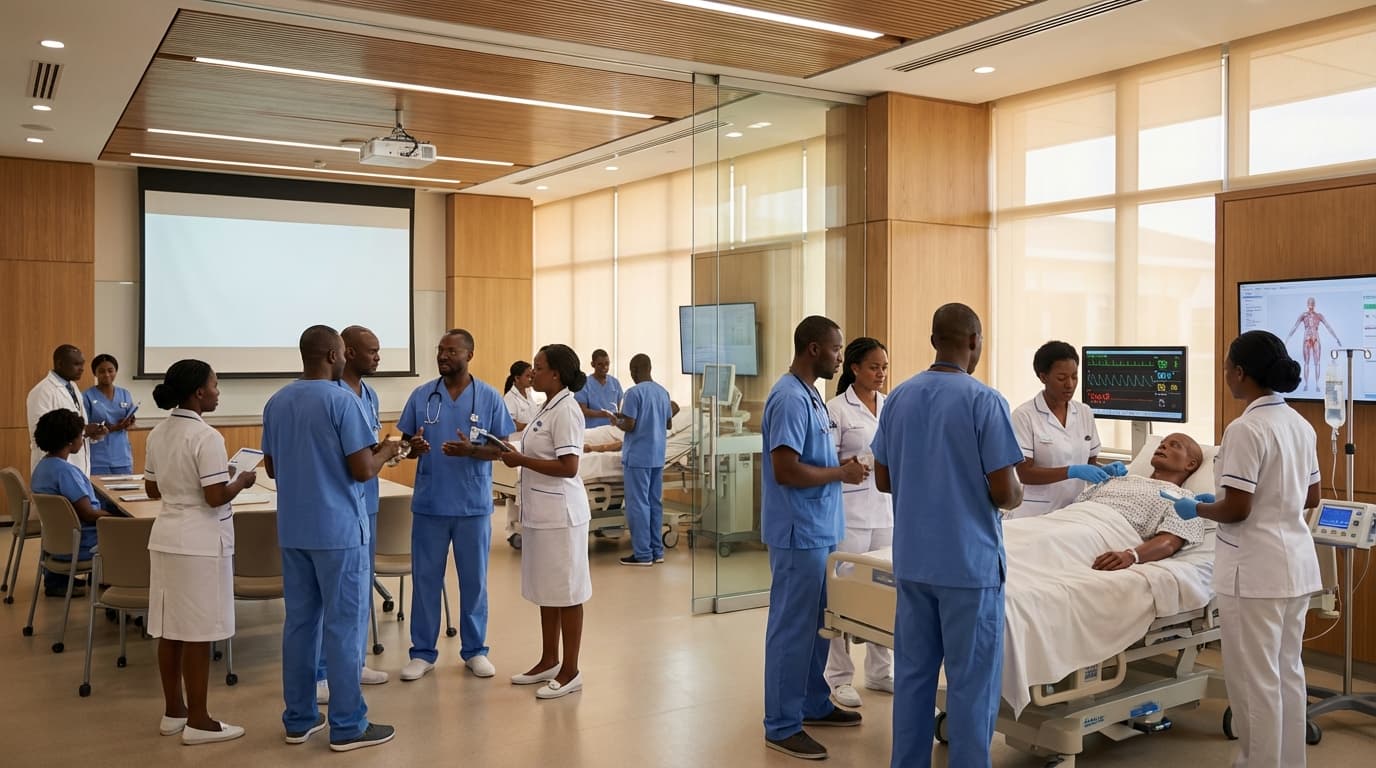
Equipment Training & Education in South Sudan
Engineering Excellence & Technical Support
Comprehensive equipment training and certification programs High-standard technical execution following OEM protocols and local regulatory frameworks.
Hands-On Skills Development for Critical Machinery
Our training programs provide practical, hands-on experience with essential heavy machinery, ensuring operators in South Sudan develop the proficiency needed for effective and safe operation in challenging environments. We focus on real-world scenarios to build confidence and competence.
Enhanced Safety Protocols and Risk Mitigation
Prioritizing safety, our curriculum integrates comprehensive training on industry-standard safety protocols, hazard identification, and emergency response procedures. This empowers South Sudanese technicians to minimize risks and maintain secure worksites, protecting both personnel and valuable equipment.
Preventative Maintenance and Troubleshooting Mastery
We equip local technicians with the knowledge and skills for proactive preventative maintenance and effective troubleshooting of a wide range of equipment. This focus on upkeep extends equipment lifespan, reduces downtime, and optimizes operational efficiency, crucial for development projects in South Sudan.
What Is Equipment Training & Education In South Sudan?
Equipment training and education in South Sudan refers to the systematic process of imparting knowledge and practical skills required for the safe, efficient, and effective operation, maintenance, and troubleshooting of various types of equipment. This service is crucial for enhancing productivity, ensuring longevity of assets, and minimizing operational risks within diverse sectors. The scope encompasses theoretical instruction, hands-on practical sessions, and ongoing assessment, tailored to the specific equipment and the operational context. It aims to bridge knowledge gaps and cultivate a competent workforce capable of maximizing equipment utility and adhering to industry best practices.
| Target Audience | Need for Training | Typical Use Cases |
|---|---|---|
| Agricultural Workers & Farmers: | To operate and maintain tractors, harvesters, irrigation systems, and other farm machinery efficiently, improving crop yields and reducing post-harvest losses. Essential for subsistence and commercial farming operations. | NGOs and Humanitarian Organizations:
|
| Healthcare Professionals & Technicians: | To ensure the proper functioning and safe use of critical medical equipment (e.g., diagnostic imaging devices, laboratory equipment, surgical instruments), vital for delivering quality healthcare services. Lack of training can lead to misdiagnosis or equipment damage. | Construction & Infrastructure Development:
|
| Logistics & Transportation Personnel: | To operate and maintain vehicles, forklifts, and other material handling equipment, ensuring efficient supply chain management and safe transportation of goods. Inadequate training can result in accidents and vehicle downtime. | Energy Sector Personnel:
|
| Public Service Workers (e.g., Water, Sanitation): | To operate and maintain equipment used for water supply, waste management, and sanitation services, ensuring public health and infrastructure functionality. Improper use can lead to system failures and contamination. | Small & Medium Enterprises (SMEs):
|
| Education & Vocational Training Institutions: | To equip students and trainees with the practical skills required for employment in sectors reliant on machinery. This supports the development of a skilled national workforce. | Government Ministries & Agencies:
|
Key Components of Equipment Training & Education:
- Operator Training: Focuses on the correct and safe usage of equipment, including pre-operation checks, functional controls, and emergency procedures.
- Maintenance Training: Covers routine servicing, preventive maintenance schedules, troubleshooting common faults, and basic repair techniques.
- Specialized Equipment Training: Addresses the unique operational and maintenance requirements of advanced or highly technical machinery (e.g., medical equipment, specialized agricultural machinery, construction equipment).
- Safety Protocols: Integration of industry-specific safety standards, hazard identification, risk mitigation, and the use of Personal Protective Equipment (PPE).
- Documentation and Record Keeping: Training on interpreting manuals, logs, and maintenance records.
- Refresher Courses and Advanced Modules: Continuous professional development to keep skills current and introduce new technologies or methodologies.
Who Needs Equipment Training & Education In South Sudan?
Comprehensive equipment training and education are critical for a wide range of individuals and organizations operating in South Sudan. This training is essential to ensure safe, efficient, and effective use of machinery, vehicles, and other vital equipment, ultimately contributing to the nation's development and stability. The target customers span both the public and private sectors, with specific needs arising from various departments and operational contexts.
| Target Customer Group | Key Departments/Sectors Requiring Training | Examples of Equipment and Training Needs |
|---|---|---|
| Government Ministries and Agencies | Ministry of Infrastructure (Roads, Bridges, Buildings); Ministry of Health (Medical Equipment, Ambulances); Ministry of Agriculture (Tractors, Harvesters, Irrigation Systems); Ministry of Water Resources and Irrigation (Water Pumps, Borehole Drilling); Ministry of Defense and Veterans Affairs (Military Vehicles, Heavy Machinery); Ministry of Education (Workshop Equipment); Local Government Administrations (Public Works, Waste Management Vehicles). | Operation and maintenance of construction equipment (excavators, graders, bulldozers); safe operation of ambulances and medical machinery; agricultural machinery operation and repair; water pump maintenance; heavy vehicle driving and maintenance; use of workshop tools and machinery. |
| International Non-Governmental Organizations (INGOs) | Logistics and Supply Chain Departments; WASH (Water, Sanitation, and Hygiene) Programs; Health Programs; Education Programs; Shelter and Infrastructure Projects; Food Security and Livelihoods Programs. | Forklift operation; vehicle maintenance (4x4 trucks, generators); water purification equipment operation; medical equipment handling and basic maintenance; construction equipment for shelter projects; agricultural equipment for livelihood initiatives. |
| Local Non-Governmental Organizations (NGOs) | Program Implementation Teams; Fleet Management; Project Operations. | Similar to INGOs but often with a smaller scale of operations. Focus on essential equipment for community-level projects, including basic vehicle operation and maintenance, and tools for construction or agricultural support. |
| Private Sector Companies | Construction Companies (heavy machinery operators, site supervisors); Oil & Gas Companies (drilling equipment operators, maintenance technicians, vehicle drivers); Agricultural Companies (farm machinery operators, mechanics); Logistics and Transportation Companies (truck drivers, warehouse equipment operators); Mining Companies (mining equipment operators, heavy vehicle mechanics). | Advanced operation of specialized construction machinery; drilling rig operations; refinery and processing equipment maintenance; agricultural tractor and harvester operation; heavy-duty truck driving and fleet management; mining equipment operation and safety protocols. |
| United Nations and Other International Bodies | UN Agencies (UNDP, UNICEF, WFP, WHO); Peacekeeping Missions; Humanitarian Aid Organizations. | Operation and maintenance of vehicles, generators, communication equipment, and specialized machinery for peacekeeping, humanitarian relief, and development projects. Includes training for local staff employed by these organizations. |
| Local Community-Based Organizations (CBOs) | Community Development Projects; Local Agricultural Initiatives; Small-Scale Infrastructure Projects. | Basic operation and maintenance of tools and small machinery relevant to their projects, such as hand tools, basic power tools, water pumps, and small agricultural implements. Emphasis on safety and sustainability. |
Target Customers and Departments for Equipment Training & Education in South Sudan
- Government Ministries and Agencies
- International Non-Governmental Organizations (INGOs)
- Local Non-Governmental Organizations (NGOs)
- Private Sector Companies (Construction, Oil & Gas, Agriculture, Logistics)
- United Nations and Other International Bodies
- Local Community-Based Organizations (CBOs)
Equipment Training & Education Process In South Sudan
The Equipment Training & Education Process in South Sudan is a structured approach designed to ensure users acquire the necessary knowledge and skills to operate and maintain various equipment safely and effectively. This process is crucial for maximizing equipment lifespan, preventing accidents, and achieving operational efficiency across diverse sectors like agriculture, healthcare, construction, and humanitarian aid.
| Stage | Description | Key Activities | Responsible Parties | Potential Challenges |
|---|---|---|---|---|
| Inquiry & Needs Assessment | Initial contact and understanding of the client's or organization's training requirements. | Receiving training requests, identifying specific equipment, target audience, skill gaps, and desired outcomes. | Client/Organization, Training Provider (Initial Contact) | Unclear requirements, scope creep, lack of detailed information on equipment. |
| Proposal Development & Approval | Formulating a comprehensive training plan and obtaining necessary approvals. | Developing a detailed training proposal (scope, objectives, methodology, budget, timeline), presenting it to stakeholders, and securing formal approval and funding. | Training Provider, Client/Organization (Management/Procurement) | Budget constraints, lengthy approval processes, competitive bidding requirements. |
| Curriculum & Material Design | Creating the educational content tailored to the specific needs. | Designing training modules, developing manuals, presentations, practical exercises, and assessment tools. Ensuring cultural appropriateness and language accessibility. | Training Provider (Curriculum Developers, Subject Matter Experts) | Lack of standardized materials, complexity of equipment, varying literacy levels of trainees. |
| Logistics & Scheduling | Organizing the practical aspects of delivering the training. | Identifying training venues (on-site/off-site), arranging for equipment availability, securing necessary tools, transportation, and accommodation (if applicable). Finalizing training dates and times. | Training Provider (Logistics Team), Client/Organization (Site Access) | Inadequate training facilities, equipment downtime, logistical challenges in remote areas, security concerns. |
| Trainer Mobilization | Identifying and preparing qualified personnel to deliver the training. | Selecting experienced and certified trainers, conducting pre-training briefings, ensuring they are familiar with the curriculum and equipment. | Training Provider (HR/Training Management) | Shortage of qualified local trainers, high trainer fees, trainers' availability. |
| Training Execution | The actual delivery of the training program. | Conducting classroom sessions (theory), practical demonstrations, hands-on exercises, simulations, and immediate feedback sessions. Adhering to safety protocols. | Trainers, Trainees | Trainee engagement issues, equipment malfunction during training, unexpected interruptions (e.g., weather, security). |
| Post-Training Follow-up & Evaluation | Assessing the effectiveness of the training and providing ongoing support. | Administering post-training assessments (knowledge and skills tests), collecting feedback from trainees and supervisors, conducting on-site follow-up visits (if planned), and analyzing training impact. | Training Provider (Evaluators), Client/Organization (Supervisors) | Difficulty in measuring long-term impact, resistance to feedback, lack of follow-up resources. |
| Certification & Documentation | Formally recognizing the successful completion of the training. | Issuing certificates of completion or proficiency to successful trainees, documenting training records, and providing reports to stakeholders. | Training Provider, Client/Organization (HR/Records Management) | Lost or delayed certificates, inaccurate record-keeping, lack of standardized certification. |
Workflow Stages
- Inquiry & Needs Assessment
- Proposal Development & Approval
- Curriculum & Material Design
- Logistics & Scheduling
- Trainer Mobilization
- Training Execution
- Post-Training Follow-up & Evaluation
- Certification & Documentation
Equipment Training & Education Cost In South Sudan
The cost of equipment training and education in South Sudan is highly variable, influenced by a multitude of factors that can significantly impact pricing. These factors range from the type of equipment and the complexity of the training to the location of the training, the duration, and the provider's reputation. Given the nascent state of many industries and the infrastructure challenges, specialized training can be particularly expensive. Local currency (South Sudanese Pound - SSP) pricing is influenced by the fluctuating exchange rate with major international currencies, inflation, and the overall economic stability of the country. Sourcing training materials, qualified instructors (often requiring international expertise), and logistical support all contribute to the final cost.
| Training Category | Estimated Price Range (SSP) | Notes |
|---|---|---|
| Basic Equipment Operation (e.g., generators, small machinery) | 20,000 - 75,000 | Typically 1-3 days, local instructors, in Juba or major towns. |
| Intermediate Technical Skills (e.g., basic mechanics, welding, IT hardware) | 50,000 - 150,000 | Multi-day courses, potentially requiring specialized local trainers or imported materials. |
| Advanced Industrial Equipment Operation (e.g., construction machinery, specialized manufacturing) | 100,000 - 300,000+ | Can involve international instructors, longer durations, and site-specific training. Costs escalate with complexity and travel. |
| Specialized IT & Software Training (e.g., GIS, project management software) | 70,000 - 200,000+ | Often requires certified instructors, specific software licenses, and can be delivered online or in person. |
| Safety & Compliance Training (e.g., construction safety, hazardous materials) | 30,000 - 100,000 | Certification-focused, can be standardized but requires qualified trainers. |
| Customized Corporate Training Packages | 150,000 - 500,000+ | Highly dependent on the scope, duration, and expertise required. Can include on-site delivery and tailored content. |
Key Pricing Factors for Equipment Training & Education in South Sudan:
- Type of Equipment: Basic machinery vs. highly specialized or industrial equipment.
- Training Complexity: Introductory skills vs. advanced technical operations and maintenance.
- Duration of Training: Short workshops vs. multi-day or multi-week courses.
- Provider's Reputation & Expertise: Local vs. international training organizations, perceived quality.
- Location of Training: Capital city (Juba) vs. remote areas, accessibility.
- Instructor Qualifications: Local instructors vs. expatriate specialists.
- Training Methodology: On-site practical training vs. classroom-based theoretical sessions.
- Customization: Generic courses vs. tailored programs for specific organizational needs.
- Materials & Resources: Provision of manuals, simulators, tools, and consumables.
- Logistics & Travel: For instructors and/or trainees (accommodation, transportation).
- Certification & Accreditation: Formal qualifications vs. informal skill development.
- Economic Conditions: Inflation rates, currency exchange rates, and market demand.
Affordable Equipment Training & Education Options
Investing in proper equipment training and education is crucial for safety, efficiency, and maximizing the lifespan of your assets. Fortunately, there are numerous affordable options available, from online courses to on-site workshops. Understanding value bundles and implementing smart cost-saving strategies can make this essential investment more accessible.
| Cost-Saving Strategy | Description | Best For |
|---|---|---|
| Online & E-Learning Courses | Self-paced, accessible from anywhere, often significantly cheaper than in-person workshops due to reduced overhead. | Individuals, remote teams, flexible schedules. |
| Group Discounts | Many training providers offer reduced per-person rates for larger groups from the same organization. | Businesses of all sizes looking to train multiple employees. |
| Early Bird Registration | Registering for courses or workshops well in advance often comes with discounted pricing. | Proactive planners, individuals or organizations with a set training budget and timeline. |
| Government & Industry Grants | Explore available grants for workforce development, safety training, or specific industry certifications. | Businesses and individuals in eligible sectors or regions. |
| Train-the-Trainer Programs | Invest in training a few key personnel who can then train others within your organization, creating internal expertise and reducing external training costs over time. | Larger organizations with a consistent need for training on specific equipment. |
| Manufacturer-Specific Training | Often the most in-depth and accurate training for specific equipment. While sometimes perceived as more expensive, it can prevent costly errors and extend equipment life. | Owners of specialized or high-value equipment. |
| Refurbished/Used Equipment Training | If purchasing used or refurbished equipment, inquire about bundled or discounted training specific to that model. | Budget-conscious buyers of pre-owned equipment. |
| Open-Source Resources & Communities | While not formal training, leveraging free online manuals, forums, and user communities can provide valuable learning opportunities. | Technically inclined individuals, for supplementary learning. |
Value Bundles: More Than Just Training
- {"title":"Comprehensive Training Packages","description":"These often combine foundational theory, practical hands-on sessions, and certification in a single offering. They provide a holistic learning experience at a potentially lower per-module cost than purchasing individually."}
- {"title":"Multi-User Licenses","description":"Ideal for businesses, these licenses allow multiple employees to access online training materials or virtual labs, significantly reducing the per-person cost."}
- {"title":"Bundled Equipment & Training","description":"Some manufacturers or suppliers offer training sessions as part of the purchase price of new equipment, effectively embedding the educational cost into the hardware acquisition."}
- {"title":"Certification & Recertification Bundles","description":"Packages that include initial certification and subsequent recertification at a discounted rate can be a cost-effective way to maintain up-to-date credentials."}
- {"title":"Training & Maintenance Support Bundles","description":"Combining operational training with ongoing technical support or maintenance plans can offer a synergistic value, ensuring smooth operation and quick problem resolution."}
Verified Providers In South Sudan
Navigating the healthcare landscape in South Sudan requires trust and confidence in the providers you choose. Ensuring access to qualified and ethical medical professionals is paramount for individual and community well-being. This is where verified providers like Franance Health become indispensable. Their commitment to stringent credentialing and adherence to international standards sets them apart, offering peace of mind in a region where reliable healthcare is a critical need.
| Key Verification Aspect | Franance Health's Approach | Benefit to Patients |
|---|---|---|
| Medical Licensure & Registration | Mandatory verification of current and valid medical licenses with South Sudanese and international bodies. | Ensures providers are legally permitted to practice and meet basic competency standards. |
| Educational Qualifications | Scrutiny of degrees, diplomas, and certifications from accredited medical institutions. | Guarantees that practitioners have received formal and recognized medical training. |
| Professional Experience | Thorough review of previous work history, references, and specialized training. | Confirms practical experience and expertise in relevant medical fields. |
| Ethical Conduct & Background Checks | Screening for disciplinary actions, criminal records, and adherence to a strict code of conduct. | Promotes a safe and trustworthy patient environment, protecting against malpractice. |
| Continuing Professional Development (CPD) | Encouraging and often requiring ongoing training and updates in medical knowledge and skills. | Ensures providers remain current with the latest medical advancements and treatments. |
Why Franance Health is the Best Choice for Verified Healthcare in South Sudan:
- Rigorous Credential Verification: Franance Health employs a multi-faceted approach to verify the qualifications, licenses, and experience of all their healthcare professionals. This includes thorough background checks and validation with relevant medical boards and educational institutions.
- Commitment to Ethical Practice: Beyond technical skills, Franance Health emphasizes a strong ethical framework. They ensure their providers uphold principles of patient care, confidentiality, and professional conduct, aligning with global best practices.
- International Standards Alignment: Franance Health strives to match and exceed international benchmarks for healthcare delivery. This means their providers are equipped with up-to-date knowledge and follow evidence-based medical protocols.
- Focus on Patient Safety and Quality: The core mission of Franance Health is to deliver safe, effective, and high-quality healthcare services. Their verification processes are designed to filter out unqualified individuals, minimizing risks and maximizing positive patient outcomes.
- Community Trust and Reliability: By consistently providing access to verified and competent medical professionals, Franance Health has built a reputation for reliability and trustworthiness within South Sudan, making them a go-to resource for healthcare needs.
- Comprehensive Service Offerings: Franance Health often partners with or directly employs a wide range of specialists, ensuring comprehensive care for diverse medical needs, from primary care to specialized treatments.
Scope Of Work For Equipment Training & Education
This Scope of Work (SOW) outlines the requirements for providing comprehensive training and educational services for the specified equipment. The objective is to ensure that all relevant personnel acquire the necessary knowledge and skills to operate, maintain, and troubleshoot the equipment effectively and safely, adhering to all manufacturer guidelines and industry best practices. This SOW details the technical deliverables, standard specifications, and training methodologies.
| Deliverable Type | Description | Standard Specification/Requirement | Format | Timeline (example) |
|---|---|---|---|---|
| Training Manuals | Comprehensive guides covering all aspects of equipment operation, maintenance, and troubleshooting. | Must be up-to-date with the latest equipment revisions. Content must be accurate, clear, and concise. Includes diagrams and illustrations. | Digital (PDF) and/or Printed | Upon course completion |
| Operator Training Sessions | Instructor-led sessions covering hands-on operation, safety procedures, and basic diagnostics. | Duration: X days/hours. Student-to-instructor ratio: Y:1. Training environment to simulate real-world conditions. | In-person/Virtual | Week 1-2 |
| Maintenance Training Modules | Detailed instruction on scheduled maintenance, calibration, and component replacement. | Focus on preventive maintenance schedules and common failure points. Includes practical exercises. | In-person/Virtual (with hands-on) | Week 3-4 |
| Troubleshooting Guides | Step-by-step procedures for diagnosing and resolving common equipment issues. | Categorized by symptom and potential cause. Includes error code explanations and diagnostic tools usage. | Digital (PDF/Interactive Guide) | Upon course completion |
| Competency Assessment | Evaluation of participant understanding and practical skills through written tests and/or practical demonstrations. | Minimum passing score of Z%. Feedback provided to participants and management. | Written/Practical | End of each module/course |
| Training Certificates | Official documentation certifying successful completion of training programs. | Includes participant name, course title, completion date, and issuing authority. | Printed/Digital | Upon successful competency assessment |
| Post-Training Support | Limited period of technical support for trainees to address follow-up questions. | Duration: X weeks/months. Availability: [Specify hours/days]. | Email/Phone/Web Portal | Post-completion of training |
Key Training Objectives
- Familiarization with equipment components and their functions.
- Safe and correct operation procedures.
- Routine maintenance and preventive care.
- Basic troubleshooting and problem-solving.
- Understanding of safety protocols and emergency procedures.
- Interpretation of technical documentation and schematics.
Service Level Agreement For Equipment Training & Education
This Service Level Agreement (SLA) outlines the standards for training and educational services provided for equipment. It defines the expected response times for support requests and guarantees a minimum uptime for access to training resources.
| Service Component | Target Response Time (Business Hours) | Uptime Guarantee (for online resources) |
|---|---|---|
| Technical Support for Training Platforms/Systems | 4 Business Hours | 99.5% |
| Request for Training Material Updates/Corrections | 1 Business Day | N/A |
| Inquiries regarding Course Content/Curriculum | 8 Business Hours | N/A |
| Access to Online Learning Management System (LMS) | N/A | 99.9% |
| Scheduled Live Training Sessions (virtual) | N/A (as per scheduled time) | 99.5% (platform availability) |
Key Service Components
- Training Delivery Methods
- Support Channels
- Scheduled Maintenance
Frequently Asked Questions

Ready when you are
Let's scope your Equipment Training & Education in South Sudan project in South Sudan.

Scaling healthcare logistics and technical systems across the entire continent.