
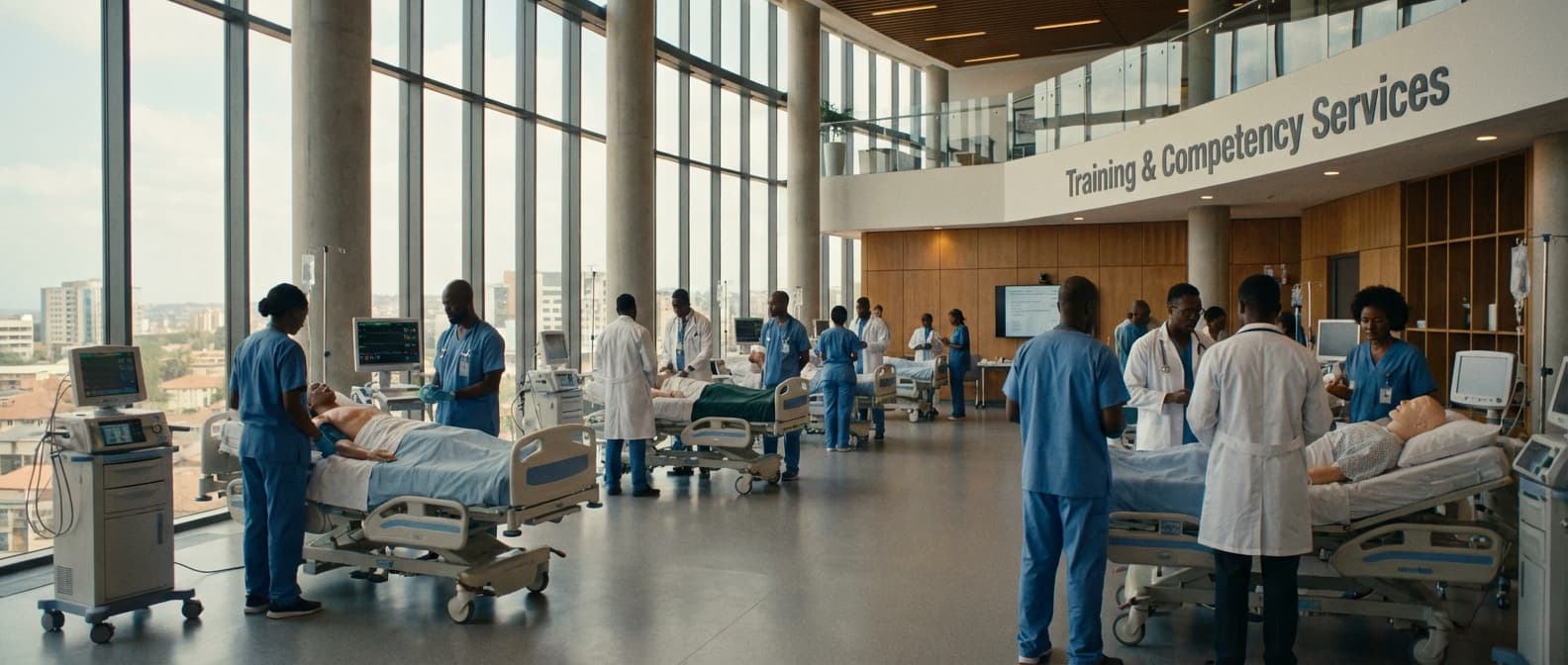
Ventilator User Training Service (Nurses) in South Sudan
Engineering Excellence & Technical Support
Ventilator User Training Service (Nurses) High-standard technical execution following OEM protocols and local regulatory frameworks.
Mastering Ventilation Settings for Optimal Oxygenation
Understand and confidently adjust key ventilator parameters (e.g., Tidal Volume, PEEP, FiO2) to ensure adequate oxygen delivery and minimize lung injury in critically ill patients. Learn to interpret real-time waveforms and pressure readings for informed decision-making.
Recognizing and Responding to Ventilator Alarms
Develop proficiency in identifying common ventilator alarms, differentiating between critical and non-critical alerts, and implementing appropriate interventions. This includes understanding the underlying causes of alarms and troubleshooting techniques for rapid resolution.
Safe Patient Disconnection and Weaning Protocols
Gain expertise in safely disconnecting patients from the ventilator, including pre-weaning assessment criteria, proper suctioning techniques, and post-extubation monitoring. Understand patient-specific weaning strategies to promote successful liberation from mechanical ventilation.
What Is Ventilator User Training Service (Nurses) In South Sudan?
Ventilator User Training Service (Nurses) in South Sudan refers to a specialized educational program designed to equip registered nurses with the knowledge and practical skills necessary for the safe and effective operation of mechanical ventilators. This service is critical in resource-limited settings like South Sudan, where access to advanced medical equipment and trained personnel is often scarce. The training focuses on understanding ventilator principles, patient assessment, ventilator settings, troubleshooting common alarms, and basic maintenance. It aims to enhance the capacity of nursing staff to manage critically ill patients requiring ventilatory support, thereby improving patient outcomes and reducing mortality rates associated with respiratory failure.
| Target Audience | Rationale for Need | Typical Use Cases |
|---|---|---|
| Registered Nurses working in critical care units (ICUs), emergency departments, and operating rooms in South Sudan. | Limited availability of physicians trained in critical care and mechanical ventilation. High prevalence of respiratory illnesses and conditions requiring ventilatory support. Need to standardize best practices in patient care. Enhance immediate response capabilities to respiratory emergencies. | Management of patients with Acute Respiratory Distress Syndrome (ARDS). Treatment of severe pneumonia, sepsis-induced respiratory failure, and exacerbations of Chronic Obstructive Pulmonary Disease (COPD). Perioperative management of patients undergoing major surgery. Stabilization of critically ill patients during transport. |
Key Components of Ventilator User Training for Nurses:
- Fundamentals of Respiratory Physiology and Pathophysiology
- Principles of Mechanical Ventilation (modes, mechanics, gas exchange)
- Patient Selection and Preparation for Mechanical Ventilation
- Initiation and Management of Ventilatory Support (setting parameters, monitoring)
- Recognition and Management of Ventilator-Associated Complications (e.g., VAP, barotrauma)
- Ventilator Alarms: Identification, Interpretation, and Troubleshooting
- Weaning from Mechanical Ventilation Protocols
- Basic Ventilator Maintenance and Infection Control Procedures
- Documentation of Ventilator Management
Who Needs Ventilator User Training Service (Nurses) In South Sudan?
This training service is crucial for nurses working in South Sudan, a nation with a significant healthcare infrastructure challenge. The demand for skilled personnel to operate and manage essential medical equipment like ventilators is exceptionally high. Proper training ensures patient safety, optimizes the use of limited resources, and empowers healthcare professionals to provide critical care in a resource-constrained environment.
| Target Customer Group | Key Departments/Settings | Rationale for Training Need |
|---|---|---|
| General Nurses in Public Hospitals | Emergency Departments, General Wards (if used for respiratory support), Intensive Care Units (ICUs), High Dependency Units (HDUs) | To provide basic life support and manage patients with respiratory distress in resource-limited settings. Increasing capacity for critical care. |
| Specialized Nurses in Referral Hospitals | Intensive Care Units (ICUs), Neonatal Intensive Care Units (NICUs), Pediatric Intensive Care Units (PICUs) | To manage complex ventilation strategies for critically ill patients, including specialized modes and settings. Maintaining high standards of care in specialized units. |
| Nurses in NGOs and International Aid Organizations | Hospitals and clinics managed by NGOs, mobile health units, emergency response teams | To ensure effective operation of ventilators in projects focused on improving maternal and child health, emergency preparedness, and general healthcare access. |
| Nurses in Teaching Hospitals | ICUs, PICUs, NICUs, Simulation Centers | To train future healthcare professionals and contribute to the development of local expertise in critical care ventilation. |
| Nurses in Newly Established or Expanded Health Facilities | Newly established clinics or hospitals, expanded wings of existing facilities | To equip staff with the skills to operate and maintain new medical equipment, ensuring immediate and effective patient care. |
Target Customers and Departments for Ventilator User Training Service (Nurses) in South Sudan
- Newly qualified nurses requiring foundational skills in ventilator operation.
- Experienced nurses working in critical care settings who need refresher training or to update their knowledge on newer ventilator models.
- Nurses redeployed to critical care units due to increased patient demand.
- Nurses in remote or rural health facilities that may be receiving donated or newly acquired ventilators.
- Nurses working with pediatric and neonatal populations who require specialized ventilator training.
Ventilator User Training Service (Nurses) Process In South Sudan
This document outlines the workflow for the Ventilator User Training Service specifically for nurses in South Sudan, from the initial inquiry to the successful execution of the training. The process is designed to be clear, efficient, and adaptable to the unique healthcare landscape of South Sudan.
| Phase | Step | Description | Responsible Party | Key Outputs/Deliverables | Timeline (Indicative) |
|---|---|---|---|---|---|
| Phase 1: Inquiry & Needs Assessment | 1.1 Initial Inquiry | Healthcare facility (hospital, clinic) expresses interest in ventilator user training for their nursing staff. | Healthcare Facility / Ministry of Health Representative | Formal or informal request for training. | 1-2 weeks |
| 1.2 Needs Assessment Call/Meeting | Discuss specific training needs, target audience size, existing knowledge levels, available equipment (type of ventilators), and logistical constraints. | Training Provider Representative, Healthcare Facility Representative | Identified training requirements, number of trainees, logistical challenges. | 1-2 weeks | |
| 1.3 Site Visit (Optional but Recommended) | Assess training environment, available equipment, and understand local context and challenges. | Training Provider Representative | Site assessment report, refined understanding of needs. | 1 week | |
| Phase 2: Proposal Development & Agreement | 2.1 Proposal Submission | Develop and submit a comprehensive training proposal outlining objectives, curriculum, methodology, duration, trainers, budget, and evaluation plan. | Training Provider | Training Proposal. | 1-2 weeks |
| 2.2 Proposal Review & Negotiation | Healthcare facility reviews the proposal, potentially with the Ministry of Health, and negotiates terms and conditions. | Healthcare Facility / Ministry of Health, Training Provider | Feedback on proposal, negotiated terms. | 1-2 weeks | |
| 2.3 Contract/Agreement Signing | Formalize the training agreement, including scope of work, payment schedule, and responsibilities of both parties. | Healthcare Facility / Ministry of Health, Training Provider | Signed Training Agreement/Contract. | 1 week | |
| Phase 3: Pre-Training Preparations | 3.1 Curriculum Finalization | Adapt and finalize the training curriculum based on specific needs identified and agreed upon. | Training Provider | Finalized Training Curriculum. | 1 week |
| 3.2 Trainer Allocation & Briefing | Assign qualified trainers with relevant experience in critical care and ventilation. Brief them on the specific context and objectives. | Training Provider | Assigned and briefed trainers. | 1 week | |
| 3.3 Training Material Development/Procurement | Prepare training manuals, presentations, case studies, and other necessary materials. Ensure availability of teaching aids. | Training Provider | Training Materials (digital and/or print). | 2-3 weeks | |
| 3.4 Logistics & Scheduling | Confirm training dates, venue, accommodation for trainers (if required), and participant registration. Coordinate with the healthcare facility. | Training Provider, Healthcare Facility | Confirmed training schedule, logistics plan. | 2-3 weeks | |
| 3.5 Equipment & Simulation Setup | Ensure that actual ventilators (if available and agreed upon) or simulation equipment are accessible and in working order for practical sessions. | Healthcare Facility, Training Provider | Ready training equipment. | 1 week | |
| Phase 4: Training Execution | 4.1 Participant Registration & Welcome | Welcome participants, provide an overview of the training, and collect attendance records. | Training Provider | Registered Participants List. | Day 1 |
| 4.2 Theoretical Sessions | Deliver lectures, presentations, and discussions on ventilator principles, modes, settings, patient monitoring, and common complications. | Training Provider (Trainer) | Knowledge acquisition by participants. | Throughout training duration | |
| 4.3 Practical Demonstrations & Hands-on Practice | Demonstrate ventilator operation, settings adjustment, and troubleshooting on actual equipment or simulators. Allow participants to practice under supervision. | Training Provider (Trainer) | Skill development in ventilator operation. | Throughout training duration | |
| 4.4 Case Study Analysis & Problem-Solving | Engage participants in analyzing real-life or hypothetical patient scenarios requiring ventilator management. | Training Provider (Trainer) | Enhanced critical thinking and decision-making skills. | Throughout training duration | |
| 4.5 Q&A and Interactive Sessions | Facilitate open discussions and address participant queries to ensure understanding and clarity. | Training Provider (Trainer) | Clarified understanding and engagement. | Throughout training duration | |
| Phase 5: Post-Training & Follow-up | 5.1 Post-Training Assessment | Evaluate participant learning through written tests, practical assessments, or simulations to gauge knowledge and skill retention. | Training Provider | Assessment results, identification of areas for improvement. | End of Training |
| 5.2 Training Feedback Collection | Gather feedback from participants on the training content, delivery, trainers, and overall experience to inform future improvements. | Training Provider | Participant feedback forms. | End of Training | |
| 5.3 Certificate Issuance | Provide certificates of completion to participants who have successfully met the training objectives. | Training Provider | Certificates of Completion. | End of Training | |
| 5.4 Training Report Submission | Submit a comprehensive report to the healthcare facility and/or Ministry of Health detailing training activities, participant performance, feedback, and recommendations. | Training Provider | Training Report. | 1-2 weeks post-training | |
| 5.5 Post-Training Support (Optional) | Offer limited remote support or follow-up consultations for a specified period to address any immediate challenges encountered by the nurses. | Training Provider | Continued learning support. | As per agreement | |
| 5.6 Impact Assessment (Long-term, Optional) | Potentially conduct follow-up assessments to evaluate the long-term impact of the training on patient care and ventilator utilization. | Training Provider, Healthcare Facility | Data on training effectiveness. | 3-6 months post-training |
Ventilator User Training Service (Nurses) Workflow in South Sudan
- Phase 1: Inquiry & Needs Assessment
- Phase 2: Proposal Development & Agreement
- Phase 3: Pre-Training Preparations
- Phase 4: Training Execution
- Phase 5: Post-Training & Follow-up
Ventilator User Training Service (Nurses) Cost In South Sudan
Providing ventilator user training for nurses in South Sudan is a critical service for improving healthcare outcomes in a region facing significant medical resource challenges. The cost of such training is influenced by a variety of factors, making it difficult to provide a single, fixed price. These factors range from the provider's experience and the depth of the curriculum to logistical considerations unique to South Sudan.
Pricing Factors:
The cost of ventilator user training for nurses in South Sudan is not standardized and can vary considerably. The following are the primary factors that influence pricing:
- Provider Expertise and Reputation: Organizations with a proven track record, extensive experience in critical care training, and a high reputation will generally command higher fees. This includes their ability to adapt training to local contexts and provide ongoing support.
- Curriculum Depth and Duration: The length and complexity of the training program are significant cost drivers. A basic introductory course will be less expensive than a comprehensive program covering advanced ventilation modes, troubleshooting, and specific patient populations (e.g., pediatric, neonatal).
- Training Modality: Whether the training is delivered on-site at a healthcare facility, at a dedicated training center, or online (though less common for hands-on ventilator training) will impact costs. On-site training often involves travel and accommodation expenses for trainers.
- Number of Participants: Training providers may offer tiered pricing based on the number of nurses attending. Larger groups can sometimes lead to a lower per-participant cost.
- Training Materials and Equipment: The cost of providing high-quality training manuals, simulation equipment (mannequins, practice ventilators), and consumables for hands-on practice will be factored into the overall price.
- Trainer Fees and Logistics: The fees for qualified and experienced trainers, including their travel, accommodation, per diem, and visa costs (if applicable), are substantial, especially in remote or challenging logistical environments like parts of South Sudan.
- Location and Accessibility: The remoteness of the training location within South Sudan can significantly increase logistical costs, including transportation and security. Training in major urban centers like Juba might be less expensive than in more isolated regions.
- Customization: If the training needs to be tailored to specific types of ventilators used by a particular hospital or to address unique patient care needs, this customization will likely incur additional costs.
- Certification and Assessment: The process of assessment, examination, and certification of nurses upon completion of the training can also influence the pricing.
Pricing Ranges (in South Sudanese Pounds - SSP):
Given the variability of the factors mentioned above, providing precise pricing ranges is challenging. However, based on general estimates for professional training services in South Sudan, and considering the specialized nature of ventilator training, the following indicative ranges can be considered:
- Basic Introduction/Refresher Course (1-2 days): For a small group of nurses (e.g., 5-10), this might range from SSP 500,000 to SSP 1,500,000. This would cover fundamental principles of mechanical ventilation and basic ventilator management.
- Intermediate to Advanced Comprehensive Course (3-5 days): For a similar group size, a more in-depth program focusing on various ventilation modes, troubleshooting, and specific clinical scenarios could range from SSP 1,200,000 to SSP 3,500,000. This often includes more hands-on practice and simulation.
- Large-Scale Institutional Training (multiple sessions, larger groups): For a significant number of nurses across an institution, or for a more extended and specialized program, costs could escalate considerably, potentially reaching SSP 5,000,000 or more. These would likely be custom-quoted based on the specific needs and scope.
It is important to note that these figures are estimates and can fluctuate based on the current economic conditions in South Sudan, exchange rates, and the specific provider's pricing structure. Organizations seeking this training are strongly advised to obtain detailed quotes from multiple reputable training providers, clearly outlining their specific requirements, to get accurate pricing.
| Training Type | Estimated Duration | Estimated Cost Range (SSP) |
|---|---|---|
| Basic Introduction/Refresher | 1-2 Days | SSP 500,000 - SSP 1,500,000 |
| Intermediate to Advanced Comprehensive | 3-5 Days | SSP 1,200,000 - SSP 3,500,000 |
| Large-Scale/Institutional Training (custom quote) | Variable | SSP 5,000,000+ |
Factors Influencing Ventilator User Training Costs for Nurses in South Sudan
- Provider Expertise and Reputation
- Curriculum Depth and Duration
- Training Modality (On-site, Center, Online)
- Number of Participants
- Training Materials and Equipment
- Trainer Fees and Logistics
- Location and Accessibility
- Customization of Content
- Certification and Assessment Processes
Affordable Ventilator User Training Service (Nurses) Options
This document outlines affordable training options for nurses on ventilator usage, focusing on value bundles and cost-saving strategies. Effective ventilator management is crucial for patient care, and equipping nurses with the necessary skills is paramount. We offer flexible training solutions designed to be accessible and cost-effective for healthcare institutions.
| Strategy | Description | Potential Cost Savings | |
|---|---|---|---|
| Group Discounts: | Training multiple nurses from the same institution simultaneously. | Reduced per-person training fee. | Economies of scale. |
| Blended Learning Approach: | Combining online modules (e-learning) with in-person practical sessions. | Reduces travel and accommodation costs for trainers and trainees. | Increased flexibility for scheduling. |
| Subscription Models: | Annual or multi-year access to training resources and updates. | Predictable budgeting. | Unlimited access to updated content. |
| Customizable Curricula: | Focusing training only on the essential elements needed for your specific equipment and patient population. | Avoids paying for unnecessary or redundant modules. | Optimized training time. |
| Remote/Virtual Training Options: | Leveraging virtual platforms for lectures and demonstrations, with localized hands-on practice. | Significantly reduces travel expenses. | Wider reach and accessibility. |
| Partnerships with Medical Device Manufacturers: | Exploring collaborations for subsidized or co-funded training, especially for newly acquired equipment. | Potential for free or discounted training directly from the device provider. | Ensures training aligns with manufacturer recommendations. |
Understanding Value Bundles
- Core Competency Bundle: This foundational package covers essential ventilator operation, monitoring, and troubleshooting. It's ideal for nurses new to critical care or requiring a refresher.
- Advanced Skills Bundle: Building upon the core competencies, this bundle includes training on specialized ventilation modes, advanced patient assessment, and weaning protocols. Suitable for experienced critical care nurses.
- Department-Specific Bundle: Tailored training for specific units (e.g., ICU, ER, Post-Anesthesia Care Unit) focusing on ventilators commonly used in those areas and relevant patient populations.
- On-Demand & Refresher Bundle: Provides access to a library of recorded sessions and updated modules for ongoing learning and to refresh skills as needed, particularly for staff with infrequent ventilator exposure.
- Train-the-Trainer Bundle: Empowers experienced nurses within your institution to become internal trainers, fostering a sustainable and cost-effective training program.
Verified Providers In South Sudan
In South Sudan's healthcare landscape, identifying verified and reputable providers is paramount for ensuring access to quality medical services. Franance Health stands out as a leading organization, distinguished by its stringent credentialing process and unwavering commitment to excellence. This commitment translates into a network of highly qualified medical professionals and facilities, all dedicated to delivering superior patient care. Choosing Franance Health offers numerous advantages, including access to a wide range of specialized medical services, adherence to international standards of care, and a patient-centered approach that prioritizes individual needs and well-being. Their robust verification process guarantees that all associated providers meet rigorous criteria, providing peace of mind to individuals and families seeking reliable healthcare solutions in South Sudan.
| Criterion | Franance Health Verification Standard | Benefit to Patients |
|---|---|---|
| Professional Licensing & Accreditation | Mandatory verification of all medical licenses and facility accreditations with relevant South Sudanese and international bodies. | Ensures providers are legally authorized and meet established professional benchmarks. |
| Clinical Competence & Experience | Rigorous review of medical education, specialized training, and proven clinical experience. | Access to highly skilled professionals with expertise in their respective fields. |
| Ethical Conduct & Professionalism | Background checks and assessment of adherence to ethical medical practices and patient care standards. | Trustworthy and compassionate healthcare providers committed to patient well-being. |
| Infrastructure & Equipment Standards | Assessment of facilities to ensure they meet minimum standards for hygiene, safety, and availability of essential medical equipment. | Safe and adequately equipped environments for diagnosis and treatment. |
| Patient Feedback & Continuous Improvement | Mechanisms for collecting and acting upon patient feedback to drive ongoing quality improvement. | A commitment to responsive and continuously improving healthcare services. |
Key Advantages of Choosing Franance Health Verified Providers:
- Access to a comprehensive network of verified and qualified medical professionals.
- Guaranteed adherence to international standards of healthcare quality and safety.
- A patient-centered approach focused on individual needs and comfort.
- Wide range of specialized medical services available.
- Peace of mind knowing you are receiving care from trusted and credentialed providers.
- Enhanced accessibility to essential healthcare services across South Sudan.
Scope Of Work For Ventilator User Training Service (Nurses)
This Scope of Work (SOW) outlines the requirements for providing comprehensive ventilator user training services specifically tailored for registered nurses. The training aims to equip nurses with the necessary knowledge and practical skills to safely and effectively operate and manage various mechanical ventilators in a clinical setting. This includes understanding ventilator principles, modes, patient monitoring, troubleshooting, and emergency procedures. The deliverables will be a blend of documented materials, hands-on practical sessions, and competency assessments.
| Deliverable Type | Description | Standard Specification | Quantity/Format | Timeline/Frequency |
|---|---|---|---|---|
| Training Curriculum Development | Comprehensive curriculum covering all aspects of ventilator use for nurses. | Must align with current best practices, evidence-based guidelines, and relevant professional standards. Include theoretical modules and practical skill stations. | 1 x Electronic Document (PDF/Word) | Within 2 weeks of SOW commencement |
| Training Manuals (Participant Copy) | Detailed manuals for each participant, summarizing key concepts and procedures. | Clear, concise language, visual aids (diagrams, images), indexed for easy reference. Content to cover all modules in the curriculum. | 1 x Per Participant (Print/Electronic) | Provided at the start of the training |
| Instructor Guide | Comprehensive guide for trainers, including lesson plans, discussion points, and assessment strategies. | Detailed instructions for delivering each module, including learning objectives, activities, and timings. Must include answers to potential participant questions. | 1 x Electronic Document (PDF) | Provided at the start of the training |
| Hands-on Practical Training Sessions | Supervised practical sessions using actual or simulated ventilators. | Minimum of 4 hours per group of 8 nurses. Sessions must include ventilator setup, mode selection, alarm management, and patient connection/disconnection. Simulation equipment to be used where appropriate. | As per training schedule (e.g., 2 x 4-hour sessions per cohort) | Scheduled throughout the training period |
| Ventilator Simulators/Manikins | Access to functional mechanical ventilators and/or advanced patient simulators for practical training. | Simulators must be capable of replicating various physiological conditions and ventilator alarms. A minimum of 1 simulator per 4 nurses for hands-on practice. | As per training schedule | Available during practical sessions |
| Competency Assessment Tools | Tools to evaluate nurses' understanding and practical skills. | Includes written knowledge tests (multiple-choice, short answer) and practical skills checklists. Assessments must be validated and cover all key learning objectives. | 1 x Written Test & 1 x Practical Checklist per Participant | At the conclusion of each training module/session |
| Post-Training Evaluation Forms | Forms for participants to provide feedback on the training. | Structured questionnaire to gather feedback on trainer effectiveness, curriculum relevance, and overall training experience. | 1 x Per Participant | At the conclusion of the training program |
| Training Attendance and Completion Records | Documentation of participant attendance and successful completion. | Detailed records of who attended each session and passed the competency assessments. A pass rate of 85% for written and 100% for practical assessment is required. | 1 x Electronic Report | Within 1 week of training completion |
| Post-Training Support Documentation (Optional) | Resources for continued learning and support. | FAQ document, troubleshooting guide, or contact information for expert consultation for a defined period (e.g., 1 month). | 1 x Electronic Document (PDF) | Provided at the conclusion of the training |
Key Training Objectives
- Understand the fundamental principles of mechanical ventilation.
- Identify common ventilator modes and their clinical applications.
- Demonstrate proper setup and connection of the ventilator to the patient.
- Interpret ventilator waveforms and parameters accurately.
- Perform routine checks and maintenance of ventilator equipment.
- Recognize and respond to common ventilator alarms and complications.
- Implement appropriate weaning strategies and protocols.
- Safely manage ventilated patients in various clinical scenarios.
- Understand infection control protocols related to ventilator use.
- Document ventilator settings and patient response accurately.
Service Level Agreement For Ventilator User Training Service (Nurses)
This Service Level Agreement (SLA) outlines the guaranteed response times and uptime for the Ventilator User Training Service specifically designed for nurses. This SLA aims to ensure timely and effective training support, minimizing disruptions to patient care.
| Issue Priority | Response Time Guarantee (within Business Hours) | Resolution Time Target | Uptime Guarantee |
|---|---|---|---|
Key Definitions
- {"item":"Business Hours","description":"Monday to Friday, 9:00 AM to 5:00 PM (Local Time), excluding public holidays."}
- {"item":"Critical Issue","description":"An issue that prevents nurses from accessing the training platform, renders a significant portion of the training content unavailable, or significantly hinders their ability to complete essential training modules required for safe patient care."}
- {"item":"High Priority Issue","description":"An issue that degrades training performance, impacts a moderate number of users, or prevents access to non-critical training modules. It does not completely halt training for all users."}
- {"item":"Normal Priority Issue","description":"A non-urgent request, such as a question about training content, a minor bug report, or a request for a new training schedule. These issues do not prevent access or significantly degrade performance."}
- {"item":"Uptime","description":"The percentage of time the Ventilator User Training Service is operational and accessible to authorized users."}
Frequently Asked Questions

Ready when you are
Let's scope your Ventilator User Training Service (Nurses) in South Sudan project in South Sudan.

Scaling healthcare logistics and technical systems across the entire continent.