
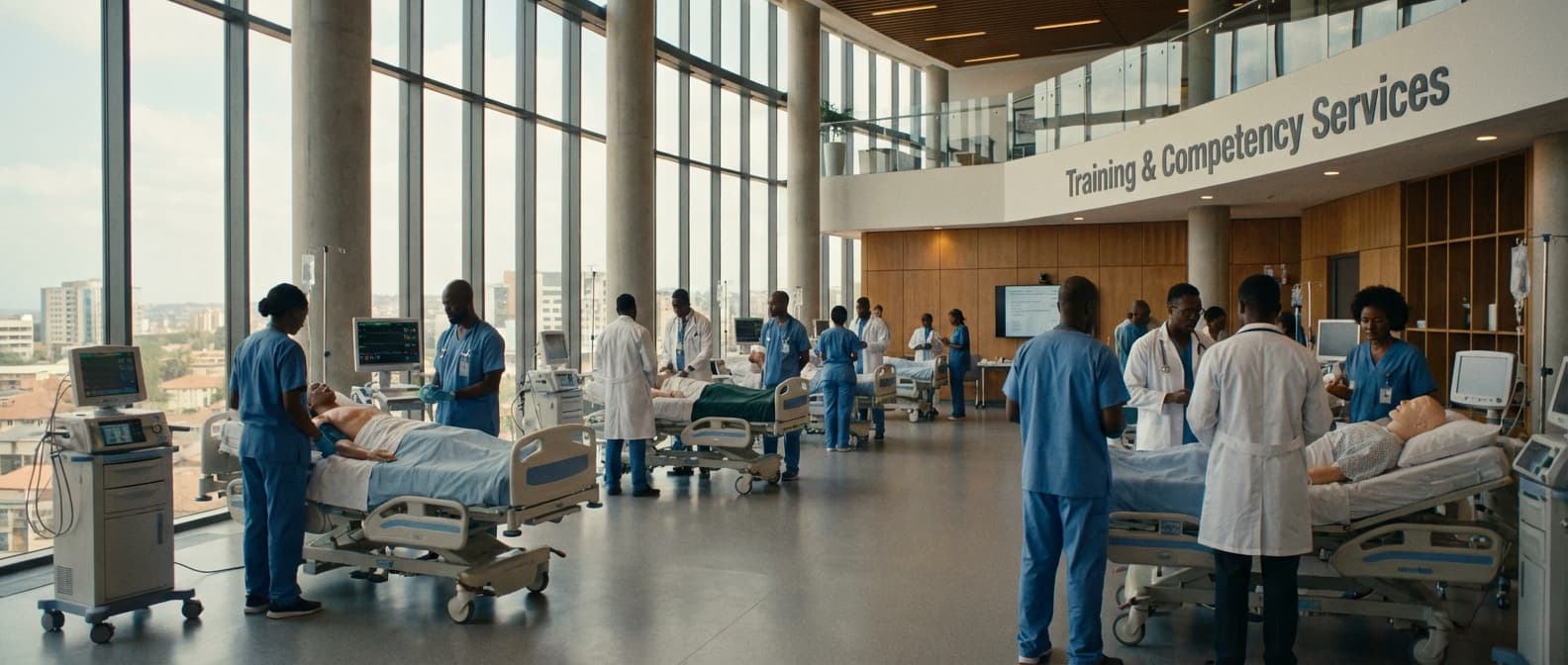
MRI Operator Training Service (Radiographers) in South Sudan
Engineering Excellence & Technical Support
MRI Operator Training Service (Radiographers) High-standard technical execution following OEM protocols and local regulatory frameworks.
Advanced MRI Physics and Safety Protocols
Comprehensive modules on MRI signal generation, image reconstruction, and adherence to stringent radiation safety standards, specifically tailored for the South Sudanese healthcare context and available equipment.
Neuroimaging Techniques & Anomaly Detection
In-depth training on acquiring high-quality brain MRI scans, identifying common neurological pathologies, and understanding the nuances of interpreting findings relevant to prevalent conditions in South Sudan.
Quality Assurance and Image Optimization
Focus on systematic quality control procedures, artifact reduction techniques, and best practices for optimizing MRI image quality under potentially challenging operational conditions.
What Is Mri Operator Training Service (Radiographers) In South Sudan?
MRI Operator Training Service (Radiographers) in South Sudan refers to specialized educational programs designed to equip qualified radiographers with the knowledge and practical skills required to operate Magnetic Resonance Imaging (MRI) equipment safely and effectively. This training is crucial for advancing diagnostic imaging capabilities within the healthcare sector of South Sudan, addressing a critical need for skilled personnel in this sophisticated medical technology.
| Who Needs This Service? | Typical Use Cases | |||
|---|---|---|---|---|
| Registered Radiographers: Primarily targets licensed radiographers seeking to specialize in MRI, either through initial training or upskilling. | Healthcare Facilities: Hospitals, imaging centers, and specialized clinics in South Sudan aiming to establish or enhance their MRI diagnostic services. | Government Health Ministries/Agencies: For capacity building initiatives and to improve the overall standard of medical imaging services. | International Aid Organizations: Involved in supporting healthcare infrastructure development in South Sudan may sponsor such training. | |
| Neurological Imaging: Diagnosis of brain tumors, stroke, multiple sclerosis, and spinal cord injuries. | Musculoskeletal Imaging: Assessment of joint injuries, ligament tears, cartilage damage, and bone tumors. | Abdominal and Pelvic Imaging: Evaluation of organs such as the liver, kidneys, pancreas, and reproductive organs for tumors, inflammation, or other pathologies. | Cardiovascular Imaging: Non-invasive assessment of heart structure and function, and blood vessels. | Oncology: Staging and monitoring of various cancers. |
Key Components of MRI Operator Training Service:
- Theoretical Instruction: Covers fundamental principles of MRI physics, including signal generation, image formation, pulse sequences, and artifact reduction. Topics also encompass patient safety protocols, radiation protection (though MRI is non-ionizing, magnetic field safety is paramount), contraindications, and contrast agent administration.
- Equipment Operation: Hands-on training on specific MRI scanner models, including patient positioning, coil selection, protocol optimization, image acquisition parameters, and quality control measures.
- Image Interpretation Fundamentals: While not a full interpretation course, operators receive foundational knowledge to recognize image quality issues and common anatomical structures for proper positioning and protocol selection.
- Patient Care and Management: Training on patient communication, managing claustrophobia, monitoring physiological parameters, and handling emergency situations within the MRI suite.
- Quality Assurance and Maintenance: Understanding basic troubleshooting, routine equipment checks, and reporting procedures for technical issues.
- Regulatory Compliance: Familiarization with relevant national and international standards for MRI operation and patient safety.
Who Needs Mri Operator Training Service (Radiographers) In South Sudan?
MRI Operator Training Service (Radiographers) in South Sudan addresses a critical need within the country's nascent healthcare infrastructure. The introduction and expansion of MRI technology are vital for accurate diagnosis and effective treatment of a wide range of conditions. However, the availability of skilled personnel to operate and maintain these complex machines is a significant bottleneck. This training service aims to bridge this gap by equipping radiographers with the necessary knowledge and practical skills to confidently and safely operate MRI scanners, interpret images, and adhere to best practices in radiation safety and patient care.
| Target Customer Type | Specific Departments/Roles | Rationale for Training Need |
|---|---|---|
| Public Hospitals | Radiology Department, Diagnostic Imaging Units | Majority of advanced diagnostic imaging services are concentrated here. Need to upskill existing radiographers and train new ones as MRI machines are acquired or upgraded. |
| Private Hospitals | Radiology Department, Imaging Services | Growing private sector is investing in advanced technology. Need trained personnel to offer competitive and high-quality diagnostic services. |
| Radiology Centers/Clinics | Imaging Technologists, Radiographers | Specialized centers focusing on imaging need skilled operators to maximize the utility of their MRI equipment and attract referrals. |
| Referral Hospitals | Radiology Department | These institutions handle complex cases and require advanced imaging capabilities, including MRI, necessitating well-trained operators. |
| Teaching Hospitals (Future) | Radiology Department, Medical Education Units | As medical education infrastructure develops, teaching hospitals will be crucial for training future generations of radiographers and need a foundational pool of skilled MRI operators. |
| NGOs with Healthcare Programs | Medical Imaging Staff | NGOs involved in providing comprehensive healthcare services in remote or underserved areas may require trained personnel if they operate or aim to acquire MRI facilities. |
Target Customers and Departments for MRI Operator Training Service in South Sudan
- Hospitals (Public and Private)
- Radiology Centers/Clinics
- Referral Hospitals
- Teaching Hospitals (future)
- Non-Governmental Organizations (NGOs) with healthcare programs
Mri Operator Training Service (Radiographers) Process In South Sudan
This document outlines the typical workflow for an MRI Operator Training Service catering to radiographers in South Sudan, from initial inquiry to the successful execution of the training program. The process is designed to be comprehensive, ensuring all logistical, technical, and administrative aspects are addressed to deliver effective and relevant training.
| Phase | Key Activities | Responsible Parties | Deliverables/Outcomes | Considerations for South Sudan |
|---|---|---|---|---|
| Receiving an inquiry from potential client (hospital, health ministry, NGO). Initial discussion to understand basic needs and scope. | Service Provider (Training Company/Institution), Client (e.g., Ministry of Health, Hospital Administration, NGO) | Acknowledgement of inquiry, preliminary understanding of client's interest. | Establish reliable communication channels (consider internet connectivity, phone access). Be aware of potential language barriers (local dialects). Understand the client's existing infrastructure and resources. |
| Detailed assessment of the client's current radiographer skill levels, specific MRI equipment available, training objectives, and desired outcomes. Development of a customized training proposal outlining curriculum, duration, methodology, trainers, budget, and schedule. | Service Provider (Training Company/Institution) in collaboration with Client | Detailed needs assessment report, comprehensive training proposal. | Assess the availability and condition of existing MRI machines for hands-on training. Identify any specific regional health priorities or common pathologies that should be emphasized in the curriculum. Factor in the need for basic English proficiency among trainees. |
| Review and negotiation of the training proposal. Signing of a formal contract or Memorandum of Understanding (MOU) detailing terms, payment schedule, responsibilities, and legal clauses. | Service Provider, Client | Signed contract/MOU. | Ensure clear payment terms and mechanisms that are feasible in the South Sudanese economic context. Address security and travel advisories for trainers if applicable. |
| Arranging travel and accommodation for trainers. Procuring or confirming availability of training materials, simulators, and any necessary equipment. Securing training venue(s). Visa and work permit arrangements for international trainers (if applicable). Pre-course communication with trainees (eligibility, schedule, pre-reading materials). | Service Provider, Client (for local support) | Confirmed travel and accommodation, training materials, secured venue, finalized trainee list. | Factor in longer lead times for travel arrangements and visa processing. Consider the availability and cost of accommodation and reliable transportation. Ensure venue has adequate power supply, cooling, and internet access. Adapt training materials for local context and potentially limited access to advanced resources. |
| Conducting theoretical lectures and practical sessions. Hands-on training on MRI equipment. Case study analysis and problem-solving exercises. On-site supervision and mentorship. | Lead Trainers, Assistant Trainers, Client's Radiographers (Trainees) | Completed training modules, hands-on competency demonstrated by trainees. | Utilize a blend of theoretical and practical approaches, prioritizing hands-on experience with available equipment. Emphasize practical troubleshooting and adaptation to potential equipment limitations. Provide opportunities for trainees to ask questions and share experiences. Ensure a safe and conducive learning environment. |
| Administering post-training assessments (theoretical and practical). Gathering feedback from trainees and client. Providing follow-up support and answering queries. Data analysis and report generation on training effectiveness. | Service Provider, Client | Post-training assessment results, feedback reports, training evaluation report. | Consider remote follow-up options via phone or email if on-site visits are not feasible. Adapt assessment methods to ensure fairness and accuracy. Document successes and areas for improvement for future training. |
| Issuing certificates of completion to successful trainees. Discussing future training needs or advanced modules. Maintaining a record of trained personnel. | Service Provider, Client | Certificates of completion, recommendations for future training. | Ensure certification is recognized and valued by local health authorities. Build long-term relationships for continued capacity building. |
MRI Operator Training Service Workflow (Radiographers - South Sudan)
- Inquiry & Initial Contact
- Needs Assessment & Proposal Development
- Agreement & Contract Finalization
- Logistical Planning & Preparation
- Training Delivery
- Post-Training Support & Evaluation
- Certification & Follow-up
Mri Operator Training Service (Radiographers) Cost In South Sudan
Providing MRI operator training services for radiographers in South Sudan involves a range of costs influenced by several critical factors. These factors determine the overall investment required for quality and effective training. The current economic climate, including inflation and currency fluctuations of the South Sudanese Pound (SSP), significantly impacts pricing. The scarcity of specialized trainers and the logistical challenges of delivering training in remote areas further contribute to higher costs. The duration and depth of the training program are paramount; comprehensive, multi-week courses will naturally be more expensive than shorter, introductory sessions. The level of expertise of the trainers, their travel and accommodation expenses, and the development of training materials all add to the overall cost. Furthermore, the availability of suitable training facilities, including access to functional MRI equipment for practical sessions, is a major determinant of pricing. Finally, the number of trainees enrolled can influence the per-person cost, with group discounts often available.
| Training Program Type | Estimated Cost Range (SSP) | Notes |
|---|---|---|
| Basic MRI Principles & Introduction | 1,500,000 - 3,000,000 | Short duration (1-2 weeks), theoretical focus, limited practical. Cost influenced by trainer availability. |
| Intermediate MRI Operator Training | 3,000,000 - 7,000,000 | Medium duration (2-4 weeks), includes practical scanning, core sequences. Covers common pathologies. |
| Advanced MRI Techniques & Specialization | 7,000,000 - 15,000,000+ | Longer duration (4+ weeks), specialized protocols (e.g., neuro, MSK, cardiac), advanced troubleshooting, potentially international trainers. |
| On-site/Customized Training (per day) | 500,000 - 1,500,000+ | Variable based on trainer's expertise, location, and specific needs. May not include facility/equipment access. |
Key Pricing Factors for MRI Operator Training (Radiographers) in South Sudan
- Economic Stability and Currency Fluctuations: The volatile nature of the South Sudanese Pound (SSP) directly impacts the cost of imported training materials, equipment maintenance, and foreign trainer expenses.
- Trainer Expertise and Availability: The rarity of highly qualified MRI trainers in South Sudan necessitates potentially higher fees and covers travel/accommodation.
- Training Program Duration and Curriculum Depth: Longer, more in-depth programs covering advanced techniques will incur higher costs than basic introductory courses.
- Logistical Challenges: Training delivery in remote or underserved regions requires additional resources for transportation, accommodation, and potentially the establishment of temporary training sites.
- Training Materials and Resources: The cost of developing or acquiring up-to-date MRI training manuals, software, and simulation tools.
- Facility and Equipment Access: The availability and cost of using a functional MRI scanner for hands-on practical training, including machine time and technical support.
- Number of Trainees: Group discounts can be applied for larger cohorts, reducing the per-person cost.
- Accreditation and Certification: Fees associated with any external accreditation bodies or the issuance of formal certificates.
- Provider Type: Costs can vary between international NGOs, specialized private training providers, and in-country institutions.
Affordable Mri Operator Training Service (Radiographers) Options
This resource outlines affordable MRI operator training services tailored for radiographers, focusing on value bundles and cost-saving strategies to make specialized MRI education accessible and impactful.
| Value Bundle Type | Included Components | Estimated Cost Range (USD) | Cost-Saving Strategies |
|---|---|---|---|
| Basic Online Theory Module | Core MRI physics, safety, and introductory protocols. Self-paced online lectures and quizzes. | $500 - $1,500 | Leverage employer sponsorship. Utilize bulk enrollment discounts for multiple staff. Focus on essential theoretical knowledge to supplement existing clinical experience. |
| Blended Learning Package | Online theory modules + limited simulation or virtual lab access. May include review sessions. | $1,500 - $3,000 | Choose programs with flexible payment plans. Seek out early-bird registration discounts. Prioritize programs that offer realistic simulations to reduce the need for extensive equipment time early on. |
| Intensive Workshop with Clinical Observation | In-person training focusing on hands-on skills, direct observation of MRI procedures, and case study analysis. May require travel. | $3,000 - $6,000+ | Combine training with travel to locations offering lower cost of living. Coordinate group bookings to secure volume discounts. Explore 'train-the-trainer' models if applicable to your facility for long-term cost-effectiveness. |
| Comprehensive Certification Preparation | Full curriculum, extensive practice exams, personalized feedback, and dedicated support for ARMRIT, ARRT (MR), or equivalent certifications. | $2,000 - $4,500 | Compare certification bodies for varying exam fees. Negotiate package deals if training and exam preparation are bundled. Focus on quality over quantity to ensure first-time pass rates, avoiding costly re-testing. |
| Custom Facility Training Solutions | Tailored programs based on specific equipment, protocols, and staff needs. On-site or remote delivery. | Varies greatly based on scope | Clearly define training objectives to avoid unnecessary modules. Partner with training providers for long-term service agreements. Leverage existing training infrastructure where possible. |
Key Components of Affordable MRI Operator Training
- Comprehensive Curriculum: Covering MRI physics, safety protocols, image acquisition techniques, patient care, and common pathologies.
- Hands-on Experience: Essential for practical skill development, often facilitated through simulations or supervised clinical rotations.
- Expert Instructors: Experienced MRI technologists and radiologists providing guidance and insights.
- Flexible Learning Formats: Online modules, blended learning, and in-person workshops to accommodate various schedules and learning preferences.
- Certification and Credentialing Support: Assistance in preparing for recognized MRI certifications.
- Ongoing Professional Development: Access to continuing education units (CEUs) and advanced training modules.
Verified Providers In South Sudan
In South Sudan, ensuring access to reliable and high-quality healthcare is paramount. This requires engaging with healthcare providers who not only possess the necessary medical expertise but also adhere to rigorous ethical and professional standards. Franance Health stands out as a prime example of such a provider, demonstrating a commitment to excellence that makes them an outstanding choice for healthcare services in the region.
| Credential Category | Franance Health's Commitment | Why It Matters for Patients |
|---|---|---|
| Licensing and Accreditation | Fully licensed by South Sudanese health authorities; pursues relevant international accreditations. | Guarantees that providers meet legal and professional standards, ensuring safe and competent care. |
| Staff Qualifications | Employs certified and experienced medical practitioners with ongoing training. | Patients receive care from highly trained professionals who stay updated on the latest medical advancements. |
| Quality Assurance | Implements strict quality control measures and continuous improvement processes. | Ensures consistently high standards of service delivery and reduces the risk of medical errors. |
| Ethical Practice | Adheres to a strong code of ethics, prioritizing patient confidentiality and dignity. | Builds trust and ensures patients feel respected, secure, and well-informed about their treatment. |
| Infrastructure & Technology | Utilizes up-to-date medical equipment and facilities. | Enables accurate diagnoses, effective treatments, and improved patient outcomes. |
Franance Health Credentials and Why They Represent the Best Choice:
- Robust Regulatory Compliance: Franance Health operates in full compliance with South Sudanese healthcare regulations and international best practices. This adherence ensures that all services are delivered safely, effectively, and ethically.
- Qualified and Experienced Medical Professionals: The organization employs a team of highly skilled doctors, nurses, and allied health professionals with extensive experience in various medical specialties. Continuous professional development is a cornerstone of their practice.
- Commitment to Patient-Centered Care: Franance Health prioritizes the well-being and individual needs of each patient. Their approach emphasizes clear communication, informed consent, and a supportive environment throughout the treatment process.
- Investment in Modern Infrastructure and Technology: To provide cutting-edge medical care, Franance Health invests in modern medical equipment and maintains well-equipped facilities. This allows for accurate diagnostics and effective treatment modalities.
- Strong Ethical Framework: Integrity, transparency, and accountability are central to Franance Health's operational philosophy. They are dedicated to upholding the highest ethical standards in all their interactions.
- Community Engagement and Accessibility: Understanding the unique challenges in South Sudan, Franance Health strives to make healthcare services accessible and responsive to the needs of the communities they serve.
- Positive Patient Outcomes and Testimonials: The success of any healthcare provider is best measured by the health and satisfaction of their patients. Franance Health has a track record of achieving positive health outcomes and fostering trust within the community.
Scope Of Work For Mri Operator Training Service (Radiographers)
This Scope of Work (SOW) outlines the requirements for providing comprehensive MRI Operator Training Services specifically tailored for Radiographers. The objective is to equip radiographers with the necessary theoretical knowledge and practical skills to safely and effectively operate MRI scanners, perform a range of examinations, and ensure optimal image quality and patient care. The training will cover fundamental MRI principles, advanced imaging techniques, safety protocols, and quality assurance measures.
| Category | Specification | Description | Acceptance Criteria |
|---|---|---|---|
| Training Curriculum | Comprehensive and Modular | Covers physics, pulse sequences, safety, artifact reduction, protocol optimization, patient preparation, and post-processing. Modules should be structured for progressive learning. | Curriculum covers all outlined topics. Modules are logical and build upon each other. Reviewed and approved by the client. |
| Instructor Qualifications | Experienced MRI Physicist/Senior Radiographer | Instructors must possess extensive practical experience in MRI operation, advanced imaging techniques, and a proven track record in training. | Proof of qualifications and relevant experience provided. Client reserves right to interview instructors. |
| Training Methodology | Blended Learning Approach | Combines theoretical lectures, case studies, interactive discussions, simulator-based practice, and supervised hands-on sessions on actual MRI equipment. | Demonstrated application of blended learning. Successful integration of theoretical and practical components. |
| Practical Training | Hands-on Proficiency | Radiographers must demonstrate proficiency in scanner operation, patient positioning, sequence selection, image acquisition, and basic troubleshooting. | Successful completion of practical tasks as outlined in the curriculum. Competency observed and documented by the instructor. |
| Safety Protocols | Rigorous Adherence | Emphasis on MRI safety, including screening procedures, ferromagnetic detection, SAR limits, quench procedures, and emergency management. | Radiographers demonstrate understanding and application of all safety protocols. No safety incidents during training. |
| Image Quality Assessment | Qualitative and Quantitative | Training on identifying and mitigating common artifacts, optimizing image parameters for diagnostic clarity, and understanding image quality metrics. | Radiographers can identify common artifacts and suggest corrective actions. Demonstrable improvement in image quality in training exercises. |
| Assessment and Evaluation | Multi-faceted | Includes theoretical knowledge tests, practical skill assessments, and feedback mechanisms to evaluate learning progress and identify areas for improvement. | All assessment components completed. Passing scores achieved for theoretical and practical evaluations. Feedback collected and analyzed. |
| Training Materials | High-Quality and Accessible | Includes detailed training manuals, quick reference guides, presentations, and online resources (if applicable). Materials should be clear, concise, and up-to-date. | Materials are comprehensive, accurate, and provided in a timely manner. Materials are easily accessible to trainees. |
| Reporting | Detailed and Timely | Regular progress reports, final evaluation reports for each trainee, and a summary report of the overall training program. | Reports are accurate, comprehensive, and submitted according to agreed-upon timelines. Reports are presented in a clear and organized format. |
Technical Deliverables
- Training Curriculum and Modules Development
- Instructor-Led Training Sessions (On-site/Remote)
- Hands-on Practical Training on MRI Simulators or Live Scanners
- Competency Assessment Tools and Evaluation Reports
- Training Materials (Manuals, Handouts, Presentations)
- Certificate of Completion for Trained Radiographers
- Post-Training Support and Refresher Modules (Optional)
Service Level Agreement For Mri Operator Training Service (Radiographers)
This Service Level Agreement (SLA) outlines the performance standards and commitments for the MRI Operator Training Service provided to registered radiographers. It details the response times for support requests and the uptime guarantees for the training platform and associated resources.
| Service Component | KPI | Target | Measurement Method | Escalation Path |
|---|---|---|---|---|
| MRI Operator Training Platform Access | Platform Uptime | 99.5% | Monthly uptime calculated from server logs and user access data. | If uptime falls below 99.5% for two consecutive months, a formal review and improvement plan will be initiated. |
| Technical Support (Platform Issues, Access Problems) | Response Time (Tier 1 - Acknowledgement) | Within 4 business hours | Timestamp of ticket creation in the support system. | If initial response is not met, the ticket is automatically escalated to Tier 2. |
| Technical Support (Platform Issues, Access Problems) | Resolution Time (Tier 1 - Minor Issues/Information Requests) | Within 1 business day | Timestamp of ticket closure in the support system. | If resolution is not met, the ticket is escalated to Tier 2. |
| Technical Support (Platform Issues, Access Problems) | Response Time (Tier 2 - Complex Technical Issues) | Within 8 business hours | Timestamp of ticket reassignment and acknowledgment by Tier 2 support. | If resolution is not met within 2 business days, the ticket is escalated to Senior Support/Engineering. |
| Technical Support (Platform Issues, Access Problems) | Resolution Time (Tier 2 - Complex Technical Issues) | Within 3 business days (subject to complexity and vendor dependencies) | Timestamp of ticket closure in the support system. | For issues exceeding 3 business days, a detailed status update and revised timeline will be provided to the client daily. |
| Training Content Support (Clarification on Course Material) | Response Time | Within 1 business day | Timestamp of ticket creation in the support system. | If initial response is not met, the ticket is automatically escalated. |
| Training Content Support (Clarification on Course Material) | Resolution Time (Information/Clarification) | Within 3 business days | Timestamp of ticket closure in the support system. | If resolution is not met, the ticket is escalated to the Training Content Lead. |
| Scheduled Training Sessions (Live Webinars/Virtual Classrooms) | Uptime/Availability | 100% during scheduled session times | Monitoring of the virtual classroom platform during scheduled sessions. | In case of platform failure, a backup communication channel (e.g., email, alternative platform) will be used, and a rescheduled session will be offered. |
| Scheduled Training Sessions (Live Webinars/Virtual Classrooms) | Technical Support for Participants | During scheduled session times | Dedicated support personnel available via chat/email during sessions. | Issues will be addressed immediately to minimize disruption. |
Key Performance Indicators (KPIs)
- Response Time: The maximum time taken by the Service Provider to acknowledge and begin working on a reported issue or request.
- Resolution Time: The maximum time taken by the Service Provider to resolve a reported issue or fulfill a request, subject to the complexity and nature of the issue.
- Platform Uptime: The percentage of time the MRI Operator Training platform and its essential functionalities are available and operational for users.
- Support Availability: The hours and days during which support services are accessible.
Frequently Asked Questions

Ready when you are
Let's scope your MRI Operator Training Service (Radiographers) in South Sudan project in South Sudan.

Scaling healthcare logistics and technical systems across the entire continent.