
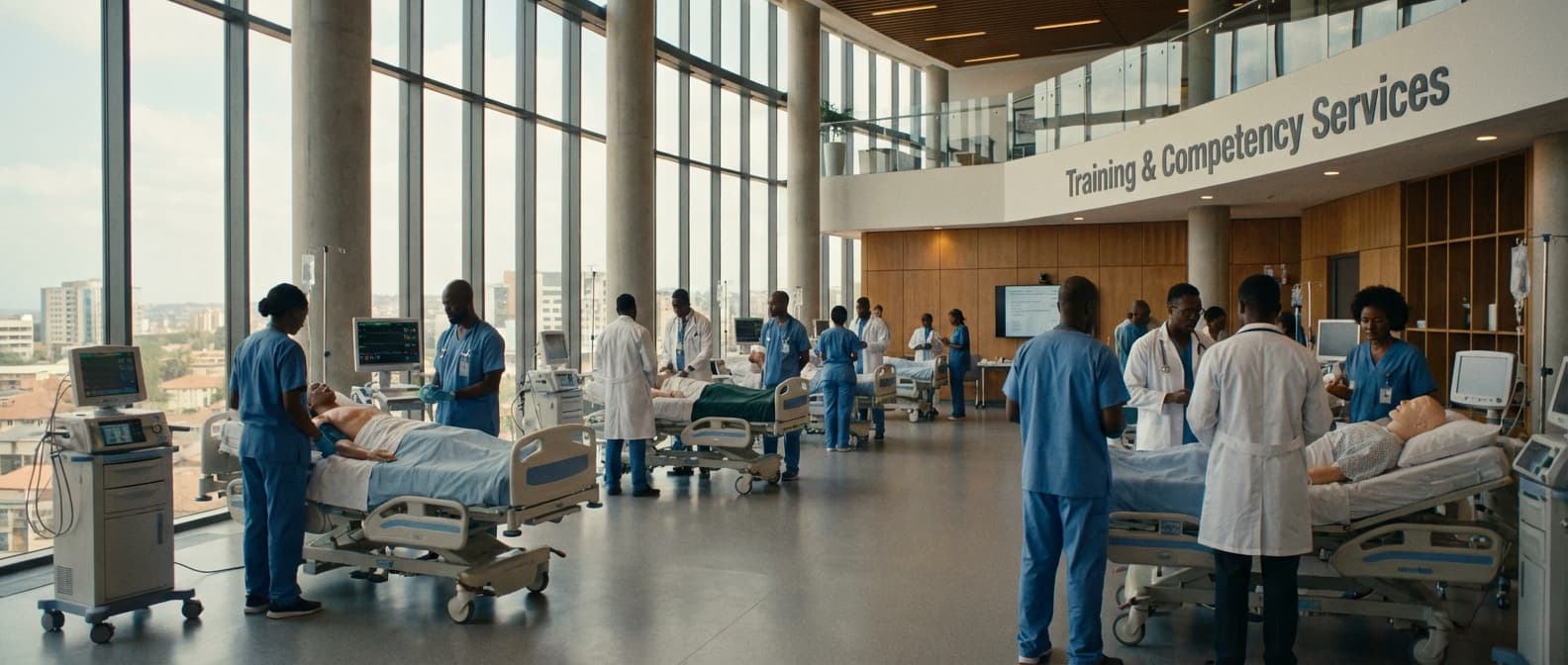
CT Operator Training Service (Radiographers) in South Sudan
Engineering Excellence & Technical Support
CT Operator Training Service (Radiographers) High-standard technical execution following OEM protocols and local regulatory frameworks.
Advanced Imaging Techniques
Comprehensive training on the latest CT scanning modalities and advanced imaging protocols, ensuring South Sudanese radiographers master techniques for accurate diagnosis and patient care.
Radiation Safety & Protocol Mastery
In-depth training focused on international radiation safety standards, patient dose optimization, and emergency protocol management, guaranteeing safe and effective CT operations in South Sudan.
PACS & Image Management Proficiency
Hands-on training in Picture Archiving and Communication Systems (PACS) and advanced image processing techniques, empowering radiographers to efficiently manage, analyze, and share medical imaging data.
What Is Ct Operator Training Service (Radiographers) In South Sudan?
CT Operator Training Service (Radiographers) in South Sudan refers to a specialized educational program designed to equip radiographers and other qualified medical imaging personnel with the theoretical knowledge and practical skills necessary to safely and effectively operate Computed Tomography (CT) scanners. This service focuses on the principles of CT physics, image acquisition protocols, patient positioning and preparation, radiation safety procedures, image processing and analysis, and artifact recognition and mitigation. The objective is to ensure competent performance in generating high-quality diagnostic CT images while minimizing radiation dose to patients and healthcare staff, adhering to international best practices and local regulatory requirements.
| Who Needs the Service | Typical Use Cases | ||||||||||||||
|---|---|---|---|---|---|---|---|---|---|---|---|---|---|---|---|
| Certified Radiographers seeking to specialize in CT imaging. | New CT scanner installations requiring trained operators. | Existing CT operators needing refresher training or advanced protocol education. | Medical imaging technologists working in public and private healthcare facilities. | Healthcare institutions aiming to expand their diagnostic imaging capabilities. | Radiology departments in hospitals and clinics. | Diagnostic imaging centers. | Mobile imaging units equipped with CT scanners. | Emergency medicine settings requiring rapid diagnostic imaging. | Trauma centers for assessing injuries. | Oncological imaging for staging and treatment monitoring. | Neurological imaging for stroke, tumors, and trauma. | Abdominal and pelvic imaging for various pathologies. | Thoracic imaging for lung diseases and trauma. | Musculoskeletal imaging for fractures and joint injuries. | Interventional radiology procedures guided by CT. |
Key Components of CT Operator Training Service (Radiographers):
- Principles of CT Physics and Technology: Understanding X-ray generation, beam filtration, detector technology, and data acquisition methods.
- CT Scanner Anatomy and Operation: Familiarization with hardware components, control console, and operational modes.
- Imaging Protocols and Parameters: Learning to select and optimize kVp, mA, pitch, slice thickness, and other parameters for various anatomical regions and clinical indications.
- Patient Care and Positioning: Techniques for patient preparation, immobilization, and precise anatomical positioning for optimal image quality.
- Radiation Safety and Protection: Implementing ALARA (As Low As Reasonably Achievable) principles, dose monitoring, and shielding techniques for patients and staff.
- Image Reconstruction and Processing: Understanding the algorithms used for image generation and techniques for post-processing, including windowing and leveling.
- Artifact Identification and Mitigation: Recognizing common CT artifacts (e.g., motion, beam hardening) and implementing strategies to reduce or eliminate them.
- Quality Assurance and Control: Performing routine checks and calibrations to ensure scanner performance and image integrity.
- Emergency Procedures: Training on responding to equipment malfunctions and patient emergencies during scanning.
- Ethical and Legal Considerations: Adherence to patient confidentiality, informed consent, and professional conduct.
Who Needs Ct Operator Training Service (Radiographers) In South Sudan?
In South Sudan, a critical need exists for comprehensive CT operator training services specifically for radiographers. This specialized training is essential to ensure the safe, effective, and accurate utilization of CT scanners, ultimately improving diagnostic capabilities and patient care across the country's healthcare system. The demand stems from a combination of factors including the introduction of new CT technology, the need to upgrade the skills of existing radiographers, and the imperative to establish robust standards for CT imaging.
| Target Customer Group | Relevant Departments / Settings | Specific Needs Addressed |
|---|---|---|
| Government Hospitals | Radiology Department, Diagnostic Imaging Unit, Tertiary Care Centers | Basic and advanced CT operation, image optimization, patient safety protocols, interpretation support. |
| Mission Hospitals and NGOs | Radiology Department, Diagnostic Imaging Services, Field Hospitals | Essential CT skills for general diagnostics, troubleshooting basic equipment issues, adapting to resource-limited settings. |
| Military and Security Forces Hospitals | Radiology Department, Medical Corps Facilities | Specialized CT protocols for trauma, battlefield injuries, and operational readiness, secure data handling. |
| Private Healthcare Facilities | Radiology Department, Imaging Centers, Specialist Clinics | Advanced imaging techniques, patient throughput optimization, quality assurance, competitive service delivery. |
| Ministry of Health / Training Institutions | Medical Education Departments, Public Health Units | Curriculum development, trainer training, standardization of CT protocols, workforce development. |
| Emergency and Disaster Response Units | Mobile Imaging Units, Field Triage Centers | Rapid deployment CT operation, emergency imaging protocols, portability and maintenance of mobile CT equipment. |
Target Customers and Departments for CT Operator Training in South Sudan:
- Government Hospitals: These are major healthcare providers and are likely to house the majority of CT scanners, requiring trained radiographers to operate them. This includes national referral hospitals and regional hospitals.
- Mission Hospitals and NGOs: Many healthcare facilities in South Sudan are run by faith-based organizations and non-governmental organizations, often serving remote or underserved populations. They may have CT scanner access and a pressing need for skilled operators.
- Military and Security Forces Hospitals: These institutions often have specialized medical facilities that may include CT imaging capabilities and require dedicated radiographers.
- Private Healthcare Facilities: As the private healthcare sector grows in South Sudan, private clinics and hospitals that invest in advanced imaging technology will also require trained CT operators.
- Ministry of Health and Medical Training Institutions: The Ministry of Health is responsible for national health policy and standards, and will benefit from the availability of trained professionals to implement and oversee CT services. Medical training institutions can incorporate this training into their curricula.
- Emergency and Disaster Response Units: Organizations involved in rapid medical response will require radiographers proficient in CT operation for immediate diagnostic needs in emergency situations.
Ct Operator Training Service (Radiographers) Process In South Sudan
This document outlines the workflow for the CT Operator Training Service (Radiographers) in South Sudan, detailing the process from initial inquiry to the successful execution of the training program. The service aims to enhance the skills and knowledge of radiographers in operating Computed Tomography (CT) scanners, thereby improving diagnostic imaging capabilities within the healthcare sector of South Sudan.
| Stage | Description | Key Activities | Responsible Party | Deliverables/Outcomes |
|---|---|---|---|---|
| Inquiry and Needs Assessment | Initial contact from a healthcare facility or organization in South Sudan seeking CT operator training. | Receive inquiry, understand training needs (number of trainees, current skill level, specific CT equipment, desired outcomes), conduct site visit (if feasible) for assessment. | Inquiring Organization, Training Provider | Clear understanding of training requirements, assessment report. |
| Proposal Development and Submission | Formal proposal outlining the training program, costs, and timeline. | Develop training curriculum outline, estimate costs (trainers, materials, travel, accommodation), define training schedule, prepare and submit a comprehensive proposal. | Training Provider | Detailed training proposal, cost breakdown, proposed schedule. |
| Contract Negotiation and Agreement | Formalizing the agreement between the training provider and the client. | Review and negotiate proposal terms, finalize contract details, sign service agreement. | Inquiring Organization, Training Provider | Signed Service Agreement. |
| Curriculum Customization and Preparation | Tailoring the training content to the specific needs and equipment of the client. | Adapt generic CT training modules, develop practical exercises and case studies relevant to South Sudan's context, prepare training materials (manuals, presentations, handouts). | Training Provider | Customized training curriculum, training materials. |
| Logistics and Resource Planning | Ensuring all practical arrangements for the training are in place. | Book training venue (if off-site), arrange for CT scanner access, schedule trainee participation, procure necessary training equipment and consumables, arrange travel and accommodation for trainers. | Training Provider, Inquiring Organization (for site access and trainee coordination) | Confirmed training venue, scheduled CT scanner time, booked accommodation and travel, all training materials ready. |
| Trainer Deployment | Assigning and dispatching qualified trainers to the training location. | Select qualified CT radiographers/trainers, conduct pre-deployment briefing, ensure trainers have all necessary travel documents and information. | Training Provider | Deployed and briefed trainers. |
| Training Delivery | Conducting the theoretical and practical training sessions. | Deliver lectures and presentations, conduct hands-on practical sessions on the CT scanner, facilitate discussions, troubleshoot issues, provide immediate feedback. | Trainers | Active trainee participation, successful completion of practical exercises. |
| Assessment and Evaluation | Measuring the learning outcomes and effectiveness of the training. | Conduct theoretical assessments (quizzes, exams), evaluate practical competency through observation and simulated scenarios, gather feedback from trainees and supervisors. | Trainers, Inquiring Organization (for feedback) | Assessment results, training evaluation report, trainee competency assessment. |
| Certification and Follow-up | Providing formal recognition of training completion and offering ongoing support. | Issue certificates of completion to successful trainees, provide a comprehensive training report to the client, offer post-training support or refresher courses if agreed upon. | Training Provider | Certificates of Completion, Final Training Report, post-training support plan. |
CT Operator Training Service Workflow
- Inquiry and Needs Assessment
- Proposal Development and Submission
- Contract Negotiation and Agreement
- Curriculum Customization and Preparation
- Logistics and Resource Planning
- Trainer Deployment
- Training Delivery
- Assessment and Evaluation
- Certification and Follow-up
Ct Operator Training Service (Radiographers) Cost In South Sudan
Providing CT Operator Training Services for Radiographers in South Sudan is a critical need for improving diagnostic imaging capabilities. The cost of such training is influenced by a variety of factors, making it difficult to provide a single, definitive price. These factors often combine to create a price range in the local currency, South Sudanese Pound (SSP).
| Training Type/Scope | Estimated Cost Range (SSP) | Notes |
|---|---|---|
| Basic CT Principles & Operation (e.g., 1-2 weeks) | 1,500,000 - 3,000,000 | Covers fundamental physics, safety, basic protocols, and image acquisition. May be delivered with limited hands-on scanner time. |
| Comprehensive CT Operator Training (e.g., 3-4 weeks) | 3,000,000 - 6,000,000 | Includes advanced protocols, image manipulation, quality control, and significant supervised practical training. Likely includes more detailed theoretical modules. |
| Specialized CT Applications (e.g., 1 week per specialization) | 1,000,000 - 2,500,000 | Focuses on specific areas like CT Angiography, CT Oncology, or Pediatric CT. Cost is per specialization and assumes basic CT knowledge. |
| Train-the-Trainer Programs | 5,000,000 - 10,000,000+ | Higher cost due to in-depth pedagogical training, advanced CT knowledge transfer, and the potential for international expertise. Aims to build local training capacity. |
| On-site Training (per group) | Variable (adds 20-50% to base cost) | Costs increase significantly due to travel, accommodation, and potential disruption to regular hospital services. Highly dependent on location within South Sudan. |
Key Pricing Factors for CT Operator Training (Radiographers) in South Sudan
- Training Duration and Intensity: Shorter, more focused introductory courses will be less expensive than comprehensive, multi-week programs covering advanced techniques. The number of hours dedicated to theory, practical sessions, and supervised on-the-job training directly impacts costs.
- Trainer Expertise and Qualifications: Highly experienced radiographers with specialized CT knowledge and extensive teaching experience will command higher fees. International trainers often add significant travel and accommodation costs to the overall price.
- Training Location and Infrastructure: Training conducted at a well-equipped hospital or training center with readily available CT scanners for practical sessions will be more expensive than training delivered in a less resourced setting. The cost of renting facilities or adapting existing ones is a factor.
- Curriculum Development and Materials: The complexity and customization of the training curriculum, along with the provision of high-quality training materials (manuals, presentations, case studies), contribute to the overall cost.
- Equipment Access and Maintenance: Access to functional CT scanners for hands-on practice is paramount. If specialized equipment needs to be leased or maintained for the training duration, this will increase the cost. The cost of consumables (e.g., phantoms) for practical exercises also plays a role.
- Number of Trainees: While often a per-trainee cost, larger groups might benefit from economies of scale, potentially reducing the per-person cost. However, very large groups may also require more trainers and resources, offsetting this.
- Certification and Assessment: The inclusion of formal certification exams, external assessments, or accreditation processes will add to the overall expense.
- Logistics and Support: This includes costs associated with participant accommodation, meals, local transportation, visa processing (for international trainers), and any administrative support required to organize the training.
- Provider Type: Whether the training is offered by a local educational institution, an international NGO, a private training company, or directly by a hospital, will influence pricing. Each has different overheads and operational models.
- Technological Requirements: If the training incorporates advanced simulation software or e-learning platforms, the associated licensing and setup costs will be factored in.
Affordable Ct Operator Training Service (Radiographers) Options
This document outlines affordable CT operator training service options specifically for radiographers. We understand the importance of specialized training to enhance proficiency and patient care in CT imaging, while also being mindful of budget constraints. This guide explores value bundles and cost-saving strategies to make high-quality CT operator training accessible.
| Training Service Type | Typical Features/Components | Value Proposition/Cost Savings | Ideal For |
|---|---|---|---|
| Basic CT Operator Certification Bundle | Foundational CT physics, patient positioning, image acquisition protocols, safety standards, basic interpretation. Includes online modules, virtual labs, and potentially a supervised practical component. | Provides a comprehensive entry-level qualification at a bundled discount. Reduces the need for separate purchases of foundational knowledge. | Newly qualified radiographers or those transitioning into CT roles. |
| Advanced CT Protocols & Applications Bundle | Specialized protocols (e.g., cardiac, neuro, vascular), advanced reconstruction techniques, contrast administration best practices, artifact reduction. Includes expert-led webinars, case studies, and hands-on simulator exercises. | Bundles advanced knowledge, saving on individual module costs. Enhances diagnostic confidence and efficiency. | Experienced radiographers looking to specialize or expand their CT skillset. |
| CT Safety & Radiation Management Bundle | Principles of ALARA, dose optimization strategies, regulatory compliance, patient and staff safety protocols. Includes online modules, compliance checklists, and risk assessment tools. | Ensures regulatory adherence and minimizes risks, preventing potential fines. Bundled approach provides a holistic safety framework. | All CT operators, particularly those in roles requiring strict adherence to safety standards. |
| Refresher & Skills Update Bundle | Focus on specific CT modalities (e.g., dual-energy CT), new software updates, common error correction, advanced troubleshooting. Shorter, targeted online modules and live Q&A sessions. | Cost-effective way to maintain up-to-date knowledge. Prevents costly errors due to outdated practices. | Radiographers needing to stay current with evolving CT technology and practices. |
| Institution-Wide Training Package | Tailored to the specific needs and equipment of a hospital or clinic. Includes a mix of online, in-person, and on-site training. Group pricing and dedicated support. | Significant cost savings through bulk enrollment. Standardizes training across the department, improving consistency and quality. | Healthcare facilities looking to train multiple staff members efficiently and cost-effectively. |
Understanding Value Bundles and Cost-Saving Strategies
- Value Bundles: These are pre-packaged training solutions that often combine multiple training modules, practical sessions, and sometimes even assessment tools at a discounted price compared to purchasing each component individually. They are designed to offer comprehensive skill development.
- Cost-Saving Strategies: These are proactive approaches to reduce the overall expense of training, including leveraging existing resources, exploring alternative delivery methods, and negotiating group rates.
- On-Demand Training: Accessing recorded webinars, online courses, and digital learning materials at your own pace, allowing for flexible scheduling and reduced travel costs.
- Group Discounts: Enrolling multiple radiographers from the same institution or practice can often unlock significant price reductions.
- Partnerships with Training Providers: Building long-term relationships with accredited CT training organizations may lead to exclusive offers or tailored pricing.
- Government Grants and Subsidies: Investigating available funding opportunities from healthcare organizations or government bodies that support professional development for medical imaging staff.
- Blended Learning Models: Combining online theoretical components with in-person practical sessions can be more cost-effective than purely face-to-face courses.
- Continuing Education Credits (CEUs): Ensure training programs offer recognized CEUs, as this is often a mandatory requirement and contributes to maintaining professional licensure, thus providing inherent value.
- Refresher Courses: Focused, shorter courses designed to update skills on specific CT protocols or new technologies can be a more economical way to maintain competency than full certification courses.
- Customized Training Packages: Working with providers to create a training plan that precisely meets your needs can prevent paying for unnecessary modules.
Verified Providers In South Sudan
In South Sudan, ensuring access to reliable and qualified healthcare providers is paramount. Franance Health stands out as a leading organization dedicated to connecting individuals with verified medical professionals. This commitment to quality and safety makes them the premier choice for healthcare services in the region. Their rigorous credentialing process and dedication to patient well-being set them apart.
| Credentialing Aspect | Franance Health's Process | Benefit to Patients |
|---|---|---|
| License Verification | Thorough checks with relevant medical councils and regulatory bodies. | Guarantees practitioners are legally authorized to practice. |
| Educational Background | Verification of degrees, diplomas, and specialized training. | Ensures providers have the necessary academic qualifications. |
| Professional Experience | Review of work history and references. | Confirms practical experience and competence. |
| Good Standing Checks | Inquiry into any disciplinary actions or malpractice claims. | Mitigates risks associated with unqualified or problematic providers. |
| Continuing Professional Development (CPD) | Encourages and potentially verifies ongoing training and skill enhancement. | Ensures providers stay updated with the latest medical advancements. |
Why Franance Health is the Best Choice:
- Rigorous Credentialing: Franance Health employs a stringent verification process for all healthcare providers.
- Qualified Professionals: Ensuring that all listed practitioners hold valid licenses and are in good standing.
- Patient-Centric Approach: Prioritizing patient safety, trust, and access to quality care.
- Comprehensive Network: Offering a wide range of medical specialties and services.
- Commitment to Excellence: Dedicated to upholding the highest standards in healthcare delivery.
- Transparency and Trust: Providing clear information about provider credentials to build patient confidence.
Scope Of Work For Ct Operator Training Service (Radiographers)
This Scope of Work (SOW) outlines the requirements for providing comprehensive CT Operator Training services to radiographers. The objective is to equip radiographers with the necessary knowledge and practical skills to safely and effectively operate CT scanners, ensuring high-quality diagnostic imaging and patient care. This SOW details the technical deliverables, standard specifications, and expected outcomes of the training program.
| Deliverable | Description | Specification/Standard |
|---|---|---|
| Training Curriculum | A comprehensive curriculum covering all modules outlined above, tailored to the specific CT scanner models in use. | Curriculum must be aligned with established professional standards (e.g., ARRT, ASRT) and include theoretical and practical components. Documentation of all learning objectives. |
| Training Manuals/Materials | High-quality, up-to-date training manuals, presentations, and hands-on guides for each module. | Materials should be easily accessible (digital or print) and include clear diagrams, illustrations, and step-by-step instructions. Manufacturer-specific manuals for the CT systems are mandatory. |
| Practical Training Sessions | Hands-on training sessions conducted on the actual CT scanner(s) with simulated patient scenarios. | Minimum of X hours of supervised practical training per participant. Sessions must cover routine procedures, protocol execution, patient positioning, and emergency management. Feedback mechanism for trainees. |
| Competency Assessment | Formal assessment of trainees' knowledge and practical skills. | Includes written examinations, practical skills demonstrations, and case study reviews. A passing score of X% is required for certification. Assessment tools must be validated. |
| Certification | Issuance of a certificate of completion upon successful assessment. | Certificates should include the trainee's name, date of training, trainer's name/signature, and the scope of training covered. Compliant with any relevant accreditation bodies. |
| Trainer Qualifications | Qualified and experienced instructors with expertise in CT technology, imaging physics, and clinical application. | Instructors must possess relevant professional certifications and a minimum of X years of experience in CT operation and training. Proven track record of effective training delivery. |
| Post-Training Support | Limited post-training support for trainees to address any immediate follow-up questions. | Availability for consultation via email or phone for a period of X weeks post-training. Access to online resources for reference. |
| Reporting | A comprehensive report detailing training activities, participant attendance, assessment results, and any recommendations. | Report to be submitted within X days of training completion. Includes anonymized aggregate data on common areas of difficulty or success. |
Key Training Modules and Topics
- Module 1: CT Physics and Principles
- X-ray production and interaction with matter
- Principles of CT image formation (reconstruction algorithms)
- CT detector technology
- Radiation physics and safety
- Module 2: CT Scanner Hardware and Operation
- CT gantry components and function
- X-ray tube and detector maintenance
- Patient table operation and safety
- Contrast media administration systems
- Image acquisition parameters (kVp, mA, pitch, slice thickness)
- Module 3: Image Acquisition Protocols
- Standard anatomical protocols (head, chest, abdomen, pelvis)
- Specialized protocols (e.g., cardiac CT, CT angiography, interventional CT)
- Protocol optimization for image quality and dose reduction
- Artifact recognition and mitigation
- Module 4: Patient Care and Safety
- Patient preparation and positioning
- Sedation and monitoring (if applicable)
- Management of adverse reactions to contrast media
- Radiation protection for patients and staff
- Infection control protocols
- Module 5: Image Processing and Post-Processing
- Image reconstruction techniques
- Windowing and leveling
- 2D and 3D visualization tools
- Basic image manipulation and measurement
- Module 6: Quality Assurance and Control
- Daily, weekly, and monthly QA checks
- Image quality assessment tools
- Troubleshooting common equipment issues
- Compliance with regulatory standards
Service Level Agreement For Ct Operator Training Service (Radiographers)
This Service Level Agreement (SLA) outlines the guaranteed response times and uptime for the CT Operator Training Service provided to Radiographers. This SLA ensures the availability and responsiveness of the training platform and support.
| Service Component | KPI | Target | Measurement Method |
|---|---|---|---|
| CT Operator Training Platform & Support | Response Time for Critical Issues (e.g., platform inaccessible, inability to launch training modules) | Within 2 business hours | Automated monitoring of platform availability and ticket logging system timestamp. |
| CT Operator Training Platform & Support | Response Time for Non-Critical Issues (e.g., content clarification, minor bug reporting) | Within 8 business hours | Ticket logging system timestamp. |
| CT Operator Training Platform | Platform Uptime Guarantee | 99.5% per calendar month | Calculated as (Total Minutes in Month - Downtime Minutes) / Total Minutes in Month * 100. Downtime is defined as periods where the training platform is unavailable to users. |
Key Performance Indicators (KPIs)
- Response Time for Critical Issues
- Response Time for Non-Critical Issues
- Platform Uptime Guarantee
Frequently Asked Questions

Ready when you are
Let's scope your CT Operator Training Service (Radiographers) in South Sudan project in South Sudan.

Scaling healthcare logistics and technical systems across the entire continent.