
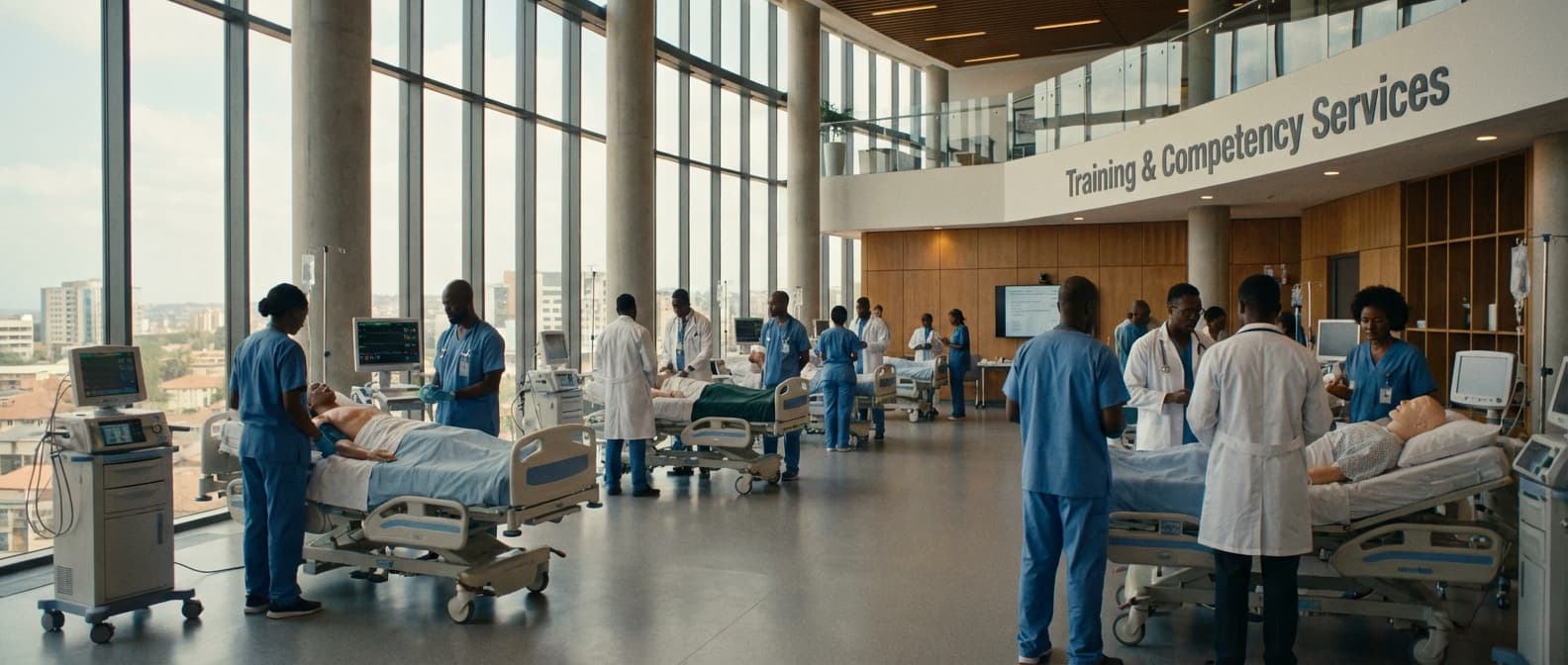
Biomedical Engineering First-Line Support Training Service in South Sudan
Engineering Excellence & Technical Support
Biomedical Engineering First-Line Support Training Service High-standard technical execution following OEM protocols and local regulatory frameworks.
Critical Equipment Uptime Maximization
Empowering first-line responders with the skills to perform rapid diagnostics and essential preventative maintenance on vital medical devices, ensuring maximum operational availability and reducing critical patient care disruptions.
Basic Biomedical Circuitry Troubleshooting
Providing practical training on identifying and resolving common electrical and electronic faults in medical equipment, enabling on-site repairs and minimizing reliance on specialized technicians for immediate issues.
Safety Protocols & First-Responder Equipment Management
Instilling a strong understanding of medical equipment safety standards and best practices for handling, cleaning, and storing essential biomedical devices, guaranteeing safe and effective use in diverse healthcare settings.
What Is Biomedical Engineering First-line Support Training Service In South Sudan?
Biomedical Engineering First-Line Support Training Service in South Sudan refers to the foundational technical education and skill development provided to personnel responsible for the initial assessment, troubleshooting, and basic maintenance of medical equipment within healthcare facilities across the nation. This service is critical for ensuring the operational readiness and safety of a wide array of medical devices, thereby directly impacting patient care delivery in a context with often limited advanced technical resources. The training focuses on equipping individuals with the knowledge and practical abilities to identify common equipment malfunctions, perform routine preventative maintenance, conduct safety checks, and manage minor repairs, escalating more complex issues to specialized biomedical engineers or external service providers when necessary. The objective is to empower local healthcare staff to sustain the functionality of essential medical technologies, reduce downtime, and prolong the lifespan of equipment, ultimately enhancing the quality and accessibility of healthcare services. This initiative is particularly vital in regions facing resource constraints, where reliance on immediate, on-site technical expertise is paramount.
| Service Component | Description | Target Audience | Typical Use Cases |
|---|---|---|---|
| Introduction to Medical Device Categories | Familiarization with different types of medical equipment found in typical healthcare settings (e.g., diagnostic, therapeutic, life support). | Clinical staff, hospital administrators, new biomedical technicians. | Understanding the range of equipment requiring support; initial inventory assessment. |
| Basic Troubleshooting Techniques | Learning systematic approaches to diagnose and resolve common equipment failures. | Clinical technicians, biomedical support staff, maintenance personnel. | Resolving issues with non-functional vital signs monitors, malfunctioning syringe pumps, or diagnostic equipment displaying error messages. |
| Preventative Maintenance (PM) Fundamentals | Training on scheduled maintenance tasks to prevent failures and ensure optimal performance. | Biomedical support teams, hospital maintenance departments. | Performing regular checks and cleaning of autoclaves, servicing of basic laboratory equipment, battery replacement for portable devices. |
| User Interface and Software Navigation | Understanding how to interact with equipment interfaces, navigate menus, and interpret user feedback. | All clinical staff, technical support personnel. | Operating imaging equipment correctly, setting parameters on ventilators, accessing diagnostic logs on ultrasound machines. |
| Equipment Safety and Electrical Hazards | Educating personnel on safe operating procedures and identification of electrical risks. | All staff interacting with medical equipment, safety officers. | Recognizing damaged power cords, performing electrical safety tests, safe use of grounded equipment. |
| Documentation and Reporting Procedures | Establishing protocols for recording maintenance, repairs, and equipment status. | Biomedical technicians, clinical engineers, department managers. | Logging PM schedules, recording repair actions, reporting equipment failures for procurement or advanced repair. |
| Escalation Protocols | Defining clear pathways for escalating issues that cannot be resolved at the first-line support level. | First-line support personnel, clinical supervisors. | Identifying when to contact specialized biomedical engineers or external service providers for complex repairs of MRI scanners or advanced surgical equipment. |
Key Components of Biomedical Engineering First-Line Support Training Service
- Equipment identification and basic operational principles.
- Routine inspection and cleaning protocols.
- Preventative maintenance procedures for common medical devices.
- Basic troubleshooting methodologies for common faults (e.g., power issues, connectivity problems).
- Safe handling and storage of medical equipment.
- Calibration verification and adjustment for selected parameters.
- User-level error code interpretation and resolution.
- Documentation of maintenance activities and reported issues.
- Understanding of essential safety standards and regulations.
- Procedure for escalating complex technical problems to higher tiers of support.
Who Needs Biomedical Engineering First-line Support Training Service In South Sudan?
This document outlines the critical need for first-line support training services in biomedical engineering within South Sudan. The aim is to equip local personnel with the essential skills to maintain and repair medical equipment, ensuring its consistent availability and optimal performance in healthcare facilities across the nation. This is particularly vital given the existing infrastructure challenges and the reliance on often scarce and complex medical technology.
| Target Customer Category | Specific Departments/Roles | Key Needs & Justification | |||||
|---|---|---|---|---|---|---|---|
| Healthcare Facilities (Hospitals, Clinics, Health Centers) | Biomedical Engineering Department (if existing) | Technical Staff (Technicians, Engineers) | Maintenance Teams | Ward Managers/Supervisors | To enable local personnel to perform routine maintenance, troubleshooting, and basic repairs of medical equipment, reducing downtime and reliance on external support. This is crucial for the consistent delivery of healthcare services. | To ensure the safe and effective operation of medical devices, preventing potential patient harm due to equipment malfunction. Empowerment of local staff fosters sustainability. | To improve the operational efficiency of healthcare facilities by minimizing equipment-related disruptions and reducing the costs associated with frequent external repair services. |
| Ministry of Health | Biomedical Engineering Unit/Department | National Biomedical Engineers | Procurement and Logistics Department | Policy and Planning Units | To build national capacity in biomedical equipment management and maintenance, leading to better asset utilization and reduced operational expenditures. | To inform evidence-based decision-making regarding medical equipment procurement, maintenance strategies, and training needs at a national level. | To develop and implement national standards and protocols for biomedical equipment maintenance and repair. |
| Non-Governmental Organizations (NGOs) with Health Programs | Field Technicians/Engineers | Logistics and Operations Managers | Program Managers | To ensure the continuous functionality of medical equipment in remote and underserved areas where NGOs operate. | To empower local staff to manage and maintain essential medical devices, thereby increasing the impact and sustainability of NGO health interventions. | To facilitate the smooth execution of health programs by minimizing equipment-related challenges and ensuring reliable patient care. | |
| International Health Organizations | Project Managers (Health Sector) | Technical Advisors | Country Representatives | To support and enhance the efforts of local partners by providing specialized training that addresses specific equipment needs and challenges. | To ensure that donor-funded medical equipment remains operational and contributes to improved health outcomes. | To facilitate knowledge transfer and build long-term capacity within the South Sudanese health system. |
Target Customers and Departments for Biomedical Engineering First-Line Support Training Service in South Sudan:
- Healthcare Facilities (Hospitals, Clinics, Health Centers)
- Ministry of Health
- Non-Governmental Organizations (NGOs) with Health Programs
- International Health Organizations
Biomedical Engineering First-line Support Training Service Process In South Sudan
This document outlines the standard workflow for providing Biomedical Engineering First-Line Support Training Services in South Sudan, from initial inquiry to the successful execution of the training program. The process is designed to be clear, efficient, and tailored to the unique context of South Sudan, ensuring that healthcare facilities receive the necessary technical capacity building for their biomedical equipment. Emphasis is placed on practical skills, local context adaptation, and sustainable knowledge transfer.
| Stage | Description | Key Activities | Deliverables |
|---|---|---|---|
| Inquiry & Needs Assessment | Understanding the training requirements and current capacity. | Receive inquiry, conduct site visit/remote consultation, identify equipment, assess skill gaps, define training scope. | Needs assessment report, initial scope definition. |
| Proposal Development | Creating a tailored training plan and cost estimate. | Develop curriculum, identify trainers, estimate resources, prepare budget, draft proposal. | Training proposal, budget breakdown. |
| Agreement & Contracting | Formalizing the service engagement. | Review and negotiate proposal, sign service agreement/MOU. | Signed service agreement/MOU. |
| Pre-Training Logistics | Ensuring all necessary preparations are in place for training delivery. | Arrange trainer travel/accommodation, procure/prepare training materials, confirm venue, pre-test equipment (if applicable). | Logistics plan, confirmed travel arrangements, training materials, secured venue. |
| Training Execution | Delivering the first-line support training to participants. | Conduct theoretical sessions, practical demonstrations, hands-on exercises, Q&A sessions, equipment-specific training. | Completed training sessions, engaged participants. |
| Post-Training Evaluation | Assessing the effectiveness and impact of the training. | Administer pre/post-tests, collect participant feedback forms, observe practical application of skills. | Evaluation forms, pre/post-test results, trainer observations. |
| Reporting & Documentation | Summarizing the training activities and outcomes. | Compile training attendance, analyze evaluation data, draft training report, document lessons learned. | Comprehensive training report, attendance records. |
| Follow-up & Support | Providing ongoing assistance and ensuring sustainability of skills. | Offer remote technical advice, schedule refresher courses, establish communication channels for queries. | Follow-up plan, ongoing technical support (as per agreement). |
Biomedical Engineering First-Line Support Training Service Process in South Sudan
- The process begins with a formal or informal inquiry regarding the need for first-line biomedical engineering support training.
- An initial needs assessment is conducted to understand the specific equipment, existing skill levels, and training priorities of the requesting facility or organization.
- A detailed training proposal is developed, outlining objectives, curriculum, duration, target audience, trainers, required resources, and budget.
- Upon acceptance of the proposal, a formal service agreement or Memorandum of Understanding (MOU) is established.
- Pre-training logistics are managed, including trainer travel, accommodation, training materials, and any necessary equipment procurement or preparation.
- The training program is delivered on-site at the designated healthcare facility, focusing on practical, hands-on skills for first-line maintenance and troubleshooting.
- Post-training evaluation is conducted to assess participant learning and satisfaction, and to gather feedback for future improvements.
- A comprehensive training report is generated, summarizing the training activities, outcomes, and recommendations.
- Follow-up support mechanisms are established, which may include remote technical assistance or future refresher training sessions.
- The service cycle is considered complete upon successful delivery, evaluation, and reporting of the training program, with ongoing support as agreed.
Biomedical Engineering First-line Support Training Service Cost In South Sudan
Providing effective first-line support training for biomedical engineers in South Sudan is crucial for maintaining essential medical equipment and improving healthcare delivery. The cost of such services is influenced by a variety of factors, leading to a range of potential pricing. Understanding these elements helps organizations budget accurately and select the most suitable training provider. Key pricing factors include the depth and breadth of the curriculum, the qualifications and experience of the trainers, the duration of the training program, the location of training delivery (whether on-site at a facility or at a dedicated training center), the number of participants, and any necessary materials or equipment required for hands-on practice. Furthermore, logistical considerations specific to South Sudan, such as transportation, accommodation for trainers (if applicable), and potential security arrangements, can significantly impact the overall cost. The current economic climate and the prevailing exchange rates for the South Sudanese Pound (SSP) will also dictate the local currency pricing.
| Training Service Component | Estimated Price Range (SSP) | Notes |
|---|---|---|
| Basic Troubleshooting & Maintenance (1-3 days) | 150,000 - 350,000 | Covers common equipment issues, preventive maintenance. |
| Intermediate Skills & Specific Equipment (3-5 days) | 300,000 - 600,000 | Focuses on more complex diagnostics and specific medical devices. |
| Advanced Repair & Calibration (5-7 days) | 500,000 - 900,000 | In-depth training for specialized equipment, calibration techniques. |
| On-site Training (per day, excluding trainer fees) | 50,000 - 150,000 | Covers local transport, minor material costs, venue setup. |
| Trainer Fees (per day, national expert) | 80,000 - 200,000 | Highly dependent on experience and specialization. |
| Trainer Fees (per day, international expert) | 300,000 - 800,000+ | Includes potential visa, travel, and higher daily rates. |
| Training Materials (per participant) | 20,000 - 75,000 | Workbooks, reference materials, basic consumables. |
| Logistics & Accommodation (for trainers, per week) | 100,000 - 300,000+ | Varies significantly based on location and security. |
Key Factors Influencing Biomedical Engineering First-Line Support Training Costs in South Sudan:
- Curriculum Scope and Depth: Comprehensive training covering a wider range of equipment and troubleshooting techniques will generally cost more.
- Trainer Expertise and Credentials: Highly qualified and experienced biomedical engineers with specialized knowledge command higher fees.
- Training Duration: Longer training programs naturally incur higher costs due to extended trainer time and resource utilization.
- Delivery Location: On-site training might involve travel and logistics costs for trainers, while a dedicated training center may have fixed overheads.
- Number of Participants: Group discounts may be available, but larger groups require more resources and potentially more trainers.
- Training Materials and Equipment: The provision of manuals, consumables, and access to functional equipment for practical sessions adds to the cost.
- Logistical Challenges in South Sudan: Transportation, accommodation, and security considerations are unique and can increase expenses.
- Economic Conditions and Exchange Rates: The value of the South Sudanese Pound (SSP) against major currencies will influence the final pricing.
- Customization of Training: Tailoring the curriculum to specific needs of a hospital or clinic can incur additional development costs.
Affordable Biomedical Engineering First-line Support Training Service Options
Acquiring specialized skills in biomedical engineering first-line support is crucial for healthcare facilities to ensure the optimal performance and safety of medical devices. This training equips technicians with the foundational knowledge and practical skills to handle common issues, perform routine maintenance, and escalate complex problems effectively. Investing in such training can significantly reduce downtime, improve patient care, and extend the lifespan of valuable medical equipment. This document outlines affordable training service options, emphasizing the benefits of value bundles and cost-saving strategies for organizations looking to upskill their support teams without breaking the bank.
| Training Service Option | Description | Typical Cost Range (USD) | Value Proposition |
|---|---|---|---|
| Online Self-Paced Modules | Pre-recorded video lectures, interactive quizzes, and downloadable resources covering core concepts. Accessible 24/7. | $100 - $500 per user/course | High flexibility, cost-effective for large groups, foundational knowledge acquisition. |
| Virtual Instructor-Led Training (VILT) | Live online sessions with a certified instructor, allowing for real-time Q&A and interactive discussions. Often includes hands-on simulation elements. | $500 - $1500 per user/session | Real-time engagement, personalized feedback, deeper understanding of complex topics, reduced travel costs. |
| On-Site Group Training | Instructor-led training delivered at the organization's facility. Can be customized to specific equipment and protocols. | $2000 - $7000 per session (group rate) | Tailored content, team-building, immediate application to real-world scenarios, eliminates travel for attendees. |
| Blended Learning Packages (Value Bundles) | Combines online modules with scheduled VILT or on-site sessions. Offers a structured learning path with varying levels of engagement. | $300 - $2000 per user (depending on intensity) | Cost-effective balance of flexibility and interaction, comprehensive skill development, often includes supplementary materials and certifications. |
| Vendor-Specific Training | Training provided by medical device manufacturers on their specific product lines. Essential for specialized equipment. | Varies widely (can be free with purchase or a significant investment) | In-depth knowledge of specific devices, manufacturer best practices, access to proprietary information, crucial for warranty and support. |
Key Components of Effective First-Line Biomedical Engineering Support Training
- Device identification and basic troubleshooting
- Preventive maintenance procedures
- Safety protocols and regulatory compliance (e.g., FDA, HIPAA)
- Documentation and record-keeping best practices
- Effective communication with clinical staff and senior engineers
- Introduction to common biomedical device categories (e.g., patient monitoring, diagnostic imaging basics)
- Use of diagnostic tools and test equipment
Verified Providers In South Sudan
In South Sudan, access to reliable and trustworthy healthcare providers is paramount. Franance Health stands out as a beacon of quality and integrity, offering a comprehensive range of medical services. Their commitment to patient care, coupled with stringent credentialing processes, makes them the premier choice for individuals seeking verified and exceptional healthcare.
| Service Area | Key Specializations | Provider Credentials |
|---|---|---|
| General Medicine | Primary Care, Chronic Disease Management, Preventive Health | Licensed Physicians (MBBS/MD), Certified Nurses |
| Maternal & Child Health | Antenatal Care, Postnatal Care, Pediatrics | Obstetricians & Gynecologists, Pediatricians, Midwives |
| Surgical Services | General Surgery, Orthopedics, Emergency Procedures | Board-Certified Surgeons, Anesthesiologists |
| Diagnostics & Laboratory | Imaging (X-ray, Ultrasound), Blood Tests, Pathology | Radiologists, Laboratory Technologists |
Why Franance Health is the Best Choice:
- Rigorous Credentialing: Franance Health employs a meticulous vetting process for all its healthcare professionals, ensuring they meet and exceed national and international standards of practice.
- Experienced Medical Teams: Their practitioners boast extensive experience and specialized training, providing a high level of expertise across various medical disciplines.
- Patient-Centered Approach: Franance Health prioritizes patient well-being, offering compassionate care and personalized treatment plans.
- State-of-the-Art Facilities: Equipped with modern medical technology and infrastructure, their facilities are designed to deliver efficient and effective healthcare.
- Commitment to Quality and Safety: Adherence to strict protocols for infection control and patient safety is a cornerstone of their operations.
Scope Of Work For Biomedical Engineering First-line Support Training Service
This Scope of Work (SOW) outlines the requirements for a comprehensive Biomedical Engineering First-Line Support Training Service. The objective is to equip technical personnel with the foundational knowledge and practical skills necessary to effectively perform initial troubleshooting, diagnostics, and basic maintenance of a wide range of biomedical equipment. This training will enhance equipment uptime, reduce reliance on specialized engineers for routine issues, and improve patient safety by ensuring equipment is promptly addressed. The service includes the development of training materials, delivery of the training program, and assessment of trainee competency. Technical deliverables will include standardized training modules, hands-on practical exercises, and competency assessment tools. Standard specifications will ensure consistency and quality across all training components.
| Deliverable | Description | Standard Specification / Format | Key Performance Indicators (KPIs) | Timeline |
|---|---|---|---|---|
| Training Curriculum Development | Creation of comprehensive, modular training content covering theoretical principles and practical applications for first-line support. | Digital format (PDF, interactive modules). Content to be reviewed and approved by client's biomedical engineering department. Aligned with current industry best practices and manufacturer documentation. | Completeness of curriculum modules. Relevance of content to targeted equipment. Instructor and trainee feedback score (>85%). | 4 weeks from SOW approval. |
| Training Materials Production | Development of supporting materials including presentations, handouts, troubleshooting guides, and quick reference cards. | Professionally designed, branded materials. Consistent formatting across all documents. Accessible digitally and in print (upon request). | Clarity and usability of materials. Positive feedback from trainees on material usefulness. | 2 weeks after curriculum approval. |
| Hands-on Practical Sessions Design | Design of practical exercises and simulations using actual or representative biomedical equipment. | Detailed exercise protocols. Safety checklists for each session. Standardized equipment setup and operation procedures. | Variety and relevance of practical scenarios. Successful completion rate of practical tasks by trainees (>90%). | Integrated with curriculum development. |
| Competency Assessment Tools | Creation of written and practical assessments to evaluate trainee understanding and skill proficiency. | Multiple-choice questions, scenario-based questions, practical skills demonstration checklist. Pass/fail criteria clearly defined. Secure and auditable assessment process. | Assessment validity and reliability. Percentage of trainees achieving passing score (>90%). | 2 weeks after curriculum approval. |
| Training Delivery | On-site or remote delivery of the training program to designated technical personnel. | Qualified and experienced trainers. Interactive training methodology. Adherence to agreed schedule. Use of approved training materials. | Trainee engagement levels. Trainer effectiveness score (>90%). Post-training performance improvement (measured by reduced escalations for basic issues). | To be scheduled based on client availability, estimated 5 days per cohort. |
| Post-Training Support & Evaluation | Provision of follow-up support, answer trainees' questions, and collect feedback to improve future training. | Dedicated support channel (email/phone). Structured feedback survey. Report summarizing training outcomes and recommendations. | Response time to queries (<24 hours). Number of identified areas for improvement from feedback. Final training report submission. | 1 week post-training delivery. |
| Standard Operating Procedures (SOPs) for First-Line Support | Development of clear, concise SOPs for common first-line support tasks, integrating learned skills. | Documented within client's existing SOP framework or as standalone documents. Clear step-by-step instructions, including safety precautions and documentation requirements. | Adherence to SOPs by trained personnel. Reduction in procedural errors. | 2 weeks post-training completion. |
Key Training Objectives
- Understand fundamental principles of common biomedical equipment operation and safety.
- Perform basic troubleshooting and diagnostic procedures for a defined list of critical medical devices.
- Conduct routine preventive maintenance checks and calibrations according to manufacturer guidelines.
- Identify and escalate complex issues to specialized biomedical engineering teams effectively.
- Maintain accurate and detailed records of all support activities.
- Adhere to all relevant safety regulations and hospital policies.
Service Level Agreement For Biomedical Engineering First-line Support Training Service
This Service Level Agreement (SLA) outlines the response times and uptime guarantees for the Biomedical Engineering First-Line Support Training Service. This service aims to ensure that our support staff receive timely and effective training to handle initial technical issues related to biomedical equipment. The terms herein are applicable to all registered trainees and authorized trainers.
| Service Metric | Target | Measurement | Remedy/SLA Credit |
|---|---|---|---|
| Training Platform Uptime | 99.5% | Measured monthly. Calculated as (Total minutes in month - Downtime minutes) / Total minutes in month. | For every 0.5% decrease in uptime below 99.5%, a service credit of 5% of the monthly training fee will be issued. |
| Response Time for Training Support Tickets (Technical Issues with platform access, login problems, etc.) | 4 business hours | Measured from the time of ticket submission to initial acknowledgment by the support team. | Failure to meet the response time for more than 3 tickets in a month will result in a service credit of 2% of the monthly training fee. |
| Response Time for Training Content Queries (Questions about training material) | 8 business hours | Measured from the time of query submission to initial acknowledgment by the trainer or designated support personnel. | Failure to meet the response time for more than 5 queries in a month will result in a service credit of 1% of the monthly training fee. |
| Availability of Scheduled Live Training Sessions | 100% | Scheduled sessions must commence as planned. Cancellations will be communicated with at least 24 hours' notice. | For any unscheduled cancellation of a live training session, a service credit of 10% of the prorated fee for that session will be issued. |
Service Scope and Definitions
- Biomedical Engineering First-Line Support Training Service: The provision of training modules, workshops, and practical sessions designed to equip first-line support personnel with the knowledge and skills to diagnose and resolve common issues with biomedical equipment.
- Training Hours: Defined as the scheduled availability of live training sessions, virtual instructor-led training, and access to on-demand training resources during standard business hours (9:00 AM - 5:00 PM, Monday-Friday, excluding public holidays).
- Response Time: The maximum time allowed for acknowledgment of a training request or query. This does not imply resolution time.
- Uptime Guarantee: The percentage of time that the training platform and its associated resources are available and accessible to users.
- Service Credits: Compensation provided to the client for failure to meet the defined SLA metrics.
Frequently Asked Questions

Ready when you are
Let's scope your Biomedical Engineering First-Line Support Training Service in South Sudan project in South Sudan.

Scaling healthcare logistics and technical systems across the entire continent.