
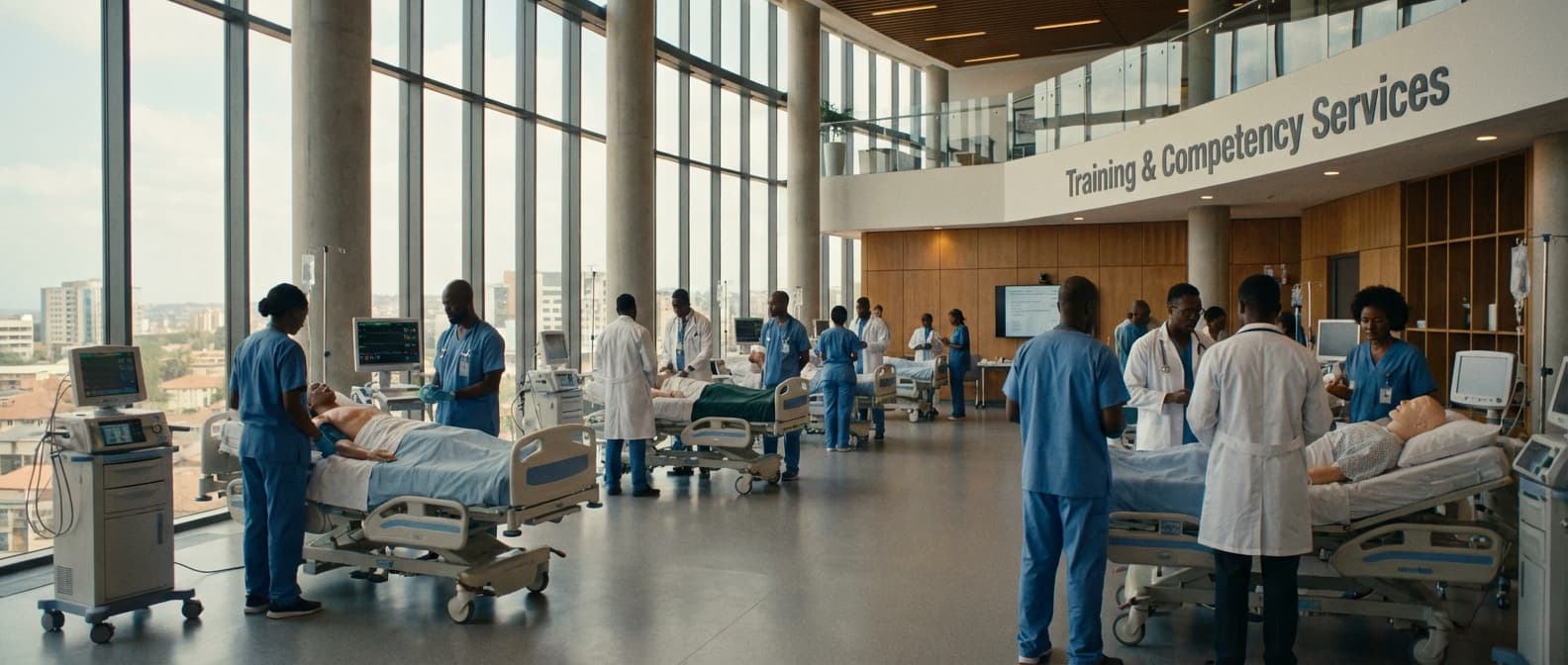
Anesthesia Workstation User Training Service in South Sudan
Engineering Excellence & Technical Support
Anesthesia Workstation User Training Service High-standard technical execution following OEM protocols and local regulatory frameworks.
Advanced Airway Management Techniques
Master critical airway control procedures using our state-of-the-art anesthesia workstations. This module covers rapid sequence intubation, supraglottic airway insertion, and troubleshooting common airway challenges in diverse patient populations encountered in South Sudan's healthcare settings.
Ventilator Optimization for Resource-Limited Environments
Learn to effectively utilize the integrated ventilation modes of our anesthesia workstations for optimal patient respiratory support. Focus on practical application of pressure control, volume control, and spontaneous breathing modes, with emphasis on managing limited gas supplies and troubleshooting common ventilator alarms in challenging logistical scenarios.
Precision Drug Delivery and Monitoring
Gain proficiency in accurate anesthetic agent administration and intravenous drug delivery using the workstation's integrated systems. This highlight emphasizes safe titration of hypnotics, opioids, and muscle relaxants, alongside real-time monitoring of physiological parameters to ensure patient safety and optimize anesthetic depth in the context of local pharmaceutical availability and patient factors.
What Is Anesthesia Workstation User Training Service In South Sudan?
Anesthesia Workstation User Training Service in South Sudan refers to a specialized educational program designed to equip healthcare professionals with the knowledge and practical skills necessary to safely and effectively operate anesthesia workstations. These workstations are complex medical devices integrating multiple functionalities for patient monitoring, ventilation, and anesthetic gas delivery during surgical and procedural interventions. The service is critical in enhancing patient safety, optimizing resource utilization, and ensuring compliance with international standards of care, particularly in healthcare settings with limited access to specialized technical support and advanced training infrastructure.
| Target Audience | Rationale for Training | Typical Use Cases |
|---|---|---|
| Anesthesiologists | Enhance clinical decision-making, optimize ventilation strategies, and ensure safe delivery of anesthetic agents. | Pre-operative assessment and planning, intra-operative patient management, post-operative care in recovery settings. |
| Anesthesia Technologists/Nurses | Ensure proper setup, operation, and basic maintenance of the workstation, freeing anesthesiologists for critical patient care. | Station setup and calibration, patient connection and disconnection, monitoring of ventilation parameters, responding to alarms, basic troubleshooting. |
| Surgeons and other Proceduralists (requiring anesthesia support) | Gain a foundational understanding of the equipment to facilitate better communication and collaboration with the anesthesia team. | Understanding basic workflow, awareness of equipment capabilities and limitations. |
| Healthcare Facility Biomedical Engineers and Technicians | Provide advanced troubleshooting, calibration, and repair services, ensuring long-term operational integrity of the equipment. | Routine maintenance, complex repairs, installation of new units, service contract management. |
| Ministry of Health Personnel / Training Institutions | Develop and deliver standardized training programs to ensure a competent anesthesia workforce nationwide. | Curriculum development, trainer certification, quality assurance of training programs. |
Key Components of Anesthesia Workstation User Training Service
- Theoretical Instruction: Covers principles of anesthesia delivery, waveform analysis, alarm management, patient physiology relevant to mechanical ventilation, anesthetic gas pharmacology, and the specific functionalities of various anesthesia workstation models.
- Practical Simulation: Hands-on training utilizing actual or simulated anesthesia workstations, focusing on setup, calibration, pre-use checks, patient connection, ventilation modes, anesthetic agent administration, troubleshooting common technical issues, and emergency scenarios.
- Device-Specific Training: Tailored modules for particular brands and models of anesthesia workstations prevalent in South Sudan, ensuring familiarity with their unique interfaces, features, and operational nuances.
- Maintenance and Troubleshooting: Basic understanding of preventive maintenance, routine checks, and the identification of common malfunctions, empowering users to address minor issues and report significant problems appropriately.
- Safety Protocols and Best Practices: Emphasizes infection control, ergonomic considerations, patient safety during induction and emergence, and the management of adverse events related to workstation operation.
- Competency Assessment: Evaluates user proficiency through practical demonstrations, written examinations, and case-based scenarios to ensure a satisfactory level of skill acquisition.
Who Needs Anesthesia Workstation User Training Service In South Sudan?
Anesthesia workstation user training services are crucial for ensuring safe and effective patient care in healthcare settings. In South Sudan, where the healthcare infrastructure is still developing and facing challenges, such training is particularly vital. This training ensures that healthcare professionals, especially those operating anesthesia equipment, are proficient in its use, maintenance, and troubleshooting. This directly impacts patient outcomes by minimizing the risk of anesthetic complications, optimizing drug delivery, and enhancing the overall quality of surgical and procedural care. The service aims to empower local healthcare providers with the knowledge and skills to independently manage and utilize advanced medical equipment, fostering self-sufficiency within the South Sudanese healthcare system.
| Healthcare Facility Type | Primary Need for Training | Key Personnel Requiring Training |
|---|---|---|
| Government Hospitals and Clinics | Standardizing anesthesia practices, ensuring compliance with national health protocols, upskilling existing staff, and integrating new equipment. | Anesthesiologists, Anesthetic Nurses, Certified Nurse Anesthetists (CNAs), Biomedical Engineers, Technical Support Staff. |
| NGO Healthcare Facilities | Providing essential surgical and procedural care in often resource-limited settings, ensuring the safe operation of donated or acquired anesthesia equipment, and training local staff for sustainability. | Anesthesiologists, Anesthetic Nurses, Doctors performing procedures requiring anesthesia, Biomedical Technicians. |
| Mission Hospitals | Maintaining high standards of patient care, often serving remote or underserved populations, and ensuring the longevity and optimal use of advanced medical equipment. | Anesthesiologists, Anesthetic Nurses, General Practitioners with anesthetic responsibilities, Biomedical Technicians. |
| Regional Referral Centers | Handling complex cases, serving as centers of excellence, and needing to train a larger cohort of staff to support multiple surgical teams and procedures. | Senior Anesthesiologists, Junior Anesthesiologists, Anesthesia Residents, Anesthesia Nurses, Senior Biomedical Engineers. |
| Teaching Hospitals and Medical Training Institutions | Educating the next generation of healthcare professionals, ensuring future practitioners are well-versed in modern anesthesia technology, and integrating hands-on training into curriculum. | Anesthesiology Faculty, Clinical Instructors, Medical Students (during anesthesia rotations), Nurse Anesthesia Students, Biomedical Engineering Students. |
Who Needs Anesthesia Workstation User Training Service in South Sudan? Target Customers & Departments
- {"items":["Government Hospitals and Clinics","Non-Governmental Organization (NGO) Healthcare Facilities","Mission Hospitals","Regional Referral Centers","Teaching Hospitals and Medical Training Institutions"],"title":"Target Customers"}
- {"items":["Anesthesiology Departments","Surgical Departments (all specialties)","Intensive Care Units (ICUs)","Emergency Departments/Trauma Centers","Obstetrics and Gynecology Departments (for cesarean sections and other procedures)","Pediatric Departments (for pediatric anesthesia)","Pain Management Clinics"],"title":"Target Departments"}
Anesthesia Workstation User Training Service Process In South Sudan
This document outlines the workflow for providing Anesthesia Workstation User Training Services in South Sudan, from initial inquiry to the successful execution of the training.
| Stage | Key Activities | Responsible Party | Deliverables/Outputs | Timeline (Indicative) |
|---|---|---|---|---|
| Inquiry & Needs Assessment | Client contacts service provider with interest in anesthesia workstation training. Provider gathers information on workstation model, number of trainees, desired training dates, location, and specific learning objectives. | Client, Service Provider | Initial inquiry documentation, needs assessment report | 1-3 business days |
| Proposal & Quotation | Service provider develops a comprehensive proposal outlining training methodology, curriculum, trainers, duration, and resources. A detailed quotation is provided based on the assessed needs. | Service Provider | Formal proposal, detailed quotation | 3-5 business days |
| Contract & Agreement | Upon client acceptance of the proposal and quotation, a formal service agreement is drafted and signed by both parties, detailing terms, conditions, payment schedule, and liabilities. | Client, Service Provider | Signed service agreement/contract | 5-7 business days |
| Training Planning & Preparation | Service provider schedules trainers, confirms logistics (venue, travel, accommodation if applicable), prepares training materials (manuals, presentations, practical exercises), and coordinates with the client on trainee lists and any pre-training requirements. | Service Provider | Training schedule, confirmed logistics, finalized training materials, communication with client | 1-2 weeks (prior to training) |
| Training Execution | Delivery of the anesthesia workstation user training. This includes theoretical sessions, practical demonstrations, hands-on practice, troubleshooting scenarios, and Q&A sessions. | Service Provider (Trainers) | Delivered training sessions, trainee engagement | Duration as per agreement (e.g., 2-5 days) |
| Post-Training Support & Evaluation | Collection of feedback from trainees and client through evaluation forms. Provision of post-training support (e.g., answering follow-up questions). Issuance of certificates of completion. | Service Provider | Training evaluation report, certificates of completion, follow-up support provided | 1-2 weeks (post-training) |
| Invoicing & Payment | Service provider issues the final invoice as per the contract. Client processes payment according to the agreed terms. | Service Provider, Client | Final invoice, payment confirmation | As per contract terms (e.g., Net 30 days) |
Workflow Stages
- Inquiry & Needs Assessment
- Proposal & Quotation
- Contract & Agreement
- Training Planning & Preparation
- Training Execution
- Post-Training Support & Evaluation
- Invoicing & Payment
Anesthesia Workstation User Training Service Cost In South Sudan
Providing user training for anesthesia workstations in South Sudan is a critical service that requires specialized expertise and logistical considerations. The cost of such training is influenced by several factors, leading to a range of potential pricing. These factors include the complexity of the anesthesia workstation, the duration and depth of the training program, the qualifications and experience of the trainers, travel and accommodation expenses, and the number of participants. Given the current economic conditions and logistical challenges in South Sudan, the pricing for these services is often higher compared to more developed regions. It's essential for healthcare facilities to factor in these costs when budgeting for new equipment or ongoing staff development.
| Training Scope | Estimated Price Range (South Sudanese Pounds - SSP) |
|---|---|
| Basic Operator Training (1-2 Days) | 500,000 - 1,500,000 SSP |
| Comprehensive User Training (3-5 Days) | 1,000,000 - 3,000,000 SSP |
| Advanced/Specialized Training (e.g., Maintenance, specific modules) | 2,000,000 - 5,000,000+ SSP |
| On-site Training (including travel & accommodation for trainer) | Additional 500,000 - 2,000,000+ SSP, depending on distance and duration |
Key Pricing Factors for Anesthesia Workstation User Training in South Sudan
- Complexity of the Anesthesia Workstation: More advanced workstations with multiple features and functionalities will require longer and more in-depth training, thus increasing costs.
- Training Duration and Content: The total hours of training, including theoretical sessions, hands-on practice, and troubleshooting, directly impacts the overall price.
- Trainer Expertise and Qualifications: Highly experienced and certified trainers, especially those with international experience relevant to South Sudan's context, will command higher fees.
- Travel and Accommodation: For trainers traveling to remote areas or requiring international travel, these costs can be significant and are usually passed on to the client.
- Number of Participants: While some training is priced per session, others might have a per-participant fee. Larger groups may receive a slightly reduced per-person rate, but the overall cost will be higher.
- Location and Accessibility: Training provided in major urban centers like Juba will generally be less expensive than training in more remote or less accessible regions due to logistical challenges.
- Customization of Training: Tailoring the training program to specific hospital protocols or local clinical needs may incur additional development costs.
- Post-Training Support: Inclusion of any follow-up support, technical assistance, or refresher courses will add to the overall service cost.
Affordable Anesthesia Workstation User Training Service Options
Providing accessible and effective user training for affordable anesthesia workstations is crucial for ensuring patient safety and operational efficiency. This service aims to equip healthcare professionals with the knowledge and skills to operate these cost-effective systems confidently. We offer flexible training solutions designed to meet the diverse needs and budgets of healthcare facilities. Our approach focuses on maximizing the value of your investment in affordable anesthesia equipment by prioritizing comprehensive understanding and practical application.
| Cost-Saving Strategy | Description | Benefit |
|---|---|---|
| Group Discounts | Reduced per-participant cost when multiple staff members from the same facility enroll in a training program. | Lower overall training expenditure for larger teams. |
| Blended Learning Approach | Combining online modules with shorter, focused on-site or remote practical sessions. | Reduces travel and on-site instructor time, leading to significant cost savings. |
| Sustained Learning Subscriptions | Annual or multi-year access to updated training materials, online resources, and refresher courses. | Ensures continuous competency and avoids the cost of repeated initial training. |
| Customized Training Plans | Tailoring training content to the specific anesthesia workstation model and the existing skill level of your staff. | Avoids paying for information that is not relevant or already known, optimizing training efficiency. |
| Leveraging Internal Expertise | Integrating the 'Train-the-Trainer' program with existing clinical educators. | Builds internal capacity and reduces reliance on external trainers for routine needs. |
Key Value Bundles for Affordable Anesthesia Workstation Training
- {"title":"Basic Operator Proficiency Bundle","description":"Covers essential functions, patient setup, basic troubleshooting, and routine maintenance. Ideal for new users or facilities with limited training budgets."}
- {"title":"Advanced Features & Troubleshooting Bundle","description":"Expands on basic operations, delving into advanced settings, ventilation modes, waveform interpretation, and in-depth troubleshooting scenarios. Beneficial for experienced users and for maximizing equipment capabilities."}
- {"title":"Train-the-Trainer Program","description":"Empowers designated staff members within your organization to become internal trainers, creating a sustainable and cost-effective training model for your facility."}
- {"title":"On-Site Comprehensive Training Package","description":"Includes all aspects of operation, maintenance, and troubleshooting delivered at your facility with hands-on practice. Maximizes convenience and minimizes disruption."}
- {"title":"Remote & Online Learning Module Access","description":"Provides flexible access to pre-recorded lectures, interactive simulations, and knowledge assessments. Offers a cost-effective option for self-paced learning and ongoing reinforcement."}
Verified Providers In South Sudan
Finding reliable and accredited healthcare providers in South Sudan is crucial for ensuring quality medical care. Franance Health stands out as a leading organization committed to upholding the highest standards of healthcare delivery. Their rigorous credentialing process and dedication to patient well-being make them a trusted choice for individuals and communities seeking medical services.
| Credentialing Aspect | Franance Health's Approach | Benefit to Patients |
|---|---|---|
| Educational Verification | Thorough checks of academic records and degrees from accredited institutions. | Ensures providers possess foundational medical knowledge. |
| Licensure and Certification | Verification of valid and up-to-date professional licenses and certifications. | Confirms legal authorization to practice and adherence to regulatory standards. |
| Work Experience & References | Detailed review of past employment history and professional references. | Assesses practical skills, experience, and reputation within the medical community. |
| Ethical Conduct Review | Assessment of professional conduct and adherence to medical ethics codes. | Guarantees providers operate with integrity and prioritize patient welfare. |
| Competency Assessment | May include peer reviews or evaluations of clinical skills. | Ensures providers are competent in their areas of specialization. |
Why Franance Health is the Best Choice for Verified Providers in South Sudan:
- Rigorous Credentialing Process: Franance Health implements a multi-faceted vetting system that goes beyond basic qualifications. This includes verifying educational backgrounds, professional licenses, work experience, and adherence to ethical guidelines.
- Commitment to Quality Assurance: They actively monitor and evaluate the performance of their network of providers, ensuring consistent delivery of high-quality medical services and patient satisfaction.
- Focus on Patient-Centric Care: Franance Health prioritizes a patient-centered approach, ensuring that all affiliated providers are dedicated to compassionate, respectful, and individualized care.
- Adherence to International Standards: Their credentialing and operational procedures are aligned with recognized international healthcare benchmarks, guaranteeing a high level of service.
- Continuous Professional Development: Franance Health encourages and supports ongoing training and development for their network, keeping providers updated on the latest medical advancements and best practices.
- Transparency and Accountability: They maintain a transparent system for provider verification and hold their network accountable for maintaining excellence in their practice.
- Comprehensive Range of Services: Franance Health collaborates with a diverse range of specialists and general practitioners, offering a broad spectrum of medical services to meet various healthcare needs.
Scope Of Work For Anesthesia Workstation User Training Service
This Scope of Work (SOW) outlines the requirements for providing user training services for anesthesia workstations. The training will equip healthcare professionals with the necessary knowledge and skills to safely and effectively operate the anesthesia workstation. This document details the technical deliverables, standard specifications, and the overall scope of the training program.
| Deliverable | Description | Specification | Format | Timeline |
|---|---|---|---|---|
| Training Curriculum Development | Comprehensive curriculum covering all aspects of anesthesia workstation operation, tailored to the specific model. | Includes theoretical modules, practical demonstrations, and hands-on exercises. Aligned with relevant clinical guidelines and manufacturer recommendations. | Digital document (PDF) and interactive online modules. | Within 4 weeks of SOW commencement. |
| Training Manuals | Detailed user manuals for the anesthesia workstation, including operation, maintenance, and troubleshooting. | Clear, concise language, high-quality diagrams, and an index for easy reference. Manufacturer-approved content. | Print and digital (PDF) versions. | Coincides with curriculum delivery. |
| Trainer Qualification | Provision of certified and experienced anesthesia workstation trainers. | Trainers must possess a minimum of 3 years of experience in clinical anesthesia and have completed manufacturer-specific training on the workstation. | Resumes and certifications for all proposed trainers. | Upon SOW commencement. |
| On-site Training Delivery | Conduct of hands-on training sessions for designated personnel at the client's facility. | Sessions will be conducted in small groups to ensure personalized attention. Includes lectures, simulations, and practical exercises on actual workstations or simulators. | Schedule of training sessions, participant lists, and attendance records. | To be scheduled based on client availability, within 8 weeks of curriculum approval. |
| Post-Training Assessment | Evaluation of participant comprehension and skill acquisition. | Includes written assessments, practical skills demonstrations, and scenario-based evaluations. Pass/fail criteria to be agreed upon. | Assessment reports, including individual participant scores and overall class performance. | Upon completion of each training session. |
| Training Certificates | Issuance of certificates to participants who successfully complete the training. | Certificates will be personalized with participant name, training date, workstation model, and trainer signature. | Professionally printed certificates and digital copies. | Upon successful completion of assessments. |
| Post-Training Support | Provision of limited post-training technical support for user inquiries. | Support to be provided via email or phone for a defined period (e.g., 30 days) after the training concludes. | Dedicated support contact information and response time metrics. | Defined period post-training. |
| Training Report | Summary report of the training activities conducted. | Includes overview of curriculum, participant numbers, assessment results, feedback, and recommendations for future training. | Digital document (PDF). | Within 2 weeks of the last training session. |
Key Training Objectives
- Understand the fundamental principles of anesthesia workstation operation.
- Identify and interpret all user interface elements, including displays, controls, and alarms.
- Perform pre-use checks and setup procedures accurately.
- Manage ventilation modes and settings appropriate for various patient populations.
- Administer anesthetic agents and monitor their delivery.
- Utilize integrated monitoring features and interpret physiological data.
- Respond appropriately to critical events and alarm conditions.
- Perform routine maintenance and troubleshooting steps.
- Understand safety features and emergency procedures.
- Document procedures and patient data using the workstation.
Service Level Agreement For Anesthesia Workstation User Training Service
This Service Level Agreement (SLA) outlines the commitment of [Provider Name] to providing Anesthesia Workstation User Training Services to [Client Name]. It defines the expected response times for support requests and the uptime guarantees for access to training resources and platforms. This SLA is an addendum to the Master Service Agreement (MSA) between the parties.
| Service Component | Severity Level | Response Time Guarantee | Uptime Guarantee |
|---|---|---|---|
| Anesthesia Workstation Training Platform Access | Critical (e.g., complete platform outage, inability to access any training modules) | 1 Hour | 99.9% |
| Anesthesia Workstation Training Platform Access | High (e.g., specific module inaccessible, significant performance degradation) | 2 Business Hours | 99.9% |
| Anesthesia Workstation Training Platform Access | Medium (e.g., minor functional issue, help documentation not loading) | 4 Business Hours | 99.9% |
| Technical Support (for platform-related inquiries) | Critical (as defined above) | 1 Hour | N/A |
| Technical Support (for platform-related inquiries) | High (as defined above) | 2 Business Hours | N/A |
| Technical Support (for platform-related inquiries) | Medium (as defined above) | 4 Business Hours | N/A |
| Anesthesia Workstation Curriculum Content (e.g., out-of-date information, typos in non-critical areas) | Low (e.g., content error that does not impact learning outcomes) | 5 Business Days | N/A |
Key Service Metrics
- Response Time: The time elapsed from when a support request is logged to when a qualified technician acknowledges and begins to address the issue.
- Resolution Time: The time elapsed from when a support request is logged to when the issue is resolved to the satisfaction of the client. (Note: Resolution times may vary based on the complexity of the issue and may require client cooperation for testing/verification.)
- System Uptime: The percentage of time the training platform and associated resources are available and operational for users.
- Scheduled Downtime: Pre-announced periods of unavailability for system maintenance, upgrades, or scheduled enhancements.
Frequently Asked Questions

Ready when you are
Let's scope your Anesthesia Workstation User Training Service in South Sudan project in South Sudan.

Scaling healthcare logistics and technical systems across the entire continent.