
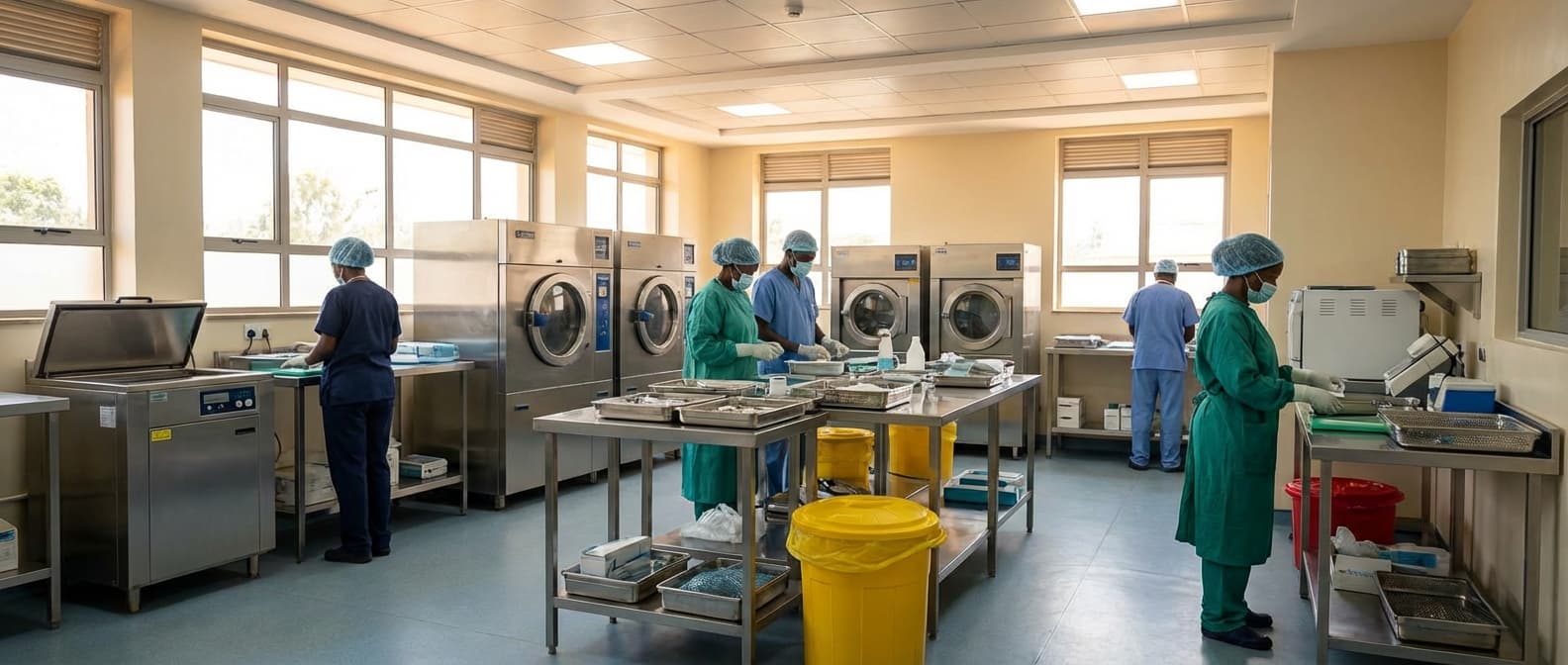
Medical Equipment Decontamination Service (Pre-Repair/Pre-Relocation) in South Sudan
Engineering Excellence & Technical Support
Medical Equipment Decontamination Service (Pre-Repair/Pre-Relocation) High-standard technical execution following OEM protocols and local regulatory frameworks.
Advanced Sterilization Techniques
Utilizing state-of-the-art chemical and physical decontamination methods, we ensure pathogens are eradicated, safeguarding against cross-contamination and guaranteeing equipment safety for repair or relocation.
Microbial Hazard Assessment
Our specialized team performs rigorous microbial testing and risk assessment to identify and neutralize biohazards, crucial for preparing sensitive medical equipment for critical maintenance or transit in challenging environments.
Certified Compliance & Traceability
Adhering to international decontamination protocols, we provide comprehensive documentation and certification, ensuring all pre-repair and pre-relocation equipment meets stringent safety and regulatory standards for South Sudan's healthcare infrastructure.
What Is Medical Equipment Decontamination Service (Pre-repair/pre-relocation) In South Sudan?
Medical Equipment Decontamination Service (Pre-Repair/Pre-Relocation) in South Sudan refers to the specialized process of cleaning, disinfecting, and sterilizing medical devices and equipment prior to their transport for repair or relocation. This service is critical for preventing the spread of infectious agents, ensuring the safety of repair technicians and personnel handling the equipment, and maintaining the integrity of the equipment itself during transit and subsequent servicing. The decontamination process typically involves multiple stages, including initial cleaning to remove gross contamination, followed by disinfection to eliminate or inactivate pathogenic microorganisms, and in some cases, sterilization to achieve a complete absence of all viable microorganisms. The specific methods employed are dependent on the type of equipment, its intended use, and the level of contamination risk.
| Who Needs This Service? | Typical Use Cases | |||
|---|---|---|---|---|
| Healthcare Facilities: Hospitals, clinics, diagnostic centers, and surgical units in South Sudan. | Medical Equipment Manufacturers/Distributors: For equipment returned for warranty repairs or servicing. | Third-Party Repair Services: External entities contracted to repair or maintain medical equipment. | Logistics and Transport Companies: Handling the movement of medical devices within or out of South Sudan. | Government Health Agencies: Overseeing the maintenance and safe operation of medical equipment. |
| Equipment failure requiring off-site repair: Devices such as ventilators, anesthesia machines, patient monitors, or surgical instruments sent to specialized repair centers. | Relocation of equipment: Moving functional or non-functional equipment between different healthcare facilities or to new storage locations. | Routine maintenance requiring off-site servicing: Equipment requiring specialized maintenance that necessitates transport to authorized service providers. | End-of-life decommissioning and disposal: Preparing equipment for safe transport to disposal facilities. | Pre-deployment of new or refurbished equipment: Ensuring equipment is fully decontaminated and safe for installation at its destination. |
Key Components of Medical Equipment Decontamination Service (Pre-Repair/Pre-Relocation)
- Initial Cleaning: Removal of visible debris, bodily fluids, and organic matter using appropriate detergents and water.
- Disinfection: Application of chemical disinfectants (e.g., glutaraldehyde, hydrogen peroxide, peracetic acid) or physical methods (e.g., UV irradiation) to reduce microbial load to safe levels.
- Sterilization (where applicable): Processes like autoclaving (steam sterilization), ethylene oxide (EtO) sterilization, or dry heat sterilization to eliminate all microbial life.
- Inspection and Verification: Post-decontamination checks to ensure the effectiveness of the process and the absence of residual contaminants.
- Packaging and Documentation: Secure packaging of decontaminated equipment to prevent re-contamination during transit, along with detailed documentation of the decontamination procedure, including chemicals used, exposure times, and verification results.
Who Needs Medical Equipment Decontamination Service (Pre-repair/pre-relocation) In South Sudan?
In South Sudan, the need for medical equipment decontamination services prior to repair or relocation is critical. This service ensures the safety of technicians, prevents the spread of infectious agents, and maintains the integrity of sensitive medical devices. It is particularly vital given the challenging healthcare infrastructure and potential for cross-contamination in resource-limited settings. This proactive measure safeguards both personnel and patients by mitigating the risks associated with handling potentially biohazardous equipment.
| Customer Type | Relevant Departments | Rationale for Decontamination (Pre-Repair/Pre-Relocation) |
|---|---|---|
| Hospitals (Government, NGO, Private) | Sterilization Units, Central Sterile Supply Department (CSSD), Operating Theatres, Intensive Care Units (ICU), Emergency Departments, Laboratory, Imaging Departments (X-ray, Ultrasound, CT scanners), Outpatient Departments (OPD) | High patient throughput means a greater chance of equipment being contaminated with blood, bodily fluids, and pathogens. Technicians performing repairs or relocation are at significant risk of exposure. Prevents cross-contamination between different patient areas during equipment movement. |
| Clinics and Health Centers | Treatment Rooms, Minor Procedure Areas, Laboratory (if applicable), Vaccination Areas | Essential for smaller facilities that may have limited infection control resources. Equipment used for routine procedures can harbor infections. Decontamination ensures the safety of staff in smaller, often more hands-on environments. |
| Diagnostic Laboratories | Microbiology, Hematology, Biochemistry, Molecular Diagnostics sections | Instruments in diagnostic labs handle biological samples. Failure to decontaminate before repair or relocation can expose lab technicians and repair personnel to infectious agents and may compromise the accuracy of future tests if residues remain. |
| Field Hospitals and Mobile Clinics | All areas of operation | Often operate in austere environments with limited sanitation. Equipment is frequently moved and used under less-than-ideal conditions, increasing the likelihood of contamination. Decontamination is crucial for personnel safety and equipment longevity. |
| Medical Aid Organizations | Field operations, distribution centers for medical supplies | These organizations often deploy equipment in diverse and remote locations. Decontamination is vital before returning equipment to central repair hubs or redistributing it to prevent the spread of diseases across different communities. |
| UN Agencies involved in healthcare delivery | Healthcare facilities managed or supported by UN agencies, logistics and supply chain departments | Similar to medical aid organizations, UN agencies operate in various contexts. Decontamination ensures adherence to international health and safety standards, protecting their personnel and the populations they serve from biological hazards. |
Target Customers and Departments Requiring Medical Equipment Decontamination Service (Pre-Repair/Pre-Relocation) in South Sudan
- Hospitals (Government, NGO, Private)
- Clinics and Health Centers
- Diagnostic Laboratories
- Field Hospitals and Mobile Clinics
- Medical Aid Organizations
- UN Agencies involved in healthcare delivery
Medical Equipment Decontamination Service (Pre-repair/pre-relocation) Process In South Sudan
The Medical Equipment Decontamination Service (Pre-Repair/Pre-Relocation) in South Sudan ensures that medical devices are safe to handle, repair, or move by eliminating biohazards. This process is crucial for the well-being of healthcare workers, repair technicians, and the wider community. The workflow begins with an inquiry from a healthcare facility or organization and concludes with the certified decontamination of the equipment.
| Stage | Key Activities | Responsible Party | Deliverable/Outcome |
|---|---|---|---|
| Inquiry & Initial Assessment | Facility submits request, provider assesses equipment type, quantity, and urgency. | Healthcare Facility, Decontamination Service Provider | Understanding of service need, preliminary risk assessment. |
| Quotation & Agreement | Provider submits cost estimate, client accepts, contract signed. | Decontamination Service Provider, Healthcare Facility | Formal service agreement, agreed pricing and scope. |
| Scheduling & Logistics Planning | Decontamination service sets date, plans transport and resource allocation. | Decontamination Service Provider | Scheduled operation, transport plan, resource allocation. |
| Equipment Collection/Preparation | Equipment moved to decontamination site or provider mobilizes on-site. | Decontamination Service Provider, Healthcare Facility (coordination) | Equipment ready for decontamination. |
| Pre-Decontamination Inspection & Documentation | Visual check for contamination, damage; documentation with photos and identifiers. | Decontamination Service Provider | Documented baseline condition of equipment. |
| Decontamination Procedure Execution | Application of cleaning, disinfection, or sterilization methods. | Decontamination Service Provider | Decontaminated and/or sterilized medical equipment. |
| Post-Decontamination Inspection & Verification | Check for residual contamination, verify effectiveness of sterilization (if applicable). | Decontamination Service Provider | Confirmed safe equipment, verification of sterilization process. |
| Documentation & Certification | Issuance of a formal decontamination certificate for each item. | Decontamination Service Provider | Decontamination Certificate(s). |
| Equipment Release & Handover | Certified equipment returned to facility or given to repair/relocation team. | Decontamination Service Provider, Healthcare Facility/Repair Technician | Safely transferred decontaminated equipment. |
| Record Keeping & Reporting | Provider maintains logs and reports of all decontamination activities. | Decontamination Service Provider | Archived decontamination records. |
Medical Equipment Decontamination Service Workflow (Pre-Repair/Pre-Relocation) in South Sudan
- Inquiry & Initial Assessment: A healthcare facility or organization contacts the decontamination service provider with a request for decontamination of specific medical equipment slated for repair or relocation. This initial contact involves understanding the type and quantity of equipment, its current condition, and the urgency of the request. The provider may conduct a preliminary risk assessment based on the information provided.
- Quotation & Agreement: Based on the initial assessment, the service provider prepares a detailed quotation outlining the scope of work, decontamination methods, estimated timeline, and associated costs. Upon acceptance of the quotation, a service agreement is signed, formalizing the terms and responsibilities of both parties.
- Scheduling & Logistics Planning: The decontamination service schedules the operation, taking into account the availability of the equipment, the facility's operational needs, and the provider's resources. Logistics for transporting the equipment (if necessary) to a decontamination facility or performing on-site decontamination are meticulously planned. This includes obtaining any required permits or clearances.
- Equipment Collection/Preparation (On-Site or Off-Site): If on-site decontamination is agreed upon, the provider's trained personnel arrive at the facility with the necessary equipment and disinfectants. If off-site decontamination is required, the equipment is carefully packaged and transported to the provider's dedicated decontamination facility, adhering to all safety and transport regulations.
- Pre-Decontamination Inspection & Documentation: Before commencing the decontamination process, a thorough visual inspection of the equipment is performed to identify any visible contamination, damage, or specific areas requiring special attention. This inspection is meticulously documented, often with photographic evidence. The equipment's unique identifiers are also recorded.
- Decontamination Procedure Execution: The core of the service. Trained technicians employ approved and validated decontamination methods. This can include a combination of:<ul><li>Physical cleaning (scrubbing, wiping) to remove gross contaminants.</li><li>Disinfection using appropriate chemical agents (e.g., hospital-grade disinfectants) effective against a broad spectrum of pathogens.</li><li>Sterilization for critical or semi-critical equipment where required, using methods like autoclaving (steam sterilization), chemical sterilization, or ethylene oxide (EtO) sterilization, depending on the equipment's material and compatibility.</li><li>Specific protocols may be followed for different types of equipment (e.g., endoscopes, ventilators, surgical instruments).</li></ul>The process adheres to established international and national guidelines for infection control and medical waste management.
- Post-Decontamination Inspection & Verification: After the decontamination procedure, the equipment undergoes another meticulous inspection to confirm the absence of visible contamination and to ensure that the decontamination process has not adversely affected the equipment's integrity or functionality. For sterilization processes, biological and chemical indicators are used to verify the effectiveness of the sterilization cycle.
- Documentation & Certification: A comprehensive decontamination certificate is issued for each piece of equipment. This certificate details the date and time of decontamination, the methods used, the chemicals or sterilization parameters, the name of the technician, and the name of the facility. It serves as proof that the equipment has been rendered safe for handling, repair, or relocation.
- Equipment Release & Handover: The decontaminated equipment is then released back to the healthcare facility or handed over to the repair technician or relocation team. Clear communication is maintained to ensure the safe transfer and proper handling of the certified equipment. If equipment was transported off-site, it is returned to the client.
- Record Keeping & Reporting: The decontamination service provider maintains detailed records of all decontamination activities, including certificates, inspection reports, and quality control data, for a specified period. This is essential for accountability, auditing, and future reference.
Medical Equipment Decontamination Service (Pre-repair/pre-relocation) Cost In South Sudan
The cost of medical equipment decontamination services in South Sudan, particularly for pre-repair or pre-relocation, is influenced by a range of factors. Due to the current economic climate and limited specialized service providers, pricing can be somewhat volatile and often subject to negotiation. These services are crucial for ensuring the safety of technicians and preventing the spread of pathogens during handling, maintenance, or transport of medical devices. Factors affecting cost include the complexity of the equipment, the type and level of contamination suspected, the urgency of the service, the location of the equipment within South Sudan, and the qualifications and reputation of the decontamination provider.
| Equipment Category | Estimated Cost Range (South Sudanese Pounds - SSP) | Notes |
|---|---|---|
| Small Diagnostic/Therapeutic Devices (e.g., stethoscopes, thermometers, blood pressure monitors) | 15,000 - 40,000 SSP | Basic disinfection protocols. Cost varies based on volume and provider. |
| Medium Sized Laboratory Equipment (e.g., centrifuges, microscopes, basic analyzers) | 50,000 - 150,000 SSP | Requires more thorough cleaning and potentially specialized disinfectants. May involve some disassembly. |
| Large/Complex Medical Equipment (e.g., X-ray machines, ultrasound units, basic patient monitors, larger lab analyzers) | 180,000 - 500,000+ SSP | More intricate decontamination procedures, specialized equipment, and potentially longer service times. Location and contamination level are significant factors. |
| Surgical Instruments (per set) | 10,000 - 30,000 SSP | Standard sterilization/disinfection practices. Cost depends on the complexity and number of instruments in a set. |
| Emergency/Rapid Response Decontamination | Additional 25% - 100% on base cost | Applicable to urgent requests, especially in outbreak situations. |
Key Factors Influencing Medical Equipment Decontamination Costs in South Sudan
- Type and Size of Medical Equipment: Larger and more complex equipment (e.g., CT scanners, large laboratory analyzers) will generally incur higher decontamination costs than smaller, simpler devices (e.g., stethoscopes, blood pressure monitors).
- Level and Type of Contamination: The suspected or confirmed presence of highly infectious agents (e.g., viral hemorrhagic fevers, tuberculosis) will require more rigorous and specialized decontamination protocols, leading to increased costs.
- Decontamination Method: The specific methods employed (e.g., chemical disinfection, autoclaving, UV irradiation) will impact the cost. Some methods require specialized equipment and consumables.
- Urgency of Service: Emergency or same-day decontamination services will typically command a premium price.
- Location of Service: Decontamination services required in remote or hard-to-reach areas of South Sudan will incur additional logistical costs (transportation, accommodation for personnel) which will be passed on to the client.
- Provider's Expertise and Certification: Reputable and certified decontamination service providers with trained personnel and adherence to international standards will likely charge more than less established or uncertified entities.
- Consumables and Reagents: The cost of specialized cleaning agents, disinfectants, personal protective equipment (PPE), and testing kits used during the decontamination process contributes to the overall price.
- Waste Disposal: Proper and safe disposal of contaminated materials and waste generated during the decontamination process adds to the service cost.
- Pre- and Post-Decontamination Testing: If validation or verification testing (e.g., swab testing for residual microbial load) is required, this will increase the overall cost.
Affordable Medical Equipment Decontamination Service (Pre-repair/pre-relocation) Options
Our Affordable Medical Equipment Decontamination Service offers crucial pre-repair and pre-relocation decontamination solutions to ensure the safety and efficiency of your medical facility. We understand the importance of minimizing downtime and preventing cross-contamination while keeping costs manageable. This service is designed to provide peace of mind and maintain the integrity of your valuable medical equipment.
| Value Bundle Name | Description | Included Services | Cost-Saving Benefits | Ideal For |
|---|---|---|---|---|
| Standard Decon Pack | Our most popular and cost-effective option for routine decontamination. | Surface cleaning and disinfection, basic biohazard assessment, and standard decontamination protocols. | Bulk pricing, reduced per-unit cost compared to individual service calls. | Routine maintenance, minor repairs, departmental equipment transfers. |
| Priority Decon Plus | Expedited service for urgent repair or relocation needs. | All Standard Decon Pack services plus: expedited scheduling, detailed contamination report, specialized cleaning for specific contaminants (e.g., blood, bodily fluids). | Minimizes downtime, prevents costly delays in repair or relocation projects, reduces risk of service interruption. | Urgent repairs, immediate equipment relocation, critical care equipment. |
| Comprehensive Equipment Overhaul | A complete decontamination and readiness package for significant equipment changes. | All Priority Decon Plus services plus: deep cleaning of internal components (where accessible), environmental monitoring post-decontamination, certification of decontamination. | Reduces the need for multiple service calls, ensures equipment is fully ready for its next phase, potential for insurance or accreditation benefits. | Major equipment upgrades, complete facility renovations, long-term storage preparation. |
| Scheduled Decon Subscription | Proactive, ongoing decontamination for high-traffic or critical equipment. | Regularly scheduled decontamination visits based on usage or agreed-upon intervals. Includes reporting and proactive scheduling. | Significant discounts on per-visit rates, predictable budgeting, minimized emergency call-out fees, proactive maintenance reduces future repair costs. | High-volume departments, imaging equipment, diagnostic machinery, long-term strategic planning. |
Why Choose Pre-Repair/Pre-Relocation Decontamination?
- Enhanced Safety: Eliminates biohazards and infectious agents before equipment is handled by repair technicians or moved to a new location, protecting personnel and patients.
- Compliance: Helps meet regulatory requirements for equipment handling and hygiene standards.
- Reduced Repair Risks: Prevents potential contamination of sensitive repair components, leading to more accurate diagnostics and repairs.
- Seamless Relocation: Ensures equipment is safe to move and integrate into a new environment, minimizing disruption.
- Extended Equipment Lifespan: Regular decontamination can help prevent performance degradation caused by organic buildup.
Verified Providers In South Sudan
Navigating the healthcare landscape in South Sudan can be challenging, with a critical need for reliable and qualified medical services. Verified providers play a crucial role in ensuring access to safe and effective care. Among these, Franance Health stands out as a premier choice due to its stringent credentialing processes and unwavering commitment to quality patient outcomes. This document outlines why Franance Health's verification represents the highest standard in South Sudan.
| Verification Aspect | Franance Health Standard | Patient Benefit |
|---|---|---|
| Professional Qualifications | Verification of degrees, diplomas, and specialized training from accredited institutions. | Ensures care is delivered by competently trained and qualified medical professionals. |
| Licensing and Registration | Confirmation of valid and current licenses to practice in South Sudan. | Guarantees providers operate legally and meet regulatory requirements. |
| Clinical Experience | Assessment of practical experience in relevant medical fields. | Increases the likelihood of successful diagnoses and effective treatment plans. |
| Reputation and References | Thorough checks of professional history and peer references. | Mitigates risks associated with unqualified or unethical practitioners. |
| Facility Standards (if applicable) | Evaluation of infrastructure, equipment, and hygiene for clinics and hospitals. | Ensures a safe, sterile, and well-equipped environment for treatment. |
Why Franance Health is the Best Choice for Verified Healthcare in South Sudan
- Rigorous Credentialing & Vetting: Franance Health employs a multi-layered verification process for all its healthcare professionals and facilities. This includes thorough background checks, verification of academic qualifications, licensing, and professional experience.
- Adherence to International Standards: Franance Health aligns its operational and clinical standards with recognized international best practices, ensuring that patients receive care comparable to global benchmarks.
- Commitment to Ethical Practice: Verification by Franance Health signifies a provider's dedication to ethical medical conduct, patient privacy, and transparent billing practices.
- Continuous Quality Improvement: Franance Health actively monitors and evaluates the performance of its verified providers, fostering a culture of continuous learning and improvement.
- Patient-Centric Approach: The verification process prioritizes providers who demonstrate a strong focus on patient well-being, effective communication, and compassionate care.
- Access to Specialized Services: Through its network of verified providers, Franance Health facilitates access to a wide range of medical specialties, addressing diverse healthcare needs within South Sudan.
Scope Of Work For Medical Equipment Decontamination Service (Pre-repair/pre-relocation)
This Scope of Work (SOW) outlines the requirements for medical equipment decontamination services. These services are to be performed prior to the equipment being sent for repair or relocation. The objective is to ensure that all biohazardous materials are removed from the equipment, thereby protecting service personnel, the environment, and preventing the spread of infection.
| Phase | Activity | Description | Standard/Specification Reference |
|---|---|---|---|
| Pre-Decontamination Assessment | Equipment Inspection | Visual inspection to identify gross contamination and areas requiring special attention. Photographic documentation of initial state may be required. | Internal Quality Control Checklist |
| Decontamination Process | Surface Cleaning | Wiping down all external surfaces with approved disinfectant solutions. Ensuring contact time as per manufacturer's instructions. | CDC Guidelines for Disinfection and Sterilization in Healthcare Facilities; Disinfectant Manufacturer's Data Sheet |
| Decontamination Process | Targeted Cleaning (if applicable) | Addressing specific areas identified during assessment, such as vents, ports, or easily accessible internal components. Use of specialized cleaning tools and solutions. | Equipment Manufacturer's Guidelines for Cleaning; Specialist Cleaning Protocols |
| Decontamination Process | Drying | Allowing equipment to air dry or using clean, lint-free cloths to ensure no residual moisture remains that could promote microbial growth. | Good Laboratory Practice (GLP) |
| Post-Decontamination | Final Inspection | Visual inspection to confirm all visible contamination has been removed and surfaces are clean. | Internal Quality Control Checklist |
| Post-Decontamination | Certification | Issuance of a signed decontamination certificate confirming the service has been completed according to this SOW and relevant standards. | Service Provider's Certificate Template |
| Waste Management | Disposal | Segregation and disposal of all contaminated materials (wipes, PPE, etc.) as biohazardous waste in approved biohazard bags and containers. | OSHA Bloodborne Pathogens Standard (29 CFR 1910.1030); Local Environmental Regulations |
Technical Deliverables and Standard Specifications
- Confirmation of decontamination completion via signed certificate.
- Documentation of the decontamination process, including chemicals used and disposal methods.
- Adherence to all relevant national and local regulations for biohazard handling and disposal.
- Use of EPA-approved, hospital-grade disinfectants with proven efficacy against a broad spectrum of pathogens (e.g., bacteria, viruses, fungi).
- All decontamination procedures must be performed by trained and certified personnel.
- Equipment must be visibly clean and free of all organic matter, blood, bodily fluids, and other potentially infectious materials (OPIM).
- Internal components accessible without disassembly will also be decontaminated.
- Appropriate Personal Protective Equipment (PPE) must be worn by all personnel involved in the decontamination process.
- Containment of all waste generated during the decontamination process in biohazard-approved containers.
- Proper disposal of all biohazardous waste according to regulatory guidelines.
Service Level Agreement For Medical Equipment Decontamination Service (Pre-repair/pre-relocation)
This Service Level Agreement (SLA) outlines the response times and uptime guarantees for the decontamination of medical equipment prior to repair or relocation. This agreement is between [Your Company Name] ('Service Provider') and [Client Name] ('Client').
| Service Metric | Definition | Target Response Time | Uptime Guarantee |
|---|---|---|---|
| Service Request Acknowledgement | Confirmation that the Client's decontamination request has been received and is being processed. | Within 2 business hours | N/A |
| On-site Technician Arrival (Standard) | Time for a qualified technician to arrive at the Client's facility to commence decontamination, for non-urgent requests. | Within 24 business hours of request approval | N/A |
| On-site Technician Arrival (Expedited) | Time for a qualified technician to arrive at the Client's facility for urgent decontamination requests (e.g., infectious contamination requiring immediate attention). | Within 4 business hours of request approval | N/A |
| Decontamination Completion (Standard) | Time to complete the decontamination process for standard equipment under normal conditions. | Within 8 business hours of technician arrival | 95% of standard decontamination requests completed within the target timeframe |
| Decontamination Completion (Complex/High-Risk) | Time to complete decontamination for complex equipment or in cases of known high-risk bioburden. | Variable, estimated upon assessment and agreed with Client. Generally within 24 business hours of technician arrival. | 90% of complex decontamination requests completed within the estimated timeframe |
| Service Availability | The availability of the decontamination service to accept and process requests. | N/A | 99.5% availability during business hours (Monday-Friday, 8:00 AM - 5:00 PM local time) |
Key Service Metrics
- This SLA applies to decontamination services requested for medical equipment requiring repair or relocation.
- The goal is to ensure minimal disruption to the Client's operations by providing prompt and effective decontamination.
- All response times are measured from the time of a validated service request submission by the Client to the Service Provider.
- Uptime guarantees, in this context, refer to the availability of the decontamination service itself and the timely completion of scheduled decontamination procedures.
Frequently Asked Questions

Ready when you are
Let's scope your Medical Equipment Decontamination Service (Pre-Repair/Pre-Relocation) in South Sudan project in South Sudan.

Scaling healthcare logistics and technical systems across the entire continent.