
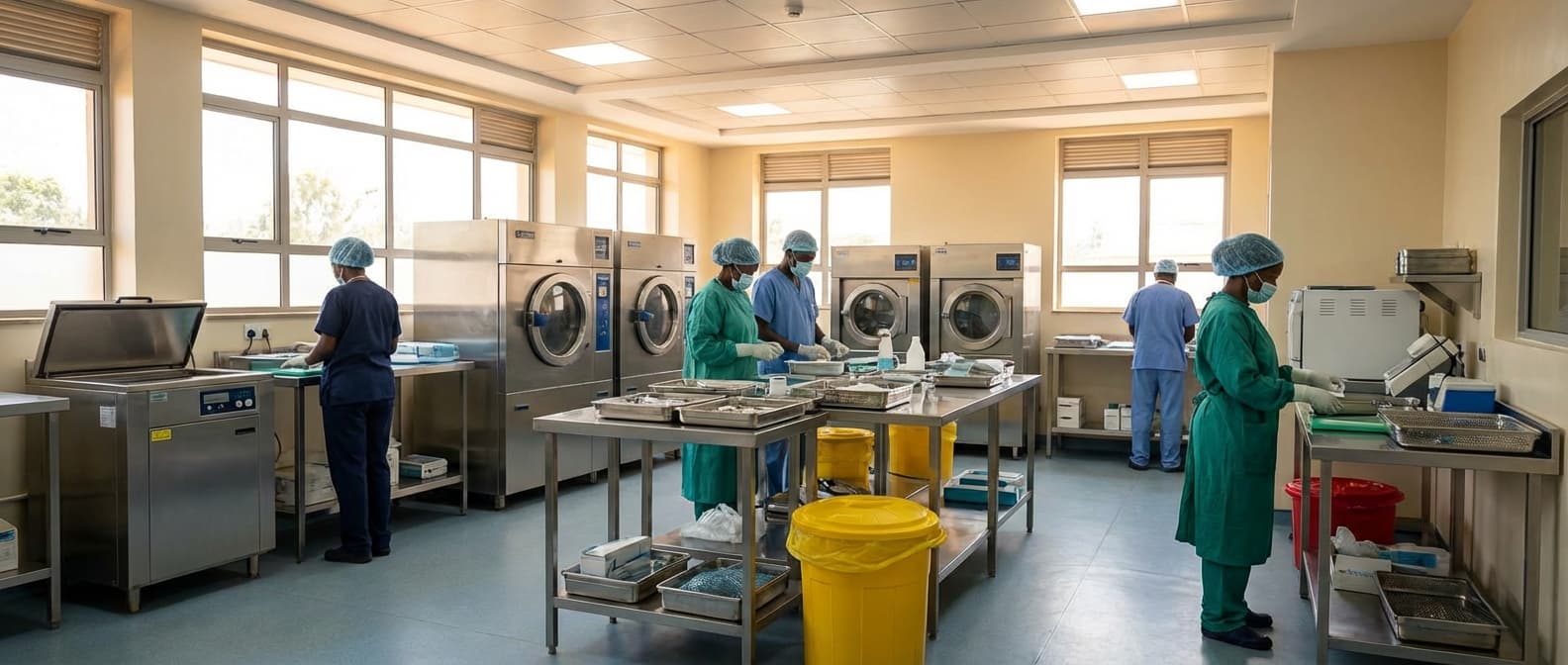
Infection-Control Readiness Support Service for Reusable Equipment in South Sudan
Engineering Excellence & Technical Support
Infection-Control Readiness Support Service for Reusable Equipment High-standard technical execution following OEM protocols and local regulatory frameworks.
Advanced Sterilization Protocol Implementation
We deploy and train local healthcare staff on state-of-the-art steam sterilization (autoclaving) and low-temperature sterilization (e.g., hydrogen peroxide plasma) techniques for critical medical instruments. This ensures the effective inactivation of all pathogens, significantly reducing the risk of healthcare-associated infections (HAIs) and protecting vulnerable patient populations.
Robust Traceability & Inventory Management
Our system utilizes digital tracking and tagging of reusable medical equipment, enabling real-time monitoring of sterilization cycles, maintenance schedules, and user accountability. This meticulous approach guarantees that all equipment is properly processed, documented, and readily available, preventing the inadvertent use of contaminated items and optimizing resource allocation in challenging environments.
Data-Driven Infection Surveillance & Risk Assessment
We establish and maintain a localized infection surveillance system that continuously collects and analyzes data on HAIs linked to reusable equipment. This enables proactive identification of emerging threats, targeted interventions, and evidence-based adjustments to sterilization practices, ensuring sustained high standards of infection control and public health safety in South Sudan.
What Is Infection-control Readiness Support Service For Reusable Equipment In South Sudan?
Infection-Control Readiness Support Service for Reusable Equipment in South Sudan refers to a comprehensive program designed to ensure that healthcare facilities have the necessary infrastructure, supplies, trained personnel, and established protocols to safely reprocess and manage reusable medical devices. This service aims to mitigate the risk of healthcare-associated infections (HAIs) transmitted through inadequately sterilized or disinfected equipment. It is particularly critical in resource-limited settings like South Sudan, where challenges in procurement, maintenance, and skilled workforce development can compromise infection prevention and control (IPC) practices.
| Who Needs the Service | Typical Use Cases | Impact/Rationale |
|---|---|---|
| Public and Private Healthcare Facilities (Hospitals, Health Centers, Clinics) in South Sudan | Routine sterilization of surgical instruments (scalpels, forceps, retractors). | Preventing surgical site infections (SSIs) and transmission of blood-borne pathogens. |
| Facilities with High Volume of Procedures Requiring Reusable Instruments | Disinfection of endoscopes and other complex medical devices. | Reducing the risk of cross-contamination from gastrointestinal or respiratory procedures. |
| Facilities Experiencing Frequent Breakdowns or Inadequacies in Reprocessing | Ensuring adequate supplies of cleaning detergents and sterilization wraps. | Maintaining the integrity of the sterilization process and preventing reprocessing failures. |
| Healthcare Workers Involved in Patient Care and Equipment Management | Training on proper handling, cleaning, and sterilization of nebulizer masks, ventilators, and other respiratory equipment. | Minimizing the spread of hospital-acquired pneumonia and other respiratory infections. |
| Maternal and Child Health Units | Sterilization of delivery kits, speculums, and other obstetric instruments. | Protecting mothers and newborns from postpartum infections and sepsis. |
| Laboratories Requiring Sterilized Glassware and Equipment | Autoclaving of Petri dishes, culture media components, and diagnostic tools. | Ensuring the accuracy and reliability of laboratory results by preventing contamination. |
Components of Infection-Control Readiness Support Service
- Assessment of existing infrastructure (sterilization units, water supply, electricity, waste management).
- Provision and maintenance of essential reprocessing equipment (autoclaves, washer-disinfectors, ultrasonic cleaners).
- Supply chain management for consumables (cleaning agents, disinfectants, sterilization wraps, indicators).
- Development and implementation of Standard Operating Procedures (SOPs) for cleaning, disinfection, sterilization, and storage.
- Training and capacity building for healthcare personnel on IPC principles and practical reprocessing techniques.
- Establishment of monitoring and auditing mechanisms to ensure compliance with guidelines.
- Support for waste management related to reprocessing activities.
- Technical assistance for equipment troubleshooting and repair.
Who Needs Infection-control Readiness Support Service For Reusable Equipment In South Sudan?
Infection-control readiness is paramount for the safe and effective use of reusable medical equipment, especially in resource-limited settings like South Sudan. This support service is crucial for ensuring that all healthcare facilities, from large hospitals to smaller clinics, have the robust systems and trained personnel in place to prevent healthcare-associated infections (HAIs) stemming from improperly processed reusable items.
| Target Customer Type | Key Departments/Units Involved | Primary Needs Addressed |
|---|---|---|
| Ministry of Health (MoH) | IPC Unit, Curative Services Department, Training & Capacity Building Unit | National policy development, standardization, training curriculum development, monitoring frameworks, regulatory oversight. |
| Public Hospitals | Central Sterile Supply Department (CSSD), Operating Theatre, Maternity Ward, Emergency Department, General Wards, Laundry Services | Equipment maintenance and calibration, staff training on sterilization/disinfection protocols, waste management systems, supply chain management for consumables, quality assurance. |
| Mission Hospitals & FBOs | Nursing Services, Biomedical Engineering (if applicable), Housekeeping/Environmental Services | Basic IPC training, provision of essential equipment and consumables, development of simplified protocols, community outreach for hygiene awareness. |
| NGO Health Facilities | Clinical Services, Nursing Leadership, Logistics/Procurement, Program Management | Needs assessment, tailored training, provision of equipment and consumables, integration of IPC into program activities, reporting mechanisms. |
| Regional/County Health Departments | IPC Focal Points, Public Health Officers, District Managers | Supervision and mentorship of facilities, local data collection and reporting, dissemination of guidelines, coordination of training initiatives. |
| Central Medical Stores & Warehousing | Procurement, Quality Assurance, Logistics | Guidance on sourcing appropriate sterilization/disinfection agents, proper storage conditions, inventory management of IPC supplies. |
| Training Institutions | Faculty of Nursing, Faculty of Medicine, Public Health Departments | Curriculum development, faculty training on IPC best practices, simulation labs for practical training. |
| Individual Healthcare Facilities (All Levels) | All clinical and support staff handling reusable equipment | Practical on-the-job training, access to updated protocols and guidelines, troubleshooting support, supply chain for consumables, assessment of existing infrastructure. |
Target Customers and Departments for Infection-Control Readiness Support Service for Reusable Equipment in South Sudan
- Ministry of Health (MoH): The primary governing body responsible for healthcare policy, standards, and oversight. They require support to develop and implement national guidelines, training programs, and monitoring systems for infection prevention and control (IPC) related to reusable equipment.
- Public Hospitals: These are the largest healthcare facilities and often serve the most patients. They have a high volume of reusable equipment and a critical need for comprehensive support in sterilization, disinfection, and waste management processes.
- Mission Hospitals & Faith-Based Organizations (FBOs): Many communities in South Sudan rely on healthcare services provided by these institutions. They often face similar resource challenges to public facilities and benefit greatly from standardized IPC support.
- Non-Governmental Organization (NGO) Health Facilities: Numerous NGOs operate health facilities across South Sudan, providing essential medical services. They need support to ensure their practices align with national standards and best practices for reusable equipment management.
- Regional and County Health Departments: These administrative levels require support to effectively implement MoH policies, train local healthcare workers, and monitor compliance within their jurisdictions.
- Central Medical Stores & Warehousing: Facilities responsible for the procurement and distribution of medical supplies, including those for sterilization and disinfection. They need guidance on proper storage, handling, and quality assurance of these critical items.
- Training Institutions (Medical Schools, Nursing Schools): To integrate robust IPC education into the curriculum for future healthcare professionals, ensuring a foundation of knowledge regarding reusable equipment processing.
- Individual Healthcare Facilities (All Levels): From tertiary referral hospitals to primary health care clinics, all facilities utilizing reusable medical devices are direct beneficiaries of this support.
Infection-control Readiness Support Service For Reusable Equipment Process In South Sudan
This workflow outlines the process for providing Infection-Control Readiness Support Services for Reusable Equipment in South Sudan. It details the journey from initial inquiry to the successful execution of the service, ensuring that healthcare facilities are equipped to safely manage and reprocess reusable medical equipment to prevent healthcare-associated infections.
| Stage | Description | Key Activities | Responsible Parties | Deliverables |
|---|---|---|---|---|
| Inquiry and Needs Assessment | Initial contact from a healthcare facility or organization in South Sudan expressing a need for support in infection control for reusable equipment. This stage involves understanding the scope and nature of their requirements. | Receive inquiry, schedule preliminary discussions, identify the facility/organization's current challenges and goals, gather basic information on existing practices and equipment. | Healthcare Facility/Organization, Service Provider (Infection Control Support Team) | Needs assessment report (preliminary), understanding of the client's context. |
| Proposal Development and Submission | Based on the needs assessment, the service provider develops a comprehensive proposal outlining the scope of work, methodology, timelines, budget, and expected outcomes. | Develop detailed service package, define specific interventions, estimate resource requirements, create a formal proposal document, submit to the requesting entity. | Service Provider (Infection Control Support Team), potentially with input from the client | Formal proposal document. |
| Contract Negotiation and Agreement | Review and refinement of the proposal, leading to a formal agreement between the service provider and the healthcare facility/organization. | Discuss proposal details, negotiate terms and conditions, finalize scope of work, sign contract/Memorandum of Understanding (MOU). | Service Provider, Healthcare Facility/Organization | Signed contract/MOU. |
| Planning and Logistics | Detailed planning for the on-site execution, including travel arrangements, scheduling, and resource allocation. | Develop detailed work plan, coordinate travel and accommodation, identify required materials and equipment for assessment and training, communicate schedule to all stakeholders. | Service Provider (Logistics and Project Management Team) | Detailed work plan, confirmed logistics, ready-to-deploy team. |
| On-site Assessment and Gap Analysis | The support team visits the facility to conduct a thorough assessment of current reusable equipment reprocessing practices. | Observe current workflows, interview staff, inspect reprocessing areas and equipment, assess availability of supplies and consumables, identify gaps in infrastructure, knowledge, and practice against national/international guidelines. | Service Provider (Assessment Team, Infection Control Specialists) | Comprehensive assessment report, detailed gap analysis, specific recommendations. |
| Training and Capacity Building | Develop and deliver targeted training programs for healthcare staff on infection control principles and practices related to reusable equipment. | Design training modules (theoretical and practical), conduct training sessions (e.g., on hand hygiene, disinfection, sterilization, waste management), provide on-the-job coaching, develop competency assessments. | Service Provider (Training Specialists, Infection Control Experts) | Trained staff, training materials, competency assessment results. |
| Equipment and Supply Support (if applicable) | Provide necessary equipment, consumables, and materials to enable effective reprocessing and infection control. | Procure and deliver essential infection control supplies (e.g., disinfectants, PPE), recommend and/or procure appropriate reprocessing equipment (e.g., autoclaves, cleaning brushes), ensure proper installation and user training. | Service Provider (Procurement and Technical Team), Healthcare Facility/Organization (for ongoing supply management) | Delivered equipment and supplies, functional reprocessing systems. |
| Implementation of Standard Operating Procedures (SOPs) | Develop, adapt, and help implement standardized procedures for all aspects of reusable equipment reprocessing. | Review existing SOPs (if any), develop new context-appropriate SOPs, train staff on SOPs, support the initial implementation and adherence. | Service Provider (Infection Control Specialists), Healthcare Facility/Organization (Management and Staff) | Approved and implemented SOPs for reusable equipment reprocessing. |
| Monitoring and Evaluation | Ongoing assessment of the effectiveness of implemented interventions and adherence to SOPs. | Conduct regular follow-up visits, monitor adherence to SOPs, track infection rates (if possible), collect feedback, identify any new challenges or areas for improvement. | Service Provider (M&E Team), Healthcare Facility/Organization (Management and Staff) | Monitoring reports, feedback mechanisms, identified areas for improvement. |
| Reporting and Follow-up | Provide comprehensive reports to the requesting entity and the healthcare facility, and establish mechanisms for continued support or handover. | Prepare final project report detailing activities, outcomes, and lessons learned. Discuss sustainability of interventions, provide recommendations for long-term management, establish follow-up contact points. | Service Provider (Project Management), Healthcare Facility/Organization | Final project report, sustainability plan, handover documentation (if applicable). |
Workflow Stages
- Inquiry and Needs Assessment
- Proposal Development and Submission
- Contract Negotiation and Agreement
- Planning and Logistics
- On-site Assessment and Gap Analysis
- Training and Capacity Building
- Equipment and Supply Support (if applicable)
- Implementation of Standard Operating Procedures (SOPs)
- Monitoring and Evaluation
- Reporting and Follow-up
Infection-control Readiness Support Service For Reusable Equipment Cost In South Sudan
Supporting infection-control readiness for reusable medical equipment in South Sudan presents unique challenges due to infrastructure limitations, volatile economic conditions, and the critical need for reliable healthcare. This service aims to ensure that reusable equipment, such as surgical instruments, sterilization units, and personal protective equipment (PPE), is consistently decontaminated, sterilized, and maintained to prevent healthcare-associated infections (HAIs). The pricing of such a service is multifaceted, influenced by a range of factors that impact operational costs and the level of support provided.
| Service Level/Component | Estimated Price Range (South Sudanese Pound - SSP) | Notes |
|---|---|---|
| Basic Training & Consumable Kit (Per Facility) | 1,500,000 - 3,000,000 SSP | Includes initial training, basic IPC guidelines, and a starter pack of disinfectants, gloves, and masks. Suitable for small clinics or initial readiness checks. |
| Comprehensive Training & Supply Chain Management (Per Facility) | 5,000,000 - 15,000,000 SSP | Includes extended training, regular supply of consumables, basic equipment checks, and simple monitoring. Assumes monthly or quarterly support. |
| Full Program Management & Technical Support (Per Facility) | 15,000,000 - 40,000,000+ SSP | Covers all aspects: advanced training, continuous supply, proactive equipment maintenance and repair, detailed monitoring & evaluation, quality assurance, and potential minor infrastructure support. Price highly dependent on facility size and complexity. |
| Specialized Sterilization Equipment Maintenance & Calibration (Per Unit, Annual) | 2,000,000 - 8,000,000 SSP | For complex autoclaves or washer-disinfectors. Varies based on equipment type, age, and availability of parts. May require international technician visits, increasing cost. |
| Logistics & Transportation (Per Deployment/Quarter) | 500,000 - 3,000,000 SSP | Covers fuel, vehicle maintenance, security escorts (if necessary), and personnel travel for remote locations. Highly variable. |
| IPC Quality Assurance & Audit (Per Facility, Quarterly) | 1,000,000 - 4,000,000 SSP | Includes site visits, data analysis, reporting, and development of improvement plans. |
Key Pricing Factors for Infection-Control Readiness Support Service in South Sudan:
- {"title":"Scope of Services:","description":"The breadth of activities included in the service significantly impacts cost. This can range from basic training and supply provision to comprehensive program management, equipment maintenance, and quality assurance. A broader scope naturally leads to higher pricing."}
- {"title":"Level of Training and Capacity Building:","description":"The intensity and duration of training for local healthcare workers on infection prevention and control (IPC) protocols, sterilization techniques, and equipment handling are crucial. Advanced, hands-on training with ongoing mentorship will be more expensive than introductory sessions."}
- {"title":"Procurement and Supply Chain Management:","description":"The service may include the procurement and distribution of essential consumables like disinfectants, sterilizing agents, PPE, and testing indicators. The cost of sourcing these items, including import duties, transportation, and storage in South Sudan's challenging logistics environment, is a major factor."}
- {"title":"Equipment Maintenance and Repair:","description":"If the service includes the maintenance and repair of sterilization equipment (e.g., autoclaves, washer-disinfectors), the cost will depend on the complexity of the equipment, the availability of spare parts, and the need for specialized technicians. This is particularly relevant given potential import restrictions and local repair capabilities."}
- {"title":"Monitoring, Evaluation, and Quality Assurance:","description":"Implementing robust systems for monitoring adherence to IPC protocols, conducting audits, and providing feedback is essential for long-term effectiveness. The resources required for data collection, analysis, and reporting contribute to the overall cost."}
- {"title":"Geographic Reach and Accessibility:","description":"Providing services across multiple healthcare facilities in diverse and potentially remote locations in South Sudan will incur higher transportation and logistical costs, including travel for trainers, technicians, and supplies. Security considerations also play a role in determining travel expenses."}
- {"title":"Personnel and Expertise:","description":"The cost of employing skilled IPC specialists, trainers, logistics coordinators, and support staff, including any expatriate personnel required for specialized knowledge or supervision, is a significant component."}
- {"title":"Duration of Contract:","description":"Longer-term contracts may offer economies of scale and allow for more sustainable capacity building, potentially leading to a lower per-unit cost over time compared to short-term interventions."}
- {"title":"Local Economic Conditions and Currency Fluctuation:","description":"The South Sudanese Pound (SSP) can be subject to significant fluctuations. Pricing will need to account for potential currency depreciation and the cost of goods and services in the local market."}
- {"title":"Infrastructure Support:","description":"The service might include minor infrastructure upgrades or modifications to ensure proper functioning of sterilization areas, water supply, or electricity for equipment. This is a variable cost depending on the existing state of facilities."}
Affordable Infection-control Readiness Support Service For Reusable Equipment Options
Our Affordable Infection-Control Readiness Support Service for Reusable Equipment Options is designed to empower healthcare facilities with comprehensive infection prevention strategies without breaking the budget. We understand the critical need for robust infection control, especially when dealing with reusable medical equipment. Our service focuses on ensuring that all reusable equipment is cleaned, disinfected, and sterilized according to the highest standards, minimizing the risk of healthcare-associated infections (HAIs). We offer flexible 'value bundles' tailored to different facility needs and budgets, alongside implemented cost-saving strategies that deliver significant financial benefits.
| Cost-Saving Strategy | Description | Potential Benefit |
|---|---|---|
| Optimized Supply Chain Management | Leveraging bulk purchasing power for cleaning and disinfection agents, and establishing standardized ordering processes to reduce waste and administrative overhead. | Reduced expenditure on consumables, minimized stockouts, and improved inventory control. |
| Process Streamlining & Automation | Analyzing and redesigning workflows for cleaning, disinfection, and sterilization to eliminate inefficiencies. Recommending and assisting with the implementation of cost-effective automated equipment where appropriate. | Reduced labor costs, faster turnaround times for equipment, and decreased risk of human error. |
| Preventative Maintenance & Equipment Longevity | Implementing regular maintenance schedules for sterilization and disinfection equipment to prevent costly breakdowns and extend the lifespan of valuable assets. | Lower repair costs, reduced equipment downtime, and avoidance of premature replacement expenses. |
| Staff Training & Competency Building | Investing in comprehensive and ongoing staff training to ensure correct adherence to protocols, reducing the likelihood of reprocessing errors that can lead to equipment damage or patient harm. | Minimized reprocessing errors, reduced replacement costs for damaged equipment, and prevention of costly infection outbreaks. |
| Data-Driven Performance Monitoring | Utilizing data analytics to track infection rates, reprocessing times, and supply usage to identify areas for further improvement and cost optimization. | Proactive identification of cost-saving opportunities, improved resource allocation, and evidence-based decision-making. |
Key Value Bundles Offered
- Basic Readiness Bundle: Includes essential training for staff on cleaning and disinfection protocols, access to updated guidelines, and a baseline risk assessment for reusable equipment.
- Standard Readiness Bundle: Encompasses all aspects of the Basic Bundle, plus a periodic review of equipment processing workflows, recommendations for optimizing cleaning agent usage, and a starter kit of approved cleaning and disinfection supplies.
- Premium Readiness Bundle: Offers the most comprehensive support, including all features of the Standard Bundle, on-site process audits, customized training modules, assistance with selection and validation of automated cleaning equipment, and ongoing consultation for emerging infection control threats related to reusable items.
Verified Providers In South Sudan
In the challenging landscape of healthcare access in South Sudan, identifying and trusting verified healthcare providers is paramount. Franance Health stands out as a leading organization committed to delivering quality medical services. Their credentials and unwavering dedication to patient well-being make them the best choice for individuals and communities seeking reliable healthcare solutions.
| Credential Type | Franance Health's Approach | Benefit to Patients |
|---|---|---|
| Licensing and Accreditation | Ensures all affiliated healthcare facilities and professionals meet national and international medical standards. Rigorous vetting process. | Guarantees that patients are receiving care from legitimate and qualified practitioners in safe and regulated environments. |
| Professional Development and Training | Invests in continuous training and skill enhancement for their medical teams, keeping them updated on the latest medical advancements and protocols. | Ensures patients benefit from the most current and effective treatments available, delivered by knowledgeable and skilled professionals. |
| Patient Feedback and Quality Improvement | Actively collects and analyzes patient feedback to identify areas for improvement and implement necessary changes in service delivery. | Provides a mechanism for patients' voices to be heard, leading to a more responsive and patient-centered healthcare experience. |
| Partnerships and Collaborations | Collaborates with international health organizations, local NGOs, and government bodies to expand reach and enhance service quality. | Leverages expertise and resources from various stakeholders to offer a wider range of services and reach underserved populations. |
| Ethical Practice and Patient Rights | Adheres to strict ethical guidelines, ensuring patient confidentiality, informed consent, and respectful treatment. | Builds trust and confidence by prioritizing the dignity and rights of every patient. |
Why Franance Health is the Best Choice:
- Extensive Network of Verified Facilities: Franance Health partners with a wide array of clinics, hospitals, and health centers across South Sudan, all rigorously vetted for quality standards and adherence to best practices.
- Highly Qualified Medical Professionals: Their network comprises experienced doctors, nurses, specialists, and support staff who are not only licensed but also dedicated to providing compassionate and effective care.
- Comprehensive Service Offerings: From primary care and maternal health to specialized treatments and emergency services, Franance Health covers a broad spectrum of medical needs.
- Commitment to Affordability and Accessibility: Understanding the economic realities, Franance Health strives to make essential healthcare services accessible to as many people as possible through various programs and partnerships.
- Focus on Community Health and Education: Beyond direct medical intervention, Franance Health actively engages in health education initiatives to empower communities with knowledge for disease prevention and healthy living.
- Transparent Operations and Accountability: Franance Health operates with transparency, ensuring clear communication with patients and maintaining high ethical standards in all their dealings.
- Robust Quality Assurance Mechanisms: Continuous monitoring and evaluation of their services ensure that patients consistently receive high-quality care.
Scope Of Work For Infection-control Readiness Support Service For Reusable Equipment
This Scope of Work (SOW) outlines the requirements for providing Infection-Control Readiness Support Services for Reusable Equipment. The service aims to ensure healthcare facilities have robust processes and systems in place to safely clean, disinfect, and sterilize reusable medical equipment, thereby minimizing the risk of healthcare-associated infections (HAIs).
| Technical Deliverable | Description | Standard Specifications / Guidelines | Acceptance Criteria |
|---|---|---|---|
| Assessment Report of Current Practices | A comprehensive evaluation of the facility's existing procedures, equipment, and infrastructure for reprocessing reusable medical devices. | Review of existing SOPs, observation of workflows, interviews with staff, equipment inventory and condition assessment. Reference to relevant guidelines (e.g., CDC, AAMI, local health authority). | Report includes detailed findings, identification of risks, and benchmarked performance against best practices and applicable standards. |
| Standard Operating Procedures (SOPs) for Equipment Reprocessing | Development of clear, concise, and evidence-based SOPs for the entire lifecycle of reusable equipment, from point-of-use to sterile storage. | SOPs to cover receiving, cleaning, disinfection (high-level, intermediate, low-level), sterilization (steam, chemical, etc.), packaging, storage, and distribution. Adherence to AAMI ST79, CDC Guidelines for Disinfection and Sterilization in Healthcare Facilities, and manufacturer's instructions for use (IFUs). | Approved and signed SOPs by facility management and relevant departments. Staff demonstrate understanding through competency assessments. |
| Staff Training Program and Competency Assessment Tools | Creation and delivery of a tailored training program for all personnel involved in reusable equipment reprocessing, including competency evaluation. | Modules to cover principles of infection control, specific reprocessing steps for various equipment types, safe handling of chemicals and biologicals, maintenance of equipment, and documentation. Training content aligned with developed SOPs and regulatory requirements. Competency assessment to include written tests, practical demonstrations, and simulations. | Training materials developed and approved. Training sessions conducted with documented attendance. Competency assessment results demonstrating proficiency in all key areas. |
| Recommendations for Equipment and Infrastructure Upgrades | Identification of necessary upgrades or new acquisitions for reprocessing equipment, cleaning agents, disinfectants, sterilizers, and supporting infrastructure (e.g., ventilation, workflow design). | Recommendations based on current needs, projected volumes, types of equipment processed, and compliance with current standards (e.g., AAMI standards for sterilizers, ventilation requirements). | A documented report detailing recommended equipment and infrastructure changes, including cost-benefit analysis and justification, approved by the facility's procurement and infection control committees. |
| Monitoring and Auditing Plan | Development of a systematic plan for ongoing monitoring and auditing of reprocessing practices to ensure sustained compliance and identify emerging issues. | Plan to include process indicators (e.g., cleaning effectiveness tests, sterilization cycle parameters), outcome indicators (e.g., HAI rates related to equipment), and regular audits of SOP adherence. Utilization of checklists and data analysis tools. | A documented monitoring and auditing plan with defined frequency, responsibilities, and reporting mechanisms. Initial audit reports demonstrating the effectiveness of the monitoring system. |
| Documentation and Record-Keeping System | Establishment of a robust system for documenting all aspects of reusable equipment reprocessing. | System to include logs for cleaning, disinfection, sterilization cycles (including biological and chemical indicator results), equipment maintenance, staff training, and incident reporting. Adherence to regulatory requirements for record retention. | A functional documentation system (paper-based or electronic) that meets all regulatory and internal audit requirements. Training provided to staff on accurate and timely record-keeping. |
| Risk Assessment and Mitigation Plan | Identification and assessment of potential risks associated with reusable equipment reprocessing and development of strategies to mitigate these risks. | Includes analysis of risks related to device contamination, processing errors, equipment malfunction, and staff exposure. Mitigation strategies to align with established SOPs and industry best practices. | A documented risk assessment report and a comprehensive mitigation plan outlining specific actions, responsibilities, and timelines, approved by facility leadership. |
Key Objectives
- Assess current infection control practices for reusable equipment.
- Identify gaps and areas for improvement in equipment processing workflows.
- Develop and implement standardized protocols for cleaning, disinfection, and sterilization.
- Provide training and competency assessment for staff involved in equipment reprocessing.
- Recommend and assist with the implementation of appropriate technologies and infrastructure.
- Establish monitoring and auditing mechanisms to ensure ongoing compliance.
Service Level Agreement For Infection-control Readiness Support Service For Reusable Equipment
This Service Level Agreement (SLA) outlines the guaranteed response times and uptime for the Infection-Control Readiness Support Service (ICRSS) specifically for reusable equipment. This service ensures that our clients have timely access to expert support to maintain the highest standards of infection control for their reusable medical devices.
| Service Level | Response Time Guarantee (Critical) | Response Time Guarantee (Standard) | Uptime Guarantee |
|---|---|---|---|
| Infection-Control Readiness Support Service (ICRSS) - Reusable Equipment | 2 Business Hours (for critical system failures or immediate infection risk) | 8 Business Hours (for non-critical inquiries or general guidance) | 99.5% Uptime for Remote Support Platform and Knowledge Base |
Scope of Service
- 24/7 availability for critical support requests related to infection control protocols for reusable equipment.
- Remote and on-site support for troubleshooting and guidance on decontamination, sterilization, and disinfection processes.
- Expert consultation on regulatory compliance and best practices for reusable equipment.
- Proactive monitoring and alerts for potential deviations from established infection control standards (where applicable and technologically feasible).
- Regular updates and training materials on evolving infection control guidelines for reusable equipment.
Frequently Asked Questions

Ready when you are
Let's scope your Infection-Control Readiness Support Service for Reusable Equipment in South Sudan project in South Sudan.

Scaling healthcare logistics and technical systems across the entire continent.