
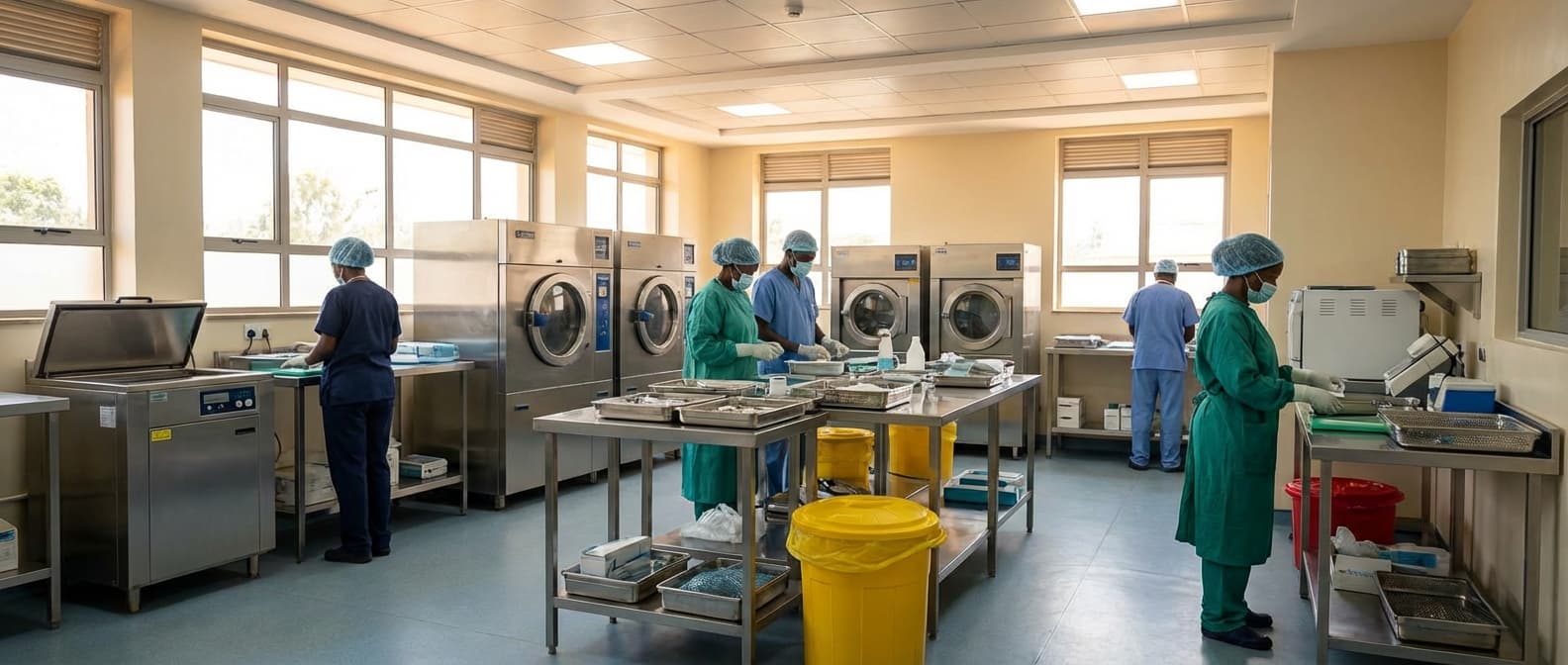
Endoscope Reprocessing Equipment Support Service in South Sudan
Engineering Excellence & Technical Support
Endoscope Reprocessing Equipment Support Service High-standard technical execution following OEM protocols and local regulatory frameworks.
ISO 13485 Certified Service Technicians
Our highly skilled technicians are exclusively trained and certified to ISO 13485 standards, ensuring unparalleled expertise in the repair and maintenance of your endoscope reprocessing equipment. This rigorous certification guarantees adherence to the highest quality management systems for medical devices, prioritizing patient safety and equipment reliability in challenging South Sudanese healthcare environments.
Remote Diagnostics & Troubleshooting
Leveraging advanced remote diagnostic tools, we can rapidly identify and resolve common equipment issues for your endoscope reprocessing machinery across South Sudan, minimizing downtime. This proactive approach reduces the need for immediate on-site visits, ensuring faster resolution and maintaining critical reprocessing workflows even in remote locations.
Localized Spare Parts & Rapid Deployment
We maintain a strategically located inventory of critical spare parts for leading endoscope reprocessing equipment manufacturers within South Sudan. This allows for rapid deployment of technicians and genuine replacement parts, drastically reducing repair times and ensuring continuous, safe reprocessing capabilities for your healthcare facilities.
What Is Endoscope Reprocessing Equipment Support Service In South Sudan?
Endoscope Reprocessing Equipment Support Service in South Sudan refers to the provision of specialized maintenance, repair, calibration, and technical consultation for automated endoscope reprocessors (AERs) and associated equipment used in the sterilization and disinfection of flexible endoscopes. This service is critical for ensuring the safety and efficacy of endoscopic procedures by preventing the transmission of healthcare-associated infections (HAIs) through inadequately reprocessed instruments. The service encompasses routine preventive maintenance, diagnostic troubleshooting, component replacement, software updates, and operational training for healthcare personnel. It plays a vital role in upholding infection control standards within healthcare facilities, particularly in contexts where access to original equipment manufacturer (OEM) services may be limited.
| Target Audience | Rationale for Need | Typical Use Cases |
|---|---|---|
| Hospitals and Tertiary Care Centers | High volume of endoscopic procedures necessitates reliable and efficient reprocessing. Compliance with national and international infection control guidelines is paramount. Deterioration of equipment can lead to significant patient safety risks and operational disruptions. | Routine maintenance of AERs used for reprocessing gastroscopes, colonoscopes, bronchoscopes, and other flexible endoscopes. Emergency repairs to minimize downtime during critical surgical periods. Calibration of AERs to ensure effective inactivation of pathogens like C. difficile and prions. |
| Specialized Clinics (e.g., Gastroenterology, Pulmonology, Urology) | These facilities rely heavily on endoscopes for diagnostic and therapeutic interventions. Ensuring the sterility of instruments is a core function directly impacting patient outcomes. | Regular servicing of AERs to maintain performance standards. Troubleshooting of intermittent error codes and performance deviations. Ensuring AERs meet efficacy standards for high-level disinfection (HLD) or sterilization. |
| Government and Non-Governmental Organization (NGO) Healthcare Facilities | Often operate with limited resources and may have aging equipment. Access to specialized technical expertise is crucial for maintaining essential infection control infrastructure. | Support for AERs in remote or resource-constrained settings. Training local technicians to perform basic maintenance. Assessment and potential upgrade recommendations for existing reprocessing equipment. |
| Biomedical Engineering Departments | Responsible for the maintenance and management of all medical equipment within a healthcare facility. Require expertise to ensure endoscope reprocessing equipment operates within safe and effective parameters. | Developing and implementing preventive maintenance schedules for AERs. Managing spare parts inventory for AERs. Providing technical oversight for endoscope reprocessing operations. |
Key Components of Endoscope Reprocessing Equipment Support Service
- Preventive Maintenance: Scheduled inspections, cleaning, lubrication, and functional checks of AERs to ensure optimal performance and longevity.
- Corrective Maintenance & Repair: Diagnosis and repair of malfunctions, including component replacement, to restore full operational capability.
- Calibration Services: Verification and adjustment of critical parameters (e.g., temperature, pressure, flow rates, cycle times) to meet manufacturer specifications and regulatory requirements.
- Technical Consultation & Troubleshooting: Providing expert advice on operational issues, workflow optimization, and best practices for endoscope reprocessing.
- Spare Parts Management: Ensuring availability and timely replacement of essential spare parts.
- Training and Education: Instruction for biomedical technicians and clinical staff on the proper operation, maintenance, and troubleshooting of AERs.
- Documentation and Reporting: Maintaining detailed records of all service activities, including maintenance logs, calibration certificates, and repair histories.
Who Needs Endoscope Reprocessing Equipment Support Service In South Sudan?
Endoscope reprocessing equipment is crucial for preventing the spread of infections in healthcare settings. In South Sudan, where healthcare infrastructure is often strained, reliable and effective reprocessing is paramount. This makes endoscope reprocessing equipment support services essential for a variety of healthcare facilities and departments. These services ensure that critical equipment remains functional, calibrated, and compliant with safety standards, ultimately protecting patient health and optimizing clinical workflows.
| Target Customer Type | Key Departments Requiring Support |
|---|---|
| Hospitals (Public and Private) | Endoscopy Suites, Central Sterile Services Department (CSSD), Operating Rooms, Infection Control Department |
| Specialized Clinics | Gastroenterology Department, Urology Department, Pulmonology Department, Outpatient Endoscopy Areas |
| NGO Healthcare Facilities | Surgical Departments, Infection Prevention and Control Units, General Procedure Rooms |
| International Aid Organization Medical Centers | Sterilization Units, Operating Theaters, Diagnostic Imaging Departments |
| Government Health Ministries and Regional Health Bureaus | Quality Assurance and Standards Departments, Training and Capacity Building Units |
Target Customers and Departments for Endoscope Reprocessing Equipment Support Service in South Sudan:
- Hospitals (Public and Private)
- Specialized Clinics (e.g., Gastroenterology, Urology, Pulmonology)
- Non-Governmental Organization (NGO) Healthcare Facilities
- International Aid Organization Medical Centers
- Government Health Ministries and Regional Health Bureaus
Endoscope Reprocessing Equipment Support Service Process In South Sudan
This document outlines the workflow for the Endoscope Reprocessing Equipment Support Service Process in South Sudan, detailing the steps from initial customer inquiry to the successful execution of the service. The process is designed to be efficient, transparent, and customer-centric, ensuring the optimal functioning of critical reprocessing equipment.
| Phase | Stage | Description | Key Activities | Responsible Party | Output/Deliverable |
|---|---|---|---|---|---|
| Inquiry Reception & Initial Assessment | Receiving and understanding the customer's need for support. | Customer contacts support via phone, email, or designated portal. Support agent gathers basic information about the equipment, issue, and urgency. | Customer, Support Agent | Initial understanding of the service need. |
| Service Request Logging & Prioritization | Formalizing the service request and determining its urgency. | Support agent logs the inquiry into the service management system. Issues are categorized and prioritized based on impact and criticality (e.g., critical, high, medium, low). | Support Agent, Service Manager | Logged Service Request (SR) with a unique ID and priority level. |
| Technical Assessment & Diagnosis | Identifying the root cause of the equipment malfunction or maintenance need. | Remote troubleshooting by technical support. If remote diagnosis is insufficient, a preliminary on-site assessment may be scheduled. Diagnosis may involve reviewing error logs, performing diagnostic tests, or consulting equipment manuals. | Technical Support Specialist | Detailed diagnosis of the equipment issue. |
| Parts & Consumables Identification & Procurement | Ensuring necessary parts and consumables are available for the repair. | Based on the diagnosis, the required spare parts, consumables, and any specialized tools are identified. Procurement process initiated, considering local availability and import lead times. | Procurement Team, Technical Support Specialist | List of required parts/consumables, confirmed availability or procurement order. |
| Service Scheduling & Technician Dispatch | Arranging for qualified personnel and resources to perform the service. | Service Manager schedules the service based on technician availability, customer's preferred time, and urgency. Qualified technician(s) are assigned and dispatched with necessary tools and identified parts. | Service Manager, Field Service Technician | Scheduled service appointment, dispatched technician(s) with confirmed travel arrangements. |
| On-Site Service Execution | Performing the repair, maintenance, or installation on the customer's premises. | Technician arrives at the site, introduces themselves, verifies the service request, and performs the repair/maintenance as per the diagnosis and service manual. Adheres to safety protocols. | Field Service Technician | Repaired/maintained equipment. |
| Testing & Validation | Ensuring the equipment is functioning correctly and meets performance standards. | Technician performs functional tests, performance checks, and calibration (if applicable) to ensure the equipment is fully operational and meets manufacturer specifications. Customer may be involved in witnessing these tests. | Field Service Technician, Customer Representative | Successful test results, validated equipment performance. |
| Documentation & Handover | Recording service details and officially handing over the equipment to the customer. | Technician completes a detailed service report including work performed, parts used, test results, and any recommendations. Customer signs off on the service report, acknowledging completion and acceptance. | Field Service Technician, Customer Representative | Signed Service Report, updated equipment maintenance log. |
| Invoicing & Payment | Processing the financial transaction for the provided service. | Service report is forwarded to the finance department for invoicing. Invoice is sent to the customer. Payment is processed according to agreed terms. | Finance Department, Customer | Issued Invoice, confirmed payment. |
| Follow-up & Feedback Collection | Ensuring customer satisfaction and gathering insights for service improvement. | Post-service follow-up by the support team to ensure customer satisfaction. Customer satisfaction survey may be sent to gather feedback on the service experience. Address any lingering concerns. | Customer Service Representative, Customer | Customer satisfaction feedback, identification of areas for improvement. |
Endoscope Reprocessing Equipment Support Service Process Workflow
- Inquiry Reception & Initial Assessment
- Service Request Logging & Prioritization
- Technical Assessment & Diagnosis
- Parts & Consumables Identification & Procurement
- Service Scheduling & Technician Dispatch
- On-Site Service Execution
- Testing & Validation
- Documentation & Handover
- Invoicing & Payment
- Follow-up & Feedback Collection
Endoscope Reprocessing Equipment Support Service Cost In South Sudan
Providing support services for endoscope reprocessing equipment in South Sudan presents unique challenges and requires careful consideration of various pricing factors. The current economic landscape, limited infrastructure, and the specialized nature of the equipment contribute to a pricing structure that can be higher than in more developed regions. Factors influencing cost include the availability of qualified technicians, travel and logistics for remote areas, the cost of spare parts (often imported), and the overall demand for these critical services in a country prioritizing healthcare infrastructure development.
Key Pricing Factors for Endoscope Reprocessing Equipment Support Service in South Sudan:
- Technician Expertise and Availability: Skilled biomedical engineers or technicians with specific training in endoscope reprocessing equipment are scarce. This scarcity drives up labor costs. Regular training and certification programs are essential but also add to the overall expense.
- Travel and Logistics: South Sudan's vast geographical spread and often poor road infrastructure mean that travel to remote healthcare facilities can be time-consuming and expensive. This includes transportation, accommodation, and per diems for technicians.
- Spare Parts and Consumables: Most specialized spare parts and consumables for endoscope reprocessing equipment are likely to be imported. This incurs costs related to international shipping, customs duties, import taxes, and local distribution markups. Availability can also be a challenge, leading to extended downtime and potentially higher emergency repair costs.
- Equipment Type and Complexity: The brand, model, and complexity of the endoscope reprocessing equipment will significantly impact service costs. Newer, more advanced systems may require specialized diagnostic tools and software, increasing the expense of support. Older or less common equipment might be harder to find parts for, escalating repair costs.
- Service Level Agreements (SLAs): The scope and urgency of the support provided will influence pricing. Comprehensive preventive maintenance contracts, emergency repair services, and response time guarantees will all have different cost structures.
- Currency Fluctuation and Inflation: South Sudan's currency (South Sudanese Pound - SSP) can experience significant fluctuations and high inflation. Service providers will factor in this volatility to ensure their costs are covered and profits are maintained, often adjusting prices based on current exchange rates and inflation projections.
- Market Demand and Competition: While demand for reliable healthcare equipment support is high, the number of qualified service providers may be limited. This can allow for higher pricing if there is a lack of competition. Conversely, if multiple providers emerge, pricing may become more competitive.
- Customs and Duties: Importation of equipment, spare parts, and even specialized tools for servicing will be subject to customs duties and taxes, which are passed on to the end-user.
Estimated Pricing Ranges (in South Sudanese Pounds - SSP):
Given the dynamic economic environment and the factors above, providing exact, fixed price ranges is challenging. The following are estimated ranges and should be considered indicative, subject to specific negotiations and prevailing market conditions. It's crucial for healthcare facilities to obtain detailed quotes from multiple reputable service providers.
- Routine Preventive Maintenance Visit (per device): This typically includes inspection, cleaning, calibration, and minor adjustments.
* **Range:** 150,000 - 400,000 SSP per visit (depending on device complexity and location).
- On-Demand / Emergency Repair Call-out (including initial diagnosis): This covers the technician's travel and the initial assessment of the issue.
* **Range:** 200,000 - 600,000 SSP per call-out (excluding parts and labor for repairs).
- Hourly Labor Rate (for repairs beyond initial diagnosis): This is for the time spent by the technician on actual repair work.
* **Range:** 75,000 - 150,000 SSP per hour.
- Major Spare Parts (e.g., pumps, heating elements, control boards): These costs can vary significantly based on the specific part and its availability.
* **Range:** 500,000 - 3,000,000+ SSP per part.
- Annual Service Contract (comprehensive, covering PM and a set number of call-outs): These offer better predictability and potential cost savings for facilities with multiple units.
* **Range:** 2,000,000 - 10,000,000+ SSP per year (highly dependent on the number and type of equipment covered, and the terms of the contract).
Important Considerations:
- Quotation Process: Always request detailed written quotations that clearly outline what is included (labor, parts, travel, taxes) and any exclusions.
- Payment Terms: Understand the payment terms. Some providers may require upfront payment for parts or services.
- Warranty: Inquire about warranties on replacement parts and labor performed.
- Local vs. International Providers: While international providers might offer specialized expertise, local or regional partners often have better understanding of local logistics and customs, potentially leading to more cost-effective solutions.
- Partnerships: Consider forming partnerships with neighboring healthcare facilities to potentially negotiate bulk service agreements.
| Service Type | Estimated Price Range (SSP) |
|---|---|
| Routine Preventive Maintenance Visit (per device) | 150,000 - 400,000 |
| On-Demand/Emergency Repair Call-out (initial diagnosis) | 200,000 - 600,000 |
| Hourly Labor Rate (for repairs) | 75,000 - 150,000 |
| Major Spare Parts (example range) | 500,000 - 3,000,000+ |
| Annual Service Contract (example range) | 2,000,000 - 10,000,000+ |
Key Factors Influencing Endoscope Reprocessing Equipment Support Service Costs in South Sudan
- Technician Expertise and Availability
- Travel and Logistics
- Spare Parts and Consumables
- Equipment Type and Complexity
- Service Level Agreements (SLAs)
- Currency Fluctuation and Inflation
- Market Demand and Competition
- Customs and Duties
Affordable Endoscope Reprocessing Equipment Support Service Options
This document outlines affordable endoscope reprocessing equipment support service options, focusing on value bundles and cost-saving strategies for healthcare facilities. Maintaining the integrity and functionality of endoscopes is crucial for patient safety and effective diagnosis and treatment. However, the cost of specialized equipment and ongoing support can be a significant budgetary concern. This guide aims to present practical solutions for optimizing these expenses without compromising on quality or compliance.
| Service Component | Description | Cost-Saving Strategy/Value Proposition |
|---|---|---|
| Preventive Maintenance Contracts | Scheduled inspections, cleaning, lubrication, and calibration of reprocessing equipment. | Value Bundle: Often includes discounted rates for parts and labor. Cost-Saving: Reduces unexpected downtime and expensive emergency repairs, extending equipment life. |
| Extended Warranty Programs | Post-manufacturer warranty coverage for a specified period. | Value Bundle: Can be bundled with new equipment purchases. Cost-Saving: Predictable maintenance costs, protection against unforeseen repair expenses. |
| On-Demand Repair Services | Access to qualified technicians for troubleshooting and repairs when needed. | Cost-Saving: Pay-as-you-go model can be more economical for facilities with low repair frequency. Value Proposition: Quick response times to minimize downtime. |
| Parts and Consumable Subscriptions/Bulk Purchasing | Pre-arranged delivery or discounted pricing for essential parts and reprocessing supplies. | Value Bundle: Discounts for committed volume. Cost-Saving: Reduced per-unit cost, ensured availability, prevention of stock-outs that can halt operations. |
| Remote Monitoring and Diagnostics | Utilizing technology to remotely assess equipment status and identify potential issues. | Cost-Saving: Early detection of problems can prevent minor issues from becoming major, costly repairs. Value Proposition: Faster initial diagnosis, potentially reducing on-site technician visits. |
| Managed Services/Outsourcing | Full or partial outsourcing of endoscope reprocessing and equipment maintenance to a third-party provider. | Value Bundle: Comprehensive coverage with a predictable monthly fee. Cost-Saving: Eliminates the need for in-house expertise, capital investment in specialized tools, and can leverage economies of scale. |
| Refurbished Equipment Options | Purchasing or leasing certified refurbished endoscope reprocessing equipment. | Cost-Saving: Significantly lower upfront capital investment compared to new equipment. Value Proposition: Often comes with a warranty and performance guarantees. |
| Training and Skill Development Programs | Investments in training in-house biomedical technicians or reprocessing staff. | Cost-Saving: Enables in-house handling of routine maintenance and minor repairs, reducing reliance on external service contracts. Value Proposition: Improved staff competency and efficiency. |
Understanding Endoscope Reprocessing Equipment Support Needs
- Preventive Maintenance: Regular servicing to identify and address potential issues before they lead to breakdowns, extending equipment lifespan and reducing costly emergency repairs.
- Corrective Maintenance: Prompt and efficient repair services for equipment failures, minimizing downtime and ensuring continued operational capacity.
- Calibration and Validation: Ensuring equipment operates within specified parameters for accurate and effective reprocessing, crucial for infection control and regulatory compliance.
- Parts and Consumables: Access to genuine or high-quality replacement parts and necessary consumables for reprocessing, often bundled for cost efficiency.
- Technical Training: Training for in-house staff on the operation, basic troubleshooting, and maintenance of reprocessing equipment, empowering them to handle minor issues and reduce reliance on external support.
- Compliance and Regulatory Support: Assistance in ensuring reprocessing procedures and equipment meet current healthcare standards and regulatory requirements (e.g., FDA, AAMI, CDC).
Verified Providers In South Sudan
In the challenging healthcare landscape of South Sudan, identifying reliable and credentialed healthcare providers is paramount. Franance Health stands out as a beacon of trust, consistently delivering high-quality medical services. Their commitment to excellence is underscored by rigorous credentialing processes and a deep understanding of the local healthcare needs. This makes Franance Health a distinguished and often the best choice for individuals and organizations seeking dependable medical support in South Sudan.
| Credentialing Aspect | Franance Health's Approach | Benefit to Patients |
|---|---|---|
| Medical Licenses & Certifications | Verification of all national and international medical licenses and certifications. | Ensures practitioners are legally qualified and meet professional standards. |
| Professional Experience | Thorough review of past employment, practical experience, and specialized training. | Guarantees that providers have the practical skills and expertise required. |
| Background Checks | Comprehensive checks to ensure the integrity and reliability of all staff. | Provides a secure and trustworthy healthcare environment. |
| Continuing Medical Education (CME) | Mandatory participation in ongoing training and development programs. | Keeps practitioners updated on the latest medical advancements and best practices. |
| Ethical Conduct Standards | Adherence to a strict code of ethics and professional conduct. | Upholds patient rights, confidentiality, and provides respectful care. |
| Local Healthcare Knowledge | Prioritization of local medical professionals with on-the-ground experience. | Offers culturally sensitive and contextually relevant healthcare solutions. |
Why Franance Health is the Best Choice:
- Rigorous Credentialing: Franance Health meticulously vets all its healthcare professionals, ensuring they possess the necessary qualifications, licenses, and experience relevant to South Sudan's context.
- Experienced Local Personnel: A significant portion of their medical team comprises South Sudanese professionals with invaluable local knowledge and understanding of prevalent health issues and cultural nuances.
- International Standards: While operating within South Sudan, Franance Health strives to adhere to international best practices in healthcare delivery, patient care, and ethical conduct.
- Comprehensive Services: They offer a broad spectrum of medical services, catering to diverse healthcare needs, from primary care to specialized interventions.
- Community Integration: Franance Health actively engages with local communities, fostering trust and building sustainable healthcare solutions tailored to the specific challenges faced.
- Commitment to Quality Assurance: Continuous monitoring and evaluation of their services ensure consistent quality and ongoing improvement, prioritizing patient safety and outcomes.
- Accessibility and Reach: Franance Health works towards making healthcare accessible across various regions in South Sudan, addressing geographical barriers where possible.
Scope Of Work For Endoscope Reprocessing Equipment Support Service
This Scope of Work (SOW) outlines the requirements for providing comprehensive support services for endoscope reprocessing equipment. The objective is to ensure the optimal performance, reliability, and regulatory compliance of all designated endoscope reprocessing systems. This includes preventive maintenance, corrective maintenance, technical support, validation, and training.
| Technical Deliverable | Description | Standard Specification / Requirement | Frequency / Trigger |
|---|---|---|---|
| Preventive Maintenance (PM) | Scheduled inspections, cleaning, lubrication, calibration, and functional testing of endoscope reprocessing equipment. | Per manufacturer's PM schedule and guidelines. Includes testing of all critical components (e.g., filters, pumps, sensors, disinfectors). | Quarterly, Semi-annually, Annually (as per manufacturer recommendations). |
| Corrective Maintenance (CM) | Diagnosis and repair of equipment malfunctions and breakdowns. | Rapid response time (e.g., within 4 business hours for critical issues). Use of OEM or equivalent parts. Detailed service reports including root cause analysis and corrective actions. | As required, upon equipment failure notification. |
| On-Site Technical Support | On-demand troubleshooting and assistance provided by qualified technicians at the facility. | Availability during business hours (e.g., 8 AM - 5 PM, Monday-Friday) and potentially after-hours/emergency support as defined in the service agreement. Clear escalation procedures. | As required, for immediate operational issues. |
| Remote Technical Support | Remote diagnosis and guidance to on-site personnel for minor issues or initial troubleshooting. | Available during business hours via phone, email, or secure remote access (if applicable). | As required, for initial problem assessment. |
| Equipment Calibration | Ensuring all measurement and control systems within the reprocessing equipment are accurate and within specified tolerances. | Calibration traceable to national or international standards. Certification provided for each calibration event. | As per manufacturer recommendations, at least annually, or post-major repair. |
| Performance Qualification (PQ) / Validation Support | Assisting in the validation of reprocessing equipment to demonstrate it consistently performs its intended function. | Follows established validation protocols (e.g., IQ, OQ, PQ). Includes documentation, testing, and reporting. | Post-installation, after major repairs, or as required by regulatory changes/internal policies. |
| Service Reports & Documentation | Comprehensive reports detailing all maintenance, repair, and validation activities performed. | Include date of service, technician name, equipment serial number, description of work performed, parts used, test results, and recommendations. Reports to be submitted within a specified timeframe (e.g., 5 business days of service completion). | After each service intervention. |
| Spare Parts Management | Ensuring availability of critical spare parts for timely repairs. | Maintain an inventory of common and critical spare parts. Provide lead times for non-stock items. Proactive identification of parts needing replacement. | Ongoing, with periodic inventory review. |
| Training & Knowledge Transfer | Providing training to facility staff on the proper operation, basic troubleshooting, and routine cleaning of the reprocessing equipment. | Training sessions to be conducted by qualified instructors. Training materials to be provided. Assessment of staff competency. | Post-installation, upon equipment upgrades, or annually. |
| Regulatory Compliance Updates | Proactive notification and guidance on any changes in regulations or standards affecting endoscope reprocessing equipment. | Regular updates from the service provider on relevant industry changes and their impact on equipment maintenance and operation. | As regulations change or are updated. |
Key Objectives
- Ensure maximum uptime and operational efficiency of endoscope reprocessing equipment.
- Maintain equipment in accordance with manufacturer specifications and industry best practices.
- Ensure compliance with all relevant regulatory standards (e.g., FDA, AAMI, local health authorities).
- Minimize the risk of equipment failure and associated patient safety concerns.
- Provide timely and effective technical support for all issues.
- Facilitate seamless equipment upgrades and modifications as required.
Service Level Agreement For Endoscope Reprocessing Equipment Support Service
This Service Level Agreement (SLA) outlines the support services provided for Endoscope Reprocessing Equipment, focusing on critical response times and guaranteed uptime to ensure operational efficiency and patient safety.
| Service Level | Response Time | Uptime Guarantee | Applicable Equipment Types |
|---|---|---|---|
| Critical Failure Support | Within 4 Business Hours of Issue Notification | 98% Uptime (Annual Average) | All Endoscope Reprocessors (Washer-Disinfectors, Sterilizers) |
| Major Malfunction Support | Within 8 Business Hours of Issue Notification | 97% Uptime (Annual Average) | All Endoscope Reprocessors (Washer-Disinfectors, Sterilizers) |
| Preventive Maintenance | Scheduled as per Manufacturer Recommendations (Min. Annually) | N/A (Proactive Service) | All Endoscope Reprocessors (Washer-Disinfectors, Sterilizers) |
| Routine Inquiries/Minor Issues | Within 24 Business Hours of Issue Notification | N/A (Focus on Resolution) | All Endoscope Reprocessors (Washer-Disinfectors, Sterilizers) |
Scope of Service
- Preventive maintenance scheduling and execution.
- Corrective maintenance for equipment malfunctions and failures.
- On-site technical support and troubleshooting.
- Remote diagnostics and support where applicable.
- Provision of replacement parts and consumables.
- Software updates and firmware management for supported equipment.
Frequently Asked Questions

Ready when you are
Let's scope your Endoscope Reprocessing Equipment Support Service in South Sudan project in South Sudan.

Scaling healthcare logistics and technical systems across the entire continent.