
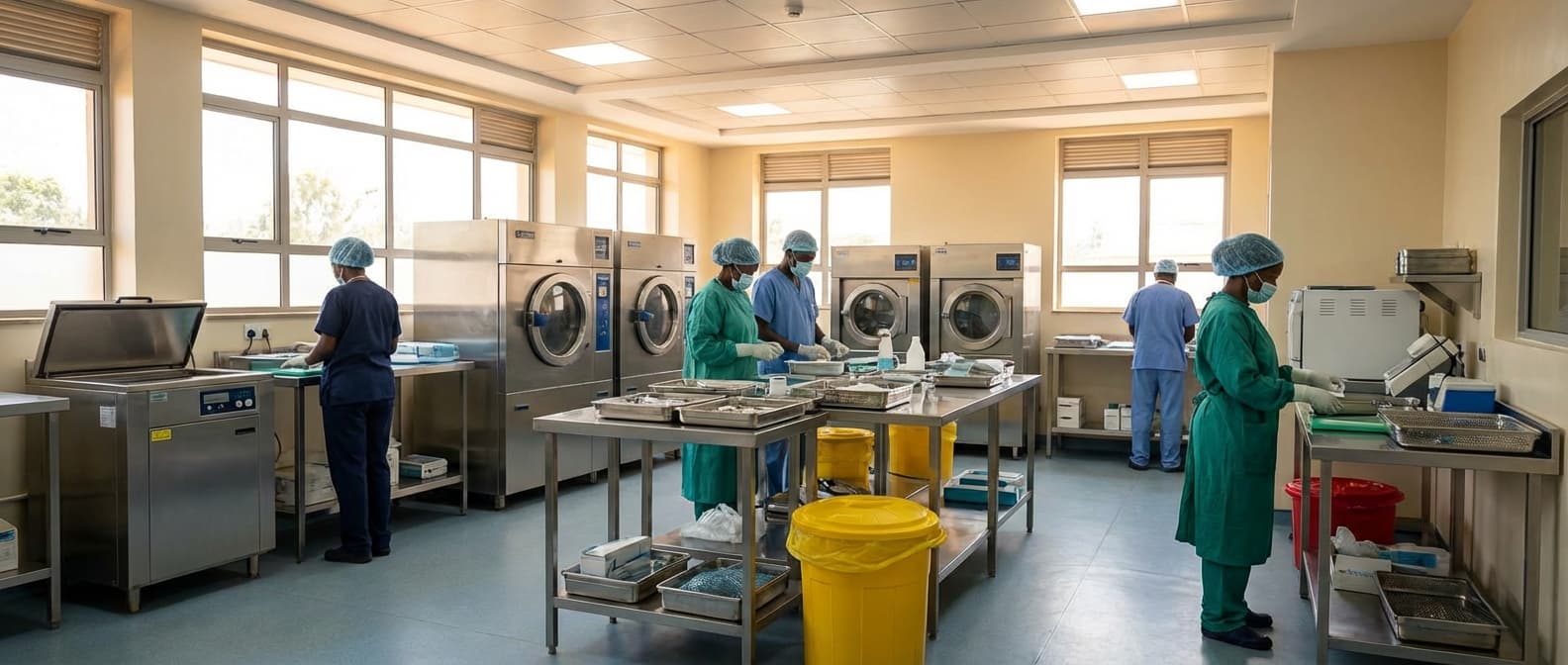
Autoclave Validation Support Service in South Sudan
Engineering Excellence & Technical Support
Autoclave Validation Support Service High-standard technical execution following OEM protocols and local regulatory frameworks.
Ensuring Sterility Assurance in Challenging Environments
Our Autoclave Validation Support Service provides critical verification of sterilization cycles for medical facilities in South Sudan. We employ robust protocols and advanced monitoring techniques to guarantee the effectiveness of autoclaves, ensuring the safety of patients and healthcare workers against microbial contamination, even in remote or resource-limited settings.
Compliance and Regulatory Adherence
Navigate the complexities of healthcare standards with confidence. Our specialized team offers comprehensive autoclave validation services that align with international best practices and emerging South Sudanese healthcare regulations. We deliver detailed documentation and reports necessary for accreditation, operational licensing, and maintaining the highest levels of patient safety and quality care.
Optimized Performance and Extended Equipment Lifespan
Go beyond basic validation. Our service includes thorough performance testing and calibration of autoclaves, identifying potential inefficiencies or wear. By ensuring optimal steam penetration and cycle parameters, we help reduce re-sterilization rates, minimize downtime, and contribute to the longevity and cost-effectiveness of your critical sterilization equipment in South Sudan.
What Is Autoclave Validation Support Service In South Sudan?
Autoclave validation support service in South Sudan refers to the comprehensive set of activities and expertise provided to ensure that steam sterilization equipment (autoclaves) in healthcare facilities and laboratories consistently achieve effective sterilization of medical devices and laboratory consumables. This service is critical for maintaining patient safety, preventing healthcare-associated infections (HAIs), and ensuring the reliability of laboratory diagnostics. It involves rigorous testing, documentation, and calibration of autoclaves according to established international standards and regulatory requirements. The primary objective is to confirm that the sterilization process reliably kills all viable microorganisms, including bacteria, viruses, fungi, and spores, rendering instruments safe for reuse or laboratory use.
| Who Needs Autoclave Validation Support Service? | Typical Use Cases |
|---|---|
| Hospitals and Clinics (Surgical departments, dental clinics, infection control units) | Sterilization of surgical instruments, dental instruments, anesthesia equipment, and other reusable medical devices. |
| Laboratories (Clinical diagnostic labs, research labs, public health labs) | Sterilization of glassware, media, laboratory consumables, and instruments used in infectious disease research and diagnostics. |
| Blood Banks and Transfusion Centers | Sterilization of reusable equipment and consumables involved in blood processing and storage. |
| Government Health Agencies and Regulatory Bodies | Ensuring compliance with national and international sterilization standards for healthcare facilities. |
| Manufacturers of Autoclaves and Medical Devices | Validation of their equipment to meet market and regulatory requirements. |
Key Components of Autoclave Validation Support Service
- Installation Qualification (IQ): Verifying that the autoclave is installed correctly according to manufacturer specifications and industry standards.
- Operational Qualification (OQ): Testing the autoclave's operational parameters (e.g., temperature, pressure, cycle times) within defined limits across its operational range.
- Performance Qualification (PQ): Demonstrating through repeated successful sterilization cycles with biological and chemical indicators that the autoclave consistently achieves the required level of sterility under normal operating conditions.
- Calibration Services: Ensuring that critical measuring instruments (thermometers, pressure gauges) are accurate and traceable.
- Preventive Maintenance: Conducting scheduled maintenance to ensure optimal autoclave performance and longevity.
- Troubleshooting and Repair: Identifying and rectifying any issues that may compromise the sterilization process.
- Documentation and Reporting: Providing comprehensive reports, certificates, and logs required for regulatory compliance and internal quality management.
- Training: Educating facility staff on the proper operation, monitoring, and maintenance of autoclaves.
Who Needs Autoclave Validation Support Service In South Sudan?
Autoclave validation is a critical process for ensuring the effectiveness of sterilization equipment, particularly in healthcare and research settings. In South Sudan, where access to reliable medical and laboratory infrastructure is paramount, robust autoclave validation support services are essential to guarantee the safety and efficacy of sterilization procedures. This ensures that medical instruments are properly sterilized, preventing the spread of infections, and that laboratory reagents and materials are free from contamination, safeguarding research integrity. Without this support, facilities risk compromised patient care, inaccurate scientific findings, and potential regulatory non-compliance.
| Customer Segment | Specific Departments/Units Requiring Support | Key Needs & Benefits |
|---|---|---|
| Hospitals (Public & Private) | Central Sterile Supply Department (CSSD) Operating Theaters Infection Control Department Dental Clinics Emergency Rooms | Ensuring sterility of surgical instruments and equipment, preventing surgical site infections, maintaining patient safety, meeting international healthcare standards. |
| Clinics & Health Centers | Sterilization Rooms Minor Procedure Areas | Safe and effective sterilization of basic medical instruments, ensuring reliable healthcare delivery at primary levels. |
| Research Institutions & Universities | Biotechnology Labs Molecular Biology Labs Microbiology Labs Chemistry Labs Medical Research Facilities | Guaranteeing sterile conditions for experiments, preventing contamination of samples and reagents, ensuring accuracy and reproducibility of research findings, protecting valuable research materials. |
| Public Health Laboratories | Diagnostic Labs Epidemiology Labs Food & Water Quality Testing Labs | Sterilizing diagnostic media and equipment, ensuring accurate disease detection and surveillance, protecting public health through reliable testing. |
| NGOs & International Health Organizations | Mobile Clinics Field Hospitals Health Program Support Units | Maintaining sterilization standards in challenging environments, ensuring the safety of medical interventions in humanitarian and development projects. |
| Government Health Agencies | Ministry of Health (for oversight and public facilities) National Public Health Institute | Ensuring compliance with national and international sterilization guidelines, supporting the capacity building of healthcare facilities. |
Target Customers and Departments Requiring Autoclave Validation Support in South Sudan
- Healthcare Facilities
- Research Laboratories
- Public Health Institutions
- Educational Institutions with Medical/Science Programs
- Non-Governmental Organizations (NGOs) with Health-Related Operations
Autoclave Validation Support Service Process In South Sudan
This document outlines the typical workflow for an Autoclave Validation Support Service process in South Sudan, covering the journey from initial client inquiry to the final execution of the validation. This process ensures that autoclaves meet required standards for sterilization efficacy, critical for healthcare and laboratory settings in the region.
| Stage | Description | Key Activities | Responsible Party | Deliverables/Outcomes |
|---|---|---|---|---|
| Inquiry & Needs Assessment | Initial contact from a client seeking autoclave validation services. | Client contacts service provider, discusses autoclave type, size, usage frequency, and any specific regulatory requirements (e.g., WHO, national health standards). Provider gathers preliminary information to understand the scope. | Client, Service Provider (Sales/Technical Representative) | Understanding of client's needs, preliminary scope definition. |
| Proposal & Quotation Generation | Developing a tailored service offering based on the assessed needs. | Service provider analyzes requirements, identifies necessary validation tests (e.g., physical, biological, chemical indicators), prepares a detailed proposal outlining scope of work, methodology, timelines, and costs. Quotation is provided. | Service Provider (Technical Team, Sales) | Detailed proposal, cost quotation, timeline estimate. |
| Agreement & Scheduling | Formalizing the service agreement and planning the execution. | Client reviews and approves the proposal/quotation. Contract is signed. Dates for on-site validation are mutually agreed upon, considering client's operational schedule and availability of equipment. | Client, Service Provider | Signed contract, confirmed validation schedule. |
| Pre-Validation Preparations | Ensuring all parties are ready for the on-site work. | Service provider confirms required calibration certificates for test equipment, prepares validation protocols and checklists based on standards. Client ensures autoclave is clean, operational, and has sufficient supplies (e.g., biological indicators, sterile packs) as per protocol instructions. | Service Provider, Client | Prepared validation protocols, calibrated equipment, client readiness confirmation. |
| On-site Validation Execution | Performing the actual validation tests. | Service provider's qualified technicians conduct physical performance tests (temperature, pressure, time), biological indicator challenge tests, and chemical indicator tests. Data logging and observations are meticulously recorded. This may involve multiple cycles. | Service Provider (Validation Technicians) | Raw validation data, log sheets, challenge test results (e.g., biological indicator growth/no growth). |
| Data Analysis & Reporting | Interpreting the collected data and generating a comprehensive report. | Service provider analyzes all collected data against predefined acceptance criteria (e.g., relevant ISO standards, national guidelines). A detailed validation report is compiled, including test results, observations, any deviations, and a conclusion on the autoclave's performance and suitability. | Service Provider (Validation Engineers/Technical Specialists) | Comprehensive Validation Report, Certificate of Validation (if passed). |
| Post-Validation Support & Revalidation Planning | Ongoing support and future planning. | Service provider may offer recommendations for operational improvements or repairs if deficiencies are identified. Client receives the report and discusses findings. Planning for routine revalidation cycles (e.g., annual) is initiated to ensure ongoing compliance. | Service Provider, Client | Recommendations for improvement, revalidation schedule (future). |
Autoclave Validation Support Service Process Workflow
- Inquiry & Needs Assessment
- Proposal & Quotation Generation
- Agreement & Scheduling
- Pre-Validation Preparations
- On-site Validation Execution
- Data Analysis & Reporting
- Post-Validation Support & Revalidation Planning
Autoclave Validation Support Service Cost In South Sudan
Autoclave validation is a critical process for ensuring the efficacy of sterilization equipment used in healthcare facilities, laboratories, and other critical environments. In South Sudan, the cost of this essential service is influenced by several key factors. These factors determine the overall price and can lead to a range of costs for autoclave validation. Understanding these elements is crucial for organizations budgeting for this service to maintain compliance and patient/product safety.
| Service Component | Estimated Cost Range (SSP - South Sudanese Pound) | Notes |
|---|---|---|
| Basic Autoclave Validation (Single Unit, Standard Load) | 150,000 - 300,000 | Covers essential performance qualification (PQ) tests for one standard autoclave. |
| Comprehensive Autoclave Validation (Multiple Units/Complex Loads) | 350,000 - 700,000+ | Includes validation for multiple autoclaves, challenging loads, or specialized types. Costs can increase significantly with the number of units. |
| Revalidation/Periodic Checks | 100,000 - 200,000 | For subsequent validations after initial qualification, generally at reduced cost. |
| Travel and Accommodation (per technician, per trip) | 50,000 - 150,000 | Highly variable based on location within South Sudan. Includes fuel, vehicle hire, and lodging. |
| Biological & Chemical Indicators (per test pack) | 5,000 - 15,000 | Cost of consumables for ensuring sterilization effectiveness. |
| Calibration of Validation Equipment | Included in overall service, but specialized calibration may add cost. | |
| Urgent Service Surcharge | 20% - 50% of base cost | For services required outside of standard scheduling. |
Key Pricing Factors for Autoclave Validation in South Sudan
- {"title":"Scope and Complexity of Validation","description":"The number of autoclaves to be validated, their size, type (e.g., gravity displacement, pre-vacuum), and specific cycle parameters significantly impact cost. More complex validation protocols, involving multiple tests and checks, will naturally incur higher fees."}
- {"title":"Number and Type of Validation Cycles","description":"The standard validation process typically involves several test cycles (e.g., empty load, standard load, challenging load). The more cycles required and the complexity of the loads used, the more time and resources are needed, increasing the overall cost."}
- {"title":"Geographic Location and Accessibility","description":"Travel and logistical costs to reach the facility in South Sudan are a major determinant. Remote or hard-to-access locations will likely have higher validation costs due to increased transportation, accommodation, and personnel expenses."}
- {"title":"Service Provider Expertise and Reputation","description":"Established and reputable service providers with experienced technicians, accredited laboratories, and a strong track record may command higher prices. This often reflects the quality of service and assurance of compliance."}
- {"title":"Equipment and Consumables","description":"The cost of specialized calibration equipment, biological indicators (BIs), chemical indicators (CIs), data loggers, and other consumables used during the validation process are factored into the service fee."}
- {"title":"Regulatory Requirements and Reporting","description":"The specific regulatory standards that need to be met (e.g., WHO guidelines, national health regulations) and the level of detail required in the validation report can influence the time and effort involved, thus affecting the price."}
- {"title":"Urgency of Service","description":"If the validation is required on an urgent basis or outside of standard working hours, premium charges may apply."}
- {"title":"Maintenance and Repair Services","description":"Some providers may bundle validation with routine maintenance or offer discounts if validation is part of a larger service contract."}
Affordable Autoclave Validation Support Service Options
Navigating autoclave validation can be a complex and costly process for many organizations. This service aims to provide affordable and accessible validation support, ensuring your autoclaves meet regulatory and operational standards without breaking the budget. We understand the critical role of validated autoclaves in maintaining sterility and patient safety, and our goal is to make this essential service achievable for businesses of all sizes.
| Service Option | Description | Ideal For | Estimated Price Range (USD) |
|---|---|---|---|
| Basic Validation Package | Includes essential PQ (Performance Qualification) testing using calibrated biological and chemical indicators, and a basic validation report. Suitable for standard validation requirements. | Small clinics, labs with low autoclave usage, those requiring a fundamental validation. | $500 - $1,200 per autoclave |
| Standard Validation Package | Builds upon the basic package with more comprehensive PQ testing, IQ (Installation Qualification) and OQ (Operational Qualification) if required, and a detailed validation report with recommendations. Also includes calibration certificate for test equipment. | Medium-sized facilities, dental practices, veterinary clinics, general laboratories. | $800 - $1,800 per autoclave |
| Premium Validation Package | The most comprehensive option, including full IQ, OQ, PQ, customized testing protocols based on specific sterilization loads, comprehensive reporting, and a post-validation consultation. Ideal for high-throughput or specialized applications. | Hospitals, large research institutions, pharmaceutical manufacturing, any facility with complex validation needs. | $1,200 - $2,500+ per autoclave (depending on complexity) |
| On-Demand Troubleshooting & Revalidation | Service for addressing specific validation failures or performance issues. Includes diagnostic testing and targeted revalidation to bring the autoclave back into compliance. | Any facility experiencing validation issues or requiring a quick revalidation after a minor repair. | Hourly Rate: $150 - $250 + cost of indicators |
Understanding Your Autoclave Validation Needs:
- Initial Validation: For newly installed or relocated autoclaves.
- Periodic Revalidation: To ensure ongoing compliance (typically annually or as per regulatory guidelines).
- After Major Repairs or Modifications: To confirm the autoclave's performance hasn't been compromised.
- Troubleshooting and Performance Qualification: When issues arise or performance is in question.
Verified Providers In South Sudan
In the challenging landscape of healthcare provision in South Sudan, identifying and trusting verified providers is paramount. Franance Health stands out as a beacon of reliability, offering a comprehensive suite of services backed by stringent credentialing and a deep commitment to quality. Understanding why Franance Health is the best choice requires a closer look at their operational standards, ethical practices, and demonstrable impact.
| Feature | Franance Health's Approach | Benefit for Patients in South Sudan |
|---|---|---|
| Credentialing Standards | Exceeds international benchmarks; rigorous verification of licenses, certifications, and ethical conduct. | Ensures access to highly qualified and trustworthy medical professionals. |
| Quality Assurance | Multi-layered protocols, continuous monitoring, and patient feedback integration. | Minimizes medical errors and enhances the effectiveness and safety of treatments. |
| Cultural Competence | Prioritizes staff with local knowledge and understanding of South Sudanese culture. | Fosters better patient-doctor relationships, improves communication, and ensures culturally sensitive care. |
| Service Breadth | Offers a full spectrum of services, from general practice to specialized care and emergency response. | Provides accessible and comprehensive healthcare solutions, reducing the need for extensive travel or multiple providers. |
| Technological Integration | Adopts appropriate technologies for diagnostics, outreach, and health management. | Improves accessibility, efficiency, and potentially the speed of diagnosis and treatment. |
| Ethical Practices | Strict adherence to privacy, transparency, and a strong ethical code. | Builds patient confidence and ensures a secure and respectful healthcare experience. |
| Community Focus | Deep commitment to improving health outcomes in South Sudan. | Reliable partner dedicated to the long-term health and well-being of the nation. |
Why Franance Health is the Best Choice for Verified Healthcare in South Sudan:
- Rigorous Credentialing and Verification: Franance Health adheres to the highest international standards for credentialing its healthcare professionals. This includes thorough background checks, verification of medical licenses and certifications, and continuous professional development assessments. This meticulous process ensures that every practitioner associated with Franance Health is not only qualified but also ethically sound.
- Commitment to Quality and Patient Safety: Patient well-being is at the core of Franance Health's mission. They implement robust quality assurance protocols, patient feedback mechanisms, and a proactive approach to identifying and mitigating risks. This commitment translates into safer, more effective, and patient-centered care.
- Experienced and Culturally Competent Staff: Franance Health prioritizes hiring professionals who possess not only medical expertise but also a deep understanding of the South Sudanese context and cultural nuances. This cultural competence fosters trust, improves communication, and ensures that care is delivered with respect and sensitivity.
- Comprehensive Service Offerings: From primary healthcare and maternal services to specialized treatments and medical emergency response, Franance Health provides a wide spectrum of essential medical services. This integrated approach allows for continuity of care and addresses diverse health needs within the community.
- Leveraging Technology for Improved Access: Franance Health actively explores and integrates appropriate technologies to enhance healthcare access, improve diagnostics, and streamline administrative processes. This forward-thinking approach helps overcome geographical barriers and brings quality healthcare closer to those who need it most.
- Strong Ethical Framework and Transparency: Operating with integrity and transparency is a cornerstone of Franance Health's operations. They maintain clear ethical guidelines, ensure patient privacy, and are open about their operational procedures and partnerships, building lasting trust with the communities they serve.
- Proven Track Record and Community Impact: Franance Health has established a strong reputation for its consistent delivery of quality healthcare and its positive impact on the health outcomes of South Sudanese communities. Their long-term commitment and demonstrable results underscore their position as a leading and trusted healthcare provider.
Scope Of Work For Autoclave Validation Support Service
This Scope of Work (SOW) outlines the services to be provided for Autoclave Validation Support. The objective is to ensure that the autoclave operates within specified parameters to achieve effective sterilization and is compliant with relevant regulatory standards. This document details the technical deliverables and standard specifications required for the successful execution of the validation project.
| Deliverable | Description | Standard Specifications / Acceptance Criteria |
|---|---|---|
| Validation Protocol (IQ/OQ/PQ) | A detailed document outlining the procedures, test methods, acceptance criteria, and responsibilities for each phase of validation. | Protocol must be written in accordance with current Good Manufacturing Practices (cGMP), relevant FDA guidelines (e.g., 21 CFR Part 11, Process Validation Guidance), and industry best practices. Protocol must be reviewed and approved by the client prior to execution. |
| Installation Qualification (IQ) Report | Documentation confirming the autoclave has been installed correctly and meets manufacturer specifications. | Verification of equipment, utilities, and controls against approved design specifications. Calibration records for all critical instruments must be provided and current. As-built drawings and equipment manuals included. |
| Operational Qualification (OQ) Report | Documentation confirming the autoclave operates within acceptable limits throughout its intended operational range. | Successful execution of a minimum of three (3) consecutive runs demonstrating consistent temperature, pressure, and time profiles at critical locations within the chamber. Alarm functions tested and verified. Data from thermocouples and pressure sensors meeting specified tolerances (e.g., ±1°C for temperature, ±0.1 bar for pressure). |
| Performance Qualification (PQ) Report | Documentation demonstrating the autoclave consistently achieves the validated sterilization parameters under normal operating conditions. | Successful execution of a minimum of three (3) consecutive cycles using biological indicators (BIs) and/or chemical indicators (CIs) placed in representative challenging locations. BI reduction equivalent to a minimum of a 12-log kill. CI color change as per manufacturer's instructions. Data from temperature, pressure, and time sensors for each run within specified ranges (e.g., sterilization temperature maintained at 121°C for a minimum of 15 minutes, or equivalent F0 value). No evidence of product or material degradation. |
| Final Validation Report | A comprehensive document summarizing all validation activities, results, deviations, and conclusions. | Clear statement of validation status (validated/not validated). All raw data, analysis, and deviations presented. Conclusions supported by the data. Report must be reviewed and approved by the client. |
| Calibration Certificates | Certificates for all calibrated instruments used during validation. | Calibration traceable to national or international standards. Certificates must be current and valid for the duration of the validation activities. |
| Challenge Study Data | Data generated from the use of biological and chemical indicators. | Documentation of BI and CI placement, incubation (for BIs), and interpretation of results. Records of spore counts (for BIs) and color change observations (for CIs). |
Services Provided
- Development of a comprehensive Validation Protocol (IQ/OQ/PQ).
- Execution of Installation Qualification (IQ) activities, including verification of installation and documentation review.
- Execution of Operational Qualification (OQ) activities, including performance testing of the autoclave under various operational conditions.
- Execution of Performance Qualification (PQ) activities, including challenge studies and routine load testing to demonstrate consistent sterilization effectiveness.
- Data analysis and reporting of all validation activities.
- Issuance of a final Validation Report summarizing findings and conclusions.
- Recommendations for remediation or revalidation if specifications are not met.
- Post-validation support as required.
Service Level Agreement For Autoclave Validation Support Service
This Service Level Agreement (SLA) outlines the response times and uptime guarantees for the Autoclave Validation Support Service. It is designed to ensure timely and reliable support for our clients utilizing autoclave validation services.
| Service Component | Severity Level | Response Time Target | Uptime Guarantee | Notes |
|---|---|---|---|---|
| Autoclave Validation Support Portal & Email | Critical (System Outage) | 1 Hour | 99.9% | Applies to ability to submit support tickets and receive automated acknowledgements. |
| Autoclave Validation Support Portal & Email | High (Significant Impact on Operations) | 4 Business Hours | 99.9% | For issues preventing core validation processes or data collection. |
| Autoclave Validation Support Portal & Email | Medium (Moderate Impact) | 8 Business Hours | 99.9% | For issues affecting non-critical features or minor inconveniences. |
| Autoclave Validation Support Portal & Email | Low (Information Request/Minor Bug) | 24 Business Hours | 99.9% | For general inquiries, documentation requests, or minor cosmetic issues. |
| Dedicated Phone Support Line (for Critical Issues) | Critical (System Outage) | 30 Minutes | N/A | Available during business hours for immediate escalation of critical issues. Not an uptime guarantee for the support line itself, but for the response. |
Key Performance Indicators (KPIs)
- Response Time: The maximum time allowed for the support team to acknowledge a reported issue.
- Resolution Time: The maximum time allowed to resolve a reported issue (may vary by severity).
- Uptime Guarantee: The percentage of time the support service is available and functional.
Frequently Asked Questions

Ready when you are
Let's scope your Autoclave Validation Support Service in South Sudan project in South Sudan.

Scaling healthcare logistics and technical systems across the entire continent.