
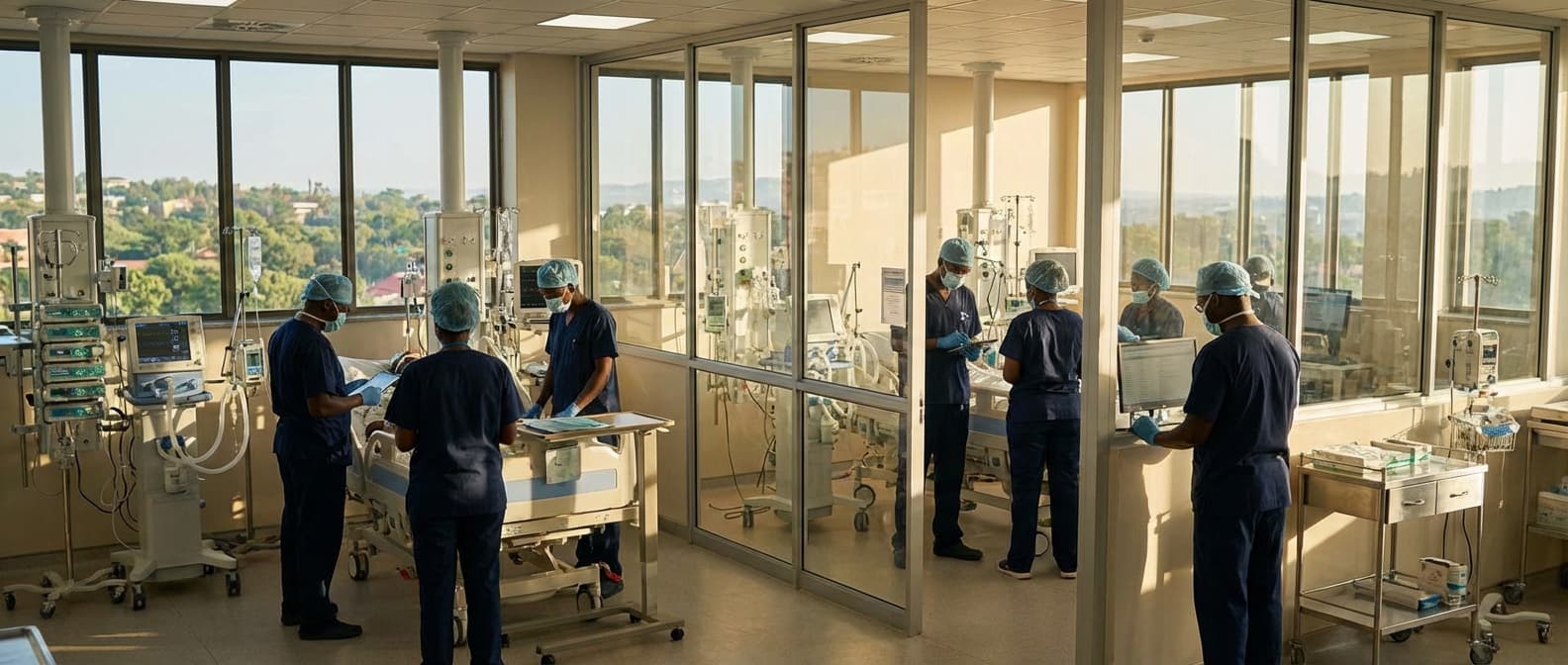
Ventilator Fleet Management & PM in South Sudan
Engineering Excellence & Technical Support
Preventive maintenance and fleet management for ICU ventilators High-standard technical execution following OEM protocols and local regulatory frameworks.
Ensuring Continuous Airflow: Critical Ventilator Uptime
Proactive Preventive Maintenance (PM) schedule for our ventilator fleet in South Sudan prioritizes critical component checks and replacements, minimizing downtime and guaranteeing uninterrupted respiratory support for patients in challenging field conditions.
Real-time Location & Status Tracking
Implementing a robust asset tracking system for all ventilators allows for real-time monitoring of location, operational status, and maintenance history across dispersed healthcare facilities in South Sudan, enabling rapid response and efficient resource allocation.
Standardized PM Protocols & Training
Deployment of standardized, context-appropriate Preventive Maintenance checklists and comprehensive training programs for local biomedical technicians ensures consistent and high-quality upkeep of the ventilator fleet, fostering self-sufficiency and long-term operational integrity.
What Is Ventilator Fleet Management & Pm In South Sudan?
Ventilator Fleet Management and Preventive Maintenance (PM) in South Sudan refers to the comprehensive operational and maintenance strategy for a deployed fleet of mechanical ventilators. This service ensures that these life-support devices are consistently functional, reliable, and available for patient care within the specific logistical, environmental, and resource constraints of the South Sudanese context. It encompasses the entire lifecycle of the ventilator, from initial deployment and installation through routine inspections, servicing, calibration, repair, and eventual decommissioning or replacement. The objective is to maximize device uptime, prolong operational lifespan, and guarantee patient safety by mitigating risks associated with device failure or malfunction.
| Who Needs This Service | Typical Use Cases in South Sudan | ||
|---|---|---|---|
| Ministry of Health (MoH) South Sudan: Responsible for national health infrastructure, including the procurement and deployment of critical medical equipment across public health facilities. | **Managing national ventilator stockpiles and their distribution to regional hospitals and primary health care centers experiencing increased respiratory illness burden. | **Ensuring consistent availability of ventilators during disease outbreaks (e.g., malaria, pneumonia, COVID-19) or humanitarian crises. | **Establishing standardized maintenance protocols across all government-funded healthcare facilities. |
| International Non-Governmental Organizations (INGOs) and United Nations Agencies (e.g., WHO, UNICEF): Organizations involved in direct healthcare service delivery, emergency response, and capacity building in South Sudan. | **Supporting and managing ventilator fleets within their implemented health projects in remote or underserved areas. | **Providing essential life support in field hospitals or mobile clinics established for specific health campaigns or emergency interventions. | **Facilitating training and technical support for local healthcare providers in facilities they support. |
| Hospitals and Healthcare Facilities (Public and Private): Healthcare institutions directly utilizing ventilators for patient care. | **Maintaining operational readiness of ventilators in Intensive Care Units (ICUs) and High Dependency Units (HDUs). | **Ensuring patient safety by guaranteeing the reliable performance of ventilators during critical care. | **Maximizing the return on investment for expensive medical equipment through proper maintenance. |
| Biomedical Engineering Departments/Technicians: The frontline personnel responsible for the technical upkeep of medical devices. | **Performing routine PM, troubleshooting, and repairs on ventilator fleets within their purview. | **Managing spare parts inventory and toolkits for effective maintenance. | **Contributing to the development and implementation of maintenance schedules and procedures. |
Key Components of Ventilator Fleet Management & PM in South Sudan
- Inventory Management: Maintaining an accurate and up-to-date registry of all deployed ventilators, including model, serial number, location, acquisition date, and maintenance history.
- Preventive Maintenance (PM) Scheduling and Execution: Implementing a standardized PM program based on manufacturer recommendations and operational demands, including scheduled inspections, cleaning, lubrication, filter replacement, and calibration. This is critical in environments where dust, humidity, and power fluctuations can impact device performance.
- Corrective Maintenance and Repair: Establishing rapid response protocols for equipment malfunctions and breakdowns. This involves diagnosing issues, procuring necessary spare parts (often a significant logistical challenge in South Sudan), and deploying trained technicians for on-site repairs.
- Technical Training and Capacity Building: Ensuring that local biomedical engineering technicians and clinical staff are adequately trained to operate, perform basic troubleshooting, and conduct routine PM on the specific ventilator models in use.
- Logistics and Supply Chain Management: Developing robust systems for the procurement, storage, and distribution of spare parts, consumables, and specialized tools, overcoming infrastructure limitations and import/export challenges.
- Quality Assurance and Performance Monitoring: Implementing mechanisms to track device performance metrics, incident reports, and PM completion rates to identify trends, assess effectiveness, and drive continuous improvement.
- Asset Tracking and Redeployment: Managing the movement of ventilators between facilities or for repairs, ensuring proper documentation and inventory updates.
- Decommissioning and Disposal: Establishing protocols for safely retiring and disposing of outdated or irreparable ventilators in an environmentally responsible manner.
Who Needs Ventilator Fleet Management & Pm In South Sudan?
Effective ventilator fleet management and preventative maintenance (PM) are crucial in South Sudan's healthcare system to ensure the availability and reliability of life-saving respiratory support. This is particularly vital given the resource-constrained environment, potential for equipment breakdown due to harsh conditions, and the constant demand for these critical devices, especially in the context of infectious disease outbreaks and high-risk patient populations.
| Target Customer/Department | Key Responsibilities & Needs | Specific Challenges in South Sudan |
|---|---|---|
| Government Ministry of Health (MoH) | Overall oversight of national healthcare infrastructure, procurement, resource allocation, setting standards, and policy development. Needs centralized data on fleet status, maintenance schedules, and performance. | Limited funding, political instability, vast geographical distances making oversight difficult, lack of centralized IT infrastructure for data management, scarcity of trained biomedical engineers. |
| Hospital Administration/Management | Responsible for the day-to-day operation of the hospital, including patient care, resource management, and equipment maintenance. Needs assurance of ventilator availability for critical care units. | Budgetary constraints for maintenance and spare parts, insufficient staffing for regular PM, challenges in sourcing quality spare parts, reliance on external support for complex repairs. |
| Intensive Care Units (ICUs) & Critical Care Departments | Direct users of ventilators, requiring immediate access to functional equipment for life support. Need reliable ventilators that are properly calibrated and maintained. | High usage rates leading to wear and tear, staff fatigue and potential for user error, limited technical expertise on-site for minor troubleshooting, pressure to maximize uptime. |
| Biomedical Engineering Departments/Technicians | Responsible for the installation, maintenance, repair, and calibration of medical equipment, including ventilators. Need access to training, spare parts, diagnostic tools, and standardized protocols. | Severe shortage of trained biomedical engineers and technicians, lack of essential spare parts and tools, limited access to original equipment manufacturer (OEM) support and training, exposure to outdated or poorly maintained equipment. |
| Procurement Departments | Responsible for acquiring new ventilators and spare parts. Need clear specifications and understanding of long-term maintenance requirements to inform purchasing decisions. | Challenges in international procurement (customs, shipping, currency fluctuations), potential for acquiring equipment not suited for local conditions, difficulty in forecasting spare part needs. |
| Infection Prevention and Control (IPC) Teams | Ensure proper cleaning, disinfection, and sterilization of ventilators between patient uses. Need access to standardized protocols and compatible consumables. | Limited availability of appropriate disinfectants and sterilization equipment, staff training gaps on IPC protocols for ventilators, potential for cross-contamination if PM and cleaning are not integrated. |
| NGOs & International Health Organizations (e.g., WHO, UNICEF) | Often provide essential healthcare services, including critical care, in underserved areas. Need robust fleet management for equipment they donate or operate to ensure sustainability and impact. | Reliance on external funding for maintenance, need for capacity building of local staff, logistical challenges in remote areas, ensuring equipment handover and long-term support plans. |
Target Customers & Departments for Ventilator Fleet Management & PM in South Sudan
- Government Ministry of Health
- Hospitals (Public and Private)
- Non-Governmental Organizations (NGOs) with Healthcare Programs
- International Health Organizations
- Rehabilitation Centers
- Field Hospitals and Emergency Medical Units
Ventilator Fleet Management & Pm Process In South Sudan
This document outlines the workflow for Ventilator Fleet Management and Preventative Maintenance (PM) processes in South Sudan. It details the journey from an initial inquiry or need identification through the complete execution of maintenance, repair, or replacement actions for the ventilator fleet. The process is designed to ensure the operational readiness and longevity of critical medical equipment in challenging logistical environments.
| Stage | Description | Key Activities | Responsible Party | Deliverables/Outcomes | Notes/Considerations |
|---|---|---|---|---|---|
| The process begins when a need for ventilator maintenance, repair, or replacement is identified. | Reporting of equipment malfunction, scheduled PM due date notification, new equipment request. | Healthcare Facility Staff, Biomedical Engineering Department, Ministry of Health. | Formal request or notification submitted. | Timeliness is crucial for critical equipment. Ensure clear reporting channels. |
| An initial evaluation of the reported issue or PM requirement to determine the urgency and nature of the intervention. | Remote diagnosis (if possible), troubleshooting, categorization of issue (minor repair, major repair, PM, replacement). | Biomedical Engineering Department, Field Technicians. | Classification of the request, preliminary scope of work, estimated urgency. | Consider communication challenges and limited on-site expertise. |
| Securing necessary parts, consumables, or new equipment, and allocating trained personnel. | Parts ordering, vendor management, budget approval, technician scheduling, tool preparation. | Procurement Department, Biomedical Engineering Department, Finance Department. | Approved purchase orders, allocated parts/equipment, confirmed technician availability. | Long lead times for imported parts. Stock management for common consumables is vital. |
| Safely and efficiently transporting technicians, tools, parts, or the ventilator itself to the site. | Vehicle allocation, route planning, customs clearance (if applicable), security arrangements, cold chain (if required). | Logistics Team, Biomedical Engineering Department, Security. | Equipment and personnel safely delivered to the designated location. | Reaching remote locations can be challenging due to infrastructure and security. Contingency planning for transport delays. |
| The physical maintenance or repair of the ventilator by qualified technicians. | Performing scheduled PM checks, diagnosing and repairing faults, replacing components, calibration. | Field Technicians, Biomedical Engineers. | Ventilator serviced, repaired, or maintained to operational standards. | Adherence to manufacturer guidelines and safety protocols is paramount. Work under adverse environmental conditions (heat, dust). |
| Ensuring the ventilator is functioning correctly and safely after maintenance or repair. | Functional tests, performance checks, safety checks, user training (if applicable). | Field Technicians, Biomedical Engineers, Healthcare Facility Staff. | Validated operational status, signed-off test reports. | Involve end-users in the final testing to ensure user confidence. |
| Recording all activities, findings, and outcomes of the maintenance or repair process. | Updating asset management system, generating maintenance reports, documenting parts used, capturing lessons learned. | Field Technicians, Biomedical Engineering Department. | Comprehensive, accurate, and up-to-date records of all interventions. | Essential for tracking asset history, planning future maintenance, and accountability. May require offline documentation and later digitization. |
| Ongoing monitoring of the ventilator fleet's performance and availability, and re-evaluation of the PM strategy. | Performance data analysis, tracking failure rates, reviewing PM schedules, identifying trends, planning for future upgrades or replacements. | Biomedical Engineering Department, Ministry of Health. | Optimized fleet performance, updated maintenance plans, informed procurement decisions. | Utilize data to proactively identify potential issues and improve overall fleet reliability. |
Ventilator Fleet Management & PM Process Workflow
- Inquiry & Needs Identification
- Initial Assessment & Triage
- Procurement/Resource Allocation
- Logistics & Transportation
- On-site Execution (PM or Repair)
- Testing & Validation
- Documentation & Reporting
- Fleet Monitoring & Re-evaluation
Ventilator Fleet Management & Pm Cost In South Sudan
Managing ventilator fleets in South Sudan presents unique challenges influenced by a combination of global and local factors. Procurement, maintenance, and operational costs are highly sensitive to the volatile economic environment, the country's infrastructure, and the specific types of ventilators deployed. This discussion will explore key pricing factors and provide estimated ranges in South Sudanese Pounds (SSP).
| Item/Service Category | Estimated Price Range (SSP) - Low | Estimated Price Range (SSP) - High | Notes |
|---|---|---|---|
| **New Basic Ventilator (e.g., portable, transport) | 7,000,000 | 15,000,000 | Includes basic accessories. Price highly dependent on brand and specific features. |
| **New ICU Ventilator (e.g., advanced modes, monitoring) | 25,000,000 | 80,000,000+ | Significantly varies by complexity, brand, and integrated features. May exclude specialized modules. |
| **Refurbished Ventilator (Basic) | 3,000,000 | 7,000,000 | Risks associated with lifespan and potential for immediate repairs. Condition dependent. |
| **Annual Preventive Maintenance (per basic ventilator) | 500,000 | 1,500,000 | Includes routine checks, calibration, and minor part replacements. Assumes access to skilled technicians. |
| **Annual Preventive Maintenance (per ICU ventilator) | 1,500,000 | 4,000,000 | More complex systems require more extensive checks and specialized parts. |
| **Critical Spare Part (e.g., sensor, motor - ICU) | 200,000 | 1,000,000+ | Depends on the specific part and its import cost. Can be a major cost driver. |
| **Biomedical Technician Hourly Rate (Specialized) | 50,000 | 150,000 | Reflects scarcity and expertise. May include travel allowances. |
| **Basic Consumables (per ventilator, monthly) | 150,000 | 500,000 | Includes filters, circuits, humidifiers. Volume discounts may apply. |
| **Generator Fuel (per month, for continuous operation) | 300,000 | 800,000 | Highly dependent on electricity reliability and generator efficiency. |
| **Training Workshop (per participant, basic operation/troubleshooting) | 100,000 | 300,000 | Can vary significantly based on duration, trainers, and materials. |
Key Pricing Factors for Ventilator Fleet Management & PM in South Sudan
- Ventilator Type and Technology:
- Basic vs. Advanced: Simple, transportable ventilators will have lower acquisition and maintenance costs compared to complex ICU ventilators with advanced monitoring and ventilation modes.
- Brand and Manufacturer: Reputable global brands often command higher prices but may offer better reliability and support. Local availability and specific supplier relationships can also influence pricing.
- New vs. Refurbished/Used: While potentially cheaper upfront, refurbished or used ventilators carry higher risks of breakdown and may have shorter lifespans, impacting long-term costs.
- Procurement Channels and Logistics:
- Import Duties and Taxes: South Sudan's tax structure and import regulations can significantly add to the landed cost of equipment.
- Shipping and Freight: The cost of transporting ventilators to landlocked South Sudan, including air or land freight, can be substantial, especially for bulky and sensitive equipment.
- Customs Clearance and Handling: Bureaucratic processes and potential delays can incur additional costs.
- Maintenance and Repair (PM Costs):
- Availability of Spare Parts: The scarcity and cost of genuine spare parts are major drivers of PM expenses. Reliance on imported parts increases cost and lead time.
- Skilled Technicians: The limited pool of trained biomedical engineers and technicians in South Sudan means that specialized maintenance services will be more expensive due to scarcity and potentially higher demand.
- Service Contracts: Whether maintenance is handled in-house or outsourced through service contracts with manufacturers or third-party providers will impact predictable versus variable costs.
- Preventive Maintenance Schedules: Adherence to recommended PM schedules is crucial for longevity but represents an ongoing cost.
- Operational Costs:
- Power Supply: Unreliable grid power often necessitates the use of generators, increasing fuel and maintenance costs for operational continuity.
- Consumables: The ongoing need for disposable supplies like circuits, filters, and humidifiers contributes to the overall operational expenditure.
- Training and Capacity Building: Equipping local healthcare staff to operate and perform basic troubleshooting on ventilators is an investment that reduces reliance on external support and lowers long-term risk.
- Economic and Security Factors:
- Exchange Rate Volatility: Fluctuations in the SSP against major international currencies (USD, EUR) directly impact the cost of imported equipment and parts.
- Inflation: High inflation rates can erode purchasing power and increase the cost of goods and services over time.
- Security Risks: The general security situation can affect the cost of transportation, insurance, and the potential for equipment damage or theft.
- Funding Availability: The source of funding (government, NGOs, international donors) can influence procurement processes, pricing negotiations, and budget allocations.
Affordable Ventilator Fleet Management & Pm Options
Managing a ventilator fleet effectively is crucial for patient care and operational efficiency. This document outlines affordable fleet management and preventative maintenance (PM) options, focusing on value bundles and cost-saving strategies. By optimizing these aspects, healthcare facilities can ensure equipment reliability, extend lifespan, and reduce overall expenditures.
| Value Bundle/Strategy | Description | Cost-Saving Benefit | Implementation Considerations |
|---|---|---|---|
| Comprehensive PM Contracts | Bundled services including scheduled PM, minor repairs, and access to loaner equipment. Often offered by OEMs or third-party service providers. | Reduces unscheduled downtime, prevents costly major repairs, predictable budgeting, potential for bundled parts discounts. | Compare contract inclusions, response times, OEM vs. third-party pricing, service level agreements (SLAs). |
| Predictive Maintenance Software/Services | Utilizes data analytics and sensors to predict potential equipment failures before they occur. Can be integrated with existing fleet management systems. | Minimizes emergency repairs, extends equipment lifespan, reduces spare parts inventory needs, optimizes technician allocation. | Investment in software/hardware, data integration complexity, training requirements, ROI analysis. |
| Refurbished Ventilator Acquisition | Purchasing professionally refurbished ventilators from reputable vendors. These often come with warranties. | Significant upfront cost savings compared to new equipment, provides surge capacity, extends fleet life. | Due diligence on vendor reputation, warranty terms, performance verification, availability of spare parts. |
| Internal Biomedical Engineering Support Optimization | Investing in training and tools for in-house biomedical teams to handle a larger portion of PM and repairs. | Reduced reliance on external service contracts, faster response times for routine issues, increased control over maintenance schedules. | Staffing levels, specialized training needs, access to technical documentation and parts, ROI of training investment. |
| Strategic Parts Inventory Management | Implementing a just-in-time (JIT) or optimized inventory system for critical ventilator parts. | Reduces carrying costs of excess inventory, minimizes stockouts of essential components, avoids obsolescence of parts. | Accurate demand forecasting, vendor relationships, secure storage, inventory tracking systems. |
| Bundled Software & Firmware Updates | Negotiating for bundled software and firmware updates as part of service contracts or equipment purchase agreements. | Ensures equipment is up-to-date with latest features and safety patches, reduces risk of compatibility issues, avoids unexpected update costs. | Clear understanding of update cycles, impact of updates on existing workflows, contract clauses related to updates. |
| Loaner Equipment Programs | Establishing agreements with vendors or other institutions for access to loaner ventilators during extended repairs. | Maintains critical patient care capacity during maintenance, avoids patient transfers or cancellations, reduces need to purchase excess fleet capacity for emergencies. | Negotiated turnaround times for loaners, associated costs (rental, shipping), inventory management of loaner pool. |
| Long-Term Service Agreements (LTSAs) | Negotiating extended service contracts beyond the initial warranty period, often with tiered service levels. | Provides long-term cost predictability, potential for volume discounts, locks in pricing, strengthens vendor relationship. | Careful review of terms and conditions, comparison across vendors, assessment of long-term equipment reliability. |
Key Components of Affordable Ventilator Fleet Management & PM
- Proactive Preventative Maintenance (PM) Schedules
- Remote Monitoring and Diagnostics
- Refurbishment and Repair Programs
- Optimized Parts Inventory Management
- Service Contract Negotiation & Value Bundles
- Staff Training and Competency
- End-of-Life Planning & Equipment Disposal
Verified Providers In South Sudan
In the challenging healthcare landscape of South Sudan, identifying and engaging with verified healthcare providers is paramount for ensuring quality and trustworthy medical services. Franance Health stands out as a beacon of reliability and excellence, offering a comprehensive range of healthcare solutions. Their commitment to rigorous credentialing and patient-centered care makes them the undisputed best choice for individuals and organizations seeking dependable healthcare in the region.
| Key Franance Health Credentials | Description | Significance for Patients |
|---|---|---|
| Licensed Medical Professionals | All healthcare providers on the Franance Health network are fully licensed by relevant South Sudanese and international medical boards. | Ensures that practitioners have met the necessary educational and ethical requirements to practice medicine safely and competently. |
| Continuous Professional Development (CPD) | Franance Health mandates and supports ongoing training and development for its staff. | Guarantees that patients receive care informed by the latest medical advancements and best practices. |
| Quality Assurance Protocols | Robust internal quality assurance measures are in place to monitor and improve service delivery. | Provides patients with confidence in the consistent quality and safety of the care they receive. |
| Patient Feedback Mechanisms | Active systems for collecting and acting upon patient feedback. | Demonstrates a commitment to patient satisfaction and continuous improvement based on real-world experiences. |
| Partnerships with Reputable Institutions | Collaboration with trusted local and international healthcare organizations and suppliers. | Enhances the scope of services offered and ensures access to high-quality medical supplies and equipment. |
Why Franance Health is the Best Choice in South Sudan:
- Unwavering Commitment to Verification: Franance Health prioritizes the thorough vetting of all its healthcare professionals, ensuring they possess legitimate qualifications and adhere to the highest ethical standards.
- Extensive Network of Specialists: They have cultivated a broad network of highly skilled doctors, nurses, and allied health professionals across various specialties, providing access to diverse medical expertise.
- Patient-Centric Approach: Franance Health places the well-being and satisfaction of their patients at the forefront of their operations, offering compassionate care and transparent communication.
- Accessibility and Reach: With a strategic presence, they strive to make quality healthcare accessible to a wider population within South Sudan, addressing geographical barriers.
- Adherence to International Standards: Franance Health aligns its practices with recognized international healthcare benchmarks, guaranteeing a high level of service delivery.
- Technological Integration: They leverage modern healthcare technologies where feasible to enhance diagnostic capabilities and treatment efficacy.
- Community Engagement: Franance Health actively participates in community health initiatives, demonstrating a deep understanding of local health needs and a dedication to improving public health outcomes.
Scope Of Work For Ventilator Fleet Management & Pm
This Scope of Work (SOW) outlines the requirements for the comprehensive management and preventative maintenance (PM) of the hospital's ventilator fleet. The objective is to ensure optimal performance, reliability, and patient safety of all ventilators through proactive maintenance, timely repairs, and efficient asset tracking. This SOW also defines the technical deliverables and standard specifications expected from the service provider.
| Category | Description | Technical Deliverables | Standard Specifications | ||||||
|---|---|---|---|---|---|---|---|---|---|
| Ventilator Fleet Management | Comprehensive oversight and tracking of all ventilators within the hospital. | Centralized asset registry with detailed equipment information (make, model, serial number, acquisition date, location, service history). | All ventilators shall be tagged with unique asset identifiers. | Real-time inventory and status updates. | System shall support mobile device access for field technicians. | Regular inventory audits. | Audits to be conducted at least quarterly. | End-of-life assessment and replacement planning. | Reports to include projected replacement costs and timelines. |
| Preventative Maintenance (PM) | Scheduled and unscheduled maintenance activities to ensure optimal performance. | Development and implementation of a comprehensive PM program. | PM schedules based on manufacturer recommendations and industry best practices. | PM procedures documented and followed for each ventilator type. | Procedures to be available in electronic format. | Performance of all scheduled PM tasks as per manufacturer guidelines. | Tasks to include, but not be limited to, calibration, cleaning, functional testing, and replacement of wear-and-tear parts. | Documentation of all PM activities, including date, technician, tasks performed, and parts used. | All documentation to be stored in the asset registry. |
| Corrective Maintenance & Repair | Prompt and effective response to equipment failures and malfunctions. | 24/7 availability for emergency repair requests. | On-site response time for critical failures within 2 hours. | Diagnosis and repair of faulty ventilators. | Use of manufacturer-approved parts and trained technicians. | Repair reports detailing the problem, diagnosis, solution, parts used, and time to repair. | Reports to be generated within 24 hours of repair completion. | ||
| Parts & Inventory Management | Management of spare parts and consumables for ventilator maintenance. | Maintenance of an adequate stock of critical spare parts. | Inventory levels to be determined based on historical usage and lead times. | Regular inventory checks and reordering. | Just-in-time (JIT) inventory practices where feasible. | Tracking of parts usage against specific repair orders. | System to provide real-time inventory value and stock alerts. | ||
| Reporting & Documentation | Provision of comprehensive reports on all aspects of ventilator management. | Monthly performance reports. | Reports to include PM completion rates, repair turnaround times, parts usage, and fleet availability. | Annual fleet summary reports. | Reports to include total cost of ownership analysis and recommendations for improvement. | Adherence to regulatory compliance documentation requirements. | All documentation to meet FDA, Joint Commission, and other relevant standards. | ||
| Quality Assurance | Processes to ensure the highest quality of service and equipment reliability. | Regular review of PM and repair procedures. | Internal quality audits of technician work. | Feedback mechanisms for clinical staff on equipment performance. | Customer satisfaction surveys to be conducted semi-annually. | Continuous improvement initiatives based on QA findings. |
Key Objectives
- Ensure continuous availability and operational readiness of the ventilator fleet.
- Minimize equipment downtime and associated patient care disruptions.
- Extend the lifespan of ventilator assets through scheduled preventative maintenance.
- Maintain compliance with all relevant regulatory standards and manufacturer recommendations.
- Provide detailed reporting on fleet status, maintenance activities, and repair history.
- Optimize inventory management of spare parts and consumables.
Service Level Agreement For Ventilator Fleet Management & Pm
This Service Level Agreement (SLA) outlines the performance standards for the management and preventive maintenance (PM) of the hospital's ventilator fleet. It defines response times for critical and non-critical events, and guarantees minimum uptime for all ventilators under management. This agreement ensures the reliable availability of critical respiratory support equipment for patient care.
| Service Level | Definition | Target Response Time | Uptime Guarantee |
|---|---|---|---|
| Critical Equipment Failure | Ventilator ceases to function during patient use, requiring immediate intervention. | Within 15 minutes of notification (24/7/365) | N/A (focus is on immediate response) |
| Urgent Repair Request | Ventilator requires immediate maintenance to prevent potential failure or to return it to service quickly. | Within 1 hour of notification (24/7/365) | N/A (focus is on rapid repair) |
| Routine Preventive Maintenance (PM) | Scheduled maintenance to ensure optimal performance and identify potential issues before they cause failure. | Within 4 business hours of scheduled appointment | N/A (focus is on proactive maintenance scheduling) |
| Fleet Uptime | Percentage of time the total operational ventilator fleet is available for use across the hospital. | N/A (this is a guaranteed outcome) | 98.5% over a rolling 30-day period |
| Individual Ventilator Downtime | Maximum allowable time an individual ventilator is out of service due to planned PM or unplanned repairs. | N/A (this is a capped duration) | No single ventilator to be out of service for more than 24 consecutive hours without prior approval and a clear remediation plan. |
Key Performance Indicators (KPIs)
- Response time for critical equipment failure (e.g., ventilator malfunction during patient use)
- Response time for urgent repair requests (e.g., ventilator requiring immediate maintenance)
- Response time for routine PM scheduling and execution
- Minimum guaranteed uptime for the entire ventilator fleet
- Maximum allowable downtime for individual ventilators
Frequently Asked Questions

Ready when you are
Let's scope your Ventilator Fleet Management & PM in South Sudan project in South Sudan.

Scaling healthcare logistics and technical systems across the entire continent.