
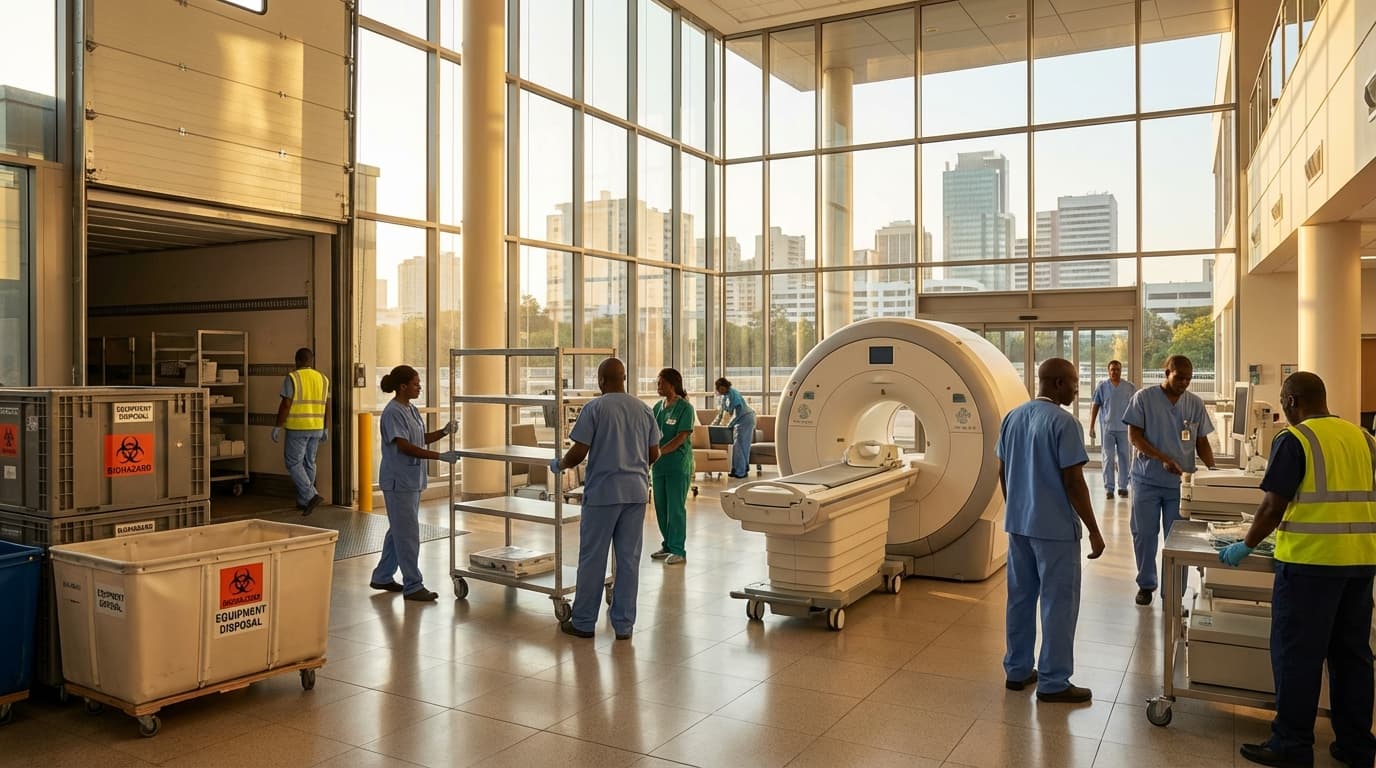
Site Restoration Service After Equipment Removal in South Sudan
Engineering Excellence & Technical Support
Site Restoration Service After Equipment Removal High-standard technical execution following OEM protocols and local regulatory frameworks.
Precision Decontamination & Soil Remediation
Post-equipment removal, our team deploys advanced soil testing and targeted bioremediation techniques to neutralize any residual hydrocarbons or heavy metals, ensuring the land is safe for agricultural use and ecological recovery.
Ecosystem Re-establishment & Biodiversity Support
We go beyond basic cleanup by implementing native seed bank dispersal and habitat reconstruction strategies, fostering the return of local flora and fauna and restoring crucial ecological functions to the impacted zones.
Water Source Protection & Hydrological Restoration
Our experts meticulously assess and restore any disturbed water bodies, implementing erosion control measures and ensuring groundwater recharge pathways are uncompromised, safeguarding vital water resources for the community.
What Is Site Restoration Service After Equipment Removal In South Sudan?
Site restoration service after equipment removal in South Sudan refers to the comprehensive process of returning a disturbed land area to its pre-disturbance or an ecologically sustainable state following the decommissioning and removal of industrial or heavy equipment. This service is critical for mitigating environmental impacts, ensuring land usability, and adhering to regulatory requirements and corporate social responsibility (CSR) commitments. The scope of work typically encompasses a range of activities designed to remediate the physical and ecological condition of the site.
| Who Needs Site Restoration Service? | Typical Use Cases in South Sudan | ||
|---|---|---|---|
| Oil and Gas Companies (Exploration & Production, Refining) | Decommissioning of drilling rigs, production facilities, pipelines, and associated infrastructure after exploration, extraction, or operational life cycles. | Restoration of exploration sites, seismic survey lines, and access roads. | Remediation of spills and leaks impacting soil and water resources. |
| Mining and Extractive Industries | Closure of open-pit mines, underground mines, processing plants, and waste dumps. | Restoration of quarry sites, material stockpiles, and haul roads. | |
| Construction and Infrastructure Projects | Removal of temporary structures, construction camps, and heavy machinery from completed project sites (e.g., roads, bridges, power plants). | Restoration of land used for material sourcing or storage. | |
| Humanitarian and Non-Governmental Organizations (NGOs) | Decommissioning of temporary infrastructure used for aid delivery, refugee camps, or medical facilities. | Restoration of land impacted by extensive logistical operations. | |
| Government Agencies and Ministries | Management and restoration of former military bases or operational sites. | Overseeing and enforcing restoration standards for commercial entities. |
Key Components of Site Restoration Service:
- Decommissioning and dismantling of remaining infrastructure.
- Removal of hazardous materials, contaminants, and residual industrial waste.
- Soil remediation, including excavation, capping, or biological treatments to address contamination.
- Regrading and re-contouring the land to prevent erosion and restore natural drainage patterns.
- Re-vegetation with native or ecologically appropriate species to promote biodiversity and habitat recovery.
- Monitoring and maintenance of the restored site to ensure long-term success and ecological stability.
- Management of waste generated during the removal and restoration processes.
Who Needs Site Restoration Service After Equipment Removal In South Sudan?
Following the removal of industrial or heavy equipment, sites in South Sudan often require professional restoration services. This is crucial for environmental remediation, safety, and enabling future land use. The demand for such services stems from various sectors and organizations operating within the country, particularly those involved in extractive industries, infrastructure development, and humanitarian aid.
| Customer Segment | Specific Departments/Units | Reasons for Needing Restoration | Examples of Equipment |
|---|---|---|---|
| Oil and Gas Companies | Operations Department, Environmental Health & Safety (EHS), Facilities Management | Decommissioning of drilling rigs, pipelines, processing facilities; contamination cleanup; land reclamation for agricultural or residential use. | Drilling rigs, pump jacks, processing units, storage tanks, pipelines |
| Mining Corporations | Mine Operations, Environmental Management, Asset Decommissioning | Restoration of mine sites post-extraction; closure of pits and waste dumps; revegetation; management of water resources. | Excavators, haul trucks, crushers, conveyor belts, processing plants |
| Construction and Infrastructure Firms | Project Management, Site Operations, Environmental Compliance | Demolition and removal of temporary structures; site clearance after infrastructure projects; preparation for new development. | Cranes, bulldozers, concrete batching plants, temporary shelters |
| United Nations Agencies and NGOs | Logistics Department, Operations Management, Program Implementation Teams | Removal of temporary camps, vehicles, and equipment after humanitarian missions; rehabilitation of sites used for emergency response. | Generators, water treatment units, prefabricated structures, vehicles |
| Government Ministries and Agencies | Ministry of Environment, Ministry of Mining, Ministry of Petroleum, Ministry of Infrastructure, Local Government Authorities | Enforcing environmental regulations; managing abandoned sites; reclaiming land for public use; overseeing rehabilitation projects. | Various, depending on the specific industry and the nature of the abandoned equipment |
Target Customers and Departments for Site Restoration Services
- Oil and Gas Companies
- Mining Corporations
- Construction and Infrastructure Firms
- United Nations Agencies and NGOs
- Government Ministries and Agencies
Site Restoration Service After Equipment Removal Process In South Sudan
This document outlines the comprehensive workflow for site restoration services following equipment removal in South Sudan. The process is designed to ensure a safe, environmentally sound, and compliant return of the land to its original or intended state, adhering to local regulations and client specifications. The workflow begins with an initial inquiry and culminates in the final handover of the restored site.
| Stage | Description | Key Activities | Responsible Parties | Deliverables |
|---|---|---|---|---|
| Inquiry & Initial Consultation | The client initiates contact to discuss their site restoration needs. | Understand project scope, site history, and specific requirements. Discuss project goals and constraints. | Client, Restoration Service Provider (RSP) | Understanding of client needs, preliminary project scope. |
| Site Assessment & Planning | A thorough evaluation of the site to determine the extent of disturbance and restoration requirements. | Conduct site surveys, soil testing, environmental sampling, and risk assessment. Identify contamination and potential hazards. Develop a detailed restoration plan. | RSP (Environmental specialists, project managers) | Detailed site assessment report, Restoration plan, Risk assessment report. |
| Proposal Development & Contract Negotiation | Presenting a comprehensive plan and cost estimate to the client. | Prepare a detailed proposal outlining scope of work, methodology, timeline, budget, and health & safety protocols. Negotiate terms and finalize the contract. | RSP, Client | Signed contract, Detailed project proposal. |
| Permitting & Approvals | Securing necessary permissions from local authorities. | Identify and apply for all required permits (environmental, construction, waste disposal, etc.) from relevant South Sudanese government bodies. | RSP, Client (for required documentation) | All necessary permits and regulatory approvals. |
| Pre-Restoration Mobilization | Preparing the site and resources for restoration activities. | Mobilize personnel, equipment, and materials. Establish site security and access control. Implement environmental protection measures. | RSP | Mobilized workforce and equipment, Established site safety and environmental controls. |
| Equipment Removal Support (if applicable) | Assisting or overseeing the safe removal of equipment. | Coordinate with equipment removal teams to minimize site disturbance. Ensure proper decommissioning and removal procedures. | RSP, Client, Equipment Removal Contractor | Equipment safely removed, Minimal additional site impact. |
| Site Remediation & Decontamination | Addressing any contamination or hazardous materials present. | Implement remediation techniques such as excavation, soil washing, bioremediation, or chemical treatment. Safely handle and dispose of hazardous waste. | RSP (Environmental technicians, hazardous material specialists) | Cleaned soil and water, Documented remediation activities. |
| Groundwork & Landscaping | Restoring the physical landscape of the site. | Regrading, backfilling, soil amendment, revegetation with native species, and contouring to prevent erosion. | RSP (Construction crew, landscapers) | Restored land contours, Planted vegetation, Erosion control measures in place. |
| Waste Management & Disposal | Proper handling and disposal of all generated waste. | Segregation, transportation, and disposal of all non-hazardous and hazardous waste in accordance with regulations. | RSP (Waste management specialists) | Properly disposed waste, Waste manifests and disposal certificates. |
| Monitoring & Validation | Ensuring the restoration is meeting its objectives and is stable. | Conduct post-restoration monitoring of vegetation growth, soil stability, and environmental parameters. Validate against restoration goals. | RSP (Environmental specialists, field technicians) | Monitoring reports, Validation of restoration success. |
| Final Inspection & Handover | Client and RSP review and accept the completed restoration. | Conduct a joint site inspection with the client. Address any outstanding issues or punch list items. Formally hand over the restored site. | RSP, Client | Client acceptance of restored site, Handover documentation. |
| Post-Restoration Reporting | Providing a comprehensive summary of the project. | Prepare a final project report detailing all activities, monitoring results, waste disposal records, and lessons learned. | RSP | Final project report, As-built drawings (if applicable). |
Site Restoration Workflow: From Inquiry to Execution
- Inquiry & Initial Consultation
- Site Assessment & Planning
- Proposal Development & Contract Negotiation
- Permitting & Approvals
- Pre-Restoration Mobilization
- Equipment Removal Support (if applicable)
- Site Remediation & Decontamination
- Groundwork & Landscaping
- Waste Management & Disposal
- Monitoring & Validation
- Final Inspection & Handover
- Post-Restoration Reporting
Site Restoration Service After Equipment Removal Cost In South Sudan
Site restoration after equipment removal in South Sudan is a crucial step to ensure land is returned to a safe and usable condition. The cost of these services can vary significantly due to several factors, and it's important for project managers and stakeholders to understand these influences to budget effectively. This document outlines the key pricing factors and provides estimated cost ranges in South Sudanese Pounds (SSP).
| Restoration Scope/Activity | Estimated Cost Range (SSP per unit/activity) | Notes |
|---|---|---|
| Initial Site Assessment & Environmental Survey | 500,000 - 2,500,000 | Varies based on site size and complexity. |
| Demolition & Debris Removal (non-hazardous) | 15,000 - 40,000 per ton | Excludes specialized hazardous waste removal. |
| Topsoil Stripping & Stockpiling | 10,000 - 25,000 per cubic meter | Dependent on depth and area. |
| Excavation & Earthworks (for soil remediation) | 12,000 - 30,000 per cubic meter | Includes soil disposal if contaminated. |
| Soil Remediation (e.g., bioremediation, stabilization) | 30,000 - 80,000 per cubic meter | Highly dependent on contaminant type and treatment method. |
| Hazardous Waste Disposal | 100,000 - 500,000+ per ton | Highly variable based on material type, transport, and disposal facility fees. May require specialized services. |
| Backfilling & Compaction | 8,000 - 20,000 per cubic meter | Cost of fill material and labor. |
| Re-vegetation & Landscaping | 5,000 - 15,000 per square meter | Includes soil amendment, seeding/planting, and initial maintenance. |
| Erosion Control Measures | 2,000 - 10,000 per linear meter (for silt fences, etc.) | Costs vary with the type and extent of measures. |
| Water Feature Restoration (if applicable) | Negotiable, highly site-specific | Can involve dredging, lining, or re-establishing natural flow. |
| Post-Restoration Monitoring & Reporting | 200,000 - 1,000,000+ | Dependent on the duration and intensity of monitoring required by regulations. |
| General Project Management & Contingency | 10-20% of total project cost | Essential for unforeseen issues and administrative overhead. |
Key Pricing Factors for Site Restoration Services in South Sudan:
- {"title":"Scale and Complexity of Restoration:","description":"The larger the area requiring restoration and the more complex the contamination or damage, the higher the cost will be. This includes factors like the depth of excavation, the extent of soil or water contamination, and the type of equipment removed (e.g., heavy industrial machinery versus smaller units)."}
- {"title":"Type of Contamination/Damage:","description":"Different contaminants (e.g., oil, chemicals, heavy metals) require specific remediation techniques, impacting labor, equipment, and disposal costs. Similarly, the extent of physical damage to the land (e.g., soil compaction, erosion) will influence the restoration methods needed."}
- {"title":"Geographical Location and Accessibility:","description":"Remote locations often incur higher costs due to increased transportation expenses for personnel, equipment, and materials. Difficult terrain can also necessitate specialized equipment and longer project timelines."}
- {"title":"Labor Costs and Availability:","description":"The availability of skilled labor in South Sudan, especially for specialized restoration tasks, can influence pricing. Wages for local workers, supervisors, and specialized technicians will be a significant component of the overall cost."}
- {"title":"Equipment and Material Requirements:","description":"The cost of hiring or purchasing specialized restoration equipment (e.g., excavators, soil stabilizers, water treatment systems) and necessary materials (e.g., backfill, soil amendments, erosion control products) directly impacts the budget. This also includes fuel costs for operating machinery."}
- {"title":"Disposal of Hazardous Materials:","description":"If hazardous materials are encountered during removal or restoration, the cost of their safe disposal according to environmental regulations can be substantial. This includes transportation to approved disposal sites and the disposal fees themselves."}
- {"title":"Environmental Regulations and Permitting:","description":"Compliance with local and national environmental regulations is mandatory. Obtaining permits and ensuring adherence to these standards can add to the administrative and operational costs."}
- {"title":"Project Timeline and Urgency:","description":"Projects with tight deadlines may incur premium charges for expedited services, requiring overtime labor and potentially faster mobilization of resources."}
- {"title":"Contractor's Overhead and Profit:","description":"Like any service, contractors will factor in their overhead costs (office expenses, insurance, management) and a profit margin, which can vary between companies."}
- {"title":"Site-Specific Assessments and Surveys:","description":"Initial site assessments, soil testing, and environmental surveys are often required to determine the scope of work and inform the restoration plan, adding to the initial costs."}
Affordable Site Restoration Service After Equipment Removal Options
When heavy equipment is removed from a site, it often leaves behind a disturbed landscape. Our affordable site restoration service focuses on returning your property to its intended condition efficiently and cost-effectively. We offer flexible solutions, including value bundles and smart cost-saving strategies, to meet your specific needs and budget.
| Cost-Saving Strategy | Description | Benefit |
|---|---|---|
| Bundle Discounts | Purchasing a pre-defined value bundle offers a reduced overall cost compared to selecting individual services. | Significant savings on comprehensive restoration. |
| Early Booking Incentives | Schedule your restoration service well in advance of equipment removal or immediately after. | Reduced rates for proactive planning. |
| Phased Restoration | Break down larger restoration projects into smaller, manageable phases over time. | Spreads costs and allows for budget flexibility. |
| DIY Component Integration | We can work with you to identify tasks that can be managed by your team (e.g., initial debris sorting, basic watering) to reduce labor costs. | Lower overall service expenditure. |
| Material Sourcing | We leverage our supplier relationships to obtain quality topsoil, seed, and other materials at competitive prices. | Reduced material costs passed on to you. |
| Efficient Project Management | Our experienced team ensures efficient workflow and minimizes wasted time and resources. | Reduced labor hours and faster completion. |
| Seasonal Timing | Certain restoration tasks, like seeding, can be more cost-effective when performed during optimal growing seasons. | Improved vegetation success at a lower cost. |
Value Bundles for Site Restoration
- {"title":"Basic Restoration Package","description":"Ideal for minor disturbances. Includes basic grading, topsoil replenishment, and initial seeding of grass. Focuses on re-establishing a functional and aesthetically pleasing ground cover."}
- {"title":"Standard Restoration Package","description":"Suitable for moderate damage. Encompasses all elements of the Basic package, plus minor debris removal, soil compaction relief, and a more robust seeding mix for enhanced vegetation growth."}
- {"title":"Premium Restoration Package","description":"For significant site disruption. Includes comprehensive debris removal, extensive grading and leveling, advanced soil amendment, specialized seeding or sodding, and initial watering and care for optimal plant establishment. May include minor erosion control measures."}
- {"title":"Customizable Restoration Bundle","description":"Tailor a package to your exact requirements. Select from our range of services to create a unique bundle that addresses your specific site conditions and desired outcomes."}
Verified Providers In South Sudan
Navigating the healthcare landscape in South Sudan can be challenging, especially when seeking verified and trustworthy providers. In this context, Franance Health emerges as a leading entity, distinguished by its stringent credentials and unwavering commitment to quality care. This document outlines why Franance Health represents the best choice for your healthcare needs.
| Criteria | Franance Health's Distinction | Benefit to Patients |
|---|---|---|
| Quality Assurance | Internationally recognized accreditation and adherence to strict protocols. | Ensures consistent, high-quality medical care and patient safety. |
| Expertise | Recruitment and retention of highly skilled and experienced medical professionals. | Access to competent and knowledgeable healthcare providers for accurate diagnosis and effective treatment. |
| Infrastructure | Investment in advanced medical technology and well-maintained facilities. | Facilitates precise diagnostics, advanced treatment options, and a comfortable patient experience. |
| Patient Experience | Focus on empathetic communication, individualized care, and patient empowerment. | Builds trust, reduces anxiety, and leads to greater patient satisfaction and adherence to treatment. |
| Community Impact | Active engagement in public health initiatives and outreach programs. | Contributes to the overall health improvement of South Sudan and promotes preventative care. |
Franance Health Credentials and Why They Matter
- Accreditation and Certification: Franance Health adheres to rigorous international and national standards for healthcare facilities and personnel. Their certifications are a testament to their commitment to best practices in patient care, safety, and operational excellence.
- Highly Qualified Medical Professionals: The organization employs a team of experienced and licensed doctors, nurses, specialists, and allied health professionals. Continuous professional development and adherence to ethical guidelines are core tenets of their staffing policy.
- State-of-the-Art Facilities and Equipment: Franance Health invests in modern medical equipment and maintains facilities designed to provide a comfortable and efficient healing environment. This ensures accurate diagnostics and effective treatments.
- Patient-Centric Approach: A core value at Franance Health is prioritizing the patient's well-being. This translates into compassionate care, clear communication, and personalized treatment plans, fostering trust and positive patient outcomes.
- Commitment to Public Health Initiatives: Beyond individual patient care, Franance Health actively participates in and supports public health programs aimed at improving the overall health of communities in South Sudan. This demonstrates a deep-seated dedication to societal well-being.
- Transparent and Ethical Practices: Franance Health operates with a high degree of transparency in its operations, billing, and patient interactions. Their ethical framework ensures that patients receive fair and honest treatment.
Scope Of Work For Site Restoration Service After Equipment Removal
This Scope of Work (SOW) outlines the requirements for the comprehensive site restoration services following the complete removal of [Specify Equipment Name(s)] from the [Specify Site Location/Address]. The objective is to return the site to a safe, stable, and environmentally sound condition, meeting all applicable regulatory standards and the client's specifications. This SOW details the technical deliverables and standard specifications to be adhered to throughout the project.
| Activity | Description | Standard Specifications/Deliverables | Acceptance Criteria |
|---|---|---|---|
| Site Assessment and Planning | Initial assessment of the site post-equipment removal to identify any damage, contamination, or necessary remediation. | Detailed site survey report including photographic documentation, identification of potential hazards, and proposed restoration plan. Environmental assessment report (if applicable). | Approved restoration plan by the Client. Compliance with all regulatory requirements. |
| Demolition and Debris Removal (if applicable) | Removal of any remaining foundations, supports, or associated structures related to the equipment. | Segregation and proper disposal or recycling of all demolition debris according to local, state, and federal regulations. Manifests for waste disposal. | Site cleared of all demolition debris. Waste manifests provided. Zero debris remaining on site. |
| Hazardous Material Abatement (if applicable) | Identification and safe removal of any hazardous materials encountered (e.g., asbestos, lead paint, contaminated oils). | Certified hazardous material handling and disposal procedures. Documentation of abatement activities, including chain of custody for waste. Air monitoring reports (if applicable). | Certificates of completion for hazardous material abatement. No detectable hazardous materials exceeding regulatory limits post-abatement. |
| Soil Remediation and Contamination Management | Assessment and remediation of any soil contamination resulting from equipment operation or leaks. | Soil sampling and analysis. Implementation of approved remediation techniques (e.g., excavation and off-site disposal, in-situ treatment). Site closure reports from regulatory agencies. | Soil contaminant levels meet or are below regulatory action levels. Approved site closure documentation. |
| Grading and Earthwork | Restoration of original site contours and grades or as specified in the restoration plan. | Compaction testing to specified density. Grading to achieve positive drainage away from structures and site boundaries. As-built grading plan. | Final grades match approved plans. Compaction test results meet specified standards. Adequate surface drainage achieved. |
| Sub-surface Utilities Verification and Repair | Verification of the integrity of all existing sub-surface utilities (e.g., electrical conduits, pipelines, drainage systems) in the work area and repair of any damage. | Utility locate services. Non-destructive testing of identified utilities. Repair of damaged utilities to meet industry standards. As-built utility drawings. | All utilities verified to be in good working order. Repairs completed to manufacturer's specifications. Updated as-built drawings. |
| Paving and Surface Restoration | Restoration of any disturbed paved surfaces (asphalt, concrete, gravel) to their original or specified condition. | Use of materials that match existing surfaces in terms of type, thickness, and finish. Proper sub-base preparation and compaction. Weather-appropriate application methods. | Paved surfaces match surrounding areas in appearance and functionality. No visible cracks, unevenness, or settlement. |
| Landscaping and Vegetation Establishment | Restoration of any disturbed vegetated areas, including topsoil placement, seeding, sodding, or planting. | Use of appropriate topsoil meeting local specifications. Application of seed/sod/plants suitable for the site's climate and conditions. Specified establishment period for vegetation. | Vegetation is healthy, established, and meets the specified coverage requirements. Absence of invasive species. |
| Final Inspection and Sign-off | Comprehensive final inspection of all restored areas to ensure all scope requirements have been met. | Final inspection report detailing all completed work and any outstanding items. Client acceptance form. | Client sign-off confirming satisfactory completion of all scope of work items. |
Project Phases and Activities
- Site Assessment and Planning
- Demolition and Debris Removal (if applicable)
- Hazardous Material Abatement (if applicable)
- Soil Remediation and Contamination Management
- Grading and Earthwork
- Sub-surface Utilities Verification and Repair
- Paving and Surface Restoration
- Landscaping and Vegetation Establishment
- Final Inspection and Sign-off
Service Level Agreement For Site Restoration Service After Equipment Removal
This Service Level Agreement (SLA) outlines the response times and uptime guarantees for the Site Restoration Service provided by [Your Company Name] following the removal of customer equipment. This SLA is an addendum to the Master Service Agreement between [Your Company Name] and [Customer Name].
| Incident Severity | Response Time Target | Resolution Time Target | Uptime Guarantee (Monthly) |
|---|---|---|---|
| Emergency | Within 30 minutes during Service Hours; 2 hours outside Service Hours | Within 8 hours of response | N/A (Focus on immediate resolution) |
| Urgent | Within 2 business hours during Service Hours | Within 24 business hours of response | 99.5% |
| Standard | Within 8 business hours during Service Hours | Within 5 business days of response | 99.9% |
Key Definitions
- Service Hours: Monday to Friday, 9:00 AM to 5:00 PM [Local Timezone], excluding national holidays.
- Emergency: Any event that causes a complete loss of access to the restored site, or poses an immediate safety hazard. Examples include significant structural damage, uncontrolled environmental contamination, or failure of critical safety systems.
- Urgent: Any issue that significantly impairs the functionality of the restored site but does not constitute an Emergency. Examples include partial loss of access, significant environmental containment breaches, or failure of non-critical safety systems.
- Standard: Any issue that does not qualify as an Emergency or Urgent. Examples include minor aesthetic damage, cosmetic imperfections, or minor deviations from agreed-upon restoration standards.
- Restored Site: The physical location where customer equipment was previously installed, now subject to the site restoration process as defined in the Service Order.
- Downtime: The period during which the Restored Site is unavailable or unusable due to a Service Incident, as measured from the time of incident notification until resolution and confirmation of service restoration.
Frequently Asked Questions

Ready when you are
Let's scope your Site Restoration Service After Equipment Removal in South Sudan project in South Sudan.

Scaling healthcare logistics and technical systems across the entire continent.