
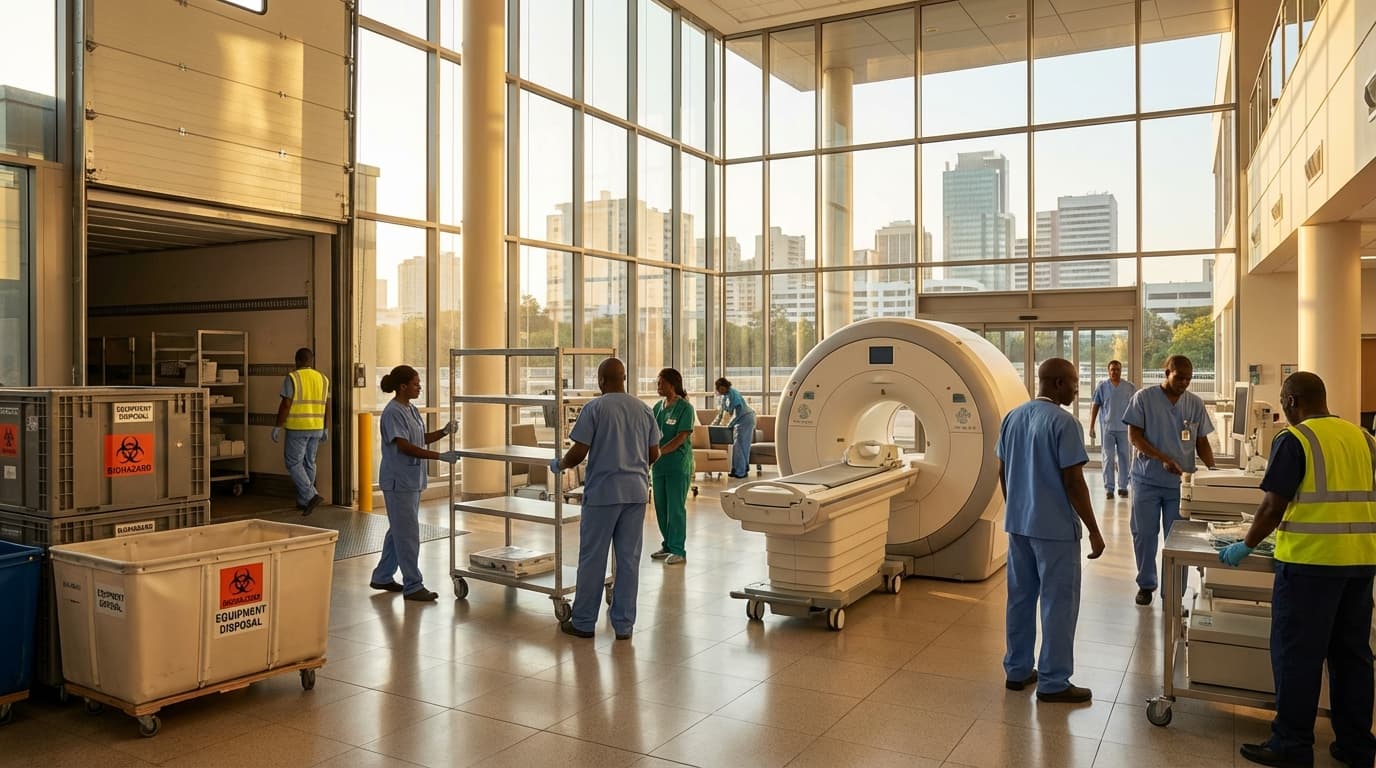
Medical Equipment Relocation Service (Move & Re-Install) in South Sudan
Engineering Excellence & Technical Support
Medical Equipment Relocation Service (Move & Re-Install) High-standard technical execution following OEM protocols and local regulatory frameworks.
Specialized Handling & Climate Control
Our trained technicians utilize custom-built, climate-controlled transport solutions to ensure sensitive medical equipment, such as MRI machines and X-ray units, maintain optimal operating conditions during transit across South Sudan's challenging terrains and fluctuating temperatures. We employ specialized padding, shock absorption, and humidity regulation to protect delicate components and prevent damage.
Certified Re-Installation & Calibration
Beyond safe transit, we provide expert re-installation and precision calibration services for all medical equipment. Our certified engineers adhere to strict manufacturer guidelines and South Sudanese health regulations, ensuring each device is fully operational, accurate, and compliant, minimizing downtime and guaranteeing patient safety immediately upon setup.
End-to-End Logistics & Compliance
We manage the entire relocation process, from comprehensive site surveys and risk assessments to customs clearance and secure transportation, even to remote regions of South Sudan. Our team is adept at navigating local logistical complexities and ensuring all necessary permits and documentation are in order, guaranteeing a seamless and compliant transition for your vital medical assets.
What Is Medical Equipment Relocation Service (Move & Re-install) In South Sudan?
Medical Equipment Relocation Service (Move & Re-Install) in South Sudan refers to a specialized logistical and technical service encompassing the safe, secure, and compliant transportation of medical devices from one location to another within South Sudan, followed by their expert re-installation and operational validation at the destination. This service is critical for healthcare facilities undergoing infrastructure changes, expansion, or requiring equipment reassignment to optimize patient care delivery and resource allocation in a challenging operational environment.
| Need For Service | Typical Use Cases | |||||
|---|---|---|---|---|---|---|
| Healthcare facilities (hospitals, clinics, diagnostic centers) undergoing physical relocation or expansion. | Relocation of a hospital wing or entire facility due to damage, renovation, or strategic repositioning. | Transfer of specialized diagnostic or surgical equipment to a new department or satellite clinic. | Consolidation or decommissioning of redundant equipment from multiple sites. | Deployment of medical equipment to newly established or temporary healthcare sites (e.g., disaster relief, humanitarian missions). | Upgrades or replacements requiring the removal and re-installation of existing, functional equipment. | Inter-facility transfers for specialized treatments or collaborations. |
| Government health ministries and public health programs responsible for managing and distributing medical assets. | Non-governmental organizations (NGOs) and international aid agencies implementing health projects. | Private healthcare providers expanding their services or relocating operations. | Research institutions requiring the movement of laboratory and diagnostic equipment. |
Key Components of Medical Equipment Relocation Service (Move & Re-Install):
- Pre-Relocation Assessment and Planning: Comprehensive site surveys at origin and destination to identify equipment specifications, environmental requirements, access limitations, power needs, and potential risks. Development of a detailed relocation plan.
- Decontamination and Preparation: Cleaning, disinfection, and sterilization of equipment according to manufacturer guidelines and infection control protocols to prevent cross-contamination during transit.
- Dismantling and Packaging: Careful disassembly of complex equipment by certified technicians. Secure packaging using specialized materials (e.g., anti-static wrapping, shock-absorbing cushioning, custom crates) to protect against physical damage, vibration, and environmental factors.
- Transportation and Logistics: Utilization of appropriate transport vehicles (e.g., climate-controlled, air-ride suspension) and trained personnel experienced in handling sensitive medical apparatus. Adherence to transportation regulations and insurance protocols.
- Re-installation and Setup: Precise reassembly and connection of equipment at the new location. Calibration and configuration to meet manufacturer specifications and clinical requirements.
- Operational Validation and Testing: Rigorous functional testing and performance verification of all relocated equipment to ensure optimal operational status and patient safety. This may include diagnostic checks, output measurements, and simulated use scenarios.
- Documentation and Training: Provision of updated installation records, test results, and user manuals. On-site training for healthcare personnel on the operation and maintenance of the re-installed equipment.
- Regulatory Compliance: Ensuring all relocation activities adhere to national health regulations, safety standards, and any applicable international guidelines relevant to medical devices in South Sudan.
Who Needs Medical Equipment Relocation Service (Move & Re-install) In South Sudan?
South Sudan's healthcare sector, though still developing, faces significant logistical challenges when it comes to medical equipment. The successful operation of clinics, hospitals, and specialized medical facilities hinges on the proper functioning and strategic placement of vital equipment. Relocating and re-installing this equipment, whether it's due to facility upgrades, expansions, emergencies, or even temporary deployments, requires specialized expertise to ensure minimal disruption and proper calibration. This is where a professional Medical Equipment Relocation Service becomes indispensable.
| Target Customer | Relevant Departments | Reasons for Relocation/Re-installation |
|---|---|---|
| Hospitals (Public and Private) | Radiology/Imaging, Surgery, Intensive Care Units (ICU), Laboratories, Operating Theaters, Emergency Departments, Pharmacy, General Wards, Administration | Renovations, upgrades, expansion of services, new facility setup, replacement of old equipment, emergency preparedness, consolidation of services. |
| Clinics and Health Centers | Consultation Rooms, Treatment Rooms, Pharmacy, Laboratory Services, Minor Procedure Areas | Relocation to new sites, facility upgrades, expansion of services, integration of new diagnostic tools, responding to community needs. |
| Specialized Medical Facilities (e.g., diagnostic imaging centers) | Imaging Departments (MRI, CT Scan, X-ray), Cardiology Units, Oncology Centers | Installation of new high-tech equipment, replacement of outdated machinery, relocation due to structural changes, optimizing workflow. |
| Non-Governmental Organizations (NGOs) | Mobile Clinics, Field Hospitals, Health Program Sites, Training Centers | Deployment of equipment to remote or underserved areas, setting up temporary medical facilities for crises, moving equipment between project sites, upgrading existing field infrastructure. |
| Government Health Ministries and Agencies | Public Health Facilities, National Medical Stores, Training Institutions | National health infrastructure development, distribution of equipment to regional health facilities, stock management and relocation, supporting public health campaigns. |
| Research Institutions and Universities | Medical Schools, Research Laboratories, Clinical Trial Sites | Setting up new research labs, upgrading existing facilities for advanced research, moving equipment for collaborative projects, ensuring continuity of research during facility changes. |
| Emergency Response Organizations | Disaster Relief Centers, Field Hospitals, Medical Aid Stations | Rapid deployment of medical equipment to emergency zones, setting up temporary medical infrastructure, relocating equipment as the situation evolves. |
| Private Medical Practitioners and Clinics | Treatment Rooms, Consultation Areas, Minor Procedure Suites | Relocation of practices, expansion of clinic space, acquisition of new specialized equipment, optimizing patient flow. |
Who Needs Medical Equipment Relocation Service (Move & Re-Install) in South Sudan?
- Hospitals (Public and Private)
- Clinics and Health Centers
- Specialized Medical Facilities (e.g., diagnostic imaging centers, surgical units)
- Non-Governmental Organizations (NGOs) involved in healthcare provision
- Government Health Ministries and Agencies
- Research Institutions and Universities with medical programs
- Emergency Response Organizations
- Private Medical Practitioners and Clinics
Medical Equipment Relocation Service (Move & Re-install) Process In South Sudan
This document outlines the standard operating procedure for medical equipment relocation and re-installation services within South Sudan. The process is designed to ensure the safe, secure, and efficient transfer and recommissioning of critical medical assets, minimizing downtime and disruption to healthcare services.
| Phase | Step | Description | Key Activities | Responsible Party | Deliverables |
|---|---|---|---|---|---|
| Phase 1: Inquiry & Assessment | 1.1 Initial Inquiry | Client contacts the service provider to request medical equipment relocation. | Receive and acknowledge client's request, gather initial information (equipment type, quantity, origin, destination, urgency). | Client, Service Provider Sales/Inquiry Team | Acknowledged inquiry, initial client brief. |
| 1.2 Site Survey & Equipment Audit | Detailed assessment of the equipment and locations involved. | On-site visit to inspect equipment condition, assess disassembly/reassembly complexity, identify access challenges (locations, roads), evaluate power/utility requirements at destination, document serial numbers and condition (photos/videos). | Service Provider Technical & Logistics Teams, Client Representative | Detailed equipment inventory, condition report, site assessment report, identified risks. | |
| Phase 2: Planning & Quotation | 2.1 Develop Relocation Plan | Create a comprehensive plan for the entire relocation process. | Define scope of work, determine disassembly/reassembly procedures, plan transportation routes and methods, schedule timelines, identify specialized tools and personnel required, develop risk mitigation strategies. | Service Provider Project Manager & Technical Team | Detailed relocation plan, project timeline. |
| 2.2 Prepare & Submit Quotation | Provide a detailed cost estimate for the relocation service. | Calculate costs for labor, specialized tools, packaging materials, transportation, insurance, potential customs/import duties (if applicable), re-installation, calibration, and testing. Present a formal quotation to the client. | Service Provider Project Manager & Finance Team | Formal quotation, terms and conditions. | |
| Phase 3: Preparation & Disassembly | 3.1 Client Agreement & Scheduling | Formalize the service agreement and set the execution dates. | Client accepts quotation, contract signing, confirmation of service dates, finalization of communication protocols. | Client, Service Provider Project Manager | Signed contract, confirmed schedule. |
| 3.2 Equipment Preparation & Disassembly | Safely prepare and dismantle the medical equipment for transport. | Clean equipment, secure loose parts, remove consumables, perform documented disassembly according to manufacturer guidelines or established procedures, label all components clearly for reassembly, protect sensitive parts with appropriate materials. | Service Provider Technical Team, Client Biomedical Engineer (if available) | Disassembled equipment, labeled components, disassembly log. | |
| Phase 4: Transportation | 4.1 Packaging & Loading | Securely package and load equipment onto transport vehicles. | Use appropriate protective packaging (e.g., crating, bubble wrap, anti-static materials), ensure weight distribution is balanced, use specialized lifting equipment for heavy items, secure loads to prevent movement during transit. | Service Provider Logistics & Technical Teams | Packaged and secured equipment, loading manifest. |
| 4.2 Transit & Monitoring | Safely transport equipment from origin to destination. | Utilize appropriate transport vehicles (e.g., climate-controlled where necessary), monitor route for safety and security, provide updates to the client, adhere to any specific transit requirements (e.g., temperature control). | Service Provider Logistics Team, Driver | Equipment in transit, route monitoring logs, client updates. | |
| 4.3 Unloading & Inspection | Safely unload equipment at the destination and conduct initial inspection. | Carefully unload equipment, visually inspect for any damage incurred during transit, compare with original condition report. | Service Provider Logistics & Technical Teams | Unloaded equipment, preliminary damage assessment report. | |
| Phase 5: Re-installation & Calibration | 5.1 Site Preparation & Setup | Prepare the destination site for re-installation. | Ensure power, ventilation, and other utility requirements are met, clear the installation area, set up necessary tools and equipment. | Service Provider Technical Team, Client Facilities Team | Prepared installation site. |
| 5.2 Equipment Re-assembly | Reassemble the medical equipment. | Follow disassembly logs and manufacturer guidelines for reassembly, connect all components correctly, ensure all fittings are secure. | Service Provider Technical Team | Reassembled equipment. | |
| 5.3 Re-installation & Connection | Install and connect equipment to utilities. | Position equipment according to site plan, connect to power, water, and other required utilities, ensure proper grounding and safety connections. | Service Provider Technical Team, Client Biomedical Engineer | Installed and connected equipment. | |
| 5.4 Calibration & Configuration | Calibrate and configure equipment to manufacturer specifications. | Perform initial calibration checks, adjust settings as per original configuration or new requirements, update software or firmware if necessary, ensure all parameters are within acceptable ranges. | Service Provider Technical Team, Manufacturer Representative (if required) | Calibrated and configured equipment, calibration certificates. | |
| Phase 6: Testing & Handover | 6.1 Functionality Testing | Thoroughly test all equipment functions. | Perform a comprehensive series of tests to verify all operational modes, safety features, and performance metrics. Use manufacturer-approved test protocols where available. | Service Provider Technical Team, Client Biomedical Engineer | Equipment functionality test reports. |
| 6.2 Performance Verification | Ensure the equipment performs to its intended standards. | Conduct tests to confirm accuracy, precision, and reliability of the equipment's outputs. Compare results with baseline data or manufacturer specifications. | Service Provider Technical Team, Client Biomedical Engineer | Performance verification reports. | |
| 6.3 Training (if applicable) | Provide training to end-users on the re-installed equipment. | Offer basic operational and safety training to relevant hospital staff on the re-installed equipment, especially if there are significant changes or new features. | Service Provider Technical Team, Client End-Users | Trained staff, training attendance records. | |
| 6.4 Final Inspection & Handover | Conduct a final walk-through and formally hand over the equipment. | Client representatives (biomedical engineering, department head) inspect the re-installed and tested equipment. Sign-off on the completion of services. | Service Provider Project Manager, Client Representatives | Signed project completion/handover document, final report. | |
| Phase 7: Post-Execution Follow-up | 7.1 Documentation & Archiving | Ensure all project documentation is complete and archived. | Compile all reports, logs, certificates, and client sign-offs. Archive for future reference. | Service Provider Project Manager | Complete project file. |
| 7.2 Warranty & Support | Provide information on warranty and ongoing support. | Clarify warranty periods for the re-installation service and any component replacements. Provide contact information for post-relocation support. | Service Provider Project Manager, Client | Warranty information, support contact details. | |
| 7.3 Client Feedback | Gather feedback on the service provided. | Send a client satisfaction survey to gather feedback on the process, identify areas for improvement. | Service Provider Quality Assurance Team | Client feedback survey results. |
Medical Equipment Relocation & Re-installation Workflow (South Sudan)
- Phase 1: Inquiry & Assessment
- Phase 2: Planning & Quotation
- Phase 3: Preparation & Disassembly
- Phase 4: Transportation
- Phase 5: Re-installation & Calibration
- Phase 6: Testing & Handover
- Phase 7: Post-Execution Follow-up
Medical Equipment Relocation Service (Move & Re-install) Cost In South Sudan
Relocating sensitive medical equipment in South Sudan involves significant logistical and technical challenges. The cost of such a service, encompassing both the physical move and the subsequent re-installation and calibration, is highly variable and depends on a multitude of factors. Understanding these factors is crucial for accurate budgeting and successful project execution. The pricing is typically determined by a combination of direct service fees, logistical considerations, and the inherent risks associated with operating in the South Sudanese context.
| Service Component | Estimated Cost Range (South Sudanese Pounds - SSP) | Notes |
|---|---|---|
| Basic Equipment Move (e.g., patient monitors, small lab equipment) | 500,000 - 2,000,000 SSP | Excludes specialized technical re-installation and calibration. |
| Mid-Range Equipment Move (e.g., smaller X-ray units, ultrasound machines) | 1,500,000 - 7,000,000 SSP | May include basic setup, but full calibration might be extra. |
| Large/Complex Equipment Move (e.g., CT scanners, MRI machines, large operating theatre equipment) | 5,000,000 - 25,000,000+ SSP | Includes specialized transport, skilled technicians for dismantling/re-assembly, and often a base level of calibration. Significant variations based on specific model and complexity. |
| Technical Re-installation & Calibration (per unit, depending on complexity) | 800,000 - 10,000,000+ SSP | This is a highly variable cost, with highly specialized equipment like MRI requiring extensive calibration. |
| Specialized Packaging & Handling (e.g., custom crating, climate control) | 200,000 - 5,000,000+ SSP | Dependent on the size, fragility, and specific requirements of the equipment. |
| Transportation Costs (per kilometer, average) | 50,000 - 200,000+ SSP | This is an estimate and can vary significantly based on road conditions, vehicle type, and fuel prices. |
| Insurance & Security Escort (percentage of total value or daily rate) | 1% - 5% of equipment value OR 500,000 - 2,000,000 SSP per day | Crucial for risk mitigation in certain regions. |
| Dismantling/Re-assembly Labor (per technician, per day) | 200,000 - 700,000 SSP | Skilled technical labor is expensive. |
Key Pricing Factors for Medical Equipment Relocation in South Sudan:
- Type and Size of Equipment: Larger, heavier, or more complex machinery (e.g., MRI machines, CT scanners, large X-ray units) will naturally incur higher transportation and specialized handling costs compared to smaller items like patient monitors or microscopes.
- Distance of Relocation: The mileage between the origin and destination is a primary cost driver. Longer distances necessitate more fuel, driver time, and potential overnight stays for the transport crew.
- Accessibility of Locations: Remote or difficult-to-access sites (e.g., rural clinics with poor road infrastructure) will significantly increase transportation costs due to the need for specialized vehicles, longer transit times, and potential for delays.
- Dismantling and Re-assembly Complexity: The intricacy of taking apart and putting back together specialized medical equipment requires skilled technicians. The more complex the process, the higher the labor costs.
- Specialized Handling and Packaging: Delicate or highly sensitive equipment may require custom crating, shock-absorbent packaging, climate-controlled transport, or even specialized lifting equipment, all contributing to increased costs.
- Technical Expertise and Calibration: Re-installing medical equipment often requires certified technicians for proper setup, alignment, and calibration to ensure accurate functionality and patient safety. This specialized labor is a significant cost component.
- Insurance and Risk Mitigation: The inherent risks in South Sudan, including security concerns, potential for damage during transit, and customs procedures, necessitate robust insurance coverage and security measures, which add to the overall price.
- Regulatory and Customs Fees: Navigating import/export regulations, customs duties, and permits for medical equipment can be complex and incur associated fees.
- Time Sensitivity: Urgent relocations or those requiring expedited services will generally command higher prices.
- Service Provider's Experience and Reputation: Established companies with a proven track record in South Sudan often charge a premium for their expertise, reliability, and established networks.
- Additional Services: This could include site surveys, preparatory work, waste disposal of old equipment, or training for staff on the re-installed equipment.
Affordable Medical Equipment Relocation Service (Move & Re-install) Options
Moving and re-installing sensitive medical equipment requires specialized care, expertise, and a robust logistical plan. Our Affordable Medical Equipment Relocation Service offers comprehensive solutions designed to minimize downtime, ensure equipment integrity, and manage costs effectively. We understand the critical nature of your operations and provide tailored services to meet your unique needs, from single-item moves to complete facility transfers.
| Value Bundle Name | Includes | Target Audience | Cost-Saving Strategies | Estimated Price Range (Illustrative) |
|---|---|---|---|---|
| Basic Move & Power-Up | Secure transport of one to five standard medical devices, basic de-installation & re-installation, power-up verification. | Small clinics, individual practitioners, single-item relocations. | Efficient packing materials, streamlined transport routes, basic technician involvement. | $500 - $2,500 |
| Standard Facility Transition | Relocation of up to 20 medical devices, specialized packing, certified de-installation & re-installation, basic calibration checks, project management. | Medium-sized clinics, departmental moves, smaller hospitals. | Bulk material discounts, optimized scheduling to reduce labor hours, pre-planning to avoid unexpected issues. | $3,000 - $15,000 |
| Comprehensive Hospital/Lab Move | Full-scale relocation of all medical equipment (including large, complex machinery), custom crating, certified technicians for all de-install/re-install, full calibration & testing, detailed inventory management, dedicated project manager. | Hospitals, research labs, multi-site healthcare systems. | Long-term contract discounts, phased relocation planning, strategic partnerships for specialized equipment, access to bulk purchasing for supplies. | $20,000+ (Highly Variable) |
| Emergency Equipment Relocation | Expedited de-installation, transport, and re-installation of critical medical equipment with a focus on minimal downtime. Service available 24/7. | Any facility experiencing urgent equipment needs due to emergencies or unforeseen circumstances. | Dedicated rapid-response teams, priority scheduling, pre-identified logistical routes. | Premium hourly rates + rush fees (details provided upon request) |
Our Value-Added Services & Cost-Saving Strategies:
- Expert Packing & Handling: Utilizing anti-static, vibration-dampening, and climate-controlled materials and vehicles to protect sensitive electronics and components.
- Certified Technicians: Our team includes certified technicians for precise de-installation and re-installation of complex medical machinery.
- Specialized Transportation: Employing air-ride suspension vehicles and securement systems to prevent damage during transit.
- Comprehensive Insurance: Providing robust insurance coverage for peace of mind throughout the relocation process.
- On-Site Assessment: Offering free, no-obligation on-site assessments to accurately quote services and identify potential challenges.
- Flexible Scheduling: Working around your operational hours to minimize disruption to patient care and business continuity.
- Post-Relocation Testing & Calibration: Ensuring all equipment functions optimally after re-installation.
- Detailed Inventory & Documentation: Maintaining meticulous records of all equipment, its condition, and its location throughout the move.
Verified Providers In South Sudan
In the challenging landscape of healthcare in South Sudan, identifying truly Verified Providers is paramount for ensuring quality and reliable medical services. Franance Health stands out as a leading organization that not only provides essential healthcare but also upholds the highest standards of verification and quality assurance. Their commitment to transparency, patient safety, and ethical practices makes them the best choice for individuals and communities seeking dependable healthcare solutions.
| Key Feature | Franance Health's Commitment | Benefit to Patients |
|---|---|---|
| Credential Verification | Meticulous vetting of all medical staff and facility accreditations. | Assurance of receiving care from qualified and legitimate healthcare professionals. |
| Quality of Care | Adherence to stringent medical protocols and continuous staff training. | Access to high-quality medical treatments and positive health outcomes. |
| Ethical Practice | Upholding the highest ethical standards in patient care and data privacy. | Trustworthy and respectful healthcare experience, with patient confidentiality assured. |
| Accessibility | Strategic placement of facilities to serve diverse populations across South Sudan. | Easier access to essential healthcare services for communities in need. |
| Patient Support | Dedicated patient support services to guide individuals through their healthcare journey. | A supportive and informative experience, reducing anxiety and improving understanding. |
Why Franance Health is the Top Choice for Verified Providers in South Sudan
- Rigorous Accreditation and Licensing: Franance Health ensures all its facilities and medical professionals are fully accredited and licensed by the relevant South Sudanese health authorities, providing an immediate layer of trust and legitimacy.
- Experienced and Qualified Medical Personnel: The organization prioritizes hiring highly skilled and experienced doctors, nurses, and support staff who are dedicated to delivering compassionate and effective care.
- Commitment to International Standards: Franance Health aligns its operational protocols and service delivery with recognized international healthcare standards, ensuring a high caliber of medical practice.
- Transparent Service Delivery and Pricing: Patients can expect clear communication regarding their treatment options, expected outcomes, and associated costs, fostering an environment of trust and accountability.
- Community-Centric Approach: Franance Health actively engages with the communities it serves, understanding their unique health needs and tailoring services accordingly. This deep understanding contributes to more relevant and effective healthcare provision.
- Robust Quality Control Measures: Continuous monitoring and evaluation of services are integral to Franance Health's operations, guaranteeing consistent quality and identifying areas for improvement.
- Dedication to Patient Safety: Patient well-being is the utmost priority, with comprehensive safety protocols in place to minimize risks and ensure a secure healthcare experience.
Scope Of Work For Medical Equipment Relocation Service (Move & Re-install)
This Scope of Work (SOW) outlines the requirements for a professional medical equipment relocation service, encompassing the safe disconnection, secure transportation, and re-installation of various medical devices at designated locations. The service aims to ensure minimal disruption to operations, maintain equipment integrity, and adhere to all relevant safety and technical standards. This document details the technical deliverables and standard specifications expected from the service provider.
| Technical Deliverable | Standard Specification / Requirement | Verification Method |
|---|---|---|
| Pre-Move Site Survey Report | Detailed inventory of all equipment, assessment of access routes, identification of potential hazards, confirmation of power/utility requirements at destination. Includes digital photographs and floor plans. | Review and approval by client representative prior to commencement of work. |
| Decontamination Certificate (if applicable) | Confirmation that equipment has been decontaminated according to manufacturer guidelines and local regulations. Includes details of decontamination agent used and date. | Certificate provided by a certified decontamination specialist or client's biomedical engineering department. |
| Equipment Disassembly Report | Confirmation of proper disconnection of all cables, utilities, and components. Record of any unique disassembly procedures or findings. Photographic evidence of disassembly state. | Visual inspection by client representative or designated personnel. Signed report by service provider technician. |
| Protective Packing Materials | Use of anti-static wrapping, custom-fitted foam padding, shock-absorbent materials, and robust crates/boxes designed for sensitive medical equipment. All materials must be clean and free from debris. | Visual inspection of packing materials before use. Equipment inspection upon arrival for any signs of damage to packaging. |
| Secure Transportation Plan | Use of climate-controlled, air-ride suspension vehicles. Equipment to be secured using straps, bolsters, and bracing to prevent movement during transit. Adherence to manufacturer's recommended transportation parameters (e.g., temperature, humidity). | Vehicle inspection by client representative. GPS tracking of transport vehicle (optional, per agreement). Photographic evidence of secured equipment in transit. |
| Re-assembly and Re-installation Report | Confirmation of correct re-assembly according to manufacturer's specifications. Proper connection to power, data, and other required utilities. Identification of any components requiring special attention during re-installation. | Visual inspection by client representative or designated personnel. Signed report by service provider technician. |
| Equipment Performance Test Report | Verification of full operational functionality post-installation. Includes pre-defined test protocols and results. For diagnostic imaging and complex devices, this includes phantom imaging or equivalent functional tests. | Execution of agreed-upon test protocols. Review and sign-off of test results by client's biomedical engineering or clinical staff. |
| Calibration Certificate (if applicable) | Confirmation that critical parameters are within manufacturer-specified tolerances. Calibration performed by certified technicians using traceable standards. | Issuance of a calibration certificate for each calibrated device. Audit of calibration records and equipment readings. |
| Post-Move Site Cleanliness Report | Confirmation that all packing materials and debris have been removed from the destination site, leaving it in a clean and operational state. | Visual inspection by client representative. Signed confirmation of site cleanup. |
| Final Project Handover Documentation | Includes all previously mentioned reports, a comprehensive equipment inventory list of relocated items, and a final sign-off form acknowledging successful completion of the relocation project. | Formal handover meeting with client representative. Signed project completion form. |
Key Stages of Medical Equipment Relocation
- Pre-Move Assessment and Planning
- Dismantling and Disconnection
- Packing and Securing
- Transportation
- Unpacking and Re-assembly
- Re-installation and Configuration
- Testing and Calibration
- Documentation and Sign-off
Service Level Agreement For Medical Equipment Relocation Service (Move & Re-install)
This Service Level Agreement (SLA) outlines the terms and conditions for the Medical Equipment Relocation Service (Move & Re-Install), focusing on guaranteed response times and uptime for critical medical devices during and immediately after the relocation process. This SLA applies to all services provided by [Your Company Name] ('Provider') to [Client Name] ('Client') for the relocation and re-installation of medical equipment as detailed in the Service Order.
| Service Level | Definition | Target Response Time (during Move & Re-Install) | Uptime Guarantee (during Move & Re-Install) | Uptime Guarantee (post Re-Install - 24 hours) |
|---|---|---|---|---|
| Standard Equipment | Medical equipment not classified as critical. | 4 business hours for acknowledgment, 8 business hours for initial on-site assessment. | N/A (Focus is on minimizing disruption, no strict uptime guarantee) | 99.5% |
| Critical Equipment | Medical equipment designated by the Client as essential for immediate patient care. | 1 business hour for acknowledgment, 4 business hours for initial on-site assessment and mitigation planning. | N/A (Focus is on minimizing disruption, no strict uptime guarantee) | 99.9% |
| Re-Installation Verification | Ensuring the equipment is functional and calibrated according to manufacturer specifications after re-installation. | Included within the response times for critical/standard equipment. | N/A | N/A (This is a component of the uptime guarantee) |
Key Service Metrics
- Response Time: The maximum time allowed for the Provider's technicians to acknowledge and begin addressing a reported issue related to the relocation or re-installation.
- Downtime: The period during which the medical equipment is not operational or available for patient care due to the relocation and re-installation process or issues arising directly from it.
- Uptime Guarantee: The percentage of time the medical equipment is expected to be operational and available for patient care, considering the relocation and re-installation activities.
- Critical Equipment: Medical devices identified by the Client as essential for immediate patient care and requiring the highest priority during relocation and re-installation.
Frequently Asked Questions

Ready when you are
Let's scope your Medical Equipment Relocation Service (Move & Re-Install) in South Sudan project in South Sudan.

Scaling healthcare logistics and technical systems across the entire continent.