
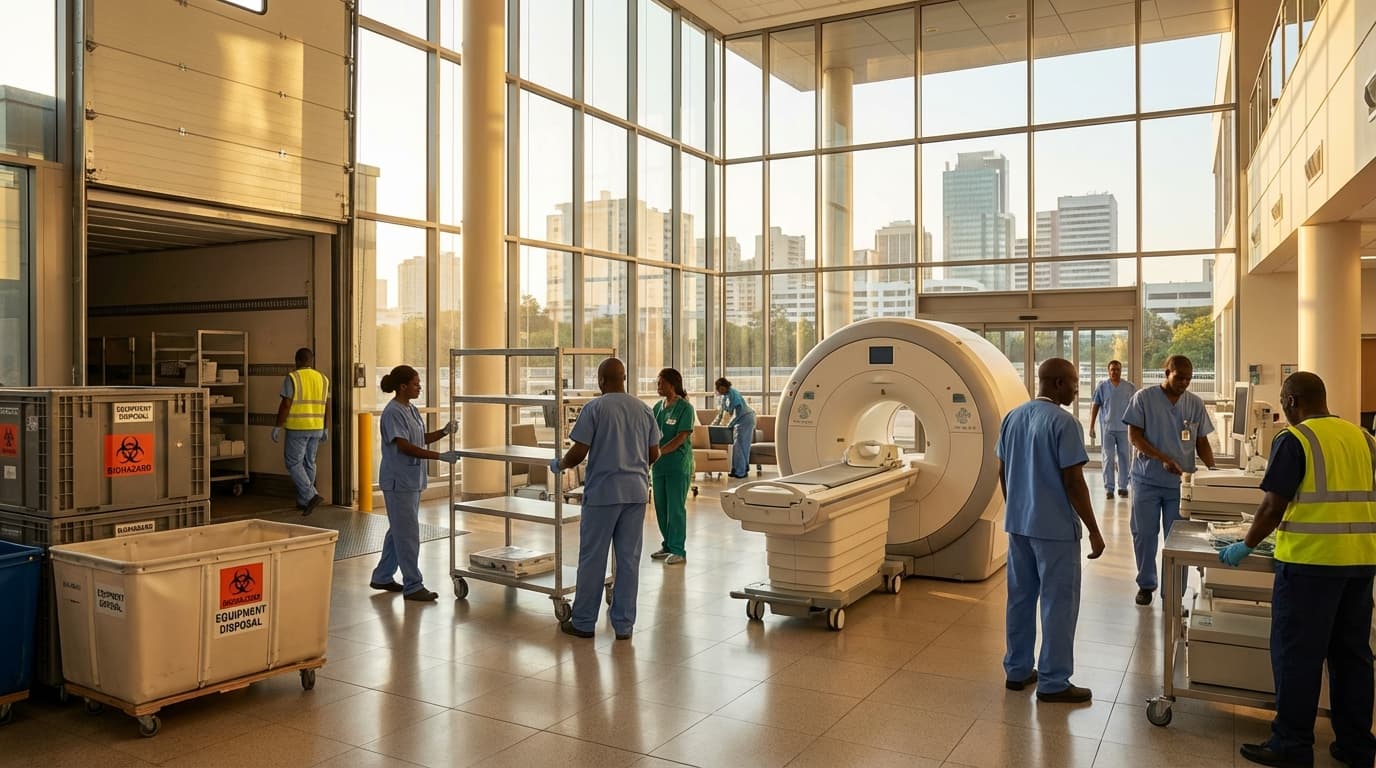
Heavy Medical Equipment De-Installation Service (MRI/CT/Cath Lab) in South Sudan
Engineering Excellence & Technical Support
Heavy Medical Equipment De-Installation Service (MRI/CT/Cath Lab) High-standard technical execution following OEM protocols and local regulatory frameworks.
Expert De-Installation of Advanced Imaging Systems
Our certified technicians possess specialized knowledge and experience in safely dismantling complex medical imaging equipment like MRI, CT scanners, and Cath Labs, adhering to strict international safety protocols and manufacturer guidelines. We ensure minimal downtime and prevent damage to sensitive components during the de-installation process.
Secure & Compliant Logistics for Critical Equipment
We manage the entire logistics chain for heavy medical equipment de-installation in South Sudan. This includes specialized packing, transportation, and coordination with relevant authorities to ensure all regulatory compliance and security are met for the safe transit of MRI, CT, and Cath Lab systems.
Mitigating Risks in Challenging Environments
Operating in South Sudan presents unique challenges. Our team is adept at risk assessment and mitigation, employing robust safety measures and contingency planning to ensure the secure and efficient de-installation of high-value medical equipment, safeguarding personnel, the equipment, and the integrity of the operation.
What Is Heavy Medical Equipment De-installation Service (Mri/ct/cath Lab) In South Sudan?
Heavy Medical Equipment De-Installation Service (MRI/CT/Cath Lab) in South Sudan refers to the specialized process of safely and systematically dismantling, packaging, and preparing for transport large, complex, and often immobile medical imaging and interventional systems. This includes Magnetic Resonance Imaging (MRI) scanners, Computed Tomography (CT) scanners, and Cardiac Catheterization (Cath Lab) suites. These systems are characterized by their significant weight, intricate internal components (e.g., superconducting magnets, X-ray tubes, high-power electronics), stringent environmental requirements (e.g., RF shielding, magnetic field containment), and the need for specialized tools, techniques, and trained personnel for their removal. The service encompasses logistical planning, structural considerations for egress, environmental hazard management, and ensuring the integrity of the equipment for potential relocation or disposal. The primary drivers for this service in South Sudan, as elsewhere, are equipment upgrades, facility renovations, site closures, or the decommissioning of obsolete technology.
| Service Recipient/Need | Typical Use Cases & Rationale |
|---|---|
| Healthcare Facilities (Hospitals, Clinics, Diagnostic Centers): | Equipment Upgrades: Replacing older generation MRI/CT/Cath Lab systems with newer, more advanced technology offering improved image quality, faster scan times, and enhanced diagnostic capabilities. Facility Renovations/Relocations: When a department or entire facility undergoes significant structural changes, or the equipment needs to be moved to a different physical location within the same facility or to a new site. End-of-Life Decommissioning: When equipment reaches its operational lifespan or becomes economically unviable to maintain, requiring its removal and responsible disposal or recycling. Service Contracts/Lease Terminations: At the conclusion of service agreements or lease periods, requiring the return of leased equipment in a safe and documented manner. |
| Medical Equipment Manufacturers/Distributors: | Refurbishment Programs: Removing older equipment from the field to be refurbished and resold or redeployed. Trade-in Programs: Facilitating the removal of old equipment when new systems are installed. Inventory Management: Managing the lifecycle of their installed base, including removal of obsolete or non-performing assets. |
| Government Health Ministries/Agencies: | National Health Infrastructure Planning: Facilitating the modernization and rationalization of medical equipment across the public health sector. Disaster Relief/Emergency Preparedness: Potentially removing and relocating essential equipment in anticipation of or response to humanitarian crises or infrastructure damage. Procurement and Asset Management: Ensuring proper decommissioning and disposal of government-owned medical assets. |
Key Components of Heavy Medical Equipment De-Installation Service:
- Site Assessment and Planning: Detailed evaluation of the installation environment, including physical access routes, structural load-bearing capacities, power supply infrastructure, and the specific configuration of the medical equipment. This phase dictates the dismantling strategy and necessary safety protocols.
- Dismantling and Component Separation: The systematic disassembly of the equipment into manageable sub-assemblies. This involves the safe handling of heavy components (e.g., gantry, magnet, patient table, power supplies), the disconnection of intricate cabling and plumbing, and the management of potentially hazardous materials (e.g., cryogens in MRI systems).
- Specialized Tooling and Equipment: Utilization of engineered lifting devices (cranes, hoists), precision cutting tools, torque wrenches, specialized connectors, and diagnostic equipment to ensure safe and accurate deconstruction.
- Environmental and Safety Management: Adherence to strict safety protocols, including lockout/tagout procedures, personal protective equipment (PPE) for personnel, and the management of residual energy sources. For MRI, this includes safe venting of cryogens (e.g., helium, nitrogen) and demagnetization procedures.
- Packaging and Protection: Robust packaging of individual components using custom crates, shock-absorbent materials, and protective coverings to prevent damage during transit. Specific considerations are given to sensitive optical or electronic components.
- Logistics and Transportation Coordination: Planning and execution of the transportation of dismantled components from the de-installation site to a designated storage facility, refurbishment center, or final disposal location. This may involve specialized transport vehicles and route planning.
- Documentation and Certification: Comprehensive record-keeping of the de-installation process, including photographic evidence, component inventories, and certification of safe handling and disassembly. This is crucial for asset tracking, warranty claims, and regulatory compliance.
Who Needs Heavy Medical Equipment De-installation Service (Mri/ct/cath Lab) In South Sudan?
South Sudan, like many developing nations, faces significant challenges in accessing and maintaining advanced medical infrastructure. The de-installation of complex medical equipment such as MRI, CT scanners, and Cath Labs is a specialized and critical service required for various scenarios. This includes equipment relocation due to hospital upgrades or closures, replacement with newer models, or decommissioning of outdated or irreparable units. The safe and efficient removal of these large, sensitive, and often heavy machines demands specialized expertise, tools, and adherence to strict safety protocols. Therefore, the need for such a service is present within the country's healthcare sector.
| Customer Type | Typical Departments Involved | Reasons for De-Installation |
|---|---|---|
| Public Hospitals | Radiology Department, Cardiology Department, Medical Engineering/Biomedical Department, Administration | Equipment upgrade to newer technology, facility renovation or expansion, closure of a specific unit, irreparable equipment failure, relocation within the hospital campus. |
| Private Hospitals & Clinics | Radiology Department, Cardiology Department, Biomedical Engineering Department, Management | Obsolescence of existing equipment, competitive upgrade to attract more patients, space optimization, end-of-lease returns, relocation to a new facility. |
| Diagnostic Imaging Centers | Imaging Department, Technical Operations, Management | Upgrade to higher resolution or faster scanners, replacement with more cost-effective models, closure or consolidation of services, relocation to a more strategic location. |
| Specialty Clinics (e.g., Cardiology) | Cath Lab Operations, Biomedical Engineering, Administration | Replacement of older Cath Lab equipment with advanced models for enhanced diagnostic and interventional capabilities, upgrade to digital systems, closure of the clinic or department. |
| Medical Research Institutions | Research Departments utilizing imaging equipment, Technical Support, Administration | Decommissioning of research equipment no longer in use, relocation of specialized research machinery for new projects, upgrade to more sensitive research tools. |
| Government Health Ministries | Planning and Procurement Departments, Biomedical Engineering Units, Regional Health Offices | Coordinating the decommissioning and disposal of government-owned outdated medical equipment from various public facilities, facilitating replacements, managing asset inventory. |
| International Aid Organizations | Project Management, Logistics, Biomedical Engineering Teams, Facility Management | De-installation of equipment from temporary or phased-out project sites, relocation of donated equipment for redeployment, decommissioning of equipment upon project completion or at the end of its lifespan. |
Target Customers and Departments Requiring Heavy Medical Equipment De-Installation Services in South Sudan
- Hospitals (Public and Private)
- Diagnostic Imaging Centers
- Specialty Clinics (e.g., Cardiology, Neurology)
- Medical Research Institutions
- Government Health Ministries and Agencies
- International Aid Organizations operating healthcare facilities
Heavy Medical Equipment De-installation Service (Mri/ct/cath Lab) Process In South Sudan
This document outlines the comprehensive workflow for the Heavy Medical Equipment De-Installation Service (MRI/CT/Cath Lab) in South Sudan. It details the process from the initial client inquiry through the successful execution of the de-installation, ensuring a systematic and efficient approach tailored to the unique logistical and operational challenges of the region. The service prioritizes safety, compliance, and minimal disruption to ongoing operations.
| Phase | Key Activities | Deliverables/Outcomes | Considerations (South Sudan Specific) |
|---|---|---|---|
| Receive client request for de-installation. Discuss equipment type, location, urgency, and any specific client requirements. Initial understanding of facility access and power availability. | Confirmation of service scope, preliminary understanding of project complexity. | Communication channels may be limited. Need to establish reliable contact points. Potential for language barriers. |
| On-site visit by experienced technicians/engineers. Detailed inspection of equipment, surrounding area, access routes, power supply, ventilation, and structural integrity. Identify potential hazards and safety protocols. | Comprehensive site survey report, detailed risk assessment, identification of necessary tools and specialized equipment, preliminary logistics plan. | Security concerns, potential for underdeveloped infrastructure (roads, bridges), availability of local skilled labor, environmental conditions (heat, dust). |
| Develop a detailed proposal including scope of work, timeline, cost breakdown (labor, materials, transport, permits), safety plan, and insurance details. Negotiate terms and finalize contract. | Signed contract, agreed-upon payment schedule, approved project plan. | Currency fluctuations, import/export regulations (if applicable for specialized tools/parts), local taxation. |
| Finalize detailed work schedule, procure specialized tools and lifting equipment, arrange transportation (including potential customs clearance), confirm personnel availability, obtain necessary permits (if any), and communicate with facility management. | Detailed work schedule, confirmed logistics, trained personnel on-site, all necessary equipment and materials. | Reliability of transportation services, potential for delays due to infrastructure or security. Need for contingency planning for unforeseen circumstances. |
| Implement rigorous safety procedures. Safely disconnect power, coolant, and other utilities. Perform initial system checks and shutdown procedures. Carefully dismantle equipment components following manufacturer guidelines and internal protocols. | Safely disconnected equipment, labeled components, organized workspace. | Strict adherence to safety protocols is paramount due to potential lack of readily available emergency services. Need for robust toolkits and backup power sources. |
| Each dismantled component is meticulously cleaned, protected from environmental damage (moisture, dust, impact), and securely packaged using appropriate materials (e.g., anti-static bags, custom crates, bubble wrap). | Securely packaged and protected equipment components, inventory of all parts. | Protection against extreme temperatures and humidity. Use of durable and readily available packaging materials. Need for careful handling during loading and unloading. |
| Carefully move packaged components within the facility to the designated loading area. Utilize appropriate lifting and handling equipment. Securely load components onto transport vehicles, ensuring weight distribution and stability. | Components safely loaded onto transport, securement confirmed. | Navigating narrow doorways, stairwells, or uneven floors. Challenges in sourcing appropriate heavy-duty lifting and transport equipment. Coordination with local authorities for road transport, if necessary. |
| Compile a comprehensive de-installation report including photos, logs, and a detailed inventory of all removed components. Formally handover the de-installation report and any relevant documentation to the client. | Completed de-installation report, client sign-off on handover. | Ensuring clarity and accuracy in documentation for future reference, especially if equipment is being relocated or stored. |
| Address any client queries, provide support for storage or onward transportation arrangements, and gather feedback on the service provided. | Client satisfaction, lessons learned for future projects. | Follow-up communication may be challenging. Proactive engagement and clear communication are key. |
De-Installation Service Workflow: Inquiry to Execution
- Initial Client Inquiry & Needs Assessment
- Site Survey & Risk Assessment
- Proposal Generation & Contract Negotiation
- Pre-De-Installation Planning & Logistics
- Equipment Disconnection & Safety Checks
- Component Dismantling & Labeling
- Packaging & Environmental Protection
- Internal Transportation (within facility)
- Loading & Securement for External Transport
- Documentation & Handover
- Post-De-Installation Support (as required)
Heavy Medical Equipment De-installation Service (Mri/ct/cath Lab) Cost In South Sudan
De-installing heavy medical equipment like MRI, CT scanners, and Cath Labs is a highly specialized and complex process. In South Sudan, the cost of such services is influenced by a variety of factors, making it difficult to provide a single, definitive price. These factors include the specific type and model of equipment, its current location and accessibility, the required safety precautions, the need for specialized tools and transportation, and the availability of qualified personnel. Due to the nascent state of specialized medical infrastructure and the logistical challenges in South Sudan, these services often incur higher costs compared to more developed regions. It's crucial to obtain detailed quotes from service providers who have experience with this type of equipment and understand the local operating environment.
| Equipment Type | Estimated De-Installation Cost Range (South Sudanese Pound - SSP) | Notes |
|---|---|---|
| MRI Scanner | 30,000,000 - 150,000,000+ SSP | Highly complex, large magnet, requires specialized cooling system and extensive disassembly. Costs can escalate significantly with older or larger magnet systems. |
| CT Scanner | 20,000,000 - 100,000,000+ SSP | Involves intricate electronic components and a rotating gantry. Weight and size vary greatly by model. Radiation safety during disassembly is a key concern. |
| Cath Lab | 25,000,000 - 120,000,000+ SSP | Includes complex imaging systems, patient tables, and interventional equipment. Requires careful handling of high-voltage systems and delicate imaging components. |
| Ancillary Equipment (e.g., X-ray machines, Ultrasound) | 5,000,000 - 30,000,000+ SSP | Generally less complex and lighter than MRI/CT/Cath Labs, but still requires trained personnel and careful handling. |
Key Pricing Factors for Heavy Medical Equipment De-Installation in South Sudan
- Equipment Specifics (MRI, CT, Cath Lab): Different machines have varying complexities, sizes, weights, and disassembly requirements.
- Accessibility and Location: Ease of access to the equipment within the healthcare facility and the remoteness of the facility itself significantly impact logistics and time.
- Specialized Tools and Equipment: The need for specific lifting gear, transport vehicles (e.g., specialized trucks, cranes), and dismantling tools.
- Personnel and Expertise: The number of technicians, engineers, and project managers required, along with their experience and certification levels.
- Safety and Compliance: Adherence to strict safety protocols for handling sensitive and heavy machinery, including potential radiation shielding considerations.
- Dismantling Complexity: The degree of disassembly required. Some equipment may need to be broken down into smaller, manageable components.
- Logistics and Transportation: Costs associated with moving components from the facility to a storage or shipping point, including potential customs and export procedures.
- Insurance and Risk Management: The cost of insuring the equipment and personnel during the de-installation process.
- Time Constraints and Urgency: Expedited services may incur premium charges.
- Site Preparation: Any necessary modifications to the facility to facilitate the removal of the equipment.
Affordable Heavy Medical Equipment De-installation Service (Mri/ct/cath Lab) Options
When decommissioning large-scale medical imaging equipment like MRI, CT, or Cath Labs, professional de-installation is crucial for safety, compliance, and preventing costly damage. Finding affordable options doesn't mean compromising on expertise. This guide explores value bundles and cost-saving strategies for heavy medical equipment de-installation.
| Cost-Saving Strategy | Description | Potential Savings |
|---|---|---|
| Bundle Services Strategically | Instead of hiring separate vendors for de-installation, transport, and disposal, opt for a provider offering integrated services. This reduces administrative overhead and can leverage economies of scale. | 10-25% on total project cost |
| Early Planning & Scheduling | Booking services well in advance allows providers more flexibility to schedule and potentially offer lower rates. Avoid last-minute rush fees. | 5-15% on service fees |
| Clear Scope of Work Definition | Precisely define what is included and excluded in the de-installation. Unforeseen complexities can drive up costs significantly. Ensure all permits and site access are pre-arranged. | 5-10% on unexpected charges |
| Negotiate Package Deals | If you have multiple equipment types or sites requiring de-installation, negotiate a package deal with a single provider for a better overall rate. | 10-20% on total volume |
| Consider Off-Peak Scheduling | If your timelines allow, inquire about discounted rates for de-installation during less busy periods (e.g., weekdays vs. weekends, specific seasons). | 5-10% on service fees |
| Leverage Internal Resources (with caution) | If your facility has qualified in-house technical staff, they might assist with certain preparatory tasks (e.g., initial power down procedures) under the supervision of the de-installation team. This needs careful risk assessment. | Variable (depends on internal capabilities) |
| Obtain Multiple Quotes | Always get detailed quotes from at least three reputable de-installation service providers. Compare not just price but also experience, certifications, and insurance coverage. | Crucial for competitive pricing |
| Inquire About Asset Recovery Options | Ask if the de-installation company partners with buyers or recyclers for your equipment. This can sometimes be factored into the de-installation cost. | Potential to offset costs, not a direct saving |
Understanding Value Bundles in De-installation Services
- Core De-installation: This is the fundamental service, including safe disconnection of power, water, and data lines, dismantling of the equipment into manageable sections, and preparation for transport.
- Site Remediation: Beyond removal, this bundle can include patching and painting walls, repairing flooring, and ensuring the space is returned to its original or a pre-agreed state.
- Logistics & Transportation Integration: Combining de-installation with specialized heavy equipment movers. This streamlines the process, reduces coordination headaches, and can lead to volume discounts.
- Asset Remarketing & Recycling Assistance: Some providers offer services to assess the resale value of usable components or coordinate responsible recycling of non-functional parts, offsetting de-installation costs.
- Comprehensive Project Management: For complex or multi-site projects, this bundle includes dedicated project managers overseeing all aspects, from initial planning to final site handover.
Verified Providers In South Sudan
Finding verified healthcare providers in South Sudan is crucial for ensuring quality and reliable medical care. Franance Health stands out as a leading organization, committed to upholding the highest standards in healthcare delivery. Their rigorous credentialing process and dedication to patient well-being make them a trustworthy and optimal choice for individuals seeking medical assistance. This document outlines Franance Health's credentials and the compelling reasons why they represent the best choice for healthcare in South Sudan.
| Feature | Benefit for Patients in South Sudan | Franance Health's Commitment |
|---|---|---|
| Verified Medical Professionals | Ensures that patients receive care from qualified and licensed individuals, reducing the risk of unqualified practitioners. | Franance Health employs a multi-stage credentialing process for all affiliated doctors, nurses, and specialists. |
| Adherence to International Standards | Guarantees that the healthcare provided meets globally recognized benchmarks for safety, efficacy, and patient care. | Actively seeks partnerships and certifications with international health organizations. |
| Focus on Patient Safety and Well-being | Minimizes the likelihood of medical errors and adverse events, promoting a secure and positive healthcare experience. | Implements strict protocols for hygiene, infection control, and medication management. |
| Ethical and Professional Conduct | Ensures respectful and trustworthy interactions, with patient rights and privacy being paramount. | Requires all providers to sign and adhere to a strict code of conduct. |
| Access to Modern Healthcare Practices | Provides patients with access to up-to-date diagnostic tools and treatment methodologies. | Invests in training and resources to equip providers with the latest medical knowledge. |
| Improved Health Outcomes | Ultimately leads to better recovery rates and improved overall health for the population. | Monitors patient outcomes to identify areas for improvement and celebrate successes. |
Franance Health Credentials and Strengths
- Accreditation and Recognition: Franance Health actively pursues and maintains accreditations from recognized national and international health bodies, demonstrating adherence to global best practices.
- Rigorous Provider Vetting: All healthcare professionals affiliated with Franance Health undergo a comprehensive vetting process, including verification of licenses, certifications, educational backgrounds, and professional experience.
- Quality Assurance Protocols: The organization implements robust quality assurance protocols to continuously monitor and evaluate the performance of its providers, ensuring consistent delivery of high-quality care.
- Ethical Practice Standards: Franance Health enforces strict ethical guidelines for all its practitioners, prioritizing patient safety, confidentiality, and informed consent.
- Commitment to Continuous Professional Development: Providers are encouraged and supported in their pursuit of ongoing training and professional development, keeping them abreast of the latest medical advancements and techniques.
- Patient-Centric Approach: A core tenet of Franance Health is its unwavering focus on the patient's needs, fostering a supportive and compassionate healthcare environment.
- Accessibility and Reach: Franance Health is dedicated to expanding access to quality healthcare services across South Sudan, particularly in underserved areas.
- Technological Integration: Leveraging appropriate technologies to enhance patient care, streamline administrative processes, and improve communication within the healthcare network.
Scope Of Work For Heavy Medical Equipment De-installation Service (Mri/ct/cath Lab)
This Scope of Work (SOW) outlines the requirements for the de-installation of heavy medical equipment, specifically Magnetic Resonance Imaging (MRI) scanners, Computed Tomography (CT) scanners, and Cardiac Catheterization (Cath Lab) systems. The objective is to ensure safe, efficient, and compliant removal of these complex systems from their current locations, preparing them for relocation, storage, or disposal. This includes all necessary technical preparations, dismantling, packaging, and site remediation to meet industry standards and manufacturer specifications.
| Technical Deliverable | Standard Specification / Requirement | Applicable Equipment Type(s) | Notes |
|---|---|---|---|
| Site Survey & Risk Assessment Report | Comprehensive report detailing site conditions, access routes, potential hazards, power requirements, and environmental factors. Includes a detailed de-installation plan and risk mitigation strategies. | MRI, CT, Cath Lab | To be completed prior to commencement of work. |
| De-Installation Plan | Detailed step-by-step plan for each equipment type, including sequence of operations, personnel roles, specialized tools, and safety protocols. Must adhere to manufacturer's guidelines. | MRI, CT, Cath Lab | Approved by client before execution. |
| Equipment Shutdown & Power Isolation | Safe and controlled shutdown of all equipment systems, including medical gas lines (if applicable), cooling systems, and electrical power. Verification of isolation through lock-out/tag-out procedures. | MRI, CT, Cath Lab | Critical for safety. Verification using appropriate test equipment. |
| Component Disassembly | Systematic disassembly of the equipment into manageable components. This includes removal of gantry, table, magnet (for MRI), detectors, cabling, and auxiliary units. Adherence to manufacturer's specific disassembly procedures. | MRI, CT, Cath Lab | Must be performed by certified technicians. Special handling for cryogen systems (MRI). |
| Cryogen Management (MRI) | Safe venting and management of helium and nitrogen cryogens according to safety regulations and manufacturer specifications. Includes provision of temporary containment and monitoring. | MRI | Requires specialized knowledge and equipment. Compliance with environmental regulations. |
| Specialized Tooling & Equipment | Use of appropriate lifting, rigging, and specialized tools for safe and efficient removal of heavy components. Includes cranes, forklifts, pallet jacks, and custom-built dollies. | MRI, CT, Cath Lab | Tooling must be rated for the weight and dimensions of the equipment. |
| Component Protection & Packaging | Proper wrapping and securing of all disassembled components using protective materials (e.g., bubble wrap, foam, specialized crates) to prevent damage during handling and transport. Custom crating may be required for sensitive parts. | MRI, CT, Cath Lab | Materials must be suitable for the specific component and anticipated transport conditions. |
| Site Cleaning & Restoration | Thorough cleaning of the de-installation area to remove debris, dust, and any residual materials. Restoration of the site to its original condition, or as specified by the client. This may include minor wall repairs or floor cleaning. | MRI, CT, Cath Lab | Focus on leaving the site safe and presentable. |
| Hazardous Material Handling & Disposal | Identification, safe handling, and appropriate disposal of any hazardous materials encountered (e.g., refrigerants, oils) in accordance with local and national regulations. | MRI, CT, Cath Lab | Requires certified personnel and licensed disposal facilities. |
| De-Installation Completion Report | A comprehensive report documenting the entire de-installation process, including photos of the dismantled equipment, packaging details, site condition before and after, and any encountered issues. Includes confirmation of site restoration. | MRI, CT, Cath Lab | Signed off by client representative. |
| Certification of De-Installation | A formal document certifying that the equipment has been de-installed in accordance with the SOW and manufacturer's specifications. | MRI, CT, Cath Lab | Issued upon successful completion and client acceptance. |
| As-Built Documentation (if applicable) | Documentation of any modifications made to site infrastructure during the de-installation process, if any. | MRI, CT, Cath Lab | Only if modifications were performed. |
Key Phases of De-Installation Service
- Pre-De-Installation Assessment & Planning
- Equipment Shutdown & Isolation
- Component Dismantling & Removal
- Packaging & Protection
- Site Restoration & Final Inspection
- Documentation & Handover
Service Level Agreement For Heavy Medical Equipment De-installation Service (Mri/ct/cath Lab)
This Service Level Agreement (SLA) outlines the response times and uptime guarantees for the de-installation of heavy medical equipment, specifically Magnetic Resonance Imaging (MRI), Computed Tomography (CT), and Cardiac Catheterization Laboratory (Cath Lab) systems. This agreement is between [Client Name/Facility Name] (hereinafter referred to as 'Client') and [Service Provider Name] (hereinafter referred to as 'Provider').
| Service Component | Response Time (Business Hours) | Uptime Guarantee |
|---|---|---|
| Initial Site Survey & Planning | Within 5 business days of request confirmation | N/A |
| Scheduling of De-installation Window | Within 2 business days of final site survey approval | N/A |
| On-Site De-installation Execution | As per agreed schedule (Client to provide 10 business days' notice) | N/A |
| Equipment Availability (for scheduled de-installation) | N/A | 100% (assuming Client provides access and clear site as per agreed plan) |
| De-installation Completion within Agreed Timeframe | N/A | 95% (allowing for unforeseen site or equipment issues, with clear communication) |
| Emergency De-installation Support (for critical infrastructure failure) | Within 8 business hours (upon confirmed critical need) | N/A |
Scope of Service
- Scheduled de-installation of specified MRI, CT, or Cath Lab equipment.
- Safe disconnection and preparation of equipment for transportation.
- Coordination with Client's facilities and logistics teams.
- Post-de-installation site cleanup to a defined standard.
Frequently Asked Questions

Ready when you are
Let's scope your Heavy Medical Equipment De-Installation Service (MRI/CT/Cath Lab) in South Sudan project in South Sudan.

Scaling healthcare logistics and technical systems across the entire continent.