
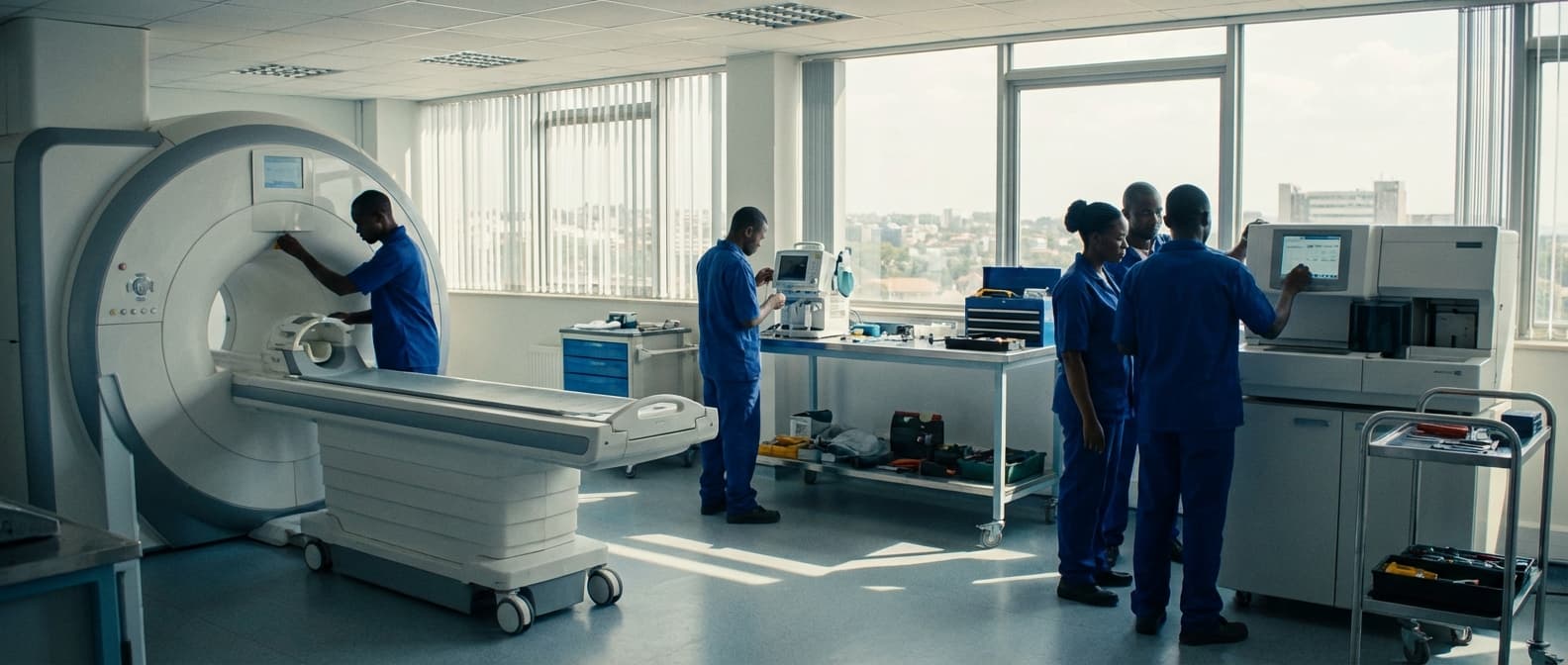
Uptime, Downtime & Root-Cause Analysis Reporting Service in South Sudan
Engineering Excellence & Technical Support
Uptime, Downtime & Root-Cause Analysis Reporting Service High-standard technical execution following OEM protocols and local regulatory frameworks.
Real-time Uptime Monitoring & Alerts
Proactive 24/7 monitoring of critical infrastructure (servers, networks, applications) across South Sudan. Receive instant, actionable alerts via SMS and email for any deviations from optimal performance, enabling rapid response to prevent widespread disruption.
Automated Downtime Tracking & Impact Assessment
Automatically logs all downtime events, including start/end times, affected services, and duration. Our platform provides a clear impact assessment of each incident, quantifying the business cost and operational downtime experienced.
Comprehensive Root-Cause Analysis (RCA) Dashboards
Leverage intelligent dashboards that visualize historical uptime/downtime trends and pinpoint the root cause of recurring issues. Empower your IT teams with data-driven insights to implement permanent solutions and enhance system resilience.
What Is Uptime, Downtime & Root-cause Analysis Reporting Service In South Sudan?
Uptime, Downtime, and Root-Cause Analysis (RCA) Reporting Services in South Sudan are critical for maintaining the operational integrity and reliability of information technology (IT) and critical infrastructure systems. These services provide structured methodologies and reporting mechanisms to track system availability, identify disruptions, and determine the underlying causes of failures. This enables proactive problem mitigation, service level agreement (SLA) adherence, and continuous improvement of system performance and resilience.
| Who Needs This Service? | Typical Use Cases in South Sudan | |
|---|---|---|
| Government Agencies: Ministries, departments, and public sector organizations responsible for delivering essential services (e.g., telecommunications, energy, water, finance, health, education). | Ensuring continuous availability of e-government portals, national communication networks, digital identity systems, and critical infrastructure management platforms. | Analyzing disruptions in public service delivery to identify systemic issues and improve citizen access to information and services. |
| Telecommunications Providers: Mobile network operators (MNOs) and internet service providers (ISPs) crucial for connectivity. | Monitoring base station uptime, network core performance, and internet gateway availability to meet SLA commitments and minimize customer impact. | Investigating service outages to identify network congestion, equipment failures, or configuration errors causing widespread disruption. |
| Financial Institutions: Banks, microfinance institutions, and payment gateways vital for economic activity. | Guaranteeing the uptime of ATM networks, online banking platforms, payment processing systems, and core banking infrastructure. | Analyzing downtime events in financial transactions to prevent fraud, maintain customer trust, and ensure regulatory compliance. |
| Energy & Utilities Companies: Electricity providers, water supply authorities, and fuel distributors. | Monitoring the reliability of power grids, water treatment plants, distribution networks, and SCADA systems to ensure consistent service delivery. | Investigating failures in critical utility infrastructure to prevent cascading failures and ensure public safety and economic stability. |
| Healthcare Providers: Hospitals, clinics, and health information systems. | Ensuring the availability of electronic health records (EHRs), medical imaging systems, communication platforms, and patient monitoring equipment. | Analyzing system failures that impact patient care, treatment delivery, and medical data integrity. |
| Businesses & Enterprises: Companies operating in various sectors, including logistics, manufacturing, retail, and hospitality. | Maintaining the uptime of enterprise resource planning (ERP) systems, customer relationship management (CRM) platforms, e-commerce websites, and internal communication tools. | Identifying performance bottlenecks and failures in business-critical applications to optimize productivity and customer satisfaction. |
| Non-Governmental Organizations (NGOs) & Humanitarian Agencies: Organizations involved in aid delivery, development projects, and emergency response. | Ensuring the reliability of communication systems, data management platforms, and operational software used for project implementation and coordination. | Analyzing disruptions in critical humanitarian operations to maintain operational effectiveness and reach beneficiaries. |
Key Components of Uptime, Downtime & RCA Reporting Service
- Uptime Monitoring: Continuous, real-time tracking of system availability and performance against defined metrics. This includes monitoring network connectivity, server health, application responsiveness, and service accessibility.
- Downtime Detection & Notification: Automated identification of service interruptions or degradation below acceptable thresholds. This involves immediate alerts to relevant stakeholders (IT operations, management, end-users) via predefined communication channels (email, SMS, ticketing systems).
- Incident Logging & Documentation: Comprehensive recording of all detected downtime events, including timestamps, affected systems/services, impact assessment, and initial troubleshooting steps taken.
- Root-Cause Analysis (RCA): A systematic investigation process to identify the fundamental reasons for an incident. This typically involves data collection (logs, performance metrics, configuration changes), analysis (identifying contributing factors, causal chains), and hypothesis testing to pinpoint the primary defect or flaw.
- Corrective & Preventive Actions (CAPA) Recommendation: Based on RCA findings, proposing specific actions to rectify the immediate issue and prevent recurrence. This can include configuration changes, software patches, hardware replacements, or procedural modifications.
- Reporting & Dashboards: Generation of regular and ad-hoc reports detailing uptime percentages, downtime durations, incident trends, RCA summaries, and the status of implemented CAPAs. Interactive dashboards provide real-time visibility into system health and historical performance.
Who Needs Uptime, Downtime & Root-cause Analysis Reporting Service In South Sudan?
In the unique operational landscape of South Sudan, where infrastructure can be fragile and resources stretched, a robust Uptime, Downtime & Root-Cause Analysis (RCA) Reporting Service is not a luxury, but a critical necessity. This service provides invaluable insights into the performance of essential systems, enabling proactive problem-solving, resource optimization, and ultimately, the reliable delivery of services that are vital for national development and humanitarian efforts.
| Target Customer | Key Departments/Units Benefiting | Primary Needs Addressed |
|---|---|---|
| Government Ministries and Agencies | IT Department, Infrastructure Planning, Service Delivery Units (e.g., Ministry of Health, Ministry of Education, Ministry of Roads & Bridges) | Ensuring uninterrupted public services (health, education, transport), efficient resource allocation, identifying systemic failures in critical infrastructure, data-driven policy making. |
| Humanitarian and Non-Governmental Organizations (NGOs) | Operations Department, IT Support, Program Management, Logistics & Supply Chain | Maintaining reliable communication and data flow for aid delivery, ensuring operational continuity in challenging environments, optimizing the use of limited resources, demonstrating accountability and effectiveness to donors. |
| Telecommunications Companies | Network Operations Center (NOC), Field Operations, Customer Support, Engineering | Minimizing network outages, improving service availability, understanding customer impact of downtime, proactive identification of recurring network issues, optimizing maintenance schedules. |
| Energy and Utility Providers | Operations & Maintenance, Grid Management, Customer Service, Engineering | Reducing power outages, identifying causes of grid instability, improving reliability of essential services, optimizing energy generation and distribution, enhancing customer satisfaction. |
| Financial Institutions | IT Operations, Risk Management, Branch Operations, Fraud Detection | Ensuring 24/7 availability of banking services, preventing financial losses due to system downtime, maintaining customer trust, identifying vulnerabilities in transaction processing, compliance with regulatory requirements. |
| Healthcare Providers | IT Department, Hospital Administration, Clinical Operations, Biomedical Engineering | Ensuring uninterrupted access to patient data and medical equipment, maintaining critical life-support systems, optimizing the use of diagnostic and treatment technology, improving patient care delivery. |
| Logistics and Transportation Companies | Fleet Management, Operations Control, IT Support, Supply Chain Management | Minimizing delays in the movement of goods and people, ensuring the reliability of tracking and communication systems, identifying causes of operational bottlenecks, optimizing delivery schedules. |
| Educational Institutions | IT Department, Academic Administration, Facilities Management | Ensuring reliable access to e-learning platforms and administrative systems, maintaining operational continuity for teaching and research, optimizing IT infrastructure for educational purposes. |
Target Customers & Departments in South Sudan
- Government Ministries and Agencies
- Humanitarian and Non-Governmental Organizations (NGOs)
- Telecommunications Companies
- Energy and Utility Providers
- Financial Institutions
- Healthcare Providers
- Logistics and Transportation Companies
- Educational Institutions
Uptime, Downtime & Root-cause Analysis Reporting Service Process In South Sudan
This document outlines the workflow for an Uptime, Downtime & Root-Cause Analysis (RCA) Reporting Service in South Sudan. This process aims to provide clients with comprehensive and timely information regarding the availability of their systems and the underlying causes of any disruptions, enabling them to make informed decisions and implement corrective actions.
| Stage | Description | Key Activities | Responsible Party | Output/Deliverable |
|---|---|---|---|---|
| Potential client expresses interest in uptime, downtime, and RCA reporting services. | Initial contact, understanding client needs, providing service overview. | Sales/Business Development Team | Initial client contact, potential interest confirmation. |
| Formalizing the service agreement and defining the scope of reporting. | Conducting detailed needs assessment, defining monitored systems/applications, establishing reporting frequency, defining RCA depth, agreeing on SLAs for reporting turnaround times, contract negotiation and signing. | Client, Service Provider Sales/Account Management, Technical Leads | Signed Service Level Agreement (SLA), Scope of Work (SOW) document. |
| Setting up and maintaining continuous monitoring of client's IT infrastructure. | Deploying monitoring tools, configuring alerts, establishing data collection mechanisms, ensuring secure data storage and access. | Technical Operations Team | Active monitoring infrastructure, continuous data streams (logs, metrics, performance data). |
| Identifying deviations from normal system behavior that may indicate downtime. | Real-time monitoring of predefined thresholds, automated alert generation and notification to the Operations Team. | Automated Monitoring Systems, Technical Operations Team | Alert notifications, incident tickets. |
| Confirming if an incident has indeed caused a service disruption (downtime). | Investigating alerts, validating impact on end-users or services, determining the start and end times of downtime, documenting initial observations. | Technical Operations Team | Verified downtime incident, initial impact assessment notes. |
| Formally starting the process to determine the underlying cause of the downtime. | Triggering RCA based on verified downtime, assigning an RCA lead, notifying relevant stakeholders. | Technical Operations Team Lead, Service Delivery Manager | Initiated RCA case/ticket. |
| Collecting all relevant information to understand the incident. | Gathering logs, configuration changes, network traffic data, performance metrics, user reports, system event logs, and any other pertinent information. | Technical Operations Team, RCA Lead | Collection of raw data and evidence relevant to the incident. |
| Analyzing collected data to identify the root cause. | Facilitating discussions among subject matter experts (SMEs), applying RCA methodologies (e.g., 5 Whys, Fishbone diagram), identifying contributing factors and the primary root cause. | RCA Team (SMEs from relevant IT domains), RCA Lead | Identified root cause(s) and contributing factors. |
| Documenting the findings of the root-cause analysis. | Structuring the RCA report to include incident summary, timeline, root cause, contributing factors, impact assessment, and recommended preventative actions. | RCA Lead, Technical Writers | Draft RCA Report. |
| Compiling statistics on system availability and disruptions. | Calculating uptime percentages, summarizing downtime incidents (frequency, duration, impact), generating trend reports. | Technical Operations Team, Reporting Specialists | Uptime & Downtime Report. |
| Ensuring the accuracy, completeness, and clarity of all generated reports. | Internal review of RCA and Uptime/Downtime reports by management and QA personnel, cross-verification of data and findings. | Service Delivery Manager, QA Team | Approved and finalized Uptime, Downtime & RCA Reports. |
| Providing the finalized reports to the client through agreed-upon channels. | Securely delivering reports via email, client portal, or scheduled meetings, ensuring reports are accessible and understandable. | Service Delivery Manager, Account Management | Delivered Uptime, Downtime & RCA Reports to Client. |
| Client reviews the reports and provides feedback or requests clarification. | Client review meetings, addressing client queries, incorporating minor factual corrections if needed. | Client, Service Delivery Manager, Account Management | Client acknowledgment, feedback, or request for further action. |
| Assisting the client in implementing recommendations and tracking progress. | Facilitating discussions on corrective actions, providing updates on implemented solutions, monitoring the effectiveness of changes (can be a separate service offering). | Account Management, Technical Consultants (if applicable) | Progress updates on corrective actions, revised system performance. |
Uptime, Downtime & Root-Cause Analysis Reporting Service Workflow
- Inquiry & Service Request
- Service Level Agreement (SLA) & Scope Definition
- System Monitoring & Data Collection
- Incident Detection & Alerting
- Downtime Verification & Initial Assessment
- Root-Cause Analysis (RCA) Initiation
- Data Gathering & Evidence Collection for RCA
- RCA Team Collaboration & Analysis
- RCA Report Generation
- Uptime & Downtime Report Generation
- Report Review & Quality Assurance
- Report Delivery to Client
- Client Review & Feedback
- Follow-up & Corrective Action Tracking (Optional/Add-on)
Uptime, Downtime & Root-cause Analysis Reporting Service Cost In South Sudan
Providing comprehensive uptime and downtime monitoring, alongside robust root-cause analysis (RCA) reporting services in South Sudan involves a complex interplay of factors influencing cost. These services are crucial for businesses relying on consistent operational availability, especially in a challenging infrastructure environment. The pricing is typically determined by the scope of services, the number and complexity of monitored systems, the frequency and depth of reporting, and the expertise of the service provider. Given the economic realities of South Sudan, pricing is often benchmarked against international standards but adapted to local purchasing power and operational costs, which can include factors like reliable electricity, internet connectivity, and skilled personnel. Service Level Agreements (SLAs) play a significant role, with higher uptime guarantees demanding more sophisticated monitoring and quicker response times, thus increasing costs. The chosen technology stack for monitoring and analysis also impacts pricing, with proprietary solutions potentially incurring higher licensing fees than open-source alternatives managed by a service provider.
| Service Component | Estimated Monthly Cost Range (South Sudanese Pounds - SSP) | Notes |
|---|---|---|
| Basic Uptime Monitoring (e.g., 10-20 critical systems) | 50,000 - 150,000 SSP | Covers essential monitoring, basic alerting, and weekly summary reports. Suitable for small to medium businesses. |
| Advanced Uptime & Downtime Monitoring (e.g., 20-50 systems, complex infrastructure) | 150,000 - 400,000 SSP | Includes performance monitoring, proactive anomaly detection, and bi-weekly detailed reports. For larger organizations with more intricate IT environments. |
| Comprehensive Uptime, Downtime & Root-Cause Analysis (RCA) Reporting (e.g., 50+ systems, mission-critical applications) | 400,000 - 1,000,000+ SSP | Full-spectrum monitoring, in-depth RCA, trend analysis, predictive insights, and on-demand reporting. Often bundled with dedicated support and higher SLAs. Pricing can escalate significantly based on complexity and guaranteed uptime. |
| SLA Guarantee (e.g., 99.9% uptime) | Additional 10% - 30% on base service cost | Higher guarantees necessitate more robust infrastructure, redundancy, and faster incident response, leading to increased costs. |
| Dedicated RCA Specialist/Consultant (On-demand) | 20,000 - 50,000 SSP per incident/project | For specific deep-dive investigations or post-incident reviews beyond standard reporting. |
Key Pricing Factors for Uptime, Downtime & RCA Reporting Services in South Sudan:
- Scope of Monitoring: Number and type of systems (servers, applications, network devices, cloud services) to be monitored.
- System Complexity: Complexity of the architecture and interdependencies of the monitored systems.
- Reporting Frequency & Depth: Daily, weekly, monthly reports; level of detail in RCA, including historical trends and actionable recommendations.
- Service Level Agreements (SLAs): Guaranteed uptime percentages, response times for incidents, and resolution times.
- Provider Expertise & Experience: Reputation, qualifications, and experience of the technical team performing the monitoring and RCA.
- Technology Stack: Costs associated with proprietary monitoring tools, software licenses, and infrastructure.
- On-site vs. Remote Support: Requirements for physical presence for troubleshooting or maintenance.
- Data Storage & Retention: Volume of data collected and the duration for which it needs to be stored.
- Customization Needs: Specific requirements for dashboards, alerts, and reporting formats.
- Geographic Coverage: If monitoring extends across multiple locations within South Sudan or internationally.
Affordable Uptime, Downtime & Root-cause Analysis Reporting Service Options
Businesses of all sizes are increasingly reliant on the continuous availability of their IT systems. Unexpected downtime can lead to significant financial losses, reputational damage, and customer dissatisfaction. Our service provides comprehensive uptime monitoring, detailed downtime reporting, and in-depth root-cause analysis to help you proactively prevent issues and quickly resolve those that do arise. We understand that budget is a key consideration, and we offer flexible value bundles and cost-saving strategies designed to meet your specific needs and financial constraints.
| Value Bundle Name | Included Services | Target Audience | Estimated Monthly Cost | Cost-Saving Strategies |
|---|---|---|---|---|
| Essential Uptime | Basic uptime monitoring (up to 5 critical endpoints), automated downtime alerts, basic downtime reporting. | Small businesses with limited IT infrastructure, startups. | $50 - $150 | Annual billing discounts (10-15%), tiered pricing based on number of monitored endpoints. |
| Proactive Insights | Expanded uptime monitoring (up to 20 critical endpoints), advanced downtime reporting, basic root-cause analysis, weekly performance summaries. | Medium-sized businesses, growing enterprises with evolving IT needs. | $200 - $500 | Bundling with other IT management services, longer contract commitments (1-3 years) for further discounts, volume-based pricing for monitoring multiple locations. |
| Enterprise Guardian | Unlimited uptime monitoring, comprehensive downtime reporting with deep-dive root-cause analysis, historical trend analysis, dedicated account manager, SLA-backed support. | Large enterprises, mission-critical operations, organizations with complex IT environments. | $750+ | Customized solutions tailored to specific infrastructure, integration with existing monitoring tools, strategic partnership discounts for high-volume deployments, co-managed services for shared responsibility. |
| On-Demand Analysis | Pay-per-incident root-cause analysis reports for unexpected downtime events, post-incident review documentation. | Businesses with existing monitoring but lacking in-depth analysis capabilities. | Variable (based on incident complexity and time spent) | Retainer packages for a set number of analysis requests at a discounted rate, volume discounts for multiple incident reports within a quarter. |
Key Features & Benefits
- Real-time uptime monitoring across critical infrastructure (servers, applications, networks, cloud services).
- Automated downtime alerts and notifications via email, SMS, or integrations with collaboration tools.
- Comprehensive downtime reports detailing duration, impact, and affected services.
- In-depth root-cause analysis to identify the underlying issues causing downtime.
- Proactive recommendations for system improvements and preventative maintenance.
- Historical data for trend analysis and performance optimization.
- 24/7 support for critical incidents.
- Customizable reporting dashboards and metrics.
Verified Providers In South Sudan
In South Sudan, the landscape of healthcare provision is evolving, and ensuring access to verified and reputable medical services is paramount. Franance Health stands out as a leading provider, distinguished by its rigorous credentialing process and unwavering commitment to quality patient care. This dedication makes them the best choice for individuals and organizations seeking reliable and effective healthcare solutions in the region.
| Aspect | Franance Health's Approach | Benefit to Patients |
|---|---|---|
| Provider Verification | Rigorous, multi-stage credentialing process including license, qualification, and experience checks. | Assurance of competence, ethical practice, and reduced risk of unqualified practitioners. |
| Medical Expertise | Network of experienced doctors and specialists across various fields. | Access to high-quality, specialized medical advice and treatment. |
| Patient Safety | Strict adherence to infection control, ethical guidelines, and evidence-based medicine. | Minimized risk of complications and enhanced treatment efficacy. |
| Technology | Partnerships with facilities boasting modern medical equipment. | Accurate diagnostics and effective, up-to-date treatment options. |
| Cultural Sensitivity | Culturally competent staff with understanding of local health issues. | Improved patient trust, communication, and engagement in their care. |
Why Franance Health is the Best Choice for Verified Providers in South Sudan:
- Uncompromising Credentialing Standards: Franance Health implements a multi-layered verification process for all its medical professionals. This includes thorough checks of academic qualifications, professional licenses, professional development records, and practical experience. This ensures that every healthcare provider associated with Franance Health meets the highest industry benchmarks.
- Experienced and Specialized Medical Teams: The network comprises a diverse group of highly skilled doctors, nurses, specialists, and allied health professionals. Their collective expertise covers a wide spectrum of medical disciplines, guaranteeing that patients receive tailored care from individuals with the most relevant experience.
- Commitment to Patient Safety and Quality Care: Patient well-being is at the forefront of Franance Health's operations. They adhere to strict protocols for infection control, medical ethics, and evidence-based practices. This focus on safety and quality significantly reduces the risk of medical errors and enhances treatment outcomes.
- State-of-the-Art Facilities and Equipment: Franance Health partners with or operates facilities equipped with modern medical technology and diagnostic tools. This allows for accurate diagnoses and effective treatment, ensuring patients benefit from the latest advancements in healthcare.
- Cultural Competency and Local Understanding: Understanding the unique cultural context and specific health challenges faced by the population of South Sudan is crucial. Franance Health's providers are trained to be culturally sensitive and possess a deep understanding of local health needs, fostering trust and effective communication with patients.
- Accessibility and Responsiveness: Franance Health is dedicated to making quality healthcare accessible. They strive for timely appointments, efficient service delivery, and a responsive approach to patient inquiries and emergencies.
- International Standards Alignment: While operating within the South Sudanese context, Franance Health endeavors to align its operational standards with international best practices in healthcare delivery, providing a benchmark for quality.
Scope Of Work For Uptime, Downtime & Root-cause Analysis Reporting Service
This Scope of Work (SOW) outlines the requirements for a comprehensive Uptime, Downtime, and Root-Cause Analysis (RCA) Reporting Service. The service aims to provide accurate, actionable insights into system availability and performance, enabling proactive issue resolution and continuous service improvement.
| Deliverable | Description | Frequency/Trigger | Format | Standard Specifications |
|---|---|---|---|---|
| Uptime/Downtime Report | Comprehensive report detailing system availability percentages, duration of downtime incidents, and affected services. | Weekly | PDF, CSV | Includes overall uptime percentage, individual service uptime, duration of each downtime event, start/end timestamps, and impact assessment. Data should be granular to at least minute-level. Must include agreed-upon uptime SLAs adherence. |
| Downtime Incident Notification | Immediate notification upon detection of a significant downtime event. | Real-time (within 5 minutes of detection) | Email, SMS, Dedicated Alerting Channel (e.g., Slack, Teams) | Includes incident ID, affected service(s), estimated time of impact, and initial assessment of severity. Notifications should go to designated on-call personnel. |
| Root-Cause Analysis (RCA) Report | Detailed investigation report for each downtime incident, identifying the underlying cause, impact, corrective actions taken, and preventative measures. | Within 48 hours of incident resolution (for critical/major incidents) | PDF, Confluence Page | Must include: Incident summary, timeline of events, impact analysis, identified root cause(s) (5 Whys or equivalent), resolution steps, corrective actions implemented, preventative measures proposed/implemented, lessons learned, and responsible parties. Severity levels for RCA reporting will be defined (e.g., Critical, Major, Minor). |
| Trend Analysis Report | Analysis of recurring downtime patterns, common causes, and performance bottlenecks over a defined period. | Monthly | PDF, Presentation Slides | Identifies recurring issues, common root causes, impact of issues on overall availability, and recommendations for systemic improvements. May include charts and graphs for visualization. |
| System Availability Dashboard | Real-time visualization of system uptime and downtime status for key services. | Real-time access | Web-based dashboard (URL provided) | Must display current uptime status, historical availability trends (e.g., 30-day view), active alerts, and key performance indicators (KPIs) related to availability. Dashboard access will be provided to authorized personnel. |
Service Objectives
- To accurately monitor and report on system uptime and downtime.
- To conduct thorough root-cause analysis for all significant downtime events.
- To provide timely and clear reports on identified issues and resolutions.
- To identify trends and patterns in downtime to inform preventative measures.
- To contribute to improved system reliability and availability.
Service Level Agreement For Uptime, Downtime & Root-cause Analysis Reporting Service
This Service Level Agreement (SLA) outlines the guaranteed uptime, downtime definitions, and root-cause analysis reporting procedures for the Uptime, Downtime & Root-Cause Analysis Reporting Service. This document aims to ensure clarity and transparency regarding the performance expectations and incident response for the provided service.
| Service Component | Guaranteed Uptime | Maximum Permitted Downtime (Monthly) | Response Time for Critical Incidents | RCA Report Delivery Time |
|---|---|---|---|---|
| Uptime, Downtime & Root-Cause Analysis Reporting Service Platform | 99.9% | 43.2 minutes | 15 minutes | Within 24 hours of Incident Resolution |
Definitions
- Uptime: The period during which the Uptime, Downtime & Root-Cause Analysis Reporting Service is fully operational and accessible to the Customer, performing its intended functions without material degradation.
- Downtime: The period during which the Uptime, Downtime & Root-Cause Analysis Reporting Service is not fully operational or accessible to the Customer, preventing the Customer from utilizing its intended functions. This includes Scheduled Maintenance and Emergency Maintenance.
- Scheduled Maintenance: Pre-announced periods of downtime necessary for system upgrades, patches, or routine maintenance. Customers will be provided with at least [Number] days' notice for Scheduled Maintenance.
- Emergency Maintenance: Unplanned periods of downtime required to address critical security vulnerabilities, severe performance issues, or to restore service functionality that has been unexpectedly interrupted. Notice for Emergency Maintenance may be limited due to the urgent nature of the situation.
- Incident: Any event that causes or may cause an Unplanned Downtime or a material degradation of the Service.
- Root-Cause Analysis (RCA): A systematic process of investigating an Incident to identify the underlying cause and to recommend corrective actions to prevent recurrence.
Frequently Asked Questions

Ready when you are
Let's scope your Uptime, Downtime & Root-Cause Analysis Reporting Service in South Sudan project in South Sudan.

Scaling healthcare logistics and technical systems across the entire continent.