
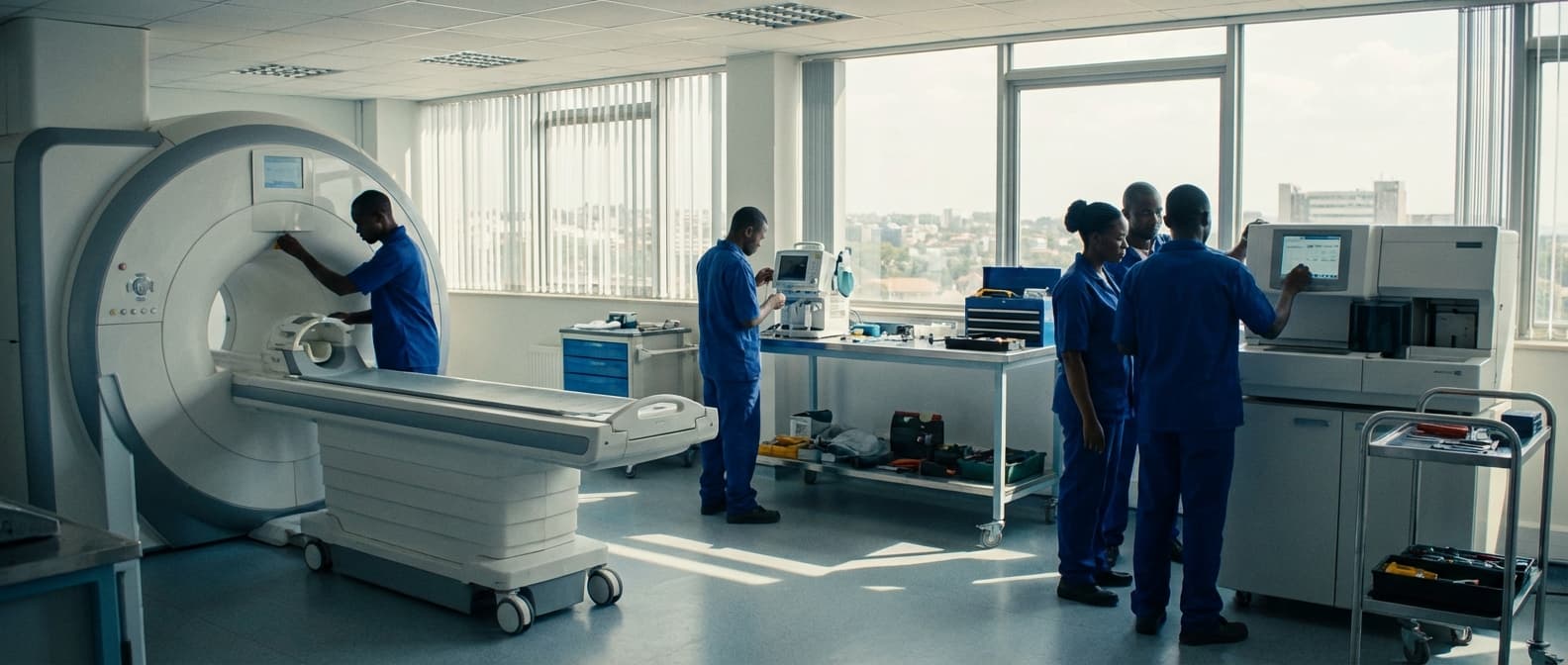
Preventive Maintenance Visit Service (On-Demand) in South Sudan
Engineering Excellence & Technical Support
Preventive Maintenance Visit Service (On-Demand) High-standard technical execution following OEM protocols and local regulatory frameworks.
Rapid On-Demand Deployment
Our fleet of fully equipped service vehicles is strategically positioned across South Sudan, ensuring rapid response to your urgent preventive maintenance requests, minimizing downtime and maximizing operational continuity.
Certified Technician Expertise
Our technicians are highly trained and certified in a wide range of industrial equipment, equipped with the latest diagnostic tools and genuine spare parts to perform thorough inspections and proactive repairs, preventing costly breakdowns.
Predictive Maintenance Insights
Leveraging advanced sensor technology and data analytics during each visit, we provide actionable insights into equipment health, allowing for predictive maintenance scheduling and preventing unexpected failures before they occur.
What Is Preventive Maintenance Visit Service (On-demand) In South Sudan?
Preventive Maintenance Visit Service (On-Demand) in South Sudan refers to a reactive, scheduled service provided for critical infrastructure and equipment where proactive, scheduled maintenance is not feasible or has been missed. This service is initiated by the asset owner when they identify a need for inspection, servicing, or minor repair to avert potential failures or performance degradation. Unlike scheduled preventive maintenance, which follows a predetermined timeline, the on-demand nature allows for flexibility and response to specific operational requirements or observed anomalies. This service aims to maintain operational continuity, extend asset lifespan, and reduce the likelihood of costly emergency repairs or downtime.
| Who Needs It | Typical Use Cases |
|---|---|
| Organizations operating critical infrastructure: Power generation facilities, water treatment plants, telecommunications towers, transportation networks (e.g., airports, ports). | Remote or inaccessible assets: Equipment located in areas with limited accessibility for regular maintenance schedules due to logistical challenges or security concerns. |
| Sectors with high operational uptime requirements: Healthcare facilities, financial institutions, essential service providers. | Assets with a history of intermittent issues: Equipment that has previously experienced minor malfunctions or performance fluctuations, requiring a targeted inspection. |
| Businesses relying on specialized or imported equipment: Machinery requiring specific expertise for maintenance and troubleshooting. | Post-emergency or disaster recovery scenarios: Assets that may have been affected by environmental conditions or operational stress, necessitating a condition assessment and stabilization. |
| Companies with fluctuating operational demands: Where maintenance can be scheduled during periods of lower activity, and on-demand services cater to peaks or unexpected needs. | Agricultural operations: Irrigation systems, generators, and processing machinery that may require attention outside of peak planting or harvesting seasons. |
| Mining and construction operations: Heavy machinery, pumps, and power units that are subject to harsh operating environments. | Logistics and distribution centers: Conveyor systems, forklifts, and warehouse management equipment. |
Key Components of Preventive Maintenance Visit Service (On-Demand):
- Assessment and Diagnosis: Initial evaluation of the asset's condition, identification of potential issues through visual inspection, diagnostic tools, and performance monitoring.
- Lubrication and Cleaning: Application of appropriate lubricants to moving parts and thorough cleaning of components to remove dust, debris, and contaminants that can impede performance and cause wear.
- Component Inspection and Testing: Non-destructive testing (NDT) and functional testing of critical components (e.g., electrical connections, mechanical linkages, seals, filters) to verify their integrity and operational parameters.
- Minor Adjustments and Replacements: Tightening of fasteners, adjustment of belts or chains, replacement of worn or damaged filters, seals, or minor expendable parts identified during inspection.
- Performance Calibration: recalibration of sensors, control systems, or mechanical settings to ensure optimal operational efficiency and adherence to specifications.
- Reporting and Recommendations: Documentation of the service performed, findings from the inspection, and provision of recommendations for further actions, including potential future maintenance needs or upgrades.
Who Needs Preventive Maintenance Visit Service (On-demand) In South Sudan?
Preventive maintenance is crucial for ensuring the longevity, reliability, and optimal performance of equipment and infrastructure. In South Sudan, where resources can be scarce and access to specialized services may be limited, an on-demand preventive maintenance visit service is particularly valuable. This service addresses the critical need to avoid costly breakdowns, minimize downtime, and extend the lifespan of essential assets across various sectors.
| Target Customer/Department | Specific Needs/Assets Requiring Preventive Maintenance | Impact of Preventive Maintenance |
|---|---|---|
| Government Ministries (e.g., Ministry of Health, Ministry of Infrastructure) | Medical equipment (generators, HVAC in hospitals), office equipment, communication systems, vehicles, water purification systems, power infrastructure. | Ensures uninterrupted public services, improves healthcare delivery, maintains essential infrastructure functionality, reduces operational disruptions. |
| International Non-Governmental Organizations (INGOs) | Vehicles (4x4s, trucks), generators, water pumps, communication equipment, field office infrastructure (buildings, sanitation). | Facilitates effective aid delivery, ensures operational continuity in remote areas, protects vital assets, enhances program effectiveness. |
| United Nations Agencies | Office equipment, vehicles, communication systems, IT infrastructure, power generation and distribution systems, specialized field equipment. | Supports peacekeeping and humanitarian operations, ensures reliability of essential services, maintains security and communication capabilities. |
| Private Sector Businesses (Logistics, Telecoms, Energy) | Fleet vehicles, IT servers, telecommunication towers and equipment, power generators, specialized machinery, warehouse equipment. | Minimizes business interruptions, reduces downtime, enhances service delivery, protects significant capital investments, improves profitability. |
| Healthcare Facilities (Hospitals, Clinics) | Medical imaging equipment, laboratory equipment, sterilization units, generators, HVAC systems, refrigeration units for vaccines, ambulances. | Ensures patient safety, maintains diagnostic and treatment capabilities, prevents critical equipment failures, improves overall healthcare quality. |
| Educational Institutions (Schools, Universities) | Computer labs, projectors, generators, administrative equipment, maintenance of school buildings and facilities. | Ensures a conducive learning environment, prevents disruptions to academic activities, prolongs the life of educational resources. |
| Agricultural Cooperatives and Large Farms | Tractors, harvesters, irrigation systems, pumps, generators, storage facilities. | Maximizes crop yields, reduces post-harvest losses, ensures efficient resource utilization, increases food security. |
| Mining and Oil & Gas Operations | Heavy machinery, drilling equipment, pumps, generators, processing equipment, vehicles. | Prevents costly breakdowns in remote and hazardous environments, ensures operational safety, maximizes extraction efficiency, reduces downtime. |
| Construction Companies | Construction vehicles, heavy machinery (excavators, cranes), power tools, generators, site equipment. | Ensures project timelines are met, reduces risk of equipment failure on-site, prolongs the life of valuable assets. |
| Service Providers (Water, Power) | Pumps, generators, water treatment plants, distribution networks, power transformers, control systems. | Ensures continuous and reliable provision of essential services, prevents community-wide disruptions, maintains public health and safety. |
Target Customers for On-Demand Preventive Maintenance Visits in South Sudan
- Government Ministries and Agencies
- International Non-Governmental Organizations (INGOs)
- United Nations Agencies
- Private Sector Businesses (e.g., logistics, telecommunications, energy)
- Healthcare Facilities
- Educational Institutions
- Agricultural Cooperatives and Large Farms
- Mining and Oil & Gas Operations
- Construction Companies
- Service Providers (e.g., water, power)
Preventive Maintenance Visit Service (On-demand) Process In South Sudan
This document outlines the workflow for an On-Demand Preventive Maintenance Visit Service in South Sudan, covering the entire process from initial inquiry to the successful execution of the service. This structured approach ensures efficiency, transparency, and timely delivery of maintenance solutions for clients.
| Stage | Description | Key Activities | Responsible Party |
|---|---|---|---|
| Inquiry & Initial Contact | Client expresses a need for preventive maintenance. | Phone call, email, online portal submission. | Client, Service Provider |
| Service Request & Information Gathering | Collecting details about the maintenance need. | Location, equipment type, issue, desired timeframe, history. | Service Provider |
| Quotation & Service Agreement | Formalizing the service terms and costs. | Preparing quotation, discussing terms, generating service agreement/work order. | Service Provider, Client |
| Scheduling & Resource Allocation | Planning the service execution. | Assigning technicians, preparing tools/parts, confirming logistics. | Service Provider |
| Pre-Visit Preparation | Ensuring readiness for the on-site visit. | Reviewing request, gathering parts/tools, confirming travel. | Service Provider |
| On-Site Execution of Preventive Maintenance | Performing the actual maintenance work. | Inspection, cleaning, lubrication, calibration, minor repairs. | Service Technician(s) |
| Reporting & Documentation | Recording and presenting the work done. | Generating service report, detailing findings and recommendations. | Service Technician(s) |
| Client Sign-off & Feedback | Client approval and satisfaction assessment. | Reviewing report, signing off, providing feedback. | Client, Service Provider |
| Invoicing & Payment | Financial settlement of the service. | Generating invoice, processing payment. | Service Provider, Client |
| Post-Service Follow-up | Ensuring continued optimal performance (optional). | Checking in with client, addressing emergent issues. | Service Provider |
Preventive Maintenance Visit Service (On-Demand) Process in South Sudan
- Inquiry & Initial Contact: The process begins when a client (individual or organization) expresses a need for preventive maintenance services. This can be through various channels such as phone calls, emails, or a dedicated online portal.
- Service Request & Information Gathering: Upon receiving an inquiry, the service provider gathers essential information. This includes the client's location in South Sudan, the type of equipment or asset requiring maintenance, the nature of the concern (e.g., scheduled check-up, specific issue), desired timeframe, and any previous maintenance history.
- Quotation & Service Agreement: Based on the gathered information, a detailed quotation is prepared. This quotation will outline the scope of work, estimated costs, parts required (if any), and the projected timeline. Upon client approval, a service agreement or work order is generated, formally documenting the terms and conditions.
- Scheduling & Resource Allocation: Once the agreement is finalized, the service is scheduled. This involves assigning qualified technicians, ensuring availability of necessary tools and equipment, and confirming logistical arrangements for travel to the client's site in South Sudan, considering local conditions and accessibility.
- Pre-Visit Preparation: Before dispatch, the assigned technician(s) review the service request, prepare the necessary parts and tools, and confirm all logistical details. This may include obtaining any required permits or access passes.
- On-Site Execution of Preventive Maintenance: The technician(s) arrive at the client's location and conduct the preventive maintenance as per the service agreement. This typically involves inspection, cleaning, lubrication, calibration, minor repairs, and replacement of worn-out parts. Safety protocols are strictly followed.
- Reporting & Documentation: After completing the maintenance, the technician(s) generate a detailed service report. This report includes a summary of the work performed, findings, any issues identified, recommendations for future maintenance or repairs, and a record of parts used. This report is presented to the client for their review and sign-off.
- Client Sign-off & Feedback: The client reviews the service report and, upon satisfaction, provides their sign-off. Feedback is actively encouraged to assess customer satisfaction and identify areas for service improvement.
- Invoicing & Payment: Following client sign-off, an invoice is generated based on the agreed-upon quotation and any additional costs incurred (if pre-approved). Payment terms are then processed according to the service agreement.
- Post-Service Follow-up (Optional but Recommended): A follow-up may be conducted after a reasonable period to ensure the equipment is functioning optimally and to address any emergent concerns, reinforcing customer relationships and ensuring long-term reliability.
Preventive Maintenance Visit Service (On-demand) Cost In South Sudan
The cost of an on-demand preventive maintenance visit service in South Sudan can vary significantly due to a confluence of economic and logistical factors specific to the country. These factors include the type of equipment or asset being maintained, the complexity of the required service, the geographical location within South Sudan (with remote areas incurring higher travel costs), the availability of specialized technicians and spare parts, and the prevailing inflation rates. Service providers often factor in security surcharges, transportation costs (which can be substantial due to poor infrastructure), and the general cost of doing business in a developing economy. Due to these variables, it's challenging to provide a precise, universally applicable price. However, an estimated range can be provided, keeping in mind that these are indicative and subject to negotiation and specific circumstances.
| Service Type / Equipment Category | Estimated Cost Range (South Sudanese Pound - SSP) |
|---|---|
| Basic Machinery (e.g., small generators, agricultural tools) | 150,000 - 400,000 SSP |
| Mid-range Industrial Equipment (e.g., larger generators, pumps) | 400,000 - 1,000,000 SSP |
| Specialized/Complex Equipment (e.g., medical machinery, advanced IT infrastructure, heavy construction machinery) | 1,000,000 - 5,000,000+ SSP |
| On-demand/Emergency Surcharge (can be a percentage or fixed fee) | An additional 20-50% on top of base service cost |
| Travel to Remote/High-Risk Areas (per visit, in addition to service cost) | 200,000 - 1,000,000+ SSP (highly variable) |
Key Pricing Factors for On-Demand Preventive Maintenance in South Sudan:
- Type and Complexity of Equipment: Basic machinery will cost less than highly specialized industrial equipment or advanced IT systems.
- Scope of Work: The number of tasks involved in the preventive maintenance will directly impact the labor hours and materials required.
- Geographical Location: Travel to remote or conflict-affected regions incurs significantly higher costs for logistics and personnel safety.
- Technician Expertise and Availability: Specialized skills may command higher rates, and scarcity of qualified personnel can drive up prices.
- Spare Parts and Materials: The cost and availability of necessary replacement parts are a major determinant.
- Urgency of Service: On-demand, emergency services typically carry a premium over scheduled maintenance.
- Service Provider's Overhead and Profit Margin: This includes administrative costs, insurance, and the company's desired profit.
- Security and Risk Assessment: In certain areas, security personnel and protocols add to the overall cost.
- Fuel and Transportation Costs: Fluctuations in fuel prices and the challenges of overland transport are significant.
- Currency Exchange Rates and Inflation: The volatile economic situation in South Sudan directly impacts the cost of imported parts and services.
Affordable Preventive Maintenance Visit Service (On-demand) Options
Our Affordable Preventive Maintenance Visit Service offers convenient, on-demand options to keep your assets running smoothly and prevent costly breakdowns. We understand the importance of proactive care and have designed flexible service bundles to meet your diverse needs and budget constraints. By investing in regular maintenance, you can significantly reduce the risk of unexpected repairs, extend the lifespan of your equipment, and maintain optimal performance, ultimately saving you money in the long run.
| Strategy | Description | Benefit |
|---|---|---|
| Scheduled vs. On-Demand | Opting for scheduled maintenance appointments, even if on-demand, can often be more cost-effective than emergency call-outs. | Reduced emergency fees, predictable budgeting, technician efficiency. |
| Bundle Discounts | Purchasing bundled services offers significant savings compared to individual service calls. | Lower overall maintenance costs, increased value for money. |
| Preventive vs. Reactive | Investing in prevention drastically lowers the likelihood of expensive, unplanned repairs. | Minimized downtime, reduced repair expenses, extended asset lifespan. |
| Early Detection | Regular inspections and diagnostics help identify potential issues before they become major problems. | Lower repair costs, less disruptive maintenance, improved reliability. |
| Extended Service Contracts | For regular users, consider long-term contracts for further discounts and guaranteed availability. | Further cost savings, prioritized service, consistent maintenance. |
Value Bundles for Preventive Maintenance
- {"title":"Basic Tune-Up Bundle","description":"Ideal for routine checks and minor adjustments. Includes essential inspections, cleaning, lubrication, and basic testing of critical components."}
- {"title":"Standard Health Check Bundle","description":"A more comprehensive service offering. Includes all Basic Tune-Up elements plus advanced diagnostics, minor part replacements (e.g., filters, belts), and a detailed performance report."}
- {"title":"Premium Proactive Care Bundle","description":"Our most extensive package, designed for maximum asset protection. Encompasses all Standard Health Check elements, in-depth system analysis, predictive maintenance recommendations, and priority scheduling for future services."}
- {"title":"Customizable Bundle Options","description":"Tailor a maintenance plan to your specific equipment and operational needs. Select individual services or combine them to create a personalized, cost-effective solution."}
Verified Providers In South Sudan
In South Sudan's evolving healthcare landscape, identifying genuinely verified and credentialed healthcare providers is paramount for ensuring quality and trustworthy medical services. Franance Health stands out as a leading organization committed to upholding the highest standards. This document outlines Franance Health's credentials and explains why they represent the best choice for healthcare needs in the region.
| Key Differentiators | Why Franance Health is the Best Choice |
|---|---|
| Unwavering Commitment to Quality: | Franance Health's strict adherence to accreditation, regulatory compliance, and continuous staff development ensures that patients receive care of the highest possible standard, minimizing risks and maximizing positive health outcomes. |
| Experienced and Competent Personnel: | The selection of only licensed and highly trained medical professionals guarantees that patients are treated by experts who possess the knowledge and skills necessary for effective diagnosis and treatment. |
| Trustworthy and Reliable Services: | With a foundation of ethical practices and transparent operations, Franance Health builds trust with its patients, offering a reliable source for essential healthcare services in a region where such assurance is critical. |
| Holistic Approach to Healthcare: | Beyond treating illness, Franance Health's patient-centered philosophy and community engagement initiatives demonstrate a commitment to the overall well-being and long-term health of individuals and the communities they serve. |
| Strong Network and Resource Mobilization: | Their established partnerships allow Franance Health to leverage a wider range of resources, expertise, and support systems, enhancing their ability to provide comprehensive and sustainable healthcare solutions. |
Franance Health Credentials and Commitment to Excellence
- Accreditation and Regulatory Compliance: Franance Health adheres to all national healthcare regulations and standards set forth by the Ministry of Health in South Sudan. They actively pursue and maintain accreditations from recognized healthcare bodies, ensuring their facilities and services meet rigorous quality benchmarks.
- Qualified Medical Professionals: The organization prioritizes employing highly qualified and licensed medical practitioners, including doctors, nurses, specialists, and allied health professionals. All personnel undergo thorough background checks and possess valid certifications and continuous professional development.
- Rigorous Training and Development: Franance Health invests heavily in ongoing training and professional development for its staff. This ensures they are up-to-date with the latest medical advancements, treatment protocols, and patient care best practices.
- Patient-Centered Care Philosophy: At its core, Franance Health is driven by a philosophy of patient-centered care. This means prioritizing patient safety, comfort, and well-being in all aspects of their operations, fostering a supportive and respectful healthcare environment.
- Transparent Operations and Ethical Practices: The organization is committed to transparency in its operations, including clear communication with patients regarding diagnoses, treatment options, and costs. Ethical conduct is a cornerstone of their practice, ensuring integrity in all interactions.
- Partnerships and Collaborations: Franance Health actively collaborates with reputable international health organizations, NGOs, and local community leaders. These partnerships enhance their capacity, facilitate knowledge sharing, and contribute to the broader improvement of healthcare access and quality in South Sudan.
- Community Engagement and Outreach: Beyond direct medical services, Franance Health engages with communities through health education programs, preventative care initiatives, and outreach services, aiming to improve overall public health awareness and outcomes.
Scope Of Work For Preventive Maintenance Visit Service (On-demand)
This Scope of Work (SOW) outlines the requirements for an On-Demand Preventive Maintenance (PM) Visit Service. The service provider will perform scheduled and unscheduled maintenance activities on specified equipment to ensure optimal performance, prevent failures, and extend equipment lifespan. This document details the technical deliverables and standard specifications for the execution of these services.
| Section | Description | Technical Deliverables | Standard Specifications |
|---|---|---|---|
| Coordinated scheduling of the PM visit based on client's operational needs and equipment criticality. Includes pre-visit communication and resource allocation. | Confirmed appointment date and time, list of required tools and parts (if known), technician's name and contact information. | Minimum 48-hour advance notification for scheduled PM visits. On-demand visits to be scheduled within 24 business hours of request receipt. |
| Adherence to client's site access procedures and safety protocols. Briefing with on-site client representative. | Signed site access log, documented safety briefing acknowledgement. | Technicians to possess valid site access credentials and undergo any required safety inductions. All work to be performed following client's Lockout/Tagout (LOTO) procedures and relevant safety regulations (e.g., OSHA). |
| Thorough visual and functional inspection of specified equipment. Utilization of diagnostic tools to assess performance. | Detailed inspection report including visual findings, operational test results, diagnostic readings (e.g., vibration analysis, thermal imaging, electrical measurements). | Inspection checklists to be provided and approved by the client. Diagnostic tools to be calibrated and certified. Reporting to include baseline data for future comparisons. |
| Execution of pre-defined PM tasks such as cleaning, lubrication, adjustments, filter replacement, and minor part replacements. | Completed PM task checklist, replacement parts inventory (if applicable), updated equipment logs. | Tasks to be performed according to manufacturer's recommendations and industry best practices. Replacement parts to be OEM or equivalent quality, pre-approved by the client. |
| Post-maintenance functional and performance testing to ensure equipment operates as intended. | Performance test report, comparison of pre- and post-maintenance data, confirmation of operational parameters. | Testing to include key performance indicators (KPIs) relevant to the equipment. Results to be within the manufacturer's specified tolerances. |
| Comprehensive reporting of all activities, findings, and recommendations. | Final PM report, including scope of work performed, observations, recommendations, parts used, labor hours, and digital photographs (if relevant). | Reports to be submitted electronically within 48 business hours of visit completion. Reports to be clear, concise, and actionable. All documentation to be retained by the service provider for a minimum of 5 years. |
| Providing recommendations for further maintenance, repairs, or upgrades based on inspection findings. | Written recommendations for corrective actions, including estimated costs and urgency. | Recommendations to be prioritized based on risk and impact on operations. Client to be consulted on recommended actions before implementation. |
Key Objectives of Preventive Maintenance Visit Service
- Minimize unexpected equipment downtime through proactive maintenance.
- Identify and address potential issues before they lead to significant failures.
- Ensure equipment operates within defined performance parameters and safety standards.
- Optimize operational efficiency and reduce energy consumption.
- Maintain detailed records of all maintenance activities performed.
Service Level Agreement For Preventive Maintenance Visit Service (On-demand)
This Service Level Agreement (SLA) outlines the terms and conditions for on-demand preventive maintenance visit services provided by [Your Company Name] (hereinafter referred to as "Provider") to [Client Company Name] (hereinafter referred to as "Client"). This SLA specifically addresses response times and uptime guarantees associated with these services.
| Service Level Parameter | Description | Target/Guarantee |
|---|---|---|
| Response Time (On-Demand) | Time from official service request to technician dispatch and active work. | Within 24 business hours for critical equipment; within 48 business hours for non-critical equipment. (Business hours defined as Monday-Friday, 8:00 AM - 5:00 PM local time, excluding public holidays). |
| Uptime Contribution of Preventive Maintenance | The expected increase in equipment reliability and reduced downtime due to the effective execution of scheduled preventive maintenance activities. | While a direct uptime guarantee for equipment operational status is not provided by this Preventive Maintenance Visit Service, the proactive nature of these visits is intended to minimize unplanned downtime by at least 15% annually for equipment covered by regular preventive maintenance. |
| Notification of Delays | Communication from Provider to Client regarding any anticipated delays in response time. | Provider will notify Client within 4 business hours of receiving a request if a delay in meeting the stated response time is foreseen, along with an updated estimated arrival time. |
Definitions
- Preventive Maintenance Visit Service: A scheduled or ad-hoc service visit by Provider's technicians to perform routine inspections, cleaning, lubrication, calibration, and minor adjustments on Client's equipment to prevent potential failures and optimize performance.
- On-Demand Service: Preventive maintenance visits that are not part of a pre-scheduled, recurring contract, and are requested by the Client as needed.
- Response Time: The time elapsed from when the Client officially requests a Preventive Maintenance Visit Service (via agreed-upon channels) until a Provider technician is dispatched and actively working on the request at the Client's location.
- Uptime Guarantee: The percentage of time that the Client's equipment is expected to be operational and functional, as influenced by the successful execution of preventive maintenance services. This SLA focuses on the contribution of preventive maintenance to overall uptime, rather than a direct guarantee of equipment operational status.
Frequently Asked Questions

Ready when you are
Let's scope your Preventive Maintenance Visit Service (On-Demand) in South Sudan project in South Sudan.

Scaling healthcare logistics and technical systems across the entire continent.