
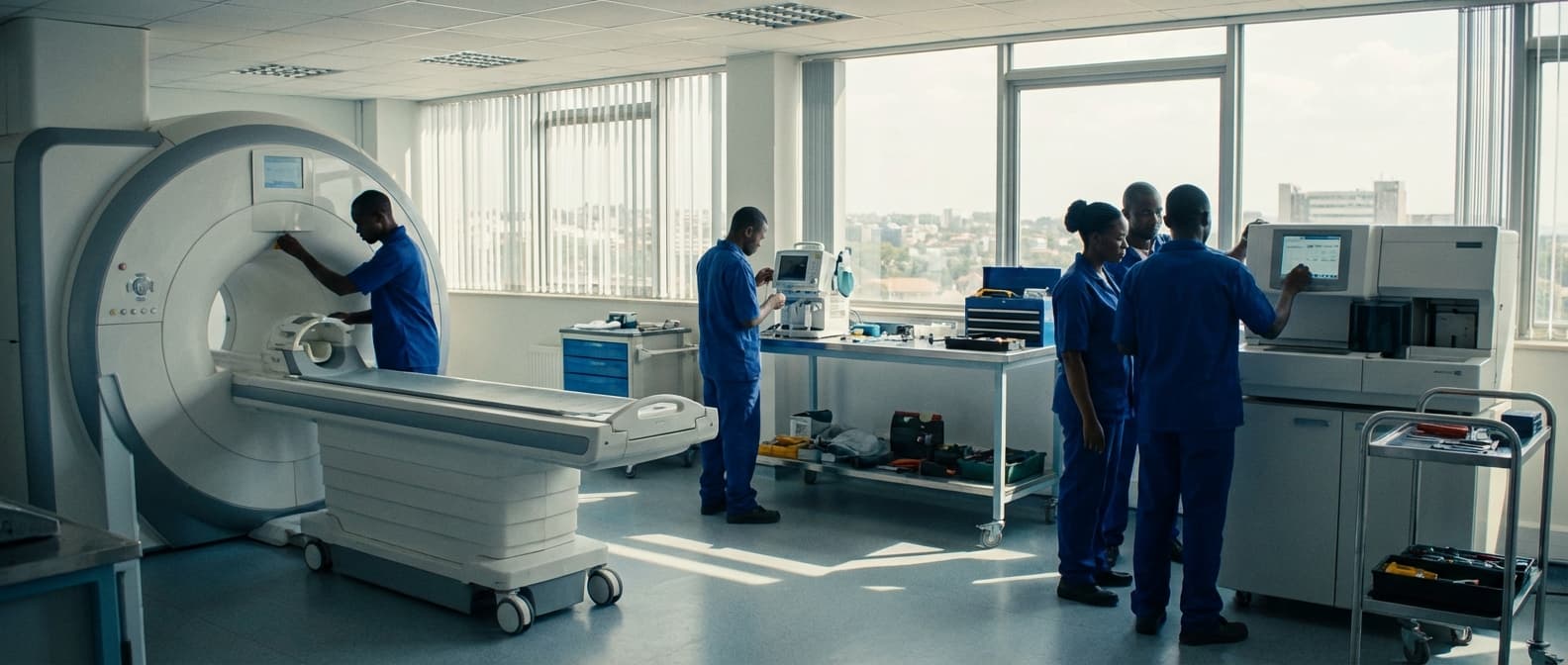
Planned Shutdown Coordination Service for Critical Equipment in South Sudan
Engineering Excellence & Technical Support
Planned Shutdown Coordination Service for Critical Equipment High-standard technical execution following OEM protocols and local regulatory frameworks.
Proactive Scheduling & Risk Mitigation
Our service leverages advanced scheduling software and historical data analysis to identify optimal shutdown windows for critical equipment in South Sudan. This minimizes operational disruption, accounts for logistical challenges unique to the region, and proactively mitigates risks associated with unplanned outages, ensuring continued service delivery.
Optimized Resource Allocation
We meticulously plan and coordinate the allocation of specialized personnel, critical spare parts, and essential tooling required for planned shutdowns. This ensures all necessary resources are available on-site at the right time, reducing downtime and preventing costly delays due to resource unavailability in remote South Sudanese locations.
Robust Stakeholder Communication & Compliance
Our service establishes clear and consistent communication channels with all stakeholders, including operational teams, maintenance crews, and regulatory bodies. We ensure adherence to all relevant safety protocols and environmental regulations specific to South Sudan, providing auditable records of the entire shutdown process for enhanced transparency and compliance.
What Is Planned Shutdown Coordination Service For Critical Equipment In South Sudan?
The Planned Shutdown Coordination Service for Critical Equipment in South Sudan is a specialized operational and logistical framework designed to ensure the efficient, safe, and minimally disruptive execution of scheduled maintenance, repair, or upgrade activities on essential infrastructure and industrial assets. This service addresses the unique challenges of operating in South Sudan, including potential logistical complexities, resource constraints, and the imperative to maintain continuity of essential services.
| Who Needs It? | Typical Use Cases | ||||
|---|---|---|---|---|---|
| Energy Sector: Oil & Gas exploration and production companies, power generation utilities (thermal, hydro, and potentially renewables). | Infrastructure Management: Operators of critical public infrastructure such as water treatment plants, telecommunications networks, and transportation hubs (airports, ports). | Industrial Facilities: Manufacturing plants, mining operations, and processing facilities reliant on heavy machinery and continuous production cycles. | Government & Public Sector: Agencies responsible for maintaining essential public services and critical national assets. | Humanitarian Organizations: Organizations operating large-scale infrastructure critical for aid delivery and essential services in remote or challenging environments. | |
| Scheduled Maintenance: Routine inspections, lubrication, filter changes, and minor component replacements on critical equipment (e.g., pumps, turbines, generators, compressors, drilling rigs). | Major Overhauls & Refurbishments: Comprehensive refurbishment of engines, gearboxes, electrical systems, and process units to extend asset life and improve efficiency. | Component Replacements: Installation of new or upgraded critical components, such as main shafts, control systems, or safety interlocks. | Upgrades & Modernization: Integration of new technologies, automation systems, or process enhancements requiring temporary cessation of operations. | Compliance-Driven Activities: Maintenance or modifications mandated by regulatory requirements or safety standards. | Emergency Preparedness Drills: Coordinated, simulated shutdown scenarios to test response protocols and personnel readiness for actual emergencies. |
Key Components of Planned Shutdown Coordination Service:
- Pre-Shutdown Planning & Risk Assessment: Comprehensive analysis of equipment dependencies, potential impacts on downstream operations and stakeholders, and identification of critical path activities. This phase involves detailed process mapping, hazard identification (HAZID), and operability studies (HAZOP) where applicable.
- Resource Mobilization & Management: Procurement, allocation, and scheduling of specialized personnel (engineers, technicians, safety officers), equipment (lifting gear, testing instruments, scaffolding), and materials required for the shutdown. This includes managing expatriate and local workforce integration and skill gap mitigation.
- Logistical Support & Supply Chain Optimization: Secure and timely delivery of parts, consumables, and tools to site, often involving complex transportation routes and customs clearance. This encompasses inventory management, just-in-time (JIT) delivery strategies, and contingency planning for supply chain disruptions.
- Permitting & Regulatory Compliance: Obtaining all necessary permits, licenses, and approvals from relevant South Sudanese authorities and regulatory bodies. This also includes adherence to local labor laws and environmental regulations.
- Safety & Environmental Management: Development and implementation of robust health, safety, and environment (HSE) plans, including lockout/tagout (LOTO) procedures, work permit systems, emergency response protocols, and waste management strategies tailored to the local context.
- Execution & Supervision: On-site management and direct supervision of all shutdown activities, ensuring adherence to the planned schedule, technical specifications, and safety procedures. This involves real-time progress monitoring and issue resolution.
- Post-Shutdown Testing & Handover: Verification of work completion, functional testing of restored equipment, performance validation, and formal handover of assets back to operational control. This includes thorough documentation and closeout reporting.
- Stakeholder Communication & Engagement: Proactive and continuous communication with all affected parties, including internal operational departments, external service providers, regulatory bodies, and potentially affected communities, to manage expectations and minimize operational impact.
Who Needs Planned Shutdown Coordination Service For Critical Equipment In South Sudan?
Planned Shutdown Coordination Services are crucial for ensuring the smooth, safe, and efficient execution of planned maintenance and repair activities for critical equipment in South Sudan. These services minimize downtime, prevent secondary damages, and optimize resource allocation, ultimately safeguarding operational continuity and profitability. The need is particularly acute in sectors where equipment failure can have severe economic, social, or safety consequences.
| Target Customer/Organization Type | Key Departments Involved in Shutdowns | Examples of Critical Equipment | Impact of Uncoordinated Shutdowns |
|---|---|---|---|
| Oil & Gas Companies (Upstream/Downstream) | Operations, Maintenance, Engineering, Safety, Supply Chain | Pumps, compressors, turbines, pipelines, generators, refining units | Production loss, safety hazards, environmental spills, significant revenue loss |
| Power Generation Companies | Operations, Maintenance, Engineering, Grid Management | Turbines, generators, transformers, control systems | Widespread power outages, economic disruption, social unrest |
| Water Utility Corporations | Operations, Maintenance, Engineering, Public Health | Pumps, treatment plant machinery, water distribution network components | Lack of clean water, sanitation issues, public health emergencies |
| Telecommunication Providers | Network Operations, Field Maintenance, Engineering, Customer Support | Base stations, power backup systems, fiber optic transmission equipment | Service disruption, loss of revenue, impact on critical communication channels |
| Airport Authorities | Operations, Maintenance, Air Traffic Control, Security | Runway lighting, navigation aids, baggage handling systems, power generators | Flight delays/cancellations, safety risks, disruption to trade and tourism |
| Large-Scale Industrial Plants (e.g., Cement, Food Processing) | Production, Maintenance, Engineering, Quality Control | Conveyor systems, processing machinery, boilers, packaging equipment | Production halts, product spoilage, contract defaults, loss of market share |
| Major Hospitals and Clinics | Facilities Management, Biomedical Engineering, IT, Clinical Departments | Emergency generators, MRI/CT scanners, life support systems, HVAC | Compromised patient care, risk to life, inability to perform essential medical procedures |
Target Customers and Departments Requiring Planned Shutdown Coordination Service in South Sudan
- {"title":"Energy Sector","description":"Organizations involved in oil and gas exploration, production, refining, and power generation are prime candidates. Reliable power supply and fuel production are vital for the nation's economy and stability."}
- {"title":"Water and Sanitation","description":"Utilities responsible for providing clean water and sanitation services to the population. Equipment failure in this sector can lead to public health crises."}
- {"title":"Telecommunications","description":"Providers of essential communication infrastructure. Downtime can disrupt business, government operations, and personal connectivity."}
- {"title":"Transportation and Logistics","description":"Entities managing airports, ports, and critical road/rail infrastructure. Disruptions can severely impact the movement of goods and people, hindering economic activity."}
- {"title":"Manufacturing and Industrial Production","description":"Factories and processing plants that produce essential goods. Planned shutdowns are necessary for maintaining machinery and ensuring product quality and output."}
- {"title":"Healthcare Facilities","description":"Hospitals and clinics that rely on critical medical equipment (e.g., power generators, imaging machines). Uninterrupted operation is paramount for patient care."}
- {"title":"Government and Public Services","description":"Agencies managing essential public infrastructure and services that depend on reliable equipment."}
Planned Shutdown Coordination Service For Critical Equipment Process In South Sudan
This document outlines the workflow for the Planned Shutdown Coordination Service for Critical Equipment in South Sudan. This service ensures the safe, efficient, and minimally disruptive scheduled maintenance of vital industrial and infrastructure equipment. The process is designed to manage the entire lifecycle of a planned shutdown, from initial customer inquiry to successful execution and post-shutdown review.
| Phase | Key Activities | Deliverables |
|---|---|---|
| Inquiry & Consultation | Receive inquiry, understand objectives, initial site assessment | Service Request, Preliminary Meeting Minutes |
| Planning & Preparation | Scope definition, risk assessment, resource planning, detailed scheduling, permit acquisition | Detailed Shutdown Plan, Resource Allocation Sheet, Safety Plan, Work Permits |
| Execution | On-site maintenance, continuous monitoring, quality control, issue resolution | Daily Progress Reports, Safety Incident Reports (if any), Work Completion Sign-offs |
| Completion & Closure | Testing, commissioning, handover, documentation, post-shutdown review | Test Certificates, Commissioning Report, Handover Documentation, Final Project Report |
Planned Shutdown Coordination Service Workflow
- {"step":1,"title":"Inquiry & Initial Consultation","description":"The process begins with a formal inquiry from the client (e.g., an oil & gas operator, power utility, mining company) requesting a planned shutdown for specific critical equipment. This is followed by an initial consultation to understand the scope, objectives, and preliminary timeline of the proposed shutdown."}
- {"step":2,"title":"Scope Definition & Requirements Gathering","description":"A detailed scope of work is defined, including the specific equipment to be serviced, the type of maintenance required (e.g., preventive, corrective, upgrade), expected duration, and any unique operational constraints. This phase involves close collaboration with the client's technical and operational teams."}
- {"step":3,"title":"Resource Planning & Mobilization","description":"Based on the defined scope, the service provider identifies and mobilizes the necessary human resources (skilled technicians, engineers, supervisors), specialized equipment (cranes, testing tools, welding machines), and materials required for the shutdown. This includes logistics and personnel deployment to the site in South Sudan."}
- {"step":4,"title":"Detailed Shutdown Planning & Scheduling","description":"A comprehensive shutdown plan is developed, including detailed work sequences, safety protocols, risk assessments, permit to work procedures, and a precise schedule. This plan is reviewed and approved by the client, with a strong emphasis on minimizing downtime and ensuring safety."}
- {"step":5,"title":"Pre-Shutdown Preparations","description":"Prior to the shutdown commencement, all pre-requisite activities are completed. This includes site preparation, final equipment checks, delivery of materials, and briefing of all involved personnel on the shutdown plan and safety procedures. Coordination with local authorities for permits and access may also occur."}
- {"step":6,"title":"Shutdown Execution","description":"The planned shutdown is executed according to the approved plan and schedule. Continuous monitoring of progress, adherence to safety standards, and real-time problem-solving are critical during this phase. Regular progress reports are provided to the client."}
- {"step":7,"title":"Testing & Commissioning","description":"After the maintenance activities are completed, the equipment undergoes rigorous testing and commissioning to ensure it is functioning as per specifications and safety standards. This may involve load testing, performance verification, and final inspections."}
- {"step":8,"title":"Handover & Documentation","description":"Upon successful completion and commissioning, the equipment is formally handed over to the client. All relevant documentation, including maintenance records, test results, and as-built drawings, is provided. Training for client personnel on new procedures or equipment may also be included."}
- {"step":9,"title":"Post-Shutdown Review & Reporting","description":"A post-shutdown review meeting is conducted to evaluate the performance of the service, discuss lessons learned, and identify areas for improvement in future shutdowns. A final report summarizing the entire shutdown process, including costs, timeline adherence, and any deviations, is submitted to the client."}
Planned Shutdown Coordination Service For Critical Equipment Cost In South Sudan
This document outlines the pricing factors and estimated cost ranges for a Planned Shutdown Coordination Service for Critical Equipment in South Sudan. Effective coordination of planned shutdowns is essential to minimize downtime, optimize maintenance schedules, and ensure the safety and longevity of critical operational assets. The service aims to provide expert project management, logistical support, and communication facilitation throughout the shutdown process.
| Service Component / Scale | Estimated Cost Range (South Sudanese Pound - SSP) | Notes |
|---|---|---|
| Small Scale (e.g., 1-3 critical equipment, 1-3 days) | 1,500,000 - 4,000,000 SSP | Basic coordination, limited personnel, standard logistics. |
| Medium Scale (e.g., 4-8 critical equipment, 3-7 days) | 4,000,000 - 12,000,000 SSP | Moderate team size, enhanced logistics, comprehensive safety planning. |
| Large Scale (e.g., 9+ critical equipment, 7+ days) | 12,000,000 - 35,000,000+ SSP | Extensive team, complex logistics (potentially including air transport), advanced risk management, specialized expertise. |
| Additional Daily Coordination Fee (beyond initial scope) | 200,000 - 800,000 SSP per day | Applicable for extended shutdown durations or unexpected delays requiring continued coordination. |
| Remote Location Surcharge | 10% - 30% of total service cost | Dependent on distance, accessibility challenges, and associated logistical complexities. |
Key Pricing Factors for Planned Shutdown Coordination Service
- {"item":"Complexity and Scope of the Shutdown","details":"The number of critical equipment items, the interdependencies between them, and the overall duration of the shutdown significantly impact resource allocation and planning effort."}
- {"item":"Duration of the Planned Shutdown","details":"Longer shutdowns generally incur higher coordination costs due to extended resource deployment and management."}
- {"item":"Geographical Location and Accessibility","details":"Remote or difficult-to-access locations in South Sudan will increase logistical costs for personnel, equipment, and supplies, thereby affecting the overall service fee."}
- {"item":"Number of Personnel Required","details":"The size of the coordination team, including project managers, engineers, safety officers, and logistics coordinators, will directly influence labor costs."}
- {"item":"Specialized Skills and Expertise","details":"If the shutdown requires highly specialized technical expertise or specific certifications, these will be factored into the pricing."}
- {"item":"Logistical Support Requirements","details":"This includes transportation (air, land, water), accommodation, catering, communication equipment, and security for the coordination team."}
- {"item":"Safety and Risk Management","details":"Developing and implementing comprehensive safety plans, risk assessments, and emergency response protocols adds to the service cost."}
- {"item":"Permitting and Regulatory Compliance","details":"Navigating local regulations and obtaining necessary permits for shutdown activities will involve administrative costs."}
- {"item":"Technology and Software Utilization","details":"Use of specialized project management software, communication platforms, or real-time monitoring tools can influence pricing."}
- {"item":"Client-Specific Requirements and Customization","details":"Any unique demands or tailored solutions requested by the client will be assessed and priced accordingly."}
Affordable Planned Shutdown Coordination Service For Critical Equipment Options
Implementing an "Affordable Planned Shutdown Coordination Service for Critical Equipment" can significantly reduce downtime costs and operational disruptions. This service focuses on meticulous planning, resource optimization, and efficient execution of scheduled equipment maintenance or upgrades. The value lies in transforming potentially costly and chaotic shutdowns into controlled, cost-effective, and predictable events. We offer flexible value bundles tailored to your specific needs, along with strategic cost-saving initiatives that deliver maximum return on investment.
| Cost-Saving Strategy | Description | Impact on Shutdown Costs |
|---|---|---|
| Proactive Scheduling & Lead Time Management | Booking contractors, ordering specialized parts, and securing necessary equipment well in advance to avoid premium rush fees and delays. | Reduces expedited shipping costs, overtime labor premiums, and lost production time due to unavailability of resources. |
| Optimized Resource Allocation | Ensuring the right personnel with the right skills are available at the right time, minimizing idle time and maximizing efficiency. Includes accurate tooling and equipment staging. | Lowers labor costs, prevents rework due to incorrect skill sets, and speeds up completion time. |
| Minimizing Scope Creep | Rigorous change management processes to prevent the addition of unplanned tasks during the shutdown that can extend the duration and increase costs. | Avoids additional labor, material, and potential production delays associated with unplanned work. |
| Leveraging Predictive & Preventive Maintenance Data | Using historical data and predictive analytics to focus maintenance efforts on components most likely to fail, preventing costly emergency shutdowns. | Reduces the likelihood of unexpected failures, allowing for planned and less expensive interventions. |
| Cross-Functional Team Collaboration | Facilitating clear communication and coordination between maintenance, operations, engineering, and procurement teams. | Improves efficiency, reduces misunderstandings, and speeds up decision-making during the shutdown. |
| Consolidated Procurement | Bundling the purchase of common parts and consumables for multiple shutdown activities to achieve bulk discounts. | Reduces material costs and administrative overhead associated with individual purchasing. |
| Contingency Planning & Risk Mitigation | Developing robust backup plans for potential issues (e.g., equipment failure, weather delays) and implementing proactive measures to avoid them. | Minimizes the financial impact of unforeseen events and prevents extended downtime. |
Value Bundles for Planned Shutdown Coordination
- Basic Essentials Bundle: Includes core planning, scheduling, basic risk assessment, and a post-shutdown review. Ideal for organizations with a strong internal maintenance team but needing external oversight for shutdown coordination.
- Comprehensive Optimization Bundle: Builds upon the Basic Essentials with advanced risk management, detailed resource allocation (labor, parts, equipment), on-site supervision during the shutdown, and predictive maintenance integration for future planning.
- Total Control Bundle: Encompasses all aspects of the Comprehensive Optimization bundle, plus vendor management, regulatory compliance checks, energy efficiency analysis during the shutdown, and detailed ROI reporting. Designed for organizations seeking a fully outsourced, end-to-end shutdown management solution.
- Customizable Solutions: We understand that no two operations are identical. Our team can work with you to create a bespoke bundle that addresses your unique critical equipment and operational challenges.
Verified Providers In South Sudan
In South Sudan's developing healthcare landscape, identifying reliable and credentialed providers is paramount. Franance Health stands out as a beacon of trust, offering a comprehensive range of services backed by rigorous verification processes and a commitment to excellence. This document outlines why Franance Health's credentials make them the premier choice for individuals and organizations seeking quality healthcare solutions in South Sudan.
| Service Area | Franance Health's Commitment | Why it Matters for Patients |
|---|---|---|
| Medical Consultations | Access to experienced and licensed general practitioners and specialists. | Accurate diagnoses and effective treatment plans tailored to individual needs. |
| Diagnostic Services | Utilizes modern laboratory and imaging equipment, with qualified technicians. | Reliable test results crucial for timely and accurate medical decision-making. |
| Preventive Healthcare & Wellness Programs | Offers health education, vaccinations, and screening services. | Empowers individuals to maintain good health and prevent diseases. |
| Emergency Medical Services | Provides prompt and skilled emergency response. | Life-saving interventions during critical situations. |
| Pharmaceutical Services | Ensures access to genuine and quality medications, ethically dispensed. | Safe and effective pharmacotherapy with professional guidance. |
Key Credentials and Strengths of Franance Health
- Accreditation and Regulatory Compliance: Franance Health adheres to all relevant South Sudanese Ministry of Health regulations and international healthcare standards. This ensures their operations, facilities, and personnel meet established benchmarks for safety, quality, and ethical practice.
- Qualified and Licensed Medical Professionals: The organization employs a team of highly skilled doctors, nurses, and specialists who are all licensed and certified by recognized medical boards. Continuous professional development and ongoing training are integral to their practice.
- Robust Quality Assurance Systems: Franance Health implements comprehensive quality assurance protocols across all its services, from patient care and diagnostics to supply chain management and facility maintenance. This proactive approach minimizes risks and maximizes patient outcomes.
- Partnerships with International Organizations: Collaborations with reputable international health organizations provide Franance Health with access to best practices, advanced medical technologies, and specialized training, further elevating their service standards.
- Patient-Centric Approach and Feedback Mechanisms: The organization prioritizes patient satisfaction and actively solicits feedback to continuously improve its services. This commitment ensures that care is delivered with empathy, respect, and a focus on individual needs.
- Transparent Operations and Ethical Conduct: Franance Health operates with a high degree of transparency, ensuring clear communication regarding services, costs, and patient rights. Upholding the highest ethical standards is a cornerstone of their practice.
Scope Of Work For Planned Shutdown Coordination Service For Critical Equipment
This Scope of Work (SOW) outlines the services to be provided for the planned shutdown coordination of critical equipment. The objective is to ensure a safe, efficient, and timely execution of scheduled maintenance, repairs, and upgrades with minimal disruption to operations. This document details the technical deliverables, standard specifications, and key activities involved in the coordination of these critical equipment shutdowns.
| Phase | Activity | Technical Deliverables | Standard Specifications / Requirements |
|---|---|---|---|
| Shutdown Planning Meeting | Approved Shutdown Plan Document, Hazard Identification and Risk Assessment (HIRA) Report, Communication Plan | Involve all relevant departments (Operations, Maintenance, Safety, Engineering), detailed task breakdown, resource allocation, criticality assessment of equipment, definition of isolation points, pre-shutdown inspection checklist. |
| Development of Detailed Work Packages | Approved Work Packages for each critical task, Bill of Materials (BOM), Service Manuals/Drawings | Clear scope of work per package, required tools and equipment, necessary permits (e.g., LOTO, hot work), estimated labor hours, contractor qualification requirements. |
| Resource & Logistics Planning | Resource Schedule (internal & external labor), Equipment & Tooling Schedule, Spare Parts Inventory Check & Procurement Plan | Availability of specialized tools, lifting equipment, temporary utilities, accommodation/transport for external personnel, timely procurement of critical spares. |
| Pre-Shutdown Inspections & Testing | Pre-Shutdown Inspection Reports, Baseline Performance Data | Verification of equipment condition, identification of potential issues, recording of operational parameters prior to shutdown. |
| Permit to Work (PTW) Management | Issued Permits (LOTO, Hot Work, Confined Space Entry, etc.) | Strict adherence to PTW procedures, verification of isolations, authorized personnel only. |
| Equipment Isolation & Depressurization | Isolation Certificates, Depressurization Records | Verified physical isolation, zero energy state achieved, pressure relief verification, documented sign-off by authorized personnel. |
| Execution of Maintenance/Repair/Upgrade Tasks | Completed Work Packages (signed off), Inspection & Test Records, Material Certification | Adherence to approved work packages, quality control checks at various stages, use of specified materials and procedures, conformance to OEM specifications. |
| Progress Monitoring & Reporting | Daily Progress Reports, Issue/Action Log | Real-time tracking of task completion, identification and resolution of impediments, escalation of critical issues, daily coordination meetings. |
| Equipment Reinstatement & Energization | Reinstatement Permits, Pre-Start up Checklists | Verification of all tasks completed, removal of tools and materials, isolation verification, authorized personnel for energization. |
| Pre-Startup & Performance Testing | Pre-Startup Reports, Performance Test Results, Dynamic Testing Records | Verification of all safety systems, controlled startup sequence, validation of operational parameters against baseline, functional testing. |
| Demobilization & Site Restoration | Site Clearance Certificates, Waste Management Records | Removal of all temporary equipment, cleaning of work areas, proper disposal of waste materials. |
| Post-Shutdown Review & Lessons Learned | Post-Shutdown Review Meeting Minutes, Lessons Learned Report, Updated Procedures (if applicable) | Analysis of shutdown performance, identification of successes and areas for improvement, documentation of best practices for future shutdowns. |
| Final Documentation & Handover | As-Built Drawings, Final Shutdown Report, Warranty Information (for new parts/services) | Comprehensive documentation of all activities, handover of equipment to operations, closure of all open items. |
Key Objectives
- Minimize downtime of critical equipment.
- Ensure the safety of all personnel involved in the shutdown activities.
- Facilitate efficient execution of planned maintenance and upgrade tasks.
- Maintain clear communication channels between all stakeholders.
- Adhere to all relevant safety, environmental, and operational regulations.
- Provide comprehensive documentation of shutdown activities and outcomes.
Service Level Agreement For Planned Shutdown Coordination Service For Critical Equipment
This Service Level Agreement (SLA) outlines the terms and conditions for the Planned Shutdown Coordination Service for Critical Equipment. It specifies response times for outage notifications and uptime guarantees for the coordination platform.
| Service Component | Response Time Guarantee | Uptime Guarantee |
|---|---|---|
| Planned Shutdown Notification Acknowledgment | Within 15 minutes of notification receipt during business hours (9 AM - 5 PM, Monday-Friday, excluding public holidays) | N/A |
| Critical Equipment Status Update Transmission | Within 5 minutes of update receipt during a planned shutdown | N/A |
| Planned Shutdown Coordination Platform Availability | N/A | 99.9% (excluding scheduled maintenance windows) |
Scope of Service
- Coordination of scheduled downtime for critical equipment to minimize operational impact.
- Facilitation of communication between relevant stakeholders during planned shutdowns.
- Provision of a centralized platform for outage scheduling, notifications, and status updates.
- Real-time monitoring and reporting of planned shutdown progress.
Frequently Asked Questions

Ready when you are
Let's scope your Planned Shutdown Coordination Service for Critical Equipment in South Sudan project in South Sudan.

Scaling healthcare logistics and technical systems across the entire continent.