
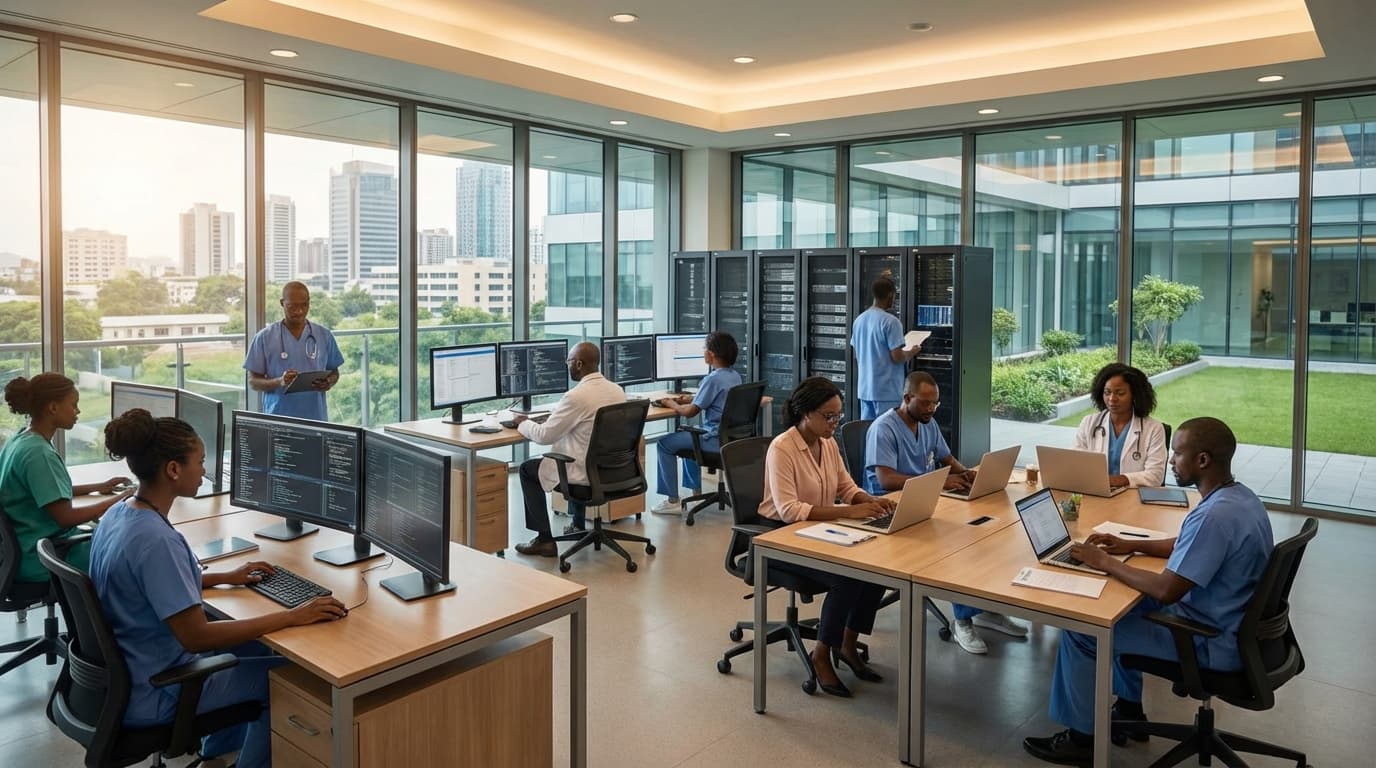
Radiology Reader & Reporting Support in South Sudan
Engineering Excellence & Technical Support
Remote radiology reading and reporting services High-standard technical execution following OEM protocols and local regulatory frameworks.
Rapid Image Upload & Access
Enables seamless and expedited upload of radiological images from remote clinics to a centralized platform, ensuring timely access for reporting and consultation by radiologists in South Sudan.
Integrated Reporting Workflow
Facilitates a streamlined reporting process with features for dictation, text editing, template utilization, and secure sharing of reports among radiologists and referring clinicians, enhancing communication and efficiency.
AI-Powered Diagnostic Assistance
Leverages artificial intelligence tools for initial image screening, anomaly detection, and potential diagnostic suggestions, augmenting the capabilities of radiologists and supporting earlier identification of critical findings in resource-limited settings.
What Is Radiology Reader & Reporting Support In South Sudan?
Radiology Reader & Reporting Support in South Sudan refers to the provision of specialized expertise and technological solutions to augment and validate the interpretation of medical imaging studies and the subsequent generation of diagnostic reports. This service aims to overcome challenges inherent in the healthcare infrastructure of South Sudan, such as a scarcity of qualified radiologists, limited access to advanced imaging technologies, and geographical barriers to specialized care. It encompasses the remote analysis of radiological images (e.g., X-rays, CT scans, MRIs, ultrasounds) by subspecialist radiologists located elsewhere, coupled with the generation of comprehensive and actionable diagnostic reports. The primary objective is to ensure accurate and timely diagnoses, thereby enabling effective patient management and improving health outcomes in resource-constrained environments. This support is crucial for healthcare facilities that lack on-site radiology expertise, particularly in remote or underserved areas.
| Who Needs Radiology Reader & Reporting Support? | Typical Use Cases |
|---|---|
| Hospitals and Clinics in Remote/Underserved Areas: Facilities lacking dedicated, full-time radiologists. | Emergency Department Consultations: Urgent interpretation of critical imaging studies (e.g., head CT for trauma, chest X-ray for suspected pneumonia) when on-site radiologist availability is limited. |
| Primary Healthcare Centers with Imaging Capabilities: Providing diagnostic support for X-rays or ultrasounds performed at the primary care level. | Complex Case Management: Obtaining expert opinions for challenging or unusual findings that require subspecialty expertise not present locally. |
| Facilities with Intermittent Radiologist Availability: Supplementing the work of a radiologist who may only be available part-time or on a rotational basis. | Screening Programs: Supporting large-scale screening initiatives (e.g., tuberculosis screening via chest X-rays) where a high volume of images requires efficient interpretation. |
| Surgical and Medical Departments: Ensuring timely and accurate diagnostic information to guide surgical planning and medical treatment decisions. | Pediatric and Neonatal Care: Accessing pediatric subspecialists for the interpretation of imaging in young patients, a demographic often requiring specialized training. |
| Referral Centers with High Imaging Volume: Offloading a portion of the interpretation workload to ensure timely reporting and reduce burnout among local radiologists. | Post-Operative Monitoring: Evaluating imaging studies to assess surgical outcomes and detect complications. |
Key Components of Radiology Reader & Reporting Support
- Remote Image Interpretation (Teleradiology): Transmission of digital medical images from the originating facility to a remote reading center for interpretation by qualified radiologists.
- Subspecialty Expertise: Access to radiologists with expertise in various subspecialties (e.g., neuroradiology, musculoskeletal radiology, pediatric radiology) to provide advanced diagnostic capabilities.
- Report Generation and Delivery: Production of standardized, detailed, and clinically relevant radiology reports, typically delivered electronically within a defined turnaround time.
- Quality Assurance and Peer Review: Implementation of processes to ensure the accuracy and consistency of interpretations and reports, often involving peer review by senior radiologists.
- Technical Infrastructure Support: Provision or guidance on necessary hardware, software (PACS/RIS), and reliable internet connectivity for image transmission and workflow management.
- Training and Capacity Building: Potential for training local healthcare professionals in basic image acquisition, quality control, and understanding of radiology reports.
Who Needs Radiology Reader & Reporting Support In South Sudan?
Radiology reader and reporting support is crucial for improving diagnostic accuracy and efficiency in healthcare settings. In South Sudan, a country facing significant challenges in its healthcare infrastructure, such support can be transformative. This service can empower local radiologists and clinicians by providing expert second opinions, assisting with complex case interpretations, and ensuring timely and comprehensive reporting. This ultimately leads to better patient care, more informed treatment decisions, and a stronger overall healthcare system.
| Customer Type | Key Departments/Users | Specific Needs |
|---|---|---|
| Public Hospitals | Radiology Department, Emergency Department, Surgical Wards, Internal Medicine, Pediatrics | Assistance with high caseloads, interpretation of complex scans (e.g., trauma, pediatric imaging), training for junior radiologists, consistent reporting standards. |
| Private Hospitals | Radiology Department, various clinical specialties, Outpatient Clinics | Enhancing diagnostic turnaround times, specialized interpretations (e.g., neuroimaging, musculoskeletal), quality assurance, competitive service offerings. |
| Diagnostic Imaging Centers | Radiology Technologists, Referring Clinicians | Ensuring accurate image acquisition and initial readings, providing expert radiologist opinions for definitive diagnoses, supporting a wider range of imaging modalities. |
| Clinics with Imaging Capabilities | General Practitioners, Nurses, Radiographers (if present) | Bridging the gap in expert radiological interpretation, providing support for basic imaging needs, facilitating referrals for complex cases. |
| NGOs in Healthcare | Medical Coordinators, Field Clinicians, Program Managers | Supporting mobile clinics or remote health posts with imaging needs, ensuring consistent diagnostic quality in resource-limited settings, contributing to public health initiatives. |
| Maternal and Child Health Centers | Obstetricians/Gynecologists, Pediatricians, Radiographers (if present) | Specialized support for obstetric ultrasound (e.g., fetal anomaly scans), pediatric imaging, and assisting in the diagnosis of common childhood illnesses. |
| Referral Hospitals | Specialized clinical departments, Radiology Department | Providing advanced diagnostic support for complex and rare conditions, aiding in subspecialty reporting, acting as a central hub for expert consultations. |
Target Customers and Departments for Radiology Reader & Reporting Support in South Sudan
- Hospitals (Public and Private)
- Diagnostic Imaging Centers
- Clinics with Imaging Capabilities
- Non-Governmental Organizations (NGOs) involved in healthcare
- Maternal and Child Health Centers
- Referral Hospitals
Radiology Reader & Reporting Support Process In South Sudan
This document outlines the workflow for radiology reader and reporting support in South Sudan, detailing the process from an initial inquiry to the final execution of services. The objective is to ensure efficient and effective utilization of radiology expertise in a resource-constrained environment.
| Stage | Description | Key Stakeholders | Tools/Technologies | Potential Challenges |
|---|---|---|---|---|
| Healthcare facilities in South Sudan identify a need for radiology interpretation or consultation due to limited local expertise, complex cases, or equipment downtime. Inquiries are submitted through designated channels. | Referring Clinician/Facility, Ministry of Health (MoH), Implementing Partner | Secure email, dedicated web portal, standardized inquiry forms, phone calls (for urgent cases) | Lack of reliable communication infrastructure, inconsistent access to technology, unfamiliarity with submission procedures, language barriers |
| Upon receipt, inquiries are assessed for urgency and complexity. Critical cases (e.g., trauma, suspected emergencies) are prioritized over routine requests. | Project Coordinator, Senior Radiologist (if available locally), designated triage team | Triage checklist, prioritization matrix, electronic case management system (if available) | Subjectivity in prioritization, potential for delays if triage team is overwhelmed, lack of clear emergency protocols |
| Relevant radiological images (X-ray, CT, Ultrasound, MRI) are acquired by the referring facility. Images are then securely transmitted to the support platform. | Radiology Technologist/Technician at referring facility, IT support (if available) | Digital imaging equipment (PACS/DICOM compliant if possible), secure file transfer protocols (SFTP), encrypted cloud storage, USB drives (as a last resort) | Poor image quality due to equipment limitations or technologist training, inconsistent internet connectivity, lack of PACS/DICOM compliance, data security concerns, large file sizes |
| Prioritized cases are assigned to available and qualified remote radiology readers based on subspecialty and workload. The reporting workflow is initiated. | Project Coordinator, PACS Administrator (if applicable), Remote Radiology Reader | Teleradiology platform, electronic worklist, case management software | Unavailability of specialized readers, reader burnout, equitable workload distribution, ensuring reader licensing and credentialing |
| Assigned readers review the transmitted images, perform interpretation, and generate a preliminary report detailing their findings and recommendations. | Remote Radiology Reader | Teleradiology workstation, advanced imaging viewing software, dictation software, report templates | Limited clinical information provided by referring facility, inter-reader variability, need for clear and concise reporting in a simplified format |
| Preliminary reports undergo a review process to ensure accuracy, completeness, and adherence to reporting standards. This may involve peer review or review by a senior radiologist. | Senior Radiologist (remote or local supervisor), Quality Assurance Officer | Peer review module within the teleradiology platform, dedicated QA forms, statistical analysis of report turnaround times and accuracy | Limited availability of senior reviewers, maintaining consistency in QA standards, time constraints for thorough review |
| The finalized and approved radiology report is securely transmitted back to the referring healthcare facility. | Project Coordinator, Referring Clinician/Facility | Secure email, teleradiology platform portal, fax (for backup) | Ensuring timely delivery, confirmation of receipt, potential for misinterpretation of transmitted reports |
| A mechanism is established to collect feedback from referring clinicians on the report quality and turnaround time. This feedback is used to identify areas for improvement in the workflow and training. | Referring Clinician/Facility, Project Coordinator, Implementing Partner | Feedback forms, surveys, regular debriefing meetings, data analysis | Low response rates for feedback, difficulty in quantifying impact of improvements, resource limitations for implementing changes |
Radiology Reader & Reporting Support Process in South Sudan
- Inquiry Generation & Submission
- Case Triage & Prioritization
- Image Acquisition & Transmission
- Reader Assignment & Workflow Initiation
- Image Interpretation & Preliminary Report Generation
- Report Review & Quality Assurance
- Final Report Dissemination
- Feedback & Continuous Improvement
Radiology Reader & Reporting Support Cost In South Sudan
Providing radiology reading and reporting support in South Sudan is crucial for healthcare delivery, but faces significant cost challenges due to the country's unique economic and infrastructural landscape. These costs are influenced by several key factors, leading to a wide and often variable pricing range in the local currency, the South Sudanese Pound (SSP).
| Service Component | Estimated Cost Range (SSP) per study/month/year | Notes |
|---|---|---|
| Teleradiology Reading Fee (Per Study) | 10,000 - 50,000+ SSP | Varies based on modality (X-ray is cheaper, CT/MRI more expensive), complexity, and turnaround time. Can be significantly higher for specialized subspecialties. |
| On-site Radiologist (Monthly Contract - Expatriate) | 1,500,000 - 5,000,000+ SSP | Includes salary, accommodation, security, flights, and hazard allowances. Highly variable based on experience and location. |
| On-site Radiologist (Daily Rate - Expatriate) | 70,000 - 200,000+ SSP | For short-term assignments or specific coverage needs. |
| PACS/RIS Software Licensing (Annual) | 500,000 - 2,000,000+ SSP | Depends on the vendor, features, and number of users/workstations. Cloud-based solutions may have subscription models. |
| Internet Connectivity (Monthly) | 100,000 - 500,000+ SSP | Crucial for teleradiology. High costs and potential unreliability. Satellite internet is often required. |
| Hardware Maintenance & Support (Annual - estimated) | 300,000 - 1,000,000+ SSP | For imaging equipment, servers, workstations, etc. Can be higher if parts need to be imported. |
| Training & Capacity Building (Per Person - variable) | 200,000 - 800,000+ SSP | Covers training for radiographers, technicians, IT support. Includes course fees, travel, and accommodation. |
| Logistics & Security (Monthly - estimated) | 200,000 - 1,000,000+ SSP | Includes transportation, security personnel, fuel for generators, etc. Highly location-dependent. |
Key Pricing Factors for Radiology Reader & Reporting Support in South Sudan:
- Radiologist Availability and Expertise: Qualified radiologists are scarce in South Sudan. The cost is heavily influenced by the availability of local vs. expatriate radiologists. Expatriate radiologists command higher fees due to relocation, accommodation, and hazard allowances. The specific subspecialty of the radiologist (e.g., neuro-radiology, pediatric radiology) also impacts cost.
- Technology and Infrastructure: The cost of implementing and maintaining radiology reading and reporting systems is high. This includes PACS (Picture Archiving and Communication System), RIS (Radiology Information System), high-speed internet connectivity (often unreliable and expensive), reliable electricity (frequent power outages necessitate generators and fuel), and the cost of imaging equipment maintenance and upgrades.
- Logistics and Security: Operating in South Sudan involves significant logistical complexities and security risks. This translates to higher operational costs, including transportation, security personnel, and insurance. Travel for remote reading or support visits adds to the overall expense.
- Training and Capacity Building: Investing in training local healthcare professionals to support radiology services (e.g., radiographers, technicians, administrative staff) is a necessary but costly component. This aims to build sustainable local capacity and reduce reliance on external support in the long run.
- Service Model (Teleradiology vs. On-site): Teleradiology services, while potentially more cost-effective than flying in specialists, still incur costs related to secure data transmission, platform licensing, and remote support. On-site services will include all the costs associated with having a radiologist physically present.
- Volume and Scope of Services: The number of studies to be read and reported, the types of imaging modalities used (X-ray, CT, MRI, Ultrasound), and the complexity of the reports required will all influence the pricing.
- Geographic Location: The cost of services can vary significantly depending on the specific location within South Sudan. Remote or conflict-affected areas generally have higher operational costs due to increased logistical and security demands.
- Exchange Rate Fluctuations: The South Sudanese Pound (SSP) is highly volatile. Pricing in local currency is subject to significant fluctuations based on the prevailing exchange rates for imported equipment, software licenses, and expatriate salaries.
- Provider Overhead and Profit Margins: Like any service, providers will have their own overhead costs (administrative, office space, etc.) and profit margins which are factored into the final price.
Affordable Radiology Reader & Reporting Support Options
Radiology departments and practices are constantly seeking ways to optimize their workflow, improve turnaround times, and enhance diagnostic accuracy while managing costs. Affordable radiology reader and reporting support options are crucial for achieving these goals. This document outlines various value bundles and cost-saving strategies, focusing on how to leverage technology and strategic partnerships to reduce expenses without compromising quality.
| Strategy/Bundle | Description | Cost-Saving Mechanism | Potential Benefits |
|---|---|---|---|
| Teleradiology Services | Remote interpretation of medical images. | Reduced need for full-time, in-house radiologists, especially for specialized or off-hour coverage. | 24/7 coverage, access to subspecialists, improved turnaround times, cost predictability. |
| AI-Powered Reading Support | AI algorithms assisting in image analysis and reporting. | Increased radiologist throughput, reduced errors, potentially fewer radiologist hours needed per case. | Faster reads, enhanced accuracy, reduced radiologist burnout, improved consistency. |
| Hybrid Teleradiology & AI | Integrated use of both teleradiology and AI. | Optimized resource allocation, leveraging the strengths of both technologies for maximum efficiency. | Comprehensive coverage, cost-effectiveness, enhanced diagnostic capabilities, workflow efficiency. |
| Outsourced Reporting Services | Specialized services for dictation, transcription, and preliminary report generation. | Frees up radiologist time for interpretation, reduces administrative burden and associated staff costs. | Increased radiologist productivity, lower administrative overhead, faster report finalization. |
| Managed Service Agreements (MSAs) | Bundled IT, PACS, RIS, and teleradiology services. | Volume discounts, simplified vendor management, streamlined integration, predictable IT costs. | Reduced operational complexity, better IT support, potential for cost savings through bundled pricing. |
| Subscription-Based Software | Cloud-based PACS, RIS, reporting software on a subscription. | Eliminates large upfront capital expenditure, predictable monthly costs, scalable as needs change. | Lower initial investment, flexibility, easier upgrades, access to latest technology. |
| Workflow Automation Tools | Software for automating tasks like QC, preliminary report population. | Reduces manual labor, minimizes errors, increases efficiency of existing staff. | Improved operational efficiency, reduced labor costs, consistent output. |
Key Value Bundles and Cost-Saving Strategies
- {"title":"Teleradiology Services","description":"Outsourcing interpretation of medical images to remote radiologists. This can be a highly cost-effective solution, especially for off-hours coverage, subspecialty reads, or when internal staffing is insufficient."}
- {"title":"AI-Powered Reading Support","description":"Utilizing Artificial Intelligence (AI) algorithms to assist radiologists. AI can pre-screen images, highlight potential abnormalities, and streamline the reporting process, leading to faster reads and reduced radiologist fatigue."}
- {"title":"Hybrid Models","description":"Combining in-house radiologists with teleradiology or AI support. This allows for flexible staffing, ensuring adequate coverage for all types of studies while managing workload."}
- {"title":"Outsourced Reporting Services","description":"Engaging specialized services for dictation, transcription, and preliminary report generation. This frees up radiologist time for interpretation and reduces administrative overhead."}
- {"title":"Managed Service Agreements (MSAs)","description":"Bundling multiple services (e.g., PACS maintenance, IT support, teleradiology, AI) under a single contract with a vendor. This can lead to volume discounts and streamlined vendor management."}
- {"title":"Subscription-Based Software Models","description":"Opting for cloud-based PACS, RIS, and reporting software on a subscription basis rather than large upfront capital expenditures. This offers predictable costs and scalability."}
- {"title":"Workflow Optimization & Automation","description":"Implementing technologies and processes that automate repetitive tasks, such as image QC, preliminary report population, and report routing. This improves efficiency and reduces manual labor costs."}
- {"title":"Partnerships with Academic Institutions","description":"Collaborating with teaching hospitals for resident or fellow support in reading and reporting, often at a reduced cost compared to fully employed radiologists."}
- {"title":"Flexible Staffing Models","description":"Employing a mix of full-time, part-time, and locum tenens radiologists to match fluctuating demand, avoiding the costs associated with permanent underutilization."}
- {"title":"Performance-Based Contracts","description":"Negotiating contracts with vendors that include performance metrics and incentives, ensuring quality and efficiency are met for the price paid."}
Verified Providers In South Sudan
In the challenging landscape of healthcare provision in South Sudan, identifying and trusting verified providers is paramount. Franance Health stands out as a beacon of reliability and quality, offering a comprehensive suite of medical services underpinned by stringent credentialing and a deep commitment to patient well-being. Their dedication to international standards and local needs makes them the premier choice for healthcare in South Sudan.
| Aspect | Franance Health's Commitment | Implication for Patients |
|---|---|---|
| Credential Verification | Thorough checking of academic degrees, licenses, and practical experience. | Assurance of receiving care from qualified and competent medical professionals. |
| Professional Development | Continuous training and upskilling of medical staff to stay abreast of the latest medical advancements. | Access to up-to-date treatments and medical knowledge. |
| Patient Safety Protocols | Implementation of strict infection control measures and safety guidelines. | Reduced risk of complications and a safer healthcare experience. |
| Cultural Sensitivity & Communication | Training staff to be culturally aware and to communicate effectively with diverse patient populations. | Improved patient comfort, understanding, and adherence to treatment plans. |
| Community Engagement | Active participation in health awareness programs and initiatives within South Sudan. | Empowerment of communities with health knowledge and access to care. |
Why Franance Health is the Best Choice:
- Rigorous Credentialing Process: Franance Health employs a multi-layered credentialing process for all its medical professionals. This includes verifying academic qualifications, professional licenses, previous employment records, and any relevant certifications. This ensures that only highly competent and ethical practitioners are part of their network.
- Experienced and Specialized Medical Staff: The organization boasts a team of highly experienced doctors, nurses, specialists, and support staff, many with international training and experience. They cover a wide range of medical disciplines, ensuring comprehensive care for diverse health needs.
- Commitment to Quality and Safety: Franance Health is dedicated to upholding the highest standards of patient care and safety. This commitment is reflected in their adherence to best practices, continuous staff training, and investment in modern medical equipment and facilities.
- Patient-Centered Approach: Beyond medical expertise, Franance Health prioritizes a compassionate and patient-centered approach. They foster an environment of trust and respect, ensuring that patients feel heard, understood, and well-cared for throughout their healthcare journey.
- Accessibility and Reach: Understanding the logistical challenges in South Sudan, Franance Health strives to make quality healthcare accessible. They are actively involved in expanding their reach and services to serve a wider population.
- Ethical Practices and Transparency: Franance Health operates with a strong ethical framework and promotes transparency in all its dealings. This builds trust with patients, partners, and the wider community.
Scope Of Work For Radiology Reader & Reporting Support
This Scope of Work (SOW) outlines the requirements for Radiology Reader & Reporting Support services. The objective is to provide qualified radiologists to interpret medical images and generate comprehensive reports, ensuring timely, accurate, and high-quality diagnostic services. This document details the technical deliverables and standard specifications expected from the service provider.
| Category | Deliverable Description | Standard Specification / Requirements | Key Performance Indicators (KPIs) | Deliverable Format |
|---|---|---|---|---|
| Image Interpretation & Reading | Interpretation of various radiological modalities (X-ray, CT, MRI, Ultrasound, Nuclear Medicine). | Reads performed by board-certified or eligible radiologists with relevant subspecialty expertise. Adherence to established clinical guidelines and protocols (e.g., ACR, ESUR). | Turnaround Time (TAT) for critical and routine reads. Accuracy rate of interpretations. | Digital format via secure PACS connection or secure cloud portal. |
| Radiology Reporting | Generation of comprehensive, clear, and concise radiology reports. | Reports to include findings, impressions, recommendations, and relevant clinical information. Use of standardized reporting templates where applicable. Compliance with HIPAA/GDPR and other privacy regulations. | TAT for report finalization. Report clarity and completeness (measured by client feedback). | Structured digital reports within the PACS/EHR system or via secure export. |
| Quality Assurance | Regular review and QA of read reports to ensure accuracy and consistency. | Implementation of a QA program with defined metrics and feedback mechanisms. Peer review process for complex or critical cases. | Percentage of reports reviewed. Concordance rate between initial and reviewed reports. | QA reports and feedback logs. |
| Technical Integration & Security | Secure and reliable connectivity to client's PACS and EHR systems. | Use of industry-standard security protocols (e.g., HL7, DICOM, HTTPS, VPN). Data encryption in transit and at rest. Compliance with client's IT security policies. | System uptime and reliability. Successful data transmission rate. | Integrated workflow within existing systems; secure data exchange logs. |
| Communication & Support | Facilitation of communication with referring physicians for critical findings or clarification. | Availability of radiologists for consultations. Defined escalation procedures for urgent cases. Prompt response to queries. | Response time for critical findings notification. Satisfaction with communication effectiveness. | Secure messaging platform, email, or phone logs. |
| Reporting & Analytics | Provision of regular reports on service utilization, TAT, and quality metrics. | Customizable reporting dashboard or scheduled monthly/quarterly reports. Data on case volume, types of studies, and performance against KPIs. | Accuracy and timeliness of reporting. Client satisfaction with reporting. | Digital reports (PDF, Excel, CSV) and/or dashboard access. |
Key Objectives
- Enhance radiology department efficiency by providing on-demand reading and reporting services.
- Ensure accurate and timely diagnostic interpretations to support patient care decisions.
- Maintain high standards of clinical quality and adherence to established protocols.
- Facilitate flexible and scalable radiology coverage to meet fluctuating workloads.
- Integrate seamlessly with existing Picture Archiving and Communication Systems (PACS) and Electronic Health Records (EHR).
Service Level Agreement For Radiology Reader & Reporting Support
This Service Level Agreement (SLA) outlines the commitment of [Provider Name] to [Client Name] regarding Radiology Reader & Reporting Support services. It defines response times for critical issues and uptime guarantees for the provided platform and services.
| Service Component | Response Time Objective (Target) | Resolution Target (Best Effort) | Uptime Guarantee |
|---|---|---|---|
| Radiology Reading Platform Availability | 15 minutes for Critical Issues | 4 hours for Critical Issues | 99.9% Monthly |
| Reporting Tool Functionality | 30 minutes for Critical Issues | 6 hours for Critical Issues | 99.9% Monthly |
| Reader & Reporting Support Staff Availability (during defined support hours) | 1 hour for High Priority Issues | 8 business hours for High Priority Issues | N/A (Defined by support hours) |
| Non-Critical Issue Response | 4 business hours for Normal Priority Issues | 2 business days for Normal Priority Issues | N/A |
Key Definitions
- Critical Issue: Any system outage, inability to access the radiology reading platform, or significant degradation of service preventing radiologists from performing their core duties and impacting patient care timelines.
- High Priority Issue: A significant functional defect that impairs reporting capabilities or leads to incorrect interpretation, but does not prevent core reading activities.
- Normal Priority Issue: A non-critical bug, feature request, or question regarding system functionality that does not immediately impact reading or reporting.
- Uptime: The percentage of time the radiology reading platform and associated reporting tools are available and functioning as intended, excluding scheduled maintenance.
- Scheduled Maintenance: Pre-announced periods when the system may be unavailable for upgrades, patches, or other necessary maintenance. Advance notice will be provided.
Frequently Asked Questions

Ready when you are
Let's scope your Radiology Reader & Reporting Support in South Sudan project in South Sudan.

Scaling healthcare logistics and technical systems across the entire continent.