
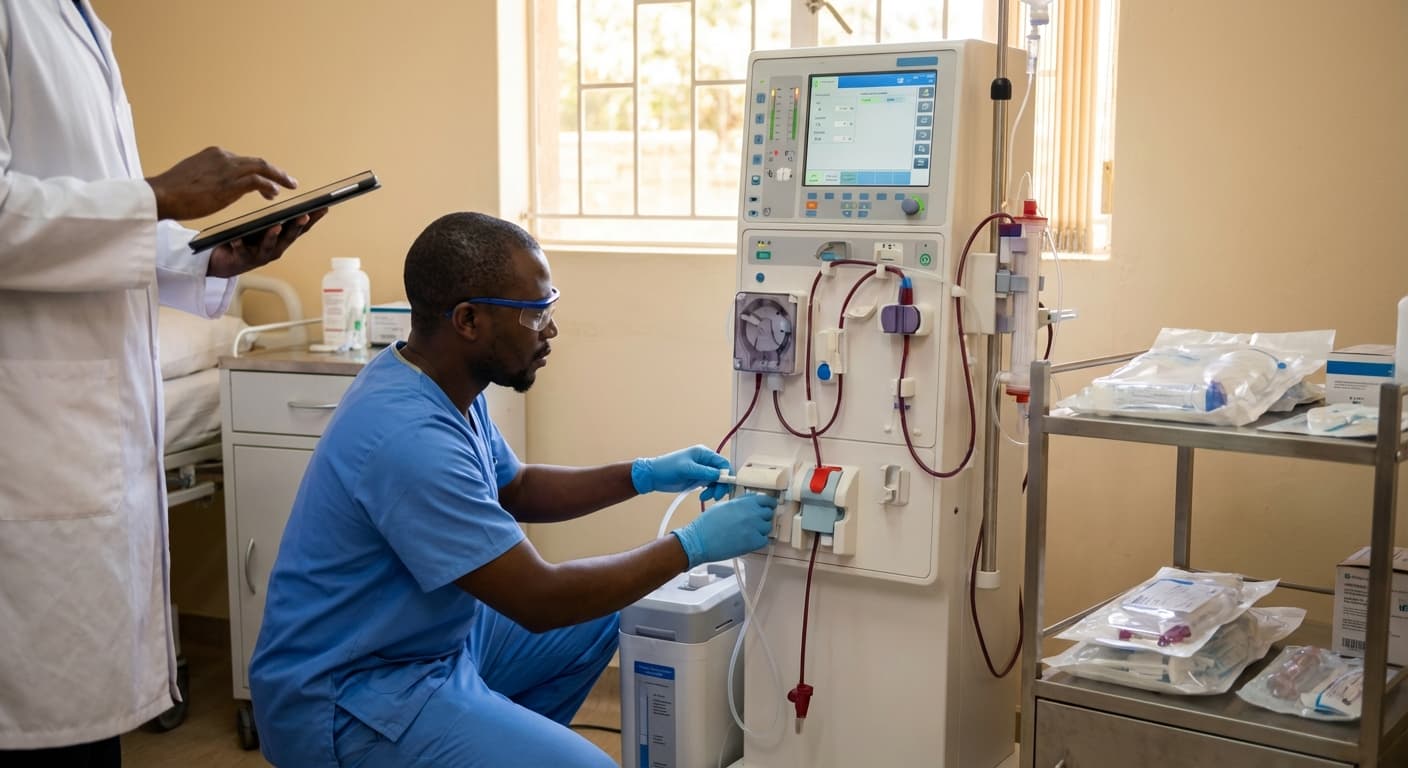
Hemodialysis Machine Installation Service in South Sudan
Engineering Excellence & Technical Support
Hemodialysis Machine Installation Service High-standard technical execution following OEM protocols and local regulatory frameworks.
Expedited Logistics & Cold Chain Assurance
Leveraging our robust supply chain network, we guarantee prompt delivery of hemodialysis machines and critical accessories across South Sudan, maintaining optimal cold chain integrity throughout transit to preserve equipment functionality and patient safety.
Certified On-Site Installation & Calibration
Our highly skilled, locally trained technicians perform meticulous on-site installation and calibration of hemodialysis machines, adhering to stringent international standards and manufacturer guidelines, ensuring immediate operational readiness and optimal patient treatment.
Remote Monitoring & Proactive Maintenance Integration
We offer integrated remote monitoring capabilities, allowing for real-time performance tracking and enabling proactive maintenance interventions. This significantly minimizes downtime and maximizes the lifespan of your hemodialysis equipment, crucial in remote settings.
What Is Hemodialysis Machine Installation Service In South Sudan?
Hemodialysis Machine Installation Service in South Sudan refers to the professional process of setting up and configuring hemodialysis machines within healthcare facilities in the Republic of South Sudan. This service encompasses a comprehensive set of procedures designed to ensure the safe, effective, and reliable operation of these critical medical devices. It involves not only the physical placement and connection of the machine but also the verification of all associated utilities, system calibrations, and initial functional testing. The primary objective is to render the hemodialysis equipment operational and ready for patient treatment, adhering to stringent medical device standards and local regulatory requirements.
| Stakeholder/Entity | Rationale for Need | Typical Use Cases |
|---|---|---|
| Public Hospitals | To establish or expand renal replacement therapy services for a broad patient population, addressing the growing burden of kidney disease. | Establishment of new dialysis centers, upgrading existing facilities, replacing outdated equipment, ensuring service continuity during refurbishment. |
| Private Healthcare Facilities/Clinics | To offer specialized nephrology services, catering to patients who can afford private healthcare and seeking high-quality treatment options. | Setting up new dialysis units within multi-specialty hospitals, dedicated nephrology clinics, providing elective dialysis treatments. |
| Non-Governmental Organizations (NGOs) and Humanitarian Organizations | To provide essential medical care, including life-sustaining treatments like dialysis, in regions with limited healthcare infrastructure and high prevalence of kidney failure. | Emergency deployment of dialysis services in disaster-affected areas, supporting public health initiatives, establishing dialysis programs in underserved rural communities. |
| Government Ministries of Health | To implement national health strategies, ensure equitable access to essential medical technologies, and manage healthcare infrastructure development. | National rollout of dialysis programs, procurement and deployment of hemodialysis machines across the country, capacity building for healthcare providers. |
| Biomedical Engineering Departments | To ensure the proper technical setup, validation, and ongoing maintenance of medical equipment to guarantee patient safety and device longevity. | Receiving and preparing new equipment for operation, conducting initial quality control checks, integrating new machines into the existing clinical workflow. |
Key Components of Hemodialysis Machine Installation Service
- Site assessment and preparation: Evaluating the designated installation area for adequate space, power supply (stable and adequate voltage, grounding), water quality (purification systems), and waste disposal infrastructure.
- Unpacking and physical placement: Careful removal of the hemodialysis machine from its packaging and precise positioning according to manufacturer specifications and ergonomic considerations for clinical staff.
- Electrical and plumbing connections: Connecting the machine to the facility's power grid and water supply lines. This often involves specialized connectors and adherence to safety protocols.
- Water purification system integration: Connecting and testing the reverse osmosis (RO) or other water purification systems that provide ultrapure water required for hemodialysis, ensuring it meets stringent dialysis water standards (e.g., AAMI standards).
- System calibration and configuration: Setting machine parameters, such as dialysate composition, flow rates, pressure limits, and blood flow rates, according to physician orders and patient profiles.
- Functional testing and diagnostics: Performing a series of operational tests to verify all machine functions, alarms, and safety features. This includes simulated dialysis treatments.
- Staff training: Providing initial training to biomedical engineers and clinical staff on the operation, basic maintenance, troubleshooting, and safety protocols of the newly installed hemodialysis machine.
- Documentation and handover: Completing all necessary installation reports, checklists, and providing the facility with operation manuals and warranty information.
- Post-installation verification: Sometimes, a follow-up visit is scheduled to confirm continued optimal performance and address any emergent operational queries.
Who Needs Hemodialysis Machine Installation Service In South Sudan?
South Sudan's healthcare system, while facing significant challenges, is seeing a growing need for specialized medical equipment like hemodialysis machines. The installation, calibration, and maintenance of these life-saving devices are critical for ensuring patient safety and treatment efficacy. Therefore, a dedicated hemodialysis machine installation service is essential to support the expansion and improvement of renal care services in the country. This service will cater to various healthcare facilities and departments that are either acquiring new hemodialysis units or require expert support for existing ones.
| Target Customer | Relevant Departments | Rationale for Need |
|---|---|---|
| Public Hospitals | Nephrology Department, Internal Medicine, Critical Care Unit | To establish or expand dialysis units for a large patient population; often resource-constrained, requiring expert installation and maintenance support. |
| Private Hospitals and Clinics | Nephrology Unit, Critical Care, Urology | To offer specialized renal care services to a paying clientele; may have newer facilities and a demand for advanced equipment. |
| NGOs with Healthcare Programs | Mobile Clinics, Field Hospitals, Dedicated Health Centers | To provide essential dialysis services in underserved or remote areas; often require robust and well-maintained equipment for consistent operation. |
| Mission Hospitals | General Medicine, Surgery, Outpatient Departments | To address the growing burden of kidney disease within their communities; may rely on external expertise for technical installation and training. |
| Regional Referral Centers | Nephrology, Internal Medicine, Intensive Care | To serve as hubs for advanced medical care, including dialysis, for surrounding regions; require efficient and reliable installation for high patient throughput. |
Target Customers for Hemodialysis Machine Installation Service in South Sudan
- Public Hospitals
- Private Hospitals and Clinics
- Non-Governmental Organizations (NGOs) with Healthcare Programs
- Mission Hospitals
- Regional Referral Centers
Hemodialysis Machine Installation Service Process In South Sudan
This document outlines the detailed workflow for the Hemodialysis Machine Installation Service Process in South Sudan, from the initial inquiry by a healthcare facility to the final execution and handover. The process emphasizes clear communication, adherence to standards, and efficient deployment to ensure the prompt availability of vital medical equipment. The services are crucial for improving kidney care access and patient outcomes in the region.
| Stage | Description | Key Activities | Responsible Parties | Timeline (Indicative) |
|---|---|---|---|---|
| The process begins when a healthcare facility in South Sudan expresses interest in acquiring and installing hemodialysis machines. | Receive and review facility's request, discuss machine specifications and quantity, understand facility's needs and existing infrastructure, provide preliminary quotation and service scope. | Client (Healthcare Facility), Service Provider (Installation Company) | 1-3 Business Days |
| A thorough evaluation of the intended installation site is conducted to ensure it meets all technical and safety requirements. | Conduct on-site visit, assess electrical capacity, water quality and supply, ventilation, space requirements, waste disposal, and safety protocols. Identify any necessary infrastructure upgrades. | Service Provider (Technical Team), Client (Facility Management/Biomedical Engineering) | 3-7 Business Days (depending on travel and assessment complexity) |
| Ensuring the safe and timely transportation of the hemodialysis machines to the designated facility in South Sudan. | Procure machines (if not already owned by client), arrange for secure packaging, manage customs clearance and import duties, coordinate transportation to the facility, and ensure insurance coverage during transit. | Service Provider (Logistics Department), Client (Procurement Department) | 2-6 Weeks (highly dependent on origin of machines and import processes) |
| The physical setup and initial configuration of the hemodialysis machines at the client's facility. | Unpack machines, connect to power and water supply, install necessary peripherals (e.g., water treatment systems), connect to any network if applicable, and perform initial system checks. | Service Provider (Installation Technicians), Client (Biomedical Engineering Staff) | 1-3 Days per machine (depending on complexity) |
| Rigorous testing and calibration of the installed machines to guarantee optimal performance and safety. | Perform functional tests, calibrate sensors, verify alarm systems, run diagnostic tests, ensure compliance with medical standards, and conduct performance validation with water and saline. | Service Provider (Certified Technicians), Client (Clinical Staff/Biomedical Engineering) | 1-2 Days per machine |
| Comprehensive training for the facility's clinical and technical staff on the operation and maintenance of the hemodialysis machines. | Conduct theoretical and practical training sessions, cover machine operation, basic troubleshooting, routine maintenance, safety procedures, and emergency protocols. Provide user manuals and operational guides. Formal handover of the installed and tested equipment. | Service Provider (Trainers/Application Specialists), Client (Clinical Staff, Biomedical Engineers, Nurses) | 2-5 Days |
| Ongoing support and maintenance to ensure the continued reliable operation of the hemodialysis machines. | Provide warranty support, schedule preventative maintenance visits, offer remote troubleshooting assistance, respond to service calls for repairs, and supply spare parts. | Service Provider (Support Team), Client (Biomedical Engineering Department) | Ongoing (as per service agreement) |
Key Stages of Hemodialysis Machine Installation Service
- Inquiry and Initial Consultation
- Site Assessment and Preparation
- Logistics and Delivery
- Installation and Configuration
- Testing and Calibration
- Training and Handover
- Post-Installation Support
Hemodialysis Machine Installation Service Cost In South Sudan
Installing a hemodialysis machine is a critical process that requires specialized expertise and adherence to strict protocols to ensure patient safety and machine functionality. The cost of this service in South Sudan can vary significantly due to several factors. These include the complexity of the installation (e.g., new build vs. existing facility), the specific model and type of hemodialysis machine, the required ancillary equipment (e.g., water treatment systems, generators), the location within South Sudan (access and logistical challenges), and the qualifications and reputation of the installation service provider. Given the developing healthcare infrastructure and potential logistical hurdles in South Sudan, these costs can be higher than in more established markets. It is crucial for healthcare facilities to obtain detailed quotes from multiple reputable service providers to accurately budget for this essential service.
| Service Component | Estimated Cost Range (South Sudanese Pounds - SSP) | Notes |
|---|---|---|
| Basic Machine Installation (Labor Only) | 150,000 - 300,000 | Excludes ancillary equipment and site preparation. Assumes basic site readiness. |
| Water Treatment System (RO Unit) Installation | 200,000 - 450,000 | Cost varies based on capacity and complexity of the RO system. Includes plumbing and electrical hookups. |
| Full Installation (Machine + RO + Basic Site Prep) | 400,000 - 900,000 | Comprehensive package including machine, water treatment, and basic adjustments to the facility. May not include major renovations. |
| Installation with Generator Integration | 600,000 - 1,500,000+ | Includes machine, RO, site prep, and integration with a backup generator. Costs escalate with generator size and complexity of electrical work. |
| Comprehensive Turnkey Solution (including minor renovations) | 1,000,000 - 3,000,000+ | For new builds or significant facility upgrades. Covers all aspects from plumbing to electrical and ventilation. Highly variable. |
| Travel & Accommodation (if applicable) | 50,000 - 200,000+ | Dependent on technician's origin and site location. Can be a significant factor in remote areas. |
| Testing, Commissioning & Initial Training | 100,000 - 250,000 | Essential post-installation services to ensure operational readiness and staff competency. |
Key Pricing Factors for Hemodialysis Machine Installation in South Sudan
- Complexity of Installation Site: Requirements for structural modifications, electrical upgrades, plumbing, and ventilation can significantly impact costs.
- Type and Brand of Hemodialysis Machine: Different models have varying installation needs and associated technical support requirements.
- Ancillary Equipment: Installation of water purification systems (RO units), backup generators, specialized medical gases, and monitoring equipment adds to the overall expense.
- Logistics and Transportation: The remoteness of the installation site and the need for specialized transport for delicate equipment can increase costs.
- Labor and Expertise: The cost of skilled biomedical engineers and technicians, including their travel and accommodation if applicable.
- Testing and Commissioning: Thorough testing, calibration, and validation of the machine and its associated systems are essential and factored into the price.
- Post-Installation Training: Training for healthcare staff on machine operation and maintenance is often included or offered as an additional service.
- Warranty and Support Agreements: The terms of the installation contract may include initial warranty periods and ongoing service agreements.
Affordable Hemodialysis Machine Installation Service Options
Securing affordable hemodialysis machine installation is crucial for healthcare facilities aiming to provide quality patient care without overextending their budgets. This service involves the technical setup, calibration, and initial testing of hemodialysis machines, ensuring they are operational and safe. Exploring value bundles and implementing cost-saving strategies can significantly reduce the overall expense. Value bundles often combine installation with other essential services like maintenance, training, and even the supply of consumables, offering a more comprehensive and potentially cost-effective package. Cost-saving strategies can range from negotiating bulk discounts to exploring refurbished equipment options, alongside proactive maintenance to prevent costly repairs.
| Strategy/Service | Description | Potential Cost Savings | Value Proposition |
|---|---|---|---|
| Value Bundles | Combining installation with maintenance, training, and consumables. | Reduced overall cost through package deals, streamlined procurement. | Comprehensive solution, predictable budgeting, enhanced operational efficiency. |
| Negotiating Bulk Discounts | Purchasing multiple machines or services from a single provider. | Lower per-unit cost for installation and associated services. | Stronger vendor relationship, potential for better support. |
| Refurbished Equipment | Installing pre-owned but certified and warrantied hemodialysis machines. | Significant upfront cost reduction compared to new machines. | Access to high-quality equipment at a fraction of the price, with reliability assurances. |
| Preventive Maintenance Programs | Regular servicing and calibration to avoid breakdowns. | Minimizes costly emergency repairs and downtime. | Extended machine lifespan, consistent performance, improved patient safety. |
| In-House Technical Staff Training | Training internal biomedical technicians to handle basic installation and maintenance. | Reduces reliance on external service providers for routine tasks. | Faster response times for minor issues, increased internal expertise, reduced service call fees. |
| Comparing Multiple Quotes | Obtaining installation quotes from several reputable service providers. | Ensures competitive pricing and identification of the best value. | Informed decision-making, potential for price negotiation. |
| Leasing Options | Leasing machines instead of purchasing them, often including installation and maintenance. | Lower upfront capital expenditure, predictable monthly costs. | Flexibility to upgrade equipment, reduced risk of obsolescence. |
Key Considerations for Affordable Hemodialysis Machine Installation
- Understanding the scope of installation services.
- Evaluating the benefits of value-added bundles.
- Identifying potential cost-saving opportunities.
- Assessing the long-term cost of ownership.
- Ensuring compliance with regulatory standards.
Verified Providers In South Sudan
In South Sudan, ensuring access to quality healthcare is paramount. Verified providers stand out for their adherence to standards, ethical practices, and commitment to patient well-being. Franance Health is a prime example of such a verified provider, offering a comprehensive range of medical services backed by a team of skilled professionals. Their dedication to patient-centered care, coupled with a robust infrastructure, makes them a trusted choice for individuals and communities seeking reliable healthcare solutions in South Sudan.
| Service Category | Key Offerings | Franance Health's Commitment |
|---|---|---|
| Primary Healthcare | General consultations, diagnostics, basic treatments, preventative care | Accessible and affordable primary care services for everyday health needs. |
| Maternal & Child Health | Antenatal care, postnatal care, immunizations, pediatric services | Dedicated to the health and well-being of mothers and children with specialized care. |
| Specialized Services | Depending on facility, may include surgery, diagnostics (X-ray, lab), dental, etc. | Investing in specialized medical equipment and expertise to address complex health issues. |
| Emergency Services | Urgent medical attention and stabilization | Prepared to provide prompt and effective care during medical emergencies. |
Why Franance Health is the Best Choice:
- Verified Credentials: Franance Health employs rigorously vetted healthcare professionals with recognized qualifications and experience.
- Commitment to Quality: Adherence to international healthcare standards and best practices in all service delivery.
- Comprehensive Services: Offering a wide spectrum of medical care, from primary consultations to specialized treatments.
- Patient-Centered Approach: Prioritizing patient comfort, privacy, and individual needs.
- Modern Infrastructure: Equipped with up-to-date medical technology and facilities.
- Community Focus: Dedicated to improving health outcomes and accessibility for the people of South Sudan.
Scope Of Work For Hemodialysis Machine Installation Service
This Scope of Work (SOW) outlines the requirements for the installation services of new hemodialysis machines. The objective is to ensure a safe, functional, and compliant installation of each unit, ready for patient use. This document details the technical deliverables and standard specifications to be met by the service provider.
| Phase | Activity | Technical Deliverable | Standard Specification / Requirement |
|---|---|---|---|
| Site Survey and Assessment | Installation Readiness Report | Confirmation of adequate space, power, water supply (quality and flow), drainage, ventilation, and network connectivity. Verification of accessibility for delivery and maneuvering of equipment. Identification of any potential hazards or site-specific challenges. Compliance with all local building codes and healthcare regulations. |
| Unpacking and Inspection | Condition Report | Visual inspection of each machine for any signs of damage during transit. Verification of all included accessories, manuals, and warranty information. Documentation of any pre-existing defects. |
| Mechanical Installation | Secured and Level Machine Placement | Machine positioned in the designated location, securely mounted if required, and precisely leveled to manufacturer specifications. All external connections (power, water inlet/outlet, drain, dialyzer tubing connections) made according to manufacturer guidelines and facility plumbing standards. |
| Electrical Connections | Properly Wired and Grounded Machine | Connection to dedicated, properly rated, and surge-protected electrical outlets. Verification of correct voltage, amperage, and grounding. Adherence to all electrical safety codes (e.g., NFPA 70, local electrical codes). |
| Water System Integration | Compliant Water Supply and Return | Connection to the facility's purified water system (RO/DI) via appropriate fittings and tubing. Ensure compliance with water quality standards (e.g., AAMI standards for dialysate water). Proper connection to drainage system to prevent backflow and ensure safe disposal. |
| Data/Network Connectivity (if applicable) | Functional Network Connection | Connection to facility's network for data logging, EMR integration, or remote monitoring, as specified. Verification of network communication and data transfer capabilities. |
| Initial Power-On and System Check | Successful System Initialization | Machine powers on without error codes. Basic system checks performed as per manufacturer's initial startup procedures. Verification of all control panel indicators and displays. |
| Functional Testing | All Functions Tested and Verified | Comprehensive testing of all machine functions, including but not limited to: pump operation (blood and dialysate), ultrafiltration control, dialysate proportioning, temperature control, conductivity monitoring, air detection, pressure monitoring (arterial, venous, transmembrane), and alarm systems. Testing performed with and without simulated blood flow. |
| Calibration | Calibrated to Manufacturer Specifications | Calibration of all sensors and measurement devices (e.g., conductivity, temperature, pressure, flow rates) according to the manufacturer's recommended schedule and procedures. Verification of calibration accuracy against known standards. |
| Safety System Testing | All Safety Features Operational | Thorough testing of all safety features, including but not limited to: air embolism detection, blood leak detection, pressure limit alarms, and emergency stop functions. Verification of response times and effectiveness. |
| Installation Documentation | Signed Installation Report & Machine Log | Completed and signed installation report by the service provider and facility representative. Updated machine logbook with installation date, serial number, technician details, and initial calibration data. All manufacturer-provided installation manuals and checklists. |
| User Training | Competency Verified Training Session | Training session for designated facility biomedical technicians and nursing staff on basic operation, troubleshooting, cleaning, disinfection, and preventative maintenance of the hemodialysis machine. Assessment of user competency. |
| Handover of Equipment | Certified Handover | Formal handover of the installed and tested hemodialysis machine to the facility, confirming all work is complete and the machine is ready for clinical use. Provision of all relevant documentation. |
| Warranty Commencement | Confirmation of Warranty Start Date | Verification and documentation of the start date of the manufacturer's warranty period. |
| Defect Rectification Period | Resolution of any Post-Installation Issues | Provision for a defined period (e.g., 30 days) for the service provider to rectify any issues or defects identified immediately following installation and initial use. |
Key Objectives of Hemodialysis Machine Installation Service
- Ensure safe and compliant installation of hemodialysis machines.
- Verify proper functioning of all machine components and features.
- Integrate machines with existing facility infrastructure (water treatment, electrical, data).
- Provide necessary documentation and training for facility staff.
- Minimize disruption to ongoing patient care during installation.
Service Level Agreement For Hemodialysis Machine Installation Service
This Service Level Agreement (SLA) outlines the terms and conditions governing the installation and ongoing maintenance of hemodialysis machines provided by [Your Company Name] to [Client Name]. It details the response times for service requests and the guaranteed uptime for the installed hemodialysis machines.
| Service Type | Response Time (Business Hours) | Resolution Target (Business Hours) | Guaranteed Uptime | Service Credits for Downtime |
|---|---|---|---|---|
| Emergency Installation (Critical) | 1 Hour | 4 Business Hours | 99.5% | 5% of monthly service fee for every 2 hours of unplanned downtime exceeding 1 hour |
| Standard Installation (Non-Critical) | 4 Business Hours | 8 Business Hours | 99.0% | 2.5% of monthly service fee for every 4 hours of unplanned downtime exceeding 2 hours |
| Preventative Maintenance | N/A (Scheduled) | N/A (Scheduled) | N/A (Not applicable to preventative maintenance scheduling) | N/A |
| Unplanned Equipment Failure (Minor) | 2 Business Hours | 12 Business Hours | 99.5% | 3% of monthly service fee for every 4 hours of unplanned downtime exceeding 2 hours |
| Unplanned Equipment Failure (Major) | 1 Business Hour | 6 Business Hours | 99.5% | 5% of monthly service fee for every 2 hours of unplanned downtime exceeding 1 hour |
Key Components of the SLA
- Scope of Service: This SLA covers the initial installation of new hemodialysis machines, including setup, calibration, testing, and user training. It also includes ongoing maintenance and repair services as defined within this agreement.
- Service Request Channels: All service requests must be submitted through the designated channels: phone at [Phone Number] or email at [Email Address].
- Definition of Uptime: Uptime refers to the period during which the hemodialysis machine is fully operational and capable of performing its intended function, excluding scheduled maintenance and planned downtime.
- Exclusions: This SLA does not cover issues arising from misuse, accidental damage, unauthorized modifications, or failure to adhere to operating manuals and recommended maintenance schedules.
- Confidentiality: Both parties agree to maintain the confidentiality of all proprietary information exchanged during the service engagement.
Frequently Asked Questions

Ready when you are
Let's scope your Hemodialysis Machine Installation Service in South Sudan project in South Sudan.

Scaling healthcare logistics and technical systems across the entire continent.