
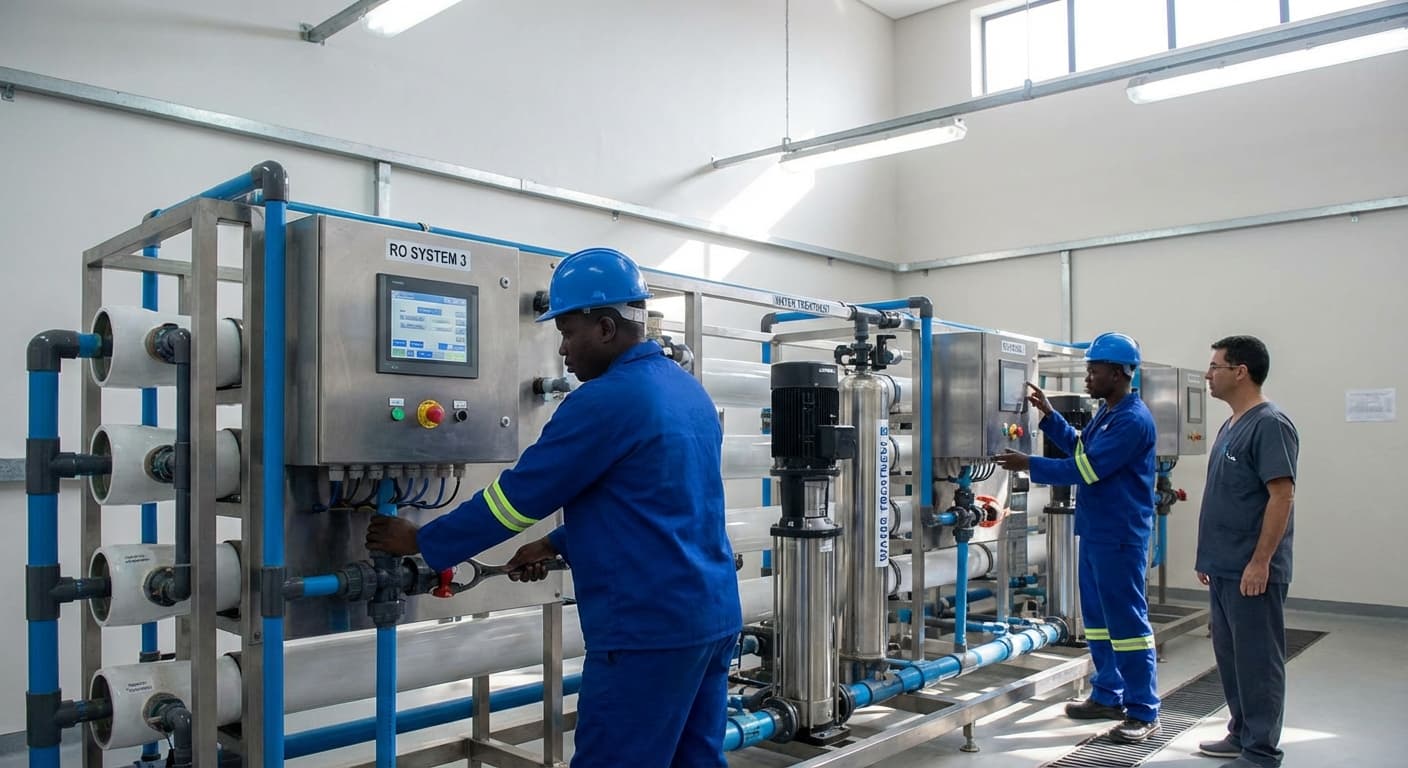
Dialysis RO/Water Treatment Plant Installation Service in South Sudan
Engineering Excellence & Technical Support
Dialysis RO/Water Treatment Plant Installation Service High-standard technical execution following OEM protocols and local regulatory frameworks.
Robust RO System Engineering
We design and install high-performance Reverse Osmosis (RO) systems specifically tailored for the challenging water conditions in South Sudan. Our solutions utilize advanced membrane technology and multi-stage filtration to deliver ultrapure water essential for safe and effective dialysis, exceeding international standards.
Reliable Power & Automation Integration
Recognizing the infrastructure limitations, our installations include integrated, robust power backup solutions and intelligent automation for seamless operation. This ensures continuous, uninterrupted water supply for dialysis centers, minimizing downtime and maximizing patient care even in remote or challenging environments.
Local Capacity Building & Support
Beyond installation, we prioritize knowledge transfer and provide comprehensive training for local technicians on operation and maintenance. Our commitment extends to ongoing technical support and rapid spare parts logistics, empowering sustainable dialysis services across South Sudan.
What Is Dialysis Ro/water Treatment Plant Installation Service In South Sudan?
Dialysis RO/Water Treatment Plant Installation Service in South Sudan refers to the comprehensive process of designing, procuring, installing, commissioning, and maintaining Reverse Osmosis (RO) and associated water treatment systems specifically tailored for dialysis facilities within South Sudan. This service ensures the provision of ultrapure water, a critical and non-negotiable requirement for hemodialysis procedures to prevent patient harm from contaminants and endotoxins present in standard municipal water supplies.
| Who Needs Dialysis RO/Water Treatment Plant Installation Service? | Typical Use Cases | |||
|---|---|---|---|---|
| Renal Dialysis Centers: Both public and private healthcare facilities that operate hemodialysis units. | Hospitals: Departments or standalone centers offering renal replacement therapy. | Non-Governmental Organizations (NGOs) and Humanitarian Aid Organizations: Implementing or supporting dialysis services in underserved regions. | Government Health Ministries: Establishing or upgrading national dialysis infrastructure. | New Healthcare Infrastructure Projects: Integrating dialysis facilities into new hospital constructions or specialized medical complexes. |
| Establishing New Dialysis Units: Setting up complete RO water treatment systems for newly built or expanded dialysis centers. | Upgrading Existing Facilities: Replacing outdated or inefficient RO systems with modern, high-performance units to meet current standards and increased patient demand. | Routine Maintenance and Repair: Addressing breakdowns, performance degradation, or scheduled servicing of existing RO plants. | Water Quality Remediation: Implementing or modifying treatment processes to address persistent water quality issues impacting dialysis safety. | Emergency Deployment: Rapid installation of temporary or permanent dialysis water treatment solutions in disaster-affected areas or during public health crises. |
Key Components and Stages of the Service:
- Site Assessment and Water Quality Analysis: Evaluating the existing water source (e.g., municipal supply, well water) to determine its impurity profile (dissolved solids, organic matter, microbial load, heavy metals, chlorine levels).
- System Design and Engineering: Developing a bespoke RO plant configuration based on the water analysis, the required volume of ultrapure water, dialysis machine specifications, and local environmental conditions. This includes selecting appropriate pre-treatment stages (e.g., sediment filtration, activated carbon filtration, water softening) and post-treatment stages (e.g., UV sterilization, final polishing filters).
- Equipment Procurement and Logistics: Sourcing and transporting high-quality RO membranes, pumps, filters, storage tanks, piping, control systems, and other necessary components to South Sudan, navigating import regulations and infrastructure challenges.
- On-site Installation and Plumbing: Assembling the RO plant components, connecting them to the water source and the dialysis unit's distribution network, and ensuring leak-free and hygienically sound plumbing.
- Electrical and Control System Integration: Installing and configuring the electrical supply, power distribution, control panels, sensors, and automation systems for the RO plant's operation and monitoring.
- Commissioning and Performance Testing: Thoroughly testing the installed system to verify its performance against design specifications. This includes measuring water quality parameters (e.g., Total Dissolved Solids (TDS), conductivity, TOC, microbial counts) at various stages of treatment and ensuring compliance with international dialysis water standards (e.g., AAMI, ISO).
- Operator Training: Providing comprehensive training to facility staff on the operation, routine maintenance, troubleshooting, and water quality monitoring procedures for the RO plant.
- Documentation and Handover: Supplying detailed operational manuals, maintenance schedules, warranty information, and certification of the installed system.
- Ongoing Maintenance and Support: Offering scheduled preventive maintenance, emergency repair services, spare parts supply, and technical assistance to ensure the long-term reliability and optimal performance of the RO plant.
Who Needs Dialysis Ro/water Treatment Plant Installation Service In South Sudan?
The installation of Dialysis Reverse Osmosis (RO) and Water Treatment Plants is crucial for ensuring the availability of safe and purified water essential for dialysis procedures in South Sudan. This specialized service caters to healthcare facilities and organizations that operate or plan to operate dialysis units, directly impacting patient care and public health. The quality of water used in hemodialysis is paramount, as any impurities can lead to serious complications for patients with kidney failure.
| Customer Type | Primary Need Addressed | Key Stakeholders/Departments Involved |
|---|---|---|
| Public Hospitals | Providing essential life-saving dialysis treatment for a large patient population, ensuring water safety and compliance with medical standards. | Nephrology, Hospital Administration, Engineering/Maintenance, Procurement |
| Private Hospitals and Clinics | Offering specialized renal care services, maintaining high standards of patient safety and operational efficiency. | Nephrology, Clinical Services Management, Biomedical Engineering, Finance/Procurement |
| NGOs & International Aid Organizations | Establishing and supporting healthcare infrastructure, particularly in underserved areas, to provide access to critical medical services. | Program Management, Health Technical Advisors, Logistics, Finance |
| Rehabilitation Centers | Integrating dialysis services for patients requiring long-term care and recovery, ensuring a continuous supply of purified water. | Medical Director, Nursing Management, Facility Management |
Target Customers and Departments for Dialysis RO/Water Treatment Plant Installation Service in South Sudan
- {"items":["Public Hospitals (Government-funded)","Private Hospitals and Clinics","Non-Governmental Organizations (NGOs) running healthcare programs","International Aid Organizations","Rehabilitation Centers with medical facilities","Research Institutions with clinical components"],"title":"Target Customers"}
- {"items":["Nephrology Departments","Internal Medicine Departments (managing renal patients)","Dialysis Centers","Infection Control Departments (concerned with water quality)","Maintenance and Engineering Departments (responsible for facility infrastructure)","Procurement and Logistics Departments (involved in acquiring essential equipment)","Quality Assurance Departments (ensuring standards are met)"],"title":"Target Departments within Facilities"}
Dialysis Ro/water Treatment Plant Installation Service Process In South Sudan
This document outlines the comprehensive workflow for Dialysis RO/Water Treatment Plant Installation Services in South Sudan, from the initial client inquiry to the final execution and handover. The process is designed to ensure efficient, compliant, and high-quality installations, addressing the unique logistical and environmental challenges present in South Sudan.
| Stage | Description | Key Activities | Deliverables/Outcomes | Considerations for South Sudan |
|---|---|---|---|---|
| The process begins when a prospective client (e.g., hospital, clinic) expresses interest in a Dialysis RO/Water Treatment Plant. | Receive and acknowledge client inquiry. Conduct initial discussions to understand basic needs, desired capacity, and location. | Confirmation of interest. Preliminary understanding of client requirements. | Clear communication channels, potentially using local agents or trusted contacts. Awareness of limited internet connectivity. Flexibility in meeting times. |
| A detailed evaluation of the client's site and a thorough understanding of their specific water treatment needs. | On-site visit (if feasible) or detailed remote assessment. Water quality testing. Assessment of existing infrastructure (power, plumbing, space). Finalization of technical specifications and capacity requirements. | Detailed site report. Specific water quality analysis. Finalized technical specifications. Bill of Quantities (BOQ). | Logistical challenges for travel. Need for robust water testing kits. Security considerations. Reliance on local expertise for site evaluation if direct access is difficult. |
| Creation of a comprehensive proposal detailing the proposed solution, timeline, and cost. | Develop technical proposal based on site assessment. Prepare a detailed cost quotation including equipment, installation labor, travel, and any local support. Present proposal to the client. | Formal project proposal. Detailed quotation. Project timeline. Terms and conditions. | Pricing must account for import duties, taxes, transportation costs within South Sudan, and potential currency fluctuations. Clear breakdown of all costs is crucial. |
| Formalizing the agreement and preparing for project execution. | Negotiate and finalize contract terms. Sign contract. Secure necessary permits and approvals (if applicable). Mobilize project team and resources. | Signed contract. Advance payment (if stipulated). Mobilization plan. | Navigating bureaucratic processes for permits. Understanding local contract law and customs. Building trust with local stakeholders. Ensuring team safety and security during mobilization. |
| Acquiring all necessary equipment and materials and transporting them to the site. | Order equipment and consumables from reputable manufacturers. Arrange for international and in-country logistics. Manage customs clearance and import procedures. Coordinate transportation to the installation site. | All equipment and materials delivered to site. Customs clearance documentation. Logistics tracking information. | Significant challenges in transportation infrastructure. Potential for delays due to customs, road conditions, and security. Importance of working with experienced logistics partners familiar with South Sudan. Secure warehousing at or near the site. |
| Ensuring the installation site is ready to receive and house the RO/Water Treatment Plant. | Prepare a dedicated space for the plant. Ensure availability of stable power supply. Install necessary plumbing connections (inlet and outlet). Ensure adequate drainage. Install safety features. | Ready installation space. Completed utility connections. Safety checks. | Reliability of power supply (may require generators). Availability of skilled local labor for construction. Sourcing local materials for site preparation. |
| The physical setup and initial testing of the RO/Water Treatment Plant. | Unpack and assemble plant components. Connect electrical and plumbing systems. Perform pre-commissioning checks. Start up the plant. Conduct rigorous testing of all systems to ensure optimal performance and water quality. | Fully installed and operational RO/Water Treatment Plant. Commissioning report. Water quality test results (post-installation). | Skilled technicians with experience in harsh environments. Need for on-site troubleshooting and adaptation. Ensuring water quality meets dialysis standards under local conditions. Managing spare parts and consumables for immediate needs. |
| Ensuring the client's staff are capable of operating and maintaining the plant. | Provide comprehensive training to client's technical staff on operation, routine maintenance, troubleshooting, and safety procedures. Conduct a formal handover of the plant and all associated documentation. | Trained client staff. Operations and maintenance manual. Training certificates. Formal handover documentation. | Language barriers may require translated manuals or interpreters. Training needs to be practical and hands-on. Emphasis on basic maintenance due to potential limitations in advanced repair capabilities. |
| Ongoing support to ensure the long-term functionality of the plant. | Provide a warranty period. Offer ongoing technical support. Schedule and conduct periodic maintenance visits. Supply spare parts and consumables. Respond to emergency repair calls. | Ongoing plant functionality. Client satisfaction. Long-term availability of clean water for dialysis. | Establishing a reliable supply chain for spare parts. Developing a strategy for remote support and rapid response. Building local capacity for basic maintenance. Long-term commitment to the region. |
Key Stages of the Dialysis RO/Water Treatment Plant Installation Service Process
- Inquiry & Initial Consultation
- Site Assessment & Requirements Gathering
- Proposal Development & Quotation
- Contract Agreement & Mobilization
- Procurement & Logistics
- Site Preparation
- Installation & Commissioning
- Training & Handover
- Post-Installation Support & Maintenance
Dialysis Ro/water Treatment Plant Installation Service Cost In South Sudan
Installing a Reverse Osmosis (RO) and water treatment plant for dialysis in South Sudan is a critical yet complex undertaking. The cost is significantly influenced by a multitude of factors, ranging from the technical specifications of the plant to logistical challenges and local economic conditions. Given the current economic climate and the nascent nature of advanced healthcare infrastructure in South Sudan, reliable cost data can be scarce. However, we can delineate the primary pricing determinants and provide estimated ranges in South Sudanese Pounds (SSP).
| Component/Service | Estimated Range (SSP) | Notes |
|---|---|---|
| Small-Scale Dialysis RO Unit (e.g., for 1-2 machines, basic pre-treatment) | 15,000,000 - 35,000,000 | Assumes readily available, relatively clean water source. Basic logistics. |
| Medium-Scale Dialysis RO/Water Treatment Plant (e.g., for 3-5 machines, moderate pre-treatment) | 35,000,000 - 70,000,000 | Includes more robust pre-filtration and potentially UV sterilization. Moderate logistics and potential need for specialized technicians. |
| Large-Scale Dialysis RO/Water Treatment Plant (e.g., for 6+ machines, advanced pre-treatment, redundancy) | 70,000,000 - 150,000,000+ | Significant pre-treatment for challenging water sources, advanced monitoring, backup systems. May involve international suppliers and expatriate teams. |
| Transportation and Logistics (within South Sudan) | 2,000,000 - 10,000,000+ | Highly variable based on remoteness and road conditions. Can be a substantial part of the cost for remote installations. |
| Installation Labor (local) | 1,000,000 - 3,000,000 | Basic installation labor. May be higher if specialized local technicians are required. |
| Installation Labor (expatriate) | 15,000,000 - 30,000,000 (per team) | Includes salaries, flights, accommodation, and per diems. Duration of stay significantly impacts cost. |
| Ancillary Infrastructure (e.g., basic generator, storage tank) | 3,000,000 - 15,000,000 | Dependent on existing facilities and the quality/capacity of required infrastructure. |
Key Pricing Factors for Dialysis RO/Water Treatment Plant Installation in South Sudan
- Plant Capacity and Technology: The volume of purified water required per day (e.g., for a single dialysis machine vs. a multi-station unit) directly impacts the size and complexity of the RO system. Advanced multi-stage purification, germicidal irradiation (UV), and specific mineral removal technologies will increase costs.
- Water Source Quality: The initial quality of the raw water (borehole, river, municipal supply) is paramount. Heavily contaminated water will require more robust pre-treatment stages (sedimentation, filtration, chemical dosing), thus increasing the overall system cost and complexity.
- Equipment Sourcing and Logistics: South Sudan's import regulations, transportation infrastructure (road conditions, availability of suitable transport), and potential customs duties will heavily influence the landed cost of equipment. Shipping from international suppliers can be a significant expense.
- Installation Labor and Expertise: The availability of skilled technicians and engineers experienced in RO and water treatment plant installation in South Sudan may be limited. This can necessitate the engagement of expatriate labor, which carries higher associated costs (salaries, accommodation, travel, visas).
- Ancillary Infrastructure: This includes the need for power supply (generators if grid power is unreliable), water storage tanks, plumbing, and the construction of a dedicated plant room, all of which add to the total project expenditure.
- Permits and Approvals: Obtaining necessary permits from local authorities for water abstraction, discharge, and health and safety compliance can incur fees and potential delays, impacting overall project timelines and costs.
- Maintenance and Spare Parts: While not strictly installation cost, the initial agreement for ongoing maintenance, training of local staff, and the availability of readily accessible spare parts for the installed system are crucial considerations that can influence the initial investment decision.
- Supplier Margins and Markup: The profit margins of the chosen supplier, whether local or international, will be factored into the final price.
- Currency Fluctuation and Inflation: The South Sudanese Pound (SSP) has experienced significant volatility. Installation costs are often quoted in USD and then converted to SSP, making the final local currency cost susceptible to exchange rate fluctuations and high inflation rates.
Affordable Dialysis Ro/water Treatment Plant Installation Service Options
Investing in a reliable Reverse Osmosis (RO) and water treatment plant for your dialysis center is crucial for patient safety and operational efficiency. This guide explores affordable installation service options, highlighting value bundles and cost-saving strategies to ensure you get the best return on your investment. We understand that budget constraints are a significant factor, and our aim is to provide clear, actionable information to help you make informed decisions.
| Value Bundle Component | Description | Cost-Saving Benefit |
|---|---|---|
| Basic Installation Package | Includes standard RO unit setup, basic plumbing connections, and initial system test. | Lower upfront installation cost for essential needs. |
| Standard Value Bundle | Combines basic installation with essential pre-treatment filters (sediment, carbon) and one year of routine maintenance visits. | Reduces potential damage to RO membrane, extending its life and decreasing replacement frequency. Predictable maintenance costs. |
| Comprehensive Care Bundle | Includes full plant installation, advanced pre-treatment (e.g., water softening), dual-pass RO, UV sterilization, a year of proactive maintenance, discounted parts, and priority emergency support. | Optimizes water purity, minimizes downtime, offers predictable long-term operational expenses, and provides peace of mind. |
| Modular System Design | Systems designed with easily replaceable modules that can be upgraded or serviced independently. | Allows for phased investment and replacement of only necessary components, reducing the cost of major overhauls. |
| Energy-Efficient Components | Inclusion of high-efficiency pumps and motors in the system design. | Lower electricity consumption, directly reducing monthly operational bills. |
Key Considerations for Affordable Dialysis RO/Water Treatment Plant Installation
- Understanding Your Water Needs: The volume of purified water required, the quality of your incoming water source, and specific regulatory compliance standards are primary drivers of system complexity and cost.
- Types of RO Systems: Explore options ranging from basic single-pass RO units to more sophisticated double-pass systems, each offering different levels of purity and throughput.
- Pre-treatment Solutions: Effective pre-treatment (e.g., sediment filters, carbon filters, water softeners) is vital to protect the RO membrane and extend its lifespan, thereby reducing long-term operational costs.
- Post-treatment and Monitoring: Consider essential post-treatment steps like UV sterilization and the importance of regular water quality monitoring to ensure patient safety and system performance.
- Installation Scope: Differentiate between simple unit installations and comprehensive plant setups that include piping, electrical work, and integration with existing infrastructure.
- Service and Maintenance Packages: Factor in the ongoing costs of maintenance, filter replacements, membrane cleaning, and emergency support, as these are critical for uninterrupted operation.
Verified Providers In South Sudan
In South Sudan's challenging healthcare landscape, identifying reliable and credentialed health providers is paramount for ensuring quality care and patient safety. Franance Health stands out as a beacon of trust, consistently demonstrating a commitment to excellence through rigorous credentialing and a patient-centric approach. This document outlines why Franance Health's verified credentials make them the superior choice for healthcare services in South Sudan.
| Provider | Credential Verification Process | Specializations Offered | Patient Testimonials (Summarized) | Impact in South Sudan |
|---|---|---|---|---|
| Franance Health | Rigorous verification of medical licenses, academic degrees, specialized certifications, and ongoing training. Regular internal and external audits. | Primary Care, Maternal & Child Health, Infectious Disease Management, Surgical Services, Diagnostics. | Consistently high ratings for professional staff, effective treatments, and compassionate care. Patients report feeling informed and well-cared for. | Significant contributions to improving access to quality healthcare in underserved areas. Successful public health campaigns and improved patient outcomes. |
| Other Providers (General) | Varies significantly; often limited to basic licensing verification. May lack comprehensive accreditation or regular quality audits. | Often focused on limited specialties or general practice. Availability of specialized care can be inconsistent. | Mixed reviews; some positive experiences, but concerns sometimes raised about consistency of care, communication, and professionalism. | Contribution levels can be less documented or widespread compared to organizations with established verification protocols. |
Key Aspects of Franance Health's Verified Credentials:
- Accreditation and Certification: Franance Health adheres to and exceeds national and international healthcare standards. Their facilities and services are regularly audited and certified by recognized bodies, ensuring compliance with best practices.
- Qualified Medical Professionals: All healthcare practitioners at Franance Health undergo a thorough vetting process. This includes verification of their medical licenses, academic qualifications, specialized training, and ongoing professional development.
- Robust Quality Assurance: The organization has implemented comprehensive quality assurance protocols to monitor patient outcomes, treatment efficacy, and adherence to clinical guidelines. This proactive approach minimizes risks and maximizes positive health results.
- Ethical Practice and Transparency: Franance Health is committed to ethical medical conduct and full transparency with patients regarding diagnoses, treatment options, costs, and potential risks. Their credentialing process emphasizes integrity and accountability.
- Community Engagement and Impact: Beyond direct patient care, Franance Health actively engages with local communities, providing health education and preventative care programs. Their verifiable impact on public health further solidifies their position as a trusted provider.
Scope Of Work For Dialysis Ro/water Treatment Plant Installation Service
This Scope of Work (SOW) outlines the requirements for the installation of a Dialysis Reverse Osmosis (RO)/Water Treatment Plant. It covers all technical deliverables and standard specifications necessary for the successful implementation of the system, ensuring it meets the stringent quality standards required for medical-grade water used in hemodialysis.
| Category | Technical Deliverables | Standard Specifications | Acceptance Criteria |
|---|---|---|---|
| Design & Engineering | Detailed P&ID (Piping and Instrumentation Diagrams) | As per approved project design, including flow rates, pressure drops, and material compatibility. | Approved by client's engineering team. |
| Design & Engineering | Electrical Schematics | Compliance with local electrical codes, NEMA standards, and safety regulations. | Approved by client's electrical engineer. |
| Design & Engineering | Structural & Civil Drawings | Foundation requirements, pipe rack designs, and general arrangement drawings. | Approved by client's civil/structural engineer. |
| Equipment Installation | Pre-treatment Units (e.g., Sediment Filters, Carbon Filters) | Installation ensuring proper flow direction, accessibility for maintenance, and leak-free connections. Materials to be NSF/ANSI 42 certified. | Visual inspection, pressure testing, and flow rate verification. |
| Equipment Installation | RO Membranes and Housings | Correct orientation of membranes, proper sealing, and secure mounting of housings. Housings to be certified to NSF/ANSI 58. | Visual inspection, leak testing, and initial permeate quality check. |
| Equipment Installation | Post-treatment Units (e.g., UV Sterilizers, Softeners) | Installation according to manufacturer's guidelines, ensuring adequate space for operation and maintenance. UV sleeves to be properly seated. | Visual inspection, functional testing, and performance verification. |
| Piping and Electrical | Piping System (e.g., SS316L, PVC) | All piping to be properly supported, insulated where necessary, and free from obstructions. Welded joints to be inspected and certified. Use of food-grade or medical-grade materials. | Hydrostatic testing, visual inspection of joints, and material certification. |
| Piping and Electrical | Electrical Wiring and Connections | All wiring to be properly insulated, grounded, and labeled. Control panel wiring to be neat and organized, conforming to schematics. | Continuity testing, insulation resistance testing, and functional verification of control systems. |
| Testing & Commissioning | Performance Test Report | Demonstrates the system achieves specified water quality parameters (TDS, conductivity, bacterial counts, endotoxins) under design flow rates and pressure. | Water analysis reports from accredited laboratory, meeting AAMI standards or client-specific requirements. |
| Testing & Commissioning | Sanitization and Bioburden Control Report | Details of disinfection procedures and post-disinfection water quality. Includes validation of germicidal efficacy. | Microbiological testing reports confirming absence of viable organisms and acceptable endotoxin levels. |
| Training & Handover | Operation and Maintenance Manuals | Comprehensive manuals for all installed equipment, including troubleshooting guides and spare parts lists. | Review and acceptance by client's O&M personnel. |
| Training & Handover | Operator Training Sessions | Practical training on system operation, routine maintenance, troubleshooting, and emergency procedures. | Sign-off sheets from trained personnel, demonstrating comprehension. |
| Documentation | As-Built Drawings | Updated P&IDs, electrical schematics, and layout drawings reflecting the final installed system. | Approved by client's project manager. |
| Documentation | Certificates of Conformity | Manufacturer's certificates for all critical components (membranes, valves, pumps, etc.). | Original certificates provided to client. |
Project Phases and Activities
- Site Survey and Assessment
- Design and Engineering
- Procurement of Equipment and Materials
- Site Preparation and Civil Works
- Installation of RO/Water Treatment Plant Components
- Piping and Electrical Connections
- Testing and Commissioning
- Training and Handover
- Documentation and As-Built Drawings
Service Level Agreement For Dialysis Ro/water Treatment Plant Installation Service
This Service Level Agreement (SLA) outlines the response times and uptime guarantees for the installation service of Dialysis Reverse Osmosis (RO)/Water Treatment Plants. This SLA is entered into by and between [Client Name/Institution Name] (hereinafter referred to as "Client") and [Provider Name] (hereinafter referred to as "Provider").
| Service Level | Description | Target Performance | |
|---|---|---|---|
| Installation Commencement | Time from contract signing to the initiation of on-site installation activities. | Within [Number] business days of contract signing and site readiness confirmation. | |
| Installation Completion & Commissioning | Time from commencement to successful system testing and handover. | Within [Number] business days from installation commencement, excluding delays caused by client-side issues or site readiness. | Target Uptime Post-Installation |
| Uptime Guarantee (During Warranty Period) | The percentage of time the RO/Water Treatment Plant is expected to be fully functional and compliant with water quality standards. | 98.5% during the warranty period of [Number] months/years. | |
| Emergency Support Response Time (Critical Failure) | Time to acknowledge and begin troubleshooting a complete system failure preventing dialysis. | Within [Number] hours during business hours; within [Number] hours for 24/7 support contracts. | |
| Standard Support Response Time (Non-Critical Issue) | Time to acknowledge and begin troubleshooting a performance degradation or non-critical issue. | Within [Number] business hours. | |
| Resolution Time (Critical Failure) | Time to restore the system to full operational status after a critical failure. | Within [Number] business hours for on-site visit, or [Number] hours if remote resolution is possible. (Actual time may vary based on part availability and complexity). | |
| Resolution Time (Non-Critical Issue) | Time to resolve a non-critical issue. | Within [Number] business days, or as agreed upon for specific issues. |
Key Definitions
- Installation Service: Refers to the complete process of site preparation, delivery, assembly, connection, testing, and commissioning of the Dialysis RO/Water Treatment Plant.
- RO/Water Treatment Plant: The specific dialysis water purification system being installed as per the agreed-upon scope of work.
- Downtime: Any period where the RO/Water Treatment Plant is non-operational or not meeting the specified water quality standards required for dialysis, preventing its intended use.
- Response Time: The maximum time allowed for the Provider to acknowledge and begin addressing a reported issue.
- Resolution Time: The maximum time allowed for the Provider to resolve a reported issue, restoring the RO/Water Treatment Plant to full operational status.
- Uptime Guarantee: The minimum percentage of time the RO/Water Treatment Plant is expected to be fully operational and meeting all performance specifications.
- Business Hours: Typically Monday to Friday, 9:00 AM to 5:00 PM local time, excluding public holidays. (Specific hours to be defined in contract addendum if necessary).
Frequently Asked Questions

Ready when you are
Let's scope your Dialysis RO/Water Treatment Plant Installation Service in South Sudan project in South Sudan.

Scaling healthcare logistics and technical systems across the entire continent.