
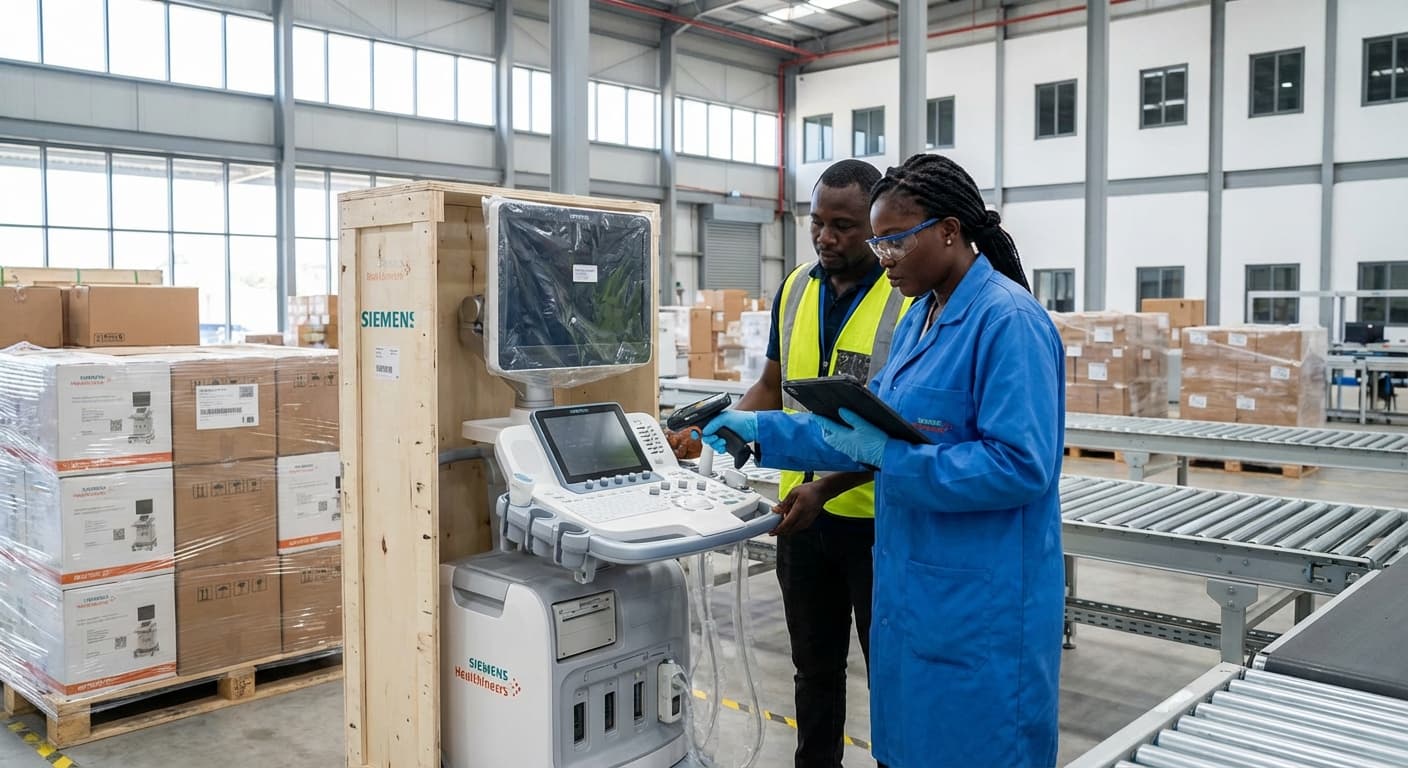
Warehouse Receiving Inspection Service (Medical Equipment) in South Sudan
Engineering Excellence & Technical Support
Warehouse Receiving Inspection Service (Medical Equipment) High-standard technical execution following OEM protocols and local regulatory frameworks.
Traceability & Compliance Verification
Ensuring 100% adherence to medical equipment import regulations and lot traceability protocols specific to South Sudan's Ministry of Health guidelines. Our rigorous checks confirm serialized unit identification against all documentation, preventing the influx of non-compliant or counterfeit devices.
Equipment Integrity & Functionality Assessment
Comprehensive visual inspection and functional testing of medical equipment upon arrival. We meticulously assess for damage during transit, verify all components are present and undamaged, and conduct initial operational checks to guarantee readiness for immediate deployment and patient care in challenging environments.
Temperature-Controlled & Secure Storage Readiness
Pre-deployment assessment of receiving facilities to confirm adequate temperature and humidity control, alongside robust security measures. This ensures the immediate integrity of sensitive medical equipment and pharmaceuticals, preventing degradation before they reach their final destination within South Sudan's healthcare network.
What Is Warehouse Receiving Inspection Service (Medical Equipment) In South Sudan?
Warehouse Receiving Inspection Service (Medical Equipment) in South Sudan refers to the systematic process of verifying the quality, quantity, condition, and conformity of medical equipment upon its arrival at a designated warehouse or storage facility within South Sudan. This service is critical for ensuring that procured medical supplies meet established standards and specifications before being distributed to healthcare facilities or end-users, thereby safeguarding patient safety and optimizing resource utilization.
| Who Needs This Service? | Typical Use Cases | ||||
|---|---|---|---|---|---|
| Government Health Ministries and Agencies: Responsible for public health procurement and distribution of medical supplies nationwide. | International Non-Governmental Organizations (INGOs) and Humanitarian Aid Agencies: Procuring and distributing medical equipment for health programs and emergency response. | United Nations Agencies (e.g., WHO, UNICEF, UNFPA): Involved in supplying medical commodities to support the health sector in South Sudan. | Local Healthcare Providers and Hospitals (for large-scale procurements): Institutions that directly import or receive significant quantities of medical equipment. | Medical Equipment Suppliers and Distributors: Companies involved in the import and onward sale of medical equipment within South Sudan. | Logistics and Supply Chain Management Companies: Providing warehousing and distribution services for medical equipment. |
| Procurement of essential medicines and medical devices: Ensuring that purchased items meet quality and quantity specifications before entering the supply chain. | Receiving donations of medical equipment: Verifying the condition and suitability of donated items. | Importation of specialized medical technology: Confirming that complex equipment meets regulatory and functional requirements. | Management of emergency medical stockpiles: Ensuring the integrity and usability of critical supplies during health crises. | Routine replenishment of medical facility inventories: Guaranteeing that stocked items are of the correct type, quantity, and quality. | Post-shipment quality assurance for critical medical supplies: Mitigating risks associated with damage or degradation during transit. |
Key Components of Warehouse Receiving Inspection Service for Medical Equipment:
- Documentation Verification: Cross-referencing incoming shipments against purchase orders, shipping manifests, invoices, certificates of origin, and any other relevant import/export documentation to confirm accuracy.
- Quantity Verification: Conducting a precise count of all received items and comparing it against the documented quantities to identify any discrepancies or shortages.
- Physical Condition Assessment: Thoroughly inspecting each item for visible signs of damage, defects, tampering, or degradation incurred during transit. This includes checking packaging integrity.
- Product Identification and Specification Check: Verifying that the received equipment matches the ordered product name, model number, manufacturer, and other critical specifications as per the procurement documents. This may involve visual checks and referencing product labels.
- Expiry Date and Shelf-Life Verification: For time-sensitive medical supplies, meticulously checking expiry dates and lot numbers to ensure compliance with storage and usability requirements.
- Adherence to Storage Requirements (Initial): A preliminary assessment to determine if the received equipment is stored in a manner that immediately preserves its integrity, particularly for items with specific temperature, humidity, or handling requirements.
- Sampling and Testing (where applicable): Depending on the criticality and nature of the equipment, random sampling may be performed for basic functional checks or laboratory analysis to confirm performance and quality.
- Reporting and Documentation: Generating detailed inspection reports that document all findings, including any discrepancies, damages, or non-conformities, along with photographic evidence.
- Disposition Recommendations: Providing clear recommendations for the disposition of inspected items, such as acceptance, rejection, quarantine, or return to the supplier, based on the inspection outcomes.
Who Needs Warehouse Receiving Inspection Service (Medical Equipment) In South Sudan?
In South Sudan, effective warehouse receiving inspection for medical equipment is crucial for ensuring the quality, safety, and efficacy of vital healthcare supplies. This service is indispensable for any organization that procures, stores, and distributes medical equipment within the country.
| Target Customer Segment | Key Departments Involved | Why Inspection is Crucial |
|---|---|---|
| Government Ministry of Health | Procurement Department, Logistics & Supply Chain Department, Quality Assurance Department, Public Health Facilities | Ensuring the integrity of government-purchased medical equipment for national health programs, preventing waste, and safeguarding patient safety. |
| International Non-Governmental Organizations (INGOs) | Logistics Department, Procurement Department, Program Management, Field Operations | Verifying that donated or procured equipment meets required standards before deployment to project sites, ensuring program effectiveness and donor accountability. |
| United Nations Agencies | Supply Chain Management, Procurement, Health Programs Division | Confirming the quality and suitability of equipment for UN-supported health initiatives, adhering to international standards and ensuring efficient resource utilization. |
| Local NGOs and CBOs | Operations Manager, Program Coordinator, Procurement Officer | Validating the condition of equipment received to support their community health services, ensuring they can deliver reliable patient care. |
| Hospitals and Clinics (Public & Private) | Materials Management, Biomedical Engineering Department, Clinical Department Heads, Procurement | Guaranteeing that the equipment arriving at their facilities is functional, safe for patient use, and aligns with their clinical needs, avoiding disruptions in service. |
| Medical Equipment Suppliers and Distributors | Warehouse Manager, Quality Control, Sales Department, Logistics | Ensuring that the equipment they receive from manufacturers or international sources meets their quality standards and is correctly documented before onward distribution. |
Target Customers for Medical Equipment Warehouse Receiving Inspection Service in South Sudan:
- Government Ministry of Health
- International Non-Governmental Organizations (INGOs) involved in healthcare delivery
- United Nations Agencies (e.g., WHO, UNICEF, UNFPA)
- Local NGOs and Community-Based Organizations (CBOs) managing health facilities
- Hospitals and Clinics (both public and private)
- Medical Equipment Suppliers and Distributors operating in South Sudan
- Humanitarian Aid Organizations
- Research Institutions requiring medical equipment
Warehouse Receiving Inspection Service (Medical Equipment) Process In South Sudan
This document outlines the workflow for the Warehouse Receiving Inspection Service for Medical Equipment in South Sudan, from initial inquiry to the final execution of the inspection.
| Stage | Description | Key Activities | Responsible Parties | Deliverables | Typical Timeline (South Sudan Context) |
|---|---|---|---|---|---|
| The process begins when a client (e.g., Ministry of Health, NGO, procurement agency) expresses interest in the inspection services for incoming medical equipment. | Client contacts inspection service provider, requests information, and initiates a formal request for inspection services. | Client, Inspection Service Provider Sales/Business Development Team | Initial contact, Request for Quotation (RFQ) or information. | 1-3 days |
| Understanding the specific needs of the client and the nature of the medical equipment to be inspected. | Discuss client requirements (equipment types, quantities, standards, inspection points), review shipping documents, develop a detailed inspection scope, prepare a formal proposal with services, costs, and terms. | Inspection Service Provider Technical Team, Sales Team, Client | Detailed Scope of Work, Formal Proposal. | 3-7 days |
| Formalizing the agreement and setting the timeline for the inspection. | Client reviews and accepts the proposal, contract negotiation (if applicable), signing of service agreement, confirmation of inspection date(s), time(s), and location(s). | Client, Inspection Service Provider Management, Legal Team (if necessary) | Signed Service Agreement, Confirmed Inspection Schedule. | 2-5 days |
| Gathering necessary resources and information before the inspection. | Assigning inspection team, preparing checklists and documentation templates, verifying equipment specifications and relevant standards (WHO, national guidelines), confirming logistics (transportation, access permits, safety protocols in South Sudan). | Inspection Service Provider Operations Manager, Inspection Team Lead, Logistics Coordinator | Inspection Team Assignment, Pre-inspection Documentation. | 1-3 days |
| Conducting the physical inspection of the medical equipment upon arrival at the warehouse. | Visual inspection (damage, completeness), verification of serial numbers and model numbers against shipping documents, functional checks (if feasible and agreed upon), quality control checks, sampling and testing (if required), documentation of findings. | Inspection Team | Field Notes, Photographs, Preliminary Findings. | Varies based on quantity and complexity, typically 1-5 days per consignment |
| Compiling and communicating the inspection findings to the client. | Analyzing field data, preparing a comprehensive inspection report (including findings, non-conformities, recommendations), submitting the report to the client, holding a debriefing session if necessary. | Inspection Team Lead, Technical Reviewer, Reporting Specialist | Formal Inspection Report (digital and/or hard copy). | 2-5 days |
| Addressing any outstanding issues and formally closing the service engagement. | Responding to client queries regarding the report, verifying corrective actions (if applicable), issuing final invoice, obtaining client feedback, archiving records. | Inspection Service Provider Project Manager, Finance Department, Client | Resolved Queries, Final Invoice, Project Closure Confirmation. | 5-10 days post-report submission |
Key Stages of the Warehouse Receiving Inspection Service Workflow
- Inquiry and Service Request
- Scope Definition and Proposal
- Agreement and Scheduling
- Pre-Inspection Preparation
- On-Site Inspection Execution
- Reporting and Documentation
- Follow-up and Closure
Warehouse Receiving Inspection Service (Medical Equipment) Cost In South Sudan
The cost of Warehouse Receiving Inspection Services for medical equipment in South Sudan can vary significantly due to a number of factors. These services are crucial for ensuring the quality, integrity, and compliance of medical supplies before they are accepted into a warehouse. The pricing will often reflect the complexity of the inspection, the volume of equipment, and the specific location within South Sudan.
| Service Level/Description | Estimated Price Range (SSP) |
|---|---|
| Basic Visual Inspection & Quantity Check (per shipment, small volume) | 15,000 - 40,000 |
| Standard Receiving Inspection (includes visual, documentation, basic functionality check, per consignment) | 30,000 - 80,000 |
| Detailed Technical Inspection (for complex equipment, per unit) | 50,000 - 150,000+ |
| Full Functional Testing & Calibration Verification (per unit, depending on complexity) | 70,000 - 250,000+ |
| Daily Rate for On-site Inspector (for extended inspections or specific projects) | 80,000 - 200,000 |
| Logistical Surcharge (for remote locations, per day/trip) | 20,000 - 100,000+ |
| Urgency/Express Fee (percentage of base service cost) | 20% - 50% |
Key Pricing Factors for Medical Equipment Warehouse Receiving Inspection in South Sudan:
- {"title":"Type and Complexity of Medical Equipment","description":"The nature of the medical equipment being inspected plays a major role. Simple consumables might require a basic visual check and quantity verification, while complex diagnostic machines or sterile surgical instruments will necessitate more in-depth technical inspections, functional testing, and potentially specialized equipment. The more specialized the equipment, the higher the inspection cost."}
- {"title":"Volume of Equipment","description":"A per-unit inspection fee is common, but bulk discounts are often applied for large shipments. Conversely, very small, ad-hoc inspections might incur a higher per-unit rate due to logistical considerations."}
- {"title":"Scope of Inspection Services","description":"Clients can opt for different levels of inspection. This can range from basic visual checks and documentation review to full functional testing, calibration verification, temperature monitoring data review, and sample testing. The broader the scope, the higher the cost."}
- {"title":"Location and Accessibility of the Warehouse","description":"South Sudan's infrastructure challenges mean that remote or difficult-to-access warehouse locations will incur additional logistical costs for inspectors (travel, accommodation, security). Inspections in major hubs like Juba are generally less expensive than those in more remote regions."}
- {"title":"Urgency of the Inspection","description":"If an inspection is required on short notice or outside of standard working hours, an express or emergency fee will likely be applied."}
- {"title":"Experience and Reputation of the Service Provider","description":"Established inspection companies with a proven track record, qualified personnel, and robust quality management systems often charge premium rates compared to smaller, less experienced providers."}
- {"title":"Regulatory Requirements and Documentation","description":"If specific regulatory compliance checks or detailed documentation audits are required (e.g., for specific donor-funded projects or national health regulations), this will add to the inspection time and cost."}
- {"title":"Need for Specialized Equipment or Expertise","description":"If the inspection requires specialized testing equipment or highly skilled technicians (e.g., for calibrating complex medical devices), this will increase the overall service cost."}
Affordable Warehouse Receiving Inspection Service (Medical Equipment) Options
Value bundles are packages of related services offered together at a discounted rate. For warehouse receiving inspection of medical equipment, common value bundles include:
- Basic Inspection Bundle: Standard checks for quantity, visible damage, and correct labeling. Often includes basic documentation verification.
- Comprehensive Inspection Bundle: Includes all basic checks plus detailed product verification against specifications, functional testing (if applicable and safe to perform at receiving), and advanced documentation review (e.g., serial number tracing, batch/lot code validation).
- Compliance & Regulatory Bundle: Focuses on ensuring all incoming equipment meets relevant regulatory standards (e.g., FDA, ISO). May include checks for sterilization status, calibration certificates, and adherence to specific storage requirements.
- Integrated Warehousing & Inspection Bundle: Combines storage, handling, and receiving inspection services from a single provider for seamless operations.
These bundles offer significant advantages, including predictable costs, streamlined vendor management, and often a more thorough quality assurance process due to the integrated nature of the services. By choosing a bundle that aligns with your specific needs, you can avoid paying for services you don't require and gain efficiencies.
Cost-Saving Strategies:
- Define Clear Inspection Protocols: Precisely outline what needs to be inspected for each product type. This prevents over-inspection and ensures consistency, reducing time and resources spent.
- Leverage Technology: Implement barcode scanning, RFID technology, and electronic record-keeping. This automates data entry, reduces errors, and speeds up the inspection process.
- Tiered Inspection Levels: Not all medical equipment requires the same level of scrutiny. Categorize equipment based on risk and criticality and apply inspection intensity accordingly. High-risk items receive more thorough checks, while low-risk items have streamlined processes.
- Volume-Based Discounts: Negotiate pricing with third-party providers based on projected inspection volumes. Higher volumes often lead to lower per-unit costs.
- Optimize Sample Sizes: For large shipments of identical items, use statistically sound sampling methods instead of inspecting every single unit, where appropriate and permitted by regulations.
- Partnerships and Long-Term Contracts: Establish long-term agreements with inspection service providers. This can secure preferential rates and demonstrate commitment, leading to better pricing.
- Internal Training & Empowerment: Invest in training your in-house team to perform inspections efficiently and accurately. Empower them to flag issues clearly and promptly.
- Supplier Collaboration: Work with your suppliers to ensure they provide accurate documentation and high-quality products. This proactive approach reduces the number of issues identified during receiving inspection.
- Risk-Based Approach: Focus resources on inspecting high-risk or critical equipment. For less critical items, a lighter inspection might suffice, provided it still meets minimum quality and compliance standards.
- Regular Performance Reviews: Periodically review the effectiveness and cost of your inspection service. Identify areas for improvement and renegotiate terms with providers as needed.
| Service Model | Description | Cost Considerations |
|---|---|---|
| In-House Inspection Team | Dedicated employees handle inspections. Offers maximum control but incurs fixed labor costs, training expenses, and overhead. | High initial investment, ongoing salary, benefits, training, and equipment costs. Scalability can be challenging. |
| Third-Party Logistics (3PL) Provider with Integrated Services | Outsourcing warehousing and inspection to a single provider. Streamlines operations and can offer economies of scale. | Variable costs tied to volume. May include tiered pricing based on inspection complexity. Potentially lower overhead than in-house. |
| Specialized Inspection Services (On-Demand or Contract) | Companies solely focused on quality control and inspection. Can be engaged for specific needs or on a contractual basis. Ideal for companies with fluctuating volumes or specialized inspection requirements. | Pay-per-inspection or hourly rates. Can be more cost-effective for low-volume or infrequent needs. May have minimum engagement fees. |
| Hybrid Model | A combination of in-house for routine checks and external specialists for complex or high-risk items. Balances control with cost-efficiency. | Blended cost structure. Leverages existing internal resources while outsourcing specialized tasks to manage costs effectively. |
Understanding Warehouse Receiving Inspection for Medical Equipment
- {"title":"What is a Warehouse Receiving Inspection?","description":"This involves a thorough examination of incoming medical equipment upon arrival at a warehouse. Key checks include verifying product identity, quantity, condition (damage, defects), expiry dates (where applicable), and ensuring compliance with documentation (e.g., Certificates of Analysis, packing lists, lot numbers)."}
- {"title":"Why is it Critical for Medical Equipment?","description":"Medical equipment is highly regulated and critical for patient care. Defective or incorrect items can lead to patient harm, regulatory penalties, product recalls, and significant financial losses. A rigorous inspection mitigates these risks."}
- {"title":"Affordable Service Models","description":"Several models cater to different needs and budgets, from in-house teams to outsourced specialists."}
Verified Providers In South Sudan
In South Sudan, ensuring access to quality healthcare is paramount. Verified providers stand out for their commitment to ethical practices, adherence to standards, and reliable service delivery. Franance Health has emerged as a leading organization in this space, consistently demonstrating its dedication to improving health outcomes across the nation. This document outlines why Franance Health's credentials make them the best choice for healthcare services in South Sudan.
| Area of Focus | Franance Health's Contribution | Impact/Benefit |
|---|---|---|
| Maternal and Child Health | Provides essential antenatal, postnatal, and delivery services; promotes immunization programs. | Reduces maternal and infant mortality rates; improves child survival and development. |
| Infectious Disease Control | Conducts awareness campaigns, diagnostic testing, and treatment for prevalent diseases like malaria, HIV/AIDS, and tuberculosis. | Slows the spread of infectious diseases; improves treatment access and outcomes. |
| Primary Healthcare Access | Establishes and operates clinics in underserved areas, offering accessible and affordable primary care services. | Increases access to essential healthcare for rural and marginalized populations. |
| Health Systems Strengthening | Invests in training local healthcare workers and improving infrastructure in partner facilities. | Enhances the capacity and sustainability of the South Sudanese healthcare system. |
| Emergency Medical Services | Offers rapid response medical support during crises and provides essential trauma care. | Saves lives and mitigates the impact of health emergencies. |
Key Credentials and Strengths of Franance Health:
- Accreditation and Certifications: Franance Health actively pursues and maintains relevant national and international accreditations, signifying adherence to rigorous quality control and operational standards. (Specific certifications can be detailed here if available)
- Experienced and Qualified Personnel: The organization employs a team of highly skilled and experienced healthcare professionals, including doctors, nurses, specialists, and support staff, who are dedicated to providing compassionate and effective care.
- Comprehensive Service Offerings: Franance Health provides a wide spectrum of healthcare services, ranging from primary care and diagnostics to specialized treatments and public health initiatives, addressing diverse health needs.
- Community Engagement and Trust: Through proactive community outreach programs and a proven track record of successful health interventions, Franance Health has built strong relationships and earned the trust of the communities they serve.
- Commitment to Innovation and Technology: The organization embraces technological advancements to enhance service delivery, improve patient outcomes, and ensure efficient management of healthcare resources.
- Transparency and Accountability: Franance Health operates with a high degree of transparency in its operations and is accountable for its performance, ensuring that resources are utilized effectively and ethically.
- Partnerships and Collaborations: They actively collaborate with government agencies, NGOs, and international organizations to strengthen the healthcare ecosystem in South Sudan and extend their reach.
Scope Of Work For Warehouse Receiving Inspection Service (Medical Equipment)
This Scope of Work (SOW) defines the requirements for the Warehouse Receiving Inspection Service of medical equipment. The service includes visual inspection, documentation verification, and basic functional checks to ensure received medical equipment meets specified quality and safety standards before being accepted into inventory.
| Inspection Area | Activity | Standard Specification / Criteria | Tools / Equipment |
|---|---|---|---|
| Documentation Verification | Verify Purchase Order (PO) against packing list and invoice. | PO details (item#, description, quantity) must match packing list and invoice. | Packing list, Invoice, Purchase Order |
| Documentation Verification | Verify manufacturer's Certificate of Analysis (CoA) or Certificate of Conformance (CoC) for critical components/finished goods. | CoA/CoC must be present, complete, and accurate, confirming adherence to specifications. | CoA/CoC, Product Specifications |
| Visual Inspection - Packaging | Inspect outer packaging for damage (tears, punctures, crushing, water damage). | No significant damage that could compromise contents. Signs of tampering must be noted. | Visual inspection |
| Visual Inspection - Packaging | Verify shipping labels and markings are legible and correct. | Labels must clearly identify product, quantity, and destination. | Visual inspection |
| Visual Inspection - Product | Inspect product for visible damage (scratches, dents, cracks, deformation). | No visible damage that affects form, fit, or function. | Visual inspection, Magnifying glass (if required) |
| Visual Inspection - Product | Verify product identity (model number, serial number) against documentation. | Model and serial numbers must match PO, packing list, and device labeling. | Visual inspection, Barcode scanner (if applicable) |
| Visual Inspection - Product | Check for correct accessories, manuals, and essential components. | All listed and expected accessories must be present and in good condition. | Packing list, User manual |
| Basic Functional Check | Perform simple operational tests as per manufacturer's basic instructions (e.g., power on, basic menu navigation). | Device powers on and basic functions operate as intended. No error messages displayed during startup. | Device manual, Manufacturer's basic test procedure |
| Basic Functional Check | Check for expiry dates or sterilization indicators (if applicable). | Products within acceptable expiry date range. Sterilization indicators show compliance. | Visual inspection, Manufacturer's guidelines |
| Labeling and Marking | Verify that all required regulatory markings (e.g., CE, FDA) and safety labels are present and legible. | Markings must be clear, durable, and comply with relevant standards. | Visual inspection, Regulatory standards documentation |
Technical Deliverables
- Receiving Inspection Report (RIR) for each shipment.
- Non-Conformance Report (NCR) for any identified discrepancies or defects.
- Photos or videos documenting inspection findings, especially for damages or defects.
- Updated inventory status reflecting acceptance or rejection of items.
- Summary report of inspection activities and findings (weekly/monthly, as agreed).
Service Level Agreement For Warehouse Receiving Inspection Service (Medical Equipment)
This Service Level Agreement (SLA) outlines the guaranteed response times and uptime for the Warehouse Receiving Inspection Service specifically for medical equipment. This SLA aims to ensure efficient and accurate inspection processes, minimizing delays and maintaining operational readiness for critical medical devices.
| Service Component | Uptime Guarantee (Business Hours) | Response Time for Critical Equipment Issues (Business Hours) | Response Time for Standard Equipment Issues (Business Hours) | Escalation Path for Unresolved Issues |
|---|---|---|---|---|
| Receiving Inspection System Availability | 99.9% | 1 hour (Acknowledgement) | 2 hours (Acknowledgement) | Service Manager, then Operations Director |
| Availability of Certified Inspectors | 99.5% | 2 hours (Deployment/Assignment) | 4 hours (Deployment/Assignment) | Service Manager, then Operations Director |
| Completion of Initial Inspection Report (Standard Equipment) | N/A (Focus on Response Time) | N/A (Focus on Critical Equipment Response) | Within 24 Business Hours of Receipt | Service Manager, then Operations Director |
| Completion of Initial Inspection Report (Critical Equipment) | N/A (Focus on Response Time) | Within 4 Business Hours of Receipt | N/A (Focus on Critical Equipment Response) | Service Manager, then Operations Director |
| Data Integrity of Inspection Records | 99.99% | 1 hour (Acknowledgement) | 2 hours (Acknowledgement) | Service Manager, then Data Quality Lead |
Key Definitions
- SLA: Service Level Agreement
- Response Time: The maximum time allowed for the Service Provider to acknowledge and begin addressing a reported issue or request.
- Uptime Guarantee: The percentage of time the Service Provider's inspection systems and personnel are available and operational to perform receiving inspections.
- Critical Equipment: Medical equipment designated as essential for immediate patient care or operational continuity, requiring expedited inspection.
- Standard Equipment: Medical equipment that is not classified as Critical Equipment.
- Business Hours: Monday to Friday, 9:00 AM to 5:00 PM (Local Time), excluding public holidays.
- Issue: Any identified problem, defect, or deviation from expected performance within the receiving inspection process.
Frequently Asked Questions

Ready when you are
Let's scope your Warehouse Receiving Inspection Service (Medical Equipment) in South Sudan project in South Sudan.

Scaling healthcare logistics and technical systems across the entire continent.