
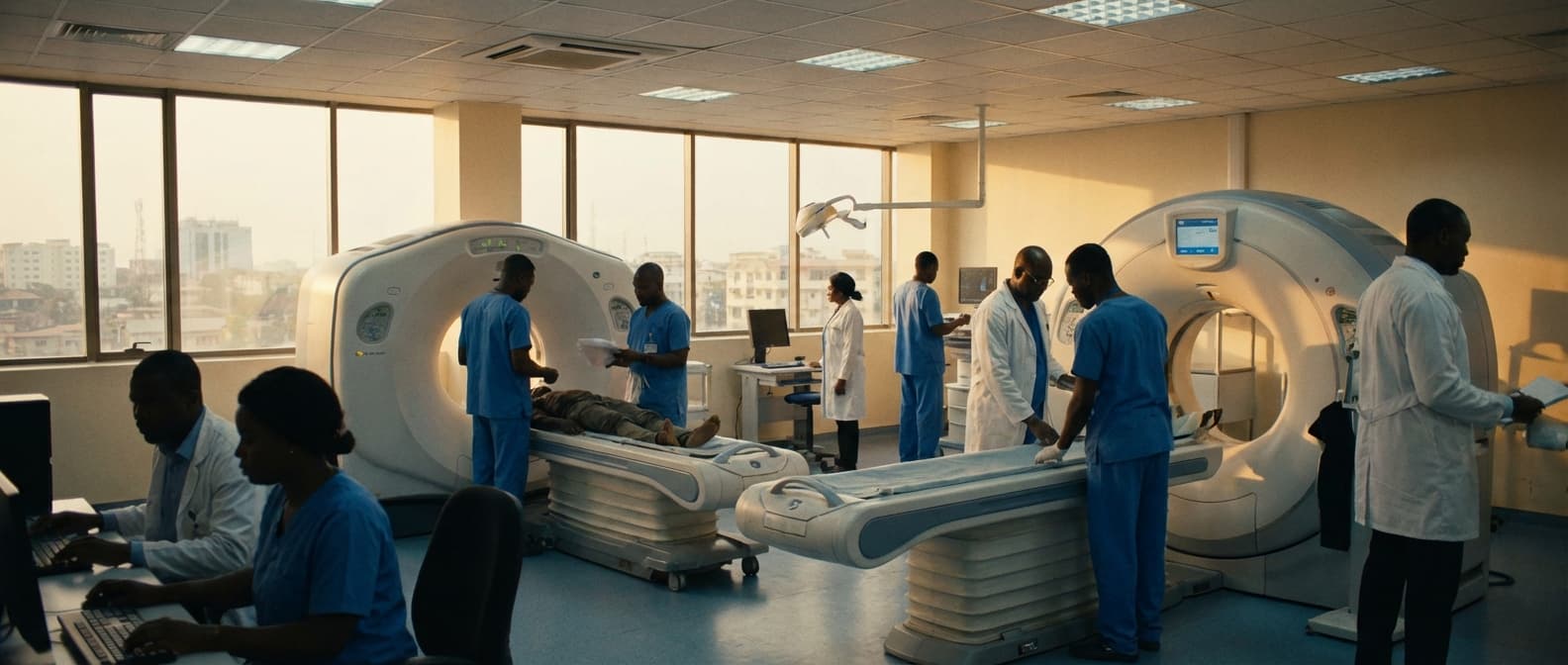
Radiology Room Design & Shielding Calculation in South Sudan
Engineering Excellence & Technical Support
Turnkey room planning, shielding drawings and approvals for imaging suites. High-standard technical execution following OEM protocols and local regulatory frameworks.
Optimized Lead Shielding for Diagnostic X-ray Units
Calculated and specified precise lead shielding thicknesses for walls, doors, and windows to ensure compliance with radiation safety standards, minimizing occupational exposure for radiology staff in new diagnostic X-ray facilities. Focused on cost-effective solutions suitable for the South Sudanese context while maintaining maximum safety.
Ergonomic and Workflow-Efficient Radiology Room Layouts
Designed functional and ergonomic layouts for X-ray rooms, considering patient throughput, equipment placement, and staff movement. Incorporated principles of infection control and patient comfort within the limitations of available building materials and local construction practices. Aimed to improve diagnostic efficiency and patient experience.
Radiation Safety Protocol Integration & Training Framework
Developed comprehensive radiation safety protocols for new radiology rooms, including procedures for equipment use, patient positioning, and emergency response. Created a foundational training framework for local technicians and healthcare workers on radiation protection principles and safe operational practices, ensuring long-term sustainability of safety measures.
What Is Radiology Room Design & Shielding Calculation In South Sudan?
Radiology room design and shielding calculation in South Sudan refers to the specialized engineering and architectural process of planning, constructing, and outfitting medical imaging suites to ensure patient and personnel safety from ionizing radiation. This service is critical for any facility performing diagnostic or interventional imaging procedures involving X-rays, CT scanners, or other radiation-emitting equipment. The core objective is to attenuate radiation levels to within regulatory limits, thereby preventing stochastic and deterministic health effects among those working in or adjacent to the imaging environment, while also optimizing workflow and patient throughput. This involves a detailed understanding of radiation physics, attenuation properties of various materials, building codes, and international safety standards, adapted to the specific logistical and resource constraints present in South Sudan.
| Who Needs Radiology Room Design & Shielding Calculation? | Typical Use Cases in South Sudan | ||||
|---|---|---|---|---|---|
| Healthcare Facilities: Hospitals (public and private), diagnostic imaging centers, polyclinics, and specialized medical centers planning to install or upgrade diagnostic and interventional radiology equipment. | Installation of new CT scanners: Requiring robust shielding due to the high dose rates and scatter radiation. | Upgrade or relocation of existing X-ray rooms: To meet current safety standards or accommodate new equipment. | Establishment of fluoroscopy suites: For interventional procedures such as angiography or urology, which involve continuous radiation exposure. | Mammography units: Requiring specific shielding considerations for dedicated breast imaging. | Radiotherapy facilities (though often a separate specialization): While primarily for treatment, the design principles for radiation safety overlap significantly, especially in bunker design. |
| Government Health Ministries and Regulatory Bodies: To establish and enforce safety standards for medical imaging facilities. | International Aid Organizations and NGOs: Involved in developing or rehabilitating healthcare infrastructure in South Sudan, often funding and overseeing the installation of medical equipment. | Architects and Construction Companies: Collaborating on healthcare projects to ensure compliance with technical specifications and safety regulations. | Medical Equipment Suppliers and Installers: To ensure that the physical environment is prepared for the safe and effective operation of their equipment. | Radiology Departments: Seeking to optimize their existing facilities for improved safety, efficiency, and diagnostic capabilities. |
Key Components of Radiology Room Design & Shielding Calculation
- Radiation Physics and Dose Assessment: Determining the types of radiation (primary, secondary – scatter and leakage), their energies, and the anticipated workload (e.g., number of procedures, patient throughput) for each imaging modality. This forms the basis for calculating the required shielding.
- Shielding Material Selection and Calculation: Evaluating and specifying appropriate shielding materials, primarily lead (Pb) and concrete, based on their attenuation coefficients and the calculated dose rates at various points. This includes determining the thickness of lead lining for walls, doors, and windows, as well as the required concrete thickness for structural elements and barriers.
- Room Layout and Workflow Optimization: Designing the spatial arrangement of the imaging equipment, control room, patient waiting areas, changing rooms, and ancillary spaces to facilitate efficient workflow, minimize radiation exposure to staff and the public, and ensure patient privacy and comfort.
- Structural and Architectural Integration: Collaborating with architects and structural engineers to integrate shielding requirements into the overall building design, ensuring structural integrity and compliance with building codes. This may involve modifications to existing structures or new construction.
- Ancillary Safety Features: Incorporating safety features such as interlocks, warning lights, radiation signage, and emergency stop mechanisms to further enhance radiation protection and operational safety.
- Regulatory Compliance and Documentation: Ensuring that the design and shielding calculations meet or exceed national and international radiation safety standards and regulations. Comprehensive documentation of the design, calculations, and materials used is essential for regulatory approval and future reference.
- Quality Assurance and Verification: Post-construction, conducting radiation surveys and measurements to verify that the installed shielding is effective and that radiation levels are within permissible limits.
- Equipment Specifics: Tailoring the design to the specific requirements of each imaging modality (e.g., CT, X-ray, fluoroscopy, mammography, angiography), as each has unique radiation emission characteristics and shielding needs.
Who Needs Radiology Room Design & Shielding Calculation In South Sudan?
The design and shielding of radiology rooms in South Sudan are critical for ensuring the safety of both patients and healthcare professionals, as well as for compliance with radiation safety regulations. While the healthcare infrastructure in South Sudan is still developing, there is a growing need for modern diagnostic imaging services. This necessitates specialized room design to accommodate imaging equipment and effective radiation shielding to prevent unnecessary exposure. The primary beneficiaries of these services are healthcare facilities and the medical professionals who operate them, as well as the patients who require X-ray, CT, MRI, and other radiological examinations. The implementation of proper design and shielding is a fundamental step towards establishing robust and safe diagnostic imaging practices in the country.
| Target Customer Segment | Relevant Departments | Specific Needs Addressed |
|---|---|---|
| Public Hospitals | Radiology Department, Radiology Physics/Safety Department, Biomedical Engineering | Upgrading existing facilities, establishing new diagnostic imaging units, ensuring compliance with emerging national safety standards, protecting staff and patients from radiation. |
| Private Hospitals & Clinics | Radiology Department, Administration, Facility Management | Investment in modern imaging technology requires appropriate room infrastructure, competitive service offering, risk mitigation for staff and patients. |
| Diagnostic Imaging Centers | Radiology Department, Operations Management | Optimizing workflow efficiency, maximizing equipment lifespan through proper installation environment, ensuring high-quality diagnostic imaging services. |
| NGO Healthcare Providers | Medical Director, Project Managers, Logistics and Infrastructure Teams | Establishing or expanding diagnostic capabilities in underserved areas, ensuring safety and sustainability of healthcare services, often with limited budgets requiring cost-effective solutions. |
| Government Health Ministries | Radiation Protection Authority, Health Infrastructure Planning, Public Health Departments | Developing national guidelines and standards for radiation safety, overseeing the implementation of safe imaging practices across the country, capacity building for regulatory oversight. |
Target Customers & Departments in South Sudan for Radiology Room Design & Shielding Calculation
- Hospitals (Public and Private)
- Clinics and Diagnostic Centers
- Specialized Medical Facilities
- Non-Governmental Organizations (NGOs) providing healthcare
- Government Health Ministries and Agencies
Radiology Room Design & Shielding Calculation Process In South Sudan
Designing and implementing radiology rooms, including the critical aspect of radiation shielding, in a developing region like South Sudan presents unique challenges. The workflow must be robust, adaptable, and account for potential resource limitations, logistical complexities, and varying levels of local expertise. This process typically begins with an initial inquiry and culminates in a fully operational and shielded radiology facility. It requires careful planning, collaboration, and execution across multiple stages.
| Phase | Key Activities | Responsible Parties (Typical) | Key Considerations for South Sudan |
|---|---|---|---|
| Phase 1: Inquiry & Needs Assessment | Receive initial request for radiology facility. Define scope of services (X-ray, CT, etc.). Assess existing infrastructure and power availability. Understand budget constraints. Identify key stakeholders (Ministry of Health, hospital administration, funding bodies). | Client (Hospital/Ministry of Health), Project Manager, Consultants (if available) | Clearly define required modalities to avoid over/under-design. Assess reliability of power supply and explore backup options (generators, solar). Engage local authorities early for approvals and buy-in. |
| Phase 2: Site Survey & Data Collection | Conduct on-site visit to evaluate the proposed room location. Measure room dimensions and structural integrity. Assess existing wall and floor construction materials. Identify proximity to occupied areas and escape routes. Collect details on ventilation and HVAC systems. | Project Manager, Architect/Designer, Radiation Physicist/Shielding Specialist | Logistical challenges in reaching remote sites. Limited availability of detailed building plans. Potentially outdated or non-standard construction materials require careful assessment. Prioritize safety of adjacent occupied spaces. |
| Phase 3: Design & Shielding Calculations | Develop architectural drawings for the radiology room layout. Determine equipment placement and workflow. Perform radiation shielding calculations based on equipment specifications, occupancy factors, and workload. Specify shielding materials (lead, concrete, etc.) and thicknesses. Design ventilation and electrical systems. | Architect/Designer, Radiation Physicist/Shielding Specialist, Equipment Vendor | Access to up-to-date equipment technical specifications is crucial. Availability and cost of shielding materials (especially lead) can be a significant challenge. Need for accurate workload estimates based on projected patient volume. Consultation with international standards and local regulations (if any). |
| Phase 4: Procurement & Logistics | Source and procure all necessary materials and equipment (shielding, construction materials, radiology equipment). Plan for transportation and customs clearance of goods. Secure specialized labor for installation. | Procurement Department, Project Manager, Logistics Coordinator | Long lead times for imported materials. High transportation costs and potential for damage during transit. Navigating customs regulations and potential corruption. Establishing reliable suppliers and contingency plans. |
| Phase 5: Construction & Installation | Prepare the site according to architectural drawings. Install radiation shielding (e.g., lead lining, concrete walls/floors/ceilings). Install electrical wiring, ventilation, and plumbing. Install the radiology equipment. Ensure proper sealing of all shielding joints. | Construction Crew, Specialized Installers (e.g., lead workers), Equipment Vendor Technicians | Availability of skilled labor can be limited; may require training or expatriate expertise. Quality control of construction and shielding installation is paramount. Protecting sensitive equipment from dust and weather during installation. Ensuring adherence to shielding specifications despite local site conditions. |
| Phase 6: Quality Assurance & Testing | Conduct radiation surveys to verify shielding effectiveness. Test all installed equipment for functionality and safety. Perform door interlock system checks. Review all construction and installation documentation. | Radiation Physicist/Shielding Specialist, Equipment Vendor Technicians, Quality Control Team | Need for portable radiation survey equipment. Ensuring independent verification of shielding integrity. Training local technicians to conduct basic checks. Documentation may be less formal; focus on visual verification and functional tests. |
| Phase 7: Commissioning & Training | Finalize all installation and testing procedures. Handover the facility to the client. Provide comprehensive training to radiographers, technologists, and maintenance staff on equipment operation and safety protocols. Train on basic shielding integrity checks and reporting procedures. | Project Manager, Equipment Vendor, Radiation Physicist, Client Personnel | Developing training materials tailored to local literacy levels and language. Ensuring ongoing access to training and support. Establishing a clear reporting structure for issues and maintenance requests. |
| Phase 8: Ongoing Monitoring & Maintenance | Implement a schedule for routine radiation safety audits and equipment maintenance. Establish a system for reporting and addressing any potential shielding compromises or equipment malfunctions. Plan for eventual equipment upgrades and facility renovations. | Hospital Maintenance Team, Ministry of Health, External Service Providers (if available) | Developing sustainable maintenance plans with limited local resources. Identifying and training local technicians for basic repairs and monitoring. Establishing a budget for ongoing maintenance and consumables. Long-term support agreements with vendors may be challenging. |
Radiology Room Design & Shielding Calculation Process in South Sudan: Workflow
- Phase 1: Inquiry & Needs Assessment
- Phase 2: Site Survey & Data Collection
- Phase 3: Design & Shielding Calculations
- Phase 4: Procurement & Logistics
- Phase 5: Construction & Installation
- Phase 6: Quality Assurance & Testing
- Phase 7: Commissioning & Training
- Phase 8: Ongoing Monitoring & Maintenance
Radiology Room Design & Shielding Calculation Cost In South Sudan
Designing and implementing radiology rooms with appropriate shielding in South Sudan involves several cost factors. These include the complexity of the room, the specific imaging modalities (e.g., X-ray, CT, MRI), the level of radiation protection required, and the availability and cost of materials locally. The pricing also depends on the expertise of the designers and installers, whether local or international, and the logistical challenges associated with importing specialized materials and equipment into South Sudan. It's crucial to consult with qualified medical physicists and radiation protection specialists to ensure compliance with safety standards, which can also influence overall project costs.
| Category | Estimated Cost Range (South Sudanese Pounds - SSP) | Notes |
|---|---|---|
| Basic X-ray Room Design & Shielding | 5,000,000 - 15,000,000 | Assumes standard lead lining, smaller room, basic layout. |
| CT Scan Room Design & Shielding | 15,000,000 - 40,000,000 | Requires more extensive shielding, larger room, specialized ventilation and power. |
| Advanced Modality Room (e.g., Fluoroscopy, Angiography) | 20,000,000 - 50,000,000+ | Shielding complexity increases with beam intensity and duration. |
| Lead Shielding Materials (per square meter) | 50,000 - 150,000+ | Varies significantly based on thickness and quality. Import costs are substantial. |
| Concrete Shielding (per cubic meter) | 15,000 - 40,000 | Depends on concrete density and reinforcement required. |
| Professional Consultation (Medical Physicist/Radiation Safety Officer) | 2,000,000 - 8,000,000 per project | Crucial for design approval, safety assessment, and compliance. |
| Labor (Skilled Installers/Technicians - per day) | 50,000 - 150,000 | Highly dependent on availability and expertise. |
| Architectural & Engineering Design Fees | 3,000,000 - 10,000,000 | Based on project scope and complexity. |
| Importation & Logistics | 1,000,000 - 5,000,000+ | Can be a significant portion of the cost due to transport challenges. |
Key Pricing Factors for Radiology Room Design & Shielding in South Sudan
- Room Size and Layout Complexity
- Type of Imaging Equipment (X-ray, CT, Fluoroscopy, MRI, etc.)
- Required Shielding Thickness (Lead lining, concrete density, etc.)
- Material Sourcing and Importation Costs
- Labor Costs (Skilled technicians, installers, radiation safety officers)
- Architectural and Engineering Design Fees
- Compliance and Certification Requirements
- Logistics and Transportation of Materials
- Site Preparation and Renovation Needs
- Project Management and Consultancy Fees
Affordable Radiology Room Design & Shielding Calculation Options
Designing and outfitting a radiology room, particularly the crucial shielding, can be a significant investment. This guide explores affordable design options, cost-effective shielding calculation strategies, and introduces value bundles to help manage your budget without compromising safety or functionality. We'll also highlight key cost-saving measures applicable throughout the process.
| Value Bundle Component | Description | Potential Cost Savings | Notes |
|---|---|---|---|
| Basic Design & Shielding Package | Includes essential architectural plans for a standard radiology room and basic lead shielding calculations based on common equipment and occupancy. | Lower upfront design costs; simplified procurement. | Suitable for smaller practices or those with standard imaging needs. May require upgrades for specialized equipment. |
| Integrated Equipment & Shielding Solution | Combines the cost of specific imaging equipment (e.g., X-ray, CT) with the design and supply of custom-fit shielding materials (lead-lined drywall, doors, windows). | Volume discounts on equipment and materials; streamlined installation coordination. | Offers a cohesive solution and can reduce integration challenges. Vendor expertise is crucial. |
| Turnkey Radiology Suite Solution | A comprehensive package including room design, shielding calculations and installation, equipment procurement and installation, and potentially patient comfort amenities. | Significant savings through bundled procurement and reduced project management overhead. | Ideal for new builds or major renovations. Requires a single point of contact and trusted vendor. |
| Consultation & Optimization Package | Expert consultation on optimizing existing space for radiology, performing detailed shielding calculations with advanced software, and recommending cost-effective material alternatives. | Avoids over-specification of shielding; identifies opportunities for material substitution. | Beneficial for retrofitting or when complex shielding is required. |
Key Considerations for Affordable Radiology Room Design & Shielding
- Understanding Room Layout and Workflow: Efficient design minimizes wasted space and equipment movement, leading to long-term operational cost savings.
- Prioritizing Essential Equipment: Focus on core imaging modalities first, with options for future expansion.
- Material Selection: Exploring cost-effective yet durable building materials and shielding options.
- Shielding Calculation Methodology: Utilizing accurate but resource-efficient calculation methods.
- Phased Implementation: Considering a staged approach for design, construction, and equipment acquisition.
- Vendor Partnerships: Leveraging relationships with suppliers for bundled pricing and integrated services.
Verified Providers In South Sudan
In South Sudan, accessing reliable healthcare is a critical concern for many. This is where verified providers like Franance Health become indispensable. Ensuring that healthcare services are delivered by qualified professionals with legitimate credentials is paramount to patient safety and effective treatment. Franance Health stands out as a leading example of such a verified provider, offering a commitment to excellence and a robust framework of credentials that underscore their position as the best choice for healthcare needs in the region.
| Credential Type | Description | Franance Health's Verification |
|---|---|---|
| Medical Licenses | Official permits granted by regulatory bodies allowing practitioners to practice medicine. | All Franance Health medical staff possess valid and current medical licenses issued by the relevant South Sudanese medical council. |
| Professional Certifications | Specialized training and qualifications in specific medical fields. | Franance Health actively recruits and employs specialists with recognized certifications in areas such as pediatrics, surgery, internal medicine, and more. |
| Educational Qualifications | Degrees and diplomas from accredited medical institutions. | All healthcare professionals at Franance Health have obtained their primary medical education from reputable and accredited universities. |
| Continuing Professional Development (CPD) | Ongoing training and education to stay updated with medical advancements. | Franance Health mandates and supports continuous professional development for its staff, ensuring they are at the forefront of medical knowledge. |
| Accreditation | Recognition from independent bodies that a healthcare facility meets specific quality and safety standards. | While specific accreditations are an ongoing process, Franance Health is committed to meeting and exceeding national healthcare standards, with a clear pathway towards formal international accreditation. |
Why Franance Health is the Best Choice:
- Uncompromising Quality of Care: Franance Health prioritizes patient well-being above all else, adhering to international standards of medical practice.
- Experienced and Certified Professionals: Their team comprises highly skilled doctors, nurses, and allied health professionals who hold recognized certifications and licenses.
- State-of-the-Art Facilities and Equipment: Franance Health invests in modern medical technology and infrastructure to ensure accurate diagnosis and effective treatment.
- Comprehensive Service Offerings: From primary care to specialized services, Franance Health provides a broad spectrum of medical solutions tailored to the community's needs.
- Patient-Centered Approach: The focus is on individualized care, with a commitment to communication, empathy, and respecting patient autonomy.
- Commitment to Ethical Practices: Franance Health operates with the highest ethical standards, ensuring transparency and integrity in all their dealings.
- Community Engagement and Trust: They are deeply integrated within the South Sudanese community, building trust through consistent, reliable, and compassionate healthcare delivery.
Scope Of Work For Radiology Room Design & Shielding Calculation
This Scope of Work (SOW) outlines the requirements for the design and radiation shielding calculations for a new or renovated Radiology Room. The objective is to ensure a safe and compliant environment for patients, staff, and the public while optimizing room layout and functionality. This SOW details the technical deliverables, standard specifications, and required expertise for successful project completion.
| Deliverable | Description | Standard Specifications / References |
|---|---|---|
| Radiology Room Design Drawings | Detailed architectural drawings including room layout, equipment placement, door/window specifications, control console location, and general room dimensions. These drawings will reflect the functional requirements and workflow of the radiology department. | Architectural Standards (e.g., NCARB, AIA Guidelines), Local Building Codes, ADA Compliance Standards. |
| Radiation Shielding Calculation Report | Comprehensive report detailing the methodology, assumptions, and results of radiation shielding calculations for all walls, floors, ceilings, doors, and windows. This report will determine the required thickness and material composition of shielding to meet regulatory limits for radiation exposure. | NCRP Report No. 147, NCRP Report No. 151, 21 CFR Part 1020 (FDA regulations), State Radiation Control Regulations, Local Health Department Guidelines. |
| Shielding Details & Material Specifications | Specific drawings and specifications outlining the proposed shielding materials (e.g., lead, concrete density, drywall thickness) and their exact placement and integration into the building structure. This includes details for penetrations (e.g., electrical conduits, HVAC ducts). | Material Safety Data Sheets (MSDS) for shielding materials, Manufacturer's product data for lead sheeting and other shielding materials. |
| Equipment Specification Integration | Ensuring that the room design and shielding calculations are coordinated with the specific requirements of the intended radiological equipment (e.g., X-ray, CT, fluoroscopy, mammography). This includes consideration for beam orientation, workload, and occupancy factors. | Equipment manufacturer's radiation safety manuals and specifications, FDA performance standards for medical imaging devices. |
| Control Console Layout & Ergonomics | Design of the control console area to ensure operator safety, ergonomic efficiency, and clear visibility of the patient and imaging area. | Human Factors Engineering principles, Ergonomic design guidelines. |
| Lighting and Ventilation Plan Integration | Incorporation of appropriate lighting levels and ventilation systems to meet healthcare facility standards and radiation safety requirements (e.g., preventing heat buildup from shielding). | ASHRAE Standards, Healthcare Facility Design Guidelines. |
| Final Design Package | A complete set of all design drawings, specifications, calculation reports, and relevant documentation suitable for bidding and construction. | Project-specific quality control checklists. |
Key Project Phases
- Phase 1: Project Initiation & Requirements Gathering
- Phase 2: Architectural Design & Layout
- Phase 3: Radiation Shielding Calculations & Design
- Phase 4: Final Design Review & Approval
- Phase 5: Construction Documentation & Support
- Phase 6: Commissioning & Verification (Optional, depending on contract)
Service Level Agreement For Radiology Room Design & Shielding Calculation
This Service Level Agreement (SLA) outlines the agreed-upon performance standards for the Radiology Room Design and Shielding Calculation services provided by [Your Company Name] to [Client Company Name]. It defines response times for critical issues and guarantees a certain level of service availability for our design and calculation tools.
| Service Component | Response Time Target (Critical Issue) | Uptime Guarantee |
|---|---|---|
| Radiology Room Design Consultation (Initial) | Within 4 business hours | N/A (Project-based) |
| Shielding Calculation Request (Standard) | Within 8 business hours | N/A (Project-based) |
| Shielding Calculation Request (Urgent - requires justification) | Within 4 business hours | N/A (Project-based) |
| Design & Calculation Platform Availability (Core System) | Within 1 business hour (for critical outage) | 99.5% per month |
| Technical Support for Design Software | Within 4 business hours | N/A (Covered by Platform Availability) |
Service Objectives
- To provide accurate and timely radiology room design and shielding calculations.
- To ensure rapid response and resolution for any service disruptions affecting design and calculation tools.
- To maintain a high level of availability for the critical design and calculation platforms.
Frequently Asked Questions

Ready when you are
Let's scope your Radiology Room Design & Shielding Calculation in South Sudan project in South Sudan.

Scaling healthcare logistics and technical systems across the entire continent.