
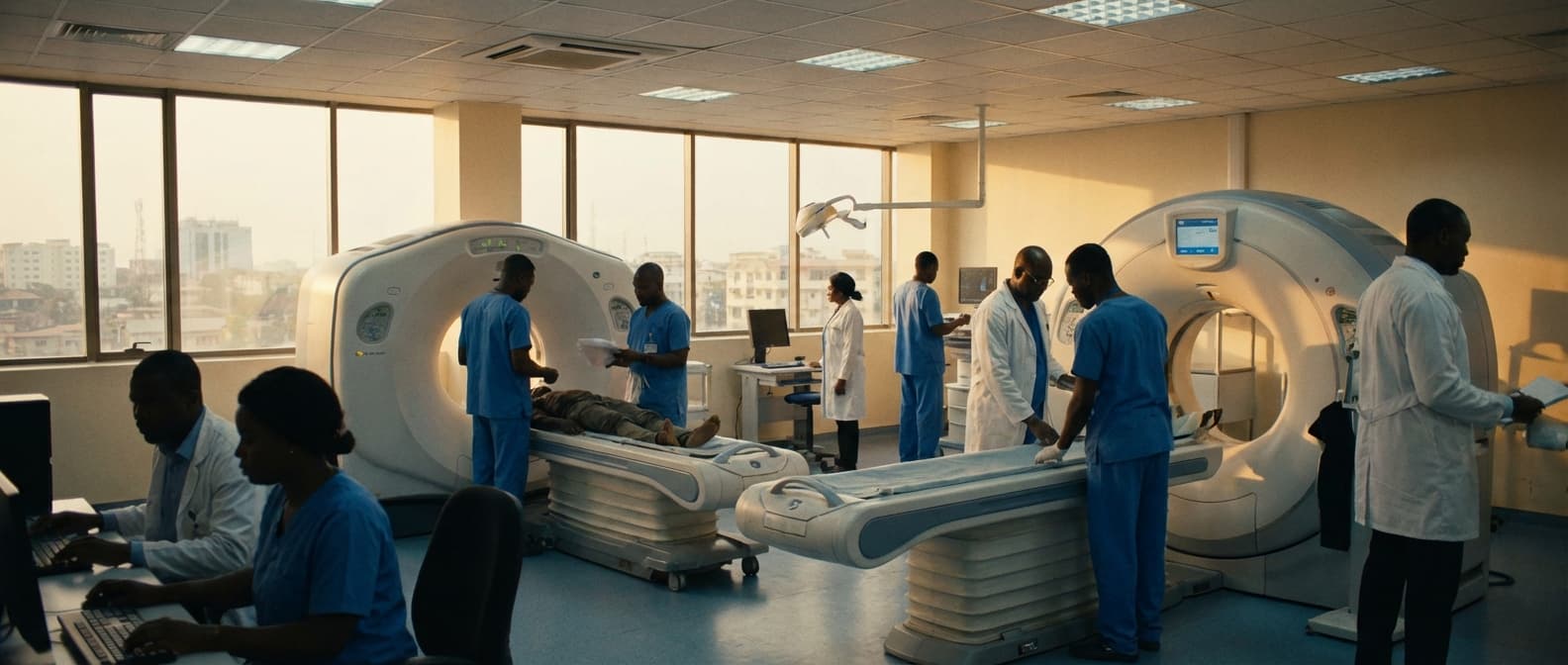
Imaging Acceptance Testing & QA in South Sudan
Engineering Excellence & Technical Support
Commissioning and periodic QA for CT/MRI/X‑ray/US/Mammo. High-standard technical execution following OEM protocols and local regulatory frameworks.
Ensuring Diagnostic Imaging Accuracy
Rigorous testing of all imaging equipment (X-ray, ultrasound, CT) to verify image quality, resolution, and diagnostic accuracy, crucial for effective patient diagnosis in resource-limited settings.
Verifying Equipment Functionality & Safety
Comprehensive acceptance testing to confirm equipment's mechanical and electrical functionality, ensuring compliance with safety standards and minimizing risks for both patients and healthcare professionals.
Establishing Baseline Performance & Calibration
Implementing precise calibration procedures for all imaging modalities upon installation and periodically thereafter, establishing a reliable baseline for ongoing performance monitoring and quality assurance.
What Is Imaging Acceptance Testing & Qa In South Sudan?
Imaging Acceptance Testing & Quality Assurance (QA) in South Sudan refers to the comprehensive process of verifying and validating imaging systems, equipment, and their associated data integrity, performance, and adherence to predefined specifications and regulatory standards within the South Sudanese context. This service ensures that imaging technologies deployed and utilized in healthcare facilities, research institutions, or any sector requiring image data capture and analysis function as intended, producing accurate, reliable, and usable imaging outputs. The process typically involves a rigorous suite of tests designed to identify and rectify defects, inconsistencies, or performance degradations prior to full operational deployment, or as part of ongoing maintenance and upgrade cycles.
| Who Needs Imaging Acceptance Testing & QA in South Sudan? | Typical Use Cases |
|---|---|
| Healthcare Facilities: Hospitals, clinics, diagnostic centers, and specialized medical institutions (e.g., radiology departments, cardiology units) that utilize medical imaging technologies for diagnosis, treatment planning, and patient monitoring. | Deployment of New Imaging Equipment: Ensuring newly purchased X-ray, CT, MRI, ultrasound, or digital radiography systems function correctly and integrate seamlessly with existing IT infrastructure before clinical use. Software Upgrades and Patches: Validating that software updates to PACS, EHR systems, or imaging modalities do not introduce new defects or negatively impact performance. System Integration Projects: Confirming that disparate imaging systems and data management platforms (e.g., PACS to EHR integration) communicate effectively and securely. Routine Maintenance and Audits: Periodic testing to ensure ongoing system reliability, image quality, and data integrity. Procurement Processes: As a critical phase before final payment and acceptance of imaging equipment or services. Emergency Response and Public Health Initiatives: Verifying the functionality and reliability of portable or rapidly deployed imaging solutions during health crises or outreach programs. Training and Education Institutions: Ensuring imaging equipment used for training medical professionals is calibrated and functioning accurately. |
| Government Health Ministries and Regulatory Bodies: Agencies responsible for setting standards, licensing medical equipment, and ensuring the quality of healthcare services provided within South Sudan. | Research and Development Institutions: Organizations utilizing imaging for scientific research, requiring validated and reproducible data acquisition. Non-Governmental Organizations (NGOs) and Humanitarian Aid Organizations: Implementing or supporting healthcare infrastructure in remote or underserved areas, requiring robust and easily maintainable imaging solutions. Private Healthcare Providers: Ensuring competitive service delivery and patient safety through reliable imaging diagnostics. IT Service Providers and Vendors: Offering imaging system implementation, maintenance, and support services to clients in South Sudan, requiring their solutions to pass rigorous acceptance testing. |
What Imaging Acceptance Testing & QA in South Sudan Involves:
- System Functionality Verification: Ensuring all hardware components (e.g., X-ray machines, CT scanners, MRI units, ultrasound devices, digital cameras) and software (e.g., Picture Archiving and Communication Systems - PACS, Electronic Health Records - EHR integration, image processing algorithms) operate according to manufacturer specifications and user requirements.
- Image Quality Assessment: Evaluating the diagnostic quality of captured images, including resolution, contrast, signal-to-noise ratio (SNR), artifact detection, and geometric accuracy. This often involves standardized phantoms and subjective expert review.
- Data Integrity and Workflow Validation: Confirming that patient data, image metadata, and associated information are accurately captured, transmitted, stored, retrieved, and displayed without corruption or loss. This includes testing interoperability between different systems (e.g., DICOM compliance).
- Performance and Throughput Testing: Measuring system response times, image acquisition speeds, processing durations, and overall system capacity under expected operational loads.
- Security and Access Control Testing: Verifying that data access controls, user authentication, and data encryption mechanisms are robust and compliant with relevant privacy regulations and institutional policies.
- Compliance and Regulatory Adherence: Ensuring that imaging systems meet national health regulations, international standards (e.g., IEC, ISO, ACR guidelines), and any specific requirements mandated by the Ministry of Health in South Sudan.
- Usability and User Interface (UI) Evaluation: Assessing the ease of use and intuitiveness of the system's interface for clinical staff and operators.
- Environmental and Durability Testing: Where applicable, testing the system's resilience to local environmental conditions (e.g., temperature, humidity, power fluctuations) and its physical durability.
Who Needs Imaging Acceptance Testing & Qa In South Sudan?
Imaging Acceptance Testing & Quality Assurance (QA) are crucial for any organization that relies on the accurate and consistent capture, processing, and interpretation of medical images. In South Sudan, where healthcare infrastructure may be developing and resources can be limited, ensuring the reliability of imaging systems is paramount. This is not just about the technology itself, but about the direct impact on patient care, diagnostic accuracy, and operational efficiency.
| Department/Role | Key Responsibilities Related to Imaging QA | Impact of Proper Acceptance Testing & QA |
|---|---|---|
| Radiology Department | Overseeing imaging procedures, image quality control, equipment performance monitoring, protocol adherence. | Ensures accurate diagnoses, reduces repeat scans, optimizes workflow, improves patient safety and satisfaction. |
| IT/Biomedical Engineering Department | Installation and maintenance of imaging equipment, network connectivity, PACS/RIS integration, software updates, calibration. | Guarantees equipment uptime, data integrity, seamless integration with hospital systems, compliance with technical specifications. |
| Clinical Staff (Radiologists, Sonographers, Radiographers) | Using imaging equipment, identifying image quality issues, providing feedback on performance, adhering to protocols. | Facilitates precise image interpretation, enables effective clinical decision-making, minimizes diagnostic errors. |
| Hospital Administration/Management | Resource allocation for equipment procurement and maintenance, ensuring compliance with regulations, patient safety oversight. | Optimizes return on investment for imaging technology, enhances patient care quality, mitigates operational risks and liabilities. |
| Quality Assurance/Compliance Officer | Developing and implementing QA policies, conducting audits, ensuring adherence to national and international standards, risk management. | Upholds high standards of imaging practice, ensures regulatory compliance, fosters a culture of continuous improvement and patient safety. |
Target Customers and Departments for Imaging Acceptance Testing & QA in South Sudan
- {"title":"Hospitals (Public and Private)","description":"These are the primary beneficiaries, as they directly provide diagnostic imaging services to the population. Ensuring their imaging equipment functions correctly and produces high-quality images is non-negotiable for accurate diagnoses and effective treatment planning."}
- {"title":"Clinics and Health Centers","description":"Even smaller facilities that may have basic imaging capabilities (e.g., portable X-ray) need to ensure their equipment is functioning optimally to avoid misdiagnosis or the need for patients to travel long distances for further imaging."}
- {"title":"Ministry of Health and Public Health Institutions","description":"Responsible for setting standards, overseeing healthcare delivery, and managing national health programs. They have a vested interest in ensuring that imaging services across the country are reliable and meet established quality benchmarks for public health initiatives and disease surveillance."}
- {"title":"Non-Governmental Organizations (NGOs) and Humanitarian Organizations","description":"Many NGOs are involved in providing healthcare services and establishing or upgrading medical facilities in South Sudan. They will require assurance that any imaging equipment they procure or implement is functioning correctly and performing to acceptable standards."}
- {"title":"Medical Training Institutions","description":"Universities, colleges, and training centers that offer radiography, radiology, or other medical imaging-related programs need reliable equipment for student training. Acceptance testing ensures that the equipment used for education is representative of current clinical standards."}
- {"title":"Diagnostic Imaging Service Providers (where applicable)","description":"Independent or shared imaging centers that offer specialized services would require rigorous testing to maintain their reputation and ensure consistent service delivery."}
Imaging Acceptance Testing & Qa Process In South Sudan
The Imaging Acceptance Testing and Quality Assurance (QA) process in South Sudan is a critical set of procedures designed to ensure that imaging systems and services meet defined standards, user requirements, and regulatory compliance before full deployment or ongoing operation. This process is vital for maintaining diagnostic accuracy, patient safety, and operational efficiency within the healthcare infrastructure.
| Phase | Key Activities | Participants | Deliverables | Key Considerations for South Sudan |
|---|---|---|---|---|
| Identifying the need for imaging equipment or services. Defining functional, technical, and performance specifications. Understanding user needs (radiologists, technicians, administrators). | Healthcare Facility Management, Clinical Staff, IT Department, Procurement Officers. | Needs Assessment Report, User Requirement Document (URD). | Limited availability of expert personnel for detailed requirement definition. Focus on essential diagnostic needs and sustainability given resource constraints. Potential for outdated infrastructure. |
| Translating requirements into detailed technical specifications. Reviewing vendor proposals against specifications. Ensuring interoperability with existing systems (e.g., PACS, HIS). | Technical Experts (Biomedical Engineers, IT Specialists), Clinical Leads, Procurement Committee, Vendor Technical Team. | Technical Specification Document, Vendor Evaluation Report, Final System Design. | Need for clear, unambiguous specifications to avoid misinterpretations. Prioritizing systems with proven reliability and ease of maintenance in challenging environments. Availability of local support for complex systems. |
| Issuing tenders, evaluating bids, awarding contracts. Managing logistics and shipping. Receiving and inspecting delivered equipment/software. | Procurement Department, Legal Team, Finance Department, Logistics Partners, Vendor. | Signed Contract, Purchase Order, Delivery Manifest, Goods Received Note (GRN). | Navigating complex import regulations and customs. Ensuring secure transportation and handling to prevent damage. Potential for long lead times and supply chain disruptions. |
| Physical installation of hardware. Software installation and initial configuration. Network connectivity setup. Integration with existing infrastructure. | Vendor Installation Engineers, Biomedical Engineers, IT Technicians, Facility Management. | Installed System, Initial Configuration Report, Network Connectivity Test Results. | Availability of qualified installers and technicians. Need for robust power and climate control infrastructure. Ensuring safety protocols are followed during installation. |
| Initial functional checks by the vendor. Basic performance tests. Verification of core features and safety mechanisms. Internal team familiarization. | Vendor Service Team, Biomedical Engineers. | Vendor Test Report, Preliminary System Functionality Check List. | Ensuring vendors conduct thorough testing before formal handover. Training local technicians to perform basic checks. |
| Comprehensive testing against URD and technical specifications. User-driven testing with simulated patient data. Performance benchmarking. Verification of image quality and diagnostic accuracy. Security testing. | Clinical Users (Radiologists, Technicians), Biomedical Engineers, IT Staff, QA Team. | Acceptance Test Plan, Test Cases, User Acceptance Testing (UAT) Report, Punch List (defects), Final Acceptance Certificate. | Developing realistic test scenarios relevant to local disease patterns. Ensuring sufficient training for users to perform effective UAT. Prioritizing critical functionalities. Clear criteria for acceptance. |
| Establishing ongoing QA protocols. Implementing regular image quality checks. Monitoring system performance and uptime. Patient dose monitoring (if applicable). Regular calibration. Establishing protocols for reporting and resolving issues. | QA Team, Biomedical Engineers, IT Support, Clinical Staff. | QA Manual/Procedures, Performance Monitoring Reports, Calibration Logs, Incident Reports. | Developing sustainable QA programs with limited resources. Training local staff on QA procedures. Establishing a reliable system for reporting and tracking issues. Importance of adherence to international QA standards where possible. |
| Creating comprehensive user manuals, service manuals, and training materials. Conducting user and technical training. Ensuring documentation is accessible and understood. | Vendor Technical Writers, Training Specialists, Biomedical Engineers, Clinical Educators. | User Manuals, Service Manuals, Training Materials, Training Attendance Records, Competency Assessments. | Developing documentation in clear, understandable language, possibly with local language translations. Training local personnel to be trainers. Focusing on practical, hands-on training. |
| Official deployment of the system/service. Close monitoring during the initial operational period. Gathering user feedback. Conducting a review of the entire acceptance and implementation process. | All Stakeholders involved in Acceptance Testing and Implementation. | Go-Live Confirmation, Post-Implementation Review Report, Lessons Learned Document. | Phased rollout where possible. Establishing robust support mechanisms for immediate post-go-live issues. Documenting challenges and successes to inform future projects. |
| Scheduled preventive maintenance. Corrective maintenance for issues. Periodic refresher training. Regular QA checks and audits to ensure sustained performance and quality. | Biomedical Engineers, IT Technicians, Vendor Support, Clinical Staff. | Maintenance Logs, Service Reports, Refresher Training Records, Periodic QA Audit Reports. | Securing sustainable service contracts and spare parts. Building local capacity for routine maintenance and troubleshooting. Continuous improvement through regular audits and feedback loops. |
Imaging Acceptance Testing & QA Process Workflow in South Sudan
- Inquiry & Requirements Gathering
- System Specification & Design Review
- Procurement & Delivery
- Installation & Configuration
- Pre-Acceptance Testing (Vendor/Internal)
- Formal Acceptance Testing (Client/User)
- Quality Assurance (QA) Implementation & Monitoring
- Documentation & Training
- Go-Live & Post-Implementation Review
- Ongoing Maintenance & Refresher QA
Imaging Acceptance Testing & Qa Cost In South Sudan
Imaging Acceptance Testing (AT) and Quality Assurance (QA) are crucial for ensuring that medical imaging equipment functions correctly, produces accurate diagnostic images, and meets regulatory standards. In South Sudan, the cost of these services is influenced by a variety of factors, leading to a wide potential price range. These factors include the complexity and type of imaging equipment (e.g., X-ray, CT scanner, MRI, ultrasound), the vendor or service provider's expertise and reputation, the location of the facility within South Sudan (remote areas may incur higher travel costs), the scope of testing required (basic functionality vs. comprehensive performance validation), and the urgency of the testing. Furthermore, the availability of specialized technicians and the need for imported testing equipment or calibration tools can significantly impact pricing.
| Service/Equipment Type | Estimated Cost Range (South Sudanese Pound - SSP) | Notes |
|---|---|---|
| Basic X-ray Machine Acceptance Testing | 50,000 - 150,000 SSP | Includes essential functional checks, image quality assessment, and basic safety checks. |
| Advanced X-ray (e.g., Fluoroscopy, Digital Radiography) AT | 100,000 - 300,000 SSP | More comprehensive testing, including advanced features and potentially dose monitoring. |
| CT Scanner Acceptance Testing | 200,000 - 700,000 SSP | Requires specialized equipment and expertise. Covers image reconstruction, spatial resolution, contrast resolution, and artifact analysis. |
| MRI Scanner Acceptance Testing | 300,000 - 1,000,000+ SSP | Highly complex and expensive. Involves extensive magnetic field uniformity checks, gradient performance, RF coil integrity, and image quality across various sequences. |
| Ultrasound Machine Acceptance Testing | 70,000 - 250,000 SSP | Focuses on transducer integrity, image depth, resolution, Doppler functionality, and artifact assessment. |
| Routine QA & Calibration (per modality, annual) | 30,000 - 100,000 SSP | Covers periodic checks to ensure ongoing optimal performance and safety. |
| On-site travel and mobilization fees (per technician) | 20,000 - 80,000 SSP | Varies significantly based on distance and logistical challenges. |
| Importation of specialized testing equipment (if required) | Variable (can add significantly to cost) | This is a one-off cost and can be substantial depending on the equipment needed. |
Key Pricing Factors for Imaging AT & QA in South Sudan:
- Type and complexity of imaging equipment (e.g., X-ray, CT, MRI, Ultrasound).
- Vendor or service provider's experience, qualifications, and reputation.
- Geographic location of the healthcare facility (urban vs. rural, accessibility).
- Scope of testing (basic functional checks, full performance validation, calibration).
- Urgency and turnaround time required for testing.
- Need for specialized testing equipment or calibration tools.
- Travel and accommodation expenses for technicians.
- Local regulatory requirements and compliance checks.
- Market competition among service providers.
Affordable Imaging Acceptance Testing & Qa Options
Ensuring the quality and accuracy of medical imaging is paramount, but the cost of comprehensive Acceptance Testing (AT) and Quality Assurance (QA) can be a significant barrier for many healthcare facilities. Fortunately, innovative approaches and strategic planning can make robust imaging AT/QA accessible. This document outlines affordable options, focusing on value bundles and cost-saving strategies, to help organizations meet regulatory requirements and ensure patient safety without breaking the budget.
| Value Bundle Type | Description | Cost-Saving Strategies |
|---|---|---|
| Basic AT/QA Package | Includes essential tests for initial equipment acceptance and fundamental ongoing QA. Typically covers core performance parameters. | Focus on essential tests, utilize in-house trained technicians for basic checks, leverage vendor standard packages. |
| Modality-Specific Bundles | Tailored packages for specific imaging modalities (e.g., X-ray, CT, MRI, Ultrasound). Offers a comprehensive set of tests relevant to each modality's performance. | Negotiate discounts for multi-modality bundles, bundle AT with initial installation and training, leverage vendor expertise for specialized tests. |
| Comprehensive Service & QA Contracts | Integrates AT/QA with full equipment maintenance and support. This approach ensures consistent quality and proactive issue resolution. | Bundle AT/QA with PM contracts, negotiate multi-year contracts for better rates, consider remote monitoring and diagnostics to reduce site visits. |
| Remote QA Monitoring Solutions | Utilizes software and network connectivity to perform certain QA checks remotely, reducing the need for on-site technician visits. | Invest in QA software that supports remote capabilities, train staff on remote monitoring procedures, integrate with PACS/RIS for data aggregation. |
| Training & Certification Programs | Empowers in-house staff to perform specific AT/QA tasks, reducing reliance on external service providers for routine checks. | Invest in vendor-provided or third-party training, create internal certification for QA technologists, offer cross-training for staff. |
Key Considerations for Affordable Imaging AT/QA
- Understanding Regulatory Requirements: Familiarize yourself with local, national, and accreditation body (e.g., ACR, Joint Commission) requirements for imaging equipment acceptance and ongoing QA.
- Defining Scope: Clearly define the essential AT/QA tasks required for each modality. Not every test is critical for every piece of equipment.
- Leveraging Existing Resources: Explore if your current staff has the expertise or can be trained for certain QA tasks.
- Strategic Vendor Partnerships: Negotiate AT/QA services as part of equipment purchase agreements or existing service contracts.
- Technology Adoption: Consider cost-effective software solutions for data management and analysis, which can streamline QA processes.
- Phased Implementation: Break down AT/QA implementation into manageable phases, prioritizing critical equipment first.
- Centralized QA Programs: For multi-site organizations, a centralized QA program can offer economies of scale.
Verified Providers In South Sudan
In South Sudan, ensuring access to quality healthcare is paramount. Verified providers play a crucial role in guaranteeing that individuals receive safe, effective, and trustworthy medical services. Among these distinguished entities, Franance Health stands out as a beacon of excellence. This document outlines Franance Health's credentials and elucidates why they represent the best choice for healthcare needs in South Sudan.
| Aspect | Franance Health's Commitment | Why it Matters for Patients |
|---|---|---|
| Quality of Care | Adherence to international medical standards, continuous professional development of staff. | Ensures patients receive safe, effective, and up-to-date treatments. |
| Expertise | Recruitment of highly trained and specialized medical professionals. | Access to specialized knowledge and skills for complex health issues. |
| Infrastructure | Investment in modern medical equipment and well-maintained facilities. | Accurate diagnostics, efficient procedures, and improved patient outcomes. |
| Accessibility | Offering a broad range of services, from primary to specialized care, and outreach programs. | Convenient access to diverse healthcare needs within one trusted provider. |
| Patient Experience | Emphasis on compassionate care, clear communication, and patient involvement in treatment decisions. | Reduced anxiety, improved understanding, and greater satisfaction with healthcare received. |
Franance Health Credentials and Key Strengths
- Accreditation and Affiliation: Franance Health is a fully accredited healthcare organization, adhering to national and international standards for medical practice and patient care. They maintain strong affiliations with reputable medical associations and governmental health bodies, signifying their commitment to regulatory compliance and best practices.
- Qualified Medical Professionals: The cornerstone of Franance Health's excellence lies in its team of highly qualified and experienced medical professionals. This includes board-certified physicians, specialist surgeons, skilled nurses, and allied health professionals, all dedicated to providing compassionate and expert care.
- State-of-the-Art Facilities and Technology: Franance Health invests in modern medical infrastructure and cutting-edge technology. Their facilities are equipped to handle a wide range of medical conditions, from routine check-ups to complex surgical procedures, ensuring accurate diagnoses and effective treatments.
- Comprehensive Service Offerings: The organization offers a comprehensive suite of healthcare services, catering to diverse medical needs. This includes primary care, specialized consultations, diagnostic imaging, laboratory services, surgical interventions, and emergency care.
- Patient-Centric Approach: Franance Health prioritizes the patient experience. They are committed to providing personalized care, fostering open communication, and ensuring patient comfort and well-being throughout their treatment journey.
- Community Engagement and Outreach: Beyond clinical services, Franance Health actively engages with communities through health education programs, awareness campaigns, and mobile clinics, demonstrating a deep commitment to improving public health across South Sudan.
- Commitment to Ethical Practices: Upholding the highest ethical standards is fundamental to Franance Health's operations. They are dedicated to transparency, integrity, and patient confidentiality in all aspects of their service delivery.
Scope Of Work For Imaging Acceptance Testing & Qa
This document outlines the Scope of Work (SOW) for Imaging Acceptance Testing and Quality Assurance (QA). It details the technical deliverables and standard specifications required to ensure the successful integration and performance of imaging systems within the defined project. The objective is to verify that the imaging solution meets all functional, performance, and reliability requirements as specified by the project stakeholders and industry standards.
| Deliverable Type | Description | Format | Acceptance Criteria | Responsible Party |
|---|---|---|---|---|
| Test Plan | Detailed document outlining the strategy, scope, resources, schedule, and test cases for acceptance testing. | PDF, Word Document | Approved by project stakeholders. | QA Team |
| Test Cases | Specific, step-by-step instructions for executing tests, including expected results and pass/fail criteria. | Spreadsheet, Test Management Tool | Cover all functional and non-functional requirements. | QA Team |
| Test Environment Setup Guide | Instructions for configuring the testing environment to mirror production as closely as possible. | PDF, Word Document | Environment is stable and representative of production. | IT Operations / QA Team |
| System Configuration Documentation | Documentation of all system settings, parameters, and configurations relevant to imaging operations. | PDF, Word Document | Accurate and complete reflection of production configuration. | System Administrators / QA Team |
| Test Execution Logs | Records of all executed test cases, including actual results, dates, and testers. | Test Management Tool, Spreadsheet | All planned test cases executed. | QA Team |
| Defect Reports | Detailed documentation of any identified defects, including severity, steps to reproduce, and impact. | Defect Tracking System, Spreadsheet | All critical and major defects resolved and retested. | QA Team |
| Performance Test Results | Data and analysis demonstrating system performance against defined benchmarks (e.g., image loading times, processing speeds). | Report (PDF, Word Document), Graphs/Charts | Meets or exceeds specified performance metrics. | QA Team / Performance Testers |
| Security Test Results | Evidence of compliance with security requirements and identification of any vulnerabilities. | Report (PDF, Word Document) | No critical or high-severity security vulnerabilities identified. | QA Team / Security Testers |
| Usability Test Results | Feedback and findings from user acceptance testing sessions. | Report (PDF, Word Document), User Feedback Summaries | Positive user feedback on key workflows and intuitive design. | QA Team / End Users |
| Data Integrity & Migration Verification Report | Confirmation that imaging data is accurate, complete, and correctly migrated (if applicable). | Report (PDF, Word Document) | No data corruption or loss detected. | QA Team |
| Final Acceptance Test Report | Comprehensive summary of all testing activities, findings, defects, and recommendations. | PDF, Word Document | Approved by project stakeholders, clear go/no-go recommendation. | QA Team |
| Sign-off Document | Formal document indicating acceptance of the imaging system by the stakeholders. | Signed PDF, Hardcopy | Mutual agreement on system readiness. | Project Stakeholders |
Key Objectives
- Validate the functionality of all specified imaging features and workflows.
- Verify image acquisition, processing, and storage capabilities meet performance benchmarks.
- Ensure data integrity and security of all imaging data.
- Confirm compliance with relevant regulatory and industry standards (e.g., DICOM, HL7, HIPAA).
- Assess system usability and user experience for all intended user roles.
- Identify and document any defects or deviations from specified requirements.
- Provide comprehensive test reports and sign-off on system acceptance.
Service Level Agreement For Imaging Acceptance Testing & Qa
This Service Level Agreement (SLA) outlines the agreed-upon response times and uptime guarantees for Imaging Acceptance Testing and Quality Assurance (QA) services. This document aims to ensure consistent and reliable performance of the imaging services, meeting the needs of the client.
| Issue Priority | Response Time Guarantee | Resolution Time Guarantee | Uptime Guarantee |
|---|---|---|---|
| Critical Issue | 15 minutes | 4 hours | 99.9% Monthly |
| High-Priority Issue | 1 hour | 8 business hours | 99.9% Monthly |
| Medium-Priority Issue | 4 business hours | 3 business days | 99.9% Monthly |
| Low-Priority Issue | 1 business day | 5 business days (or next scheduled maintenance) | 99.9% Monthly |
Definitions
- Imaging Acceptance Testing: The process of verifying that newly deployed or updated imaging systems (e.g., PACS, RIS, modality interfaces) meet defined functional and performance requirements before being released for clinical use.
- Quality Assurance (QA): The ongoing process of monitoring and evaluating the performance of imaging systems and workflows to ensure accuracy, reliability, and adherence to established standards.
- Critical Issue: An issue that significantly impairs or completely prevents the use of the imaging system or a critical function of the imaging workflow. This includes complete system outages, inability to acquire or view images, or significant data integrity problems.
- High-Priority Issue: An issue that degrades the performance of the imaging system or workflow but does not completely prevent its use. This might include slow system response times, intermittent errors that can be bypassed, or minor functional defects.
- Medium-Priority Issue: An issue that affects a non-critical function or has a minor impact on performance. These are typically cosmetic issues or require workarounds that do not significantly impede workflow.
- Low-Priority Issue: An issue that has minimal impact on system functionality or performance and does not require immediate attention. This could include documentation errors or feature enhancement requests.
- Response Time: The maximum time allowed from the reporting of an issue to the commencement of investigation and diagnosis by the service provider.
- Resolution Time: The maximum time allowed from the reporting of an issue to its complete resolution or the implementation of an acceptable workaround.
- Uptime: The percentage of time that the imaging system and associated services are available and functional, excluding scheduled maintenance.
Frequently Asked Questions

Ready when you are
Let's scope your Imaging Acceptance Testing & QA in South Sudan project in South Sudan.

Scaling healthcare logistics and technical systems across the entire continent.