
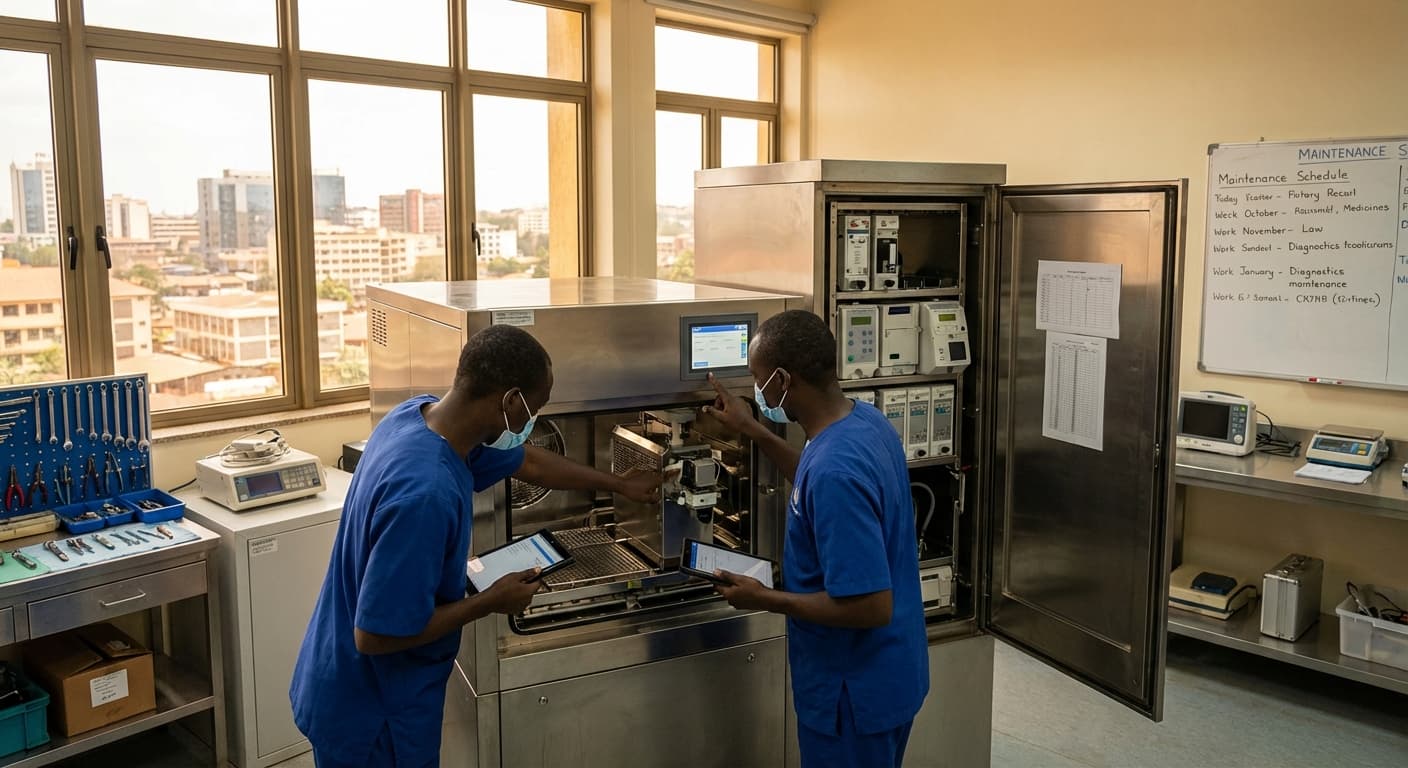
Total Cost of Ownership (TCO) & Lifecycle Budgeting Service in South Sudan
Engineering Excellence & Technical Support
Total Cost of Ownership (TCO) & Lifecycle Budgeting Service High-standard technical execution following OEM protocols and local regulatory frameworks.
Optimized Asset Longevity & Performance
Leverage advanced data analytics and predictive maintenance strategies to extend the operational lifespan of critical infrastructure and equipment. Our TCO modeling identifies optimal service intervals and proactive interventions, minimizing unexpected downtime and maximizing asset ROI in the unique South Sudanese operational environment.
Risk Mitigation Through Transparent Supply Chains
We provide granular visibility into the entire lifecycle cost, from procurement and installation to ongoing maintenance and eventual disposal. Our TCO assessments incorporate projected inflation, import duties, and local sourcing opportunities in South Sudan, enabling robust financial planning and mitigating supply chain volatility.
Strategic Capital Allocation & Future-Proofing
Our lifecycle budgeting service empowers strategic decision-making by forecasting long-term expenditure. We integrate environmental, social, and governance (ESG) factors relevant to South Sudan, ensuring investments align with sustainability goals and future regulatory landscapes, thereby securing sustainable growth and operational resilience.
What Is Total Cost Of Ownership (Tco) & Lifecycle Budgeting Service In South Sudan?
Total Cost of Ownership (TCO) and Lifecycle Budgeting (LCB) services in South Sudan are strategic financial management methodologies aimed at determining the comprehensive cost of an asset, system, or project throughout its entire lifespan, from acquisition through disposal. TCO focuses on quantifying all direct and indirect expenditures, while LCB extends this to integrate these costs into multi-year budgetary frameworks. This service is crucial for public and private sector entities operating within South Sudan's unique economic and operational landscape, characterized by infrastructure challenges, supply chain complexities, and evolving regulatory environments. It provides a robust framework for informed decision-making, resource optimization, and enhanced financial predictability.
| Who Needs TCO & Lifecycle Budgeting? | Rationale for Need in South Sudan |
|---|---|
| Government Ministries & Agencies (e.g., Infrastructure, Health, Education, Defense): Responsible for the procurement and management of large-scale public assets and infrastructure projects. | Need to ensure long-term fiscal sustainability, avoid unexpected expenditures, optimize public funds, and plan for the responsible management of national assets in a resource-constrained environment. Crucial for donor-funded projects requiring robust financial accountability. |
| State-Owned Enterprises (SOEs) & Public Corporations: Operating critical infrastructure and services (e.g., energy, water, telecommunications). | Require predictable operational costs, efficient resource allocation, and long-term investment planning to maintain service delivery and financial viability, especially in sectors prone to high maintenance and upgrade costs. |
| International Development Organizations & NGOs: Implementing projects funded by grants and aid. | Need to demonstrate efficient use of donor funds, ensure project sustainability beyond initial funding, and account for all costs, including operational and maintenance expenses, over the project lifecycle. |
| Private Sector Companies (especially in infrastructure, oil & gas, telecommunications, manufacturing): | To make informed investment decisions on capital assets, manage operational risks, optimize profitability by understanding true operating costs, and plan for asset replacement and upgrades in a volatile economic climate. |
| Financial Institutions & Lenders: | To assess the financial viability and long-term risk of projects and assets they are financing, ensuring that projected revenues can cover all lifecycle costs. |
Key Components of TCO & Lifecycle Budgeting Services
- TCO Analysis: Involves identifying, quantifying, and projecting all costs associated with an asset or project over its operational life. This includes initial capital expenditure (CAPEX), operating expenditure (OPEX) such as maintenance, consumables, energy, personnel, and indirect costs like training, downtime, and end-of-life disposal or decommissioning.
- Lifecycle Costing Models: Development of financial models to forecast costs across different stages of the asset's lifecycle (e.g., acquisition, operation, maintenance, upgrade, disposal). This often incorporates elements of risk assessment and sensitivity analysis.
- Budgetary Integration: Translating TCO projections into actionable, multi-year budget plans. This ensures that future financial obligations are anticipated and allocated for, mitigating budget shortfalls and enabling strategic financial planning.
- Scenario Planning & Sensitivity Analysis: Evaluating the impact of various economic, operational, and external factors (e.g., inflation, currency fluctuations, technological obsolescence, political instability) on the total lifecycle cost.
- Benchmarking & Optimization: Comparing costs against industry standards or alternative solutions to identify areas for cost reduction and efficiency improvements.
- Reporting & Decision Support: Providing clear, concise reports and analytical insights to support strategic procurement, investment, and operational decisions.
- Disposal and Decommissioning Planning: Accounting for the often-significant costs associated with the eventual retirement, removal, or recycling of assets.
Who Needs Total Cost Of Ownership (Tco) & Lifecycle Budgeting Service In South Sudan?
In South Sudan, a country navigating significant economic and developmental challenges, robust financial planning and management are paramount for achieving sustainable growth and efficient resource allocation. Total Cost of Ownership (TCO) and Lifecycle Budgeting services are crucial for organizations seeking to maximize value, minimize risks, and ensure long-term financial viability. These services provide a comprehensive understanding of the true cost of assets, projects, and initiatives, extending beyond initial purchase price to encompass all associated expenses throughout their operational life. For South Sudan, this translates to smarter investments, reduced waste, and improved accountability in critical sectors.
| Target Customer/Department | Key Needs & Benefits of TCO/Lifecycle Budgeting |
|---|---|
| Government Ministries & Agencies (e.g., Ministry of Finance, Ministry of Infrastructure, Ministry of Health) | Making informed procurement decisions for public assets (e.g., vehicles, IT equipment, medical supplies, infrastructure projects). Ensuring long-term affordability and sustainability of public services. Improving budget predictability and reducing unexpected expenditure. Enhancing accountability and transparency in public spending. Optimizing the lifespan and maintenance costs of critical infrastructure. |
| International Development Organizations & NGOs | Maximizing the impact of donor funding by ensuring long-term sustainability of projects and assets. Accurate budgeting for project implementation and post-project support. Reducing operational costs and improving efficiency of service delivery. Demonstrating responsible financial stewardship to donors. Planning for asset disposal and replacement in challenging environments. |
| Public Utility Providers (Water, Electricity) | Accurate forecasting of capital expenditure for infrastructure upgrades and maintenance. Optimizing operational costs for energy, water treatment, and distribution. Planning for the lifecycle of critical equipment (e.g., turbines, pumps, transformers). Ensuring long-term service delivery affordability and reliability. Justifying tariff adjustments based on true operational costs. |
| Large-Scale Infrastructure Developers (Roads, Bridges, Buildings) | Comprehensive understanding of all project-related costs, including design, construction, operation, maintenance, and eventual decommissioning. Mitigating financial risks associated with long-term project commitments. Securing financing by demonstrating robust financial planning. Optimizing asset performance and longevity. Ensuring compliance with environmental and safety regulations throughout the lifecycle. |
| Resource Extraction Companies (Oil, Mining) | Accurate cost estimation for exploration, extraction, processing, and site remediation. Long-term financial planning for operational phases and eventual closure. Managing the lifecycle costs of heavy machinery and specialized equipment. Assessing the economic viability of projects over their entire lifespan. Ensuring compliance with environmental and regulatory obligations throughout the project lifecycle. |
| Financial Institutions (Banks, Microfinance) | Assessing the true cost of technology investments (e.g., IT systems, ATMs). Evaluating the long-term profitability of lending products and services. Managing the lifecycle of physical assets (e.g., branches, vehicles). Improving risk management by understanding underlying operational costs. Strategic planning for technology upgrades and replacements. |
| Telecommunications Companies | Accurate budgeting for network infrastructure (e.g., towers, fiber optics, base stations). Planning for the lifecycle of telecommunications equipment and software. Optimizing operational and maintenance costs. Forecasting capital expenditure for network expansion and upgrades. Ensuring competitive pricing based on actual cost of service delivery. |
| Educational Institutions (Universities, Schools) | Managing the lifecycle costs of buildings, classrooms, laboratories, and IT infrastructure. Optimizing operational budgets for utilities, maintenance, and supplies. Strategic planning for future investments in educational technology and facilities. Ensuring affordability of education for students. Efficient management of learning resources. |
| Healthcare Providers (Hospitals, Clinics) | Accurate costing for medical equipment (e.g., MRI machines, X-ray equipment) including maintenance, consumables, and eventual replacement. Optimizing operational expenses for facilities and patient care. Long-term planning for healthcare infrastructure development and upgrades. Ensuring the sustainability of healthcare services. Effective management of pharmaceutical and supply chain costs. |
| Large Manufacturing & Agricultural Enterprises | Cost-effective procurement and management of machinery and equipment. Optimizing operational and maintenance costs for production lines and agricultural machinery. Strategic planning for asset replacement and technology adoption. Improving overall production efficiency and profitability. Managing the lifecycle of raw materials and finished goods storage facilities. |
Who Needs TCO & Lifecycle Budgeting Service in South Sudan?
- Government Ministries and Agencies
- International Development Organizations & NGOs
- Public Utility Providers
- Large-Scale Infrastructure Developers
- Resource Extraction Companies
- Financial Institutions
- Telecommunications Companies
- Educational Institutions
- Healthcare Providers
- Large Manufacturing and Agricultural Enterprises
Total Cost Of Ownership (Tco) & Lifecycle Budgeting Service Process In South Sudan
This document outlines the typical workflow for a Total Cost of Ownership (TCO) & Lifecycle Budgeting service process in South Sudan, from initial inquiry to final execution. The process is designed to be collaborative, transparent, and tailored to the specific needs and context of clients operating within South Sudan's unique economic and operational environment.
| Phase | Key Activities | South Sudan Specific Considerations |
|---|---|---|
| Inquiry & Scoping | Understanding client needs, defining project scope, initial feasibility assessment. | Assessing existing infrastructure, security environment, and local regulatory landscape. |
| Proposal & Agreement | Developing scope of work, methodology, deliverables, timelines, and pricing. Negotiating SLA. | Incorporating potential delays due to logistics, import/export regulations, and currency volatility. |
| Data Collection | Gathering cost data for acquisition, operation, maintenance, and disposal. Site visits, stakeholder interviews, market research. | Navigating limited data availability, potential security concerns during site visits, reliance on local contacts for pricing and information. |
| Analysis & Modeling | Developing TCO models, quantifying direct and indirect costs, applying discount rates. | Factoring in high inflation rates, unpredictable currency exchange, and specific local taxes/duties. |
| Risk Assessment | Identifying financial, operational, political, and security risks. Developing mitigation plans. | Assessing risks related to political instability, conflict, corruption, and humanitarian crises impacting supply chains. |
| Budget Generation | Creating detailed lifecycle budgets, forecasting CAPEX and OPEX, scenario planning. | Accounting for potential cost escalations due to unforeseen events and infrastructure limitations. |
| Reporting & Presentation | Compiling comprehensive reports, presenting findings and recommendations. | Ensuring clear communication despite potential language barriers and cultural nuances. |
| Implementation & Monitoring | Assisting with budget implementation, tracking actual costs, providing ongoing advice. | Adapting strategies based on rapidly changing socio-economic and security conditions. |
Service Process Workflow for TCO & Lifecycle Budgeting in South Sudan
- {"step":"1. Initial Inquiry & Scoping","description":"Prospective clients contact the service provider with a need for TCO & Lifecycle Budgeting analysis. This stage involves understanding the client's objectives, the assets/projects in scope, the desired level of detail, and any specific challenges or constraints within South Sudan (e.g., data availability, logistical complexities)."}
- {"step":"2. Proposal Development & Agreement","description":"Based on the initial inquiry, a detailed proposal is developed. This includes defining the scope of work, methodologies, deliverables, timelines, key performance indicators (KPIs), and a cost breakdown. A Service Level Agreement (SLA) is then negotiated and signed."}
- {"step":"3. Data Collection & Verification","description":"This is a critical phase. Information is gathered on all relevant cost components throughout the lifecycle of the asset/project. This may involve site visits (often challenging in South Sudan), interviews with stakeholders, review of existing documentation, and leveraging local market intelligence for pricing and availability."}
- {"step":"4. Cost Modeling & Analysis","description":"Collected data is input into TCO models. This involves identifying and quantifying direct costs (acquisition, operation, maintenance) and indirect costs (training, disposal, downtime). Inflation, currency fluctuations, and local taxes specific to South Sudan are incorporated."}
- {"step":"5. Risk Assessment & Mitigation Strategy Development","description":"Potential risks that could impact the TCO (e.g., supply chain disruptions, security concerns, political instability, regulatory changes in South Sudan) are identified. Strategies to mitigate these risks are developed and integrated into the budget."}
- {"step":"6. Lifecycle Budget Generation","description":"A comprehensive lifecycle budget is developed, projecting costs over the entire lifespan of the asset/project. This includes forecasts for capital expenditure (CAPEX) and operational expenditure (OPEX), with clear breakdowns for each phase."}
- {"step":"7. Reporting & Presentation","description":"The findings, including the TCO analysis, lifecycle budget, risk assessment, and recommended strategies, are compiled into a detailed report. This report is then presented to the client, with opportunities for discussion and clarification."}
- {"step":"8. Implementation Support (Optional)","description":"The service provider can offer ongoing support to help the client implement the recommendations, monitor adherence to the budget, and make necessary adjustments based on evolving conditions in South Sudan."}
- {"step":"9. Review & Optimization","description":"Periodic reviews are conducted to assess the accuracy of the TCO projections against actual expenditures. This allows for continuous optimization of the budget and future TCO calculations."}
Total Cost Of Ownership (Tco) & Lifecycle Budgeting Service Cost In South Sudan
Providing Total Cost of Ownership (TCO) and Lifecycle Budgeting services in South Sudan involves a nuanced approach due to the country's unique economic and operational landscape. These services are crucial for organizations to understand the full financial implications of acquiring, operating, maintaining, and disposing of assets over their entire lifespan, preventing unexpected expenses and enabling strategic financial planning. The pricing for these services is influenced by several key factors.
Key Pricing Factors in South Sudan:
- Scope and Complexity of Assets: The number, type, and complexity of assets being analyzed significantly impact the effort and expertise required. A single building's TCO will be less demanding than a large-scale infrastructure project or a fleet of vehicles.
- Data Availability and Quality: The ease of accessing reliable historical data (purchase costs, operational expenses, maintenance records, disposal values) is a major determinant. In South Sudan, data can be fragmented, requiring more investigative work and potentially impacting the timeline and cost.
- Consultant Expertise and Experience: The reputation, qualifications, and track record of the consulting firm or individual providing the service are critical. Highly experienced consultants with specific industry knowledge in South Sudan will command higher fees.
- Duration and Depth of Analysis: A short-term, high-level TCO assessment will be less expensive than a comprehensive, multi-year lifecycle budgeting project requiring detailed modeling and scenario planning.
- Geographic Reach and Accessibility: If the assets are dispersed across different regions of South Sudan, travel, accommodation, and logistical costs for the consultants will be factored in.
- Risk and Uncertainty: South Sudan's environment can present higher operational and economic risks. Consultants may factor in a risk premium to account for potential delays, unforeseen challenges, and currency fluctuations.
- Reporting and Deliverables: The format, detail, and number of reports required will influence the pricing. Detailed financial models, presentations, and training sessions will add to the cost.
- Client-Specific Requirements: Customization of the service to meet specific organizational needs or reporting standards can also affect the price.
Pricing Ranges in South Sudanese Pounds (SSP):
It is challenging to provide definitive price ranges without a clear understanding of the project's specifics. However, based on the factors above and general consulting rates in similar emerging markets, the following estimations can be made. It's important to note that these are indicative ranges and can fluctuate significantly.
- Small-scale TCO Assessment (e.g., for a few key assets or a single department): This could range from SSP 1,500,000 to SSP 5,000,000. This would involve a focused analysis on a limited number of assets with readily available data.
- Medium-scale TCO and Lifecycle Budgeting (e.g., for a moderate fleet of vehicles, a medium-sized building, or a specific operational unit): This could range from SSP 5,000,000 to SSP 25,000,000. This would entail a more in-depth analysis with broader data collection and more complex modeling.
- Large-scale, Complex TCO and Lifecycle Budgeting (e.g., for major infrastructure projects, entire organizations, or multi-year strategic planning): This could range from SSP 25,000,000 to SSP 100,000,000+. These projects require extensive data gathering, sophisticated financial modeling, multiple stakeholder consultations, and significant consultant time over an extended period. The higher end of this range would typically involve international consulting firms with a local presence or strong local partnerships.
| Service Scope | Indicative Price Range (SSP) | Description |
|---|---|---|
| Small-scale TCO Assessment | 1,500,000 - 5,000,000 | Focused analysis on a limited number of assets with readily available data. |
| Medium-scale TCO & Lifecycle Budgeting | 5,000,000 - 25,000,000 | In-depth analysis with broader data collection and more complex modeling for moderate assets/units. |
| Large-scale, Complex TCO & Lifecycle Budgeting | 25,000,000 - 100,000,000+ | Extensive data gathering, sophisticated modeling for major projects or entire organizations over extended periods. |
Key Pricing Factors for TCO & Lifecycle Budgeting Services in South Sudan
- Scope and complexity of assets
- Data availability and quality
- Consultant expertise and experience
- Duration and depth of analysis
- Geographic reach and accessibility
- Risk and uncertainty
- Reporting and deliverables
- Client-specific requirements
Affordable Total Cost Of Ownership (Tco) & Lifecycle Budgeting Service Options
Our Affordable Total Cost of Ownership (TCO) and Lifecycle Budgeting Services are designed to provide organizations with a comprehensive understanding and strategic management of all costs associated with an asset or system throughout its entire lifespan. We offer flexible value bundles and proven cost-saving strategies to ensure optimal financial performance and long-term asset value. Our approach emphasizes proactive planning, risk mitigation, and informed decision-making, empowering you to achieve your financial and operational goals.
| Value Bundle | Description | Included Services | Target Audience | Investment Level |
|---|---|---|---|---|
| Essential TCO Analysis | A foundational service to understand the core costs of a single asset or system. | Initial TCO calculation, breakdown of direct costs (acquisition, operation, maintenance), basic disposal cost estimation. | Small businesses, project teams, single-asset evaluations. | Low |
| Integrated Lifecycle Budgeting | Extends TCO analysis to encompass the entire lifecycle, including strategic planning and risk assessment. | Full TCO and lifecycle cost modeling, operational cost optimization, maintenance strategy development, risk identification and mitigation, disposal planning. | Medium-sized businesses, departments, multi-asset portfolios. | Medium |
| Strategic Asset Management Suite | A comprehensive solution for organizations seeking to proactively manage their entire asset portfolio for maximum value. | All services from Integrated Lifecycle Budgeting, plus predictive maintenance integration, capital planning optimization, technology refresh strategies, vendor performance analysis, sustainability impact assessment. | Large enterprises, government agencies, asset-intensive industries. | High |
Key Benefits of Our TCO & Lifecycle Budgeting Services:
- Enhanced Financial Predictability: Gain clear visibility into all direct and indirect costs, enabling accurate budgeting and forecasting.
- Optimized Resource Allocation: Identify opportunities to reduce unnecessary expenditures and reallocate resources effectively.
- Improved Asset Performance & Longevity: Proactive maintenance and strategic upgrades extend asset life and minimize downtime.
- Reduced Risk & Surprises: Mitigate unforeseen costs associated with obsolescence, maintenance, and disposal.
- Data-Driven Decision Making: Leverage robust data analysis to make informed investment and operational choices.
- Strategic Procurement & Vendor Management: Negotiate better terms and ensure value throughout the supply chain.
- Sustainability & Environmental Impact: Integrate environmental considerations into lifecycle cost analysis.
Verified Providers In South Sudan
In South Sudan, navigating the healthcare landscape can be challenging. Ensuring you're accessing quality medical services from trusted sources is paramount. Verified providers stand out for their commitment to adherence to standards, ethical practices, and patient well-being. Franance Health has emerged as a leading example of such a verified provider, offering a comprehensive range of services with a dedication to excellence. This document outlines what makes a provider 'verified' in South Sudan and highlights why Franance Health credentials solidify their position as the best choice for your healthcare needs.
| Franance Health Credentials | Significance for Patients | Why They Are the Best Choice |
|---|---|---|
| Accreditation by National Health Authorities: Holding official licenses and accreditations from the South Sudanese Ministry of Health and relevant professional bodies. | Guarantees that Franance Health meets the minimum standards for healthcare delivery, safety, and ethical practice as mandated by the government. | Demonstrates a foundational commitment to legal and regulatory compliance, ensuring patients receive care within established frameworks. |
| Highly Qualified and Licensed Medical Staff: A team comprising doctors, nurses, specialists, and allied health professionals with recognized qualifications and active licenses. | Ensures patients are treated by competent individuals with the necessary expertise and up-to-date knowledge in their respective fields. | Provides confidence in the medical competence and ethical conduct of the practitioners attending to your health concerns. |
| Modern Healthcare Facilities and Equipment: Well-maintained clinics and hospitals equipped with essential diagnostic and treatment tools, adhering to international standards where possible. | Facilitates accurate diagnosis and effective treatment, improving patient outcomes and comfort during their healthcare journey. | Offers access to advanced medical technology and a conducive environment for healing, minimizing the need for external referrals for many common conditions. |
| Established Patient Safety and Infection Control Measures: Robust protocols for hygiene, sterilization, waste management, and emergency preparedness. | Minimizes the risk of healthcare-associated infections and ensures a safe environment for all patients and staff. | Prioritizes your well-being and safety at every step of your treatment, offering peace of mind. |
| Commitment to Ethical Practices and Patient Rights: A strong emphasis on patient confidentiality, informed consent, and respectful treatment. | Empowers patients by ensuring their rights are respected and that they are active participants in their healthcare decisions. | Fosters a trusting relationship between patients and providers, built on integrity and respect. |
| Community Trust and Positive Track Record: A history of providing reliable and compassionate healthcare services to the South Sudanese population. | Indicates a proven ability to meet the diverse healthcare needs of the community with satisfaction. | Leverages the trust and positive experiences of countless individuals who have benefited from their services, making them a dependable choice. |
What Constitutes a Verified Provider in South Sudan?
- Regulatory Compliance: Adherence to all national health regulations and licensing requirements set by the Ministry of Health.
- Quality Assurance: Implementation of robust internal quality control measures, including patient feedback mechanisms and regular service audits.
- Professional Standards: Employment of qualified and licensed healthcare professionals who adhere to ethical guidelines and continuous professional development.
- Infrastructure and Equipment: Maintenance of well-equipped facilities with functional and up-to-date medical technology.
- Patient Safety Protocols: Strict implementation of hygiene, infection control, and patient safety procedures.
- Transparency and Accountability: Openness in operations, clear communication with patients, and mechanisms for addressing grievances.
Scope Of Work For Total Cost Of Ownership (Tco) & Lifecycle Budgeting Service
This document outlines the Scope of Work (SOW) for a comprehensive Total Cost of Ownership (TCO) and Lifecycle Budgeting service. The service aims to provide a detailed financial roadmap for assets, projects, or initiatives, encompassing all direct and indirect costs from acquisition through disposal. This ensures informed decision-making, optimized resource allocation, and proactive risk management throughout the entire lifecycle.
| Technical Deliverable | Description | Standard Specifications / Methodology | |
|---|---|---|---|
| TCO Model | A structured framework to capture and analyze all costs associated with an asset or project over its lifespan. This includes initial acquisition, operational expenses, maintenance, upgrades, and disposal costs. | Utilizes industry-standard TCO frameworks (e.g., based on ISO 55000 principles). Model will be built using dynamic spreadsheets or dedicated TCO software. Includes clear categorization of cost elements (e.g., CAPEX, OPEX, IT, personnel, energy, waste management). | |
| Lifecycle Cost Analysis Report | A comprehensive report detailing the TCO calculation, including breakdowns, sensitivity analyses, and identification of key cost drivers and potential savings opportunities. | Includes executive summary, detailed cost breakdown by lifecycle phase, scenario analysis (e.g., best-case, worst-case, most likely), identification of major cost drivers, and actionable recommendations for cost reduction and optimization. Adheres to recognized LCCA standards (e.g., ASTM E917). | |
| Lifecycle Budget Forecast | A projected budget covering all anticipated costs for each phase of the asset or project lifecycle, typically presented in annual or multi-year increments. | Includes projected expenditure for each cost category per lifecycle phase. Incorporates inflation rates, potential technology refresh cycles, and anticipated operational changes. Presented in a clear, tabular format with supporting narrative. | Projected costs will be presented annually for a minimum of 5 years, or the expected operational life of the asset/project, whichever is longer. |
| Risk Assessment Matrix | Identification and evaluation of potential financial risks that could impact the TCO and lifecycle budget, along with proposed mitigation strategies. | Identifies risks (e.g., technological obsolescence, regulatory changes, supplier default, unexpected maintenance). Assesses likelihood and impact. Proposes mitigation strategies and their associated costs and benefits. A standard risk matrix format will be used. | |
| Recommendations Report | Actionable insights and strategic recommendations derived from the TCO and LCCA, focused on optimizing expenditure, improving asset performance, and minimizing long-term costs. | Provides clear, quantifiable recommendations for cost reduction, investment prioritization, asset management strategies, and operational efficiencies. Prioritizes recommendations based on ROI and strategic alignment. | |
| Data Collection Plan & Template | A structured approach for gathering all necessary cost and performance data from relevant stakeholders and sources. | Defines data requirements, sources, collection methods (e.g., surveys, system extracts, interviews), and validation procedures. Includes standardized templates for data submission to ensure consistency and accuracy. | |
| Stakeholder Workshop Summary | Documentation of key decisions, insights, and agreed-upon actions from workshops held with relevant stakeholders. | Summarizes discussion points, identified challenges, stakeholder input, and agreed-upon next steps related to TCO and lifecycle budgeting. Records decisions made regarding cost assumptions and strategic direction. | |
| Data Validation Report | A report detailing the process and findings of validating the accuracy and completeness of collected data. | Outlines the methodology for data validation, including cross-referencing, outlier detection, and reconciliation. Summarizes any discrepancies found and the steps taken to address them. |
Key Service Components
- TCO Model Development
- Lifecycle Cost Analysis (LCCA)
- Budgeting and Forecasting
- Risk Assessment and Mitigation
- Reporting and Recommendations
- Data Collection and Validation
- Stakeholder Engagement
Service Level Agreement For Total Cost Of Ownership (Tco) & Lifecycle Budgeting Service
This Service Level Agreement (SLA) outlines the performance standards and guarantees for the Total Cost of Ownership (TCO) & Lifecycle Budgeting Service. This agreement defines response times for critical issues, acceptable uptime for the service platform, and escalation procedures. It is designed to ensure the reliability and availability of the TCO & Lifecycle Budgeting Service to support our clients' financial planning and asset management needs.
| Service Component | Uptime Guarantee | Response Time (Critical Incident) | Response Time (Major Incident) | Response Time (Minor Incident) |
|---|---|---|---|---|
| TCO & Lifecycle Budgeting Service Platform Access | 99.8% per calendar month | 1 hour | 4 business hours | 8 business hours |
| Data Input and Processing | 99.5% per calendar month | 2 hours | 8 business hours | 24 business hours |
| Reporting and Analysis Generation | 99.7% per calendar month | 2 hours | 6 business hours | 16 business hours |
| Support Portal and Documentation Access | 99.9% per calendar month | 4 business hours | 1 business day | 2 business days |
Key Definitions
- Service Availability (Uptime): The percentage of time the TCO & Lifecycle Budgeting Service is accessible and operational.
- Response Time: The maximum time allowed to acknowledge and begin working on a reported issue.
- Resolution Time: The maximum time allowed to resolve a reported issue, contingent on issue complexity and client cooperation.
- Critical Incident: A service disruption that renders the TCO & Lifecycle Budgeting Service completely inaccessible or a significant loss of core functionality affecting all users.
- Major Incident: A service degradation that significantly impairs core functionalities but does not render the service completely unusable, affecting a substantial portion of users.
- Minor Incident: A functional defect or performance issue that does not significantly impair core functionalities and affects a limited number of users or specific features.
Frequently Asked Questions

Ready when you are
Let's scope your Total Cost of Ownership (TCO) & Lifecycle Budgeting Service in South Sudan project in South Sudan.

Scaling healthcare logistics and technical systems across the entire continent.