
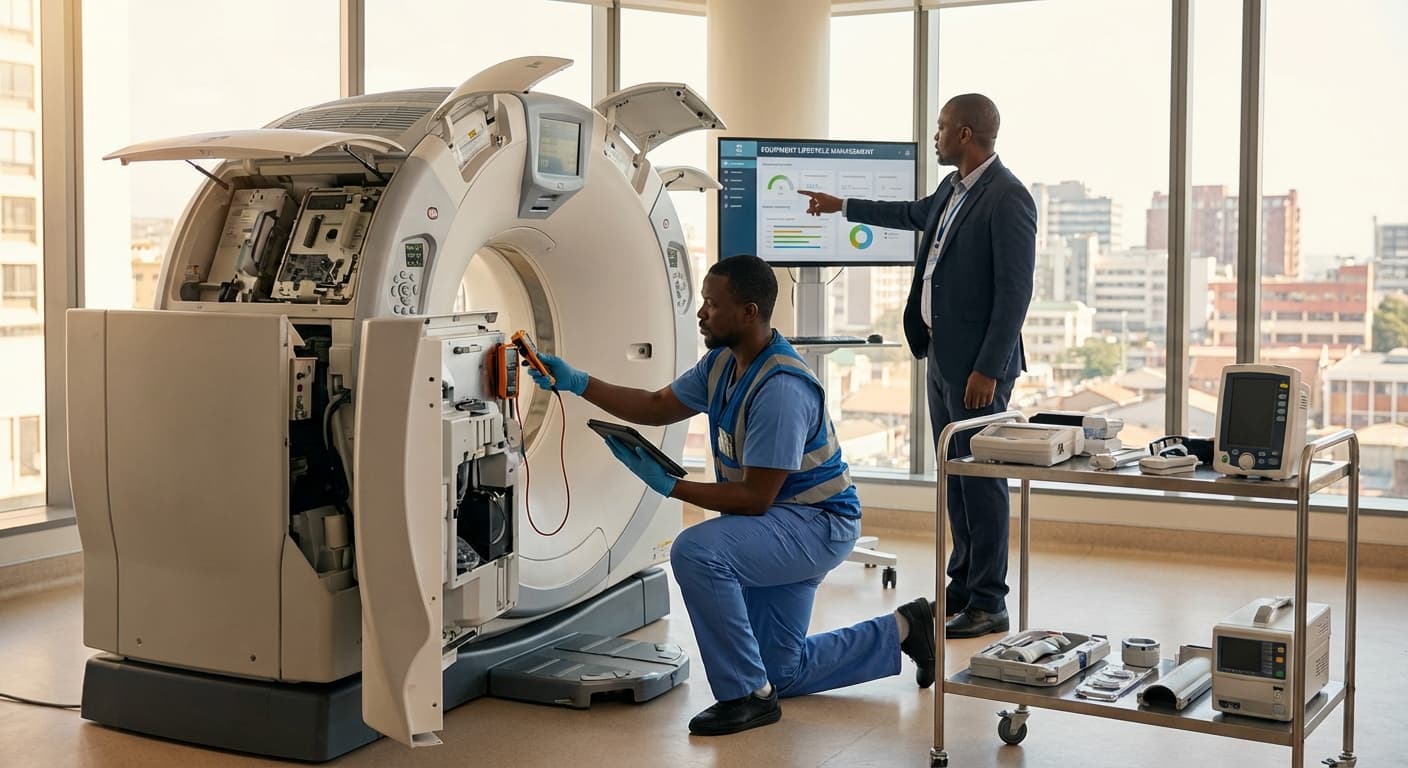
Equipment Replacement Planning & Obsolescence Strategy Service in South Sudan
Engineering Excellence & Technical Support
Equipment Replacement Planning & Obsolescence Strategy Service High-standard technical execution following OEM protocols and local regulatory frameworks.
Proactive Lifecycle Management
Our service leverages advanced analytics to track the lifecycle of critical equipment in South Sudan, predicting failure points and identifying obsolescence risks long before they impact operations. This ensures minimal downtime and optimized resource allocation for timely replacements.
Resilient Supply Chain Integration
We design and implement robust, context-aware supply chain strategies for equipment sourcing and replacement in South Sudan's unique operational environment. This includes identifying reliable local and international suppliers, managing lead times, and mitigating logistical challenges to ensure continuous operational readiness.
Strategic Obsolescence Mitigation
Our experts conduct thorough risk assessments to identify and prioritize equipment at risk of obsolescence. We develop tailored mitigation plans, including phased upgrades, alternative technology sourcing, and strategic inventory management, to safeguard against operational disruptions and maintain competitive advantage.
What Is Equipment Replacement Planning & Obsolescence Strategy Service In South Sudan?
Equipment Replacement Planning & Obsolescence Strategy Service in South Sudan refers to a comprehensive set of activities and processes designed to proactively manage the lifecycle of critical operational assets. It encompasses the strategic assessment of equipment to determine optimal replacement timelines, mitigate risks associated with technological obsolescence, and ensure continued operational efficiency and safety within the South Sudanese context. This service aims to move beyond reactive maintenance and breakdown replacement towards a data-driven, forward-looking approach to asset management. It involves understanding the unique environmental, economic, and logistical challenges prevalent in South Sudan, such as infrastructure limitations, supply chain complexities, and the availability of skilled technical personnel. The core objective is to minimize total cost of ownership (TCO) over the asset's lifecycle while maximizing its return on investment (ROI) and ensuring uninterrupted service delivery. This includes forecasting future needs, evaluating emerging technologies, and developing robust strategies for disposition and disposal of retired assets.
| Who Needs This Service? | Typical Use Cases & Sectors | |||||||
|---|---|---|---|---|---|---|---|---|
| Government Agencies & Public Sector Organizations: Responsible for essential services like water, sanitation, healthcare, and transportation infrastructure. | Critical Infrastructure Management: Planning for the replacement of aging water pumps, power generation equipment, road maintenance machinery, and communication systems. | Healthcare Facilities: Managing the lifecycle of medical diagnostic equipment (e.g., X-ray machines, CT scanners), laboratory equipment, and hospital support systems. | Telecommunications Providers: Strategizing for the upgrade and replacement of network infrastructure, base stations, and transmission equipment. | Energy & Utilities Companies: Planning for the replacement of power generators, transmission lines, substations, and oil/gas exploration and production equipment. | Non-Governmental Organizations (NGOs) & Humanitarian Aid Agencies: Managing fleets of vehicles, field equipment, communication devices, and camp infrastructure in remote or challenging environments. | Mining & Extractive Industries: Addressing the high capital costs and operational demands of heavy machinery, processing plants, and exploration equipment. | Construction & Engineering Firms: Ensuring the availability of reliable and efficient construction machinery and specialized engineering tools. | Logistics & Transportation Companies: Managing fleets of trucks, buses, and related maintenance and support equipment. |
Key Components of Equipment Replacement Planning & Obsolescence Strategy Service
- Asset Inventory & Condition Assessment: Cataloging all relevant equipment, assessing its current condition, performance metrics, and remaining useful life (RUL).
- Lifecycle Cost Analysis: Evaluating the total cost of ownership, including acquisition, operation, maintenance, repair, and disposal costs, for each asset.
- Obsolescence Risk Assessment: Identifying equipment that is at risk of becoming obsolete due to technological advancements, lack of spare parts, or diminishing vendor support.
- Predictive Maintenance & Performance Monitoring Integration: Incorporating data from condition monitoring systems to inform replacement decisions.
- Technology Scouting & Future Needs Forecasting: Researching emerging technologies and predicting future operational requirements to inform investment decisions.
- Development of Replacement Strategies: Defining criteria for replacement, establishing trigger points (e.g., age, performance degradation, obsolescence risk), and outlining acquisition plans.
- Financial Planning & Budgeting: Developing long-term capital expenditure plans for equipment replacement and upgrades.
- Supply Chain & Logistics Optimization: Planning for the procurement, delivery, and installation of new equipment, considering South Sudan's specific logistical challenges.
- Training & Skill Development: Identifying and planning for the necessary training of personnel to operate and maintain new technologies.
- End-of-Life Management & Disposal Strategy: Developing environmentally sound and compliant strategies for the decommissioning, resale, or recycling of retired equipment.
Who Needs Equipment Replacement Planning & Obsolescence Strategy Service In South Sudan?
In South Sudan, a robust Equipment Replacement Planning & Obsolescence Strategy Service is crucial for any organization heavily reliant on machinery, technology, or critical infrastructure. The dynamic operational environment, coupled with potential supply chain challenges and the need to optimize limited resources, makes proactive planning essential. This service helps organizations avoid costly downtime, maintain operational efficiency, ensure safety, and achieve long-term cost savings.
| Target Customer Sector | Key Departments Involved | Primary Needs/Benefits | Examples of Equipment |
|---|---|---|---|
| Government Agencies (e.g., Ministry of Infrastructure, Ministry of Health, Ministry of Energy) | Public Works, Asset Management, Procurement, Engineering, IT | Ensuring uninterrupted public service delivery, managing national assets efficiently, long-term budget planning, compliance with standards. | Road maintenance equipment, water pumps, power generators, hospital diagnostic machines, communication infrastructure, vehicles. |
| Energy & Extractive Industries (e.g., Oil & Gas companies, Mining corporations) | Operations, Maintenance, Engineering, Supply Chain, Finance, Safety | Minimizing operational downtime, maximizing asset lifespan, ensuring worker safety, reducing repair costs, planning for technological upgrades. | Drilling rigs, pumps, turbines, generators, heavy-duty vehicles, analytical instruments, processing machinery. |
| Telecommunications Providers | Network Operations, Engineering, IT, Procurement, Strategic Planning | Maintaining network reliability and performance, offering competitive services, avoiding obsolescence in rapidly evolving technology, managing capital expenditure. | Base stations, servers, routers, switches, fiber optic cables, transmission equipment. |
| Infrastructure & Construction Companies | Fleet Management, Operations, Project Management, Procurement, Maintenance | Optimizing fleet utilization, reducing maintenance costs, ensuring project deadlines, safety of operations, acquiring cost-effective replacements. | Excavators, bulldozers, cranes, concrete mixers, trucks, surveying equipment. |
| Healthcare Sector (Hospitals, Clinics, Diagnostic Centers) | Biomedical Engineering, Procurement, IT, Administration, Clinical Departments | Ensuring patient safety and quality of care, access to modern medical technology, reducing diagnostic errors, efficient use of healthcare budgets. | MRI machines, CT scanners, X-ray machines, laboratory equipment, patient monitoring systems, surgical instruments. |
| Transportation & Logistics | Fleet Management, Operations, Maintenance, Safety, Procurement | Ensuring reliable and safe transportation, optimizing fuel efficiency, complying with international standards, managing depreciation and replacement cycles. | Aircraft, trucks, buses, locomotives, cargo handling equipment, navigation systems. |
| Manufacturing & Industrial Operations | Production, Maintenance, Engineering, Procurement, Quality Control | Maintaining production output and quality, minimizing machinery breakdowns, integrating automation, reducing energy consumption, enhancing competitiveness. | Assembly lines, CNC machines, industrial robots, packaging machinery, material handling systems. |
| NGOs & Humanitarian Aid Organizations | Operations, Logistics, Procurement, IT, Program Management | Ensuring operational continuity in challenging environments, effective delivery of aid, reliable communication, efficient use of donor funds. | Vehicles (4x4s, trucks), generators, satellite phones, computers, water purification systems, medical supplies equipment. |
Target Customers & Departments in South Sudan Requiring Equipment Replacement Planning & Obsolescence Strategy Service
- {"title":"Government Agencies & Public Services","description":"Agencies managing vital national infrastructure and public services will benefit immensely from strategic planning to ensure continuity and avoid disruption."}
- {"title":"Energy & Extractive Industries","description":"Companies operating in oil, gas, mining, and power generation are highly dependent on specialized and often expensive equipment where obsolescence can lead to significant financial losses and safety hazards."}
- {"title":"Telecommunications Providers","description":"Given the rapid pace of technological advancement, telecom operators need to stay ahead of obsolescence to maintain network performance and customer satisfaction."}
- {"title":"Infrastructure & Construction Companies","description":"Organizations involved in building and maintaining roads, bridges, buildings, and other critical infrastructure rely on heavy machinery and specialized tools that require regular assessment and replacement planning."}
- {"title":"Healthcare Sector","description":"Hospitals and clinics depend on a wide range of medical equipment. Planning for replacement ensures access to modern, reliable technology for patient care and safety."}
- {"title":"Transportation & Logistics","description":"Airlines, shipping companies, and logistics providers need to manage fleets of vehicles and aircraft, where aging equipment can impact efficiency, safety, and regulatory compliance."}
- {"title":"Manufacturing & Industrial Operations","description":"Any manufacturing facility utilizing machinery will benefit from planning to prevent breakdowns, maintain production quality, and integrate newer, more efficient technologies."}
- {"title":"Non-Governmental Organizations (NGOs) & Humanitarian Aid Organizations","description":"Many NGOs operate in challenging environments and rely on vehicles, communication equipment, and other assets. Strategic planning ensures their operational capacity and ability to deliver aid effectively."}
Equipment Replacement Planning & Obsolescence Strategy Service Process In South Sudan
This document outlines the workflow for the Equipment Replacement Planning & Obsolescence Strategy Service Process in South Sudan, from initial inquiry to final execution. This process ensures that organizations in South Sudan can effectively manage their asset lifecycles, mitigate risks associated with outdated equipment, and make informed decisions about replacements, thereby optimizing operational efficiency and minimizing downtime.
| Phase | Stage/Activity | Description | Key Deliverables/Outcomes | Responsible Party (Client/Service Provider) |
|---|---|---|---|---|
| Phase 1: Inquiry & Initial Consultation | Inquiry Received | Client expresses interest in equipment replacement planning and obsolescence strategy services. | Initial understanding of client's needs and objectives. | Client |
| Phase 1: Inquiry & Initial Consultation | Initial Consultation & Scope Definition | Service Provider engages with the client to understand their current equipment inventory, operational context, budget considerations, and specific challenges related to obsolescence. | Defined service scope, preliminary understanding of client's asset base, and identified high-level objectives. | Service Provider, Client |
| Phase 2: Assessment & Strategy Development | Asset Inventory & Data Collection | Detailed inventory of all relevant equipment, including make, model, purchase date, current condition, maintenance history, and operational utilization. | Comprehensive asset register, data on equipment age and performance. | Client, Service Provider |
| Phase 2: Assessment & Strategy Development | Obsolescence Risk Assessment | Analysis of each piece of equipment for technological obsolescence, spare parts availability, maintenance support, and potential safety or compliance risks. | Prioritized list of equipment at risk of obsolescence, identified critical failure points. | Service Provider |
| Phase 2: Assessment & Strategy Development | Life Cycle Costing (LCC) Analysis | Evaluation of the total cost of ownership for existing equipment, including acquisition, operation, maintenance, and disposal, to inform replacement decisions. | LCC data for key equipment assets. | Service Provider |
| Phase 2: Assessment & Strategy Development | Development of Obsolescence Strategy | Formulation of a strategic approach to manage equipment obsolescence, including proactive replacement schedules, risk mitigation measures, and technology adoption plans. | Draft Obsolescence Management Strategy. | Service Provider |
| Phase 3: Planning & Recommendation | Replacement Need Identification | Identification of specific equipment requiring replacement based on age, performance, obsolescence risk, and operational impact. | List of recommended equipment for replacement. | Service Provider |
| Phase 3: Planning & Recommendation | Option Analysis & Technology Evaluation | Research and evaluation of potential replacement options, including new technologies, alternative suppliers, and refurbished equipment, considering cost-effectiveness and future compatibility. | Comparison of replacement options, technology roadmap recommendations. | Service Provider |
| Phase 3: Planning & Recommendation | Development of Replacement Plan | Creation of a detailed plan for equipment replacement, including timelines, budget proposals, procurement strategies, and training requirements. | Formal Equipment Replacement Plan, including budget and schedule. | Service Provider |
| Phase 3: Planning & Recommendation | Presentation & Approval | Presentation of the findings, obsolescence strategy, and replacement plan to the client for review and approval. | Client approval of the Equipment Replacement Plan and associated budget. | Service Provider, Client |
| Phase 4: Execution & Implementation | Procurement Process | Assistance with or management of the procurement process for new equipment, including tender preparation, vendor selection, and contract negotiation. | Acquisition of new equipment. | Service Provider, Client |
| Phase 4: Execution & Implementation | Installation & Commissioning | Overseeing the installation and commissioning of new equipment to ensure it meets operational requirements and is fully functional. | Installed and commissioned equipment, operational readiness. | Service Provider, Client |
| Phase 4: Execution & Implementation | Disposal of Old Equipment | Planning and execution of the safe and environmentally responsible disposal or recycling of obsolete equipment. | Documented disposal of old equipment. | Service Provider, Client |
| Phase 4: Execution & Implementation | Training & Handover | Providing training to client personnel on the operation and maintenance of new equipment and a formal handover of assets. | Trained personnel, completed asset handover. | Service Provider, Client |
| Phase 5: Monitoring & Review | Performance Monitoring | Ongoing monitoring of the performance of new equipment and the effectiveness of the obsolescence strategy. | Performance reports of new equipment. | Service Provider, Client |
| Phase 5: Monitoring & Review | Periodic Review & Strategy Update | Regular review of the equipment lifecycle and obsolescence strategy to adapt to technological changes, business needs, and market conditions. | Updated obsolescence strategy and replacement plans, continuous improvement. | Service Provider, Client |
Equipment Replacement Planning & Obsolescence Strategy Service Process Workflow in South Sudan
- Phase 1: Inquiry & Initial Consultation
- Phase 2: Assessment & Strategy Development
- Phase 3: Planning & Recommendation
- Phase 4: Execution & Implementation
- Phase 5: Monitoring & Review
Equipment Replacement Planning & Obsolescence Strategy Service Cost In South Sudan
Planning for equipment replacement and developing obsolescence strategies are crucial for businesses in South Sudan to ensure operational continuity, avoid costly breakdowns, and optimize capital expenditure. The cost of such services in South Sudan is influenced by several factors, making it difficult to provide precise fixed pricing. However, we can outline the key determinants and provide estimated cost ranges in South Sudanese Pounds (SSP).
Key Pricing Factors for Equipment Replacement Planning & Obsolescence Strategy Services in South Sudan:
- Scope and Complexity of Equipment: The number of equipment types, their criticality, the complexity of their maintenance history, and the lifespan of the assets are major drivers. A diverse and large asset base will naturally incur higher planning costs.
- Data Availability and Quality: The ease of accessing and analyzing historical maintenance records, operational data, and supplier information significantly impacts the time and resources required. Poor or incomplete data will necessitate more investigative work.
- Level of Detail Required: Whether the service involves a high-level strategic overview or a detailed, item-by-item replacement schedule with specific budget allocations will affect the cost. Granularity increases the effort.
- Consultant Expertise and Experience: The reputation, qualifications, and experience of the consulting firm or individual providing the service are paramount. Specialists with a proven track record in asset management, particularly in challenging operating environments like South Sudan, will command higher fees.
- On-site vs. Remote Services: While remote consulting is possible, on-site assessments in South Sudan often involve logistical challenges, security considerations, and travel expenses, which will be factored into the overall cost. The need for local presence and understanding of the specific operating context is invaluable.
- Reporting and Deliverables: The format, depth, and number of reports, presentations, and actionable plans required will influence the service cost. Customization of deliverables also adds to the price.
- Duration of the Project: The estimated time required to complete the assessment, analysis, and strategy development will directly translate into costs based on daily or hourly rates.
- Market Demand and Competition: The availability of specialized consultants in South Sudan and the general demand for such services can influence pricing. Limited availability of highly skilled professionals may lead to higher costs.
- Geographic Location within South Sudan: While less of a direct factor for the planning service itself, if on-site visits are required, travel to remote or difficult-to-access regions will incur additional logistical costs (transport, accommodation, security).
Estimated Cost Ranges in South Sudanese Pounds (SSP):
Given the economic volatility and specific market dynamics in South Sudan, these ranges are indicative and subject to significant fluctuation. It's crucial to obtain specific quotes from providers.
1. Basic Equipment Inventory & Age Analysis (High-Level Strategy):
* **Description:** Focuses on cataloging existing equipment, identifying its age, and providing a general overview of potential obsolescence risks and future replacement needs.
* **Estimated Range:** 5,000,000 - 15,000,000 SSP
2. Comprehensive Equipment Replacement Planning (Mid-Level Strategy):
* **Description:** Includes detailed data collection, analysis of maintenance history, performance metrics, and supplier lead times. Develops a phased replacement plan with budget estimates and risk assessments.
* **Estimated Range:** 15,000,000 - 40,000,000 SSP
3. Advanced Obsolescence Strategy & Lifecycle Management (In-depth Strategy):
* **Description:** Encompasses a holistic approach, including total cost of ownership (TCO) analysis, risk mitigation strategies for critical equipment, technology forecasting, and development of long-term asset management policies. May involve sophisticated software tools and extensive on-site work.
* **Estimated Range:** 40,000,000 - 100,000,000+ SSP
Important Considerations for South Sudan:
- Currency Volatility: The SSP can be highly volatile. Prices quoted might be subject to exchange rate fluctuations if the provider incurs costs in foreign currency.
- Logistical Challenges: Obtaining accurate data might require significant effort due to infrastructure limitations and potential security concerns. This needs to be factored into the service provider's time.
- Local Context: Consultants with a deep understanding of the South Sudanese business environment, regulatory landscape, and local supplier capabilities will be more effective and may command a premium.
- Negotiation: It is always advisable to negotiate terms and pricing, especially for larger projects, and to seek multiple quotes from different service providers.
| Service Level | Description | Estimated Cost Range (SSP) |
|---|---|---|
| Basic Equipment Inventory & Age Analysis | Cataloging existing equipment, identifying age, and providing a general overview of obsolescence risks and future replacement needs. | 5,000,000 - 15,000,000 |
| Comprehensive Equipment Replacement Planning | Detailed data collection, analysis of maintenance history, performance metrics, and supplier lead times. Develops a phased replacement plan with budget estimates and risk assessments. | 15,000,000 - 40,000,000 |
| Advanced Obsolescence Strategy & Lifecycle Management | Holistic approach including TCO analysis, risk mitigation, technology forecasting, and long-term asset management policies. | 40,000,000 - 100,000,000+ |
Key Pricing Factors for Equipment Replacement Planning & Obsolescence Strategy Services
- Scope and Complexity of Equipment
- Data Availability and Quality
- Level of Detail Required
- Consultant Expertise and Experience
- On-site vs. Remote Services
- Reporting and Deliverables
- Duration of the Project
- Market Demand and Competition
- Geographic Location within South Sudan
Affordable Equipment Replacement Planning & Obsolescence Strategy Service Options
Our Affordable Equipment Replacement Planning & Obsolescence Strategy Service is designed to help businesses proactively manage their asset lifecycle, minimize downtime, and avoid costly emergency replacements. We offer flexible service options that can be tailored to your specific needs and budget, ensuring you gain maximum value from your investment in our expertise. By understanding your current equipment portfolio, operational demands, and financial constraints, we develop a strategic roadmap for replacements and upgrades that aligns with your business objectives and mitigates the risks associated with aging or obsolete technology.
| Cost-Saving Strategy | Description | Impact on Budget | Service Bundle Alignment |
|---|---|---|---|
| Proactive Replacement Scheduling | Avoiding emergency purchases and associated rush fees, potential for better pricing through planned procurement. | Reduced capital expenditure through bulk discounts and negotiation. Minimized operational disruption costs. | All Bundles |
| Obsolescence Risk Mitigation | Identifying and addressing aging equipment before it fails, preventing costly downtime and production loss. | Avoidance of unplanned capital outlays and lost revenue. | Essential Planning, Strategic Optimization, Comprehensive Lifecycle Management |
| Total Cost of Ownership (TCO) Analysis | Understanding the full cost of equipment over its lifecycle, not just the initial purchase price, enabling informed decisions. | Optimized investment in equipment with the lowest long-term cost. | Strategic Optimization, Comprehensive Lifecycle Management |
| Standardization and Consolidation | Reducing the variety of equipment, leading to simpler maintenance, better spare parts management, and potential for volume discounts. | Lower inventory costs, reduced training expenses, and improved purchasing power. | Strategic Optimization, Comprehensive Lifecycle Management |
| Lease vs. Buy Analysis | Evaluating the financial benefits of leasing versus purchasing equipment based on usage patterns and financial goals. | Optimal financing structure to preserve cash flow and minimize overall expense. | Comprehensive Lifecycle Management |
| Vendor Negotiation Strategies | Leveraging planned purchases and a clear understanding of needs to secure better terms and pricing from suppliers. | Direct cost savings on equipment acquisition. | Strategic Optimization, Comprehensive Lifecycle Management |
| Extended Equipment Lifespan | Implementing robust preventative maintenance plans to maximize the operational life of existing assets. | Delayed capital expenditure, further stretching budgets. | Essential Planning, Strategic Optimization, Comprehensive Lifecycle Management |
Key Value Bundles
- {"title":"Essential Planning Bundle","features":["Initial equipment inventory & assessment","Basic lifecycle cost analysis","Identification of immediate obsolescence risks","Development of a 1-3 year replacement schedule","Recommendations for preventative maintenance improvements"],"description":"Ideal for businesses starting their asset management journey. This bundle provides a foundational understanding of your equipment's condition and predicts future replacement needs."}
- {"title":"Strategic Optimization Bundle","features":["All features of the Essential Planning Bundle","Detailed total cost of ownership (TCO) modeling","Obsolescence risk forecasting (3-5 years)","Development of a 3-5 year strategic replacement plan","Identification of potential for standardization and bulk purchasing","Guidance on technology roadmapping and upgrade paths","Scenario planning for budget fluctuations"],"description":"For businesses seeking a more comprehensive and proactive approach. This bundle deepens the analysis and incorporates advanced strategies for cost optimization and risk mitigation."}
- {"title":"Comprehensive Lifecycle Management Bundle","features":["All features of the Strategic Optimization Bundle","Long-term (5+ years) equipment replacement strategy","Integration with financial planning and budgeting cycles","Analysis of lease vs. buy options","Recommendations for vendor negotiation strategies","Ongoing monitoring and re-evaluation services","Development of a capital expenditure forecasting model"],"description":"Our most advanced offering, providing end-to-end lifecycle management and long-term strategic alignment."}
Verified Providers In South Sudan
In the challenging healthcare landscape of South Sudan, identifying and trusting verified healthcare providers is paramount. Franance Health stands out as a beacon of reliability and quality, offering a comprehensive suite of services underpinned by rigorous credentialing and a deep commitment to patient well-being. This document outlines Franance Health's credentials and illuminates why they represent the best choice for healthcare needs in South Sudan.
| Aspect | Franance Health's Assurance | Why it Matters in South Sudan |
|---|---|---|
| Regulatory Compliance | Fully licensed and accredited by the South Sudanese Ministry of Health. | Ensures adherence to national health standards and legal frameworks, providing a crucial layer of protection for patients. |
| Medical Expertise | Employs certified and experienced healthcare professionals with diverse specializations. | Guarantees access to competent care, reducing the risk of misdiagnosis or ineffective treatment in a resource-constrained environment. |
| Quality Assurance | Adheres to internationally recognized protocols for patient care, safety, and hygiene. | Minimizes the risk of complications and infections, crucial for improving health outcomes where healthcare resources can be stretched. |
| Technological Investment | Utilizes up-to-date medical equipment and diagnostic tools. | Facilitates accurate diagnosis and effective treatment, offering advanced care options that might otherwise be unavailable. |
| Ethical Practice | Committed to transparency, patient rights, and ethical medical conduct. | Builds trust and confidence, ensuring patients receive care with respect and integrity, fostering a positive patient-provider relationship. |
| Accessibility | Works towards making quality healthcare accessible to a wider population. | Addresses the critical need for reliable healthcare access across South Sudan, particularly in underserved areas. |
Franance Health Credentials and Strengths
- Accreditation and Licensing: Franance Health operates under full compliance with South Sudanese Ministry of Health regulations, holding all necessary licenses and accreditations for its facilities and medical professionals.
- Qualified Medical Staff: The organization employs a team of highly skilled and experienced doctors, nurses, specialists, and support staff. All medical personnel undergo thorough background checks and possess recognized medical degrees and certifications from reputable institutions.
- International Standards: Franance Health adheres to international best practices in healthcare delivery, infection control, and patient safety, ensuring a high standard of care comparable to global benchmarks.
- Continuous Professional Development: A strong emphasis is placed on ongoing training and professional development for all staff. This ensures that medical professionals remain at the forefront of medical advancements and techniques.
- Robust Infrastructure: Franance Health facilities are equipped with modern medical equipment and technology, enabling accurate diagnosis and effective treatment. Investments in infrastructure ensure a safe and efficient healthcare environment.
- Patient-Centric Approach: The organization prioritizes patient comfort, dignity, and involvement in their care. This is reflected in their clear communication, empathetic approach, and commitment to personalized treatment plans.
- Community Engagement and Trust: Franance Health has actively engaged with local communities, building trust through consistent, reliable, and compassionate healthcare services. Their understanding of local health challenges is a significant asset.
Scope Of Work For Equipment Replacement Planning & Obsolescence Strategy Service
This Scope of Work (SOW) outlines the services to be provided for Equipment Replacement Planning and Obsolescence Strategy. The objective is to develop a comprehensive and actionable strategy for managing equipment lifecycle, anticipating obsolescence, and optimizing replacement decisions to ensure operational continuity, cost-effectiveness, and technological advancement. This service will involve analysis, strategic planning, and the development of specific deliverables to support informed decision-making.
| Deliverable Name | Description | Format | Key Content/Components | Standard Specifications/Acceptance Criteria |
|---|---|---|---|---|
| Current Equipment Inventory and Condition Assessment Report | Detailed catalog of existing equipment, including age, condition, maintenance history, and criticality. | Digital Document (PDF, Word) | Equipment ID, Manufacturer, Model, Serial Number, Installation Date, Last Maintenance Date, Current Condition Rating (e.g., Excellent, Good, Fair, Poor), Criticality Rating (e.g., High, Medium, Low), Vendor Support Status, Warranty Expiration Date. | Inventory accuracy > 95%. Condition ratings consistently applied based on defined criteria. Criticality assessment aligned with business impact. |
| Obsolescence Risk Assessment Report | Identification and quantification of obsolescence risks for key equipment categories. | Digital Document (PDF, Word) | Equipment Category, Identified Obsolescence Factors (e.g., end-of-life support, component availability, performance limitations, security vulnerabilities), Risk Score (e.g., High, Medium, Low), Justification for Risk Score, Potential Impact. | Obsolescence factors clearly defined and consistently applied. Risk scores are justifiable and quantifiable where possible. Report highlights top 10-20% of equipment at highest risk. |
| Equipment Replacement Prioritization Framework | A structured methodology for prioritizing equipment replacements based on defined criteria. | Digital Document (PDF, Excel) | Prioritization Criteria (e.g., Obsolescence Risk, Business Criticality, Cost of Maintenance, Performance Requirements, Regulatory Compliance, Strategic Alignment), Scoring Mechanism, Ranking Algorithm, Example Prioritization Matrix. | Framework is transparent, reproducible, and defensible. Criteria are weighted appropriately. Output clearly ranks equipment for replacement consideration. |
| Long-Term Equipment Replacement Roadmap (3-5 Years) | A strategic plan outlining phased equipment replacements over a specified period. | Digital Document (PDF, PowerPoint, Excel) | Phased Replacement Schedule (Year 1, Year 2, Year 3+), Budget Estimates per Phase, Key Dependencies, Technology Upgrade Paths, Risk Mitigation Strategies for each phase. | Roadmap aligns with business objectives. Budget estimates are realistic and supported by preliminary research. Schedule is achievable and considers operational impact. |
| Obsolescence Management Policy and Procedures | Formal documentation defining the organization's approach to managing equipment obsolescence. | Digital Document (PDF, Word) | Policy Statement, Roles and Responsibilities, Obsolescence Identification Process, Risk Assessment Methodology, Mitigation Strategies, Replacement Decision Criteria, Documentation Requirements, Review and Update Cycle. | Policy is comprehensive, clear, and actionable. Procedures are well-defined and practical to implement. Aligns with industry best practices. |
| Recommended Technology Standards and Future State Architecture | Guidelines for selecting new equipment and defining an optimal future technology landscape. | Digital Document (PDF, PowerPoint) | Preferred Vendors/Manufacturers, Standardization Guidelines (e.g., for hardware, software, networking), Interoperability Requirements, Scalability Considerations, Security Standards, Proposed Future State Architecture Diagram. | Recommendations are technology-agnostic where possible but provide clear guidance. Standards promote efficiency and reduce complexity. Future state architecture addresses business needs and technological trends. |
| Cost-Benefit Analysis for Key Replacement Scenarios | Detailed financial evaluation of proposed equipment replacements, including ROI and TCO. | Digital Document (Excel, PDF) | Scenario Description, Capital Expenditure (CAPEX), Operational Expenditure (OPEX), Total Cost of Ownership (TCO), Return on Investment (ROI), Payback Period, Sensitivity Analysis, Qualitative Benefits. | Financial models are robust and transparent. Assumptions are clearly stated. Analysis considers both tangible and intangible benefits. Results are presented in an easily understandable format. |
| Implementation Plan for Obsolescence Mitigation and Replacement | A detailed plan for executing the recommended replacement and obsolescence management strategies. | Digital Document (PDF, Project Management Software Export) | Action Items, Timelines and Milestones, Resource Allocation (Personnel, Budget), Stakeholder Communication Plan, Training Requirements, Risk Management Plan for Implementation, Performance Measurement Metrics. | Plan is detailed, realistic, and assigns clear ownership. Timelines are achievable. Communication plan ensures stakeholder alignment. Metrics allow for tracking progress and success. |
Key Technical Deliverables
- Current Equipment Inventory and Condition Assessment Report
- Obsolescence Risk Assessment Report
- Equipment Replacement Prioritization Framework
- Long-Term Equipment Replacement Roadmap (3-5 Years)
- Obsolescence Management Policy and Procedures
- Recommended Technology Standards and Future State Architecture
- Cost-Benefit Analysis for Key Replacement Scenarios
- Implementation Plan for Obsolescence Mitigation and Replacement
Service Level Agreement For Equipment Replacement Planning & Obsolescence Strategy Service
This Service Level Agreement (SLA) outlines the guaranteed response times and uptime for the Equipment Replacement Planning & Obsolescence Strategy Service (the "Service"). This SLA applies to all clients who have subscribed to the Service and is an integral part of the Master Service Agreement (MSA) between the Client and the Service Provider.
| Service Component/Issue Type | Severity Level | Response Time Guarantee | Resolution Time Guarantee | Uptime Guarantee |
|---|---|---|---|---|
| Core Service Functionality (e.g., Access to planning tools, report generation, data updates) | Critical (Service completely unavailable or severely degraded impacting core planning activities) | 1 Hour | 4 Business Hours | 99.5% |
| Core Service Functionality | High (Significant degradation of service impacting specific planning features) | 2 Business Hours | 8 Business Hours | 99.5% |
| Core Service Functionality | Medium (Minor functional issues, workarounds available) | 4 Business Hours | 2 Business Days | 99.5% |
| Reporting & Data Analysis Tools (e.g., specific report generation, minor data discrepancies) | Medium | 4 Business Hours | 2 Business Days | 99.5% |
| Consultation Request (e.g., scheduling expert advice, follow-up questions) | N/A (Managed through separate scheduling process) | 1 Business Day (for initial scheduling confirmation) | N/A (Consultation duration managed per engagement) | N/A |
| General Inquiries & Non-Critical Issues | Low (General questions, minor cosmetic issues) | 8 Business Hours | 3 Business Days | 99.5% |
Definitions
- Service: Refers to the Equipment Replacement Planning & Obsolescence Strategy Service, including all associated tools, reports, expert consultation, and data analysis provided by the Service Provider.
- Downtime: A period during which the Service is unavailable to the Client due to unplanned maintenance, technical issues, or service interruptions initiated by the Service Provider. Scheduled maintenance is excluded from Downtime.
- Response Time: The maximum time allowed for the Service Provider to acknowledge and begin addressing a reported issue. This is measured from the time the Client submits a support ticket or initiates contact through approved channels.
- Resolution Time: The maximum time allowed for the Service Provider to resolve a reported issue to the extent that the Service is restored to its intended functionality. Resolution may involve a workaround or a permanent fix.
- Scheduled Maintenance: Planned periods during which the Service may be temporarily unavailable for updates, upgrades, or essential maintenance. Clients will be notified in advance of all Scheduled Maintenance.
- Support Channels: Approved methods for contacting the Service Provider for support, typically including a dedicated support portal, email address, and/or phone number.
Frequently Asked Questions

Ready when you are
Let's scope your Equipment Replacement Planning & Obsolescence Strategy Service in South Sudan project in South Sudan.

Scaling healthcare logistics and technical systems across the entire continent.