
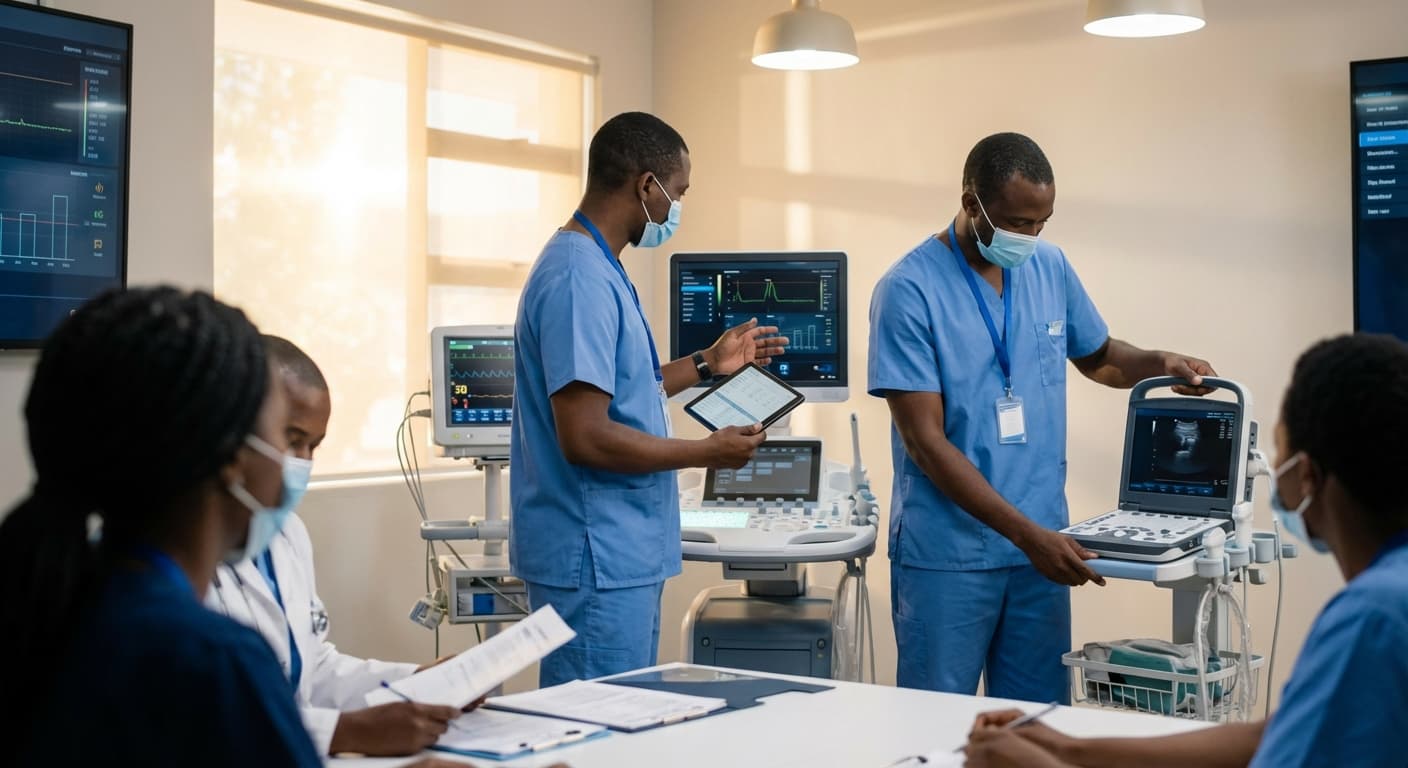
Clinical Needs Assessment for Medical Equipment in South Sudan
Engineering Excellence & Technical Support
Clinical Needs Assessment for Medical Equipment High-standard technical execution following OEM protocols and local regulatory frameworks.
Demand-Driven Procurement Strategy
Leverages data-driven needs assessments to prioritize equipment procurement, aligning with actual clinical demands and disease burden in specific regions, thereby optimizing resource allocation and ensuring critical supplies reach the most vulnerable populations.
Integrated Lifecycle Management Framework
Implements a comprehensive framework that includes not only initial needs assessment but also robust plans for installation, training, preventive maintenance, and eventual decommissioning, ensuring long-term functionality and sustainability of medical equipment.
Stakeholder-Centric Needs Identification
Employs a collaborative approach, actively engaging healthcare providers, local administrators, and community representatives in the needs assessment process to capture nuanced clinical requirements and ensure the selected equipment is appropriate for the local context and user capabilities.
What Is Clinical Needs Assessment For Medical Equipment In South Sudan?
A Clinical Needs Assessment for Medical Equipment in South Sudan is a systematic and evidence-based process designed to identify, quantify, and prioritize the medical equipment requirements of healthcare facilities and public health programs within the country. This service is critical for ensuring the availability of appropriate, functional, and sustainable medical technology to address the prevailing health challenges, with a particular focus on improving patient care outcomes and strengthening the healthcare infrastructure in a context often characterized by resource scarcity, logistical complexities, and a high burden of disease. The assessment considers not only the technical specifications of equipment but also its operational feasibility, maintenance capacity, user training needs, and cost-effectiveness within the local environment.
| Who Needs It | Typical Use Cases |
|---|---|
| Ministry of Health (South Sudan): To inform national health sector strategies, procurement plans, and resource allocation for public healthcare facilities. | Developing national essential medical equipment lists (e.g., for primary healthcare units, hospitals). Developing national procurement strategies and tendering processes. Allocating national health budget to medical equipment procurement and maintenance. Planning for the rollout of new health programs (e.g., maternal and child health, infectious disease control). |
| International Non-Governmental Organizations (INGOs) and Humanitarian Agencies: To guide their medical equipment support to healthcare facilities and to ensure alignment with national priorities and humanitarian response plans. | Assessing equipment needs for specific health interventions (e.g., emergency surgical units, mobile clinics, malnutrition treatment centers). Planning for the establishment or refurbishment of health facilities in displacement camps or conflict-affected areas. Developing project proposals for donor funding for medical equipment. |
| United Nations Agencies (e.g., WHO, UNICEF, UNFPA): To support evidence-based planning for health system strengthening and to coordinate international assistance in the health sector. | Providing technical assistance to the Ministry of Health in developing national health sector plans. Coordinating global health initiatives and ensuring equitable access to essential medical technologies. Supporting large-scale procurement and distribution of medical equipment during health emergencies. |
| National and International Donors and Funding Bodies: To ensure that their investments in the South Sudanese health sector are targeted, effective, and sustainable. | Evaluating the feasibility and impact of proposed medical equipment projects. Making informed decisions on funding allocations for health infrastructure and equipment. Monitoring the effective utilization and maintenance of donated equipment. |
| Healthcare Facility Management and Clinical Staff: To advocate for specific equipment needs and to ensure that procured equipment meets operational requirements. | Identifying immediate equipment shortages that impact patient care delivery. Providing input on the technical specifications of desired equipment. Participating in post-installation verification and user acceptance. |
Key Components of a Clinical Needs Assessment for Medical Equipment:
- Facility Assessment: Evaluation of existing infrastructure, patient flow, service delivery models, and current equipment stock (including functional status, age, and maintenance history).
- Service Gap Analysis: Identification of services that are limited or unavailable due to the absence or inadequacy of medical equipment.
- Disease Burden and Epidemiological Data Review: Analysis of prevalent diseases, mortality and morbidity rates, and projected health trends to inform equipment prioritization.
- Clinical Practice Guidelines and Protocols Review: Alignment of equipment needs with national and international clinical standards and treatment protocols.
- User Consultation and Capacity Assessment: Engagement with healthcare professionals (doctors, nurses, technicians) to understand their equipment needs, operational challenges, and existing technical skills for equipment operation and maintenance.
- Logistical and Supply Chain Analysis: Evaluation of the capacity for procurement, transportation, installation, and distribution of medical equipment, including spare parts and consumables.
- Maintenance and Repair Infrastructure Assessment: Determination of the availability and capability of local maintenance and repair services, including the need for training and specialized tools.
- Budgetary and Financial Planning: Estimation of capital costs, operational expenses (consumables, energy), and maintenance costs to inform procurement strategies and funding requests.
- Risk Assessment: Identification of potential challenges related to equipment procurement, installation, operation, maintenance, and sustainability (e.g., security, environmental factors, corruption).
- Prioritization and Recommendation Development: Ranking of equipment needs based on impact on patient care, cost-effectiveness, and feasibility, leading to actionable recommendations for procurement, training, and infrastructure development.
Who Needs Clinical Needs Assessment For Medical Equipment In South Sudan?
Clinical needs assessment for medical equipment in South Sudan is a critical process to ensure that healthcare facilities are equipped with the right tools to provide effective and essential medical services. This assessment is vital for a nation facing significant healthcare challenges, including limited resources, geographical dispersion, and a high burden of disease. By systematically evaluating the current and future needs, stakeholders can make informed decisions about procurement, resource allocation, and training, ultimately improving patient outcomes and strengthening the healthcare system.
| Department/Facility Type | Key Needs Assessment Focus Areas | Specific Medical Equipment Examples |
|---|---|---|
| Primary Health Care Centers (PHCs) | Basic diagnostics, essential medicines delivery, maternal & child health, common ailments treatment | Stethoscopes, thermometers, blood pressure monitors, basic laboratory kits (e.g., malaria testing), infant weighing scales, delivery kits, basic wound care supplies, essential drugs refrigeration |
| County Hospitals | Expanded diagnostics, surgical capacity (basic), emergency care, inpatient management, specialized outpatient services | X-ray machines, ultrasound machines, basic surgical sets, anesthesia machines, ventilators (basic), laboratory equipment (hematology, biochemistry), ECG machines, oxygen concentrators |
| Referral/Tertiary Hospitals | Advanced diagnostics, complex surgeries, specialized care (e.g., cardiology, neurology, intensive care), advanced laboratory services | CT scanners, MRI machines, advanced surgical microscopes, hemodialysis units, cardiac catheterization labs, advanced ventilators, sophisticated laboratory analyzers, endoscopy equipment |
| Maternal and Child Health Units | Antenatal care, labor and delivery, postnatal care, neonatal care, pediatric services | Incubators, phototherapy units, fetal dopplers, ultrasound for obstetrics, pediatric ventilators, specialized infant monitoring equipment |
| Emergency Departments | Trauma care, immediate resuscitation, critical care stabilization | Defibrillators, cardiac monitors, trauma resuscitation kits, portable ultrasound, portable X-ray, airway management devices |
| Surgical Departments | General surgery, specialized surgical procedures | Surgical lights, operating tables, electrosurgical units, laparoscopic equipment, orthopedic surgical sets, specialized instruments |
| Laboratory Services | Diagnostic testing (infectious diseases, non-communicable diseases, blood banking) | Microscopes, centrifuges, PCR machines, ELISA readers, automated analyzers, blood refrigerators, autoclaves |
| Radiology Departments | Diagnostic imaging | X-ray machines (fixed and mobile), ultrasound machines, contrast media injectors, imaging workstations, PACS systems (where applicable) |
| Pharmacy Units | Secure storage and dispensing of medications, cold chain management | Refrigerators (medical grade), freezers, temperature monitoring devices, dispensing cabinets |
| Rehabilitation Centers | Physical therapy, occupational therapy | Therapy mats, exercise equipment, gait trainers, assistive devices, electrotherapy units |
Target Customers and Departments Requiring Clinical Needs Assessment
- Ministry of Health (MoH)
- National Medical Stores (NMS)
- County Health Departments
- Public Hospitals (Tertiary, Secondary, Primary)
- Non-Governmental Organizations (NGOs) involved in healthcare delivery
- United Nations Agencies (e.g., WHO, UNICEF)
- International Donor Agencies
- Healthcare Training Institutions
- Research Institutions
Clinical Needs Assessment For Medical Equipment Process In South Sudan
This document outlines the workflow for conducting a Clinical Needs Assessment (CNA) for medical equipment in South Sudan. The process is designed to be systematic, ensuring that the identified equipment aligns with the country's healthcare priorities, existing infrastructure, and the specific needs of healthcare facilities. The workflow begins with an initial inquiry or identification of a need and progresses through various stages of planning, data collection, analysis, validation, and finally, the execution of the assessment report.
| Stage | Description | Key Activities | Responsible Parties | Deliverables/Outcomes |
|---|---|---|---|---|
| The initiation point of the CNA process, triggered by a recognized gap in medical equipment provision or a specific project requirement. | Receive and acknowledge inquiry, conduct initial stakeholder consultation, define broad area of need (e.g., primary healthcare, surgical services). | Ministry of Health (MoH), International NGOs, UN Agencies, Healthcare Facility Management, Funding Partners. | Formal request for a CNA, preliminary understanding of the scope and urgency. |
| Defining the precise boundaries, objectives, and methodology of the CNA. | Define geographic focus, target healthcare facility levels, specific medical specialties/service areas, establish project team, develop work plan and timeline, secure budget. | Project Lead/Coordinator, MoH Representatives, Technical Experts. | Detailed CNA Terms of Reference (ToR), Work Plan, Budget, Project Team Structure. |
| Creating the instruments and questionnaires to be used for data collection. | Develop standardized assessment questionnaires (facility-based, community-based if applicable), interview guides for key informants, equipment inventory templates, data entry forms. | Technical Experts, Data Management Specialists, MoH Representatives. | Validated assessment questionnaires, interview guides, data collection forms. |
| Gathering information on existing equipment, unmet needs, infrastructure, and user capacity from healthcare facilities and relevant stakeholders. | Conduct site visits to healthcare facilities, conduct interviews with healthcare professionals, administrators, and community representatives, review existing records and reports, perform equipment condition assessments (if applicable). | Assessment Team (field enumerators, technical experts). | Completed questionnaires, interview notes, photographic evidence, facility assessment reports. |
| Processing and interpreting the collected data to identify critical equipment needs. | Data entry and cleaning, quantitative analysis (e.g., calculating equipment ratios, identifying critical shortages), qualitative analysis (e.g., thematic analysis of user feedback), cross-referencing needs with national health priorities. | Data Analysts, Technical Experts, Project Coordinator. | Identified critical equipment gaps, prioritized equipment list, analysis of contributing factors to unmet needs. |
| Documenting the findings, analysis, and recommendations of the CNA. | Drafting the CNA report including an executive summary, introduction, methodology, findings (current status, needs assessment), recommendations (equipment specifications, quantity, training, maintenance), budget estimates, and annexes. | Lead Assessor, Technical Experts, Report Writer. | Draft CNA Report. |
| Presenting the draft findings and recommendations to key stakeholders for feedback and confirmation. | Organize validation workshops/meetings, present draft report, gather feedback, incorporate revisions based on stakeholder input. | Project Team, MoH Representatives, Key Stakeholders (NGOs, UN Agencies, Donors). | Revised CNA Report, stakeholder consensus on findings and recommendations. |
| Producing the final CNA report and sharing it with relevant parties for action. | Finalizing the report, obtaining formal approval, disseminating the report to all relevant stakeholders for planning, procurement, and implementation purposes. | Project Lead/Coordinator, MoH. | Final Approved CNA Report, action plan for equipment procurement and implementation. |
Workflow Stages
- Inquiry/Need Identification
- Scoping and Planning
- Tool Development
- Data Collection
- Data Analysis
- Report Writing
- Validation and Review
- Finalization and Dissemination
Clinical Needs Assessment For Medical Equipment Cost In South Sudan
This document outlines a clinical needs assessment for medical equipment costs in South Sudan, focusing on prevailing pricing factors and their impact on acquisition within the local currency (South Sudanese Pound - SSP). The assessment acknowledges the volatile economic landscape and the challenges in obtaining precise, up-to-date pricing. However, it aims to provide a realistic overview of cost ranges and the key determinants influencing them.
Pricing Factors in South Sudan:
Several critical factors contribute to the pricing of medical equipment in South Sudan. These include:
- Import Duties and Taxes: South Sudan levies import duties and various taxes on medical supplies and equipment, significantly inflating their landed cost.
- Transportation and Logistics: The poor state of infrastructure, particularly roads, makes transportation of goods exceptionally challenging and expensive. This includes costs for fuel, vehicle maintenance, security escorts (often necessary), and potential delays.
- Currency Fluctuation and Exchange Rates: The South Sudanese Pound (SSP) is highly volatile against major international currencies (USD, Euro). Fluctuations directly impact the cost of imported goods, as most medical equipment is sourced internationally. The exchange rate at the time of purchase is a major determinant of final SSP cost.
- Supplier Markups and Profit Margins: Local suppliers, importers, and distributors add their markups to cover operational costs, risk, and profit. These can be substantial given the market dynamics.
- Availability and Scarcity: Limited availability of certain specialized equipment can drive up prices due to high demand and low supply.
- Quality and Brand: While essential for patient care, higher-quality and internationally recognized brands often come with a premium price tag compared to generic or less established alternatives.
- Maintenance and After-Sales Support: The cost of ensuring ongoing maintenance, spare parts availability, and technical support for equipment can be factored into the initial purchase price, especially for more complex machinery.
- Security Surcharges: In certain regions or during periods of heightened insecurity, additional costs may be incurred for security measures during transit and storage.
- Procurement Method: The method of procurement (e.g., direct purchase, tender, donation) can influence the final price. Tenders can sometimes lead to competitive pricing, while direct purchases may be subject to higher markups.
- Local vs. Imported: While some basic medical consumables might be locally produced, the vast majority of medical equipment, especially advanced diagnostic and therapeutic devices, is imported, making them susceptible to the aforementioned import-related costs.
Estimated Pricing Ranges (Illustrative - in SSP):
It is crucial to emphasize that the following ranges are highly illustrative and subject to significant variation based on the factors discussed above, the specific model of equipment, its condition (new vs. refurbished), and the supplier. These are estimates and should be verified through current market research and quotations.
| Category of Equipment | Estimated Range (SSP) | Notes |
| :------------------------- | :-------------------- | :------------------------------------------------------------------------------------------------------------------------------------------- |
| Basic Diagnostics | | |
| Stethoscope | 15,000 - 40,000 | Varies by brand and quality. |
| Blood Pressure Monitor | 20,000 - 60,000 | Manual and digital models, different brands. |
| Thermometer (Digital) | 10,000 - 30,000 | Standard digital thermometers. |
| Weighing Scale (Adult) | 30,000 - 100,000 | Mechanical or digital, depending on precision and features. |
| Laboratory Equipment | | |
| Microscope (Basic) | 500,000 - 2,000,000 | Entry-level compound microscopes. |
| Centrifuge (Benchtop) | 800,000 - 3,000,000 | Basic speed and capacity centrifuges. |
| Hematology Analyzer (Semi-auto)| 5,000,000 - 15,000,000| Semi-automatic, common parameters. |
| Imaging & Radiology | | |
| Portable X-ray Machine | 20,000,000 - 80,000,000 | Older or basic models. Significant variation based on brand, power, and features. |
| Ultrasound Machine (Portable)| 15,000,000 - 50,000,000 | Basic diagnostic ultrasound, depending on probe type and imaging capabilities. |
| Surgical & Emergency | | |
| Surgical Instrument Set | 1,000,000 - 5,000,000 | Basic general surgery set. |
| Anesthesia Machine (Basic) | 25,000,000 - 100,000,000| Basic, vapor-based anesthesia delivery. |
| Ventilator (Adult ICU) | 50,000,000 - 200,000,000| ICU-grade ventilators, advanced features increase cost. |
| Consumables & Sterilization | | |
| Autoclave (Small) | 5,000,000 - 20,000,000| Tabletop or small freestanding autoclaves for clinics. |
| Syringes (Box of 100) | 5,000 - 15,000 | Varies by size and quality. |
| Gloves (Box of 100) | 8,000 - 25,000 | Latex or nitrile, varies by size and type. |
Important Considerations:
- Exchange Rate Fluctuations: The SSP equivalent of USD or Euro prices can change daily. It is imperative to get quotes in SSP at the prevailing exchange rate at the time of procurement.
- Importation Costs: The listed ranges often reflect the landed cost after import duties, taxes, and local logistics. Direct import without local agents might incur different cost structures but requires significant expertise.
- Refurbished vs. New: Refurbished equipment can offer significant cost savings but requires careful inspection and warranty considerations.
- Bulk Purchasing: Opportunities for reduced pricing may arise with larger, consolidated procurement efforts.
- Long-Term Costs: Factor in the ongoing costs of maintenance, spare parts, and training. The cheapest initial purchase might not be the most cost-effective in the long run.
- Local Market Research: The most accurate pricing will come from engaging directly with local medical equipment suppliers and distributors in South Sudan. This assessment provides a baseline understanding.
| Category of Equipment | Estimated Range (SSP) | Notes |
|---|---|---|
| Basic Diagnostics | ||
| Stethoscope | 15,000 - 40,000 | Varies by brand and quality. |
| Blood Pressure Monitor | 20,000 - 60,000 | Manual and digital models, different brands. |
| Thermometer (Digital) | 10,000 - 30,000 | Standard digital thermometers. |
| Weighing Scale (Adult) | 30,000 - 100,000 | Mechanical or digital, depending on precision and features. |
| Laboratory Equipment | ||
| Microscope (Basic) | 500,000 - 2,000,000 | Entry-level compound microscopes. |
| Centrifuge (Benchtop) | 800,000 - 3,000,000 | Basic speed and capacity centrifuges. |
| Hematology Analyzer (Semi-auto) | 5,000,000 - 15,000,000 | Semi-automatic, common parameters. |
| Imaging & Radiology | ||
| Portable X-ray Machine | 20,000,000 - 80,000,000 | Older or basic models. Significant variation based on brand, power, and features. |
| Ultrasound Machine (Portable) | 15,000,000 - 50,000,000 | Basic diagnostic ultrasound, depending on probe type and imaging capabilities. |
| Surgical & Emergency | ||
| Surgical Instrument Set | 1,000,000 - 5,000,000 | Basic general surgery set. |
| Anesthesia Machine (Basic) | 25,000,000 - 100,000,000 | Basic, vapor-based anesthesia delivery. |
| Ventilator (Adult ICU) | 50,000,000 - 200,000,000 | ICU-grade ventilators, advanced features increase cost. |
| Consumables & Sterilization | ||
| Autoclave (Small) | 5,000,000 - 20,000,000 | Tabletop or small freestanding autoclaves for clinics. |
| Syringes (Box of 100) | 5,000 - 15,000 | Varies by size and quality. |
| Gloves (Box of 100) | 8,000 - 25,000 | Latex or nitrile, varies by size and type. |
Key Pricing Factors for Medical Equipment in South Sudan
- Import Duties and Taxes
- Transportation and Logistics
- Currency Fluctuation and Exchange Rates
- Supplier Markups and Profit Margins
- Availability and Scarcity
- Quality and Brand
- Maintenance and After-Sales Support
- Security Surcharges
- Procurement Method
- Local vs. Imported
Affordable Clinical Needs Assessment For Medical Equipment Options
Securing the right medical equipment is crucial for effective patient care, but budget constraints often present a significant challenge. This guide outlines a practical approach to conducting a clinical needs assessment while exploring affordable options and cost-saving strategies. We will also delve into the concept of value bundles to maximize return on investment. A thorough needs assessment ensures that acquired equipment directly addresses clinical requirements, preventing overspending on unnecessary or underutilized technology. By strategically combining equipment purchases, services, and training, healthcare providers can achieve significant cost efficiencies and enhance overall operational effectiveness.
| Cost-Saving Strategy | Description | Potential Benefits |
|---|---|---|
| Refurbished/Pre-owned Equipment | Purchasing high-quality, certified refurbished or pre-owned medical devices from reputable dealers. | Significant upfront cost reduction, often with warranties and service options. |
| Leasing Options | Leasing equipment instead of outright purchasing, with options for upgrades or returns at the end of the term. | Lower initial capital outlay, predictable monthly expenses, access to newer technology, and potential for easier upgrades. |
| Negotiate Bulk Discounts | Purchasing multiple pieces of equipment or related items from a single vendor to secure volume discounts. | Reduced per-unit cost, streamlined procurement process. |
| Consolidate Service Contracts | Negotiating comprehensive service agreements that cover multiple pieces of equipment from the same manufacturer or vendor. | Potentially lower overall service costs, simplified maintenance management. |
| Explore Open-Source or Lower-Cost Alternatives | Investigate if less expensive, but still clinically effective, software or hardware alternatives exist for certain functions. | Reduced acquisition and maintenance costs, especially for software-dependent equipment. |
| Phased Implementation | Acquiring essential equipment first and then expanding as budget and needs evolve. | Manages cash flow, allows for learning and adaptation based on initial experiences. |
Key Steps in an Affordable Clinical Needs Assessment:
- Define Specific Clinical Requirements: Clearly identify the procedures, patient populations, and diagnostic/therapeutic needs that the equipment must address.
- Prioritize Essential Features: Distinguish between 'must-have' functionalities and 'nice-to-have' features to avoid unnecessary expenses.
- Involve End-Users: Engage clinicians, technicians, and support staff who will directly use the equipment in the assessment process.
- Research Available Technologies: Explore a range of equipment options, including new, refurbished, and previously owned models, as well as different manufacturers.
- Analyze Total Cost of Ownership (TCO): Consider not only the initial purchase price but also installation, maintenance, service contracts, consumables, training, and potential upgrades.
- Evaluate Vendor Reputation and Support: Assess the reliability, customer service, and technical support offered by potential suppliers.
- Seek Professional Consultation (if budget allows): Consider engaging a third-party consultant for an objective needs assessment and market analysis.
Verified Providers In South Sudan
In South Sudan, finding healthcare providers with verified credentials is paramount for ensuring quality and safe medical care. Franance Health stands out as a leading organization dedicated to connecting individuals with such trusted professionals. This document outlines the credentials and services offered by Franance Health, highlighting why they represent the best choice for accessing verified healthcare in South Sudan.
| Credential Type | Verification Method | Franance Health Assurance |
|---|---|---|
| Medical Licenses & Certifications | Cross-referencing with national medical councils and licensing bodies. | All listed providers hold valid and current medical licenses recognized in South Sudan. |
| Educational Background | Verification of degrees and diplomas from accredited institutions. | Confirmation of comprehensive medical education and specialized training. |
| Professional Experience | Reference checks and verification of past employment records. | Ensuring a track record of competent and ethical practice. |
| Specialization Accreditations | Validation of specific certifications and accreditations for specialized fields. | Patients can be confident in the specialized expertise of the providers they choose. |
| Ethical Conduct & Background Checks | Review of professional conduct records and, where applicable, background screening. | Commitment to a high standard of patient care and integrity. |
Franance Health: Ensuring Verified Healthcare
- Rigorous Verification Process: Franance Health employs a multi-stage credentialing process that meticulously scrutinizes the qualifications, licenses, and professional history of every healthcare provider on their platform.
- Commitment to Quality: Our mission is to elevate healthcare standards in South Sudan by ensuring that patients are treated by competent and ethical medical professionals.
- Comprehensive Provider Network: We have cultivated a diverse network of doctors, specialists, nurses, and other healthcare professionals across various disciplines.
- Patient-Centric Approach: Franance Health prioritizes patient well-being by offering easy access to verified providers and transparent information about their expertise.
- Addressing Healthcare Gaps: We aim to bridge the gap in accessible, high-quality healthcare by making it simpler to find reliable medical assistance.
Scope Of Work For Clinical Needs Assessment For Medical Equipment
This Scope of Work (SOW) outlines the requirements for a comprehensive clinical needs assessment to determine the appropriate medical equipment for [Healthcare Facility Name/Department Name]. The assessment will identify current and future clinical demands, patient populations, technological advancements, and operational workflows to ensure the selection of suitable, efficient, and cost-effective medical equipment.
| Deliverable | Description | Standard Specifications/Format |
|---|---|---|
| Clinical Needs Assessment Report | A comprehensive document detailing the findings of the assessment, including analysis of current and future clinical needs, patient demographics, existing equipment evaluation, and identified gaps. | Microsoft Word (.docx) or PDF (.pdf) format. Includes executive summary, detailed analysis, and recommendations. |
| Equipment Requirements Matrix | A structured matrix listing all identified medical equipment, prioritized based on clinical need, operational impact, and budget. Includes preliminary justification for each item. | Microsoft Excel (.xlsx) format. Columns include: Equipment Category, Specific Device, Clinical Justification, Priority Level, Estimated Cost Range (preliminary). |
| Technical Specification Documents (per equipment item) | Detailed technical specifications for each identified medical equipment item. Includes functional requirements, performance standards, safety features, power requirements, connectivity needs, and compatibility with existing infrastructure. | Microsoft Word (.docx) or PDF (.pdf) format. Follows a standardized template for clarity and consistency. |
| Vendor Evaluation Criteria | A set of standardized criteria for evaluating potential medical equipment vendors, including factors such as product quality, reliability, service and support, warranty, training provision, and financial stability. | Microsoft Excel (.xlsx) or PDF (.pdf) format. Includes scoring mechanism and weighting for each criterion. |
| Training and Support Plan Outline | An outline of the proposed training and ongoing support requirements for the selected medical equipment, considering user proficiency levels and maintenance needs. | Microsoft Word (.docx) or PDF (.pdf) format. High-level overview of training topics, duration, and support modalities. |
Key Activities and Objectives
- Define the current and projected clinical service needs and patient demographics.
- Evaluate existing medical equipment, identifying gaps, redundancies, and obsolescence.
- Research and identify relevant medical technologies and equipment solutions.
- Analyze clinical workflows and operational requirements to determine equipment integration.
- Assess capital and operational budget constraints.
- Develop a prioritized list of required medical equipment.
- Define technical specifications and functional requirements for selected equipment.
- Identify training needs and support requirements for new equipment.
Service Level Agreement For Clinical Needs Assessment For Medical Equipment
This Service Level Agreement (SLA) outlines the terms and conditions regarding the provision of Clinical Needs Assessment services for medical equipment, focusing on defined response times for service requests and uptime guarantees for critical assessment processes. This SLA is entered into between [Your Company Name] (hereinafter referred to as "Provider") and [Client Organization Name] (hereinafter referred to as "Client").
| Service Component | Service Level Target | Measurement Method | Remedy for Non-Compliance |
|---|---|---|---|
| Initial Response to Service Request (Standard) | Within 8 business hours | Timestamp of acknowledgment by Provider against timestamp of initiation of work by Provider. | Root cause analysis and corrective action plan. For repeated failures, a 5% discount on the next assessment project. |
| Initial Response to Service Request (Critical) | Within 2 business hours | Timestamp of acknowledgment by Provider against timestamp of initiation of work by Provider. | Root cause analysis and corrective action plan. For repeated failures, a 10% discount on the next assessment project. |
| Uptime Guarantee (Standard Assessment Tools/Platforms) | 99.0% during agreed service hours | Monitoring of system availability by Provider, reported monthly. | For every 1% of downtime below the target, a credit of 1% of the monthly service fee will be applied. |
| Uptime Guarantee (Critical Assessment Process Support) | 99.9% during agreed service hours | Monitoring of system/personnel availability by Provider, reported monthly. | For every 0.1% of downtime below the target, a credit of 2% of the monthly service fee will be applied. If downtime exceeds 1 hour cumulatively per month, an additional root cause analysis and action plan will be provided. |
| Resolution of Service Request (Standard) | To be defined per project scope, with target resolution dates communicated upon request. | Completion of defined assessment tasks as per project plan. | If resolution significantly exceeds communicated targets, a review of the assessment process and potential adjustments to future project timelines. |
| Resolution of Service Request (Critical Assessment Process Component) | To be defined per project scope, with target resolution dates communicated upon request. | Completion of critical assessment tasks as per project plan. | If resolution significantly exceeds communicated targets, a review of the assessment process and potential adjustments to future project timelines, with consideration for expedited support on subsequent critical components. |
Key Service Definitions
- Clinical Needs Assessment: The process of evaluating and documenting the clinical requirements for specific medical equipment, including but not limited to functionality, performance specifications, integration needs, and user workflow compatibility.
- Service Request: Any formal communication initiated by the Client to the Provider requesting a Clinical Needs Assessment or support related to an ongoing assessment.
- Response Time: The maximum elapsed time from the acknowledgment of a Service Request by the Provider to the initiation of work by a qualified Provider representative.
- Uptime Guarantee: The percentage of time during agreed-upon service hours that the Provider's assessment tools, platforms, or designated personnel are available and functioning to support the Clinical Needs Assessment process.
- Critical Assessment Process: Specific stages or components of the Clinical Needs Assessment that are deemed essential for the timely progression of the overall project, as mutually agreed upon by both parties.
Frequently Asked Questions

Ready when you are
Let's scope your Clinical Needs Assessment for Medical Equipment in South Sudan project in South Sudan.

Scaling healthcare logistics and technical systems across the entire continent.