
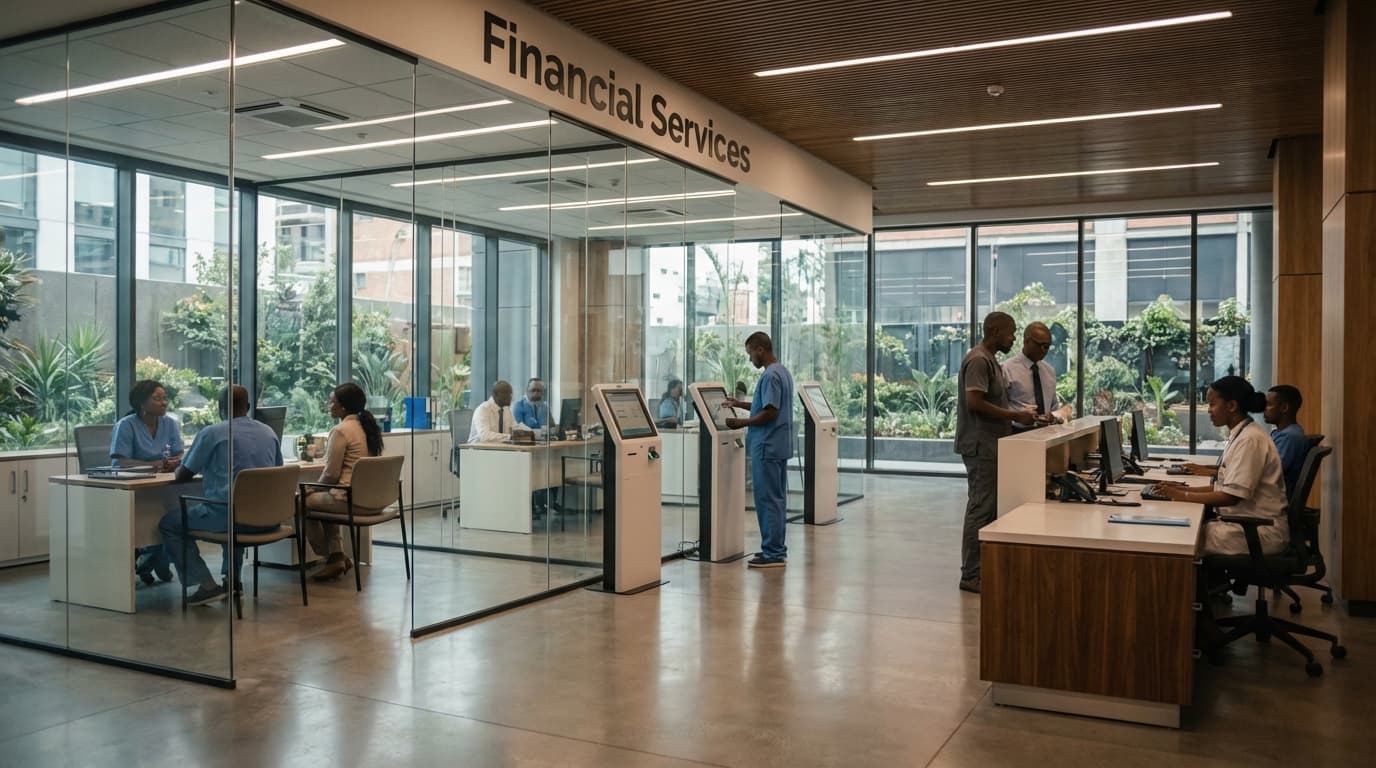
Medical Equipment Rental in South Sudan
Engineering Excellence & Technical Support
Short-term and long-term equipment rental solutions High-standard technical execution following OEM protocols and local regulatory frameworks.
Optimized Equipment Allocation & Tracking
Leveraging advanced GPS and inventory management systems, we ensure rapid deployment and real-time visibility of our medical equipment across South Sudan's diverse terrain. This minimizes downtime and maximizes accessibility to life-saving technology for remote communities and emergency response.
Proactive Biomedical Engineering Support
Our highly trained biomedical engineers conduct rigorous, scheduled preventative maintenance and on-demand repairs. Utilizing diagnostic tools and a robust spare parts network, we guarantee the operational integrity and longevity of our rental fleet, ensuring reliable performance even in challenging environments.
Customized Solutions for Critical Care Needs
We offer a comprehensive portfolio of specialized medical equipment, from critical care ventilators and portable X-ray machines to diagnostic ultrasound units and oxygen concentrators. Our technical team works closely with healthcare providers to assess specific needs and tailor rental packages, empowering them with the precise tools required for advanced patient care.
What Is Medical Equipment Rental In South Sudan?
Medical equipment rental in South Sudan refers to the provision of temporary access to diagnostic, therapeutic, and life-support medical devices. This service allows healthcare facilities, non-governmental organizations (NGOs), and governmental health bodies to utilize essential medical technology without the significant capital investment and long-term maintenance commitments associated with outright purchase. The service encompasses the logistics of sourcing, delivering, installing, maintaining, and retrieving equipment, often including operator training or technical support. The demand for such services is critically high in regions like South Sudan, characterized by resource constraints, fluctuating healthcare needs due to conflict or disease outbreaks, and an underdeveloped indigenous medical equipment supply chain.
| Stakeholder Group | Needs | Typical Use Cases |
|---|---|---|
| Hospitals (Public and Private) | Temporary augmentation of existing capacity; access to specialized equipment for specific procedures or patient surges; replacing equipment undergoing repair. | Rental of ventilators during an influenza outbreak; leasing of diagnostic imaging equipment (e.g., X-ray, ultrasound) for a specific diagnostic campaign; temporary rental of surgical lights for an overloaded operating room. |
| Non-Governmental Organizations (NGOs) | Deployment of essential medical services in remote or emergency settings; equipping mobile clinics; responding to humanitarian crises; bridging gaps in public healthcare infrastructure. | Rental of basic laboratory diagnostic kits and microscopes for a field hospital; leasing of patient monitors and oxygen concentrators for a displaced persons camp; provision of portable ultrasound machines for maternal health outreach programs. |
| Governmental Health Ministries/Agencies | Implementing public health initiatives; equipping newly established or under-resourced health centers; managing temporary outbreaks or public health emergencies. | Rental of sterilization equipment for a district hospital; leasing of rapid diagnostic test readers for a national disease surveillance program; provision of emergency oxygen therapy equipment during a pandemic response. |
| Research and Training Institutions | Access to specific equipment for clinical trials or medical education without long-term commitment. | Rental of advanced physiological monitoring systems for a research study; leasing of simulation mannequins for medical training workshops. |
Key Aspects of Medical Equipment Rental in South Sudan
- Scope of Service: Provision of diverse medical devices, from basic diagnostic tools to complex life-support systems.
- Beneficiaries: Healthcare providers requiring flexible and accessible medical technology.
- Operational Model: Focus on flexibility, cost-effectiveness, and rapid deployment.
- Technical Support: Often includes on-site maintenance, troubleshooting, and calibration.
- Logistical Management: Covers transportation, installation, and de-installation of equipment.
Who Needs Medical Equipment Rental In South Sudan?
In South Sudan, the demand for medical equipment rental is driven by a complex interplay of factors, including limited government budgets, rapid response needs for emergencies, and the specialized requirements of various healthcare providers. This service bridges the gap between the immediate need for critical medical technology and the often long procurement cycles or prohibitive upfront costs. Target customers range from large national hospitals to smaller, remote clinics, as well as non-governmental organizations (NGOs) and international aid agencies working in the healthcare sector.
| Customer Type/Department | Specific Needs/Reasons for Rental | Examples of Equipment Needed |
|---|---|---|
| Public Hospitals | Supplementing existing strained resources, covering breakdowns, managing temporary increases in patient load, accessing specialized equipment for specific procedures. | Ventilators, surgical lights, patient monitors, defibrillators, diagnostic imaging equipment (e.g., portable X-ray, ultrasound), anesthesia machines, hospital beds. |
| Private Healthcare Facilities | Upgrading technology without significant capital investment, offering specialized services, responding to fluctuating patient demand. | Advanced diagnostic equipment (e.g., CT scanners, MRI if available), specialized surgical instruments, intensive care unit (ICU) equipment, physiotherapy equipment. |
| NGOs & International Aid Agencies | Setting up temporary health posts, responding to humanitarian crises, providing specialized medical care in underserved areas, supplementing partner facilities. | Basic diagnostic tools, maternal and child health equipment, portable diagnostic equipment, surgical kits, water purification systems with medical applications, field X-ray units. |
| Emergency Response Units | Immediate deployment of life-saving equipment during outbreaks, accidents, or natural disasters. | Portable ventilators, defibrillators, oxygen concentrators, emergency trauma kits, basic surgical sets, rapid diagnostic test kits. |
| Research Institutions & Training Centers | Accessing modern equipment for training healthcare professionals, conducting clinical research without long-term commitment. | High-end diagnostic machines for training purposes, specialized laboratory equipment, simulation manikins, anatomical models. |
| Disaster Relief Operations | Establishing temporary medical facilities and providing essential care in disaster-affected regions. | Field hospitals, sanitation equipment, basic medical supplies, portable power generators for medical devices, communication equipment. |
| Mobile Clinics & Outreach Programs | Equipping mobile units for remote access healthcare delivery, offering specific services in areas lacking permanent facilities. | Portable ultrasound machines, digital stethoscopes, basic diagnostic kits, dental chairs (portable), vision screening equipment. |
Target Customers and Departments for Medical Equipment Rental in South Sudan
- Public Hospitals (National, State, and County Level)
- Private Healthcare Facilities
- Non-Governmental Organizations (NGOs) and International Aid Agencies
- Emergency Response Units
- Research Institutions and Training Centers
- Disaster Relief Operations
- Mobile Clinics and Outreach Programs
Medical Equipment Rental Process In South Sudan
This document outlines the typical workflow for medical equipment rental in South Sudan, from the initial inquiry to the final execution and return of the equipment. The process is designed to ensure transparency, efficiency, and compliance with local regulations, while also addressing the unique challenges and humanitarian context of the region.
| Stage | Description | Key Activities | Responsible Parties | Documentation Required |
|---|---|---|---|---|
| Inquiry & Needs Assessment | The process begins when a healthcare facility or organization identifies a need for specific medical equipment on a temporary basis. | Client contacts rental provider, specifies equipment needs (type, quantity, duration), discusses intended use and any special requirements. Provider may conduct site visit for assessment. | Client (e.g., Hospital, NGO), Rental Provider | Needs assessment form, Initial request email/letter |
| Quotation & Agreement | Based on the inquiry, the rental provider prepares a detailed quotation and formalizes the rental agreement. | Provider generates a quotation including rental fees, delivery/installation costs, insurance, and terms. Both parties review and negotiate. A formal Rental Agreement is drafted and signed. | Rental Provider, Client | Quotation, Rental Agreement (signed), Insurance certificate (if applicable) |
| Logistics & Delivery | This stage involves the safe and timely transportation of the rented equipment to the client's location. | Provider arranges for packaging, transportation (including customs clearance if applicable), and delivery to the designated site. Risk assessment for delivery routes and security is crucial. | Rental Provider (logistics team), Local transporters | Delivery manifest, Bill of lading/Airway bill, Customs documentation (if applicable), Proof of delivery (signed) |
| Installation & Training | Ensuring the equipment is properly set up and the end-users are trained on its operation and maintenance. | Technicians from the rental provider install and test the equipment. Training sessions are conducted for the client's medical staff on operation, basic troubleshooting, and safety protocols. | Rental Provider (technicians), Client's medical staff | Installation report, Training attendance sheet, Training manual (provided) |
| Usage & Maintenance | The period during which the client utilizes the rented equipment, with ongoing support from the provider. | Client uses the equipment as per the agreement. Routine maintenance and troubleshooting are handled by the rental provider as per the agreed service level. Client reports any issues promptly. | Client, Rental Provider (technical support) | Equipment usage log (client-maintained), Maintenance request forms, Service reports |
| Return & Inspection | Upon completion of the rental period, the equipment is returned and inspected to assess its condition. | Client arranges for equipment readiness for pickup or returns it to the provider's designated location. Rental provider conducts a thorough inspection for damage or loss. | Client, Rental Provider (inspection team) | Equipment return form, Inspection report, Photos of equipment condition |
| Invoicing & Payment | The final stage involves billing for the rental services and settling the payment. | Provider issues a final invoice based on the rental agreement and any additional charges (e.g., damages). Client processes payment according to agreed terms. Reconciliation of accounts. | Rental Provider, Client | Final invoice, Payment receipt, Bank transfer details |
Key Stages in Medical Equipment Rental Process
- Inquiry & Needs Assessment
- Quotation & Agreement
- Logistics & Delivery
- Installation & Training
- Usage & Maintenance
- Return & Inspection
- Invoicing & Payment
Medical Equipment Rental Cost In South Sudan
South Sudan's healthcare system faces significant challenges, and access to medical equipment is often limited. Renting medical equipment can be a viable solution for both healthcare facilities and individuals, especially in situations where purchasing is not feasible due to cost or short-term needs. However, pricing can be highly variable, influenced by a multitude of factors. Understanding these factors and the potential cost ranges in South Sudanese Pounds (SSP) is crucial for budgeting and planning.
| Equipment Category | Estimated Rental Range (SSP per month/day) | Notes |
|---|---|---|
| Basic Mobility Aids (e.g., Wheelchairs, Crutches, Walkers) | SSP 10,000 - SSP 50,000 per month / SSP 1,000 - SSP 5,000 per day | Prices can vary based on model and condition. Daily rates are typically for short-term needs. |
| Hospital Beds (Manual/Electric) | SSP 30,000 - SSP 150,000 per month / SSP 3,000 - SSP 15,000 per day | Electric beds with more features will be at the higher end. Includes basic mattress. |
| Oxygen Concentrators (Portable/Stationary) | SSP 50,000 - SSP 250,000 per month / SSP 5,000 - SSP 25,000 per day | Flow rate and features impact price. Includes consumables like nasal cannulas. |
| Diagnostic Equipment (e.g., Portable Ultrasound, ECG Machine) | SSP 100,000 - SSP 500,000+ per month / SSP 10,000 - SSP 50,000+ per day | Prices highly dependent on model, manufacturer, and included accessories. Technical support is crucial. |
| Life Support Equipment (e.g., Ventilators, Anesthesia Machines) | SSP 200,000 - SSP 1,000,000+ per month / SSP 20,000 - SSP 100,000+ per day | Requires specialized training and maintenance. Rental often includes service contracts. |
| Surgical Instruments (Basic Sets) | SSP 20,000 - SSP 100,000 per set per month | Generally rented by surgical teams for specific procedures. Sterilization costs may be separate. |
| Maternity Equipment (e.g., Delivery Beds, Fetal Dopplers) | SSP 40,000 - SSP 200,000 per month / SSP 4,000 - SSP 20,000 per day | Prices vary with the complexity and features of the equipment. |
Key Pricing Factors for Medical Equipment Rental in South Sudan
- Type and Complexity of Equipment: Basic equipment like crutches or hospital beds will be significantly cheaper to rent than advanced diagnostic machines (e.g., portable X-ray, ultrasound) or life-support systems (e.g., ventilators, oxygen concentrators).
- Duration of Rental: Short-term rentals (days or weeks) typically have a higher daily or weekly rate compared to long-term rentals (months or years), which often come with discounted rates.
- Condition and Age of Equipment: Newer, state-of-the-art equipment will command higher rental fees than older or refurbished units. The level of maintenance and calibration also plays a role.
- Supplier/Provider: The reputation, overhead, and service offerings of the rental company will influence pricing. Larger, established companies might have higher prices but offer better support and a wider selection.
- Availability and Demand: If a particular piece of equipment is in high demand and short supply, rental prices are likely to increase.
- Location and Logistics: Delivery, installation, and pick-up costs can add to the overall rental price, especially for remote or difficult-to-access locations within South Sudan. Transport costs can be substantial.
- Included Services: Rentals that include maintenance, on-site technical support, training for staff, or insurance will generally be more expensive.
- Negotiation and Bulk Discounts: For healthcare facilities renting multiple pieces of equipment or for extended periods, there is often room for negotiation and potential bulk discounts.
- Currency Fluctuations and Inflation: South Sudan has experienced significant currency fluctuations and high inflation. Rental prices are often adjusted to reflect these economic realities, making it important to confirm the current SSP rate.
- Importation Costs (for specialized equipment): If the rental company has to import specialized equipment specifically for a rental agreement, these costs will likely be passed on to the renter.
Affordable Medical Equipment Rental Options
Renting medical equipment can be a significantly more cost-effective solution than purchasing, especially for short-term needs, trials, or situations with uncertain future requirements. Affordable medical equipment rental options cater to individuals, healthcare facilities, and research institutions, offering flexibility and immediate access to necessary devices. Understanding value bundles and implementing smart cost-saving strategies can further enhance the affordability of these rental services.
| Value Bundle Component | Description | Cost-Saving Benefit |
|---|---|---|
| Extended Rental Periods | Renting equipment for several weeks or months. | Often comes with a discounted daily or weekly rate compared to short-term rentals. |
| All-Inclusive Packages | Bundles that include delivery, setup, training, and maintenance. | Can be more economical than paying for each service individually and avoids hidden costs. |
| Bulk Equipment Rentals | Renting multiple pieces of equipment from a single provider. | May qualify for volume discounts and simplifies logistics. |
| Subscription Models | Ongoing rental agreements with regular equipment rotation or upgrades. | Provides predictable costs and ensures access to modern technology. |
| Preventative Maintenance Included | Rental contracts that incorporate regular servicing by the provider. | Minimizes the risk of unexpected breakdowns and costly repairs, ensuring equipment availability. |
Key Cost-Saving Strategies for Medical Equipment Rental
- Compare Rental Companies: Obtain quotes from multiple reputable rental providers to ensure competitive pricing.
- Negotiate Rental Terms: Discuss potential discounts for longer rental periods or early payment.
- Consider Used Equipment: Many rental companies offer well-maintained, pre-owned equipment at a lower price point.
- Bundle Services: Inquire about packages that include delivery, setup, maintenance, and even training.
- Understand Insurance Coverage: Check if your insurance policy covers any portion of rental equipment costs.
- Return Equipment Promptly: Avoid incurring additional charges by returning equipment as soon as it's no longer needed.
- Factor in Maintenance & Support: Choose providers with reliable maintenance and responsive customer support to avoid unexpected repair costs.
Verified Providers In South Sudan
In the challenging landscape of healthcare in South Sudan, identifying and trusting healthcare providers is paramount. Verified providers offer a level of assurance that is crucial for patients seeking quality care. Franance Health stands out as a leading example of such a verified provider, demonstrating a deep commitment to excellence, ethical practices, and patient well-being. Their credentials and operational philosophy make them a top choice for individuals and communities in South Sudan.
Franance Health's commitment to verification signifies their adherence to stringent standards. This includes rigorous internal quality control measures, compliance with national health regulations, and a dedication to continuous improvement. Their team comprises highly qualified and experienced medical professionals, many of whom have undergone specialized training and possess internationally recognized certifications. This expertise ensures that patients receive accurate diagnoses, effective treatments, and compassionate care tailored to their individual needs. Furthermore, Franance Health prioritizes patient safety through robust infection control protocols and the use of modern medical equipment. Their transparent approach to service delivery and patient rights builds trust and empowers individuals to make informed decisions about their health.
| Credential/Aspect | Franance Health's Commitment |
|---|---|
| Medical Expertise | Employs certified and experienced doctors, nurses, and specialists. |
| Quality Assurance | Implements rigorous internal quality control and best practice protocols. |
| Patient Safety | Prioritizes infection control, sterile environments, and safe medical procedures. |
| Ethical Standards | Adheres to a strict code of conduct and upholds patient confidentiality and rights. |
| Regulatory Compliance | Operates in full compliance with South Sudan's Ministry of Health regulations. |
| Technological Advancement | Invests in modern medical equipment and diagnostic tools. |
| Community Focus | Dedicated to serving the healthcare needs of communities across South Sudan. |
Why Franance Health is the Best Choice:
- Unwavering commitment to patient safety and quality care.
- Highly qualified and experienced medical professionals.
- Adherence to stringent national and international health standards.
- Transparent and ethical operational practices.
- Focus on continuous improvement and advanced medical technologies.
- Building trust through patient-centered care and respect for rights.
Scope Of Work For Medical Equipment Rental
This Scope of Work (SOW) outlines the requirements for the rental of medical equipment, including technical deliverables and standard specifications. The objective is to ensure the provision of reliable, high-quality medical equipment that meets all necessary regulatory standards and operational needs.
| Category | Equipment Type | Technical Deliverables | Standard Specifications |
|---|---|---|---|
| Monitoring | Patient Monitor (e.g., ECG, SpO2, NIBP, Temp) | Fully functional unit with all required accessories (cables, sensors). Calibration certificate. User manual. Preventative maintenance log. Infection control cleaning certification. | CE/FDA certified. Latest software version. Minimum 5-lead ECG capability. NIBP with adult/pediatric/neonatal cuffs. SpO2 sensor (adult/pediatric). Alarms configurable and functional. Battery backup with minimum 2-hour operational life. |
| Ventilation | Mechanical Ventilator (e.g., ICU Ventilator) | Assembled and tested unit with humidifier, breathing circuits, filters, and all necessary accessories. Calibration and performance verification report. Operator's manual. Maintenance history. Infection control cleaning certification. | CE/FDA certified. Modes: Volume Control, Pressure Control, PSV, SIMV, CPAP. Tidal volume range: 20-2000ml. Respiratory rate: 1-60 bpm. PEEP: 0-30 cmH2O. FiO2 adjustment: 21-100%. Integrated O2/Air blender. Integrated humidifier. Battery backup with minimum 1-hour operational life. |
| Infusion Therapy | Infusion Pump (e.g., Volumetric Infusion Pump) | Fully functional pump with power cord, rechargeable battery, and required tubing connectors. Calibration certificate. User manual. Infection control cleaning certification. | CE/FDA certified. Flow rate range: 0.1-999 ml/hr. Volume to be infused (VTBI) range: 1-9999 ml. Multiple infusion modes (e.g., rate, VTBI, time). Occlusion, air-in-line, and low battery alarms. Drip count facility. Compatible with standard IV sets. |
| Anesthesia | Anesthesia Machine | Complete workstation with vaporizers (if applicable), breathing circuit, scavenger system, oxygen/air cylinders (if required), and all necessary tubing. Calibration and leak test report. Operator's manual. Maintenance records. Infection control cleaning certification. | CE/FDA certified. Integrated or standalone vaporizers for common anesthetic agents. Flowmeters for O2, Air, N2O. Minimum two vaporizers. Integrated or separate ventilator. Automatic leak testing. Audible and visual alarms for critical parameters. |
| Diagnostic Imaging | Portable Ultrasound Machine | Unit with all probes (e.g., curvilinear, linear), gel, power cord, and rechargeable battery. Image storage capability (USB/DICOM). User manual. Infection control cleaning certification. | CE/FDA certified. Multiple transducer ports. Minimum B-mode, Color Doppler, Pulsed Wave Doppler capabilities. High-resolution display. Portable and lightweight design. Battery operation time: minimum 2 hours. |
| Support Equipment | Hospital Bed (e.g., Electric Hospital Bed) | Fully functional bed with mattress, side rails, and controls. Load-bearing capacity as specified. Infection control cleaning certification. | Adjustable height, head, and foot sections. Trendelenburg/Reverse Trendelenburg functionality. Lockable castors. Maximum patient weight capacity: 250 kg. |
| Support Equipment | Suction Pump (Portable) | Unit with collection canister, tubing, and power adapter. Calibration and functional test. User manual. Infection control cleaning certification. | CE/FDA certified. Adjustable suction pressure. Battery-powered option. Durable construction. Quiet operation. |
Key Objectives of Medical Equipment Rental
- To provide a diverse range of functional and well-maintained medical equipment for specified durations.
- To ensure all rented equipment complies with relevant medical device regulations and safety standards.
- To deliver equipment that is calibrated, tested, and ready for immediate clinical use.
- To provide comprehensive technical support, including installation, maintenance, and de-installation.
- To offer training on equipment operation for designated clinical staff, if required.
Service Level Agreement For Medical Equipment Rental
This Service Level Agreement (SLA) outlines the terms and conditions governing the rental of medical equipment, specifically focusing on response times for technical support and guaranteed uptime for the rented equipment. This SLA is entered into by and between [Rental Company Name] (hereinafter referred to as 'Provider') and [Healthcare Facility Name] (hereinafter referred to as 'Client').
| Service Component | Service Level Target | Measurement Metric | Remedy for Breach |
|---|---|---|---|
| Technical Support Response Time (Critical Equipment) | 1 hour | Time from initial notification of critical equipment failure to acknowledgment and initiation of troubleshooting by Provider. | 10% discount on the next month's rental fee for the affected equipment. |
| Technical Support Response Time (Non-Critical Equipment) | 4 business hours | Time from initial notification of non-critical equipment failure to acknowledgment and initiation of troubleshooting by Provider. | 5% discount on the next month's rental fee for the affected equipment. |
| Uptime Guarantee (Critical Equipment) | 98.5% | Percentage of time the critical equipment is operational and available during the rental period. | Prorated rental credit for the amount of downtime exceeding the guaranteed uptime. |
| Uptime Guarantee (Non-Critical Equipment) | 97% | Percentage of time the non-critical equipment is operational and available during the rental period. | Prorated rental credit for the amount of downtime exceeding the guaranteed uptime. |
| Preventative Maintenance Scheduling | Scheduled within Provider's standard service windows | Proactive maintenance completed according to manufacturer recommendations and agreed-upon schedule. | No direct remedy, but failure may impact uptime guarantees. |
Key Definitions
- Equipment: Refers to all medical equipment rented by the Client from the Provider as specified in the rental agreement.
- Downtime: The period during which the Equipment is not functional or available for use due to a malfunction, failure, or need for maintenance not caused by Client misuse or negligence.
- Response Time: The maximum time allowed for the Provider to acknowledge a reported issue and initiate troubleshooting.
- Resolution Time: The maximum time allowed for the Provider to resolve a reported issue and restore Equipment functionality.
- Uptime Guarantee: The minimum percentage of time the Equipment is expected to be operational and available for use over a specified period.
Frequently Asked Questions

Ready when you are
Let's scope your Medical Equipment Rental in South Sudan project in South Sudan.

Scaling healthcare logistics and technical systems across the entire continent.