
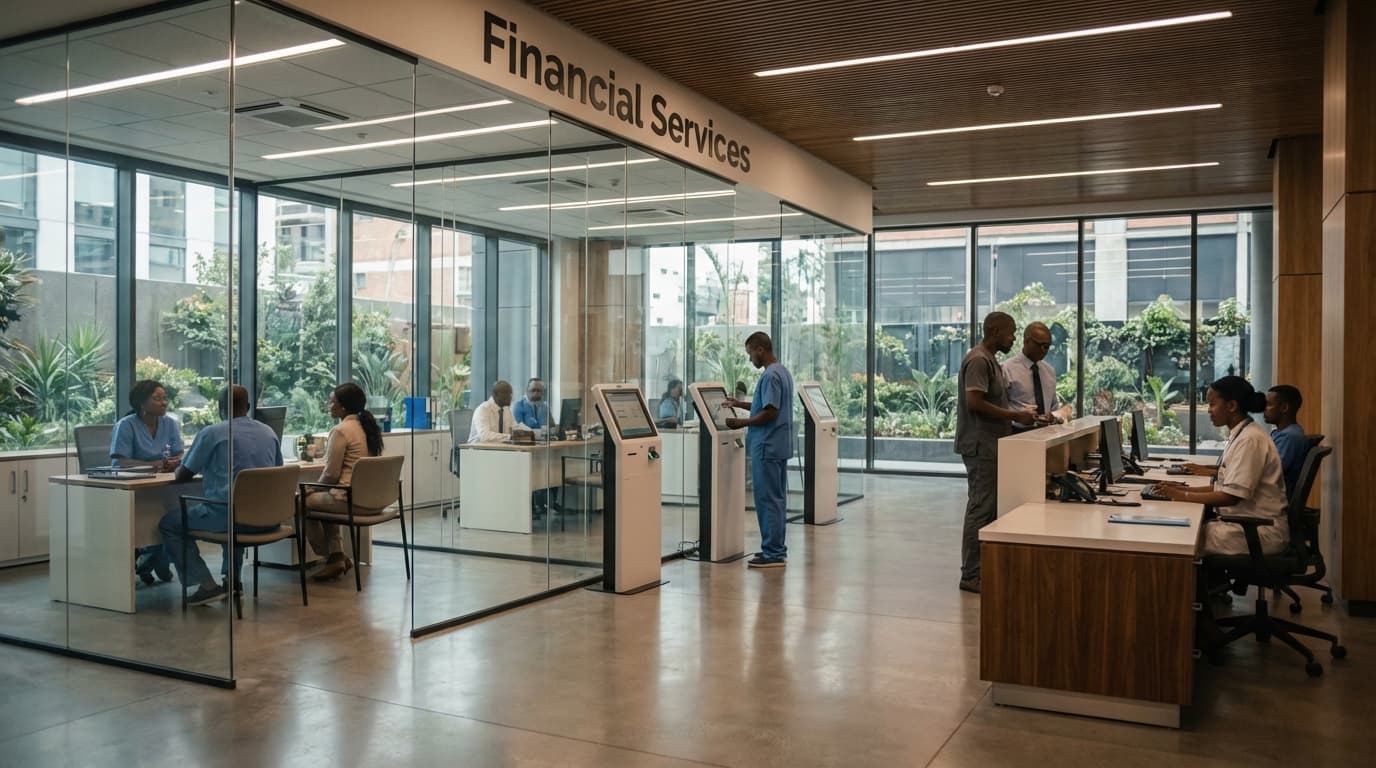
Medical Equipment Financing in South Sudan
Engineering Excellence & Technical Support
Leasing and financing solutions for medical equipment High-standard technical execution following OEM protocols and local regulatory frameworks.
Bridging Healthcare Gaps with Accessible Financing
Our specialized medical equipment financing solutions empower healthcare providers in South Sudan to acquire life-saving technologies, from diagnostic tools to surgical instruments. We offer flexible terms and competitive rates, ensuring vital equipment is accessible to underserved communities and strengthening the nation's healthcare infrastructure.
Tailored Financial Instruments for Local Needs
Understanding the unique economic landscape of South Sudan, we provide bespoke financing packages designed to meet the specific needs of clinics, hospitals, and NGOs. This includes options for both new and refurbished equipment, minimizing upfront costs and enabling sustainable operational growth without compromising on quality of care.
Enabling Sustainable Healthcare Operations
Beyond initial acquisition, our financing extends to essential maintenance and upgrade plans. We partner with local technical teams to ensure ongoing functionality and support, thereby guaranteeing the long-term reliability of medical equipment and fostering a robust and resilient healthcare system across South Sudan.
What Is Medical Equipment Financing In South Sudan?
Medical Equipment Financing in South Sudan refers to a specialized financial service that provides capital for healthcare providers and institutions to acquire, upgrade, or maintain essential medical equipment. This financing mechanism addresses the significant capital expenditure required for procuring advanced medical technologies, diagnostic tools, surgical instruments, patient monitoring systems, and other critical healthcare infrastructure. It is designed to alleviate the upfront financial burden, enabling access to vital medical resources that are often limited in developing economies like South Sudan due to economic constraints and infrastructure challenges. The service typically involves structured loan agreements, leasing options, or other credit facilities tailored to the specific needs and repayment capacities of healthcare entities.
| Typical Use Cases for Medical Equipment Financing | Rationale/Impact |
|---|---|
| Acquisition of New Diagnostic Imaging Equipment (e.g., X-ray, Ultrasound, CT Scanners) | Enhances diagnostic capabilities, leading to earlier and more accurate disease detection and improved patient outcomes. |
| Procurement of Essential Surgical Instruments and Operating Theater Equipment | Facilitates the performance of life-saving surgical procedures, reduces reliance on external referral for surgical interventions. |
| Installation of Laboratory Equipment for Diagnostic Testing (e.g., PCR machines, Hematology Analyzers) | Expands the capacity for infectious disease testing, routine health screenings, and research, improving public health surveillance. |
| Upgrade of Patient Monitoring Systems and Critical Care Equipment (e.g., Ventilators, ICU beds) | Improves the management of critically ill patients, reduces mortality rates in intensive care settings. |
| Financing for Telemedicine and Remote Diagnostic Solutions | Extends healthcare access to remote and underserved populations, facilitates specialist consultations without physical travel. |
| Acquisition of Basic Healthcare Equipment for Primary Healthcare Centers | Strengthens primary healthcare delivery, enabling essential services at the community level and reducing the burden on referral hospitals. |
| Leasing of Specialized Medical Equipment for Specific Projects or Temporary Needs | Provides access to high-cost equipment without significant upfront capital investment, ideal for short-term initiatives or pilot programs. |
| Financing for Maintenance and Repair of Existing Medical Equipment | Ensures the continued operational functionality of critical medical devices, preventing service disruptions and extending equipment lifespan. |
Key Stakeholders and Their Needs for Medical Equipment Financing in South Sudan
- Public Healthcare Facilities (Government Hospitals and Clinics): Require financing for essential equipment to serve the broader population, often facing budgetary limitations. This includes diagnostic imaging, laboratory equipment, surgical tools, and basic patient care apparatus.
- Private Hospitals and Clinics: Seek financing for advanced and specialized medical equipment to enhance service offerings, attract patients, and compete in the market. This may encompass MRI/CT scanners, specialized surgical suites, and advanced diagnostic laboratories.
- Non-Governmental Organizations (NGOs) and International Aid Agencies: Often require financing for medical equipment to implement health programs, respond to humanitarian crises, and establish or upgrade health centers in underserved areas. This can range from primary healthcare kits to specialized equipment for disease control initiatives.
- Medical Training Institutions (Medical Schools, Nursing Schools): Need financing for simulation equipment, anatomical models, and diagnostic tools for training healthcare professionals. This ensures that future practitioners are equipped with hands-on experience on modern medical technology.
- Medical Equipment Suppliers and Manufacturers: May utilize financing to offer their products to healthcare providers on a deferred payment basis, thereby facilitating sales and market penetration. This can involve vendor financing programs.
- Research Institutions and Laboratories: Require funding for sophisticated analytical instruments, genetic sequencers, and other specialized research equipment.
Who Needs Medical Equipment Financing In South Sudan?
Medical equipment financing in South Sudan is a critical need for a wide range of healthcare providers and organizations aiming to improve the quality and accessibility of healthcare services. The country faces significant challenges in its healthcare infrastructure, including a scarcity of modern medical technology, limited access to specialized equipment, and a reliance on outdated or broken machinery. Financing options are essential to overcome these barriers and ensure that healthcare facilities can acquire, maintain, and upgrade the necessary tools to provide effective patient care. This financing can range from purchasing life-saving diagnostic machines and surgical instruments to acquiring essential hospital beds, laboratory equipment, and even basic medical supplies that require upfront investment.
| Target Customer | Key Departments/Needs | Impact of Financing |
|---|---|---|
| Public Hospitals and Health Centers | Emergency, Surgery, Pediatrics, Maternity, General Medicine, Outpatient Departments | Upgrade outdated equipment, acquire essential diagnostic tools (X-ray, ultrasound), expand surgical capacity, improve patient outcomes, reduce reliance on referrals. |
| Non-Governmental Organizations (NGOs) and Humanitarian Aid Organizations | Mobile Clinics, Field Hospitals, Primary Healthcare Units, Disease-Specific Programs (e.g., HIV/AIDS, Malaria) | Equip remote health posts, support emergency response with portable diagnostic and treatment devices, provide specialized equipment for specific health campaigns, ensure consistent service delivery in challenging environments. |
| Private Hospitals and Clinics | Surgery, Cardiology, Radiology, Gynecology, Internal Medicine | Invest in advanced diagnostic and therapeutic technologies, offer specialized services, enhance patient comfort and experience, compete with established facilities, attract qualified medical professionals. |
| Maternal and Child Health Facilities | Obstetrics and Gynecology, Neonatal Intensive Care Unit (NICU), Pediatrics | Acquire delivery tables, infant warmers, incubators, ultrasound machines for prenatal care, essential monitoring equipment, reduce maternal and infant mortality rates. |
| Diagnostic Laboratories and Imaging Centers | Pathology, Hematology, Biochemistry, Microbiology, Radiology, CT Scan, MRI | Purchase state-of-the-art laboratory analyzers, microscopes, PCR machines, CT scanners, MRI machines, improve diagnostic accuracy, reduce turnaround times, expand testing capabilities. |
| Specialized Treatment Centers | Dialysis Units, Oncology Units, Cardiac Catheterization Labs | Acquire specialized equipment like dialysis machines, linear accelerators, angiogram machines, advanced monitoring systems, provide life-sustaining and specialized treatments locally. |
| Medical Training Institutions | Anatomy, Physiology, Pathology, Clinical Skills Labs | Equip simulation labs for practical training, provide functional equipment for student learning, ensure graduates are proficient with modern medical technology. |
Who Needs Medical Equipment Financing in South Sudan?
- Public Hospitals and Health Centers
- Non-Governmental Organizations (NGOs) and Humanitarian Aid Organizations
- Private Hospitals and Clinics
- Maternal and Child Health Facilities
- Diagnostic Laboratories and Imaging Centers
- Specialized Treatment Centers (e.g., dialysis, oncology)
- Medical Training Institutions
Medical Equipment Financing Process In South Sudan
The medical equipment financing process in South Sudan, while facing unique challenges due to the country's infrastructure and economic landscape, generally follows a structured workflow from initial inquiry to final execution. This process involves multiple stakeholders, including healthcare providers, financial institutions, equipment suppliers, and potentially government or international aid organizations. The complexity and duration of each step can vary significantly based on the scale of the financing, the specific equipment, and the funding source.
| Stage | Description | Key Activities | Responsible Parties | Potential Challenges |
|---|---|---|---|---|
| The healthcare provider identifies a need for new or upgraded medical equipment. | Identify specific equipment requirements, assess budget, research potential suppliers. | Healthcare Provider (Hospital, Clinic, NGO) | Lack of clear understanding of equipment needs, limited budget clarity, identifying reliable suppliers. |
| The healthcare provider formally applies for financing to a chosen financial institution. | Complete application forms, provide business plans, financial statements, and supporting documents. | Healthcare Provider, Financial Institution (Bank, Microfinance, Development Agency) | Incomplete documentation, lack of financial history, unfamiliarity with application processes. |
| The financial institution evaluates the applicant's creditworthiness and the viability of the project. | Review financial records, assess repayment capacity, verify ownership of assets, conduct site visits. | Financial Institution, Credit Analysts | Limited verifiable financial data, political instability affecting business continuity, currency fluctuations. |
| The healthcare provider or financial institution identifies and obtains quotations for the required equipment. | Contacting reputable suppliers, comparing prices and specifications, ensuring quality and availability. | Healthcare Provider, Equipment Supplier, Financial Institution | Availability of specific medical equipment, high import duties, unreliable supply chains, counterfeit products. |
| The financial institution prepares a financing proposal based on the assessment and quotation, which is then approved. | Determine loan amount, interest rate, repayment terms, collateral requirements. Internal approval from lending committees. | Financial Institution | Internal bureaucratic delays, stringent collateral requirements, inadequate risk appetite for the sector. |
| Finalizing the terms and conditions of the financing agreement. | Drafting and reviewing loan agreements, collateral documentation, and any service level agreements. | Financial Institution, Healthcare Provider, Legal Advisors | Complex legal frameworks, lack of standardized contracts, language barriers, disputes over terms. |
| The funds are released to the supplier, and the equipment is procured. | Transfer of funds, placing the order with the supplier, arranging for shipping and customs clearance. | Financial Institution, Healthcare Provider, Equipment Supplier | Delays in fund disbursement, issues with customs clearance, logistical challenges in transportation, potential for corruption. |
| The medical equipment is installed and healthcare staff are trained on its use. | On-site installation by qualified technicians, comprehensive training programs for operators and maintenance staff. | Equipment Supplier, Healthcare Provider | Lack of qualified technicians, insufficient training resources, poor infrastructure for installation, user resistance to new technology. |
| The healthcare provider repays the loan according to the agreed schedule, and the financial institution monitors the loan performance. | Regular repayment of installments, financial reporting, site visits to assess equipment utilization and maintenance. | Healthcare Provider, Financial Institution | Difficulty in generating revenue for repayment, equipment breakdown leading to reduced service delivery, economic downturns, political instability impacting operations. |
Workflow Stages of Medical Equipment Financing in South Sudan
- Inquiry & Needs Assessment
- Application Submission
- Due Diligence & Credit Assessment
- Equipment Sourcing & Quotation
- Proposal & Approval
- Contract Negotiation & Documentation
- Disbursement & Procurement
- Installation & Training
- Repayment & Monitoring
Medical Equipment Financing Cost In South Sudan
Financing medical equipment in South Sudan presents a unique set of challenges and cost considerations, heavily influenced by local economic conditions, currency fluctuations, and the specific nature of the equipment. The primary currency used for transactions is the South Sudanese Pound (SSP). However, due to high inflation and a volatile exchange rate, USD is also widely used and often preferred for significant transactions, with the effective cost in SSP being subject to the prevailing market rate. Factors influencing financing costs are multifaceted, encompassing import duties, shipping and logistics, the equipment's technological sophistication, its purchase price, and the chosen financing model (e.g., outright purchase with a loan, leasing, or specialized medical financing programs). The availability of reliable local financing institutions is also a determinant, as is the perceived risk associated with the borrower and the investment. Therefore, providing exact pricing ranges is challenging and highly dependent on current market conditions and specific deals.
| Equipment Category | Indicative Financing Cost Range (SSP/USD Equivalent) | Key Considerations |
|---|---|---|
| Basic Diagnostic Equipment (e.g., Stethoscopes, BP Monitors, Basic Lab Kits) | SSP 100,000 - SSP 1,000,000 (approx. $200 - $2,000 USD) | Relatively lower capital outlay, often financed through small business loans or direct purchase. Availability can be better. |
| Intermediate Medical Equipment (e.g., Ultrasound Machines, X-ray Machines, Dental Chairs) | SSP 5,000,000 - SSP 50,000,000 (approx. $10,000 - $100,000 USD) | Requires more robust financing, potentially from commercial banks or specialized lenders. Import costs are significant. Interest rates can range from 15-30% per annum on the USD equivalent, depending on risk. |
| Advanced Imaging & Surgical Equipment (e.g., MRI Scanners, CT Scanners, Sophisticated Surgical Units) | SSP 100,000,000 - SSP 1,000,000,000+ (approx. $200,000 - $2,000,000+ USD) | High capital investment, often requiring international financing or partnerships. Significant import duties, logistics, and installation complexities. Financing terms can be longer, but interest rates remain high due to perceived risk. Leasing options might be explored. |
| Laboratory Analyzers & Diagnostic Instruments (Sophisticated) | SSP 20,000,000 - SSP 200,000,000 (approx. $40,000 - $400,000 USD) | Costs vary greatly with automation and complexity. Import duties and specialized maintenance contracts are major factors. Financing often involves a combination of equipment cost, installation, and consumables. |
Key Pricing Factors for Medical Equipment Financing in South Sudan
- Equipment Cost: The base price of the medical equipment itself, whether sourced internationally or locally (though local availability is limited for advanced equipment).
- Import Duties and Taxes: Levied by the South Sudanese government on imported goods, these can significantly increase the final cost.
- Shipping, Insurance, and Logistics: Costs associated with transporting equipment from the point of origin to South Sudan, including customs clearance, freight, and insurance.
- Currency Exchange Rate Volatility: The fluctuating value of the South Sudanese Pound (SSP) against major currencies like the US Dollar (USD) directly impacts the cost in local terms. Many high-value transactions are often priced or settled in USD.
- Financing Fees and Interest Rates: Charged by lending institutions. These can be higher due to perceived country risk and potential collateral challenges.
- Installation and Training Costs: Essential for specialized equipment, these add to the overall financing requirement.
- Maintenance and Service Agreements: Often bundled with financing or required separately, these contribute to the ongoing cost of ownership.
- Supplier Markups and Profit Margins: Local distributors or international suppliers will add their own markups.
- Creditworthiness of the Borrower: The financial standing and history of the individual or institution seeking financing.
- Type of Financing: Outright purchase loans, leasing agreements, or specific medical equipment financing schemes will have different cost structures.
Affordable Medical Equipment Financing Options
Navigating the costs of medical equipment can be a significant challenge for healthcare providers, especially those with limited budgets. Fortunately, there are several affordable financing options and strategic approaches available to acquire necessary equipment without breaking the bank. This guide explores flexible financing solutions like leasing and loans, highlights the benefits of value bundles, and outlines practical cost-saving strategies to empower you to make informed decisions and maintain operational efficiency.
| Cost-Saving Strategy | Description | Potential Benefits |
|---|---|---|
| Value Bundling | Acquiring multiple pieces of equipment, software, or services as a package deal from a single vendor. Vendors often offer discounts for combined purchases. | Reduced overall cost, streamlined procurement process, potential for integrated systems, easier maintenance and support. |
| Negotiate Discounts | Actively engage with vendors to negotiate pricing, payment terms, and any additional included services. | Direct cost reduction on equipment, improved cash flow through flexible payment plans. |
| Consider Refurbished Equipment | Opt for high-quality, certified refurbished medical equipment instead of new. These are typically restored to original specifications and come with warranties. | Significant cost savings (often 30-60% less than new), environmentally friendly, still reliable with warranty support. |
| Lease vs. Buy Analysis | Conduct a thorough financial analysis to determine whether leasing or purchasing is more cost-effective based on usage, depreciation, and tax implications. | Optimized long-term financial commitment, potential for tax deductions, access to newer technology through regular upgrades if leasing. |
| Bulk Purchasing/GPOs | Participate in group purchasing organizations or negotiate bulk discounts if multiple facilities are involved. | Leveraged buying power leading to lower unit costs, reduced administrative overhead for procurement. |
| Phased Acquisition | Prioritize essential equipment and acquire less critical items over time as budget allows. | Manages upfront capital outlay, allows for adjustment based on actual needs and usage. |
Affordable Medical Equipment Financing Options
- Equipment Leasing: Offers lower upfront costs compared to purchasing, with regular payments that can be budgeted more easily. Tax benefits are often associated with leasing. Options include operating leases (for short-term use) and finance leases (akin to ownership with a purchase option at the end).
- Equipment Loans: Provide ownership of the equipment from the outset. Interest rates and repayment terms vary based on creditworthiness and loan duration. Secured loans (backed by the equipment itself) typically offer lower rates.
- Medical Equipment Refurbishing Programs: Purchasing certified pre-owned or refurbished equipment can significantly reduce costs while still offering warranties and performance guarantees.
- Rent-to-Own Programs: A hybrid approach that allows for the use of equipment with payments accumulating towards ownership. This can be a good option for businesses unsure of long-term needs.
- Government Grants and Subsidies: Explore federal, state, and local programs that may offer grants or subsidies for purchasing essential medical equipment, particularly for underserved areas or specific medical specialties.
- Partnerships and Group Purchasing Organizations (GPOs): Joining a GPO can grant access to negotiated discounts on equipment due to bulk purchasing power.
Verified Providers In South Sudan
Finding verified healthcare providers in South Sudan is crucial for ensuring quality and trustworthy medical services. Franance Health stands out as a leading organization that rigorously vets its network of healthcare professionals. This verification process is not merely a formality; it's a comprehensive assessment designed to guarantee that every provider meets the highest standards of medical expertise, ethical conduct, and patient care. By choosing Franance Health-credentialed providers, individuals can be confident that they are receiving care from qualified and reputable practitioners, mitigating risks associated with unverified services.
| Credentialing Aspect | Franance Health's Approach | Benefit to Patients |
|---|---|---|
| Professional Qualifications | Rigorous verification of medical degrees, licenses, and specializations from recognized institutions. | Confirmation that providers possess the necessary academic and practical knowledge to treat diverse medical conditions. |
| Experience and Competence | Assessment of clinical experience, surgical outcomes (where applicable), and peer reviews. | Ensures that providers have a proven track record of successful patient management and effective treatment. |
| Ethical Standards | Thorough background checks and adherence to a strict code of conduct, including patient confidentiality and non-discrimination. | Upholds patient rights and promotes a safe, respectful, and trustworthy healthcare environment. |
| Continuing Professional Development | Verification of participation in ongoing training and educational programs to stay abreast of medical advancements. | Guarantees that providers are offering up-to-date and evidence-based medical care. |
| Infrastructure and Resources | Where applicable, assessment of the facilities and equipment used by providers to ensure they meet acceptable standards. | Ensures that patients will receive care in a well-equipped and appropriate setting. |
Why Franance Health Credentials Matter
- Ensures access to highly qualified and experienced medical professionals.
- Guarantees adherence to ethical medical practices and patient safety protocols.
- Provides peace of mind and reduces the risk of encountering fraudulent or substandard healthcare.
- Facilitates timely access to reliable medical advice and treatment.
- Promotes trust and transparency in the South Sudanese healthcare landscape.
Scope Of Work For Medical Equipment Financing
This Scope of Work (SOW) outlines the technical deliverables and standard specifications required for the successful financing of medical equipment. It aims to ensure that all procured equipment meets the necessary technical standards, performance requirements, and regulatory compliance. This document serves as a guide for both the financing institution and the medical facility.
| Equipment Category | Standard Specification Category | Key Parameters to Specify | Relevant Standards/Certifications |
|---|---|---|---|
| Imaging Equipment (MRI, CT, X-ray) | Performance & Imaging Quality | Image resolution, signal-to-noise ratio (SNR), contrast resolution, artifact reduction capabilities, dose reduction technologies | IEC 60601 series, ACR standards, local radiology guidelines |
| Surgical Equipment (Electrosurgical Units, Lasers) | Safety & Efficacy | Power output, waveform control, tissue effect, safety features (e.g., patient return electrode monitoring) | IEC 60601 series, EN 13028, FDA guidelines |
| Anesthesia Machines | Ventilation & Gas Delivery | Tidal volume, respiratory rate, inspiratory pressure, oxygen concentration control, gas flow accuracy, safety alarms | IEC 60601 series, ISO 80601-2-13 |
| Patient Monitoring Systems | Data Accuracy & Connectivity | Parameter accuracy (ECG, SpO2, NIBP, etc.), data transmission protocols, alarm management, cybersecurity features | IEC 60601 series, ISO 80601-2-30, HL7 |
| Sterilization Equipment (Autoclaves, Sterilizers) | Sterilization Efficacy & Safety | Temperature and pressure cycles, validation protocols (e.g., Bowie-Dick test), cycle time, safety interlocks | ISO 17665 series, ISO 13060, EN 285 |
| Laboratory Analyzers | Accuracy & Throughput | Assay accuracy and precision, linearity, detection limits, sample throughput, reagent compatibility | ISO 13485, CLIA regulations, CAP guidelines |
| Diagnostic Ultrasound Systems | Image Quality & Transducer Specifications | Frequency range, depth penetration, frame rate, Doppler capabilities, transducer types and frequencies | IEC 60601 series, AIUM standards |
| Laboratory Information Systems (LIS) | Data Management & Interoperability | Workflow management, data integrity, reporting capabilities, integration with other systems (EHR, instruments) | ISO 13485, HL7, HIPAA |
| Physiotherapy Equipment (TENS, Ultrasound Therapy) | Therapeutic Efficacy & Safety | Frequency, intensity, waveform, treatment modes, safety cut-offs | IEC 60601 series, local physiotherapy guidelines |
| Medical Furniture & General Equipment | Ergonomics & Durability | Material quality, load-bearing capacity, ease of cleaning, mobility, ergonomic design | Relevant ANSI/BIFMA standards, local healthcare facility guidelines |
Key Technical Deliverables
- Detailed Equipment Specifications: Comprehensive documentation for each piece of equipment, including manufacturer, model number, technical specifications, intended use, and required accessories.
- Performance Validation Reports: Evidence of successful performance validation, including test results and calibration certificates, demonstrating that the equipment meets manufacturer and regulatory standards.
- Installation and Commissioning Reports: Documentation confirming the correct installation and commissioning of the equipment by qualified personnel, including site acceptance testing.
- User Manuals and Training Materials: Complete set of original user manuals, service manuals, and any provided training materials in the specified language.
- Warranty Certificates: Valid warranty certificates for all equipment, clearly stating the duration, coverage, and terms of the warranty.
- Regulatory Compliance Certifications: Proof of compliance with relevant national and international regulatory standards (e.g., FDA, CE marking, ISO certifications) as applicable to the equipment type and jurisdiction.
- Maintenance and Service Agreements (if applicable): Copies of any service or maintenance agreements in place for the equipment, outlining service schedules, response times, and costs.
- Software Licenses and Updates (if applicable): Documentation for any software licenses, including version numbers and proof of entitlement to future updates.
- Disposal Plan (for end-of-life equipment): A preliminary plan for the environmentally responsible disposal or decommissioning of the equipment at the end of its operational life, where applicable.
Service Level Agreement For Medical Equipment Financing
This Service Level Agreement (SLA) outlines the response times and uptime guarantees for medical equipment financing services provided by [Your Company Name] to [Client Name]. This agreement is intended to ensure the efficient operation and reliability of the financed medical equipment and the associated financing services.
| Service Component | Response Time | Uptime Guarantee | Notes |
|---|---|---|---|
| Initial response to financing inquiries/discrepancies | Within 8 business hours | N/A | Applies to queries submitted via email or designated portal. |
| Escalation of critical equipment malfunction requiring immediate attention (impacts patient care) | Within 2 business hours | N/A | Client must clearly mark as 'CRITICAL' in communication. This triggers expedited support coordination. |
| Coordination of technician dispatch for non-critical equipment malfunction | Within 24 business hours | N/A | Timeframe for technician arrival may vary based on service provider availability and location. |
| Availability of financing portal for payment processing and account management | N/A | 99.5% uptime (scheduled maintenance excluded) | Scheduled maintenance will be communicated at least 48 hours in advance. Downtime exceeding 0.5% in a calendar month may result in service credits as per the 'Service Credits' section (not detailed here). |
| Provision of monthly financial statements | Within 5 business days of month-end | N/A | Statements will be delivered electronically via secure portal or email. |
| Support for equipment decommissioning or end-of-lease processes | Within 48 business hours of request initiation | N/A | Requires advance notice as per lease agreement terms. |
Key Service Components
- Equipment Financing Management: Oversight and support for the financed medical equipment.
- Maintenance and Repair Coordination: Facilitating timely responses for equipment issues.
- Financial Reporting: Providing accurate and timely financial statements related to the financing.
- Technical Support Liaison: Acting as a point of contact for equipment-related technical issues.
Frequently Asked Questions

Ready when you are
Let's scope your Medical Equipment Financing in South Sudan project in South Sudan.

Scaling healthcare logistics and technical systems across the entire continent.