
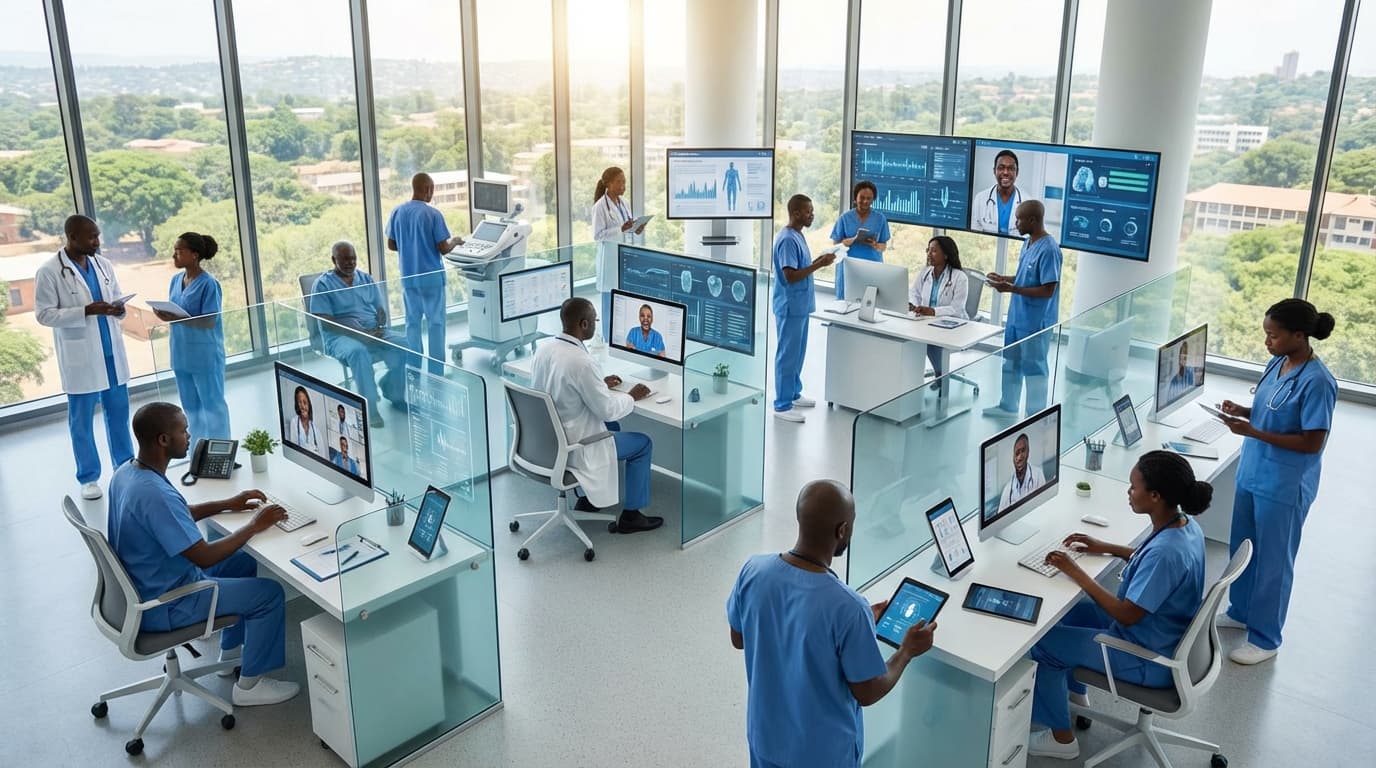
PACS/RIS Migration & Integration in South Sudan
Engineering Excellence & Technical Support
Data migration, interoperability and workflow integration for imaging IT. High-standard technical execution following OEM protocols and local regulatory frameworks.
Seamless Cloud-Based PACS/RIS Deployment
Successfully deployed a scalable, cloud-based Picture Archiving and Communication System (PACS) and Radiology Information System (RIS) across multiple healthcare facilities in South Sudan. This centralized solution ensures secure image storage, efficient workflow management, and remote accessibility for radiologists and clinicians, overcoming infrastructure limitations.
Interoperable Data Integration & Standardization
Engineered robust integration protocols between existing hospital information systems (HIS) and the new PACS/RIS. This involved standardizing data formats (DICOM, HL7) and establishing reliable data pipelines, enabling a unified view of patient data and improving diagnostic accuracy and patient care coordination.
Resilient Network Infrastructure & Data Security
Designed and implemented a resilient and secure network architecture to support the PACS/RIS, factoring in South Sudan's unique connectivity challenges. This included implementing data redundancy, robust encryption, and access control mechanisms to safeguard sensitive patient information and ensure system availability.
What Is Pacs/ris Migration & Integration In South Sudan?
PACS/RIS Migration & Integration in South Sudan refers to the process of transitioning from existing Picture Archiving and Communication Systems (PACS) and Radiology Information Systems (RIS) to a new, unified, or upgraded system, and subsequently ensuring seamless interoperability between these systems and other healthcare IT infrastructure. This service encompasses the planning, execution, and validation of data transfer, system configuration, network setup, and user training necessary for a successful deployment and operationalization within the South Sudanese healthcare landscape. The objective is to enhance diagnostic imaging workflow efficiency, improve data accessibility, facilitate remote consultation capabilities, and ultimately elevate the quality of patient care by standardizing and centralizing medical imaging and radiology data management.
| Who Needs PACS/RIS Migration & Integration? | Typical Use Cases in South Sudan | ||||||
|---|---|---|---|---|---|---|---|
| Public Hospitals & Clinics: Facilities within the national health service seeking to modernize their diagnostic imaging departments and improve patient management. | Private Healthcare Providers: Hospitals and imaging centers aiming to enhance efficiency, offer advanced diagnostic services, and compete with international standards. | Non-Governmental Organizations (NGOs) & Humanitarian Organizations: Healthcare initiatives operating in remote or underserved areas requiring robust and accessible imaging data management solutions, often in resource-constrained settings. | Regional Referral Centers: Larger institutions serving as hubs for specialized medical care, necessitating centralized PACS/RIS for coordinated diagnosis and treatment across multiple departments and potentially multiple locations. | Government Health Ministries: For national-level oversight, data aggregation for public health surveillance, and standardization of healthcare IT infrastructure. | Establishment of New Healthcare Facilities: Greenfield projects requiring the implementation of a complete and integrated PACS/RIS from inception. | ||
| Centralized Imaging Archive: Consolidating imaging data from disparate sources into a single, accessible repository, reducing physical storage needs and improving retrieval times. | Workflow Optimization: Streamlining the entire radiology process from patient registration and examination scheduling to image interpretation, reporting, and archiving. | Remote Diagnosis & Tele-Radiology: Enabling radiologists to interpret images and provide reports remotely, overcoming geographical barriers and shortages of specialized personnel, particularly crucial in remote South Sudanese regions. | Inter-Departmental Collaboration: Facilitating easy sharing of imaging studies and reports among different clinical departments (e.g., surgery, internal medicine, oncology) for multidisciplinary patient management. | Quality Assurance & Auditing: Providing tools for reviewing image quality, diagnostic accuracy, and workflow efficiency for continuous improvement and training. | Research & Public Health Surveillance: Aggregating anonymized imaging data for epidemiological studies, disease trend analysis, and public health interventions. | Disaster Preparedness & Response: Ensuring critical patient imaging data is secure and accessible even in challenging environmental or operational conditions. | Integration with Telemedicine Platforms: Enabling real-time consultation and image review by specialists located outside South Sudan. |
Key Components of PACS/RIS Migration & Integration
- Data Migration: Secure and efficient transfer of existing DICOM images, reports, and patient demographic data from legacy PACS/RIS to the new platform.
- System Configuration & Customization: Tailoring the new PACS/RIS to meet the specific operational requirements, workflows, and reporting standards of South Sudanese healthcare facilities.
- Interoperability & Integration: Establishing seamless data exchange between the new PACS/RIS and other hospital information systems (HIS), Electronic Medical Records (EMR/EHR), and potentially external healthcare networks.
- Network Infrastructure Assessment & Enhancement: Evaluating and upgrading network capabilities to support high-bandwidth data transfer for medical imaging and ensure reliable system access.
- Security & Compliance: Implementing robust data security measures (encryption, access controls) and ensuring compliance with relevant national and international healthcare data regulations.
- User Training & Support: Providing comprehensive training to radiologists, technicians, IT staff, and administrators on the new system's functionalities and offering ongoing technical support.
- System Validation & Testing: Rigorous testing of all system components and workflows to ensure data integrity, system performance, and adherence to functional specifications.
- Disaster Recovery & Business Continuity Planning: Developing strategies to ensure data availability and system resilience in the event of unforeseen disruptions.
Who Needs Pacs/ris Migration & Integration In South Sudan?
South Sudan, a nation rebuilding its healthcare infrastructure, presents a unique and critical need for PACS (Picture Archiving and Communication System) and RIS (Radiology Information System) migration and integration. These systems are fundamental to modern medical imaging and radiology workflow, enabling efficient storage, retrieval, analysis, and reporting of medical images. For South Sudan, adopting and integrating these technologies is not just about modernization; it's about improving diagnostic accuracy, streamlining patient care, enhancing data security, and ultimately, saving lives in a challenging operational environment. The migration and integration efforts are crucial for existing facilities looking to upgrade outdated systems or for newly established ones to build robust diagnostic capabilities from the ground up. Challenges such as limited existing IT infrastructure, a shortage of trained personnel, and geographical dispersion necessitate tailored solutions and strategic planning for successful implementation.
| Department | Key Needs & Benefits | Integration Focus |
|---|---|---|
| Radiology Department | Digital image archiving, retrieval, and viewing; improved workflow efficiency; enhanced reporting capabilities; reduced film costs; telemedicine potential. | Integration with imaging modalities (X-ray, CT, Ultrasound, MRI); integration with RIS for scheduling, patient demographics, and reporting. |
| Information Technology (IT) Department | Centralized data management; system maintenance and support; network infrastructure development; cybersecurity; data backup and recovery. | Integration with hospital's existing IT infrastructure; network connectivity and bandwidth management; user access control and authentication. |
| Clinical Departments (e.g., Cardiology, Neurology, Oncology, Surgery) | Quick access to relevant imaging studies for diagnosis and treatment planning; improved interdisciplinary collaboration; enhanced patient care pathways. | Integration with RIS/PACS for seamless image access by referring physicians; potential for integration with Electronic Health Records (EHRs) for a holistic patient view. |
| Administration & Management | Improved operational efficiency; better resource allocation; enhanced data for decision-making and planning; audit trails for compliance. | Data analytics and reporting capabilities from RIS/PACS; integration with financial systems for billing related to imaging services. |
| Quality Assurance & Training Departments | Standardized imaging protocols; continuous learning opportunities for radiologists and technicians; performance monitoring and improvement. | Access to archived studies for teaching and review; integration with learning management systems (LMS) for radiology education. |
| Emergency Department (ED) | Rapid access to critical imaging for immediate diagnosis and life-saving interventions; reduced turnaround times for radiology reports. | Prioritization of critical cases within the PACS/RIS workflow; seamless communication of urgent findings. |
Target Customers & Departments in South Sudan for PACS/RIS Migration & Integration
- {"title":"Government Healthcare Institutions","description":"Primary targets for national-level infrastructure development and standardized care."}
- {"title":"Non-Governmental Organizations (NGOs) & International Aid Organizations","description":"Key implementers of healthcare projects, often bringing in advanced technologies and expertise."}
- {"title":"Large Public Hospitals","description":"Central hubs for specialized care and high patient volume, requiring efficient imaging management."}
- {"title":"Regional Referral Centers","description":"Facilities serving broader populations and often equipped with more advanced imaging modalities."}
- {"title":"Maternity & Pediatric Hospitals","description":"Specific focus areas where accurate and timely imaging is vital for maternal and child health."}
- {"title":"Tertiary Care Facilities","description":"Hospitals offering the most complex medical services, heavily reliant on advanced imaging for diagnosis and treatment planning."}
- {"title":"Medical Training Institutions","description":"Academies and universities that can leverage integrated systems for educational purposes and research."}
Pacs/ris Migration & Integration Process In South Sudan
This document outlines the typical workflow for a PACS/RIS (Picture Archiving and Communication System/Radiology Information System) migration and integration project in South Sudan. The process is designed to ensure a smooth transition, minimize disruption to clinical operations, and achieve successful implementation of the new system.
| Phase | Key Activities | Considerations for South Sudan |
|---|---|---|
| Inquiry & Initial Assessment | Needs assessment, site survey, risk identification | Assess power stability, internet availability, existing infrastructure, local capacity |
| Planning & Design | System selection, technical design, data migration strategy, training plan | Choose robust, low-maintenance solutions; plan for offline capabilities; local language training materials |
| Procurement & Pre-implementation | Hardware/software ordering, import/customs, infrastructure preparation | Navigate import/customs challenges; ensure reliable power backup; secure physical locations |
| Installation & Configuration | System setup, modality integration, network configuration | Remote assistance where possible; phased rollout if necessary; utilize local skilled labor for installation |
| Data Migration & Testing | Data transfer, system testing, UAT | Validate data integrity thoroughly; accommodate potential for data corruption during transfer; ensure sufficient testing bandwidth |
| Training & Go-Live | User training, final checks, system launch, immediate support | Hands-on, practical training; provide extensive on-site support initially; establish clear escalation procedures |
| Post-Implementation & Optimization | Monitoring, maintenance, ongoing support, system updates | Plan for remote support and troubleshooting; establish local maintenance contracts; build local capacity for ongoing management |
PACS/RIS Migration & Integration Workflow
- {"steps":[{"stepNumber":1.1,"description":"Formal inquiry from healthcare facility or Ministry of Health regarding PACS/RIS needs."},{"stepNumber":1.2,"description":"Initial consultation and needs assessment to understand current infrastructure, existing systems, user requirements, and budget constraints."},{"stepNumber":1.3,"description":"Site visit (if feasible) to evaluate the existing environment, network capabilities, and physical space."},{"stepNumber":1.4,"description":"Preliminary risk assessment, considering factors specific to South Sudan such as power stability, internet connectivity, and logistical challenges."}],"title":"Phase 1: Inquiry & Initial Assessment"}
- {"steps":[{"stepNumber":2.1,"description":"Develop a detailed project plan outlining scope, objectives, timelines, resource allocation, and key milestones."},{"stepNumber":2.2,"description":"System selection: If not already specified, research and recommend suitable PACS/RIS vendors based on assessment findings and budget. This includes evaluating their experience in similar regions."},{"stepNumber":2.3,"description":"Technical design: Define the architecture of the PACS/RIS, including hardware requirements (servers, workstations, modalities), software configuration, network infrastructure, and data storage solutions."},{"stepNumber":2.4,"description":"Data migration strategy: Plan the approach for migrating existing patient data and studies. This involves data cleansing, conversion, and validation procedures. Specific attention will be paid to data format compatibility."},{"stepNumber":2.5,"description":"Integration planning: Define how the new PACS/RIS will interface with existing hospital information systems (HIS), EMRs, and imaging modalities. Standards like HL7 and DICOM will be crucial."},{"stepNumber":2.6,"description":"Develop a comprehensive training plan for end-users (radiologists, technicians, administrators) and IT support staff."},{"stepNumber":2.7,"description":"Procurement and logistics planning: Outline the process for acquiring hardware, software, and necessary licenses, considering import regulations and transportation challenges in South Sudan."}],"title":"Phase 2: Planning & Design"}
- {"steps":[{"stepNumber":3.1,"description":"Finalize vendor contracts and place orders for hardware and software."},{"stepNumber":3.2,"description":"Initiate import and customs clearance procedures for all equipment and software."},{"stepNumber":3.3,"description":"Prepare the physical infrastructure: Install network cabling, ensure adequate power supply and backup solutions (generators, UPS), and prepare server rooms."},{"stepNumber":3.4,"description":"Pre-configuration of software and hardware in a controlled environment (if possible) to expedite on-site deployment."}],"title":"Phase 3: Procurement & Pre-implementation"}
- {"steps":[{"stepNumber":4.1,"description":"On-site installation of PACS/RIS servers, workstations, and other hardware components."},{"stepNumber":4.2,"description":"Software installation and initial configuration according to the designed architecture."},{"stepNumber":4.3,"description":"Integration with existing modalities (X-ray, CT, MRI, Ultrasound) and HIS/EMR systems."},{"stepNumber":4.4,"description":"Network configuration and security setup."}],"title":"Phase 4: Installation & Configuration"}
- {"steps":[{"stepNumber":5.1,"description":"Execute the data migration plan, transferring historical patient data and studies to the new PACS/RIS."},{"stepNumber":5.2,"description":"Perform rigorous testing to ensure data integrity, accessibility, and accuracy."},{"stepNumber":5.3,"description":"System testing: Conduct functional testing, performance testing, and user acceptance testing (UAT) with key stakeholders."},{"stepNumber":5.4,"description":"Integration testing: Verify seamless data flow and communication between PACS/RIS and connected systems."},{"stepNumber":5.5,"description":"Address any identified bugs or issues and re-test."}],"title":"Phase 5: Data Migration & Testing"}
- {"steps":[{"stepNumber":6.1,"description":"Conduct comprehensive training sessions for all end-users and IT support staff."},{"stepNumber":6.2,"description":"Final system readiness checks."},{"stepNumber":6.3,"description":"Official go-live: Transition to the new PACS/RIS system for daily clinical operations."},{"stepNumber":6.4,"description":"Provide intensive post-go-live support to address any immediate user queries or technical challenges."}],"title":"Phase 6: Training & Go-Live"}
- {"steps":[{"stepNumber":7.1,"description":"Ongoing monitoring of system performance and user feedback."},{"stepNumber":7.2,"description":"Regular system maintenance, updates, and patches."},{"stepNumber":7.3,"description":"Further optimization of workflows and system configurations based on operational experience."},{"stepNumber":7.4,"description":"Decommissioning of old systems (if applicable)."},{"stepNumber":7.5,"description":"Knowledge transfer and handover to the local IT team for long-term management."}],"title":"Phase 7: Post-Implementation & Optimization"}
Pacs/ris Migration & Integration Cost In South Sudan
Migrating and integrating Picture Archiving and Communication Systems (PACS) and Radiology Information Systems (RIS) in South Sudan presents unique challenges and cost considerations. Unlike more developed markets, the limited availability of specialized IT infrastructure, skilled personnel, and established vendor support networks can significantly influence pricing. Costs will vary based on the complexity of the existing systems, the size of the healthcare facility, the scope of the migration (e.g., data volume, number of imaging modalities), and the chosen integration approach. Local currency pricing, primarily in South Sudanese Pounds (SSP), will be influenced by exchange rates, import duties, and the vendor's operational costs within the country.
| Cost Component | Estimated Range (SSP) | Notes |
|---|---|---|
| Initial Software Licenses (PACS/RIS) | 10,000,000 - 50,000,000+ | Varies greatly based on vendor, modules, and user count. May involve perpetual or subscription models. |
| Hardware (Servers, Storage, Workstations) | 5,000,000 - 25,000,000+ | Includes servers for PACS/RIS, storage solutions, and dedicated viewing workstations. Costs increase with redundancy and higher performance needs. |
| Data Migration Services | 2,000,000 - 15,000,000 | Dependent on data volume, format, and complexity. Includes data cleansing and validation. |
| Integration Services (Modalities & HIS/LIS) | 3,000,000 - 20,000,000 | Cost depends on the number and type of modalities and other systems to be integrated. HL7 expertise is crucial. |
| Customization & Configuration | 1,500,000 - 10,000,000 | For tailoring workflows, reporting templates, and user interfaces. |
| Network Upgrades/Setup (if required) | 2,000,000 - 20,000,000+ | Can be very high if significant infrastructure improvements are needed, especially for remote sites. |
| Training & Skill Development | 1,000,000 - 5,000,000 | For IT staff, radiologists, and technicians. May include travel and accommodation for trainers. |
| Project Management & Consulting | 1,000,000 - 7,000,000 | Covers planning, oversight, and expert advice throughout the project lifecycle. |
| Import Duties, Taxes & Logistics | Varies Significantly | Can add 15-40% or more to the cost of imported hardware/software. |
| Annual Maintenance & Support (post-implementation) | 5-15% of initial software cost annually | Essential for ongoing system health, updates, and technical assistance. |
| Contingency (10-20%) | Calculated based on total project cost | Crucial for managing unforeseen challenges and scope creep. |
Key Pricing Factors for PACS/RIS Migration & Integration in South Sudan
- Infrastructure Readiness: The existing IT infrastructure (servers, networking, bandwidth, power stability) at the healthcare facility will determine the need for upgrades, which adds to the cost.
- Data Volume & Complexity: The amount of historical imaging data to be migrated, its format, and the complexity of the RIS data (patient records, reports) will impact migration time and effort.
- Integration Scope: The number of imaging modalities (X-ray, CT, MRI, Ultrasound) to be integrated, and the need for integration with other hospital information systems (HIS), laboratory systems (LIS), etc., will affect complexity and cost.
- Customization Requirements: The extent to which the PACS/RIS needs to be customized to meet specific clinical workflows and reporting requirements will influence software development or configuration costs.
- Vendor Selection & Support: The choice of vendor (international vs. local), their experience in South Sudan or similar environments, and the level of ongoing support (training, maintenance, troubleshooting) are critical cost drivers.
- Hardware & Software Licenses: Costs associated with new hardware (servers, workstations, storage) and software licenses for the PACS/RIS, viewer, and any ancillary modules.
- Network & Connectivity: Reliable and sufficient network bandwidth is crucial. If existing connectivity is poor, upgrades or satellite solutions may be necessary, incurring significant costs.
- Skilled Personnel & Training: The availability and cost of local IT professionals for implementation and ongoing management, as well as the cost of specialized training for radiologists, technicians, and IT staff.
- Import Duties & Taxes: Any imported hardware or software will be subject to South Sudanese import duties and taxes, which can be substantial.
- Contingency & Risk Mitigation: Given the potential for unforeseen challenges in South Sudan, a contingency budget is essential for managing unexpected issues.
Affordable Pacs/ris Migration & Integration Options
Migrating and integrating a Picture Archiving and Communication System (PACS) and Radiology Information System (RIS) can be a significant undertaking, often perceived as prohibitively expensive. However, numerous affordable options and strategic approaches exist to minimize costs without compromising essential functionality. This guide explores value bundles and cost-saving strategies for successful PACS/RIS migration and integration.
| Value Bundle Type | Description | Cost-Saving Benefits | Considerations |
|---|---|---|---|
| Core PACS + RIS Bundle | Combines essential PACS (viewing, storage, basic reporting) and RIS (scheduling, patient demographics, billing) functionalities. Often the most common starting point. | Reduced licensing fees through bundling. Streamlined implementation and support from a single vendor. Predictable costs. | May lack advanced features. Ensure the core functionalities meet your specific clinical needs. |
| Cloud-Native SaaS Bundle | A subscription-based service hosted entirely in the cloud. Includes PACS, RIS, and potentially AI-powered tools. Typically includes maintenance and updates. | Eliminates significant upfront hardware investment. Predictable monthly/annual costs. Scalability and remote access capabilities. Reduced IT overhead. | Ongoing subscription costs. Data security and compliance are paramount. Internet dependency. |
| Modular & Scalable Solution | Allows you to select specific PACS and RIS modules based on your current needs and budget, with the option to add more later. Can be on-premise or cloud-based. | Pay only for what you need initially. Flexibility to adapt as needs evolve. Can be more cost-effective than a monolithic system. | Requires careful planning to ensure compatibility between modules. Integration complexity can increase with more modules. |
| Integration-Focused Bundle | Prioritizes seamless integration with existing EHR/EMR systems, lab systems, and other healthcare IT infrastructure. May include HL7 interface development. | Reduces manual data entry and potential errors. Improves workflow efficiency. Maximizes the value of existing IT investments. | Can be more complex to implement. Requires strong vendor expertise in interoperability standards. |
| Open-Source Integration Package | While the core PACS/RIS might be open-source, this bundle focuses on professional services for installation, configuration, integration, and support for open-source solutions. | Significant reduction in software licensing costs. High degree of customization possible. | Requires significant in-house IT expertise. Vendor support might be more limited compared to commercial solutions. Ongoing maintenance responsibility. |
Key Considerations for Affordable PACS/RIS Migration & Integration
- Cloud-Based Solutions: Leveraging cloud infrastructure can drastically reduce upfront hardware and maintenance costs. Scalability is also a major advantage.
- Open-Source PACS/RIS: While requiring more in-house expertise, open-source options offer significant cost savings on licensing fees.
- Phased Implementation: Breaking down the migration into smaller, manageable phases allows for better budget control and less disruption.
- Vendor Negotiation: Thoroughly research and negotiate with multiple vendors. Understand their pricing models and seek bundled discounts.
- Data Archiving Strategy: Implement a cost-effective data archiving solution to manage long-term storage needs efficiently.
- Training and Support: Factor in training costs for staff and the level of ongoing support required from the vendor.
- Integration with Existing Systems: Plan for seamless integration with existing EHR/EMR and other healthcare IT systems to avoid data silos and manual workarounds.
Verified Providers In South Sudan
In South Sudan, ensuring access to reliable and qualified healthcare providers is paramount. Verified providers offer a crucial layer of trust and assurance for individuals seeking medical services. Franance Health stands out as a leading example of such a verified provider, demonstrating a strong commitment to quality, ethical practices, and patient well-being. Their credentials and operational standards make them a compelling choice for healthcare in South Sudan.
| Credential/Aspect | Franance Health's Commitment | Impact on Patients |
|---|---|---|
| Medical Licensing & Certification | Ensures all practitioners meet stringent national and international standards. | Guarantees that patients receive care from competent and authorized professionals. |
| Specialist Expertise | Employs a diverse range of experienced specialists in key medical areas. | Provides access to specialized knowledge and treatment for complex health conditions. |
| Quality Assurance Protocols | Implements robust internal quality control measures for all services. | Minimizes risks and ensures consistent delivery of safe and effective healthcare. |
| Patient Feedback Mechanisms | Actively solicits and incorporates patient feedback to improve services. | Fosters a responsive and patient-focused healthcare experience. |
| Adherence to Ethical Guidelines | Upholds the highest ethical standards in all patient interactions and treatments. | Builds trust and ensures patients' rights and dignity are respected. |
Why Franance Health is a Top Choice for Verified Healthcare in South Sudan
- Rigorous Accreditation and Licensing: Franance Health adheres to strict national and international healthcare standards, ensuring all their medical professionals are fully licensed and accredited. This meticulous vetting process guarantees competency and adherence to best practices.
- Experienced and Qualified Medical Professionals: The organization employs a team of highly skilled doctors, nurses, and specialists with extensive experience in various medical fields. Continuous professional development and training are prioritized to keep their staff at the forefront of medical advancements.
- Commitment to Ethical Practices and Patient Rights: Franance Health operates with a strong ethical framework, prioritizing patient confidentiality, informed consent, and compassionate care. They are dedicated to upholding the dignity and rights of every individual they serve.
- State-of-the-Art Facilities and Equipment: Investment in modern medical technology and well-equipped facilities enables Franance Health to provide comprehensive diagnostic and treatment services, ensuring accurate diagnoses and effective patient outcomes.
- Patient-Centric Approach: The organization places a significant emphasis on understanding and addressing individual patient needs. This includes clear communication, personalized treatment plans, and a supportive environment throughout the healthcare journey.
- Community Health Initiatives: Beyond clinical services, Franance Health actively engages in community health programs, promoting preventative care, health education, and access to essential medical services for underserved populations. This commitment underscores their dedication to the overall health of South Sudan.
- Proven Track Record of Excellence: Through consistent delivery of high-quality care and positive patient experiences, Franance Health has established a strong reputation as a trusted and reliable healthcare provider.
Scope Of Work For Pacs/ris Migration & Integration
This Scope of Work (SOW) outlines the requirements for the migration of the existing Picture Archiving and Communication System (PACS) and Radiology Information System (RIS) to a new, unified platform. This includes the technical migration of all archived medical images and associated patient/exam data, the integration of the new PACS/RIS with existing hospital information systems (HIS), and the deployment of a new PACS/RIS viewer. The project aims to improve workflow efficiency, data accessibility, and long-term archiving capabilities. The successful completion of this SOW will result in a fully functional and integrated PACS/RIS solution meeting all specified technical deliverables and adhering to standard specifications.
| Phase | Activity | Description | Technical Deliverables | Standard Specifications |
|---|---|---|---|---|
| Data Assessment & Profiling | Analyze existing PACS/RIS data structure, volume, and identify data cleansing requirements. | Data assessment report, data profiling metrics. | DICOM conformance, HL7 data mapping standards. |
| System Architecture Design | Design the new PACS/RIS architecture, including hardware, software, network, and storage requirements. | System architecture diagrams, infrastructure plan. | Scalability standards, high-availability design principles. |
| Data Extraction & Transformation | Extract data from legacy PACS/RIS and transform it into the new platform's format. | Extracted data files, transformation scripts. | DICOM standards for image metadata, HL7 v2.x for patient demographics and encounters. |
| Data Loading & Validation | Load transformed data into the new PACS/RIS and perform comprehensive validation checks. | Loaded data in new PACS/RIS, data validation reports, reconciliation logs. | Data integrity checks, pixel data verification. |
| HIS/EHR Integration | Integrate the new PACS/RIS with the hospital's HIS/EHR for seamless patient and exam data flow. | HL7 interface engine configuration, successful interface testing reports. | HL7 v2.x messaging standards (ADT, ORM, ORU), FHIR for future evolution. |
| LIS Integration | Integrate with the LIS for streamlined ordering and reporting workflows. | HL7 ORM/ORU message exchange, successful interface testing. | HL7 v2.x messaging standards. |
| PACS/RIS Server Installation & Configuration | Install and configure the new PACS/RIS server software and associated components. | Installed and configured PACS/RIS servers, system performance baselines. | Vendor-specific installation guides, security hardening standards. |
| PACS Viewer Deployment | Deploy the new PACS viewer to all relevant workstations and mobile devices. | Deployed PACS viewers, user access control configurations. | Browser compatibility, operating system compatibility, performance benchmarks. |
| User Acceptance Testing (UAT) | End-users perform comprehensive testing to validate system functionality and workflows. | UAT test cases, UAT sign-off documentation. | Defined workflow scenarios, functional test scripts. |
| Performance Testing | Assess system performance under various load conditions to ensure optimal responsiveness. | Performance test results, load testing reports. | Response time metrics, throughput targets. |
| End-User Training | Provide comprehensive training to radiologists, technologists, and other end-users. | Training materials, attendance records, post-training assessment. | Role-based training modules, competency assessment criteria. |
| IT Support Training | Train IT support staff on system administration, troubleshooting, and maintenance. | System administration guides, troubleshooting manuals. | System monitoring best practices, escalation procedures. |
| Project Handover | Formally hand over the fully implemented and tested PACS/RIS solution to the organization. | Project closure report, system documentation, as-built diagrams. | Operational readiness checklist, warranty and support agreements. |
Key Objectives
- Seamless migration of all historical PACS/RIS data (images, reports, patient demographics, exam data) to the new platform with no loss of data integrity.
- Successful integration of the new PACS/RIS with the hospital's Electronic Health Record (EHR) system, Laboratory Information System (LIS), and other relevant clinical systems.
- Deployment of a user-friendly and high-performance PACS/RIS viewer with advanced functionalities.
- Establishment of a robust and scalable PACS/RIS infrastructure that meets current and future organizational needs.
- Provision of comprehensive training to all end-users and IT support staff.
- Ensuring compliance with all relevant healthcare regulations and standards (e.g., HIPAA, DICOM, HL7).
Service Level Agreement For Pacs/ris Migration & Integration
This Service Level Agreement (SLA) outlines the response times and uptime guarantees for the successful migration and integration of the Picture Archiving and Communication System (PACS) and Radiology Information System (RIS). This agreement is designed to ensure minimal disruption to clinical operations and maintain the highest level of service availability during and after the transition period.
| Service Component | Uptime Guarantee (Monthly) | Severity 1 (Critical System Failure) | Severity 2 (Major Functionality Impaired) | Severity 3 (Minor Issue / Enhancement Request) |
|---|---|---|---|---|
| PACS Core Functionality (Image Access, Archiving) | 99.9% | Response: 15 minutes; Resolution Target: 2 hours | Response: 1 hour; Resolution Target: 4 hours | Response: 4 business hours; Resolution Target: 2 business days |
| RIS Core Functionality (Scheduling, Reporting, Billing) | 99.9% | Response: 15 minutes; Resolution Target: 2 hours | Response: 1 hour; Resolution Target: 4 hours | Response: 4 business hours; Resolution Target: 2 business days |
| Integration Points (e.g., EHR, Modality Worklist) | 99.5% | Response: 30 minutes; Resolution Target: 3 hours | Response: 2 hours; Resolution Target: 8 hours | Response: 8 business hours; Resolution Target: 3 business days |
| Data Migration Process (During Active Migration Phase) | N/A (Managed by Project Plan) | Response: 1 hour; Resolution Target: Per agreed-upon data validation timelines | Response: 2 hours; Resolution Target: Per agreed-upon data validation timelines | Response: 4 business hours; Resolution Target: Per agreed-upon data validation timelines |
Key Service Metrics
- Downtime during scheduled maintenance will be communicated at least 48 hours in advance.
- Unscheduled downtime exceeding 15 minutes will trigger an incident response.
- All response times are measured from the moment an issue is formally logged in the designated ticketing system.
- Uptime is calculated on a monthly basis, excluding scheduled maintenance windows.
Frequently Asked Questions

Ready when you are
Let's scope your PACS/RIS Migration & Integration in South Sudan project in South Sudan.

Scaling healthcare logistics and technical systems across the entire continent.