
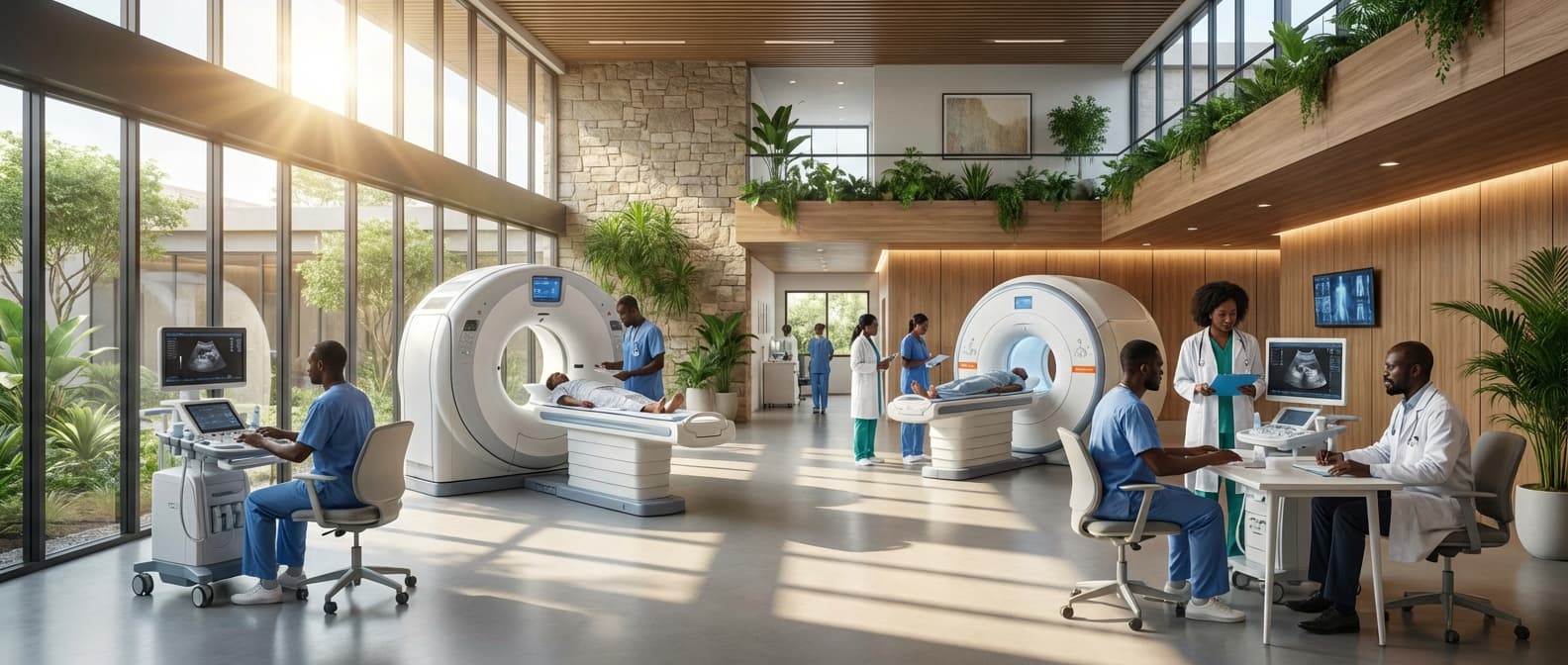
Diagnostic Imaging in South Sudan
Engineering Excellence & Technical Support
High-resolution imaging systems including CT scanners, MRI, X-ray, and ultrasound technology for accurate clinical diagnosis. High-standard technical execution following OEM protocols and local regulatory frameworks.
Mobile X-ray Units Deployed to Remote Areas
Strategic deployment of portable X-ray machines to underserved rural clinics enhances early detection of tuberculosis, pneumonia, and fractures, significantly improving patient outcomes in regions lacking fixed infrastructure.
Point-of-Care Ultrasound Training for Healthcare Workers
Empowering local healthcare professionals with bedside ultrasound skills enables rapid diagnosis of critical conditions such as ectopic pregnancies, appendicitis, and fluid accumulation in emergency settings, bridging the diagnostic gap.
Tele-radiology Network for Specialist Consultations
Establishing a secure tele-radiology platform facilitates remote interpretation of imaging studies by specialized radiologists, providing expert diagnostic support to isolated healthcare facilities and improving patient referral pathways.
What Is Diagnostic Imaging In South Sudan?
Diagnostic imaging in South Sudan refers to the use of specialized medical equipment and techniques to create visual representations of the internal structures of the human body. This service plays a critical role in the accurate diagnosis, staging, and monitoring of a wide range of medical conditions within the healthcare infrastructure of South Sudan, which often faces significant resource constraints. It involves the acquisition of anatomical and physiological data, which clinicians then interpret to identify abnormalities, assess disease progression, and guide therapeutic interventions. The availability and effective utilization of diagnostic imaging are crucial for improving patient outcomes, even in challenging operational environments.
| Who Needs Diagnostic Imaging? | Typical Use Cases | ||||||
|---|---|---|---|---|---|---|---|
| Individuals presenting with symptoms suggestive of internal injury or pathology. | Trauma patients (e.g., suspected fractures, internal bleeding). | Patients with suspected infections (e.g., pneumonia, tuberculosis, abscesses). | Patients experiencing abdominal pain or discomfort. | Women undergoing prenatal care for fetal assessment. | Patients with neurological symptoms (e.g., stroke, head injury). | Individuals requiring monitoring of chronic diseases (e.g., cancer staging, treatment response). | |
| Fracture detection and assessment of bone integrity. | Diagnosis of pulmonary diseases such as pneumonia, tuberculosis, and pleural effusions. | Evaluation of abdominal organs (liver, kidneys, spleen, pancreas, gallbladder) for abnormalities. | Guidance for minimally invasive procedures (e.g., biopsies, fluid drainage). | Assessment of fetal development, position, and well-being during pregnancy. | Detection of intracranial hemorrhages, tumors, and degenerative changes in the brain. | Monitoring the extent and response to treatment for various cancers. | Identification of vascular abnormalities and blood flow disturbances. |
Diagnostic Imaging Services in South Sudan
- Radiography (X-ray): The most common form, utilizing electromagnetic radiation to produce images of bones, lungs, and certain soft tissues. This is often the foundational imaging modality in resource-limited settings.
- Ultrasonography (Ultrasound): Employs sound waves to create real-time images of soft tissues, organs, and blood flow. It is particularly valuable for obstetrics, gynecology, abdominal assessments, and vascular studies due to its non-ionizing nature and portability.
- Computed Tomography (CT) Scan: Generates cross-sectional images by combining multiple X-ray beams. While more advanced and requiring greater infrastructure, CT offers detailed visualization of bone, soft tissues, and organs, crucial for trauma, neurological conditions, and complex abdominal pathologies.
- Magnetic Resonance Imaging (MRI): Utilizes strong magnetic fields and radio waves to produce highly detailed images of soft tissues, organs, and the brain. Due to its high cost and infrastructure requirements, MRI availability in South Sudan is extremely limited, often restricted to major referral centers or through specialized outreach programs.
- Fluoroscopy: A real-time X-ray imaging technique that allows visualization of internal structures and their movement, often used for gastrointestinal studies or during interventional procedures.
Who Needs Diagnostic Imaging In South Sudan?
Diagnostic imaging plays a crucial role in healthcare delivery, even in resource-limited settings like South Sudan. Identifying the specific needs and target customers for these services is essential for optimizing their impact and ensuring equitable access. This involves understanding the prevalent diseases, healthcare infrastructure, and the individuals and institutions that would benefit most from accurate and timely diagnoses provided by imaging modalities.
| Customer Group | Key Needs Addressed by Imaging | Primary Imaging Modalities |
|---|---|---|
| Individuals in Remote Areas | Access to basic diagnostics for common illnesses and injuries. | Portable X-ray, Ultrasound |
| Urban Hospital Patients | Comprehensive diagnosis for complex conditions, surgical planning, and monitoring. | X-ray, Ultrasound, CT (where available) |
| Maternal & Child Health Clinics | Monitoring pregnancy, identifying complications, and diagnosing pediatric illnesses. | Ultrasound, X-ray |
| Trauma & Emergency Units | Rapid assessment of fractures, internal bleeding, and other injuries. | X-ray, CT (where available) |
| TB & Infectious Disease Centers | Confirmation of pulmonary TB, assessment of pneumonia, and monitoring treatment. | X-ray |
| Government Ministry of Health | Public health surveillance, planning of health services, and resource allocation. | Data from imaging services across facilities |
| NGOs & Humanitarian Organizations | Providing essential medical services in underserved and crisis-affected regions. | Portable X-ray, Ultrasound |
Target Customers and Departments for Diagnostic Imaging in South Sudan
- {"item":"Patients with suspected infectious diseases","description":"South Sudan faces a high burden of infectious diseases such as tuberculosis, pneumonia, malaria, and HIV. Diagnostic imaging, particularly X-rays and ultrasounds, can be vital for confirming diagnoses, assessing disease severity, and monitoring treatment response."}
- {"item":"Individuals with traumatic injuries","description":"Due to conflict and accidents, trauma is a significant concern. X-rays are indispensable for diagnosing fractures and dislocations, while CT scans (where available) can provide detailed views of internal injuries, head trauma, and spinal cord damage."}
- {"item":"Pregnant women","description":"Ultrasound is a cornerstone of antenatal care, enabling the monitoring of fetal development, identification of potential complications (e.g., ectopic pregnancy, placenta previa), and guidance for delivery. This is particularly important in a region with high maternal and infant mortality rates."}
- {"item":"Patients with non-communicable diseases (NCDs)","description":"While infectious diseases are prevalent, NCDs like cardiovascular disease, cancer, and chronic respiratory conditions are also on the rise. Imaging can aid in the diagnosis and staging of these conditions, though access may be more limited."}
- {"item":"Children with various health issues","description":"Pediatric populations are susceptible to a wide range of conditions, from pneumonia and appendicitis to congenital abnormalities. Imaging can offer non-invasive and accurate diagnostic pathways for these young patients."}
- {"item":"Healthcare Facilities (Hospitals and Clinics)","description":"Central hospitals, regional referral centers, and even larger primary health clinics would be the primary users of diagnostic imaging equipment. This includes both government-run and non-governmental organization (NGO) facilities."}
- {"item":"Specialty Departments within Hospitals","description":"Key departments would include Radiology (the primary imaging department), Surgery (for trauma and surgical planning), Internal Medicine (for diagnosing a range of conditions), Pediatrics (for childhood illnesses), Obstetrics and Gynecology (for maternal health), and Oncology (for cancer diagnosis and management)."}
- {"item":"Mobile Outreach Programs","description":"Given the dispersed population and limited infrastructure, mobile imaging units can extend the reach of diagnostic services to remote areas, targeting communities that would otherwise have no access."}
- {"item":"Medical Training Institutions","description":"Hospitals affiliated with medical schools or training centers will require imaging equipment for the education and training of future radiologists, radiographers, and other healthcare professionals."}
Diagnostic Imaging Process In South Sudan
Diagnostic imaging in South Sudan, like in many developing nations, faces significant challenges related to infrastructure, skilled personnel, and resource availability. Despite these hurdles, a general workflow from inquiry to execution can be outlined, highlighting the critical steps and potential bottlenecks.
| Stage | Description | Key Actors | Potential Challenges in South Sudan |
|---|---|---|---|
| Patient Referral/Inquiry | A patient presents with symptoms or a suspected condition requiring imaging. This can originate from a primary healthcare center, a specialist, or a hospital department. | Patient, Primary Healthcare Worker, Nurse, Doctor | Lack of awareness about imaging services, geographical barriers to access, limited diagnostic capacity at lower healthcare levels. |
| Clinical Assessment and Decision Making | The referring clinician evaluates the patient's condition and determines if diagnostic imaging is necessary and what modality is most appropriate (e.g., X-ray, Ultrasound, CT, MRI - though CT/MRI are very limited). | Doctor, Clinical Officer | Limited availability of specialists to guide imaging choices, insufficient understanding of imaging indications, reliance on basic clinical judgment. |
| Imaging Request and Justification | A formal request form is completed, outlining the patient's details, clinical history, suspected diagnosis, and the specific imaging study required. This often includes a justification for the need for the scan. | Referring Clinician | Incomplete or inaccurate request forms, lack of standardized request forms, insufficient justification leading to potential denial of service due to resource constraints. |
| Logistics and Scheduling | The imaging request is received by the imaging department. Scheduling depends on equipment availability, radiographer/technician availability, and patient transport arrangements. | Administrative Staff, Radiographer/Technician | Limited number of imaging facilities, infrequent operation of specialized equipment (if available), unpredictable power supply, lack of reliable transport for patients, high patient load leading to long waiting times. |
| Image Acquisition (Scanning) | The patient undergoes the imaging procedure using the available equipment. This involves positioning the patient and operating the imaging device. | Radiographer/Technician | Malfunctioning or outdated equipment, lack of consumables (e.g., contrast media, films if applicable), insufficient training of radiographers, power outages during scans, limited accessibility of advanced modalities (CT/MRI). |
| Image Interpretation | A qualified radiologist (or in some cases, a trained radiographer/doctor in basic interpretation) reviews the acquired images to identify abnormalities and provide a diagnostic opinion. | Radiologist, Radiographer/Technician (limited scope) | Severe shortage of radiologists, overwhelming workload for existing radiologists (often relying on remote interpretation services if available), limited access to PACS (Picture Archiving and Communication System) for efficient review, potential for delayed interpretation. |
| Report Generation | A formal report detailing the imaging findings, impression, and recommendations is compiled based on the interpretation. | Radiologist | Delays in report generation due to workload, potential for basic or incomplete reports due to limited expertise, reliance on manual transcription if electronic systems are absent. |
| Report Delivery and Follow-up | The imaging report is sent back to the referring clinician, who then uses it to guide patient management and treatment. Follow-up imaging may be scheduled if necessary. | Administrative Staff, Referring Clinician, Patient | Lost or delayed reports, communication breakdowns between departments, lack of a robust system for tracking reports, limited capacity for follow-up imaging due to ongoing challenges. |
Diagnostic Imaging Workflow in South Sudan
- Patient Referral/Inquiry
- Clinical Assessment and Decision Making
- Imaging Request and Justification
- Logistics and Scheduling
- Image Acquisition (Scanning)
- Image Interpretation
- Report Generation
- Report Delivery and Follow-up
Diagnostic Imaging Cost In South Sudan
Diagnostic imaging costs in South Sudan are significantly influenced by a complex interplay of factors, leading to a wide and often unpredictable price range. The country's fragile economy, limited infrastructure, and reliance on imported equipment and consumables are primary drivers of these costs. Prices are typically quoted in South Sudanese Pounds (SSP), but exchange rate volatility can make international comparisons and financial planning challenging. The scarcity of specialized equipment and trained personnel further exacerbates the issue, often leading to a situation where available services are priced at a premium.
| Imaging Modality | Typical Price Range (SSP) | Notes |
|---|---|---|
| X-ray (Single View) | 15,000 - 50,000 | Price varies significantly based on body part and facility. Some basic X-rays might be cheaper in public health centers. |
| X-ray (Multiple Views/Chest X-ray) | 30,000 - 100,000 | More complex imaging or multiple views will increase the cost. |
| Ultrasound (Abdomen/Pelvis) | 40,000 - 150,000 | Obstetric ultrasounds may fall within this range or be slightly higher depending on complexity. |
| Ultrasound (Other - e.g., Thyroid, Breast) | 35,000 - 120,000 | Specialized ultrasounds can vary in price. |
| CT Scan (Head/Chest/Abdomen - non-contrast) | 150,000 - 500,000+ | CT scanners are rare and expensive to operate. Prices can fluctuate wildly and are often only available in major referral hospitals or private centers. |
| MRI Scan | Not widely available / Extremely high cost | MRI services are exceptionally rare in South Sudan. If available, prices would be prohibitive for the majority of the population, likely in the millions of SSP. |
Key Pricing Factors for Diagnostic Imaging in South Sudan
- Equipment Availability and Maintenance: The cost of acquiring, maintaining, and repairing specialized diagnostic imaging equipment (X-ray, ultrasound, CT scanners, MRI) is a major factor. Many facilities operate with aging equipment requiring frequent and costly repairs, often relying on imported parts and expatriate technicians, driving up operational expenses.
- Importation Costs and Tariffs: South Sudan has a high dependency on imported medical supplies, including imaging consumables (contrast agents, films, sensors) and spare parts. Import duties, logistical challenges, and currency depreciation significantly inflate these costs.
- Infrastructure Limitations: Unreliable electricity supply necessitates the use of generators, which add to fuel and maintenance costs. Poor road networks can also increase the cost of transporting equipment, parts, and personnel.
- Skilled Personnel Shortage: A severe deficit in trained radiologists, radiographers, and sonographers means that existing professionals command higher salaries. Many facilities rely on expensive expatriate staff, further increasing labor costs.
- Facility Type and Location: Government-run facilities generally offer lower prices, often subsidized, but may have limited availability and longer waiting times. Private clinics and hospitals, particularly in major urban centers like Juba, typically charge higher rates due to their operational costs and target clientele.
- Demand and Competition: In areas with limited access to imaging services, demand outstrips supply, allowing providers to set higher prices. Conversely, in locations with more options, competition may lead to more moderate pricing, though this is less common.
- Consumables and Supplies: The cost of essential consumables such as X-ray films, developing chemicals, ultrasound gel, and contrast media is a significant component of the overall price. These are often imported and subject to fluctuating exchange rates.
- Energy Costs: Consistent and reliable power is crucial for diagnostic imaging. The reliance on generators and the associated fuel costs contribute to the overall pricing structure.
- Administrative and Overhead Costs: Running a medical facility involves various administrative expenses, including rent, utilities, and staffing, which are factored into the pricing of services.
Affordable Diagnostic Imaging Options
Navigating the costs of diagnostic imaging can be a significant concern for many individuals. Fortunately, there are increasingly accessible and affordable options available. Understanding concepts like 'value bundles' and employing smart cost-saving strategies can significantly reduce out-of-pocket expenses without compromising the quality of care. Value bundles often group related imaging services together, offering a fixed price that is typically lower than purchasing each service individually. Cost-saving strategies involve proactive research, comparison shopping, and leveraging available resources.
| Imaging Service | Potential Cost Range (Out-of-Pocket/Uninsured) | Average Savings with Bundles/Strategies |
|---|---|---|
| X-ray (Single View) | $50 - $250 | 15-30% |
| CT Scan (Abdomen/Pelvis) | $200 - $1,000+ | 20-40% |
| MRI (Brain) | $300 - $1,500+ | 25-50% |
| Ultrasound (Abdominal) | $100 - $500+ | 10-25% |
| Mammogram (Screening) | $75 - $300 | 15-30% |
Key Cost-Saving Strategies for Diagnostic Imaging:
- Compare Prices: Different imaging centers and hospitals can have vastly different prices for the same procedure. Utilize online price transparency tools or call facilities directly to get quotes.
- Ask About Value Bundles: Inquire if the imaging center offers bundled pricing for related services (e.g., an MRI with contrast).
- Check Insurance Coverage Carefully: Understand your deductible, co-pays, and co-insurance for imaging services. Contact your insurance provider to confirm in-network providers and pre-authorization requirements.
- Consider Outpatient Imaging Centers: Independent outpatient imaging centers are often significantly less expensive than hospital-based facilities for the same services.
- Negotiate Self-Pay Discounts: If you are paying out-of-pocket, don't hesitate to ask for a discount. Many facilities offer reduced rates for patients who pay in full before or at the time of service.
- Explore Discount Programs and Medical Credit Cards: Some imaging providers participate in discount programs or offer payment plans. Medical credit cards can also provide financing options.
- Discuss Necessity with Your Doctor: Ensure the imaging ordered is truly necessary. Sometimes, alternative diagnostic methods might be available.
- Look for Imaging Centers Specializing in Specific Modalities: Centers that focus on a particular type of imaging (e.g., MRI only) might offer more competitive pricing.
- Consider Imaging Centers with Transparent Pricing: Some facilities are leading the way in providing clear and upfront pricing information online or over the phone.
- Utilize Patient Advocacy Groups: These organizations can offer guidance and resources for navigating healthcare costs, including imaging.
Verified Providers In South Sudan
In South Sudan, identifying reliable and accredited healthcare providers is paramount for ensuring quality medical care. Franance Health stands out as a leading organization, meticulously vetting and credentialing healthcare professionals and facilities across the nation. Their rigorous verification process guarantees that all listed providers meet stringent international standards for competence, ethics, and safety. Choosing a Franance Health verified provider means opting for excellence, trust, and a commitment to patient well-being. This dedication to quality assurance makes Franance Health the definitive choice for anyone seeking dependable healthcare services in South Sudan.
| Criterion | Franance Health Verified Providers | General Providers |
|---|---|---|
| Credential Verification | Thoroughly checked and certified. | May vary; often unverified or inconsistently checked. |
| Adherence to Standards | Strictly follows established international medical protocols. | May not consistently meet international benchmarks. |
| Professional Ethics | Undergoes assessment for ethical conduct and patient care. | Ethical standards can be difficult to ascertain without verification. |
| Patient Safety | Prioritizes patient safety through comprehensive checks. | Patient safety measures might be less standardized. |
| Reputation & Trust | Built on a foundation of verified competence and reliability. | Reputation can be subjective and lack objective backing. |
Why Choose Franance Health Verified Providers?
- Unwavering commitment to international quality and safety standards.
- Rigorous vetting process for all healthcare professionals and facilities.
- Enhanced patient confidence and trust in healthcare services.
- Access to a network of skilled and ethically-minded medical practitioners.
- Reduced risk of encountering substandard or unqualified providers.
Scope Of Work For Diagnostic Imaging
This Scope of Work (SOW) outlines the requirements for providing diagnostic imaging services, including technical deliverables and standard specifications. It aims to ensure the delivery of high-quality imaging, accurate reporting, and seamless integration with existing healthcare systems.
| Section | Description | Key Deliverables | Standard Specifications/Requirements |
|---|---|---|---|
| Imaging Modalities and Services | Provision of diagnostic imaging services across various modalities. | Radiology reports, imaging studies (DICOM format), contrast media usage logs. | CT, MRI, X-ray, Ultrasound, Mammography, Nuclear Medicine (as applicable). Availability of specialized procedures (e.g., interventional radiology, PET/CT). |
| Technical Specifications for Imaging Equipment | Requirements for imaging hardware to ensure optimal image quality and patient safety. | Equipment technical manuals, calibration certificates, performance reports. | Minimum spatial resolution, signal-to-noise ratio (SNR), dose reduction technologies, adherence to FDA/CE marking standards. Latest generation equipment preferred. |
| Image Acquisition and Processing Standards | Protocols and procedures for image acquisition, reconstruction, and post-processing. | Standardized imaging protocols for common examinations, post-processing algorithms documentation. | Adherence to ACR (American College of Radiology) guidelines, industry best practices for noise reduction, artifact correction, and image enhancement. |
| PACS Integration | Seamless integration of imaging systems with the existing Picture Archiving and Communication System (PACS). | Successful DICOM connectivity, HL7 messaging integration, image availability within PACS within defined SLAs. | Compliance with DICOM standards (v3.0 or later), HL7 v2.x or FHIR, secure network protocols (e.g., TLS 1.2+). |
| Reporting and Interpretation Standards | Qualifications and standards for radiologists and the reporting process. | Radiology reports (structured and unstructured), turnaround times (TATs) for routine and STAT interpretations. | Board-certified radiologists, adherence to reporting templates, standardized terminology (e.g., RadLex), minimum TATs for critical findings (e.g., < 60 minutes for STAT CT head). |
| Data Security and Privacy | Measures to ensure the security and privacy of patient imaging data. | HIPAA/GDPR compliance documentation, audit logs, security incident reports. | Encryption of data in transit and at rest, access controls, regular security audits, robust backup and disaster recovery plan. |
| Quality Assurance and Control | Processes for monitoring and improving the quality of imaging services. | QA reports, peer review results, patient satisfaction surveys, corrective action plans. | Regular equipment QA checks, protocol audits, radiologist peer review, adherence to ACR QA standards. |
| Training and Support | Provision of training for healthcare staff and ongoing technical support. | Training materials, support contact information, service level agreements (SLAs) for support response times. | On-site and remote training, 24/7 technical support availability, dedicated account manager. |
| Maintenance and Upgrades | Regular maintenance of imaging equipment and timely upgrades. | Maintenance schedules, upgrade plans, performance reports post-maintenance/upgrade. | Preventive maintenance as per manufacturer recommendations, plan for hardware and software upgrades to maintain state-of-the-art capabilities. |
Key Areas Covered
- Imaging Modalities and Services
- Technical Specifications for Imaging Equipment
- Image Acquisition and Processing Standards
- Picture Archiving and Communication System (PACS) Integration
- Reporting and Interpretation Standards
- Data Security and Privacy
- Quality Assurance and Control
- Training and Support
- Maintenance and Upgrades
Service Level Agreement For Diagnostic Imaging
This Service Level Agreement (SLA) outlines the guaranteed performance standards for diagnostic imaging services provided by [Your Company Name] to [Client Name]. It covers critical aspects such as report turnaround times and system uptime, ensuring reliable and timely access to essential imaging data.
| Service Component | Metric | Guaranteed Level | Measurement Period | Service Credit/Remedy |
|---|---|---|---|---|
| Diagnostic Imaging Report Turnaround | Report Delivery Time (Routine Exams) | 95% of reports delivered within 24 hours | Monthly | 10% discount on monthly service fee for each instance of failing to meet the 24-hour deadline for >5% of routine exams. |
| Diagnostic Imaging Report Turnaround | Report Delivery Time (STAT Exams) | 98% of reports delivered within 2 hours | Monthly | 15% discount on monthly service fee for each instance of failing to meet the 2-hour deadline for >2% of STAT exams. |
| Diagnostic Imaging System Uptime | System Availability | 99.9% uptime (excluding scheduled maintenance) | Monthly | Tiered service credits based on uptime deviation: 99.5%-99.9% (5% credit), 99.0%-99.4% (10% credit), <99.0% (20% credit). |
| Diagnostic Imaging Data Accessibility | Image Retrieval Time | 99.9% of image retrieval requests completed within 60 seconds | Monthly | 5% discount on monthly service fee for each instance of failing to meet the 60-second retrieval time for >0.1% of requests. |
Key Performance Indicators (KPIs) and Guarantees
- Report Turnaround Time: The time from image acquisition completion to the delivery of a radiologist's final report.
- System Uptime: The percentage of time the diagnostic imaging systems are operational and accessible for image acquisition and review.
- Data Accessibility: The guaranteed availability of stored imaging data for retrieval and analysis.
Frequently Asked Questions

Ready when you are
Let's scope your Diagnostic Imaging in South Sudan project in South Sudan.

Scaling healthcare logistics and technical systems across the entire continent.