
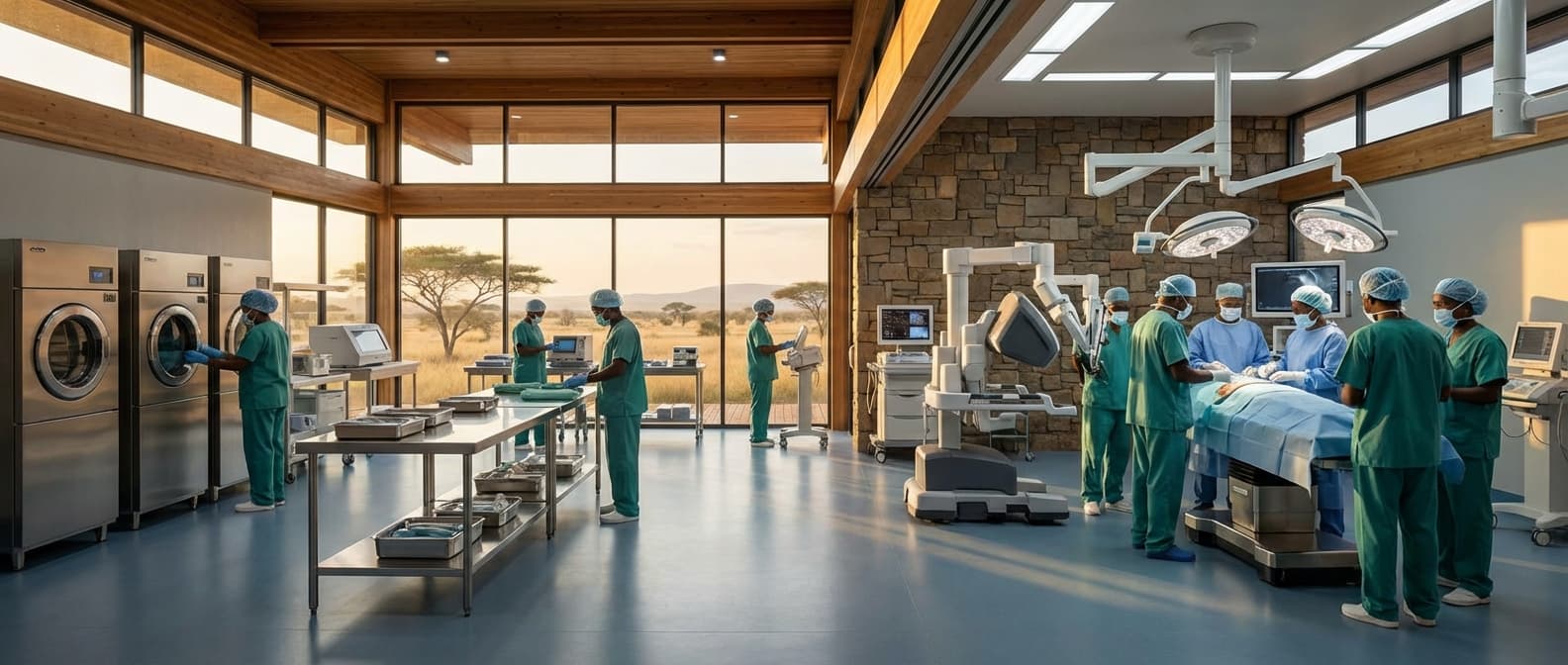
Endoscopy Reprocessing Validation in South Sudan
Engineering Excellence & Technical Support
AER validation, SOP development and compliance High-standard technical execution following OEM protocols and local regulatory frameworks.
Validated Cleaning Efficacy
Demonstrates successful removal of protein and bioburden from endoscopes using validated cleaning protocols, ensuring patient safety and infection prevention in resource-limited settings of South Sudan.
Sterilization Process Assurance
Confirms the effectiveness of chosen sterilization methods (e.g., high-level disinfection, autoclaving) to eliminate all viable microorganisms on endoscopes, crucial for preventing hospital-acquired infections in South Sudan's healthcare infrastructure.
Robust Performance Monitoring
Establishes a framework for continuous monitoring and documentation of reprocessing cycles, providing data-driven insights to maintain high standards of endoscopic reprocessing and adapt to local operational challenges in South Sudan.
What Is Endoscopy Reprocessing Validation In South Sudan?
Endoscopy reprocessing validation in South Sudan refers to the systematic process of verifying and documenting that reusable medical devices, specifically endoscopes, have undergone a validated and effective cleaning, disinfection, or sterilization procedure. This validation ensures that these critical instruments are free from viable microorganisms and are safe for subsequent patient use, thereby preventing healthcare-associated infections (HAIs). The process adheres to established guidelines and standards for reprocessing reusable medical devices.
| Aspect | Description | Relevance in South Sudan | |||
|---|---|---|---|---|---|
| Service Definition | The comprehensive process of verifying the effectiveness of cleaning, disinfection, and/or sterilization protocols for reusable endoscopes to ensure patient safety. | Crucial for mitigating the risk of transmission of infectious agents, particularly in resource-limited settings where HAIs can have a disproportionately high impact. | |||
| Who Needs It | Healthcare facilities in South Sudan that utilize reusable endoscopes for diagnostic and therapeutic procedures. This includes public and private hospitals, as well as specialized clinics. | Essential for any healthcare provider performing or intending to perform endoscopic procedures, including gastroenterology, pulmonology, urology, and gynecology departments. | |||
| Typical Use Cases | Preventing Cross-Contamination: Ensuring that endoscopes used on one patient do not transmit pathogens to another. | Regulatory Compliance: Meeting national and international standards for medical device reprocessing. | Patient Safety Assurance: Providing a reliable guarantee of instrument safety for all patients. | Quality Improvement: Establishing a benchmark for consistent and effective reprocessing practices. | Training and Education: Serves as a basis for training healthcare personnel on proper reprocessing techniques. |
Key Components of Endoscopy Reprocessing Validation
- Pre-cleaning: Initial gross debris removal immediately after use.
- Manual Cleaning: Thorough manual scrubbing of all lumens and external surfaces to remove organic matter and debris.
- Automated Mechanical Cleaning (if applicable): Utilization of automated endoscope reprocessors (AERs) that have been validated for the specific detergents and disinfection/sterilization agents used.
- High-Level Disinfection (HLD) or Sterilization: Application of a validated chemical agent or process to eliminate all microorganisms except for large numbers of bacterial spores (HLD) or to eliminate all forms of microbial life, including spores (sterilization).
- Rinsing: Thorough rinsing with sterile or filtered water to remove residual cleaning/disinfecting agents.
- Drying: Proper drying of all channels and surfaces to prevent microbial proliferation.
- Storage: Appropriate storage in a clean, dry, and protected environment to prevent recontamination.
Who Needs Endoscopy Reprocessing Validation In South Sudan?
Endoscopy reprocessing validation is a critical quality assurance process ensuring that reusable medical devices, particularly endoscopes, are thoroughly cleaned and sterilized to prevent the transmission of infections. This process is vital in healthcare settings worldwide, and its importance is amplified in regions facing resource constraints and potential challenges in maintaining sterile environments. In South Sudan, where healthcare infrastructure is developing and access to advanced medical technologies can be limited, ensuring the safety of endoscopic procedures is paramount. Therefore, the need for endoscopy reprocessing validation is not a question of 'who' needs it, but rather a foundational requirement for any facility performing endoscopic procedures. The target customers and departments requiring this validation are those directly involved in the use and reprocessing of endoscopes.
| Customer/Department | Role in Endoscopy Reprocessing | Reason for Validation Need | Impact of Non-Validation |
|---|---|---|---|
| Hospitals/Healthcare Facilities | Hosts endoscopic procedures and reprocessing units. | Ensures compliance with patient safety standards and infection control guidelines. | Risk of healthcare-associated infections (HAIs), reputational damage, and potential legal repercussions. |
| Surgical/Gastroenterology/Pulmonology Departments | Directly utilize endoscopes on patients. | Guarantees the safety of instruments used in invasive procedures. | Transmission of pathogens to patients, leading to severe illness or death. |
| Central Sterile Supply Departments (CSSDs) | Perform the critical cleaning, disinfection, and sterilization of endoscopes. | Verifies the effectiveness of their reprocessing protocols. | Failure to adequately reprocess can lead to instrument contamination and subsequent infections. |
| Infection Prevention and Control (IPC) Committees | Develop and monitor infection control policies, including reprocessing standards. | Provides evidence of effective infection prevention measures. | Inability to demonstrate effective reprocessing undermines IPC efforts and patient safety. |
| Government Health Ministries/Regulatory Bodies | Set and enforce healthcare quality standards. | Ensures that facilities meet national and international safety benchmarks. | Lack of validated reprocessing can lead to non-compliance with regulations and a general decline in healthcare quality. |
| NGOs/International Aid Agencies | Often involved in establishing or supporting healthcare services and training. | Ensures that the healthcare infrastructure they help build adheres to best practices. | Supporting facilities with unvalidated reprocessing can inadvertently contribute to patient harm and undermine the impact of their aid. |
Target Customers and Departments for Endoscopy Reprocessing Validation in South Sudan
- Hospitals and larger healthcare facilities performing endoscopic procedures.
- Surgical departments utilizing endoscopes for diagnostic and therapeutic interventions.
- Gastroenterology departments, a primary user of endoscopes.
- Pulmonology departments, also using flexible endoscopes.
- Operating rooms where endoscopic surgeries are conducted.
- Central Sterile Supply Departments (CSSDs) or their equivalent responsible for endoscope reprocessing.
- Infection Prevention and Control (IPC) committees and departments, who oversee patient safety and infection control protocols.
- Government health ministries and regulatory bodies responsible for setting healthcare standards and ensuring patient safety.
- Non-governmental organizations (NGOs) and international aid agencies involved in healthcare delivery and capacity building in South Sudan.
Endoscopy Reprocessing Validation Process In South Sudan
The Endoscopy Reprocessing Validation Process in South Sudan is a critical quality assurance measure to ensure that endoscopes are safe for patient use. This process verifies that the adopted reprocessing methods effectively eliminate microorganisms. The workflow typically involves several stages, beginning with an inquiry and culminating in a documented validation report. Each step is designed to assess the efficacy of the cleaning and disinfection/sterilization procedures under local conditions, considering resource availability and potential challenges. This validation is crucial for infection prevention and control within healthcare facilities. The process aims to build confidence in the reprocessing protocol and minimize the risk of healthcare-associated infections transmitted via endoscopes.
| Stage | Description | Key Activities | Responsible Parties | Potential Challenges in South Sudan |
|---|---|---|---|---|
| Initial Inquiry & Need Assessment | Understanding the requirement for validating existing or proposed reprocessing protocols. | Formal request from healthcare facility, identification of endoscopes to be validated, assessment of current reprocessing practices. | Healthcare Facility Management, Infection Prevention and Control (IPC) Team, Ministry of Health (MoH) representative. | Lack of formal documentation of existing processes, limited awareness of validation requirements. |
| Protocol Development/Review | Establishing or evaluating the detailed step-by-step procedure for reprocessing. | Reviewing manufacturer's instructions for use (IFU), adapting to local resources, developing Standard Operating Procedures (SOPs) for cleaning, high-level disinfection (HLD) or sterilization. | IPC Team, Biomedical Engineering Department, External Consultants (if available), MoH. | Inconsistent availability of manufacturer's IFUs, limited access to up-to-date guidelines, difficulty in adapting protocols to scarce resources. |
| Resource & Equipment Verification | Ensuring that necessary cleaning agents, disinfectants, sterilants, and equipment are available and functional. | Checking expiry dates of chemicals, verifying functionality of automated endoscope reprocessors (AERs) if available, ensuring availability of appropriate cleaning brushes, personal protective equipment (PPE). | IPC Team, Biomedical Engineering Department, Pharmacy/Procurement Department. | Frequent stockouts of essential chemicals and supplies, unreliable power supply affecting AER function, lack of specialized cleaning brushes. |
| Training & Competency Assessment | Ensuring that reprocessing staff are adequately trained and competent in performing the validated protocol. | Conducting theoretical and practical training sessions, assessing staff understanding and adherence to SOPs, competency checks. | IPC Team, Senior Nursing Staff, External Trainers. | High staff turnover, limited access to structured training programs, language barriers. |
| Performance Monitoring & Data Collection | Observing and documenting the reprocessing process in real-time to identify deviations and gather data. | Recording water temperatures, contact times for HLD, chemical concentrations, visual inspection of cleanliness, patient and procedure logs. | Reprocessing Staff, IPC Team. | Inconsistent record-keeping, difficulty in real-time monitoring due to heavy workload. |
| Microbiological Testing | Assessing the effectiveness of the reprocessing protocol in eliminating microorganisms from the endoscope. | Collecting rinse water samples from lumens and surfaces of reprocessed endoscopes, culturing for bacterial, fungal, and potentially viral pathogens. | Laboratory Technicians, IPC Team, External Laboratory (if specialized). | Limited availability of well-equipped microbiology laboratories, lack of specialized reagents, unreliable sample transportation. |
| Data Analysis & Interpretation | Evaluating the collected data to determine if the reprocessing protocol meets the defined validation criteria. | Analyzing cleaning verification results, reviewing microbiological test outcomes, identifying any trends or failures. | IPC Team, Biostatistician (if available), MoH. | Lack of expertise in data analysis, difficulty in establishing clear pass/fail criteria without established benchmarks. |
| Validation Report Generation | Documenting the entire validation process, findings, and recommendations. | Compiling all collected data, summarizing the results, recommending acceptance or modification of the reprocessing protocol, documenting any limitations. | IPC Team, MoH. | Limited capacity for report writing, lack of standardized reporting templates. |
| Implementation & Ongoing Monitoring | Implementing the validated protocol and establishing a system for continuous quality improvement. | Rolling out the validated SOPs, establishing regular audits and re-validation cycles, continuous staff training, monitoring for any adverse events. | Healthcare Facility Management, IPC Team, MoH. | Lack of resources for ongoing monitoring, difficulty in maintaining consistent adherence to protocols over time. |
Endoscopy Reprocessing Validation Workflow in South Sudan
- Initial Inquiry & Need Assessment
- Protocol Development/Review
- Resource & Equipment Verification
- Training & Competency Assessment
- Performance Monitoring & Data Collection
- Microbiological Testing
- Data Analysis & Interpretation
- Validation Report Generation
- Implementation & Ongoing Monitoring
Endoscopy Reprocessing Validation Cost In South Sudan
Endoscopy reprocessing validation is a critical step in ensuring patient safety and preventing the transmission of infections. In South Sudan, the cost of this validation can vary significantly due to several factors. These factors include the type of validation required (e.g., initial validation, periodic revalidation, or validation after equipment repair), the specific reprocessing protocol being validated, the cost of consumables and reagents used in the validation process, and the expertise and fees of the personnel conducting the validation. Additionally, logistical challenges inherent to South Sudan, such as transportation costs for personnel and samples, potential import duties on specialized validation equipment or reagents, and the availability of local service providers, all contribute to the overall pricing. The current economic climate and currency fluctuations also play a significant role in determining the local currency cost.
| Service Component | Estimated Cost Range (South Sudanese Pound - SSP) |
|---|---|
| Initial Validation of a Standard Protocol (per endoscope) | 500,000 - 1,200,000 SSP |
| Periodic Revalidation (per endoscope, annually) | 300,000 - 800,000 SSP |
| Validation Post-Equipment Repair/Modification | 400,000 - 1,000,000 SSP |
| Microbiological Testing (per sample, e.g., water system, channel rinse) | 50,000 - 150,000 SSP per sample |
| Consumables for Chemical Indicator Testing | 75,000 - 200,000 SSP (depending on frequency and type) |
| Personnel Travel and Logistics (within a major city) | 100,000 - 300,000 SSP |
| Personnel Travel and Logistics (inter-state/remote) | 250,000 - 700,000 SSP + |
| Consultation and Reporting Fees (for specialized services) | 200,000 - 500,000 SSP |
| Potential Importation of specialized reagents/equipment (variable) | Highly variable, can add significant cost |
Pricing Factors for Endoscopy Reprocessing Validation in South Sudan
- Type of Validation (Initial, Periodic, Post-Repair)
- Complexity of Reprocessing Protocol
- Cost of Consumables and Reagents
- Personnel Expertise and Fees
- Logistical Challenges (Transportation, Import Duties)
- Availability of Local Service Providers
- Economic Climate and Currency Fluctuations
Affordable Endoscopy Reprocessing Validation Options
Validating the reprocessing of endoscopes is crucial for patient safety and regulatory compliance. Traditional validation methods can be expensive and time-consuming. This document explores affordable options, focusing on value bundles and cost-saving strategies for endoscopy reprocessing validation.
| Strategy/Bundle Type | Description | Potential Cost Savings | Considerations |
|---|---|---|---|
| Value Bundle: Comprehensive Re-processing Support | Includes regular equipment maintenance, performance verification, and validation testing bundled with endoscope purchase or lease. May also include training. | Reduced per-service cost, predictable budgeting. Avoids separate vendor management. | Requires careful contract review to ensure all essential validation components are included and terms are favorable. |
| Value Bundle: Third-Party Validation & Compliance | Outsourced service offering regular validation of reprocessing equipment and processes. Often includes documentation and reporting. | Lower upfront investment than in-house validation infrastructure. Access to expert knowledge. | Selection of a reputable and accredited third-party provider is critical. Understanding their scope of services is essential. |
| Strategy: Incremental Validation Rollout | Focus validation efforts on high-risk/high-volume endoscopes first, then expand to others. This allows for resource allocation and budget management. | Spreads out costs over time. Allows for learning and refinement of the validation process. | Requires a clear prioritization plan and ongoing commitment to complete validation across all scope types. |
| Strategy: Data-Driven Validation Focus | Utilize internal audit data and reprocessing logs to identify specific areas of concern requiring validation, rather than a blanket approach. | Targets resources where they are most needed, avoiding unnecessary validation of already compliant processes. | Requires robust data collection and analysis capabilities. Regular internal audits are a prerequisite. |
| Strategy: Remote Validation Monitoring Solutions | Leveraging technology for remote data collection and analysis of reprocessing parameters and validation indicators. | Reduces on-site personnel time and travel costs for validation checks. | Requires reliable internet connectivity and integration with existing systems. Data security is paramount. |
Key Cost-Saving Strategies and Value Bundles
- Leverage Existing Data & Internal Audits: Conduct thorough internal audits of current reprocessing protocols and outcomes. Analyzing historical data can identify areas of non-compliance or inefficiency, allowing for targeted validation efforts rather than broad, expensive re-validation.
- Phased Validation Approaches: Instead of validating all endoscope models at once, prioritize based on usage volume, complexity, and risk. Implement validation in phases, focusing on the most critical or frequently used scopes first.
- Vendor Partnerships for Bundled Services: Explore 'value bundles' offered by endoscope manufacturers or third-party reprocessing solution providers. These bundles often combine equipment maintenance, validation services, and training at a reduced overall cost compared to purchasing each service individually.
- Consortium Purchasing & Shared Resources: For smaller facilities, consider forming a consortium with other healthcare providers to collectively purchase validation services or equipment. This can lead to significant volume discounts.
- Remote Monitoring & Data Analysis Tools: Invest in or utilize validation systems that offer remote monitoring and data analysis capabilities. This reduces the need for on-site personnel and can streamline the validation process.
- DIY Validation Kits (with caution): Some kits are available for specific validation parameters (e.g., detergent effectiveness, high-level disinfectant efficacy). While seemingly cost-effective, ensure these kits are FDA-cleared, validated themselves, and that staff are properly trained to use them accurately. Misuse can lead to false positives or negatives, negating any cost savings.
- Focus on Process Improvement: Often, the highest cost is associated with re-processing failures. Investing in robust staff training, workflow optimization, and automated tracking systems can reduce failures and the subsequent need for extensive re-validation due to errors.
- Subscription-Based Software for Tracking & Reporting: Utilize affordable subscription-based software for tracking scope reprocessing cycles, maintenance, and validation records. This simplifies compliance reporting and reduces manual data entry.
- Refurbished or Certified Pre-owned Equipment: When acquiring validation equipment (e.g., automated loggers, biological indicators), consider purchasing refurbished or certified pre-owned options from reputable vendors to lower initial capital expenditure.
Verified Providers In South Sudan
Ensuring access to reliable and ethical healthcare services is paramount, especially in regions where navigating the medical landscape can be challenging. In South Sudan, identifying 'Verified Providers' is crucial for individuals seeking quality care. Franance Health stands out as a leading organization committed to this standard, offering a robust system for credentialing and ensuring that their network of healthcare professionals meets rigorous benchmarks. This dedication to verification not only builds trust but also guarantees that patients receive safe and effective medical treatment from qualified individuals.
| Aspect of Verification | Franance Health's Approach | Benefit to Patients |
|---|---|---|
| Educational Background | Verification of degrees, diplomas, and specialized training from accredited institutions. | Ensures providers possess the foundational knowledge required for competent practice. |
| Professional Licensing | Confirmation of valid and current medical licenses issued by relevant authorities. | Guarantees that providers are legally permitted to practice medicine. |
| Clinical Experience | Assessment of practical experience and years of service in relevant medical fields. | Indicates a proven track record and hands-on expertise. |
| Ethical Conduct and Professionalism | Evaluation of past performance, adherence to medical ethics, and patient feedback mechanisms. | Promotes a safe, respectful, and trustworthy patient-provider relationship. |
| Specialization and Competency | Verification of specific areas of expertise and relevant certifications. | Helps patients find the most suitable specialist for their condition. |
| Continuous Professional Development | Encouragement and verification of ongoing training and skill enhancement. | Ensures providers stay updated with the latest medical advancements and practices. |
Why Franance Health Represents the Best Choice for Verified Providers in South Sudan:
- Rigorous Credentialing Process: Franance Health employs a comprehensive vetting system that scrutinizes the educational background, professional licenses, and practical experience of every provider within their network. This ensures that only highly qualified individuals are listed.
- Commitment to Ethical Standards: Beyond clinical competence, Franance Health also assesses providers for their adherence to ethical medical practices, patient-centered care, and professional conduct. This holistic approach guarantees a positive patient experience.
- Continuous Monitoring and Quality Assurance: The verification process doesn't end with initial accreditation. Franance Health maintains ongoing monitoring and quality assurance mechanisms to ensure that providers consistently meet and exceed established standards.
- Patient Safety and Trust: By providing a curated list of verified professionals, Franance Health significantly enhances patient safety and fosters an environment of trust. Patients can be confident in the care they receive, reducing anxiety and improving health outcomes.
- Accessibility to Quality Healthcare: Franance Health's network aims to increase accessibility to high-quality healthcare across South Sudan, connecting patients with reliable providers in various specializations.
- Empowering Patients: The transparent verification process empowers patients with the knowledge and assurance that they are choosing legitimate and competent healthcare professionals.
- Promoting Professional Excellence: By setting a high bar for verification, Franance Health incentivizes healthcare providers to maintain the highest levels of professionalism and continuous learning.
Scope Of Work For Endoscopy Reprocessing Validation
This Scope of Work (SOW) outlines the requirements for validating the reprocessing of flexible endoscopes to ensure patient safety and compliance with regulatory standards. The objective is to demonstrate the efficacy of the established endoscope reprocessing procedures, including cleaning, disinfection, and high-level disinfection (HLD), in eliminating viable microorganisms and preventing cross-contamination.
| Technical Deliverable | Description | Standard Specification / Reference |
|---|---|---|
| Validation Protocol | A comprehensive document detailing the validation strategy, test methods, sampling plans, acceptance criteria, and scope of the validation study. | Internally developed protocol aligned with relevant regulatory guidelines and industry best practices. |
| Cleaning Validation Report | Report detailing the results of analytical testing for residual organic matter (e.g., protein, carbohydrate, lipid) on the endoscope surfaces after cleaning. | Acceptance criteria typically set at low ppm levels (e.g., < 200 µg protein/cm², < 1 mg carbohydrate/cm², < 1 mg lipid/cm²), as defined by the protocol. Reference: AAMI ST58, ISO 15883. |
| Disinfection/HLD Efficacy Report | Report detailing the results of microbial challenge testing demonstrating the inactivation of surrogate or specified microorganisms (e.g., Geobacillus stearothermophilus spores, Mycobacterium terrae) after the disinfection/HLD process. | Demonstration of a significant log reduction (e.g., ≥ 5-7 log reduction) of challenge organisms. Acceptance criteria defined in the protocol. Reference: EPA, FDA Guidance, EN standards (e.g., EN 14669). |
| Rinse Water Quality Report | Report detailing the microbiological analysis of rinse water used in the final rinsing step to ensure it meets acceptable quality standards. | Microbiological limits for water typically specified by regulatory bodies or industry standards (e.g., < 100 CFU/mL for total viable count, absence of specific pathogens). Reference: AAMI TIR34. |
| Storage and Handling Assessment Report | Report documenting the assessment of storage conditions, cabinet integrity, and handling procedures to ensure the endoscope remains safe for patient use. | Assessment against manufacturer's instructions for use (IFU) and relevant guidelines. Verification of environmental conditions (e.g., temperature, humidity). |
| Final Validation Summary Report | A consolidated report summarizing all validation activities, methodologies, results, deviations, and the overall conclusion on the validation status of the reprocessing procedure. | Comprehensive review and sign-off by relevant stakeholders. Statement of compliance and recommendation for routine monitoring. |
Key Stages of Endoscopy Reprocessing Validation
- 1. Protocol Development: Establishing a detailed validation protocol that outlines the scope, methodology, acceptance criteria, and testing procedures.
- 2. Pre-Cleaning Verification: Assessing the effectiveness of manual or automated pre-cleaning steps in removing gross soil.
- 3. Cleaning Validation: Verifying the removal of residual organic matter (e.g., proteins, carbohydrates, lipids) after the cleaning process using validated analytical methods.
- 4. Disinfection/HLD Efficacy Testing: Evaluating the effectiveness of the disinfection or HLD process in inactivating a broad spectrum of microorganisms (including highly resistant forms like spores) using surrogate or challenge organisms.
- 5. Rinse Water Quality Testing: Ensuring the quality of rinse water meets specified microbiological limits to prevent recontamination.
- 6. Storage and Handling Verification: Assessing the effectiveness of storage and handling procedures in maintaining the sterile or high-level disinfected state of the endoscope.
- 7. Documentation and Reporting: Compiling comprehensive reports that document all validation activities, results, and conclusions.
Service Level Agreement For Endoscopy Reprocessing Validation
This Service Level Agreement (SLA) outlines the response times and uptime guarantees for the Endoscopy Reprocessing Validation service. It aims to ensure the reliable and timely validation of the endoscopy reprocessing process to maintain patient safety and regulatory compliance.
| Service Element | Response Time (Business Hours) | Uptime Guarantee |
|---|---|---|
| Initial Consultation & Planning | 2 Business Days | N/A (Consultation is not a continuous service) |
| Scheduling of Validation Activities | 3 Business Days (post-agreement signature) | N/A |
| On-site Validation Execution (per reprocessor/process) | As per agreed schedule (typically within 5 Business Days of scheduled date) | 99.5% (during scheduled validation windows) |
| Microbiological Sample Collection & Transport | Within 2 hours of sample availability | N/A (dependent on laboratory schedules) |
| Lab Analysis Turnaround Time (for routine tests) | 5 Business Days (from receipt by laboratory) | N/A (laboratory-specific) |
| Preliminary Validation Report Submission | 2 Business Days (post completion of on-site activities and lab results) | N/A |
| Final Validation Report Submission | 5 Business Days (post client feedback on preliminary report) | N/A |
| Technical Support (for validation-related queries) | 4 Business Hours (for critical issues) | N/A (on-demand support) |
Scope of Services
- Validation of automated endoscopy reprocessors.
- Validation of manual cleaning and disinfection procedures.
- Performance of process challenge device (PCD) testing.
- Microbiological testing of reprocessed endoscopes.
- Documentation and reporting of validation results.
Frequently Asked Questions

Ready when you are
Let's scope your Endoscopy Reprocessing Validation in South Sudan project in South Sudan.

Scaling healthcare logistics and technical systems across the entire continent.