
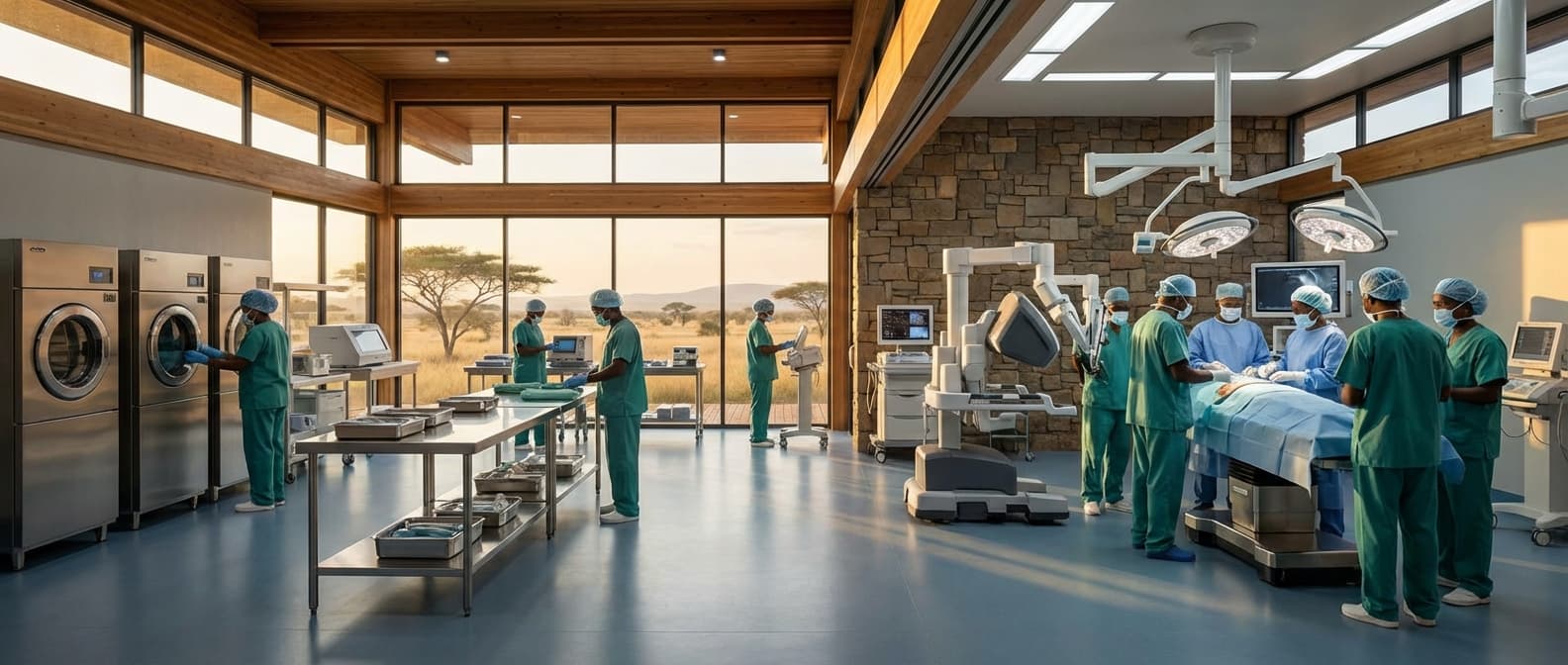
CSSD Design & Validation in South Sudan
Engineering Excellence & Technical Support
CSSD workflow design, validation and process development High-standard technical execution following OEM protocols and local regulatory frameworks.
Sterile Processing Standards Alignment
Ensured CSSD design and validation adhere to international standards (e.g., ISO 13485, AAMI ST79) adapted for South Sudan's context, incorporating considerations for local infrastructure, power availability, and water quality to guarantee effective and safe sterilization practices.
Validation Protocol Development & Execution
Designed and executed comprehensive validation protocols for all CSSD equipment and processes, including steam sterilization cycles, washer-disinfector performance, and drying efficiency, utilizing appropriate testing methods to confirm efficacy and compliance with regulatory requirements specific to South Sudan.
Capacity Building & Operational Readiness
Developed and delivered training programs for CSSD staff on equipment operation, infection control protocols, and validation principles, ensuring operational readiness and sustained high standards for sterile supply within healthcare facilities in South Sudan.
What Is Cssd Design & Validation In South Sudan?
Central Sterilization Supply Department (CSSD) design and validation in South Sudan refers to the systematic process of planning, configuring, and verifying the functionality, safety, and efficacy of a CSSD facility and its associated processes. This encompasses the physical layout, equipment selection, workflow integration, and the establishment of robust quality management systems to ensure the delivery of sterile medical devices. The primary objective is to prevent healthcare-associated infections (HAIs) by guaranteeing that all reusable medical and surgical instruments are properly decontaminated, disinfected, and sterilized before patient use.
This service involves:
- Needs Assessment: Evaluating the current and projected sterilization demands based on healthcare facility type, patient volume, and surgical specialties.
- Facility Design & Layout: Developing architectural plans that optimize workflow, ensure proper environmental controls (ventilation, air pressure differentials), and adhere to infection control principles (separation of clean and dirty areas).
- Equipment Specification & Selection: Identifying and specifying appropriate sterilization technologies (e.g., autoclaves, low-temperature sterilizers), washer-disinfectors, drying cabinets, and sterile packaging systems based on validated performance and maintenance requirements.
- Workflow Design & Optimization: Mapping out and streamlining the entire sterilization cycle, from soiled instrument receiving to sterile storage and distribution, minimizing potential for cross-contamination and maximizing efficiency.
- Standard Operating Procedures (SOPs) Development: Creating detailed, evidence-based SOPs for all CSSD activities, including pre-cleaning, cleaning, disinfection, packaging, sterilization, storage, and monitoring.
- Validation & Qualification: Performing rigorous testing and documentation to confirm that all equipment and processes consistently achieve the intended sterilization parameters (e.g., Bowie-Dick tests, biological and chemical indicator testing, process challenge device testing). This includes Installation Qualification (IQ), Operational Qualification (OQ), and Performance Qualification (PQ).
- Training Program Development: Designing comprehensive training modules for CSSD personnel on equipment operation, SOP adherence, infection control practices, and quality assurance.
- Quality Management System (QMS) Implementation: Establishing a framework for ongoing monitoring, auditing, and continuous improvement of CSSD operations, including documentation, record-keeping, and incident reporting.
- Regulatory Compliance Review: Ensuring adherence to national and international guidelines and standards for sterilization and medical device reprocessing.
Who Needs It:
- Hospitals and Healthcare Facilities: All facilities performing surgical procedures, invasive diagnostic procedures, or handling reusable medical devices that require sterilization.
- Clinics and Diagnostic Centers: Especially those offering outpatient surgical services or specialized procedures.
- Public Health Institutions: Including government hospitals and clinics that form the backbone of healthcare delivery in South Sudan.
- Non-Governmental Organizations (NGOs) and Humanitarian Organizations: Involved in providing healthcare services in challenging environments where robust infection control is paramount.
- Medical Device Manufacturers (Indirectly): While not direct users, the quality of CSSD operations impacts the effectiveness and safety of their devices in clinical settings.
Typical Use Cases:
- Establishment of New Healthcare Facilities: Designing a CSSD from inception to meet current and future needs.
- Renovation or Expansion of Existing Facilities: Reconfiguring or upgrading existing CSSD infrastructure and processes.
- Implementation of New Sterilization Technologies: Introducing advanced sterilization methods that require specific facility design and validation protocols.
- Addressing Infection Control Deficiencies: Investigating and rectifying identified weaknesses in sterilization processes that may lead to HAIs.
- Compliance with Evolving Standards: Adapting CSSD operations to meet updated national or international sterilization guidelines.
- Improving Operational Efficiency: Streamlining workflows and optimizing resource utilization within the CSSD.
- Ensuring Patient Safety: The overarching use case is to guarantee the delivery of safe, sterile medical instruments to prevent patient harm.
| Phase | Activities | Objective | Key Deliverables |
|---|---|---|---|
| Design Phase | Needs assessment, facility layout, equipment specification, workflow mapping, SOP drafting. | To create a blueprint for an optimal, safe, and compliant CSSD. | Architectural drawings, equipment list, workflow diagrams, draft SOPs. |
| Pre-Validation/Qualification | Equipment installation, initial functional checks, SOP refinement, staff training. | To ensure equipment is correctly installed and staff are prepared for validation. | Installation reports, updated SOPs, training records. |
| Validation & Qualification Phase | IQ, OQ, PQ testing for all critical equipment and sterilization cycles. Biological and chemical indicator testing, process challenge device testing. | To scientifically prove that the CSSD equipment and processes consistently produce sterile products. | IQ/OQ/PQ reports, validation certificates, documented test results. |
| Ongoing Monitoring & Revalidation | Routine monitoring of sterilization cycles, periodic revalidation of equipment and processes, internal audits, continuous improvement initiatives. | To maintain the validated state of the CSSD and ensure ongoing compliance and efficacy. | Routine monitoring logs, audit reports, revalidation plans, CAPA documentation. |
Key Components of CSSD Design & Validation
- Needs Assessment & Capacity Planning
- Spatial Planning & Workflow Optimization
- Environmental Control Systems (HVAC, Airflow)
- Equipment Selection & Integration
- Development of Comprehensive SOPs
- Validation Protocols (IQ/OQ/PQ)
- Monitoring & Quality Assurance Procedures
- Staff Training & Competency Assessment
- Waste Management Strategies
- Sterile Storage & Distribution Logistics
Who Needs Cssd Design & Validation In South Sudan?
Central Sterile Services Departments (CSSDs) are critical for infection prevention and control in healthcare settings. Their effective design and meticulous validation are paramount to ensuring patient safety and the efficient operation of medical facilities. In South Sudan, where healthcare infrastructure is often developing and facing unique challenges, well-designed and validated CSSDs are not a luxury but a necessity. This is particularly true for preventing the spread of infectious diseases and ensuring that surgical instruments and medical devices are safe for reuse. Neglecting CSSD design and validation can lead to increased healthcare-associated infections, prolonged patient recovery times, and a higher burden on already stretched healthcare resources. Therefore, understanding who benefits most from robust CSSD design and validation is crucial for strategic investment and resource allocation in South Sudan's healthcare sector.
| Target Customer/Department | Why CSSD Design & Validation is Crucial | Specific Needs & Challenges |
|---|---|---|
| Hospitals (Public and Private) | Ensure sterile instruments for all procedures, reduce hospital-acquired infections (HAIs), maintain operational efficiency, comply with national/international standards. | Limited access to specialized equipment and training, unreliable power and water supply, high patient volumes, diverse range of medical services. |
| Surgical Centers | Guarantee the sterility of instruments for elective and emergency surgeries, minimize post-operative complications, build patient trust. | May have specialized surgical needs (e.g., orthopedics, ophthalmology) requiring specific sterilization methods; often rely on outsourced sterilization if internal capacity is lacking. |
| Maternity and Child Health Clinics | Prevent infections during childbirth and for pediatric procedures, ensure safe reuse of instruments like speculums and surgical tools. | High volume of deliveries, potentially limited space for dedicated CSSD, need for basic but effective sterilization methods. |
| Trauma and Emergency Units | Rapid turnaround of sterile instruments for life-saving interventions, critical in conflict or disaster-affected areas. | High-pressure environment, need for robust and quick sterilization processes, potential for contaminated instruments due to injuries. |
| Non-Governmental Organization (NGO) Healthcare Facilities | Provide essential healthcare services in remote or underserved areas, ensure safety for vulnerable populations. | Often operate with limited budgets and resources, need for durable and low-maintenance CSSD solutions, challenges in accessing spare parts and technical support. |
| Military and Peacekeeping Medical Units | Maintain the health and readiness of military personnel, provide medical support in challenging operational environments. | Need for highly reliable and mobile sterilization solutions, ability to operate in austere conditions, strict adherence to military health standards. |
Target Customers and Departments Requiring CSSD Design & Validation in South Sudan
- Hospitals (Public and Private)
- Surgical Centers
- Maternity and Child Health Clinics
- Trauma and Emergency Units
- Non-Governmental Organization (NGO) Healthcare Facilities
- Military and Peacekeeping Medical Units
Cssd Design & Validation Process In South Sudan
This document outlines the workflow for the design and validation of Central Sterile Supply Departments (CSSDs) in South Sudan, encompassing the entire process from initial inquiry to final execution and handover. The process is designed to ensure that CSSDs meet international standards for infection prevention and control, while also considering local context, resource availability, and sustainability.
| Phase | Key Activities | Deliverables | Key Stakeholders | Timeline (Indicative) |
|---|---|---|---|---|
| Receive initial request/inquiry for CSSD development or upgrade. Conduct preliminary site visit and gather basic information on the facility. Understand the rationale and desired outcomes. Discuss preliminary budget and scope. | Inquiry acknowledgement, Preliminary assessment report, Scope of work outline | Healthcare Facility Management, Ministry of Health (MoH) officials, Project Initiator | 1-2 Weeks |
| Conduct detailed needs assessment: analyze current sterilization practices, instrument reprocessing volumes, projected needs, existing infrastructure, human resources, and financial capacity. Define specific requirements, including capacity, workflow, infection control standards, and regulatory compliance. Develop a detailed project scope and objectives. | Detailed needs assessment report, Project scope document, Functional program | Healthcare Facility Management, MoH representatives, CSSD Experts, Infection Control Team, Biomedical Engineers, Architects/Planners | 2-4 Weeks |
| Develop architectural and engineering designs based on the functional program and identified needs. This includes layout, workflow optimization, ventilation, water supply, drainage, electrical requirements, and safety features. Develop specifications for materials and finishes. Create detailed construction and procurement plans. Obtain necessary permits and approvals. | Architectural drawings, Engineering drawings (MEP), Equipment specifications, Bill of Quantities (BOQ), Construction plan, Procurement plan, Approvals/permits | Architects, Mechanical Engineers, Electrical Engineers, Plumbing Engineers, CSSD Consultants, MoH review committee | 8-16 Weeks |
| Procure all necessary construction materials and CSSD-specific equipment based on approved specifications and BOQ. Oversee the construction or renovation of the CSSD facility according to the design plans. Ensure adherence to quality standards and infection control principles during construction. | Procured materials and equipment, Completed construction/renovation, Site inspection reports | Procurement Department, Contractors, Project Managers, Quality Assurance Team, MoH representatives | 12-24 Weeks (depending on scope) |
| Install all procured CSSD equipment (autoclaves, washers, dryers, sterile storage cabinets, etc.). Conduct pre-commissioning checks and calibration. Ensure proper integration with existing utilities. Perform initial testing of equipment functionality. | Installed equipment, Commissioning reports, Calibration certificates, Initial performance data | Equipment Suppliers/Manufacturers, Biomedical Engineers, CSSD Technicians, Project Managers | 2-4 Weeks |
| Develop and deliver comprehensive training programs for CSSD staff on infection prevention and control protocols, operation and maintenance of equipment, sterile processing techniques, documentation, and quality management. Training should cover both theoretical and practical aspects. | Training curriculum, Trained staff, Training attendance records, Competency assessments | CSSD Trainers, Infection Control Specialists, Equipment Trainers, CSSD Staff | 2-3 Weeks (ongoing as needed) |
| Conduct rigorous validation and performance testing of the entire CSSD system. This includes testing sterilization cycles (e.g., biological and chemical indicators), workflow efficiency, environmental monitoring, and adherence to regulatory standards. Document all test results. | Validation protocols, Test results documentation, Validation report, Compliance certificates | Validation Engineers, Microbiologists, Infection Control Team, MoH Quality Assurance | 1-2 Weeks |
| Formally launch the operational CSSD. Develop and implement standard operating procedures (SOPs) for all CSSD functions. Finalize all documentation and handover the facility to the healthcare facility management. Conduct a final project review and close-out. | Operational CSSD, Approved SOPs, Handover documentation, Final project report | Healthcare Facility Management, MoH representatives, Project Team, CSSD Staff | 1 Week |
| Establish a system for ongoing monitoring of CSSD performance, quality indicators, and equipment maintenance. Provide ongoing technical support, troubleshooting, and refresher training as needed. Conduct periodic audits to ensure sustained compliance and identify areas for improvement. | Monitoring framework, Performance reports, Audit reports, Ongoing technical support | Healthcare Facility Management, MoH Health Services, CSSD Supervisors, Biomedical Engineering Department | Ongoing |
CSSD Design & Validation Process Workflow
- Phase 1: Inquiry & Initial Assessment
- Phase 2: Needs Assessment & Scoping
- Phase 3: Design & Planning
- Phase 4: Procurement & Construction/Renovation
- Phase 5: Equipment Installation & Commissioning
- Phase 6: Staff Training & Capacity Building
- Phase 7: Validation & Performance Testing
- Phase 8: Operationalization & Handover
- Phase 9: Post-Implementation Monitoring & Support
Cssd Design & Validation Cost In South Sudan
Designing and validating a Central Sterile Supply Department (CSSD) in South Sudan is a complex undertaking with significant cost implications. The pricing is influenced by a multitude of factors, from the scale and scope of the facility to the availability of skilled labor and imported materials. This discussion outlines the key pricing factors and provides estimated cost ranges in South Sudanese Pounds (SSP).
| Cost Component | Estimated Range (SSP) | Notes |
|---|---|---|
| Architectural & Engineering Design Fees (as % of project cost) | 5% - 15% | Varies based on complexity and consultant experience. |
| Equipment Purchase (per sterilization bay) | 20,000,000 - 100,000,000+ | Highly dependent on type and brand of autoclaves, washer-disinfectors, etc. Local procurement might be cheaper but may have quality/availability issues. |
| Building Materials & Construction/Renovation | 15,000,000 - 75,000,000+ | Depends on size, existing infrastructure, and imported materials. |
| Validation & Commissioning Services | 10,000,000 - 50,000,000 | Includes testing, documentation, and specialized consultant fees. |
| Training & Capacity Building | 5,000,000 - 20,000,000 | For staff training on equipment and procedures. |
| Regulatory Approvals & Permits | 1,000,000 - 5,000,000 | Costs for various permits and certifications. |
| Contingency (10-20% of total project cost) | Highly Variable | Essential for unforeseen circumstances. |
| Total Estimated Project Cost (Small to Medium Scale CSSD) | 100,000,000 - 500,000,000+ | This is a broad estimate and can fluctuate significantly. |
| Total Estimated Project Cost (Large Scale CSSD) | 500,000,000 - 2,000,000,000+ | For major hospitals or regional hubs. |
Key Pricing Factors for CSSD Design & Validation in South Sudan:
- Scope of Services and Facility Size: A larger CSSD, catering to a major hospital or a network of facilities, will naturally incur higher design and validation costs than a smaller unit for a rural clinic. This includes the number of sterilization bays, decontamination areas, sterile storage, and administrative spaces.
- Equipment Requirements: The type and quantity of sterilization equipment (autoclaves, washer-disinfectors, ultrasonic cleaners, sterile packaging machines), as well as supporting equipment (instrument trays, trolleys, workbenches), are major cost drivers. The choice between new, refurbished, or locally fabricated equipment also impacts price.
- Architectural and Engineering Design Fees: Professional fees for architects, mechanical, electrical, and plumbing (MEP) engineers specializing in healthcare facilities. These fees are often calculated as a percentage of the total project cost or on a fixed fee basis.
- Building Materials and Construction: The cost of raw materials, labor, and any imported components for constructing or renovating the CSSD space. South Sudan's infrastructure challenges and reliance on imports can significantly inflate these costs.
- Validation and Commissioning Services: This includes the rigorous testing and documentation required to ensure the CSSD meets international standards for infection control and equipment performance. This often involves specialized external consultants and testing equipment.
- Regulatory Compliance and Approvals: Costs associated with obtaining necessary permits, licenses, and certifications from local health authorities and potentially international bodies, depending on funding sources or project mandates.
- Training and Capacity Building: Training CSSD staff on proper procedures, equipment operation, and quality control is crucial and adds to the overall cost. This may involve local or international trainers.
- Contingency and Unforeseen Expenses: Given the economic and logistical uncertainties in South Sudan, a substantial contingency fund is essential to cover unexpected costs.
- Geographic Location: Accessibility to the project site can influence transportation costs for materials, equipment, and personnel.
- Project Management: The cost of overseeing the entire design and validation process, including procurement, scheduling, and stakeholder coordination.
Affordable Cssd Design & Validation Options
Designing and validating a Central Sterile Supply Department (CSSD) is crucial for patient safety and operational efficiency. However, the costs associated with these processes can be a significant barrier, especially for smaller facilities or those with budget constraints. Fortunately, there are affordable CSSD design and validation options available, focusing on smart value bundles and strategic cost-saving measures. These approaches aim to deliver essential functionality and compliance without unnecessary expenditure.
| Cost-Saving Strategy | Description | Impact on Affordability |
|---|---|---|
| Prioritize Essential Equipment | Focus on the core functional needs of your CSSD. Identify equipment that is essential for your scope of services and regulatory compliance. Avoid unnecessary advanced features or redundancy. | Reduces capital expenditure and ongoing maintenance costs. |
| Leverage Existing Infrastructure | Assess if any existing plumbing, electrical, or ventilation systems can be adapted or integrated into the new CSSD design, rather than installing entirely new systems. | Significantly lowers construction and installation costs. |
| Standardize Equipment Brands | Where possible, standardize on a few reputable equipment brands. This can lead to bulk purchase discounts, simplified maintenance contracts, and easier staff training. | Can result in lower purchase prices and streamlined support. |
| Phased Implementation & Upgrades | Instead of a complete overhaul, plan for a phased approach. Implement core functions first and upgrade or expand as budget allows. This allows for a more manageable cash flow. | Spreads capital expenditure over time, improving financial flexibility. |
| DIY Design & Planning (with expert review) | For facilities with some in-house expertise, preliminary design and layout planning can be done internally. However, always engage a CSSD consultant for a final review to ensure compliance and best practices. | Reduces consultant fees for the initial design stages. |
| Consider Refurbished or Certified Pre-Owned Equipment | For non-critical components or as a starting point, explore high-quality refurbished or certified pre-owned equipment from reputable suppliers. Ensure it meets all necessary standards and comes with a warranty. | Substantially lowers equipment acquisition costs. |
| Optimize Workflow & Layout | A well-designed workflow minimizes movement, reduces the risk of cross-contamination, and improves efficiency. This often doesn't require expensive equipment but rather smart space utilization. | Increases operational efficiency, potentially reducing labor costs and waste. |
| Negotiate Package Deals with Suppliers | When purchasing multiple pieces of equipment or services, inquire about bundled discounts or package deals from suppliers or contractors. | Can lead to overall cost reductions through volume purchasing. |
Value Bundles for Affordable CSSD Design & Validation
- {"title":"Modular & Scalable Design Packages","description":"Instead of a completely custom, ground-up design, opt for pre-engineered modular components that can be adapted to your space. These packages often include optimized layouts for workflow, essential equipment integration points, and basic infrastructural requirements. Scalability allows you to start with a core setup and expand as your needs grow."}
- {"title":"Essential Equipment & Fit-out Bundles","description":"Focus on procuring essential, high-quality, but not necessarily top-of-the-line equipment. Value bundles often include a curated selection of cleaning, disinfection, sterilization, and storage equipment that meets regulatory standards. These can be bundled with basic plumbing, electrical, and ventilation services, reducing the need for separate contractor negotiations."}
- {"title":"Phased Validation & Verification Services","description":"Rather than a single, comprehensive validation project, consider a phased approach. This involves validating critical processes and equipment incrementally as they are implemented or upgraded. Bundled services can offer a structured plan for ongoing validation and re-validation, spreading the cost over time and ensuring continuous compliance."}
- {"title":"Consultancy & Training Packages","description":"Integrate expert consultancy for initial design advice and regulatory guidance with staff training on proper CSSD procedures and equipment operation. Value packages can combine these elements to ensure your team is equipped with the knowledge to run an efficient and compliant department from the outset."}
Verified Providers In South Sudan
In South Sudan's evolving healthcare landscape, identifying trusted and verified healthcare providers is paramount for ensuring quality and accessible medical services. Among these, Franance Health stands out as a leading organization, demonstrating a steadfast commitment to excellence and patient well-being. This document outlines Franance Health's credentials and the compelling reasons why they represent the best choice for healthcare in South Sudan.
| Area of Excellence | Franance Health's Commitment | Why it Matters for Patients |
|---|---|---|
| Quality Assurance | Adherence to stringent accreditation and certification standards. | Ensures that all medical procedures and services meet recognized benchmarks for safety and effectiveness. |
| Medical Expertise | Recruitment and retention of highly qualified, experienced, and often internationally trained medical professionals. | Patients benefit from accurate diagnoses, effective treatment plans, and access to specialized medical knowledge. |
| Accessibility of Services | Provision of a comprehensive range of medical services, from primary to specialized care. | Reduces the need for patients to seek care from multiple facilities, offering convenience and continuity of care. |
| Advanced Care | Investment in state-of-the-art medical technology and diagnostic equipment. | Leads to more precise diagnoses, less invasive treatments, and ultimately, better health outcomes. |
| Patient Experience | Prioritization of patient comfort, dignity, and personalized care. | Creates a supportive and reassuring environment, fostering trust and improving patient satisfaction. |
| Public Health Impact | Active involvement in community health initiatives and educational programs. | Contributes to the overall well-being of the population by promoting preventative health and disease awareness. |
Franance Health Credentials & Key Strengths
- Accreditation and Certifications: Franance Health adheres to rigorous national and international standards, holding [mention specific certifications or accreditations if available, e.g., Ministry of Health approvals, WHO guidelines, ISO certifications]. These validations confirm their commitment to operational excellence, patient safety, and quality management.
- Experienced and Qualified Medical Professionals: The organization boasts a team of highly skilled and dedicated doctors, nurses, specialists, and support staff. Many of their professionals have international training and extensive experience in treating a wide range of medical conditions, ensuring patients receive expert care.
- Comprehensive Service Offerings: Franance Health provides a broad spectrum of medical services, encompassing primary care, specialized treatments, diagnostics, preventative health programs, and [mention any other specific services like maternal health, pediatrics, surgery, etc.]. This integrated approach caters to diverse patient needs under one roof.
- Commitment to Innovation and Technology: The organization invests in modern medical equipment and adopts innovative healthcare technologies. This dedication ensures accurate diagnoses, effective treatments, and improved patient outcomes, aligning with global best practices.
- Patient-Centric Approach: Franance Health places a strong emphasis on patient comfort, privacy, and personalized care. Their approach focuses on understanding individual needs and providing compassionate, respectful treatment at every stage of the patient journey.
- Community Engagement and Outreach: Beyond providing direct medical services, Franance Health actively engages with communities through health education, awareness campaigns, and [mention any specific outreach programs like mobile clinics, health camps, etc.]. This commitment underscores their dedication to improving public health in South Sudan.
- Ethical Practices and Transparency: Franance Health operates with the highest ethical standards, ensuring transparency in their services, pricing, and patient information. This builds trust and confidence among the communities they serve.
Scope Of Work For Cssd Design & Validation
This Scope of Work (SOW) outlines the requirements for the design, validation, and documentation of a Central Sterile Supply Department (CSSD) to meet industry best practices and regulatory standards. The project encompasses all phases from conceptual design through to final validation and handover, ensuring a functional, efficient, and safe sterile processing environment.
| Category | Technical Deliverables | Standard Specifications / References |
|---|---|---|
| Layout & Workflow Design | Detailed CAD drawings of the CSSD layout, including sterile processing zones, workflow diagrams (decontamination, cleaning, disinfection, packaging, sterilization, sterile storage), material flow analysis, and personnel flow analysis. | HTM 01-01 (UK), ANSI/AAMI ST79 (USA), ISO 13485 (Medical Devices - Quality Management Systems), Local Health Authority Guidelines, ASHRAE 170 (Ventilation of Healthcare Facilities). |
| Room Finishes & Environmental Control | Specifications for wall, floor, and ceiling materials (seamless, non-porous, cleanable), lighting levels, air change rates per hour (ACPH), temperature and humidity control, differential pressure gradients between zones, and negative/positive pressure requirements. | HTM 01-01, ANSI/AAMI ST79, ISO 14644 (Cleanrooms and associated controlled environments), ASHRAE 170. |
| Equipment Specification | Detailed technical specifications for all CSSD equipment, including: cleaning brushes, ultrasonic cleaners, washer-disinfectors, drying cabinets, packaging equipment (sealing machines, tray sealers), sterilization equipment (autoclaves, low-temperature sterilizers), sterile storage cabinets, and water treatment systems. | Manufacturer's specifications, CE marking (Europe), FDA approval (USA), relevant ISO standards for specific equipment types (e.g., ISO 17665 for steam sterilization). |
| Utilities & Services | Specifications for medical-grade gases (if applicable), compressed air, water supply (quality, flow rates, point-of-use filtration), drainage, electrical power (including backup power/UPS), and ventilation systems (HEPA filtration, exhaust). | Local building codes, ASHRAE 170, HTM 01-01, manufacturer's requirements for equipment. |
| Workflow Process Validation | Development of Standard Operating Procedures (SOPs) for all CSSD processes, including instrument tracking and traceability systems, decontamination, cleaning, disinfection, inspection, packaging, sterilization, and sterile storage. Validation protocols and reports for each process. | ANSI/AAMI ST79, ISO 13485, manufacturer's IFUs (Instructions For Use). |
| Equipment Validation | Installation Qualification (IQ), Operational Qualification (OQ), and Performance Qualification (PQ) protocols and reports for all installed CSSD equipment. Calibration records for critical monitoring devices. | Manufacturer's validation packages, ANSI/AAMI ST79, relevant ISO standards for sterilization validation (e.g., ISO 11135 for EtO, ISO 17665 for steam). |
| Environmental Monitoring | Protocols and reports for routine environmental monitoring of the CSSD, including air sampling, surface sampling, and personnel monitoring to ensure compliance with cleanliness standards. | ISO 14644, HTM 01-01, ANSI/AAMI ST79. |
| Documentation & Training | Comprehensive project documentation including: as-built drawings, equipment manuals, validation reports, SOPs, maintenance schedules, and training materials. Records of personnel training on all aspects of CSSD operations and safety. | ISO 13485, organizational quality management system, manufacturer's documentation. |
Key Project Phases
- Conceptual Design & Planning
- Detailed Design Development
- Equipment Selection & Specification
- Construction & Installation Oversight
- Commissioning & Validation
- Documentation & Training
Service Level Agreement For Cssd Design & Validation
This Service Level Agreement (SLA) outlines the performance standards for the design and validation of Central Sterile Supply Department (CSSD) facilities. It defines response times for critical incidents and guarantees system uptime for essential CSSD operations.
| Service Level | Incident Priority | Response Time Target | Uptime Guarantee (Critical Systems) | Resolution Target (Best Effort) |
|---|---|---|---|---|
| Design Consultation & Review | Critical (e.g., major design flaw impacting sterilization capacity) | 4 Business Hours | N/A (Design phase is not a continuous operational service) | 2 Business Days |
| Design Consultation & Review | Major (e.g., non-critical equipment specification error) | 8 Business Hours | N/A | 5 Business Days |
| Design Consultation & Review | Minor (e.g., minor documentation query) | 24 Business Hours | N/A | 7 Business Days |
| Validation Services (IQ/OQ/PQ) | Critical (e.g., failure of a sterilizer to pass performance testing) | 1 Business Day | N/A (Validation is project-based) | 3 Business Days (to reschedule/re-evaluate) |
| Validation Services (IQ/OQ/PQ) | Major (e.g., delay in a specific validation step due to equipment availability) | 3 Business Days | N/A | 7 Business Days (to reschedule/re-evaluate) |
| Ongoing Operational Support (for validated systems) | Critical (e.g., sterilizer malfunction during a critical sterilization cycle) | 2 Business Hours | 99.5% (for all critical sterilization equipment over a monthly period) | 8 Business Hours (for initial diagnosis and mitigation plan) |
| Ongoing Operational Support (for validated systems) | Major (e.g., failure of environmental monitoring system to record data) | 4 Business Hours | 99.0% (for all environmental monitoring and control systems over a monthly period) | 1 Business Day |
| Ongoing Operational Support (for validated systems) | Minor (e.g., reporting discrepancy, minor equipment calibration issue) | 8 Business Hours | N/A | 3 Business Days |
Key Service Commitments
- Service Scope: This SLA covers the design consultation, review, and validation phases of new or upgraded CSSD facilities. This includes process flow, equipment selection, environmental controls, and infection control adherence.
- Support Channels: All requests for service must be submitted through the designated ticketing system or email to support@cssddesignvalidation.com.
- Escalation Procedure: In case of non-compliance with response times, escalation will follow the defined process within the organizational structure.
- Definitions:
- Critical Incident: An event that directly impacts the ability to sterilize or decontaminate medical devices, leading to a halt in patient care or a significant risk of infection transmission.
- Major Incident: An event that hinders CSSD operations but does not immediately halt all sterilization processes. This could include issues with non-critical equipment or minor environmental control failures.
- Minor Incident: An issue that does not impact the core sterilization functions but may affect efficiency or reporting.
- Uptime: The percentage of time that critical CSSD systems (e.g., sterilizers, washer-disinfectors, environmental monitoring systems) are fully operational and performing within specified parameters.
- Response Time: The time elapsed from the moment a service request is officially logged until a qualified technician or designer begins active work on the issue.
Frequently Asked Questions

Ready when you are
Let's scope your CSSD Design & Validation in South Sudan project in South Sudan.

Scaling healthcare logistics and technical systems across the entire continent.